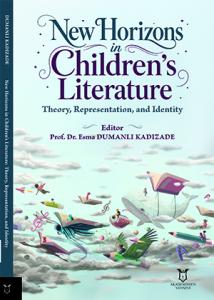
Big Questions at a Young Age: Philosophy For Children (P4C)
Özet
This chapter examines Philosophy for Children (P4C) as an educational approach that connects children’s search for meaning, curiosity, questioning, and dialogic inquiry. It first discusses meaning-making as a fundamental human concern and emphasizes that children, like adults, may experience uncertainty and the need to understand the world. Curiosity is presented as a central developmental force that activates observation, exploration, questioning, and learning. Within this framework, P4C is positioned as a pedagogical model that transforms children’s natural curiosity into a structured process of philosophical inquiry. The chapter explains the emergence of P4C through Matthew Lipman’s work and situates the approach within Dewey’s pragmatist philosophy, reflective thinking, democratic education, and the community of inquiry model. P4C is described as a holistic educational practice that develops critical, creative, caring, and collaborative thinking. In this model, the classroom becomes a dialogic community where children generate questions, justify ideas, listen to others, compare viewpoints, and construct shared meaning. The chapter also discusses the relationship between P4C and children’s literature. Literary texts, stories, picture books, and other stimuli make abstract philosophical problems accessible through concrete characters, conflicts, and narrative situations. In addition, the chapter outlines the aims, learning outcomes, session components, and implementation stages of P4C. Two sample practices based on folktales illustrate how P4C can be applied to moral philosophy and philosophy of being. Overall, the chapter frames P4C as a systematic approach that supports children’s thinking, meaning-making, and democratic dialogue.
Referanslar
Altan, Z. M. (2024). Öğrenmenin, gelişmenin ve büyümenin temel unsuru: merak. Disiplinlerarası Eğitim Araştırmaları Dergisi, 8(19), 256–271. https://doi.org/10.57135/jier.1596563
Berlyne, D. E. (1960). Conflict, arousal, and curiosity. McGraw-Hill.
Cam, P. (2014). Philosophy for Children, Values Education and the Inquiring Society. Educational Philosophy and Theory, 46(11), 1203–1211. https://doi.org/10.1080/00131857.2013.771443
Chirouter, E. (2024). Çocuk, edebiyat ve felsefe (D. Pınarbaşı, Çev.). Sözelti Çocuk ve Gençlik Edebiyatı Dergisi, (11), 44–66. (Original work published 2015)
De Marzio, D. M. (2011). What happens in philosophical texts: Matthew Lipman's theory and practice of the philosophical text as a model. Childhood & Philosophy, 7(13), 29–47.
Dewey, J. (1910). How we think. D. C. Heath.
Dewey, J. (1916). Democracy and education. Macmillan.
Dewey, J. (1934). Art as experience. Minton, Balch & Company.
Dewey, J. (1938). Experience and education. Kappa Delta Pi.
Engel, S. (2011). Children's need to know: Curiosity in schools. Harvard educational review, 81(4), 625–645. https://doi.org/10.17763/haer.81.4.h054131316473115
Fisher, R. (2017). Philosophy with children: A global perspective. In S. Naji & R. Hashim (Eds.), History, theory and practice of philosophy for children: International perspectives (pp. 185–196). Routledge.
Frankl, V. E. (2022). İnsanın anlam arayışı (Ö. Yılmaz, Çev.; 134. baskı). Okuyanus Yayınevi.
Green, L. (2017). Philosophy for children and developmental psychology: A historical review. In M. R. Gregory, J. Haynes, & K. Murris (Eds.), The Routledge International Handbook of Philosophy for Children (pp. 37-44). Routledge.
Gregory, M. (2008). Philosophy for children: Practitioner handbook. Institute for the Advancement of Philosophy for Children.
Gregory, M. (2017). Philosophy for children: Where are we now? In S. Naji & R. Hashim (Eds.), History, theory and practice of philosophy for children: International perspectives (pp. 207–221). Routledge.
Gregory, M. R., Haynes, J., & Murris, K. (Eds.). (2017). The Routledge international handbook of philosophy for children. Routledge.
Haynes, J. (2008). Children as philosophers: Learning through enquiry and dialogue in the primary classroom (2nd ed.). Routledge.
Hurwich, T. (2022). P4C and the philosophical community of inquiry: Making meaning by learning to question. Novel Impressions. https://timnahurwich.com/2021/10/17/the-philosophical-community-of-inquiry-making-meaning-by-learning-to-question/
Kashdan, T. B., Rose, P., & Fincham, F. D. (2004). Curiosity and exploration: Facilitating positive subjective experiences and personal growth opportunities. Journal of Personality Assessment, 82(3), 291–305. https://doi.org/10.1207/s15327752jpa8203_05
Kilby, B. (2025). Philosophy for/with Children: A Meta-Analysis. International Journal of Contemporary Educational Research, 12(1), 26–38. https://doi.org/10.52380/ijcer.2025.12.1.703
Lipman, M. (1988). Philosophy goes to school. Temple University Press.
Lipman, M. (2003). Thinking in education (2nd ed.). Cambridge University Press. https://doi.org/10.1017/CBO9780511840272
Lipman, M. (2017). The Institute for the Advancement of Philosophy for Children (IAPC) program. In S. Naji & R. Hashim (Eds.), History, theory and practice of philosophy for children: International perspectives (pp. 3–11). Routledge.
Lipman, M., Sharp, A. M., & Oscanyan, F. S. (1980). Philosophy in the classroom. Temple University Press.
Litman, J. A. (2005). Curiosity and the pleasures of learning: Wanting and liking new information. Cognition and Emotion, 19(6), 793–814. https://doi.org/10.1080/02699930541000101
Loewenstein, G. (1994). The psychology of curiosity: A review and reinterpretation. Psychological Bulletin, 116(1), 75–98.
Murris, K. (2016). The posthuman child: Educational transformation through philosophy with picturebooks. Routledge.
Murris, K. (2017). P4C and picture books. In S. Naji & R. Hashim (Eds.), History, theory and practice of philosophy for children: International perspectives (pp. 81–85). Routledge.
Özdemir, Ö. (2018). Dünyada çocuklar için felsefe: Tarihçe ve güncel çalışmalar. Arkhe-Logos Felsefe Dergisi, (6), 149–165.
Ricoeur, P. (1992). Oneself as another (K. Blamey, Trans.). University of Chicago Press.
Rosenblatt, L. M. (1978). The reader, the text, the poem: The transactional theory of the literary work. Southern Illinois University Press.
Sasseville, M. (2017). Showing that children can do philosophy. In S. Naji & R. Hashim (Eds.), History, theory and practice of philosophy for children: International perspectives (pp. 89–101). Routledge.
Suvaroğlu, A. S., Peker, B., Peker Antepe, N., & Tavuş, Ö. (2022). Uygulama el kitabı 1: Okul öncesi-ilkokul-ortaokul-lise çocuklarla topluluklarla felsefe. Mela Yayıncılık.
Sutcliffe, R. (2017). The difference between P4C and PwC. In S. Naji & R. Hashim (Eds.), History, theory and practice of philosophy for children: International perspectives (pp. 56–62). Routledge.
Şahinkaya, A. (2024). P4C’ye farklı yaklaşımlar. Temaşa Felsefe Dergisi, (21), 6–22.
Trickey, S., & Topping, K. J. (2004). Philosophy for Children: A systematic review. Research Papers in Education, 19(3), 365–380. https://doi.org/10.1080/0267152042000248016
UNESCO. (2007). Philosophy: A school of freedom. UNESCO Publishing.
Vygotsky, L. S. (1978). Mind in society: The development of higher psychological processes (M. Cole, V. John-Steiner, S. Scribner, & E. Souberman, Eds.). Harvard University Press.