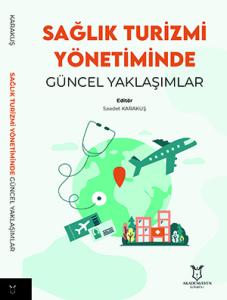
Ekonomik Kalkınmanda Kadın Sağlığının Sağlık Turizmine Yansıması
Özet
Bu çalışmada, ekonomik kalkınmanın değişen paradigma ve yaklaşımlarında kadın sağlına bakışın sağlık turizmine yansıması incelenmiştir. Çalışma, ekonomik kalkınmada kadın sağlığını iyileştirme çabalarının kalkınma aracı bakışıyla gerçekleştirildiği iddiasında bulunmaktadır. Çalışmada ilk olarak II. Dünya Savaşı sonrası sağlıkla ilişkili kalkınma süreci açıklanmıştır. Daha sonra kalkınma çevreleri ve literatürün genel kabullerine eleştiriler getirerek ekonomik çıkarlar doğrultusunda değişen kadın sağlığı bakışları tanımlanmıştır. Son olarak kadın sağlığına araçsal bakış tanımlamalarının sağlık turizmine yansıması turizm pazar araştırmaları ve literatür doğrultusunda açıklanmıştır.
Referanslar
AbouZahr, C. (2003). Safe Motherhood: A brief history of the global movement 1947–2002, British Medical Bulletin, 67(1), 13-25. doi: 10.1093/bmb/ldg014
Acar, S. & Gültekin-Karakaş, D. (2017). Dünyada ve Türkiye’de serbest bölgeler. Marmara İktisat Dergisi. 1(1), 21-35. doi: 10.24954/mjecon.2017.1
Adelman, I. (1999). The role of government in economic development. (Working Paper No: 890) University of California, Berkeley, Department of Agricultural and Resource Economics and Policy. doi: 10.22004/ag.econ.25039
American Society of Plastic Surgeons. (2022). Survey Finds Demand for Cosmetic Surgery, Driven by Women Under 45, Surged After the Pandemic. https://www.plasticsurgery.org/documents/News/Statistics/2020/plastic-surgery-statistics-full-report-2020.pdf
Ananat, E. O., Gruber, J., Levine, P. B. & Staiger, D. (2006). Abortion and selection. (NBER Working Paper No. 12150). doi: 10.3386/w12150
Anand, S. & Ravallion, M. (1993). Human development in poor countries: On the role of private incomes and public services. The Journal of Economic Perspectives. 7(1), 133-150. Retrieved from https://www.jstor.org/
Austad, S.N. (2006). Why women live longer than men: sex differences in longevity. Gender Medicine. 3(2), 79-92. doi: 10.1016/S1550-8579(06)80198-1
Barrie, L. (2019). The Future Is Female When It Comes to Wellness Adventure Travel. Skift. https://skift.com/2019/09/13/the-future-is-female-when-it-comes-to-wellness-adventure-travel/
Brown, T. M., Cueto, M. & Fee, E. (2006). The World Health Organization and the transition from “international” to “global” public health. American Journal of Public Health. 96(1), 62-72. doi: 10.2105/AJPH.2004.050831
Campbell, C. A., Restrepo, C., Navas, G., Vergara, I., & Peluffo, L. (2019). Plastic Surgery Medical Tourism in Colombia: A Review of 658 International Patients and 1,796 Cosmetic Surgery Procedures. Plast Reconstr Surg Glob Open, 7(5), e2233. doi:10.1097/GOX.0000000000002233
Castro Martín, T. & Juárez, F. (1995). The impact of women’s education on fertility in Latin America: searching for explanations. International Family Planning Perspectives. 21(2), 52–57. doi:10.2307/2133523
Cromartie, J. & Nelson, P. (2009). Baby boom migration and its impact on rural America. (Economic Research Report No. 79). Economic Research Service/USDA. www.ers.usda.gov/publications/pub-details/?pubid=46231
Dobson, F. & Jowell, T. (1998). Our healthier nation: a contract for health. Presented to Parliament by the Secretary of State for Health by Command of Her Majesty. London: Stationery Office. https://catalogue.sunderland.ac.uk/items/208857
Fortune Business Insights (2023). Healthcare/Medical Tourism Market. Fortune. https://www.fortunebusinessinsights.com/industry-reports/medical-tourism-market-100681
Gilmartin, M., & White, A. (2011). Interrogating medical tourism: Ireland, abortion, and mobility rights. Signs: Journal of Women in Culture and Society, 36(2), 275-280.
Global Wellness (2023). Wellness Travel Aimed at Empowering Women. Global Wellness. https://www.globalwellnesssummit.com/trendium/wellness-travel-aimed-at-empowering-women/
Global Wellness Institute (2022). New Data on Wellness Tourism: Projected to Hit $817 Billion This Year, $1.3 Trillion in 2025. https://globalwellnessinstitute.org/global-wellness-institute-blog/2022/01/11/industry-research-new-data-on-wellness-tourism-projected-to-hit-817-billion-this-year-1-3-trillion-in-2025/
Global Wellness Institute. (2021). Global Wellness Economy: Looking Beyond COVID. https://globalwellnessinstitute.org/press-room/press-releases/2021-gwi-research-report/
Grossman, M. (1972). On the concept of health capital and the demand for health. Journal of Political Economy. 80(2), 223-255. doi: 10.1086/259880
Hall, C. M. (2011). Health and medical tourism: A kill or cure for global public health?. Tourism review, 66(1/2), 4-15.
Husain, M.J. (2010). Contribution of health to economic development: A survey and overview. Economics E-Journal. 4(14), 1-52. doi: 10.2139/ssrn.1726742
IMARC (2023). Medical Tourism Market: Global Industry Trends, Share, Size, Growth, Opportunity and Forecast 2023-2028. https://www.reportlinker.com/p05889816/Medical-Tourism-Market-Global-Industry-Trends-Share-Size-Growth-Opportunity-and-Forecast.html
IUOTO (1973), Health Tourism, United Nations, Geneva.
Karaçay, H., Şafak Zülfikar, B. & Güler Aydın, D. (2014) Post-Neoliberal kalkınma paradigmasında “kalkınmada kadın ve güçlenme” algısı: Dünya Bankası örneği. Afyon Kocatepe Üniversitesi İktisadi ve İdari Bilimler Fakültesi Dergisi. 16(2), 15-31. doi: 10.5578/jeas.8907
Kelly, K. (2017). Büyük teknolojik dönüşüm (Çev. Ü. Şensoy). İstanbul: Türk Hava Yolları Yayınları.
Kirmanoğlu, H. (2005). Amartya Sen’in özgürlük ve kalkınma üzerine düşüncelerine bir bakış. İstanbul Üniversitesi İktisat Fakültesi Maliye Araştırma Merkezi Konferansları (47. Seri: Prof. Dr. Türkan Öncel’e Armağan). https://dergipark.org.tr/tr/pub/iumamk/issue/745/8036
Kissinger, H.A. (1975). 121. Memorandum from the president’s assistant for national security affairs (Kissinger) to President Ford. Foreign Relations of the United States, 1969-1976, Volume E–14, Part 1, Documents on the United Nations, 1973-1976. https://history.state.gov/historicaldocuments/frus1969-76ve14p1/d121
Kuznetsova, I.G., Goloshchapova, L.V., Ivashina, N.S., Shichiyakh, R.A., Petrova, L.I. & Tkachev, B.P. (2019). The paradigm of human capital development capable of adapting innovations in the transition to a digital economy. International Journal of Civil Engineering and Technology. 10(2), 1408-1417. https://www.academia.edu/40160370/THE_PARADIGM_OF_HUMAN_CAPITAL_DEVELOPMENT_CAPABLE_OF_ADAPTING_INNOVATIONS_IN_THE_TRANSITION_TO_A_DIGITAL_ECONOMY
Lagarde, C. (2014). Empowerment-the Amartya Sen Lecture, International Monetary Fund. https://www.imf.org/en/News/Articles/2015/09/28/04/53/sp060614
Marketing to Millennial Women. (2019). M2W is the world’s premier marketing to women event. https://m2w.biz/
Martin, L.J. (2009). Reproductive tourism in the age of globalization. Globalizations, 6 (2), 249-263 doi: 10.1080/14747730802500398
Maturo, A. (2012). Medicalization: current concept and future directions in a bionic society. Mens Sana Monogr. 10(1), 122-133. doi: 10.4103/0973-1229.91587
McCarthy, M. (2002). A brief history of the World Health Organization. The Lancet, 360(9340), 1111-1112. doi: 10.1016/S0140-6736(02)11244-X
Mincer, J. (1958). Investment in human capital and personal income distribution. Journal of Political Economy. 66(4), 281-302.
Mohindra, K. & Nikiema, B. (2010). Women’s health in developing countries: Beyond an investment? International Journal of Health Services. 40(3), 543-567. doi: 10.2190/HS.40.3.i
Mueller, H., & Kaufmann, E. L. (2001). Wellness tourism: Market analysis of a special health tourism segment and implications for the hotel industry. Journal of vacation marketing, 7(1), 5-17.
Nichols, F.H. (2000). History of the women's health movement in the 20th century. Journal of Obstetric, Gynecologic, and Neonatal Nursing/JOGNN. 29(1), 56-64. doi: 10.1111/j.1552-6909.2000.tb02756.x
Nockels, K. (2005). The General Agreement on Trade in Services (GATS) and health care: an introduction and annotated bibliography.
Onarheim, K.H., Iversen, J.H. & Bloom, D.E. (2016). Economic benefits of ınvesting in women’s health: A systematic review. Plos One. 11(3), e0150120. doi: 10.1371/journal.pone.0150120
Online Etymology Dictionary. (2021). Devolepment. https://www.etymonline.com/search?q=development&ref=searchbar_searchhint
Otsea, K. (1992). Progress and prospects the safe motherhood initiative 1987-1992. (revised edition) The World Bank Washington, D.C. https://documents.worldbank.org/en/publication/documents-reports/documentdetail/450251468177862838/progress-and-prospects-the-safe-motherhood-initiative-1987-1992
Özdemir, Ş. ve Yaman, F. (2007). Hedonik alışverişin cinsiyete göre farklılaşması üzerine bir araştırma, Eskişehir Osmangazi Üniversitesi İ.İ.B.F. Dergisi. 2(2), 81-91. https://dergipark.org.tr/tr/pub/oguiibf/issue/56506/785828
Parry, M. (2010). Betty Friedan: Feminist icon and Founder of the National Organization for Women. American Journal of Public Health. 100(9), 1584-1585. doi: 10.2105/AJPH.2009.187534
Peet, R. & Hartwick, E. (2009). Theories of development: Contentions, arguments, alternatives (2nd edt.). New York-Londra: The Guildford Press.
Pieterse, J.N. (1996). The development of development theory: Twords critical globalism. Review of International Political Economy. 3(4), 541-547.
Pollock, A., Williams, P., Gartner, W. C., & Lime, D. W. (2000). Health tourism trends: closing the gap between health care and tourism. Trends in outdoor recreation, leisure and tourism, 165-173.
Pop-Eleches, C. (2006). The impact of an abortion ban on socioeconomic outcomes of children: Evidence from Romania. Journal of Political Economy. 114(4), 744-773. doi: 10.1086/506336
Pupavac, V. (2010). The consumerism-development-security nexus. Security Dialogue. 41(6), 691-713. doi: 10.1177/0967010610388204
Ritter, S. (2005). Trends and skills needed in the tourism sector:‘Tourism for wellness’. Trends and skill needs in tourism, 115, 79.
Ronsmans, C., Chowdhury, M.E., Dasgupta, S.K., Ahmed, A. & Koblinsky, M. (2010). Effect of parent’s death on child survival in rural Bangladesh: A cohort study. The Lancet. 375(9730): 2024-2031. doi: 10.1016/S0140-6736(10)60704-0
Singh, S., Casterline, J.B. & Cleland, J.G. (1985). The proximate determinants of fertility: subnational variations. Population Studies. 39(1), 113-135.
Strickland, P., & Ratten, V. (2023). Fertility tourism: A systematic review. International Journal of Sociology and Social Policy.
Smith, A. (1776), An inquiry into the nature and causes of the wealth of nations. New York: Meta Libri, Digital Edition, 2007. http://metalibri.wikidot.com/title:an-inquiry-into-the-nature-and-causes-of-the-wealth-of
Spa Executive. (2018). The most common wellness traveller is a solo woman. Here’s what she wants. https://spaexecutive.com/2018/10/19/the-most-common-wellness-traveller-is-a-solo-woman-heres-what-she-wants/
Stănciulescu, G. C., Diaconescu, G. N., & Diaconescu, D. M. (2015). Health, spa, wellness tourism. What is the difference. Knowledge Horizons/Orizonturi Ale Cunoasterii, 7(3), 158-161.
Stern, M. (2005). Botox and bridges: South African exports of health and construction services. Development Southern Africa, 22(5), 673-693.
Şahin, Ş. K. (2011). Televizyonda kadın, sağlık ve hastalık. Sosyoloji Araştırmaları Dergisi. 14(2). 118-150.
Şen, H., Kaya, A. & Alpaslan, B. (2018). Sürdürülebilirlik üzerine tarihsel ve güncel bir perspektif. Ekonomik Yaklaşım. 29(107), 1-47. doi: 10.5455/ey.39101
Şenses, F. (2004). Neoliberal küreselleşme kalkınma için bir fırsat mı, engel mi? (ERC Working Paper in Economic 04/09). Economic Research Center, Middle East Technical University.
Tatar, M. (2009). Teorik çerçevesiyle sağlık ekonomisi ve Türkiye’ye ilişkin genel bir değerlendirme. Sağlık Ekonomisi Dergisi, 1(1). http://saglikekonomisi.omegacro.com/teorik-cercevesiyle-salk-ekonomisi-ve-tuerkiyeye-likin-genel-bir-deerlendirme
Teixeira, P.N. (2000). A portrait of the economics of education, 1960–1997. History of Political Economy, 32(Suppl_1), 257-288. doi: 10.1215/00182702-32-Suppl_1-257
The Henry J. Kaiser Family Fundation. (2003, Nisan). Women, work and family health: A balancing act. (Issue Brief an upfate on women’s health policy). https://www.nationalpartnership.org/our-work/resources/economic-justice/paid-sick-days/women-work-family-balancing-act.pdf
Turhan, Y. (2020). Kalkınma kavramının tarihsel süreci ve etimolojik analizi. Uluslararası İktisadi ve İdari İncelemeler Dergisi. (29), 149-164. doi.org/10.18092/ulikidince.719140
Turner, B. L. & Fischer-Kowalski, M. (2010). Ester boserup: An interdisciplinary visionary relevant for sustainability. Proceedings National Academy of Sciences (PNAS). 107(51), 21963-21965. doi: 10.1073/pnas.1013972108
United Nations Human Rights. (1986). Declaration on the Right to Development (41/128). https://www.ohchr.org/en/professionalinterest/pages/righttodevelopment.aspx
Ünay, S. (2009). Küresel kalkınma paradigmasının evriminde kurumsal etkenler ve dünya bankası. İstanbul Üniversitesi Siyasal Bilgiler Fakültesi Dergisi. (41), 87-111. https://dergipark.org.tr/tr/pub/iusiyasal/issue/595/5988
Willis, K. (2011). Theories and practices of development. (2nd edt.). New York: Routledge.
World Health Organization. (2021a). How WHO is funded. https://www.who.int/about/funding
World Health Organization. (2021b). Sustainable development Goals (SDGs). https://www.who.int/health-topics/sustainable-development-goals#tab=tab_1
World Health Organization. (2019a). Maternal mortality. https://www.who.int/news-room/fact-sheets/detail/maternal-mortality
World Health Organization. (2019b). World health statistics 2019: monitoring health for the SDGs. https://www.who.int/nepal/news/detail/31-07-2019-world-health-statistics-2019-monitoring-health-for-the-sdgs
World Health Organization. (2018). Millennium Development Goals (MDGs). https://www.who.int/news-room/fact-sheets/detail/millennium-development-goals-(mdgs)#:~:text=The%20United%20Nations%20Millennium%20Declaration,are%20derived%20from%20this%20Declaration
World Health Organization. (1986). The 1st international conference on health promotion. https://www.who.int/teams/health-promotion/enhanced-wellbeing/first-global-conference
World Bank. (2020). COVID-19 ve insan sermayesi. Dünya Bankası ECA Ekonomik Güncelleme Raporu. doi: 10.1596/978-1-4648-1643-7
World Bank. (2021). Life expectancy at birth, total. https://data.worldbank.org/indicator/SP.DYN.LE00.IN
Yılmaz, A. (2019). Göç ve kadın: “göçün feminizasyonu” ve kadın göçmenlerin durumu. CBÜ Sosyal Bilimler Dergisi. 17(1), 383-400. doi: 10.18026/cbayarsos.545290
Zola, I.K. (1972). Medicine as an institution of social control. The Sociological Review. 20(4), 487-504. doi: 10.1111/j.1467-954X.1972.tb00220.x