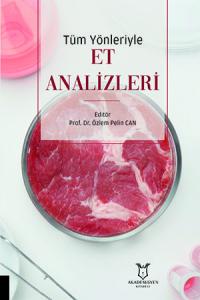
Ette Renk Oluşumu ve Renk Tayin Yöntemleri
Özet
Et ve et ürünlerinde renk, tüketicilerin satın alma kararlarını doğrudan etkileyen ve etin tazeliği ile kalitesini simgeleyen en kritik görsel faktörlerden biridir. Etin renginden esas olarak sorumlu olan pigment, kas dokusunda aerobik metabolizma için oksijen depolayan bir hem proteini olan miyoglobindir. Taze ette miyoglobin; morumsu-kırmızı renkli deoksimiyoglobin, tüketicilerin tercih ettiği parlak kırmızılıktaki oksimiyoglobin, esmerleşmeye neden olan kahverengi metmiyoglobin ve karbonmonoksit ile stabil parlak kırmızı renk oluşturan karboksimiyoglobin olmak üzere dört temel kimyasal formda mevcuttur. Et yüzeyinde metmiyoglobin oranının artması ürünün kabul edilebilirliğini ve raf ömrünü olumsuz etkilemektedir. Et rengi ve stabilitesi; besleme, kesim öncesi stres ve soğutma hızı gibi dışsal faktörler ile hayvanın türü, ırkı, yaşı, cinsiyeti, kas lifi tipi ve et pH'sı gibi içsel faktörlerin yanı sıra depolama sıcaklığı, paketleme atmosferi, ışıklandırma ve mikrobiyal gelişim gibi teknolojik faktörlerden etkilenmektedir. Et renginin tayininde panelistlerce yürütülen görsel değerlendirmeler ve renk kartlarının yanı sıra pigment ekstraksiyonu, CIE Lab* renk uzayını esas alan kolorimetreler, spektrofotometrik yansıma analizleri, bilgisayarlı görüntüleme sistemleri (BGS) ve yakın kızılötesi spektroskopisi (NIR) gibi objektif enstrümantal yöntemler kullanılmaktadır.
Color in meat and meat products is one of the most critical visual quality factors directly affecting consumer purchasing decisions and symbolizing meat freshness and quality. The pigment primarily responsible for meat color is myoglobin, a heme protein that stores oxygen for aerobic metabolism in muscle tissue. In fresh meat, myoglobin exists in four primary chemical forms: purplish-red deoxymyoglobin, bright red oxymyoglobin preferred by consumers, brown metmyoglobin causing browning, and carboxymyoglobin forming a stable bright red color with carbon monoxide. An increased proportion of metmyoglobin on the meat surface negatively affects product acceptability and shelf life. Meat color and stability are influenced by exogenous factors such as feeding, pre-slaughter stress, and chilling rate; endogenous factors such as animal species, breed, age, sex, muscle fiber type, and meat pH; as well as technological factors including storage temperature, packaging atmosphere, lighting, and microbial growth. In the determination of meat color, visual evaluations conducted by panelists and color charts are used alongside objective instrumental methods, including pigment extraction, colorimeters based on the CIE Lab* color space, spectrophotometric reflectance analyses, computer vision systems (CVS), and near-infrared spectroscopy (NIRS).
Referanslar
Adzitey, F., & Nurul, H. (2011). Pale soft exudative (PSE) and dark firm dry (DFD) meats: causes and measures to reduce these incidences-a mini review. International food research journal, 18(1).
Alander, J. T., Bochko, V., Martinkauppi, B., Saranwong, S., & Mantere, T. (2013). A review of optical nondestructive visual and near-infrared methods for food quality and safety. 341402, 1-36.
AMSA. (2012). Meat color measurement guidelines. American Meat Science Association, https://meatscience.org/publications-resources/printed-publications/amsa-meat-color-measurement-guidelines.
Balkir, P., Kemahlıoğlu, K., & Yücel, U. (2019). Machine vision system: Food industry applications and practices. Turkish Journal of Agriculture-Food Science and Technology, 7(7), 989-999.
Barragán-Hernández, W., Mahecha-Ledesma, L., Angulo-Arizala, J., & Olivera-Angel, M. (2020). Near-infrared spectroscopy as a beef quality tool to predict consumer acceptance. Foods, 9(8), 984.
Beć, K. B., Grabska, J., & Huck, C. W. (2020). Near-infrared spectroscopy in bio-applications. Molecules, 25(12), 2948.
Bekhit, A. E. D. A., Morton, J. D., Bhat, Z. F., & Zequan, X. (2019a). Meat colour: Chemistry and measurement systems. Encyclopaedia of food chemistry, 2, 211-217.
Bekhit, A. E. D. A., Morton, J. D., Bhat, Z. F., & Kong, L. (2019b). Meat color: Factors affecting color stability. Encyclopedia of food chemistry, 2, 202-210.
Busboom, J. R., & Reeves, J. J. (1997). Japanese meat grading. Washington State University Pullman, WA, 99164(1997), 7.
Cho, S., Kang, G., Seong, P. N., Park, B., & Kang, S. M. (2015). Effect of slaughter age on the antioxidant enzyme activity, color, and oxidative stability of Korean Hanwoo (Bos taurus coreanae) cow beef. Meat Science, 108, 44-49.
Daugaard, SB., Adler-Nissen, J., Carstensen, JM. 2010.New Vision Technology for Multidimensional Quality Monitoring of Continuous Frying of Meat. Food Control., 21(5):626-632.
de Lima Júnior, D. M., de Carvalho, F. F., da Silva, F. J., Rangel, A. H. D. N., Novaes, L. P., & Difante, G. D. S. (2016). Intrinsic factors affecting sheep meat quality: a review. Revista Colombiana de Ciencias Pecuarias, 29(1), 03-15.
Dobbelstein, S. H. J. M. (2005). Relationship between beef colour and myoglobin (No. 474). Agrotechnology & Food Innovations.
Du, C. J., & Sun, D. W. (2004). Recent developments in the applications of image processing techniques for food quality evaluation. Trends in food science & technology, 15(5), 230-249.
El Barbri, N., Halimi, A., & Rhofir, K. (2014). A nondestructive method based on an artificial vision for beef meat quality assesement. Int J Innov Res Electr Electron Instrum Control Eng, 2, 2060-2063.
Faustman, C., Sun, Q., Mancini, R., & Suman, S. P. (2010). Myoglobin and lipid oxidation interactions: Mechanistic bases and control. Meat science, 86(1), 86-94.
Feiner, G. (2006). Meat products handbook: Practical science and technology. Elsevier.
Girolami, A., Napolitano, F., Faraone, D., & Braghieri, A. (2013). Measurement of meat color using a computer vision system. Meat science, 93(1), 111-118.
Hernández, B., Sáenz, C., Alberdi, C., & Diñeiro, J. M. (2015). Comparison between two different methods to obtain the proportions of myoglobin redox forms on fresh meat from reflectance measurements. Journal of food science and technology, 52(12), 8212-8219.
Holman, B. W., Mao, Y., Coombs, C. E., van de Ven, R. J., & Hopkins, D. L. (2016). Relationship between colorimetric (instrumental) evaluation and consumer-defined beef colour acceptability. Meat Science, 121, 104-106.
Honikel, K. O. (1998). Reference methods for the assessment of physical characteristics of meat. Meat Science, 49(4), 447−457.
Houser, K., Mossman, M., Smet, K., & Whitehead, L. (2016). Tutorial: color rendering and its applications in lighting. Leukos, 12(1-2), 7-26.
Huang, M. J., Chen, H. S., Luo, R., & Sun, P. L. (2018). Assessing appearance and emotional attributes of coloured metallic paints. Coloration Technology, 134(1), 59-70.
Hughes, J. M., Clarke, F. M., Purslow, P. P., & Warner, R. D. (2020). Meat color is determined not only by chromatic heme pigments but also by the physical structure and achromatic light scattering properties of the muscle. Comprehensive Reviews in Food Science and Food Safety, 19(1), 44-63.
Hunt, M. C., Sørheim, O., & Slinde, E. (1999). Color and heat denaturation of myoglobin forms in ground beef. Journal of Food Science, 64(5), 847-851.
HunterLab, 2012. Application notes- An 1005 HunterLab vs CIE Lab. https://www.hunterlab.com/en/color-measurement-learning/application-notes/
Ibraheem, N. A., Hasan, M. M., Khan, R. Z., & Mishra, P. K. (2012). Understanding color models: a review. ARPN Journal of science and technology, 2(3), 265-275.
Ijaz, M., Li, X., Zhang, D., Hussain, Z., Ren, C., Bai, Y., & Zheng, X. (2020). Association between meat color of DFD beef and other quality attributes. Meat Science, 161, 107954.
Jacob Rus. (2007). Munsell color system Image. https://commons.wikimedia.org/wiki/File:Munsell-system.svg
Kim, G. D., Jeong, J. Y., Hur, S. J., Yang, H. S., Jeon, J. T., & Joo, S. T. (2010). The relationship between meat color (CIE L* and a*), myoglobin content, and their influence on muscle fiber characteristics and pork quality. Food Science of Animal Resources, 30(4), 626-633.
Krzywicki, K. (1982). The determination of haem pigments in meat. Meat Science, 7(1), 29-36.
Kuttappan, V. A., Lee, Y. S., Erf, G. F., Meullenet, J. F., McKee, S. R., & Owens, C. M. (2012). Consumer acceptance of visual appearance of broiler breast meat with varying degrees of white striping. Poultry Science, 91(5), 1240-1247.
Ledward, D. A., Dickinson, R. F., Powell, V. H., & Shorthose, W. R. (1986). The colour and colour stability of beef longissimus dorsi and semimembranosus muscles after effective electrical stimulation. Meat Science, 16(4), 245-265.
Liu, Y., Fan, X., Chen, Y. R., & Thayer, D. W. (2003). Changes in structure and color characteristics of irradiated chicken breasts as a function of dosage and storage time. Meat science, 63(3), 301-307.
MacDougall, D. B. (2010). Colour measurement of food: principles and practice. In Colour Measurement (pp. 312-342). Woodhead Publishing.
Mancini, R. A., & Hunt, M. (2005). Current research in meat color. Meat science, 71(1), 100-121.
Mancini, R. (2013). Meat color. The science of meat quality (Ed. Kerth, C. R.), Blackwell Publishing, pp. 177-198.
Manley, M. (2014). Near-infrared spectroscopy and hyperspectral imaging: non-destructive analysis of biological materials. Chemical Society Reviews, 43(24), 8200-8214.
Markakis, P. (2003). Food Colors. Encyclopedia of Physical Science and Technology (Third Edition). Academic Press, pp. 105-120.
McGuire, R. G. (1992). Reporting of objective color measurements. HortScience, 27(12), 1254-1255.
Mery, D., Pedreschi, F., & Soto, A. (2013). Automated design of a computer vision system for visual food quality evaluation. Food and Bioprocess Technology, 6(8), 2093-2108.
Miller, R. K. (2017). The eating quality of meat: V—Sensory evaluation of meat. In Lawrie´ s Meat Science (pp. 461-499). Woodhead Publishing.
Minolta, K. (2007). Precise color communication. Konica Minolta Photo Sensing Inc., Japan. https://www5.konicaminolta.eu/en/measuring-instruments/learning-centre/colour-measurement/precise-colour-communication.html
Minolta, K. (2017). Gıda Endüstrisi İçin Renk Ölçüm Çözümleri. https://www5.konicaminolta.eu/tr/oelcuem-cihazlari/ueruenler/renk-oelcuemue/renk-oelcer/cr-400-410/oezellikler.html. [Erişim Tarihi: 9.02.2022]
Mouw, T. (1995). A discussion of instrument geometries and their areas of application (Sphere vs. 0°/45°). X-Rite, Incorporated.
Mörlein, D. (2019, September). Sensory evaluation of meat and meat products: Fundamentals and applications. In IOP Conference Series: Earth and Environmental Science (Vol. 333, No. 1, p. 012007). IOP Publishing.
Neethling, N. E. (2016). Factors influencing colour variation and oxidative stability of South African game meat species (Doctoral dissertation, Stellenbosch: Stellenbosch University).
Neethling, N. E., Suman, S. P., Sigge, G. O., Hoffman, L. C., & Hunt, M. C. (2017). Exogenous and endogenous factors influencing color of fresh meat from ungulates. Meat and Muscle Biology, 1(1).
Nguyen, T., Phan, K. N., Lee, J. B., & Kim, J. G. (2016). Met-myoglobin formation, accumulation, degradation, and myoglobin oxygenation monitoring based on multiwavelength attenuance measurement in porcine meat. Journal of Biomedical Optics, 21(5), 057002.
Nurilmala, M., Ushio, H., Kaneko, G., & Ochiai, Y. (2013). Assessment of commercial quality evaluation of yellowfin tuna Thunnus albacares meat based on myoglobin properties. Food Science and Technology Research, 19(2), 237-243.
O'Sullivan, M. G., Byrne, D. V., & Martens, M. (2003). Evaluation of pork colour: sensory colour assessment using trained and untrained sensory panellists. Meat Science, 63(1), 119-129.
Oliveira, L. S., & Franca, A. S. (2011). Applications of near infrafred spectroscopy (NIRS) in food quality evaluation. Food Quality: Control, Analysis and Consumer Concerns, 4(3), 131-179.
Patel, K. K., Kar, A., Jha, S. N., & Khan, M. A. (2012). Machine vision system: a tool for quality inspection of food and agricultural products. Journal of food science and technology, 49(2), 123-141.
Pathare, P. B., Opara, U. L., & Al-Said, F. A. J. (2013). Colour measurement and analysis in fresh and processed foods: a review. Food and bioprocess technology, 6(1), 36-60.
Prevolnik, M., Candek-Potokar, M., & Skorjanc, D. (2004). Ability of NIR spectroscopy to predict meat chemical composition and quality-a review. Czech Journal of Animal Science-UZPI, 49 (11): 500-510.
Prieto, N., Pawluczyk, O., Dugan, M. E. R., & Aalhus, J. L. (2017). A review of the principles and applications of near-infrared spectroscopy to characterize meat, fat, and meat products. Applied spectroscopy, 71(7), 1403-1426.
Ramanathan, R., Mancini, R. A., Naveena, B. M., & Konda, M. K. R. (2010). Effects of lactate-enhancement on surface reflectance and absorbance properties of beef longissimus steaks. Meat science, 84(1), 219-226.
Ramanathan, R., Lusk, J. L., Reuter, R., Mafi, G. G., & VanOverbeke, D. L. (2019). Consumer practices and risk factors that predispose to premature browning in cooked ground beef. Meat and Muscle Biology, 3(1).
Ramanathan, R., Hunt, M. C., Mancini, R. A., Nair, M. N., Denzer, M. L., Suman, S. P., & Mafi, G. G. (2020). Recent updates in meat color research: Integrating traditional and high-throughput approaches. Meat and Muscle Biology, 4(2).
Richards, M. P. (2013). Redox reactions of myoglobin. Antioxidants & redox signaling, 18(17), 2342-2351.
Rosenvold, K., & Andersen, H. J. (2003). The significance of pre-slaughter stress and diet on colour and colour stability of pork. Meat Science, 63(2), 199-209.
Ruiz-Capillas, C., Herrero, A. M., Pintado, T., & Delgado-Pando, G. (2021). Sensory analysis and consumer research in new meat products development. Foods, 10(2), 429.
Saláková, A. (2012). Instrumental measurement of texture and color of meat and meat products. Maso Int, 2, 107-114.
Salinas Labra, S., Rubio Lozano, M. S., Braña Varela, D., Méndez Medina, R. D., & Delgado Suárez, E. J. (2020). Development and validation of a visual pattern for evaluating beef meat color in Mexico. Revista mexicana de ciencias pecuarias, 11(2), 479-497.
Shange, N., Gouws, P., & Hoffman, L. C. (2019). Changes in pH, colour and the microbiology of black wildebeest (Connochaetes gnou) longissimus thoracis et lumborum (LTL) muscle with normal and high (DFD) muscle pH. Meat science, 147, 13-19.
Salueña, B. H., Gamasa, C. S., Rubial, J. M. D., & Odriozola, C. A. (2019). CIELAB color paths during meat shelf life. Meat science, 157, 107889.
Sánchez-Escalante, A., Torrescano, G., Djenane, D., Beltrán, J. A., Giménez, B., & Roncalés, P. (2011). Effect of antioxidants and lighting conditions on color and lipid stability of beef patties packaged in high-oxygen modified atmosphere. CyTA-Journal of Food, 9(1), 49-57.
Suman, S. P., & Joseph, P. (2013). Myoglobin chemistry and meat color. Annual review of food science and technology, 4, 79-99.
Taheri-Garavand, A., Fatahi, S., Omid, M., & Makino, Y. (2019). Meat quality evaluation based on computer vision technique: A review. Meat science, 156, 183-195.
Tang, J., Faustman, C., & Hoagland, T. A. (2004). Krzywicki revisited: Equations for spectrophotometric determination of myoglobin redox forms in aqueous meat extracts. Journal of food science, 69(9), C717-C720.
Tapp III, W. N., Yancey, J. W. S., & Apple, J. K. (2011). How is the instrumental color of meat measured?. Meat science, 89(1), 1-5.
Tomasevic, I., Djekic, I., Font-i-Furnols, M., Terjung, N., & Lorenzo, J. M. (2021). Recent advances in meat color research. Current Opinion in Food Science, 41, 81-87.
Üren, A. (1999). Üç boyutlu renk ölçme yöntemleri. Gıda, 24 (3): 193-200.
Vestergaard, M., Oksbjerg, N., & Henckel, P. (2000). Influence of feeding intensity, grazing and finishing feeding on muscle fibre characteristics and meat colour of semitendinosus, longissimus dorsi and supraspinatus muscles of young bulls. Meat Science, 54(2), 177-185.
Viriyarattanasak, C., Hamada-Sato, N., Watanabe, M., Kajiwara, K., & Suzuki, T. (2011). Equations for spectrophotometric determination of relative concentrations of myoglobin derivatives in aqueous tuna meat extracts. Food chemistry, 127(2), 656-661.
Węglarz, A. (2010). Meat quality defined based on pH and colour depending on cattle category and slaughter season. Czech J. Anim. Sci, 55(12), 548-556.
Werner, J. S., & Chalupa, L. M. (Eds.). (2004). The visual neurosciences. Mit Press.
Wideman, N., O'bryan, C. A., & Crandall, P. G. (2016). Factors affecting poultry meat colour and consumer preferences-A review. World's Poultry Science Journal, 72(2), 353-366.
Wu, D., & Sun, D. W. (2013). Colour measurements by computer vision for food quality control–A review. Trends in Food Science & Technology, 29(1), 5-20.
Wu, Z., Ouyang, G., Shi, X., Ma, Q., Wan, G., & Qiao, Y. (2014). Absorption and quantitative characteristics of CH bond and OH bond of NIR. Optics and Spectroscopy, 117(5), 703-709.
Xrite. (2016). A Guide to Understanding Color. https://www.xrite.com/-/media/xrite/files/whitepaper_pdfs/l10001_a_guide_to_understanding_color_communication/l10-001_understand_color_en.pdf
Yancey, J. W. S., & Kropf, D. H. (2008). Instrumental reflectance values of fresh pork are dependent on aperture size. Meat Science, 79, 734−739.
Zeece, M. (2020). Introduction to the Chemistry of Food. Academic Press, pp. 313-344.
Zhang, T., Fan, L., & Yu, Y. (2020). The Influence of Myoglobin on the Color of Beef During the Storage. Academic Journal of Agriculture & Life Sciences, 1(1).
Zhu, L. G., & Brewer, M. S. (1999). Relationship between instrumental and visual color in a raw, fresh beef and chicken model system. Journal of Muscle Foods, 10(2), 131-146.