Uşak Müzesi Birleşik Kapları
Özet
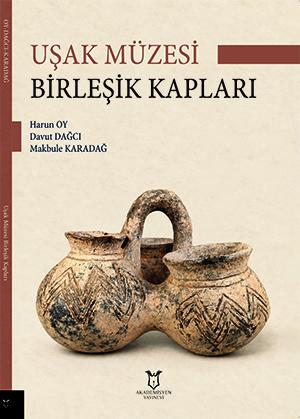
Bu çalışma, Uşak Müzesi koleksiyonunda kayıtlı kırk adet birleşik kabın kapsamlı bir tipolojik, teknolojik ve karşılaştırmalı analizini sunmaktadır. Birleşik kaplar, iki veya daha fazla ayrı kabın omuz veya göbek kısmından birleştirilerek tek bir gövde haline getirilmesiyle oluşturulan, tipik olarak tek bir sepet kulpuyla taçlandırılmış, kendine özgü bir seramik form sınıfıdır. Bilimsel literatürde çeşitli isimlerle bilinen - kompozit kaplar, ikiz kaplar, çift kaplar, üçlü kavanozlar, çok bölmeli kaplar, birleşik kaplar - bu formlar, Anadolu'daki Erken Tunç Çağı (EBD) repertuarının en teknik açıdan zorlu ve sembolik olarak önemli seramik türlerinden birini temsil etmektedir. Zanaat uzmanlaşması, ritüel uygulama ve bölgeler arası kültürel etkileşimin göstergeleri olarak önemlerine rağmen, bu form türünün müze koleksiyonlarına özel olarak ayrılmış sistematik bilimsel çalışmalar oldukça azdır. Bu çalışma, Uşak Müzesi koleksiyonunu ilk kez birleşik bir külliyat olarak bilimsel kayıtlara sunarak, titiz tipolojik sınıflandırma, makroskopik doku analizi, dekoratif çalışma, karşılaştırmalı bağlamlandırma ve fonksiyonel yorumlama yoluyla inceleyerek bu boşluğu doldurmayı amaçlamaktadır. Uşak bölgesi, Batı Anadolu, Orta Anadolu ve Ege küresinin kültürel arayüzünde yer alan İç Batı Anadolu'da stratejik olarak önemli bir konumdadır. Bu coğrafi geçiş karakteri, bölgeden elde edilen seramik topluluklarında doğrudan ve tutarlı bir şekilde yansıtılmaktadır. Uşak ve hinterlandı, en azından MÖ 4. binyılın sonlarından beri Batı Türkiye'nin daha geniş Bronz Çağı kültürel ağlarına entegre edilmişti ve burada incelenen birleşik kaplar, bu entegrasyonun en etkileyici maddi ifadeleri arasındadır. Uşak Müzesi 1970 yılında açılmış olup bugün Paleolitik dönemden Bizans dönemine kadar uzanan yaklaşık 45.643 eserden oluşan bir envantere sahiptir ve bu eserlerin 12.671'i seramik kaplardır. Burada incelenen birleşik kaplar koleksiyonu, 1968 ile 2019 yılları arasında, çoğunlukla özel kişilerden satın alma yoluyla ve daha az sayıda durumda da el koyma yoluyla elde edilmiştir. Parçaların hiçbiri kontrollü stratigrafik kazıdan elde edilmediğinden, kesin buluntu yerleri bilinmemektedir. Bununla birlikte, topluluğun biçimsel ve teknik homojenliği ve belgelenmiş edinim geçmişi temelinde, kapların Uşak bölgesi ve çevresinden kaynaklandığı oldukça muhtemel kabul edilmektedir. Stratigrafik verilerin yokluğu, tüm kronolojik değerlendirmelerin, Anadolu genelindeki kazı alanlarından iyi tarihlendirilmiş topluluklarla çapraz referanslı karşılaştırmalı tipolojik analiz yoluyla yapıldığı anlamına gelir. Bu çalışmada kullanılan metodoloji, kırk kabın tamamının doğrudan makroskobik incelemesine dayanmaktadır. Her bir nesne için, genel yükseklik, her bir bölmenin ağız çapı ve ağız ve tabandaki duvar kalınlığı dahil olmak üzere ölçümler sistematik olarak kaydedilmiştir. Kumaş ve astar renkleri, Munsell Toprak Renk Tablosu (2009 revize edilmiş baskı, 2015 üretimi) kullanılarak belirlendi. Teknik çizimler, siyah-beyaz çizimler, yarım kesit profilleri ve plan görünümleri kullanılarak standart arkeolojik çizim kurallarına uygun olarak üretildi. Tipolojik sınıflandırma, birleştirilmiş oda sayısı, bağlantı şekli, gövde formu, sap konfigürasyonu ve kenar morfolojisi gibi çoklu yapısal kriterlere dayanarak geliştirildi ve basit niceliksel ayrımın ötesine geçen çok boyutlu bir şema ortaya koydu. Kırk kap, birleştirilmiş oda sayısına göre üç ana tipolojik gruba ayrıldı. Tip 1 olarak adlandırılan ilk grup, dörtlü birleştirilmiş bir kabı temsil eden tek bir örnekten oluşmaktadır (Katalog No. 1; koleksiyonun %2,5'i). Bu kap, minyatür bir dördüncü kabın eklendiği üç ana küresel gövdeden oluşmaktadır. Odalar gövde kısmından birleştirilmiş olup, bütünün üzerinde sepet şeklinde bir sap bulunmaktadır. Alışılmadık bir şekilde, bir bölmenin hem sapı hem de karşı kenarı asma delikleriyle delinmiştir; bu da kabın kullanım sırasında asılmak veya bağlanmak üzere tasarlandığını göstermektedir. İkinci ve açık ara en kalabalık grup, otuz dört adet üçlü birleşik kaptan ( %85) oluşan Tip 2'dir. Bu grup içinde daha fazla alt bölümleme gözlemlenmektedir: Tip 2a, üç bölmenin de biçimsel olarak aynı olduğu, benzer kenar çaplarına ve aynı gövde profillerine sahip kapları (yirmi örnek) kapsarken, Tip 2b, iki bölmenin benzer boyutlara sahip olduğu, üçüncüsünün ise belirgin şekilde daha dar ve uzun silindirik bir boyuna sahip olduğu kapları (on dört örnek) ifade etmektedir. Üçlü formun ezici hakimiyeti -tüm koleksiyonun %85'ini temsil etmektedir- bu konfigürasyonun standartlaştırılmış, bölgesel olarak tercih edilen bir form olduğunu güçlü bir şekilde düşündürmektedir.
This study presents a comprehensive typological, technological, and comparative analysis of forty conjoined vessels registered in the collection of the Uşak Museum. Conjoined vessels are a distinctive class of ceramic form created by joining two or more individual containers into a single unified body, connected at the shoulder or belly and typically surmounted by a single basket handle. Known in the scholarly literature under various designations - composite vessels, twin vessels, double vessels, triple jars, multi-chambered vessels, conjoined vessels - these forms represent one of the most technically demanding and symbolically significant ceramic types of the Early Bronze Age (EBA) repertoire in Anatolia. Despite their importance as indicators of craft specialisation, ritual practice, and inter-regional cultural interaction, systematic scholarly studies dedicated exclusively to museum collections of this form type remain scarce. The present work aims to address this gap by introducing the Uşak Museum collection to the scientific record for the first time as a unified corpus, examined through rigorous typological classification, macroscopic fabric analysis, decorative study, comparative contextualisation, and functional interpretation. The Uşak region occupies a strategically significant position in Inner Western Anatolia, situated at the cultural interface of Western Anatolia, Central Anatolia, and the Aegean sphere. This geographical transitional character is directly and consistently reflected in the ceramic assemblages recovered from the region. Uşak and its hinterland had been integrated into the broader Bronze Age cultural networks of western Turkey since at least the late fourth millennium BCE, and the conjoined vessels examined here are among the most eloquent material expressions of that integration. The Uşak Museum itself was opened in 1970 and today holds a total inventory of approximately 45,643 artefacts spanning the Palaeolithic through the Byzantine period, with 12,671 of those objects being ceramic vessels. The collection of conjoined vessels studied here was assembled between 1968 and 2019, acquired primarily through purchase from private individuals and, in a smaller number of cases, through confiscation. Because none of the pieces derive from controlled stratigraphic excavation, their precise find spots are unknown. It is considered highly probable, however, on the basis of the formal and technical homogeneity of the assemblage and the documented acquisition history, that the vessels originate from the Uşak region and its immediate environs. The absence of stratigraphic data means that all chronological assessments have been conducted through comparative typological analysis, cross-referenced against well-dated assemblages from excavated sites across Anatolia. The methodology employed in this study is based on direct macroscopic examination of all forty vessels. Measurements were recorded systematically for each object, including overall height, rim diameters of each individual chamber, and wall thickness at the rim and base. Fabric and slip colours were determined using the Munsell Soil Color Chart (2009 revised edition, 2015 production). Technical drawings were produced in accordance with standard archaeological illustration conventions, employing black-and-white line drawing with half-section profiles and plan views. The typological classification was developed on the basis of multiple structural criteria - number of joined chambers, mode of connection, body form, handle configuration, and rim morphology - resulting in a multi-dimensional scheme that goes beyond simple quantitative distinction. The forty vessels were classified into three principal typological groups according to the number of joined chambers. The first group, designated Type 1, consists of a single example representing a quadruple conjoined vessel (Cat. No. 1; 2.5% of the collection). This vessel is composed of three principal spherical bodies to which a miniature fourth container is attached. The chambers are joined at the belly, and the ensemble is surmounted by a basket handle. Unusually, both the handle and the opposing rim of one chamber are pierced by suspension holes, indicating that the vessel was designed to be hung or tied in place during use. The second and by far the most numerous group is Type 2, comprising thirty-four triple conjoined vessels (85%). Within this group a further subdivision is observed: Type 2a encompasses vessels in which all three chambers are formally uniform, with similar rim diameters and identical body profiles (twenty examples), while Type 2b designates vessels in which two chambers share similar dimensions while the third is distinctly narrower and has an elongated cylindrical neck (fourteen examples). The overwhelming dominance of the triple form — representing 85% of the entire collection — strongly suggests that this configuration was the standardised, regionally preferred production type in the Uşak area during the Early Bronze Age, and that its production was guided by an established craft tradition with consistent formal conventions. The third group, Type 3, comprises five double conjoined vessels (12.5%) and is the most morphologically diverse category. It is subdivided into Type 3a, consisting of two spouted (beak-mouthed) forms with basket handles and, in one case, four footed legs (Cat. Nos. 36–37); Type 3b, comprising two necked globular forms, one with a basket handle and one with plastic knob decoration and four feet (Cat. Nos. 38–39); and Type 3c, a single miniature example formed by joining two small cups with vertical handles (Cat. No. 40). The formal variety displayed within the double vessel group, despite its small number, indicates that this category was not subject to the same degree of standardisation as the triple form and may reflect a wider range of functional intentions or regional influences. All forty vessels in the collection were produced entirely by hand. No wheel-made example is present. Individual chambers, basket handles, and connecting elements were modelled separately from clay and joined while still in a plastic, leather-hard state, a procedure requiring considerable skill in calculating shrinkage rates, maintaining proportional symmetry across multiple chambers, and ensuring structural integrity at the joints during drying and firing. The consistency of wall thicknesses across the collection - averaging approximately 0.5 cm at the rim, with a slight increase toward the base - indicates that despite the absence of standardised moulds, production was guided by an accumulated practical knowledge that produced reliably similar results. The clay fabrics are generally of medium-to-fine quality with well-levigated paste. The most characteristic petrographic feature of the collection is the near-universal presence of mica temper: thirty-nine of the forty vessels contain mica inclusions of varying density, while lime temper was identified alongside mica in two examples, and a single vessel has a non-tempered, fully levigated fabric. The use of mica as a primary temper agent is a defining characteristic of the EBA grey-black metallic ware tradition of Western Anatolia and directly links the Uşak collection to the broader regional production network centred on the Beycesultan and Yortan assemblages. The overwhelming majority of vessels - thirty-four of forty, constituting 84% of the collection - were fired in a reducing (oxygen-depleted) atmosphere, producing the grey-to-black, visually metallic surfaces that characterise EBA II–III Western Anatolian prestige ceramics. The reducing technique, which required controlled kiln management and deliberate manipulation of the firing atmosphere, is itself an indicator of advanced craft knowledge and has been associated with the deliberate imitation of metal vessel aesthetics. Burnishing is attested on thirty-six of the forty examples, applied before firing to close surface pores, enhance water resistance, and create a smooth, reflective finish that complements the grey-black colouration. Slip and fabric colours are largely consistent within individual vessels, indicating carefully controlled production conditions. Surface decoration is a prominent feature of the collection. Thirty-eight of the forty vessels carry ornament; only two triple conjoined vessels are entirely undecorated (Cat. Nos. 15 and 35). The dominant decorative technique is incised groove and channel ornament, applied to nearly the entire collection and present in virtually all vessel categories. The grooves were executed before firing, when the clay had reached a leather-hard consistency, by drawing a blunt-tipped implement across the surface. Compositions include vertical groove bands running from shoulder to base - the most common arrangement, which accentuates the globular form of the chambers - as well as diagonal grooves, horizontal bands, herringbone patterns, hatched lozenges, zigzag bands, and crosshatched panels within defined registers. Decoration extends from the vessel body onto the basket handles, where vertical, diagonal, and transverse groove patterns create additional visual complexity. The richest decorated examples (Cat. Nos. 1, 2, 4, 6–7, 11–12, 16–18, 20–21, 23–28, 30, 36–37) employ multiple groove motifs in combination, with different patterns applied to individual chambers, creating a visually dynamic and heterogeneous surface that is among the most accomplished expressions of EBA incised ceramic decoration known from Inner Western Anatolia. Plastic relief decoration - small applied knobs and lugs - appears on five vessels (Cat. Nos. 2, 18, 34, 39, and the distinctive example Cat. No. 39, which carries six large bosses arranged in pairs on the two chamber bodies). Impressed decoration was identified on two vessels (Cat. Nos. 3 and 21), applied in combination with groove ornament and confined to the basket handle surface. Particularly noteworthy from a technical and aesthetic standpoint are two vessels (Cat. Nos. 5 and 8) on which the incised grooves are filled with a white inlay material - powdered limestone mixed with water or a similar binder - creating a striking chromatic contrast between the dark, burnished grey-black ground and the white-filled motifs. This incrustation technique, also known from the Yortan Cemetery assemblage and from the triple conjoined vessel found in situ at the Denizli-Laodikeia Western Necropolis, is a relatively rare but regionally significant decorative practice that heightens both the visual impact and the symbolic resonance of the vessels. Chronological assignment of the collection rests on comparative analysis with well-stratified assemblages from across Anatolia. The majority of the vessels - the quadruple example and most of the triple group - are assigned to EBA I–II (approximately 3200–2700 BCE), principally on the basis of their grey-black reducing-fired fabrics with mica temper, consistent wall thicknesses, globular chamber forms with outturned rims, and close formal and technical parallels with vessels from Beycesultan levels XIX–XVII and with the Yortan Cemetery assemblage, both of which are securely dated to EBA I–II. A subset of the triple vessels — those with red or brown slipped surfaces - is attributed to EBA II (approximately 2900–2700 BCE), reflecting the gradual introduction of oxidising-fired wares into the Western Anatolian ceramic repertoire during this period. The five double conjoined vessels, which display the greatest morphological diversity and include both grey-black and brown/red slipped examples, are assigned to EBA II–III (approximately 2700–2000 BCE) on the basis of their formal characteristics and slipping practices. The single miniature double cup (Cat. No. 40), distinguished by its red slip, vertical handles, extremely thin walls (0.3 cm), and formal similarities to EBA III cup forms known from Troia and related assemblages, is attributed to EBA III (approximately 2400–2000 BCE). The collection was examined within a broad comparative framework that encompasses all major conjoined vessel assemblages documented from Anatolia and the adjacent Aegean region. The most direct and numerous parallels were identified at Beycesultan in the Büyük Menderes valley, the geographically closest major excavated site to Uşak. The EBA levels at Beycesultan have yielded triple conjoined vessels with mica-tempered, grey-black burnished fabrics and vertical groove decoration that match the Uşak examples in fabric, formal profile, and ornamental vocabulary with exceptional precision, confirming that the two sites participated in a shared regional production tradition. The Yortan Cemetery in the Balıkesir–Manisa region of Northwestern Anatolia constitutes the second major reference point. The triple conjoined vessels of Yortan Shape XV - formed by joining three globular jars under a single basket handle - are essentially identical to the dominant Type 2 forms in the Uşak collection, differing only in minor details of handle form and groove composition. The Yortan parallels are especially significant because they situate the Uşak examples within a funerary assemblage context, supporting the interpretation of the vessels as grave goods. Further significant comparisons were drawn with conjoined vessels from Troia (where D31 form conjoined vessels appear in levels II onward), Poliochni on the island of Lemnos (Giallo period), Baklatepe near İzmir (EBA I), Çeşme-Bağlararası (Late Bronze Age triple bowl), the Denizli-Laodikeia Western Necropolis (EBA II pithos burial), Denizli-Karahisar Höyük, Seyitömer Höyük near Kütahya (EBA III, where conjoined vessels include mould-made examples - a production technique absent from the Uşak collection), Karataş-Semayük in Lycia (EBA II double vessel), Mersin Yumuktepe (Chalcolithic and EBA examples), Kazanlı Höyük in Cilicia, and Tarsus-Gözlükule (EBA II–III assemblage including double, triple, and quadruple forms). This geographically extensive distribution - from the Aegean islands in the west to Cilicia in the southeast, and from the Black Sea hinterland in the north to the Taurus piedmont in the south - demonstrates that the conjoined vessel tradition was a widely shared cultural phenomenon during the EBA, rooted in Western Anatolia but disseminated across much of the peninsula through sustained trade, gift exchange, and the movement of craft specialists. The Uşak region, positioned at the convergence of Inner Western Anatolian, Western Anatolian, and Central Anatolian cultural zones, functioned as a significant node within this interaction network, receiving, mediating, and transmitting ceramic traditions across a broad cultural frontier. The functional interpretation of the Uşak conjoined vessels points consistently toward ritual and ceremonial rather than domestic use. Several lines of evidence converge on this conclusion. First, the individual chambers of all vessels in the collection are sealed from one another; there is no internal communication between chambers, which means the vessels cannot function as pouring devices in the conventional sense and that any contents of individual chambers would remain separated. This structural feature suggests that the vessels were designed for the simultaneous presentation of distinct substances - most probably sacred liquids such as water, wine, and oil - rather than for the mixing or decanting of fluids. Second, the small standardised chamber volumes (typically 8–13 cm in overall height, with rim diameters of 4–7 cm) are incompatible with large-scale domestic storage or cooking functions; they are, however, entirely consistent with the controlled presentation of small quantities of ritually significant substances. Third, the absence of any use-wear traces - burning, encrustation, surface abrasion — on the vessel surfaces is inconsistent with repeated domestic use and suggests instead that the vessels were either used rarely under carefully controlled conditions or reserved entirely for display and ceremonial deposition. Fourth, the high investment of technical skill and the rich, carefully composed decorative programmes applied to the vessels - characteristics atypical of utilitarian household wares - indicate that these objects were produced for contexts in which aesthetic presentation and symbolic communication were primary considerations. Fifth, and most compellingly, formally and technically identical vessels are consistently found in funerary contexts at Yortan and Laodikeia, where they appear as grave offerings deposited alongside the deceased, strongly suggesting that the Uşak examples — though acquired without documented find contexts - participated in the same funerary and ritual tradition. The basket handles, which allow the vessels to be carried comfortably with one hand, and the suspension holes identified on two examples (Cat. Nos. 1 and 2), indicate that the vessels were also designed to be displayed, hung, or transported during ceremonies. On the basis of all available evidence, the Uşak conjoined vessels are interpreted as multi-purpose ritual objects that could function as libation containers in living ceremonial contexts - presented to deities or ancestors during offerings involving water, wine, oil, or other sacred liquids - and as prestigious grave goods deposited in mortuary contexts as part of beliefs concerning provisions for the afterlife. The forty conjoined vessels in the Uşak Museum constitute a coherent, technically accomplished, and archaeologically significant assemblage that substantially enriches the scholarly understanding of Early Bronze Age ceramic production and ritual practice in Inner Western Anatolia. The typological homogeneity of the collection - overwhelmingly dominated by the triple-chambered form with basket handle, grey-black reducing-fired fabric, mica temper, and incised groove decoration - places it firmly within the EBA I–III continuum and documents a strong, sustained craft tradition deeply rooted in the Beycesultan and Yortan cultural orbit. The consistency of production standards across vessels acquired over a span of more than fifty years further suggests that the assemblage reflects a geographically focused production zone within the Uşak hinterland, characterised by the continuous transmission of specialist knowledge across generations of potters. At the same time, the formal and technical diversity visible within the double vessel group, the occasional use of incrustation and plastic decoration, and the presence of red-slipped examples attest to the receptiveness of Uşak region potters to influences from the Western Anatolian coast, the Inner Anatolian plateau, and the broader EBA interaction sphere. This study introduces the collection to the scientific literature for the first time as a systematically documented corpus and provides a reliable typological, chronological, and comparative foundation for future research. Petrographic, chemical, and isotopic analyses of the vessel fabrics would substantially advance understanding of production centres, raw material procurement zones, and possible exchange of finished vessels across the region - research avenues that the present work identifies as priorities for the next phase of investigation into Early Bronze Age ceramic networks in Inner Western Anatolia.
Referanslar
Ahrens, Alexander-Manuelli, Federico, “Observations on John Garstang’s Excavations at Kazanlı Höyük (Cilicia) in 1937”, Altorientalische Forschungen, C. 44, S. 2, 2017, s. 187-200.
Akıllı, Nihal, “A Collection of Early Bronze Age Pottery from Akhisar Museum”, Cedrus, XIII, 2025, s. 1-29.
Bernabò-Brea, Luigi, Poliochni: Città Preistorica nell’isola di Lemnos (Vol. II, 2. Tavole), L’Erma di Bretschneider, Roma 1976.
Bilgen, A. Nejat, Bilgen, Zeynep, Çakıroğlu, Semra, “Erken Tunç Çağı yerleşimi (V. Tabaka)”,
Seyitömer Höyük I, ed. A. Nejat Bilgen, Arkeoloji ve Sanat Yayınları, Ankara 2015, s. 119-186. Blegen, Carl W, Caskey, John L, Rawson, Marion, Troy I: General Introduction; The First and Second
Settlements, Princeton University Press, Princeton 1950.
Blegen, Carl W, Caskey, John L, Rawson, Marion, Troy II: The Third, Fourth, and Fifth Settlements, Princeton University Press, Princeton 1951.
Böyükulusoy, Kadir, Bakla Tepe Erken Tunç Çağı I Seramiğinin Ege Arkeolojisindeki Yeri ve Önemi, Hacettepe Üniversitesi Sosyal Bilimler Enstitüsü, Yayınlanmamış Doktora Tezi, Ankara 2016.
Collignon, Maxime, Note sur les fouilles de M. Paul Gaudin dans la Nécropole de Yortan, en Mysie, Alphonse Picard et Fils, Paris 1901, s. 1-8.
Dönmez, Şevket, “M. Baha Tanman Koleksiyonu Protohistorik Çağ Çanak-Çömleği”, Anadolu Araştırmaları, 14, 1996, s. 231-255.
Duru, Refik, MÖ 8000’den M.S. 2000’e Burdur-Antalya Bölgesinin Altıbin Yılı, Suna ve İnan Kıraç Akdeniz Medeniyetleri Araştırma Enstitüsü, İstanbul 2008.
Efe, Turan, “Pottery Distribution within the Early Bronze Age of Western Anatolia and Its Implications upon Cultural, Political (and Ethnic?) Entities”, Archaeological Essays in Honour of Homo Amatus: Güven Arsebük İçin Armağan Yazılar, ed. Mihriban Özbaşaran, Oğuz Tanındı, Ahmet Boratav, Ege Yayınları, İzmir 2003, s. 87-103.
Eslick, Christine, Elmalı-Karataş I: The Neolithic and Chalcolithic Periods: Bağbaşı and Other Sites, Bryn Mawr College, Pennsylvania 1992.
Garstang, John, Prehistoric Mersin: Yümük Tepe in Southern Turkey, Clarendon Press, Oxford 1953. Goldman, Hetty, “Excavations at Gözlükule, Tarsus, 1938”, American Journal of Archaeology, C. 44, S. 1, 1940, s. 60-86.
Goldman, Hetty, Excavations at Gözlükule, Tarsus: Vol. II. Plates. from the Neolithic through the Bronze Age, Princeton University Press, Princeton 1956.
Höckmann, Olaf, “Frühe Funde aus Anatolien im Museum Altenessen, Essen, und in Privatbesitz”,
Mitteilungen des Deutschen Archäologischen Instituts, Abteilung Istanbul, 32, 1982, s. 97-136. Kâmil, Turhan, Yortan Cemetery in the Early Bronze Age of Western Anatolia, British Archaeological Reports, Oxford 1982.
Kılıç, Atilla Cengiz, “İngirgen (Redüksiyon) Ortamda Sırsız Seramik Pişirim Teknikleri ve Uygulama Yöntemleri”, Ankara Üniversitesi Güzel Sanatlar Fakültesi Dergisi, C. 5, S. 1, 2023, s. 360-378.
Kuru, Asuman, “İçbatı Anadolu’daki Seyitömer Höyüğü’nün Erken Tunç Çağ III Birleşik Kapları”, Uluslararası Amisos Dergisi, C. 1, S. 1, 2016, s. 135-146.
Lloyd, Seton-Mellaart, James, Beycesultan: Vol. I. The Chalcolithic and Early Bronze Age Levels, The British Institute of Archaeology at Ankara, Ankara 1962.
Mellaart, James, Excavations at Hacılar, Occasional Publications of the British Institute of Archaeology at Ankara, Edinburgh University Press, Edinburgh 1970.
Mellink, Machteld J.-Angel, J. Lawrence, “Excavations at Karataş-Semayük in Lycia, 1965”, American Journal of Archaeology, C. 70, S. 3, 1966, s. 245-257.
Mellink, Machteld J., “Excavations at Karataş-Semayük in Lycia, 1968”, American Journal of Archaeology, C. 73, S. 3, 1969, s. 319-331.
Munsell Soil Color Chart, 2009 Year Revised 2015 Production, Baltimore, 2015.
Oğuzhanoğlu, Umay, “Laodikeia’dan Batı Anadolu Erken Tunç Çağı’na Yeni Katkılar”, 10. Yılında Laodikeia (2003-2013 Yılları), ed. Celal Şimşek, Ege Yayınları, İzmir 2014, s. 71-86.
Oy, Harun, İlk Tunç Çağında Uşak I: Merkez, Banaz ve Sivaslı İlçeleri, Gece Kitaplığı, Ankara 2018. Oy, Harun, “An Important Settlement Related to Yortan Culture in Central West Anatolia: Kızılkabaağaç, Eşme, Uşak”, Journal of Ancient History and Archaeology, C. 10, S. 4, 2023, s. 57-82.
Oy, Harun, İlk Tunç Çağında Uşak II: Karahallı, Ulubey ve Eşme İlçeleri, Akademisyen Kitabevi, Ankara 2024.
Oy, Harun, “Bronze Age Settlement and Cemetery in the Ulubey Canyon in Inland Western Anatolia: Mehmet Bey Dere, Uşak, Turkey”, Anadolu Araştırmaları-Anatolian Research, 30, 2024, s. 67-92.
Özdoğan, Mehmet, “The Making of the Early Bronze Age in Anatolia”, Old World: Journal of Ancient Africa and Eurasia, C. 3, S. 1, 2023, s. 1-58.
Schliemann, Heinrich, Ilios: The City and Country of the Trojans: The Results of Researches and Discoveries on the Site of Troy and throughout the Troad in the Years 1871-72-73-78-79, Harper & Brothers, New York 1880.
Schmidt, Hubert, Heinrich Schliemann’s Sammlung Trojanischer Altertümer, Georg Reimer, Berlin 1902.
Şahoğlu, Vasıf, Böyükulusoy, Ümit Çayır, Erbil, Yiğit Hayati, Erkanal, Hayat, Tuğcu, İrfan, “2012 Yılı Çeşme-Bağlararası Kazıları”, Anadolu/Anatolia, 40, 2014, s. 179-194.
Warner, Jayne L. Elmalı-Karataş II: The Early Bronze Age Village of Karataş. Bryn Mawr College Archaeological Monographs, Pennsylvania 1994.
Yalman, Nurcan, Özdöl, Serap, “Pottery Report”, Çatalhöyük 2003 Archive Report, Çatalhöyük Research Project, 2003. http://www.catalhoyuk.com/archive_reports/2003/ar03_15.html
Yaylalı, Serap, Akdeniz, Engin, “Aphrodisias Müzesi’ndeki Karahisar Buluntuları”, Olba, VI, 2002, s. 1-40.
Yiğitpaşa, Davut, Çelik, M. Uğur, “Samsun Müzesi’nde Bulunan Bir Grup Batı Anadolu Erken Tunç Çağı Seramiği”, Tokat Gaziosmanpaşa Üniversitesi Sosyal Bilimler Araştırmaları Dergisi, C. 16, S. 1, 2021, s. 13-28.
Yurtsever-Beyazıt, Aslıhan, “Burdur-Antalya Bölgesi’nde Bulunmuş Olan Geç Kalkolitik ve İlk Tunç Çağlarına Ait Bir Grup Ayrışık Kap Üzerine Gözlemler”, Colloquium Anatolicum, X, 2011, s. 277-292.
İndir
Yayınlanan
Lisans
LisansBu İnternet Sitesi içeriğinde yer alan tüm eserler (yazı, resim, görüntü, fotoğraf, video, müzik vb.) Akademisyen Kitabevine ait olup, 5846 sayılı Fikir ve Sanat Eserleri Kanunu ve 5237 sayılı Türk Ceca Kanunu kapsamında korunmaktadır. Bu hakları ihlal eden kişiler, 5846 sayılı Fikir ve Sanat eserleri Kanunu ve 5237 sayılı Türk Ceza Kanununda yer alan hukuki ve cezai yaptırımlara tabi olurlar. Yayınevi ilgili yasal yollara başvurma hakkına sahiptir.
