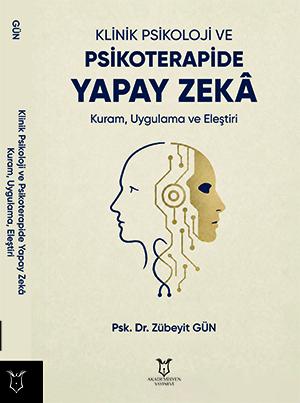
Klinik Psikoloji ve Psikoterapide Yapay Zekâ: Kuram, Uygulama, Eleştiri
Özet
-
Referanslar
Abd-Alrazaq, A. A., Rababeh, A., Alajlani, M., Bewick, B. M. ve Househ, M. (2020). Effectiveness and safety of using chatbots to improve mental health: Systematic review and meta-analysis. Journal of Medical Internet Research, 22(7), e16021. https://doi.org/10.2196/16021
Amerikan Psikoloji Birliği. (2025). Use of generative AI chatbots and wellness applications for mental health. https://www.apa.org/topics/artificial-intelligence-machine-learning/health-advisory-chatbots-wellness-apps
Andersson, G. ve Titov, N. (2014). Advantages and limitations of internet-based interventions for common mental disorders. World Psychiatry, 13(1), 4–11. https://doi.org/10.1002/wps.20083
Andersson, G., Carlbring, P., Titov, N. ve Lindefors, N. (2019). Internet interventions for adults with anxiety and mood disorders: A narrative umbrella review of recent meta-analyses. The Canadian Journal of Psychiatry, 64(7), 465–470. https://doi.org/10.1177/0706743719839381
Andrews, J. A., Brown, L. J. E., Hawley, M. S. ve Astell, A. J. (2019). Older adults’ perspectives on using digital technology to maintain good mental health: Interactive group study. Journal of Medical Internet Research, 21(2), e11694. https://doi.org/10.2196/11694
Arribas, M., de Micheli, A., Krakowski, K., Stahl, D., Correll, C. U., Young, A. H., Andreassen, O. A., Vieta, E., Arango, C., McGuire, P., Oliver, D. ve Fusar-Poli, P. (2026). Joint detection of risk for psychotic disorders or bipolar disorders in clinical practice in the UK: Development and validation of a clinical prediction model. The Lancet Psychiatry, 13(1), 14–23. https://doi.org/10.1016/S2215-0366(25)00307-4
Atkins, D. C., Steyvers, M., Imel, Z. E. ve Smyth, P. (2014). Scaling up the evaluation of psychotherapy: Evaluating motivational interviewing fidelity via statistical text classification. Implementation Science, 9, 49. https://doi.org/10.1186/1748-5908-9-49
Avrupa Parlamentosu ve Avrupa Birliği Konseyi. (2016). Regulation (EU) 2016/679 of the European Parliament and of the Council (General Data Protection Regulation). Official Journal of the European Union, L 119, 1–88. https://eur-lex.europa.eu/eli/reg/2016/679/oj
Avrupa Parlamentosu ve Avrupa Birliği Konseyi. (2024). Regulation (EU) 2024/1689 laying down harmonised rules on artificial intelligence (Artificial Intelligence Act). Official Journal of the European Union. https://eur-lex.europa.eu/eli/reg/2024/1689/oj/eng
Bai, R., Xiao, L., Guo, Y., Zhu, X., Li, N., Wang, Y., Chen, Q., Feng, L., Wang, Y., Yu, X., Wang, C., Hu, Y., Liu, Z., Xie, H. ve Wang, G. (2021). Tracking and monitoring mood stability of patients with major depressive disorder by machine learning models using passive digital data: Prospective naturalistic multicenter study. JMIR mHealth and uHealth, 9(3), e24365. https://doi.org/10.2196/24365
Baidal, M., Derner, E. ve Oliver, N. (2025). Guardians of trust: Risks and opportunities for LLMs in mental health. İçinde Proceedings of the Fourth Workshop on NLP for Positive Impact (ss. 11–22). Association for Computational Linguistics. https://doi.org/10.18653/v1/2025.nlp4pi-1.2
Ballı, M., Ercan Doğan, A. ve Yapıcı Eser, H. (2024). Psikiyatri hizmetlerinin yapay zekâ ile geliştirilmesi: Fırsatlar ve zorluklar. Türk Psikiyatri Dergisi, 35(4), 317–328. https://doi.org/10.5080/u27604
Barnett, I., Torous, J., Staples, P., Sandoval, L., Keshavan, M. ve Onnela, J.-P. (2018). Relapse prediction in schizophrenia through digital phenotyping: A pilot study. Neuropsychopharmacology, 43(8), 1660–1666. https://doi.org/10.1038/s41386-018-0030-z
Barocas, S., Hardt, M. ve Narayanan, A. (2023). Fairness and machine learning: Limitations and opportunities. MIT Press.
Baumel, A., Edan, S. ve Kane, J. M. (2019). Is there a trial bias impacting user engagement with unguided e-mental health interventions? Internet Interventions, 17, 100256. https://doi.org/10.1016/j.invent.2019.100256
Beauchamp, T. L. ve Childress, J. F. (2019). Principles of biomedical ethics (8th ed.). Oxford University Press.
Bedi, G., Carrillo, F., Cecchi, G. A., Fernández Slezak, D., Sigman, M., Mota, N. B., Ribeiro, S., Javitt, D. C., Copelli, M. ve Corcoran, C. M. (2015). Automated analysis of free speech predicts psychosis onset in high-risk youths. NPJ Schizophrenia, 1(1), 15030. https://doi.org/10.1038/npjschz.2015.30
Bender, E. M., Gebru, T., McMillan-Major, A. ve Shmitchell, S. (2021). On the dangers of stochastic parrots: Can language models be too big? İçinde Proceedings of the 2021 ACM Conference on Fairness, Accountability, and Transparency (ss. 610–623). Association for Computing Machinery. https://doi.org/10.1145/3442188.3445922
Bion, W. R. (1962). Learning from experience. Heinemann.
Bişkin, O. T., Candemir, C. ve Selver, M. A. (2025). Detection of bipolar disorder and schizophrenia employing Bayesian-optimized Grad-CAM-driven deep learning. Applied Sciences, 15(4), 1717. https://doi.org/10.3390/app15041717
Blease, C. ve Rodman, A. (2025). Generative artificial intelligence in mental healthcare: An ethical evaluation. Current Treatment Options in Psychiatry, 12, Article 5. https://doi.org/10.1007/s40501-024-00340-x
Bordin, E. S. (1979). The generalizability of the psychoanalytic concept of the working alliance. Psychotherapy: Theory, Research & Practice, 16(3), 252–260. https://doi.org/10.1037/h0085885
Borghouts, J., Eikey, E., Mark, G., De Leon, C., Schueller, S. M., Schneider, M., Stadnick, N., Zheng, K., Mukamel, D. ve Sorkin, D. H. (2021). Barriers to and facilitators of user engagement with digital mental health interventions: Systematic review. Journal of Medical Internet Research, 23(3), e24387. https://doi.org/10.2196/24387
Bouguettaya, A., Stuart, E. M. ve Aboujaoude, E. (2025). Racial bias in AI-mediated psychiatric diagnosis and treatment: A qualitative comparison of four large language models. npj Digital Medicine, 8, Article 332. https://doi.org/10.1038/s41746-025-01746-4
Bowlby, J. (1988). A secure base: Parent-child attachment and healthy human development. Basic Books.
Brown, J. E. H. ve Halpern, J. (2021). AI chatbots cannot replace human interactions in the pursuit of more inclusive mental healthcare. SSM - Mental Health, 1, 100017. https://doi.org/10.1016/j.ssmmh.2021.100017
Brown, T. B., Mann, B., Ryder, N., Subbiah, M., Kaplan, J. D., Dhariwal, P., Neelakantan, A., Shyam, P., Sastry, G., Askell, A., Agarwal, S., Herbert-Voss, A., Krueger, G., Henighan, T., Child, R., Ramesh, A., Ziegler, D. M., Wu, J., Winter, C., ... Amodei, D. (2020). Language models are few-shot learners. Advances in Neural Information Processing Systems, 33, 1877–1901.
Cabitza, F., Rasoini, R. ve Gensini, G. F. (2017). Unintended consequences of machine learning in medicine. JAMA, 318(6), 517–518. https://doi.org/10.1001/jama.2017.7797
Calvo, R. A., Milne, D. N., Hussain, M. S. ve Christensen, H. (2017). Natural language processing in mental health applications using non-clinical texts. Natural Language Engineering, 23(5), 649–685. https://doi.org/10.1017/S1351324916000383
Cavoukian, A. (2010). Privacy by design: The 7 foundational principles. Information and Privacy Commissioner of Ontario.
Collins, G. S., Moons, K. G. M., Dhiman, P., Riley, R. D., Beam, A. L., Van Calster, B., Ghassemi, M., Liu, X., Reitsma, J. B., van Smeden, M., Boulesteix, A.-L., Camaradou, J. C., Celi, L. A., Denaxas, S., Denniston, A. K., Glocker, B., Golub, R. M., Harvey, H., Heinze, G., … Logullo, P. (2024). TRIPOD+AI statement: Updated guidance for reporting clinical prediction models that use regression or machine learning methods. BMJ, 385, e078378. https://doi.org/10.1136/bmj-2023-078378
Corrigan, P. W., Druss, B. G. ve Perlick, D. A. (2014). The impact of mental illness stigma on seeking and participating in mental health care. Psychological Science in the Public Interest, 15(2), 37–70. https://doi.org/10.1177/1529100614531398
Council of Europe. (2024). Framework Convention on Artificial Intelligence and Human Rights, Democracy and the Rule of Law. https://www.coe.int/en/web/artificial-intelligence/the-framework-convention-on-artificial-intelligence
Cowan, T., Masucci, M. D., Gupta, T., Haase, C. M., Strauss, G. P. ve Cohen, A. S. (2022). Computerized analysis of facial expressions in serious mental illness. Schizophrenia Research, 241, 44–51. https://doi.org/10.1016/j.schres.2021.12.026
Cruz-Gonzalez, P., He, A. W.-J., Lam, E. P., Ng, I. M. C., Li, M. W., Hou, R., Chan, J. N.-M., Sahni, Y., Vinas Guasch, N., Miller, T., Lau, B. W.-M. ve Sánchez Vidaña, D. I. (2025). Artificial intelligence in mental health care: A systematic review of diagnosis, monitoring, and intervention applications. Psychological Medicine, 55, e18. https://doi.org/10.1017/S0033291724003295
Dai, H.-J., Su, C.-H., Lee, Y.-Q., Zhang, Y.-C., Wang, C.-K., Kuo, C.-J. ve Wu, C.-S. (2021). Deep learning-based natural language processing for screening psychiatric patients. Frontiers in Psychiatry, 11, 533949. https://doi.org/10.3389/fpsyt.2020.533949
Darcy, A., Daniels, J., Salinger, D., Wicks, P. ve Robinson, A. (2021). Evidence of human-level bonds established with a digital conversational agent: Cross-sectional, retrospective observational study. JMIR Formative Research, 5(5), e27868. https://doi.org/10.2196/27868
Donker, T., Griffiths, K. M., Cuijpers, P. ve Christensen, H. (2009). Psychoeducation for depression, anxiety and psychological distress: A meta-analysis. BMC Medicine, 7, 79. https://doi.org/10.1186/1741-7015-7-79
Doshi-Velez, F. ve Kim, B. (2017). Towards a rigorous science of interpretable machine learning. arXiv. https://doi.org/10.48550/arXiv.1702.08608
Dünya Sağlık Örgütü. (2021). Ethics and governance of artificial intelligence for health: WHO guidance. World Health Organization. https://www.who.int/publications/i/item/9789240029200
Dünya Sağlık Örgütü. (2022). World mental health report: Transforming mental health for all. World Health Organization. https://www.who.int/publications/i/item/9789240049338
Dünya Sağlık Örgütü. (2023). Regulatory considerations on artificial intelligence for health. World Health Organization. https://www.who.int/publications/i/item/9789240078871
Dünya Sağlık Örgütü. (2025). Ethics and governance of artificial intelligence for health: Guidance on large multi-modal models. World Health Organization. https://www.who.int/publications/i/item/9789240084759
Ebert, D. D., Van Daele, T., Nordgreen, T., Karekla, M., Compare, A., Zarbo, C., Brugnera, A., Øverland, S., Trebbi, G., Jensen, K. L., Kaehlke, F., Baumeister, H. ve Taylor, J. (2018). Internet- and mobile-based psychological interventions: Applications, efficacy, and potential for improving mental health: A report of the EFPA E-health Taskforce. European Psychologist, 23(2), 167–187. https://doi.org/10.1027/1016-9040/a000318
Erbe, D., Eichert, H.-C., Rietz, C. ve Ebert, D. D. (2017). Blending face-to-face and internet-based interventions for the treatment of mental disorders in adults: Systematic review. Journal of Medical Internet Research, 19(9), e306. https://doi.org/10.2196/jmir.6588
Esteva, A., Robicquet, A., Ramsundar, B., Kuleshov, V., DePristo, M., Chou, K., Cui, C., Corrado, G. S., Thrun, S. ve Dean, J. (2019). A guide to deep learning in healthcare. Nature Medicine, 25, 24–29. https://doi.org/10.1038/s41591-018-0316-z
Firth, J., Torous, J., Nicholas, J., Carney, R., Pratap, A., Rosenbaum, S. ve Sarris, J. (2017). The efficacy of smartphone-based mental health interventions for depressive symptoms: A meta-analysis of randomized controlled trials. World Psychiatry, 16(3), 287–298. https://doi.org/10.1002/wps.20472
Fiske, A., Henningsen, P. ve Buyx, A. (2019). Your robot therapist will see you now: Ethical implications of embodied artificial intelligence in psychiatry, psychology, and psychotherapy. Journal of Medical Internet Research, 21(5), e13216. https://doi.org/10.2196/13216
Fitzpatrick, K. K., Darcy, A. ve Vierhile, M. (2017). Delivering cognitive behavior therapy to young adults with symptoms of depression and anxiety using a fully automated conversational agent (Woebot): A randomized controlled trial. JMIR Mental Health, 4(2), e19. https://doi.org/10.2196/mental.7785
Flemotomos, N., Martinez, V. R., Chen, Z., Singla, K., Ardulov, V., Peri, R., Caperton, D. D., Gibson, J., Tanana, M. J., Georgiou, P., Van Epps, J., Lord, S. P., Hirsch, T., Imel, Z. E., Atkins, D. C. ve Narayanan, S. (2022). Automated evaluation of psychotherapy skills using speech and language technologies. Behavior Research Methods, 54(2), 690–711. https://doi.org/10.3758/s13428-021-01623-4
Floridi, L., Cowls, J., Beltrametti, M., Chatila, R., Chazerand, P., Dignum, V., Luetge, C., Madelin, R., Pagallo, U., Rossi, F., Schafer, B., Valcke, P. ve Vayena, E. (2018). AI4People—An ethical framework for a good AI society: Opportunities, risks, principles, and recommendations. Minds and Machines, 28(4), 689–707. https://doi.org/10.1007/s11023-018-9482-5
Flückiger, C., Del Re, A. C., Wampold, B. E. ve Horvath, A. O. (2018). The alliance in adult psychotherapy: A meta-analytic synthesis. Psychotherapy, 55(4), 316–340. https://doi.org/10.1037/pst0000172
Fonagy, P., Gergely, G., Jurist, E. L. ve Target, M. (2002). Affect regulation, mentalization, and the development of the self. Other Press.
Fond, G., Bulzacka, E., Boucekine, M., Schürhoff, F., Berna, F., Godin, O., Aouizerate, B., Capdevielle, D., Chereau, I., D’Amato, T., Dubertret, C., Dubreucq, J., Faget, C., Leignier, S., Lançon, C., Mallet, J., Misdrahi, D., Passerieux, C., Rey, R., ... Llorca, P. M. (2019). Machine learning for predicting psychotic relapse at 2 years in schizophrenia in the national FACE-SZ cohort. Progress in Neuro-Psychopharmacology and Biological Psychiatry, 92, 8–18. https://doi.org/10.1016/j.pnpbp.2018.12.005
Frank, J. D. ve Frank, J. B. (1991). Persuasion and healing: A comparative study (3. bs.). Johns Hopkins University Press.
Frankl, V. E. (1963). Man's search for meaning. Beacon Press.
Fulmer, R., Joerin, A., Gentile, B., Lakerink, L. ve Rauws, M. (2018). Using psychological artificial intelligence (Tess) to relieve symptoms of depression and anxiety: Randomized controlled trial. JMIR Mental Health, 5(4), e64. https://doi.org/10.2196/mental.9782
Garriga, R., Mas, J., Abraha, S., Nolan, J., Harrison, O., Tadros, G. ve Matic, A. (2022). Machine learning model to predict mental health crises from electronic health records. Nature Medicine, 28(6), 1240–1248. https://doi.org/10.1038/s41591-022-01811-5
GBD 2019 Mental Disorders Collaborators. (2022). Global, regional, and national burden of 12 mental disorders in 204 countries and territories, 1990–2019: A systematic analysis for the Global Burden of Disease Study 2019. The Lancet Psychiatry, 9(2), 137–150. https://doi.org/10.1016/S2215-0366(21)00395-3
Gelso, C. J. ve Hayes, J. A. (2007). Countertransference and the therapist's inner experience: Perils and possibilities. Lawrence Erlbaum Associates.
Gerke, S., Minssen, T. ve Cohen, G. (2020). Ethical and legal challenges of artificial intelligence-driven healthcare. In A. Bohr ve K. Memarzadeh (Eds.), Artificial intelligence in healthcare (pp. 295–336). Academic Press. https://doi.org/10.1016/B978-0-12-818438-7.00012-5
Gooding, P. ve Kariotis, T. (2021). Ethics and law in research on algorithmic and data-driven technology in mental health care: A scoping review. JMIR Mental Health, 8(6), e24668. https://doi.org/10.2196/24668
Hargittai, E. (2010). Digital na(t)ives? Variation in internet skills and uses among members of the “Net Generation.” Sociological Inquiry, 80(1), 92–113. https://doi.org/10.1111/j.1475-682X.2009.00317.x
Heinz, M. V., Mackin, D. M., Trudeau, B. M., Bhattacharya, S., Wang, Y., Banta, H. A., Jewett, A. D., Salzhauer, A. J., Griffin, T. Z. ve Jacobson, N. C. (2025). Randomized trial of a generative AI chatbot for mental health treatment. NEJM AI, 2(4), AIoa2400802. https://doi.org/10.1056/AIoa2400802
Hickey, B. A., Chalmers, T., Newton, P., Lin, C.-T., Sibbritt, D., McLachlan, C. S., Clifton-Bligh, R., Morley, J. ve Lal, S. (2021). Smart devices and wearable technologies to detect and monitor mental health conditions and stress: A systematic review. Sensors, 21(10), 3461. https://doi.org/10.3390/s21103461
Hill, E. D., Kashyap, P., Raffanello, E., Wang, Y., Moffitt, T. E., Caspi, A., Engelhard, M. ve Posner, J. (2025). Prediction of mental health risk in adolescents. Nature Medicine, 31(6), 1840–1846. https://doi.org/10.1038/s41591-025-03560-7
Hua, Y., Siddals, S., Ma, Z., Galatzer-Levy, I., Xia, W., Hau, C., Na, H., Flathers, M., Linardon, J., Ayubcha, C. ve Torous, J. (2025). Charting the evolution of artificial intelligence mental health chatbots from rule-based systems to large language models: A systematic review. World Psychiatry, 24, 383–394. https://doi.org/10.1002/wps.21352
Huckvale, K., Torous, J. ve Larsen, M. E. (2019). Assessment of the data sharing and privacy practices of smartphone apps for depression and smoking cessation. JAMA Network Open, 2(4), e192542. https://doi.org/10.1001/jamanetworkopen.2019.2542
Huckvale, K., Torous, J. ve Larsen, M. E. (2019a). Assessment of the data sharing and privacy practices of smartphone apps for depression and smoking cessation. JAMA Network Open, 2(4), e192542. https://doi.org/10.1001/jamanetworkopen.2019.2542
Huckvale, K., Venkatesh, S. ve Christensen, H. (2019b). Toward clinical digital phenotyping: A timely opportunity to consider purpose, quality, and safety. npj Digital Medicine, 2, Article 88. https://doi.org/10.1038/s41746-019-0166-1
Huys, Q. J. M., Maia, T. V. ve Frank, M. J. (2016). Computational psychiatry as a bridge from neuroscience to clinical applications. Nature Neuroscience, 19(3), 404–413. https://doi.org/10.1038/nn.4238
Imel, Z. E., Creed, T., Kious, B., Althoff, T., Atzil-Slonim, D. ve Srikumar, V. (2026). A framework for automation in psychotherapy. Current Directions in Psychological Science, 35(2), 66–76. https://doi.org/10.1177/09637214251386047
Imel, Z. E., Steyvers, M. ve Atkins, D. C. (2015). Computational psychotherapy research: Scaling up the evaluation of patient-provider interactions. Psychotherapy, 52(1), 19–30. https://doi.org/10.1037/a0036841
Inkster, B., Sarda, S. ve Subramanian, V. (2018). An empathy-driven, conversational artificial intelligence agent (Wysa) for digital mental well-being: Real-world data evaluation mixed-methods study. JMIR mHealth and uHealth, 6(11), e12106. https://doi.org/10.2196/12106
Insel, T. R. (2017). Digital phenotyping: Technology for a new science of behavior. JAMA, 318(13), 1215–1216. https://doi.org/10.1001/jama.2017.11295
Iyortsuun, N. K., Kim, S. H., Jhon, M., Yang, H. J. ve Pant, S. (2023). A review of machine learning and deep learning approaches on mental health diagnosis. Healthcare, 11(3), 285. https://doi.org/10.3390/healthcare11030285
Jacobson, N. S. ve Truax, P. (1991). Clinical significance: A statistical approach to defining meaningful change in psychotherapy research. Journal of Consulting and Clinical Psychology, 59(1), 12–19. https://doi.org/10.1037/0022-006X.59.1.12
Jacobucci, R., Shao, W., Kobrinsky, V. ve Ammerman, B. (2026). Predicting momentary suicidal ideation from smartphone screenshots using vision-language models: Prospective machine learning study. JMIR Mental Health, 13, e90581. https://doi.org/10.2196/90581
Jobin, A., Ienca, M. ve Vayena, E. (2019). The global landscape of AI ethics guidelines. Nature Machine Intelligence, 1(9), 389–399. https://doi.org/10.1038/s42256-019-0088-2
Kazdin, A. E. (2006). Evidence-based practice in psychology. American Psychologist, 61(7), 685–698. https://doi.org/10.1037/0003-066X.61.7.685
Kim, A. Y., Kim, S., Lee, J., Han, Y., Lee, H. J. ve Cho, C.-H. (2026). Smartphone-based digital phenotyping for detection of high-risk depression and anxiety in Korean community settings. Internet Interventions, 44, 100934. https://doi.org/10.1016/j.invent.2026.100934
Kişisel Verileri Koruma Kurumu. (2024). Özel nitelikli kişisel verilerin işlenmesine ilişkin rehber. https://www.kvkk.gov.tr/Icerik/8184/Ozel-Nitelikli-Kisisel-Verilerin-Islenmesine-Iliskin-Rehber
Kişisel Verileri Koruma Kurumu. (2025). Üretken yapay zekâ ve kişisel verilerin korunması rehberi (15 soruda). https://www.kvkk.gov.tr/Icerik/8547/uretken-yapay-zeka-ve-kisisel-verilerin-korunmasi-rehberi-15-soruda
Kohut, H. (1971). The analysis of the self: A systematic approach to the psychoanalytic treatment of narcissistic personality disorders. International Universities Press.
Kolding, S., Lundin, R. M., Hansen, L. ve Østergaard, S. D. (2025). Use of generative artificial intelligence (AI) in psychiatry and mental health care: A systematic review. Acta Neuropsychiatrica, 37, e37. https://doi.org/10.1017/neu.2024.50
Kooistra, L. C., Ruwaard, J., Wiersma, J. E., van Oppen, P., van der Vaart, R., van Gemert-Pijnen, J. E. W. C. ve Riper, H. (2016). Development and initial evaluation of blended cognitive behavioural treatment for major depression in routine specialized mental health care. Internet Interventions, 4, 61–71. https://doi.org/10.1016/j.invent.2016.01.003
Kulke, J. K., Fuhrmann, L. M., Berking, M., Ebert, D. D., Baumeister, H., Derfiora, A., Veldhouse, A. ve Weisel, K. K. (2025). Efficacy of standalone smartphone apps for mental health: An updated systematic review and meta-analysis. The Lancet Digital Health, 7(11), 100923. https://doi.org/10.1016/j.landig.2025.100923
Kuo, P. B., Tanana, M. J., Goldberg, S. B., Caperton, D. D., Narayanan, S., Atkins, D. C. ve Imel, Z. E. (2024). Machine-learning-based prediction of client distress from session recordings. Clinical Psychological Science, 12(3), 435–446. https://doi.org/10.1177/21677026231172694
Lee, D. Y., Kim, C., Lee, S., Son, S. J., Cho, S.-M., Cho, Y. H., Lim, J. ve Park, R. W. (2022). Psychosis relapse prediction leveraging electronic health records data and natural language processing enrichment methods. Frontiers in Psychiatry, 13, 844442. https://doi.org/10.3389/fpsyt.2022.844442
Lekadir, K., Frangi, A. F., Porras, A. R., Glocker, B., Cintas, C., Langlotz, C. P., Weicken, E., Asselbergs, F. W., Prior, F., Collins, G. S., Kaissis, G., Tsakou, G., Buvat, I., Kalpathy-Cramer, J., Mongan, J., Schnabel, J. A., Kushibar, K., Riklund, K., Marias, K., … Starmans, M. P. A. (2025). FUTURE-AI: International consensus guideline for trustworthy and deployable artificial intelligence in healthcare. BMJ, 388, e081554. https://doi.org/10.1136/bmj-2024-081554
Li, H., Zhang, R., Lee, Y.-C., Kraut, R. E. ve Mohr, D. C. (2023). Systematic review and meta-analysis of AI-based conversational agents for promoting mental health and well-being. npj Digital Medicine, 6, 236. https://doi.org/10.1038/s41746-023-00979-5
Lin, B., Bouneffouf, D., Landa, Y., Jespersen, R., Corcoran, C. ve Cecchi, G. (2025). COMPASS: Computational mapping of patient-therapist alliance strategies with language modeling. Translational Psychiatry, 15, 166. https://doi.org/10.1038/s41398-025-03379-3
Linardon, J., Cuijpers, P., Carlbring, P., Messer, M. ve Fuller-Tyszkiewicz, M. (2019). The efficacy of app-supported smartphone interventions for mental health problems: A meta-analysis of randomized controlled trials. World Psychiatry, 18(3), 325–336. https://doi.org/10.1002/wps.20673
Linardon, J., Torous, J., Firth, J., Cuijpers, P., Messer, M. ve Fuller-Tyszkiewicz, M. (2024). Current evidence on the efficacy of mental health smartphone apps for symptoms of depression and anxiety: A meta-analysis of 176 randomized controlled trials. World Psychiatry, 23(1), 139–149. https://doi.org/10.1002/wps.21183
Luxton, D. D., June, J. D. ve Kinn, J. T. (2016). Technology-based suicide prevention: Current applications and future directions. Telemedicine and e-Health, 22(8), 681–687. https://doi.org/10.1089/tmj.2015.0048
Martinez-Martin, N. ve Kreitmair, K. (2018). Ethical issues for direct-to-consumer digital psychotherapy apps: Addressing accountability, data protection, and consent. JMIR Mental Health, 5(2), e32. https://doi.org/10.2196/mental.9423
Martinez-Martin, N., Greely, H. T. ve Cho, M. K. (2021). Ethical development of digital phenotyping tools for mental health applications: A Delphi study. JMIR mHealth and uHealth, 9(7), e27343. https://doi.org/10.2196/27343
McCarthy, J., Minsky, M. L., Rochester, N. ve Shannon, C. E. (2006). A proposal for the Dartmouth Summer Research Project on Artificial Intelligence, August 31, 1955. AI Magazine, 27(4), 12–14. https://doi.org/10.1609/aimag.v27i4.1904
McCradden, M. D., Joshi, S., Mazwi, M. ve Anderson, J. A. (2020). Ethical concerns around the use of artificial intelligence in health care. The Lancet Digital Health, 2(10), e512-e513. https://doi.org/10.1016/S2589-7500(20)30175-9
McFadyen, J., Habicht, J., Dina, L.-M., Harper, R., Hauser, T. U. ve Rollwage, M. (2026). Increasing engagement with cognitive-behavioral therapy (CBT) using generative AI: A randomized controlled trial (RCT). Communications Medicine, 6, 129. https://doi.org/10.1038/s43856-025-01321-8
Mehrabi, N., Morstatter, F., Saxena, N., Lerman, K. ve Galstyan, A. (2021). A survey on bias and fairness in machine learning. ACM Computing Surveys, 54(6), Article 115. https://doi.org/10.1145/3457607
Menne, F., Dörr, F., Schräder, J., Tröger, J., Habel, U., König, A. ve Wagels, L. (2024). The voice of depression: Speech features as biomarkers for major depressive disorder. BMC Psychiatry, 24(1), 794. https://doi.org/10.1186/s12888-024-06253-6
Min, S., Yeum, T.-S., Shin, D., Rhee, S. J., Lee, H., Lee, H.-S., Park, S., Lee, J. ve Ahn, Y. M. (2025). Automated speech analysis for screening and monitoring bipolar depression: Machine learning model development and interpretation study. JMIR Medical Informatics, 13, e79093. https://doi.org/10.2196/79093
Miner, A. S., Milstein, A., Schueller, S., Hegde, R., Mangurian, C. ve Linos, E. (2016). Smartphone-based conversational agents and responses to questions about mental health, interpersonal violence, and physical health. JAMA Internal Medicine, 176(5), 619–625. https://doi.org/10.1001/jamainternmed.2016.0400
Mittelstadt, B. D., Allo, P., Taddeo, M., Wachter, S. ve Floridi, L. (2016). The ethics of algorithms: Mapping the debate. Big Data & Society, 3(2). https://doi.org/10.1177/2053951716679679
Mohr, D. C., Riper, H. ve Schueller, S. M. (2021). A solution-focused research approach to achieve an implementable revolution in digital mental health. JAMA Psychiatry, 78(2), 113–114. https://doi.org/10.1001/jamapsychiatry.2020.2284
Mohr, D. C., Zhang, M. ve Schueller, S. M. (2017). Personal sensing: Understanding mental health using ubiquitous sensors and machine learning. Annual Review of Clinical Psychology, 13, 23–47. https://doi.org/10.1146/annurev-clinpsy-032816-044949
Montague, P. R., Dolan, R. J., Friston, K. J. ve Dayan, P. (2012). Computational psychiatry. Trends in Cognitive Sciences, 16(1), 72–80. https://doi.org/10.1016/j.tics.2011.11.018
Moore, J., Grabb, D., Agnew, W., Klyman, K., Chancellor, S., Ong, D. C. ve Haber, N. (2025). Expressing stigma and inappropriate responses prevents LLMs from safely replacing mental health providers. İçinde Proceedings of the 2025 ACM Conference on Fairness, Accountability, and Transparency. Association for Computing Machinery. https://doi.org/10.1145/3715275.3732039
Ng, M. M., Firth, J., Minen, M. ve Torous, J. (2019). User engagement in mental health apps: A review of measurement, reporting, and validity. Psychiatric Services, 70(7), 538–544. https://doi.org/10.1176/appi.ps.201800519
Nilsen, P., Svedberg, P., Nygren, J., Frideros, M., Johansson, J. ve Schueller, S. (2022). Accelerating the impact of artificial intelligence in mental healthcare through implementation science. Implementation Research and Practice, 3, 26334895221112033. https://doi.org/10.1177/26334895221112033
Nock, M. K., Millner, A. J., Ross, E. L., Kennedy, C. J., Al-Suwaidi, M., Barak-Corren, Y., Castro, V. M., Castro-Ramirez, F., Lauricella, T., Murman, N., Petukhova, M., Bird, S. A., Reis, B., Smoller, J. W. ve Kessler, R. C. (2022). Prediction of suicide attempts using clinician assessment, patient self-report, and electronic health records. JAMA Network Open, 5(1), e2144373. https://doi.org/10.1001/jamanetworkopen.2021.44373
Norcross, J. C. ve Lambert, M. J. (2018). Psychotherapy relationships that work III. Psychotherapy, 55(4), 303–315. https://doi.org/10.1037/pst0000193
Nunes, A., Schnack, H. G., Ching, C. R. K., Agartz, I., Akudjedu, T. N., Alda, M., Alnæs, D., Alonso-Lana, S., Bauer, J., Baune, B. T., Bøen, E., Bonnin, C. D. M., Busatto, G. F., Canales-Rodríguez, E. J., Cannon, D. M., Caseras, X., Chaim-Avancini, T. M., Dannlowski, U., Díaz-Zuluaga, A. M., ... ENIGMA Bipolar Disorders Working Group. (2020). Using structural MRI to identify bipolar disorders: 13 site machine learning study in 3020 individuals from the ENIGMA Bipolar Disorders Working Group. Molecular Psychiatry, 25(9), 2130–2143. https://doi.org/10.1038/s41380-018-0228-9
Obermeyer, Z., Powers, B., Vogeli, C. ve Mullainathan, S. (2019). Dissecting racial bias in an algorithm used to manage the health of populations. Science, 366(6464), 447–453. https://doi.org/10.1126/science.aax2342
Onnela, J.-P. ve Rauch, S. L. (2016). Harnessing smartphone-based digital phenotyping to enhance behavioral and mental health. Neuropsychopharmacology, 41(7), 1691–1696. https://doi.org/10.1038/npp.2016.7
Open Science Collaboration. (2015). Estimating the reproducibility of psychological science. Science, 349(6251), aac4716. https://doi.org/10.1126/science.aac4716
O’Dea, B., Batterham, P. J., Braund, T. A., Chakouch, C., Larsen, M. E., Berk, M., Torok, M., Christensen, H. ve Glozier, N. (2025). A randomised cross-over trial examining the linguistic markers of depression and anxiety in symptomatic adults. NPJ Mental Health Research, 4(1), 30. https://doi.org/10.1038/s44184-025-00140-y
Patel, V., Saxena, S., Lund, C., Thornicroft, G., Baingana, F., Bolton, P., Chisholm, D., Collins, P. Y., Cooper, J. L., Eaton, J., Herrman, H., Herzallah, M. M., Huang, Y., Jordans, M. J. D., Kleinman, A., Medina-Mora, M. E., Morgan, E., Niaz, U., Omigbodun, O., ... Unützer, J. (2018). The Lancet Commission on global mental health and sustainable development. The Lancet, 392(10157), 1553–1598. https://doi.org/10.1016/S0140-6736(18)31612-X
Pichowicz, W., Kotas, M. ve Piotrowski, P. (2025). Performance of mental health chatbot agents in detecting and managing suicidal ideation. Scientific Reports, 15, Article 31652. https://doi.org/10.1038/s41598-025-17242-4
Price, W. N., II ve Cohen, I. G. (2019). Privacy in the age of medical big data. Nature Medicine, 25(1), 37–43. https://doi.org/10.1038/s41591-018-0272-7
Rahsepar Meadi, M., Sillekens, T., Metselaar, S., van Balkom, A., Bernstein, J. ve Batelaan, N. (2025). Exploring the ethical challenges of conversational AI in mental health care: A scoping review. JMIR Mental Health, 12, e60432. https://doi.org/10.2196/60432
Riad, R., Denais, M., de Gennes, M., Lesage, A., Oustric, V., Cao, X. N., Mouchabac, S. ve Bourla, A. (2024). Automated speech analysis for risk detection of depression, anxiety, insomnia, and fatigue: Algorithm development and validation study. Journal of Medical Internet Research, 26, e58572. https://doi.org/10.2196/58572
Rocher, L., Hendrickx, J. M. ve de Montjoye, Y.-A. (2019). Estimating the success of re-identifications in incomplete datasets using generative models. Nature Communications, 10, Article 3069. https://doi.org/10.1038/s41467-019-10933-3
Rogers, C. R. (1957). The necessary and sufficient conditions of therapeutic personality change. Journal of Consulting Psychology, 21(2), 95–103. https://doi.org/10.1037/h0045357
Rudin, C. (2019). Stop explaining black box machine learning models for high stakes decisions and use interpretable models instead. Nature Machine Intelligence, 1, 206–215. https://doi.org/10.1038/s42256-019-0048-x
Russell, S. ve Norvig, P. (2021). Artificial intelligence: A modern approach (4. bs.). Pearson.
Ryu, J., Heisig, S., McLaughlin, C., Katz, M., Mayberg, H. S. ve Gu, X. (2023). A natural language processing approach reveals first-person pronoun usage and non-fluency as markers of therapeutic alliance in psychotherapy. iScience, 26(6), 106860. https://doi.org/10.1016/j.isci.2023.106860
Safran, J. D. ve Muran, J. C. (2000). Negotiating the therapeutic alliance: A relational treatment guide. Guilford Press.
Salvetat, N., Checa-Robles, F. J., Delacrétaz, A., Cayzac, C., Dubuc, B., Vetter, D., Dainat, J., Lang, J.-P., Gamma, F. ve Weissmann, D. (2024). AI algorithm combined with RNA editing-based blood biomarkers to discriminate bipolar from major depressive disorders in an external validation multicentric cohort. Journal of Affective Disorders, 356, 385–393. https://doi.org/10.1016/j.jad.2024.04.022
Samek, W., Wiegand, T. ve Müller, K.-R. (2018). Explainable artificial intelligence: Understanding, visualizing and interpreting deep learning models. ITU Journal: ICT Discoveries, 1(1), 39–48.
Sohn, J.-S., Ha, B.-G., Park, S., Kim, J.-J., Lee, E., Oh, H., Lee, S. ve Kim, E. (2026). Systematic review and meta analysis of chatbots in the management of depressive and anxiety symptoms. npj Digital Medicine, 9, 377. https://doi.org/10.1038/s41746-026-02566-w
Su, C., Aseltine, R., Doshi, R., Chen, K., Rogers, S. C. ve Wang, F. (2020). Machine learning for suicide risk prediction in children and adolescents with electronic health records. Translational Psychiatry, 10(1), 413. https://doi.org/10.1038/s41398-020-01100-0
Tanana, M., Hallgren, K. A., Imel, Z. E., Atkins, D. C. ve Srikumar, V. (2016). A comparison of natural language processing methods for automated coding of motivational interviewing. Journal of Substance Abuse Treatment, 65, 43–50. https://doi.org/10.1016/j.jsat.2016.01.006
Tavory, T. (2024). Regulating AI in mental health: Ethics of care perspective. JMIR Mental Health, 11, e58493. https://doi.org/10.2196/58493
Thornicroft, G., Chatterji, S., Evans-Lacko, S., Gruber, M., Sampson, N., Aguilar-Gaxiola, S., Al-Hamzawi, A., Alonso, J., Andrade, L., Borges, G., Bruffaerts, R., Bunting, B., De Almeida, J. M. C., Florescu, S., De Girolamo, G., Gureje, O., Haro, J. M., He, Y., Hinkov, H., ... Kessler, R. C. (2017). Undertreatment of people with major depressive disorder in 21 countries. The British Journal of Psychiatry, 210(2), 119–124. https://doi.org/10.1192/bjp.bp.116.188078
Tong, F., Lederman, R., D'Alfonso, S., Berry, K. ve Bucci, S. (2023). Conceptualizing the digital therapeutic alliance in the context of fully automated mental health apps: A thematic analysis. Clinical Psychology & Psychotherapy, 30(5), 998–1012. https://doi.org/10.1002/cpp.2851
Topol, E. J. (2019). Deep medicine: How artificial intelligence can make healthcare human again. Basic Books.
Topol, E. J. (2019). High-performance medicine: The convergence of human and artificial intelligence. Nature Medicine, 25(1), 44–56. https://doi.org/10.1038/s41591-018-0300-7
Tornero-Costa, R., Martinez-Millana, A., Azzopardi-Muscat, N., Lazeri, L., Traver, V. ve Novillo-Ortiz, D. (2023). Methodological and quality flaws in the use of artificial intelligence in mental health research: A systematic review. JMIR Mental Health, 10, e42045. https://doi.org/10.2196/42045
Torous, J. ve Roberts, L. W. (2017). Needed innovation in digital health and smartphone applications for mental health: Transparency and trust. JAMA Psychiatry, 74(5), 437–438. https://doi.org/10.1001/jamapsychiatry.2017.0262
Torous, J., Bucci, S., Bell, I. H., Kessing, L. V., Faurholt-Jepsen, M., Whelan, P., Carvalho, A. F., Keshavan, M., Linardon, J. ve Firth, J. (2021). The growing field of digital psychiatry: Current evidence and the future of apps, social media, chatbots, and virtual reality. World Psychiatry, 20(3), 318–335. https://doi.org/10.1002/wps.20883
Torous, J., Linardon, J., Goldberg, S. B., Sun, S., Bell, I., Nicholas, J., Hassan, L., Hua, Y., Milton, A. ve Firth, J. (2025). The evolving field of digital mental health: Current evidence and implementation issues for smartphone apps, generative artificial intelligence, and virtual reality. World Psychiatry, 24(2), 156–174. https://doi.org/10.1002/wps.21299
Torous, J., Lipschitz, J., Ng, M. ve Firth, J. (2020). Dropout rates in clinical trials of smartphone apps for depressive symptoms: A systematic review and meta-analysis. Journal of Affective Disorders, 263, 413–419. https://doi.org/10.1016/j.jad.2019.11.167
Torous, J., Nicholas, J., Larsen, M. E., Firth, J. ve Christensen, H. (2018). Clinical review of user engagement with mental health smartphone apps: Evidence, theory and improvements. Evidence-Based Mental Health, 21(3), 116–119. https://doi.org/10.1136/eb-2018-102891
Torous, J., Onnela, J.-P. ve Keshavan, M. (2017). New dimensions and new tools to realize the potential of RDoC: Digital phenotyping via smartphones and connected devices. Translational Psychiatry, 7(3), e1053. https://doi.org/10.1038/tp.2017.25
Torous, J., Wisniewski, H., Bird, B., Carpenter, E., David, G., Elejalde, E., Fulford, D., Guimond, S., Hays, R., Henson, P., Hoffman, L., Lim, C., Menon, M., Noel, V., Pearson, J., Peterson, R., Susheela, A., Troy, H., Vaidyam, A., ... Keshavan, M. (2019). Creating a digital health smartphone app and digital phenotyping platform for mental health and diverse healthcare needs: An interdisciplinary and collaborative approach. Journal of Technology in Behavioral Science, 4(2), 73–85. https://doi.org/10.1007/s41347-019-00095-w
Turkle, S. (2011). Alone together: Why we expect more from technology and less from each other. Basic Books.
U.S. Food and Drug Administration. (2026). Clinical decision support software: Guidance for industry and Food and Drug Administration staff. https://www.fda.gov/regulatory-information/search-fda-guidance-documents/clinical-decision-support-software
Vaidyam, A. N., Wisniewski, H., Halamka, J. D., Keshavan, M. S. ve Torous, J. B. (2019). Chatbots and conversational agents in mental health: A review of the psychiatric landscape. The Canadian Journal of Psychiatry, 64(7), 456–464. https://doi.org/10.1177/0706743719828977
van Dijk, J. (2020). The digital divide. Polity.
Vasey, B., Nagendran, M., Campbell, B., Clifton, D. A., Collins, G. S., Denaxas, S., Denniston, A. K., Faes, L., Geerts, B., Ibrahim, M., Liu, X., Mateen, B. A., Mathur, P., McCradden, M. D., Morgan, L., Ordish, J., Rogers, C., Saria, S., Ting, D. S. W., … DECIDE-AI Expert Group. (2022). Reporting guideline for the early-stage clinical evaluation of decision support systems driven by artificial intelligence: DECIDE-AI. Nature Medicine, 28(5), 924–933. https://doi.org/10.1038/s41591-022-01772-9
Vaswani, A., Shazeer, N., Parmar, N., Uszkoreit, J., Jones, L., Gomez, A. N., Kaiser, Ł. ve Polosukhin, I. (2017). Attention is all you need. İçinde Advances in Neural Information Processing Systems, 30 (ss. 5998–6008).
Vayena, E., Blasimme, A. ve Cohen, I. G. (2018). Machine learning in medicine: Addressing ethical challenges. PLOS Medicine, 15(11), Article e1002689. https://doi.org/10.1371/journal.pmed.1002689
Veinot, T. C., Mitchell, H. ve Ancker, J. S. (2018). Good intentions are not enough: How informatics interventions can worsen inequality. Journal of the American Medical Informatics Association, 25(8), 1080–1088. https://doi.org/10.1093/jamia/ocy052
Vos, T., Lim, S. S., Abbafati, C., Abbas, K. M., Abbasi, M., Abbasi-Kangevari, M., ... Murray, C. J. L. (2020). Global burden of 369 diseases and injuries in 204 countries and territories, 1990–2019: A systematic analysis for the Global Burden of Disease Study 2019. The Lancet, 396(10258), 1204–1222. https://doi.org/10.1016/S0140-6736(20)30925-9
Walsh, C. G., Ribeiro, J. D. ve Franklin, J. C. (2017). Predicting risk of suicide attempts over time through machine learning. Clinical Psychological Science, 5(3), 457–469. https://doi.org/10.1177/2167702617691560
Wampold, B. E. ve Imel, Z. E. (2015). The great psychotherapy debate: The evidence for what makes psychotherapy work (2. bs.). Routledge. https://doi.org/10.4324/9780203582015
Wang, L., Bhanushali, T., Huang, Z., Yang, J., Badami, S. ve Hightow-Weidman, L. (2025). Evaluating generative AI in mental health: Systematic review of capabilities and limitations. JMIR Mental Health, 12, e70014. https://doi.org/10.2196/70014
Wang, X., Zhou, Y. ve Zhou, G. (2025). The application and ethical implication of generative AI in mental health: Systematic review. JMIR Mental Health, 12, e70610. https://doi.org/10.2196/70610
Wasil, A. R., Venturo-Conerly, K. E., Shingleton, R. M. ve Weisz, J. R. (2019). Applying new technologies to address the global mental health crisis. Nature Human Behaviour, 3(10), 1040–1048. https://doi.org/10.1038/s41562-019-0654-4
Weber, J., Weber, M. ve Lopez Alcaraz, J. M. (2025). Depression diagnosis from patient interviews using multimodal machine learning. Frontiers in Psychiatry, 16, 1694762. https://doi.org/10.3389/fpsyt.2025.1694762
Weilnhammer, V., Hou, K. Y. C., Luettgau, L., Summerfield, C., Dolan, R. ve Nour, M. M. (2026). A clinically validated framework for auditing AI chatbot behavior in mental health interactions. Nature Medicine. https://doi.org/10.1038/s41591-026-04577-2
Wentzel, J., van der Vaart, R., Bohlmeijer, E. T. ve van Gemert-Pijnen, J. E. W. C. (2016). Mixing online and face-to-face therapy: How to benefit from blended care in mental health care. JMIR Mental Health, 3(1), e9. https://doi.org/10.2196/mental.4534
Winnicott, D. W. (1965). The maturational processes and the facilitating environment: Studies in the theory of emotional development. The Hogarth Press and the Institute of Psycho-Analysis.
Yalom, I. D. (1980). Existential psychotherapy. Basic Books.
Yang, J. H., Chung, Y., Rhee, S. J., Park, K., Kim, M. J., Lee, H., Song, Y., Lee, S. Y., Shim, S. H., Moon, J. J., Cho, S. J., Kim, S. G., Kim, M. H., Lee, J., Kang, W. S., Park, C. H. K., Won, S. ve Ahn, Y. M. (2024). Development and external validation of a logistic and a penalized logistic model using machine-learning techniques to predict suicide attempts: A multicenter prospective cohort study in Korea. Journal of Psychiatric Research, 176, 442–451. https://doi.org/10.1016/j.jpsychires.2024.06.003
Yip, W. L. T., Yambao Yang, Y., Wang, Z. L. ve Stuckler, D. (2026). Efficacy of AI-delivered cognitive behavioral therapy interventions for anxiety and depressive symptoms: A systematic review. npj Digital Medicine. Erken çevrim içi yayın. https://doi.org/10.1038/s41746-026-02744-w
Zhang, R., Meng, H., Neubronner, M. ve Lee, Y.-C. (2025). Computational and ethical considerations for using large language models in psychotherapy. Nature Computational Science, 5, 854–862. https://doi.org/10.1038/s43588-025-00874-x
Zhang, T., Schoene, A. M., Ji, S. ve Ananiadou, S. (2022). Natural language processing applied to mental illness detection: A narrative review. NPJ Digital Medicine, 5(1), 46. https://doi.org/10.1038/s41746-022-00589-7
Zheng, H., Cheng, X., Gan, W., Duan, S., Liu, Y., Li, K., Su, C., Xu, C., Zhou, Y., Zhang, W., Wu, R. ve Xie, Y. (2026). Development and external validation of a diagnostic model for differentiating major depressive disorder from bipolar disorder. BMC Psychiatry, 26(1), 197. https://doi.org/10.1186/s12888-026-07844-1
Zhong, W., Luo, J. ve Zhang, H. (2024). The therapeutic effectiveness of artificial intelligence-based chatbots in alleviation of depressive and anxiety symptoms in short-course treatments: A systematic review and meta-analysis. Journal of Affective Disorders, 356, 459–469. https://doi.org/10.1016/j.jad.2024.04.057
Yayınlanan
Lisans
LisansBu İnternet Sitesi içeriğinde yer alan tüm eserler (yazı, resim, görüntü, fotoğraf, video, müzik vb.) Akademisyen Kitabevine ait olup, 5846 sayılı Fikir ve Sanat Eserleri Kanunu ve 5237 sayılı Türk Ceca Kanunu kapsamında korunmaktadır. Bu hakları ihlal eden kişiler, 5846 sayılı Fikir ve Sanat eserleri Kanunu ve 5237 sayılı Türk Ceza Kanununda yer alan hukuki ve cezai yaptırımlara tabi olurlar. Yayınevi ilgili yasal yollara başvurma hakkına sahiptir.
