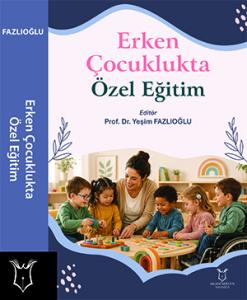
Erken Çocuklukta Kapsayıcı Eğitim: Özel Gereksinimli Çocuklar İçin Evrensel Tasarım Yoluyla Öğrenme (UDL)
Özet
Bu bölümde, erken çocukluk döneminde kapsayıcı eğitimin güçlendirilmesinde Evrensel Tasarım Yoluyla Öğrenme (Universal Design for Learning – UDL) yaklaşımının rolü ele alınmıştır. Erken çocukluk dönemi, çocukların bilişsel, sosyal, duygusal ve dil gelişimlerinin en hızlı gerçekleştiği kritik bir süreçtir. Bu nedenle farklı gelişim özelliklerine sahip tüm çocukların öğrenme ortamlarına eşit erişimi büyük önem taşımaktadır. UDL, öğrenmedeki bireysel farklılıkları doğal bir çeşitlilik olarak kabul eden ve öğretim süreçlerini en baştan esnek biçimde tasarlamayı amaçlayan kapsayıcı bir öğretim yaklaşımıdır. Bölümde UDL’nin nörobilim temelli kuramsal yapısı, katılım, temsil ve ifade için çoklu yollar sunan temel ilkeleri açıklanmıştır. Ayrıca fiziksel çevre düzenlemeleri, oyun temelli öğrenme, teknoloji destekli uygulamalar, alternatif iletişim sistemleri ve öğretmen işbirliği gibi erken çocukluk uygulamalarına yer verilmiştir. Araştırmalar, UDL’nin özel gereksinimli çocukların öğrenmeye katılımını, akran etkileşimini, aidiyet duygusunu ve öğrenme çıktılarını olumlu yönde desteklediğini göstermektedir. Bununla birlikte Türkiye’de öğretmen yeterlikleri, materyal eksikliği ve politika düzeyindeki sınırlılıklar UDL’nin yaygın uygulanmasını zorlaştırmaktadır. Sonuç olarak UDL, erken çocuklukta tüm çocuklar için erişilebilir, adil ve kapsayıcı öğrenme ortamları oluşturulmasına katkı sağlayan güçlü bir eğitim yaklaşımıdır.
This chapter examines the role of Universal Design for Learning (UDL) in strengthening inclusive education in early childhood settings. Early childhood is a critical developmental period during which cognitive, social, emotional, and language development rapidly occurs. Therefore, ensuring equal access to learning environments for all children, including those with special needs, is essential. UDL is an inclusive instructional framework that views learner variability as a natural aspect of learning and promotes the proactive design of flexible and accessible educational environments. The chapter discusses the neuroscience-based theoretical foundations of UDL and its three core principles: multiple means of engagement, representation, and action/expression. In addition, practical applications in early childhood settings are presented, including environmental adaptations, play-based learning, technology-supported instruction, alternative communication systems, and collaborative teaching practices. Research findings indicate that UDL enhances participation, peer interaction, belonging, and learning outcomes for children with special needs. However, challenges related to teacher competencies, limited materials, and policy-level barriers continue to restrict the widespread implementation of UDL in Türkiye. Overall, UDL offers a powerful framework for creating equitable, accessible, and inclusive learning environments that support the holistic development of all children in early childhood education.
Referanslar
Adair, B., Ullenhag, A., Keen, D., Granlund, M., & Imms, C. (2015). The effect of interventions aimed at improving participation outcomes for children with disabilities: A systematic review. Developmental Medicine & Child Neurology, 57(12), 1093-1104. https://doi.org/10.1111/dmcn.12809
Adu-Boateng, S., & Goodnough, K. (2021). Examining A Science Teacher’s Instructional Practices in the Adoption of Inclusive Pedagogy: A Qualitative Case Study. Journal of Science Teacher Education, 33(3), 303–325. https://doi.org/10.1080/1046560X.2021.1915605
Ainscow, M. (2020). Promoting inclusion and equity in education: lessons from international experiences. Nordic Journal of Studies in Educational Policy, 6(1), 7–16. https://doi.org/10.1080/20020317.2020.1729587
Akbulut, F., & Akşin Yavuz, E. (2021). Öğretmen Adayları Kapsayıcı Eğitim Hakkında Ne Düşünüyor? Uluslararası Erken Çocukluk Eğitimi Çalışmaları Dergisi, 6(1), 33-52.
Baglieri, S., & Lalvani, P. (2019). Undoing ableism: Teaching about disability in K-12 classrooms. Routledge. https://www.taylorfrancis.com/books/mono/10.4324/9781351002868/undoing-ableism-priya-lalvani-susan-baglieri
Barton, E. E., & Smith, B. J. (2015). Advancing high-quality preschool inclusion. Young Exceptional Children, 18(2), 3–16.
Bennett, J. (2011). Early Childhood Education and Care Systems: Issue of Tradition andGovernance. In Encyclopedia on Early Childhood Development. Centre of Excellence for EarlyChildhood Development and Strategic Knowledge Cluster on Early Child Development, editedby R. E. Tremblay, M. Boivin, and R. D. E. V. Peters, i–iv. Montreal. https://www.child-encyclopedia.com/pdf/expert/child-care-early-childhood-education-and-care/according-experts/early-childhood-education-and-care
Blewitt, C., Fuller-Tyszkiewicz, M., Nolan, A., Bergmeier, H., Vicary, D., Huang, T., McCabe, P., McKay, T., & Skouteris, H. (2018). Social and emotional learning associated with universal curriculum-based interventions in early childhood education and care centers. JAMA Network Open, 1(8), e185727.
Boavida, T., Aguiar, C., & McWilliam, R. A. (2013). A training program to improve IFSP/IEP goals and objectives through the routines-based interview. Topics in Early Childhood Special Education, 33(4), 200-211. https://doi.org/10.1177/0271121413494416
Bodrova, E., & Leong, D. J. (2024). Tools of the Mind: Vygotskian perspectives on early childhood education. In Handbook of Early Childhood Education (pp. 9–27). Routledge.
Boothe, K. A., Lohmann, M. J., Donnell, K. A., & Hall, D. D. (2018). Applying the Principles of Universal Design for Learning (UDL) in the College Classroom. Journal of Special Education Apprenticeship, 7, 1-13. https://www.scirp.org/reference/referencespapers?referenceid=3284681
Bray, A., Devitt, A., Banks, J., Sanchez Fuentes, S., Sandoval, M., Riviou, K., … Terrenzio, S. (2023). What next for universal design for learning? A systematic literature review of technology in UDLimplementations at second level. British Journal of Educational Technology, 55(1), 113-138. https://doi.org/10.1111/bjet.13328
Brillante, P., & Nemeth, K. (2022). Universal design for learning in the early childhood classroom: Teaching children of all languages, cultures, and abilities, birth–8 years. Routledge.
Bronfenbrenner, U. (1979). The ecology of human development. Harvard University Press.
Campbell, P. H., & Milbourne, S. (2005). Improving the quality of infant–toddler care: Integrating universal design for learning. Infants & Young Children, 18(3), 165–178.
https://doi.org/10.1097/00001163-200507000-00005
Capp, M. J. (2017). The effectiveness of universal design for learning: a meta-analysis of literature between 2013 and 2016. International Journal of Inclusive Education, 21(8), 791–807. https://doi.org/10.1080/13603116.2017.1325074
Capp, M. J. (2018). Teacher confidence to implement the principles, guidelines, and checkpoints of universal design for learning. International Journal of Inclusive Education, 24(7), 706–720. https://doi.org/10.1080/13603116.2018.1482014
CAST. (2018). Universal Design for Learning guidelines version 2.2. CAST. http://udlguidelines.cast.org
Coyne, P., Pisha, B., Dalton, B., Zeph, L. A., & Smith, N. C. (2012). Literacy by design: A universal design for learning approach for students with significant intellectual disabilities. Remedial and Special Education, 33(3), 162–172. https://doi.org/10.1177/0741932510381651
Danış, N., Güneş, İ., Tektaş, K., Eroğlu, S., İpek, M., Kaçan, V., ... & Gürbüz, U. A. (2023). Kapsayıcı Eğitimin Dünü, Bugünü, Yarını ve Öğrenme Ortamlarına Yansımaları. International Journal of Social and Humanities Sciences Research (JSHSR), 10(101), 3089-3102.
DEC & NAEYC. (2009). Early childhood inclusion: A joint position statement. Division for Early Childhood & National Association for the Education of Young Children.
DeVore, S. & Russell, K. (2007). Early Childhood Education and Care for Children with Disabilities: Facilitating Inclusive Practice. Early Childhood Education Journal 35, 189–198. https://doi.org/10.1007/s10643-006-0145-4
Dinh Thanh Tuyen. (2024). The factors influencing preschool teachers’ supportive behaviors for the inclusion of 18–36-month-old children with special needs based on Universal Design for Learning. HNUE Journal of Science, 69(5A), 127–138. https://vjol.info.vn/index.php/DHSP-GD/article/view/112983
Ellen MCGuire-Schwartz, M., & Arndt, J. S. (2007). Transforming Universal Design for Learning in Early Childhood Teacher Education from College Classroom to Early Childhood Classroom. Journal of Early Childhood Teacher Education, 28(2), 127–139. https://doi.org/10.1080/10901020701366707
Ellen MCGuire-Schwartz, M., & Arndt, J. S. (2007). Transforming Universal Design for Learning in Early Childhood Teacher Education from College Classroom to Early Childhood Classroom. Journal of Early Childhood Teacher Education, 28(2), 127–139. https://doi.org/10.1080/10901020701366707
Fleer, M. (2010). Early learning and development: Cultural-historical concepts in play. Cambridge University Press.
Florian, L., & Black-Hawkins, K. (2011). Exploring inclusive pedagogy. British Educational Research Journal, 37(5), 813–828. http://www.jstor.org/stable/23077052
Garip, S. E. (2022). ÖğRenme Için Evrensel Tasarım öğretmen öz-yeterlik ölçeği'nin Geliştirilmesi (Master's thesis, Dokuz Eylul Universitesi (Turkey)).
Hall, T. E., Meyer, A., & Rose, D. H. (2012). Universal Design for Learning in the classroom: Practical applications. Guilford Press. https://www.guilford.com/excerpts/hall3_old_ch1.pdf?t=1
Hartmann, E. (2015). Universal design for learning (UDL) and learners with severe support needs. International Journal of Whole Schooling, 11(1), 54-67. https://eric.ed.gov/?id=EJ1061020
Hitchcock, C., & Stahl, S. (2003). Assistive Technology, Universal Design, Universal Design for Learning: Improved Learning Opportunities. Journal of Special Education Technology, 18(4), 45-52. https://doi.org/10.1177/016264340301800404
Jhuo, R. A., & Chu, S. Y. (2025). Application of Universal Design for Learning for Improving Child Engagement in an Inclusive Preschool Setting in Taiwan. International Journal of Disability, Development and Education, 1–23. https://doi.org/10.1080/1034912X.2025.2528189
Katz, J., & Sugden, R. (2013). The Three-Block Model of Universal Design for Learning Implementation in a High School. Canadian Journal of Educational Administration and Policy. https://www.threeblockmodel.com/the-three-block-model-of-udl.html
Kuuk, Ö. (2023). Evrensel tasarıma dayalı öğrenme ilkeleri ile desteklenmiş proje tabanlı öğrenmenin öğrencilerin motivasyon ve 21. yüzyıl becerilerine etkisi (Doctoral dissertation, Bartin University (Turkey)).
Lalvani, P., Broderick, A. A., Fine, M., Jacobowitz, T., & Michelli, N. (2015). Teacher education, InExclusion, and the implicit ideology of Separate but Equal: An invitation to a dialogue. Education, Citizenship and Social Justice, 10(2), 168-183. https://doi.org/10.1177/1746197915583935
Lawrence, S., Smith, S., & Banerjee, R. (2016). Preschool Inclusion: Key Findings from Research and Implications for Policy. Child Care and Early Education Research Connections. National Center for Children in Poverty. https://academiccommons.columbia.edu/doi/10.7916/D8571C1C
Lohmann, M. J., Hovey, K. A., & Gauvreau, A. N. (2023). Universal Design for Learning in inclusive preschool science classrooms. Journal of Science Education for Students with Disabilities, 15, 5. https://repository.rit.edu/jsesd/vol26/iss1/4/
Lohnmann, M. J., Hovey, K. A., & Gauvreau, A. N. (2018). Using a universal design for learning framework to enhance engagement in the early childhood classroom. The Journal of Special Education Apprenticeship, 7(2). doi:10.58729/2167-3454.1072
Lohnmann, M. J., Hovey, K. A., & Gauvreau, A. N. (2018). Using a Universal Design for Learning Framework to Enhance Engagement in the Early Childhood Classroom. The Journal of Special Education Apprenticeship, 7(2). https://doi.org/10.58729/2167-3454.1072
Lundqvist, J. (2022). Putting preschool inclusion into practice: a case study. European Journal of Special Needs Education, 38(1), 95–109. https://doi.org/10.1080/08856257.2022.2031096
Lundqvist, J. (2022). Putting preschool inclusion into practice: a case study. European Journal of Special Needs Education, 38(1), 95–109. https://doi.org/10.1080/08856257.2022.2031096
Meyer, A., Rose, D. H., & Gordon, D. (2014). Universal design for learning: Theory and practice. CAST. https://udltheorypractice.cast.org/
Millî Eğitim Bakanlığı [MEB]. (2018). Özel Eğitim Hizmetleri Yönetmeliği. Resmî Gazete.
Morgan, C. W., Du, K., & Friesen, A. (2021). Responding to Difference: Enacting Inclusive Early Childhood Education Through the Social-Relations Approach. Young Exceptional Children, 24(3), 170-186. https://doi.org/10.1177/10962506211010719
Morton, B., & Pilgrim, J. (2023). Promoting inclusive education: Social and emotional learning through the lens of universal design for learning. Eesti Haridusteaduste Ajakiri. Estonian Journal of Education, 11(1), 28-47. doi:10.12697/eha.2023.11.1.02b
Murphy, D. B. (2021). Teacher perceptions of the effectiveness and barriers of universal design implementation for students with disabilities: An exploratory case study (Order No. 28719998). Available from ProQuest Dissertations & Theses Global. (2641904173). Retrieved from https://www.proquest.com/dissertations-theses/teacher-perceptions-effectiveness-barriers/docview/2641904173/se-2
NAEYC. (2020). Developmentally appropriate practice position statement. National Association for the Education of Young Children.
https://www.naeyc.org/resources/position-statements/dap
Nasri, N., Rahimi, N. M., Nasri, N. M., & Talib, M. A. (2021). A comparison study between universal design for learning-multiple intelligence (UDL-MI) oriented STEM program and traditional STEM program for inclusive education. Sustainability, 13(2), 554. https://doi.org/10.3390/su13020554
National Research Council (US) and Institute of Medicine (US) Committee on Integrating the Science of Early Childhood Development, Shonkoff, J. P., & Phillips, D. A. (Eds.). (2000). From Neurons to Neighborhoods: The Science of Early Childhood Development. National Academies Press (US). https://doi.org/10.17226/9824
National Research Council. (2001). Eager to learn: Educating our preschoolers. National Academy Press.
Neuman, M. J. (2005). Governance of early childhood education and care: recent developments in OECD countries. Early Years, 25(2), 129–141. https://doi.org/10.1080/09575140500130992
Novak, K., & Rose, D. H. (2021). UDL and blended learning: Thriving in flexible learning landscapes. CAST Publishing.
Nutbrown, C., & Clough, P. (2009). Citizenship and inclusion in the early years: understanding and responding to children’s perspectives on ‘belonging.’ International Journal of Early Years Education, 17(3), 191–206. https://doi.org/10.1080/09669760903424523
Odom, S. L., Buysse, V., & Soukakou, E. (2011). Inclusion for young children with disabilities. Journal of Early Intervention, 33(4), 344-356. https://doi.org/10.1177/1053815111430094
Ok, M. W., Rao, K., Bryant, B. R., & McDougall, D. (2016). Universal Design for Learning in Pre-K to Grade 12 Classrooms: A Systematic Review of Research. Exceptionality, 25(2), 116–138. https://doi.org/10.1080/09362835.2016.1196450
Öcal Dörterler, S., & Polat, Ö. (2025). Öğrenmede Evrensel Tasarım Yaklaşımı: 2010-2024 Yılları Arasında Türkiye’de Tamamlanmış Tezlerin İncelenmesi. Ondokuz Mayis University Journal of Education, 44(1).
Page, A., Anderson, J., & Charteris, J. (2024). Innovative Learning Environments and spaces of belonging for students with disability in mainstream settings. Cambridge Journal of Education, 54(5), 607–626. https://doi.org/10.1080/0305764X.2024.2397398
Peters, S. J. (2003). Inclusive education: Achieving education for all by including those with disabilities and special education needs. Washington DC: World Bank, 1-133. http://documents.worldbank.org/curated/en/614161468325299263
Pianta, R. C., Barnett, W. S., Justice, L. M., & Sheridan, S. (2012). Handbook of early childhood education. Guilford Press.
Rao, K., & Meo, G. (2016). Using Universal Design for Learning to design standards-based lessons. SAGE Open, 6(4), 1–12. https://doi.org/10.1177/2158244016680688
Rappolt-Schlichtmann, G., Todd, K., & Daley, S. (2020). Universal design for—emotion in—learning: a practice for the creation of emotionally accessible digital learning experiences. Inclusive digital interactives: best practices and research Smithsonian institution. Access Smithsonian, Institute for human centered design, MuseWeb, 139-166.
Reschly, A. L., & Christenson, S. L. (2012). Jingle, jangle, and conceptual haziness: Evolution and future directions of the engagement construct. Handbook of Research on Student Engagement, 3–19.
https://doi.org/10.1007/978-1-4614-2018-7_1
Rose, D. H., & Meyer, A. (2002). Teaching every student in the digital age: Universal Design for Learning. ASCD.
Rotheram‐Fuller, E., Kasari, C., Chamberlain, B., & Locke, J. (2010). Social involvement of children with autism spectrum disorders in elementary school classrooms. Journal of Child Psychology and Psychiatry, 51(11), 1227-1234. https://doi.org/10.1111/j.1469-7610.2010.02289.x
Sakız, H. (2022). Kapsayıcı eğitimin psikolojisi: Güncel eğilimler ve uygulamalar. Turkish Journal of Special Education Research and Practice, 4(1), 1–26. https://doi.org/10.37233/TRSPED.2022.0120
Scott, L. A. (2018). Barriers with implementing a universal design for learning framework. Inclusion, 6(4), 274-286. https://doi.org/10.1352/2326-6988-6.4.274
Shpendi Şirin, T., & Ahmetoğlu, E. (2024). The making friends program: Impact on social acceptance in inclusive preschool settings. The Asia-Pacific Education Researcher, 33(5), 1189-1199. https://doi.org/10.1007/s40299-023-00789-z
Slee, R. (2018). Defining the scope of inclusive education. UNESCO.
Şimşek, H., Dağıstan, A., Şahin, C., Koçyiğit, E., Yalçınkaya, G. D., Kart, M., & Dağdelen, S. (2019). Kapsayıcı eğitim bağlamında Türkiye’de ilköğretim programlarında çokkültürlülüğün izleri. Ahi Evran Üniversitesi Sosyal Bilimler Enstitüsü Dergisi, 5(2), 177-197.
Taylor, K., Neild, R., & Fitzpatrick, M. (2023). Universal Design for Learning in early childhood education for deaf and hard of hearing children. Perspectives on Early Childhood Psychology and Education, 5(2), 4. https://doi.org/10.58948/2834-8257.1059
Theobald M, Whiteford C, McFadden A. (2025). Through Their Eyes: Children’s Perspectives on Quality in Early Childhood Education. Education Sciences, 15(7), 836. https://doi.org/10.3390/educsci15070836
Tīģere, I., Bethere, D., Jurs, P., & Ļubkina, V. (2025). Developing inclusive preschool education for children with autism applying Universal Design for Learning strategy. Education Sciences, 15(6), 638. https://doi.org/10.3390/educsci15060638
Tīģere, I., Bethere, D., Jurs, P., & Ļubkina, V. (2025). Developing inclusive preschool education for children with autism applying universal learning design strategy. Education Sciences, 15(6), 638. https://doi.org/10.3390/educsci15060638
UNESCO. (1994). The Salamanca statement and framework for action. https://www.right-to-education.org/sites/right-to-education.org/files/resource-attachments/Salamanca_Statement_1994.pdf
UNICEF. (2019). A world ready to learn: Prioritizing quality early childhood education.
UNICEF. (2023). Kapsayıcı Erken Çocukluk Eğitimi Projesi: Türkiye raporu 2021–2023. UNICEF Türkiye Temsilciliği.
Vasinda, S., & Pilgrim, J. (2022). Technology supports in the UDL framework: Removable scaffolds or permanent new literacies? Reading Research Quarterly, 58(1), 44-58. https://doi.org/10.1002/rrq.484
Vaughn, B. E., Santos, A. J., Monteiro, L., Shin, N., Daniel, J. R., Krzysik, L., & Pinto, A. (2016). Social engagement and adaptive functioning during early childhood: Identifying and distinguishing among subgroups differing with regard to social engagement. Developmental Psychology, 52(9), 1422–1434. https://doi.org/10.1037/dev0000142
Veytia Bucheli, M. G., Gómez-Galán, J., Cáceres Mesa, M. L., & López Catalán, L. (2024). Digital technologies as enablers of universal design for learning: Higher education students' perceptions in the context of SDG4. Discover Sustainability, 5(1). https://doi.org/10.1007/s43621-024-00699-0
Vygotsky, L. S. (1978). Mind in society: The development of higher psychological processes. Harvard University Press.