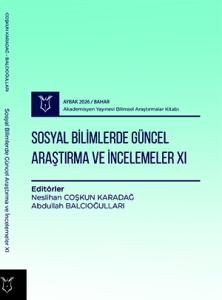
Düşük Gelirli Hanelerin Sosyal ve Ekonomik Yaşam Profili
Özet
Yaşam kalitesi, bireylerin içinde bulundukları toplumsal ve kültürel çevre bağlamında yaşamlarını nasıl algıladıkları ve yaşamlarının fiziksel, psikolojik ve sosyal boyutlarından ne ölçüde memnun olduklarıyla ilişkilidir. Dünya Sağlık Örgütü’ne göre yaşam kalitesi, bireyin yaşadığı kültür ve değerler sistemi içinde kendi durumunu hedefleri, beklentileri ve yaşam standartları doğrultusunda değerlendirme biçimini ifade etmektedir. Bu bağlamda yaşam kalitesi yalnızca maddi refah ya da tüketim düzeyiyle açıklanamaz; bireyin sağlık durumu, sosyal ilişkileri, psikolojik iyi oluşu ve yaşamdan duyduğu memnuniyet gibi öznel deneyimleri de kapsamaktadır. Yoksulluk ise bireylerin temel ihtiyaçlarını karşılayabilecek düzeyde gelir ve kaynaklara sahip olmaması durumunu ifade eder. Gıda, barınma, sağlık ve eğitim gibi temel ihtiyaçların karşılanamaması, bireylerin yaşam kalitesini doğrudan olumsuz etkileyerek sosyal ve ekonomik sorunların ortaya çıkmasına yol açmaktadır. Yoksulluk, yalnızca ekonomik bir yetersizlik değil; aynı zamanda işsizlik, gelir eşitsizliği, eğitime erişim sorunları ve sağlık hizmetlerinden yararlanamama gibi çok boyutlu faktörlerle ilişkili bir toplumsal sorundur. Bu nedenle yoksullukla mücadelede devlet kurumları, yerel yönetimler ve sivil toplum kuruluşları önemli roller üstlenmektedir. Sosyal yardım politikaları ve sivil toplum faaliyetleri, ihtiyaç sahibi bireylerin desteklenmesine katkı sağlayarak toplumun refah düzeyinin artırılmasına yardımcı olmaktadır.
Quality of life is related to how individuals perceive their lives within the context of their social and cultural environment, and the extent to which they are satisfied with the physical, psychological, and social dimensions of their lives. According to the World Health Organization, quality of life refers to how an individual evaluates their own situation within their culture and value system, in line with their goals, expectations, and living standards. In this context, quality of life cannot be explained solely by material well-being or consumption levels; it also encompasses subjective experiences such as an individuals health status, social relationships, psychological well-being, and life satisfaction. Poverty, on the other hand, refers to the situation where individuals do not have sufficient income and resources to meet their basic needs. The inability to meet basic needs such as food, housing, health, and education directly and negatively affects individuals' quality of life, leading to social and economic problems. Poverty is not only an economic inadequacy; it is also a social problem related to multi-dimensional factors such as unemployment, income inequality, problems with access to education, and lack of access to health services. Therefore, state institutions, local governments, and civil society organizations play important roles in combating poverty. Social assistance policies and civil society activities contribute to supporting individuals in need, thus helping to increase the welfare level of society.
Referanslar
Açıkgöz, R, Yusufoğlu, Ö. Ş. (2012). Türkiye’de yoksulluk olgusu ve toplumsal yansımaları. İnsan ve Toplum Bilimleri Araştırmaları Dergisi, 1(1), 76-117.
Alpaydın, Y. (2008). Türkiye’de yoksulluk ve eğitim ilişkileri. İlem Yıllık, 3(3), 49-64.
Atkinson, A. B. (2013). Measuring poverty around the world. Princeton University Press.
Aksan, G. (2019). Yoksulluk ve Yoksulluk Kültürünün Toplumsal Görünümleri. Selçuk Üniversitesi Sosyal Bilimler Enstitüsü Dergisi (27), 9-19.
Banerjee, A. V, Duflo, E. (2011). Poor economics: A radical rethinking of the way to fight global poverty. Public Affairs
Becker, G. S. (1993). Human capital: A theoretical and empirical analysis, with special reference to education (3rd ed.). University of Chicago Press,
Benzeval M, Bond L, Campbell M, et al. (2014). How does money influence health?, Joseph Rowntree Foundation.
Commissioneuropa, https://commission.europa.eu/publications/annual-activity-report-2023-eurostat_en, Erişim tarihi 25.12.2025
Çalışkan, Ş. (2007). Eğitim-işsizlik ve yoksulluk ilişkisi. Sosyal Ekonomik Araştırmalar Dergisi, 7(13), 284-308.
Çetin, İ. (2020). Yoksulluk ve yoksulluk göstergeleri: Türkiye ve OECD ülkeleri üzerine bir karşılaştırma. Ankara Hacı Bayram Veli Üniversitesi İktisadi ve İdari Bilimler Fakültesi Dergisi, 22(2), 510-532.
Felce, D, Perry, J. (1995). Quality of life: Its definition and measurement. Research in Developmental Disabilities, 16(1), 51–74.
Gazzillo, F. (2023). Toward a more comprehensive understanding of pathogenic beliefs: Theory and clinical implications. Journal of Contemporary Psychotherapy, 53(3), 227-234.
Göksoy Sevinçli, B. (2024). Yoksulluk algısı ile yaşam memnuniyeti arasındaki ilişkiye yönelik bir araştırma: Bitlis örneği. İdealkent, 15(42), 816-843. https://doi.org/10.31198/idealkent.1350888.
Hatun, Ş. Yoksulluk ve çocuklar üzerine etkileri. (2002). Türk Tabipler Birliği, 1-44.
Hatun, Ş, Etiler, N, Gönüllü, E. (2003). Yoksulluk ve çocuklar üzerine etkileri. Çocuk Sağlığı ve Hastalıkları Dergisi, 251-260.
ILO. World employment and social outlook: Trends 2020. International Labour Organization. https://www.ilo.org/publications/world-employment-and-social-outlook-trends-2020-0n Erişim Tarihi: 16.12.2025
Julius, D, Bawane, J. (2011). Education as a strategy for poverty alleviation in developing countries. International Journal of Education, 3(2), 45-56
Katipoğlu, P, Armağan, G. (2020). Tarımda beşeri ve sosyal sermayenin kırsal kalkınmada önemi. İzmir İktisat Dergisi, (35)1, 155-175.
Keleş, Ş, Keskin, A, Ertek, N. (2018). Kırsal alanda sosyal sermayenin yaşam memnuniyeti üzerine etkisi. Kahramanmaraş Sütçü İmam Üniversitesi Tarım ve Doğa Dergisi (21), 123-132.
Ludwig-Mayerhofer, W, Gartner, H, Allmendinger, J. (2006). The allocation of money in couples: The end of inequality? Zeitschrift für Soziologie, 35(3), 212-226.
Lorant, V., Deliège, D., Eaton, W, et al. (2003). Socioeconomic inequalities in depression: A meta-analysis. American Journal of Epidemiology, 157(2), 98–112. https://doi.org/10.1093/aje/kwf182.
Mateu, P, Vasquez, E, Zuniga, J, et al. (2020). Happiness and poverty in the very poor peru: Measurement improvements and a consistent relationship. Journal of the Springer Nature, 54, 1075–1094.
Marmot, M. (2005). Social determinants of health inequalities. The Lancet, 365(9464), 1099–1104.
OECD. (2021). Income inequality and poverty, https://www.oecd.org/en/data/indicators/income-inequality.html Erişim Tarihi: 16.12.2025
Öner, E. (2011). Yoksullar için sosyal güvenlik: Mikrosigorta. Elektronik Sosyal Bilimler Dergisi, 10(35), 202-220.
Öğütoğulları, E, Akpınar, T. (2020). Türkiye'de sosyal güvenlik sisteminde reform ihtiyacının nedenleri ve yapılan düzenlemeler. Balkan & Near Eastern Journal of Social Sciences (BNEJSS), 6
Psacharopoulos, G, Patrinos, H. A. (2018). Returns to investment in education: A decennial review of the global literature. Education Economics, 26(5), 445–458.
Sen, A. (1999). Development as freedom. Oxford University Press
Silver, H. (1994). Social exclusion and social solidarity: Three paradigms. International Labour Review, 133(5–6), 531–578.
Sipahi, B. B. (2023). Obezite ve yoksulluk: Türkiye örneği. Erciyes Üniversitesi İktisadi ve İdari Bilimler Fakültesi Dergisi, (64), 73-79.
Spicker, P. (2007). Definitions of poverty: Twelve clusters of meaning. In Poverty: An international glossary, 229–243, Zed Books.
Standing, G. (2011). The precariat: The new dangerous class. London: Bloomsbury Academic.
Şahin, T,. (2009). Sosyal dışlanma ve yoksulluk ilişkisi Sosyal Yardım Uzmanlık Tezi Başbakanlık Sosyal Yardımlaşma Ve Dayanışma Genel Müdürlüğü.
Şeker, B. D, Akman, E. (2015). Farklı ülkelerden üniversite öğrencilerinin psikolojik iyi olma ve yaşam doyumları üzerine bir araştırma, Celal Bayar Üniversitesi Sosyal Bilimler Dergisi, 13(1), 106-119.
TÜİK. (2023). Gelir ve yaşam koşulları araştırması. https://data.tuik.gov.tr Erişim Tarihi: 15.12.2025
TÜİK, (2024). https://data.tuik.gov.tr/Bulten/Index?p=Yoksulluk-ve-Yasam-Kosullari-Istatistikleri-2024-53714 Erişim Tarihi: 15.12.2025
Türkoğlu, İ. (2013). Sosyal devlet bağlamında Türkiye’de sosyal yardım ve sosyal güvenlik. Akademik İncelemeler Dergisi, 8(3), 275–305.
Townsend, P. (1979). Poverty in the United Kingdom: a survey of household resources and standards of living. Univ of California Press,
UNDP. (2015). The millennium development goals report. United Nations Development Programme
UNESCO, (2020). Global education monitoring report, https://unesdoc.unesco.org Erişim Tarihi: 15.12.2025
UNICEF, (2020). The State of the World’s Children 2020, United Nations International Children's Fund.
Victora, C. G, Adair, L, Fall, C, et al. (2008). Maternal and child undernutrition: consequences for adult health and human capital. The Lancet, 371(9609), 340–357.
WHO, (2022). World health statistics 2022, World Health Organization.
World Bank (2018). Learning to realize education’s promise, World Development Report 2018. https://www.worldbank.org, Erişim Tarihi: 15.12.2025