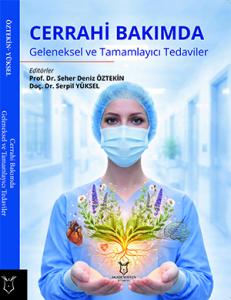
Mizah Terapisinin Cerrahi Bakımda Kullanımı
Özet
Mizah; gerek yaşamda gerekse sanat ve edebiyatta kullanımı itibarıyla, mizahi bir tepki üretmeyi amaçlayan bir uyaranı, zihinsel bir süreci veya bir tepkiyi ifade etmektedir. Kahkaha/gülme, mizahi deneyimin en yaygın ifadesidir. Mizahın hasta ve hastalık üzerine etkili olabileceğine dair ilk belgelenmiş veriler, Norman Cousins’in Bir Hastalığın Anatomisi (Anatomy of an Illness) adlı eserinde yer almaktadır. Birçok baskısı yapılan ve çok satan bu kitap, 1964 yılında mizahın ankilozan spondilitin iyileşmesine yararlarını açıklamaktadır. Bununla birlikte Platon, Descartes, Aristoteles, Kant, Darwin, Freud, Twain ve Hobbes gibi büyük düşünürler, eskiden beri mizahı tanımlamaya çalışmışlardır. Mizahın tipoloji ve işlevi, M.Ö. 4. ve 5. yüzyıllarda Antik Yunan'a kadar uzanmaktadır. Amerikan Ulusal Tamamlayıcı ve Alternatif Tıp Merkezi Geleneksel ve Tamamlayıcı Tıbbı, "Modern tıbbın bir parçası olarak sayılmayan çeşitli tıbbi sağlık sistemleri, uygulama ve ürünleri içeren bir branş" olarak tanımlamaktadır.
The first documented evidence that humor can influence patients and illnesses is found in Norman Cousins’s book, Anatomy of an Illness. This best-selling book, published in 1964 describes how humor can help healing ankylosing spondylitis (a painful disease that causes the spinal cord to deteriorate). Great thinkers such as Plato, Descartes, Aristotle, Kant, Darwin, Freud, Twain, and Hobbes have long tried to define humor. Consequently, the typology and function of humor can be traced back to Ancient Greece in the 4th and 5th centuries BC. The National Center for Complementary and Alternative Medicine (NCCAM) defines Traditional and Complementary Medicine as: “A branch of medicine that includes a variety of medical and health systems, practices, and products that are not considered part of modern medicine”.
Referanslar
Kayne SB. Mind and body therapies.
Complementary and Alternative Medicine. 2nd ed. Great Britain: Pharmaceutical Press; 2009. p. 561-590.
Başkaya E, Demir S. Sihirli gülüşlerle yaşama bir dokunuş: Mizah terapi. Sağlık Bilimleri ve Meslekleri Dergisi. 2018;5(3):453-457. doi:10.17681/hsp.340288
Mann D, Gaylord S, Norton SK. Integrating Complementary & Alternative Therapies with Conventional Care. USA: Chapel Hill, NC; 2004.
Edmonds M. What is laughter yoga? Available from: https://science.howstuffworks.com/life/laughter-yoga.htm#:~:text=Laughter%20yoga%20is%20a%20practice%20that%20combines%20laughter,reducing%20stress%2C%20boosting%20mood%20and%20enhancing%20overall%20health (Accessed 26th March 2025).
Ansell L. An investigation into laughter therapy, including clowning and laughter yoga as new aspects to dramatherapy for people suffering from mental illness. England: Bath Spa University. doi: 10.13140/RG.2.2.25899.54563
National Center for Complementary and Alternative Medicine (NCCAM). Expanding Horizons of Healthcare: Five-Year Strategic Plan 2001-2005. Washington DC: U.S. Department of Health and Human Services; 2000. Available from: https://files.nccih.nih.gov/expanding-horizons-of-healthcare-five-year-strategic-plan-2001-2005.pdf (Accessed 23rd March 2025).
Penson RT, Partridge RA, Rudd P, et al. Update: Laughter: the best medicine? The Oncologist. 2005; 10(8):651-660. doi: 10.1634/theoncologist.10-8-651
Seaward BL. Humor's healing potential. Health Prog. 1992; 73(3): 66-70.
McCreaddie M, Wiggins S. The purpose and function of humour in health, health care and nursing: A narrative review. Journal of Advanced Nursing. 2008; 61(6):584-595. doi: 10.1111/j.1365-2648.2007.04548.x
Ruch W. Psychology of humor. Raskin V (ed.) The Primer of Humor Research. New York: De Gruyter Mouton; 2008. p.17-100.
Sultanoff SM. Integrating humor into psychotherapy: Research, theory, and the necessary conditions for the presence of therapeutic humor in helping relationships. The Humanistic Psychologist. 2013;41(4):388–399. doi:10.1080/08873267.2013.802145
Mora-Ripoll R. Potential health benefits of simulated laughter: a narrative review of the literature and recommendations for future research. Complementary Therapies in Medicine. 2011;19(3):170-177. doi:10.1016/j.ctim.2011.05.003
Strack F, Martin L, Stepper S. Inhibiting and facilitating conditions of the human smile: A nonobtrusive test of the facial feedback hypothesis. Journal of Personality and Social Psychology. 1988;54(5):768-777. doi:10.1037/0022-3514.54.5.768
Tavakoli T, Davoodi N, Tabatabaee TS, et al. Comparison of laughter yoga and anti-anxiety medication on anxiety and gastrointestinal symptoms of patients with irritable bowel syndrome. Middle East Journal of Digestive Diseases. 2019;11(4):11-217. doi:10.15171/mejdd.2019.151
Čokolič M, Herodež ŠS, Sternad, et al. The inhibitory effect of laughter yoga on the increase in postprandial blood glucose in type 2 diabetic patients. Diabetologia Croatica. 2013;42(2):54-58.
Kong M, Shin SH, Lee E, et al. The effect of laughter therapy on radiation dermatitis in patients with breast cancer: a single-blind prospective pilot study. OncoTargets and Therapy. 2014;4;7;2053–9. doi:10.2147/OTT.S72973
Mallet J, A’hern R. Comparative distribution and use of humour within nurse patient communication. International Journal of Nursing Studies. 1996;33(5):530-50. doi: 10.1016/0020-7489(96)00008-9
Sánchez JC, Porras GL, Torres MA, et al. Effects of clowning on anxiety, stress, pain, and hormonal markers in paediatric patients. BMC Pediatrics. 2024; 24(1):728. doi:10.1186/s12887-024-0728-5
Üner E, Balcı AS, Kadıoğlu H. The effect of laughter therapy on physical and mental health: systematic review. Journal of Public Health Nursing. 2022;4(3):251-269. doi.org/10.54061/jphn.1102843
Alptekin, HM. Stomalı hastalarda gülme terapisinin benlik saygısı ve yaşam kalitesine etkisi. (Yayımlanmamış doktora tezi). 2023. İstanbul: İstanbul Üniversitesi-Cerrahpaşa Lisansüstü Eğitim Enstitüsü.
Haydon G, Reit PV, Browne R. A narrative inquiry: humour and gender differences in the therapeutic relationship between nurses and their patients. Contemporary Nurse. 2015;50 (2-3):214-226. doi: 10.1080/10376178.2015.1021436
Haigh RA. Therapeutic uses of humor. American Journal of Psychotherapy. 1986;40(4):543-553. doi: 10.1176/appi.psychotherapy.1986.40.4.543
Chaloult G, Blondeau C. Perspectives sur l’usage de l’humour en psychothérapie. Santé mentale au Québec. 2017;42(1):425-443. doi: 10.7202/1040263ar
Amici P. The humor in therapy: the healing power of laughter. Psychiatria Danubina. 2019;31(Suppl 3):503-508.
Konradt B, Hirsch RD, Jonitz MF, et al. Evaluation of a standardized humor group in a clinical setting: Feasibility study for older patients with depression. International Journal of Geriatric Psychiatry. 2013;28(8):850–857. doi:10.1002/gps.3893
Tabei M, Ravari A, Kataria M, et al. The effect of laughter yoga and music intervention on depression, anxiety, and stress in the Rafsanjan-Iran aged: a randomized clinical trial study. Aging and Mental Health. 2025;29(2):274-281. doi:10.1080/13607863.2024.2385454
Linge L. Joyful and serious intentions in the work of hospital clowns: a meta-analysis based on a 7-year research project conducted in three parts. International Journal of Qualitative Studies on Health and Well-being. 2013;4:8:1-8. doi:10.3402/qhw.v8i0.18907
Cousins N. Anatomy of an illness (as perceived by the patient). N Engl J Med. 1976;295(26):1458-1463. doi: 10.1056/NEJM197612232952605
Simon JM. Humour and the older adult: implications for nursing. Journal of Advanced Nursing. 1988;13(4):441-446. doi: 10.1111/j.1365-2648.1988.tb02847.x
Wala CN, Kok RN. Laughter-inducing therapies: systematic review and meta-analysis. Social Science and Medicine. 2019;232:473-488. doi:10.1016/j.socscimed.2019.05.001.
Heuchert PJ, McNair D. POMS-2 manual: A profile of mood states. Available from: https://psycnet.apa.org/doiLanding?doi=10.1037%2Ft05057-000 (Accessed 16rd March 2025).
Trout SK. Humor. Lindquist R, Tracy MF, Snyder M. (Ed.) Complementary and alternative therapies in nursing. USA: Springer Publishing Company LLC; 2018. p.127-150.
Thornton J, White A. A Heideggerian investigation into the lived experience of humour by nurses in an intensive unit. Intensive and Critical Care Nursing. 1999;15(5):266-278. doi:10.1054/iccn.1999.1448
Martin R, Lefcourt H. Sense of humor and physical health: theoretical issues, recent findings, and future directions. Humor. 2004;17(1):1-20. doi:10.1515/humr.2004.005
Elfenbein HA, Ambady N. On the universality and cultural specificity of emotion recognition: a meta-analysis. Psychological Bulletin. 2002;128(2):203–235. doi:10.1037/0033-2909.128.2.203.
Bezold C. Envisioning the future. Faass N. (Ed.) Integrating complementary medicine into health systems. USA: Aspen Publications; 2001. p.708-718.
Åstedt-Kurki P, Isola A. Humour between nurse and patient, and among staff: analysis of nurses’ diaries. Journal of Advanced Nursing. 2001;35(3):452-458. doi: 10.1046/j.1365-2648.2001.01860.x
Ulloth JK. The benefits of humor in nursing education. The Journal of Nursing Education. 2002;41(11):476-481. doi:10.3928/0148-4834-20021101-06.