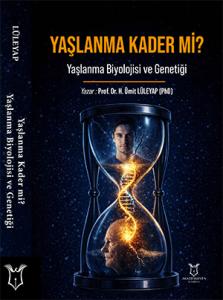
Yaşlanma Kader mi? Yaşlanma Biyolojisi ve Genetiği
Özet
-
Referanslar
Lüleyap H. Ümit Homo Inquirens Sorgulayan İnsan;; Yayın Yılı ·2007 ve 2020 ; Akademisyen Yayınevi; ISBN ·978-605-258-817-8.
Lüleyap, H. Ü. (2020). Moleküler genetiğin esasları. Akademisyen Kitabevi.
George C. Williams.,1957., Pleıotropy, Natural Selectıon, And The Evolutıon Of Senescence. Evolution, 11; 398-411
Rose, M.R. (1991) Evolutionary Biology of Aging. Oxford University Press, New York.
L. Partridge &; N. H. Barton.1993, Optimally, mutation and the evolution. Nature volume 362, pages 305–311.
Martin Ackermann and et al 2007. On the evolutionary origin of aging. Aging Cell. 6(2):235-44.
S N Austad 1,K E Fischer,. Mammalian aging, metabolism, and ecology: evidence from the bats and marsupials. J Gerontol 1991 Mar;46(2):B47-5
S.J.Olshansky.The Law of Mortality Revisited: Interspecies Comparisons of Mortality. Journal of Comparative Pathology. Volume 142, Supplement 1, January 2010, Pages S4-S9
Benjamin Gompertz. On the Nature of the Function Expressive of the Law of Human Mortality, and on a New Mode of Determining the Value of Life Contingencies. Philosophical Transactions of the Royal Society of London, Vol. 115. (1825), pp. 513-583.
Jan Vijg., Aging genomes: A necessary evil in the logic of life. Bioessays. 36 (3):282-292 (2014
Jan Vijg, Genome instability and aging: Cause or effect? Translational Medicine of Aging. Volume 1, October 2017, Pages 5-11
Bottomley, J. M., & Lewis, C. B. (2024). Comparing and Contrasting the Theories of Aging. In A Clinical Approach to Geriatric Rehabilitation (pp. 17-36). Routledge.
Mechnikov, I. (1908). On the present state of the question of immunity in infectious diseases. Nobel lecture, 11.
Carrel, A. (1912). On the permanent life of tissues outside of the organism. The Journal of experimental medicine, 15(5), 516.
Hayflick, L., & Moorhead, P. S. (1961). The serial cultivation of human diploid cell strains. Experimental cell research, 25(3), 585-621.
Pearl, R. (1928). The rate of living: being an account of some experimental studies on the biology of life duration. AA Knopf.
McNab, B. K. (2002). The physiological ecology of vertebrates: a view from energetics. Cornell University Press.
McNab, B. K. (2002). Minimizing energy expenditure facilitates vertebrate persistence on oceanic islands. Ecology Letters, 5(5), 693-704.
Gür, H., Perktaş, U., & Gür, M. K. (2018). Do climate-driven altitudinal range shifts explain the intraspecific diversification of a narrow ranging montane mammal, Taurus ground squirrels?. Mammal Research, 63(2), 197-211.
Failla, G. (1958). The aging process and cancerogenesis.
Szilard, L. (1959). On the nature of the aging process. Proceedings of the National Academy of Sciences, 45(1), 30-45.
Szilard, L. (1959). On the nature of the aging process. Proceedings of the National Academy of Sciences, 45(1), 30-45.
Medvedev, Z. A. (1990). An attempt at a rational classification of theories of ageing. Biological Reviews, 65(3), 375-398.
Merry, B. J. (1987). Biological mechanisms of ageing. Eye, 1(2), 163-170.
Leibovitz, B. E., & Siegel, B. V. (1980). Aspects of free radical reactions in biological systems: aging. Journal of gerontology, 35(1), 45-56.
Beckman, K. B., & Ames, B. N. (1998). The free radical theory of aging matures. Physiological reviews.
Orgel, L. E. (2001). The Maintenance of the Accuracy of Protein Synthesis and Its Relevance to Aging: Proc. Natl. Acad. Sci USA 49, 517-521 (1963). Science of Aging Knowledge Environment, 2001(1), cp8-cp8.
Milholland, B., Suh, Y., & Vijg, J. (2017). Mutation and catastrophe in the aging genome. Experimental gerontology, 94, 34-40.
Bjorksten, J., & Champion, W. J. (1942). Mechanical influence upon tanning. Journal of the American Chemical Society, 64(4), 868-869.
Balch, W. E., Morimoto, R. I., Dillin, A., & Kelly, J. W. (2008). Adapting proteostasis for disease intervention. science, 319(5865), 916-919.
Whittemore, K., Vera, E., Martínez-Nevado, E., Sanpera, C., & Blasco, M. A. (2019). Telomere shortening rate predicts species life span. Proceedings of the National Academy of Sciences, 116(30), 15122-15127.
Remot, F., Ronget, V., Froy, H., Rey, B., Gaillard, J. M., Nussey, D. H., & Lemaître, J. F. (2020). No sex differences in adult telomere length across vertebrates: a meta-analysis. Royal Society open science, 7(11), 200548.
Sohal, R. S., & Forster, M. J. (2014). Caloric restriction and the aging process: a critique. Free Radical Biology and Medicine, 73, 366-382.
Flanagan, E. W., Most, J., Mey, J. T., & Redman, L. M. (2020). Calorie restriction and aging in humans. Annual review of nutrition, 40(1), 105-133.
Weyand, C. M., & Goronzy, J. J. (2016). Aging of the immune system. Mechanisms and therapeutic targets. Annals of the American Thoracic Society, 13(Supplement 5), S422-S428.
Li, G., Yu, M., Lee, W. W., Tsang, M., Krishnan, E., Weyand, C. M., & Goronzy, J. J. (2012). Decline in miR-181a expression with age impairs T cell receptor sensitivity by increasing DUSP6 activity. Nature medicine, 18(10), 1518-1524.
Jagger, A., Shimojima, Y., Goronzy, J. J., & Weyand, C. M. (2014). Regulatory T cells and the immune aging process: a mini-review. Gerontology, 60(2), 130-137.
Suzuki, M., Jagger, A. L., Konya, C., Shimojima, Y., Pryshchep, S., Goronzy, J. J., & Weyand, C. M. (2012). CD8+ CD45RA+ CCR7+ FOXP3+ T cells with immunosuppressive properties: a novel subset of inducible human regulatory T cells. The Journal of Immunology, 189(5), 2118-2130.
Wen, Z., Shimojima, Y., Shirai, T., Li, Y., Ju, J., Yang, Z., ... & Weyand, C. M. (2016). NADPH oxidase deficiency underlies dysfunction of aged CD8+ Tregs. The Journal of clinical investigation, 126(5), 1953-1967.
Goronzy, J. J., Qi, Q., Olshen, R. A., & Weyand, C. M. (2015). High-throughput sequencing insights into T-cell receptor repertoire diversity in aging. Genome medicine, 7(1), 117.
Qi, Q., Liu, Y., Cheng, Y., Glanville, J., Zhang, D., Lee, J. Y., ... & Goronzy, J. J. (2014). Diversity and clonal selection in the human T-cell repertoire. Proceedings of the National Academy of Sciences, 111(36), 13139-13144.
Qi, Q., Zhang, D. W., Weyand, C. M., & Goronzy, J. J. (2014). Mechanisms shaping the naïve T cell repertoire in the elderly—thymic involution or peripheral homeostatic proliferation?. Experimental gerontology, 54, 71-74.
Goronzy, J. J., Fang, F., Cavanagh, M. M., Qi, Q., & Weyand, C. M. (2015). Naive T cell maintenance and function in human aging. The Journal of Immunology, 194(9), 4073-4080.
Goronzy, J. J., Li, G., Yang, Z., & Weyand, C. M. (2013). The janus head of T cell aging–autoimmunity and immunodeficiency. Frontiers in immunology, 4, 131.
Cavanagh, M. M., Weyand, C. M., & Goronzy, J. J. (2012). Chronic inflammation and aging: DNA damage tips the balance. Current opinion in immunology, 24(4), 488-493.
Goronzy, J. J., & Weyand, C. M. (2012). Immune aging and autoimmunity. Cellular and Molecular Life Sciences, 69(10), 1615-1623.
Goronzy, J. J., Li, G., Yu, M., & Weyand, C. M. (2012, October). Signaling pathways in aged T cells–a reflection of T cell differentiation, cell senescence and host environment. In Seminars in immunology (Vol. 24, No. 5, pp. 365-372). Academic Press.
Yang, Z., Matteson, E. L., Goronzy, J. J., & Weyand, C. M. (2015). T-cell metabolism in autoimmune disease. Arthritis research & therapy, 17(1), 29.
Yang, Z., Shen, Y., Oishi, H., Matteson, E. L., Tian, L., Goronzy, J. J., & Weyand, C. M. (2016). Restoring oxidant signaling suppresses proarthritogenic T cell effector functions in rheumatoid arthritis. Science translational medicine, 8(331), 331ra38-331ra38.
Yang, Z., Fujii, H., Mohan, S. V., Goronzy, J. J., & Weyand, C. M. (2013). Phosphofructokinase deficiency impairs ATP generation, autophagy, and redox balance in rheumatoid arthritis T cells. Journal of Experimental Medicine, 210(10), 2119-2134.
Collins, R. H., Lack, L. E. O. N., & Killenberg, P. G. (1987). Rat hepatic bile acid sulfotransferase: enzyme response to androgens and estrogens. American Journal of Physiology-Gastrointestinal and Liver Physiology, 252(2), G276-G280.
Yang, Z., Goronzy, J. J., & Weyand, C. M. (2015). Autophagy in autoimmune disease. Journal of molecular medicine, 93(7), 707-717.
Olshansky, S. J. (2016). Articulating the case for the longevity dividend. Cold Spring Harbor Perspectives in Medicine, 6(2), a025940.
Smith, J. A., & Daniel, R. (2012). Stem cells and aging: a chicken-or-the-egg issue?. Aging and disease, 3(3), 260.
Kirkwood, T. B. (1977). Evolution of ageing. Nature, 270(5635), 301-304.
Rando, T. A. (2006). Stem cells, ageing and the quest for immortality. Nature, 441(7097), 1080-1086.
Aging Dis 2012 Feb 13;3(3):260–268. Stem Cells and Aging: A Chicken-Or-The-Egg Issue
Karnaukhov, A. V., Karnaukhova, E. V., Sergievich, L. A., Karnaukhova, N. A., Bogdanenko, E. V., Manokhina, I. A., & Karnaukhov, V. N. (2017). The information theory of aging: the major factors that determine lifespan. Biophysics, 62(5), 829-835.
Sinclair, D. A., & LaPlante, M. D. (2019). Lifespan: why we age—and why we don't have to. Atria books.
Kane, A. E., & Sinclair, D. A. (2019). Epigenetic changes during aging and their reprogramming potential. Critical reviews in biochemistry and molecular biology, 54(1), 61-83.
Lu, Y. R., Tian, X., & Sinclair, D. A. (2023). The information theory of aging. Nature aging, 3(12), 1486-1499.
Vujin, A., & Dick, K. (2020). The information theory of aging: Hacking immortality. Health Sci. Inq, 11(1), 154.
Weismann, A. (1893). The germ-plasm: a theory of heredity. Scribner's.
Haldane, J. B. S. (1940). Lysenko and genetics. Science & Society, 433-437.
Medawar, P. B. (1958). The uniqueness of the individual. Basic Books.
Williams, G. C. (2001). Pleiotropy, Natural Selection, and the Evolution of Senescence: Evolution 11, 398-411 (1957). Science of Aging Knowledge Environment, 2001(1), cp13-cp13.
Medawar, P. B. (1952). An unsolved problem of biology.
Kirkwood, T. B., & Holliday, R. (1979). The evolution of ageing and longevity. Proceedings of the Royal Society of London. Series B. Biological Sciences, 205(1161), 531-546.
Kirkwood, T. B. L., & Rose, M. R. (1991). Evolution of senescence: Late survival sacrificed for reproduction. Philosophical Transactions of the Royal Society of London B: Biological Sciences, 332(1262), 15–24.
Rose, M. R., & Charlesworth, B. (1981). Genetics of life history in Drosophila melanogaster. I. Sib analysis of adult females. Genetics, 97(1), 173-186.
Rose, M. R. (1984). Laboratory evolution of postponed senescence in Drosophila melanogaster. Evolution, 1004-1010.
Luckinbill, L. S., Arking, R., Clare, M. J., Cirocco, W. C., & Buck, S. A. (1984). Selection for delayed senescence in Drosophila melanogaster. Evolution, 996-1003.
Moorad, J. A., & Promislow, D. E. (2008). A theory of age-dependent mutation and senescence. Genetics, 179(4), 2061-2073.
Finch, C. E. (2010). Evolution of the human lifespan and diseases of aging: roles of infection, inflammation, and nutrition. Proceedings of the National Academy of Sciences, 107(suppl_1), 1718-1724.
Gurven M, Kaplan H (2007) Hunter-gatherer longevity: Cross-cultural perspectives.Popul Dev Rev 33:321–365.
Hawkes K, Smith KR, Robson SL (2009) Mortality and fertility rates in humans andchimpanzees: How within-species variation complicates cross-species comparisons.Am J Hum Biol 21:578–586.
Hawkes K (2004) Human longevity: The grandmother effect. Nature 428:128–129.
Finch CE (2007) The Biology of Human Longevity. Inflammation, Nutrition, andAging in the Evolution of Lifespans (Academic, San Diego)
Jeune B, et al. (2009) Jeanne Calment’s and her successors. Biographical notes on thelongest living humans. Supercentenarians, ed Maier H (Springer, Berlin).
Parkin TG (1992) Demography in Roman Society (Johns Hopkins Press, Baltimore).
Scheidel W (2007) Demography. The Cambridge History of the Greco-Roman World,Scheidel W, Morris I, Saller R (Cambridge Univ Press, Cambridge, UK), pp 38–86
Hoppa RD, Vaupel JW (2002) The Rostock manifesto for paleodemography.Paleodemography: Age Distributions from Skeletal Samples (Cambridge Studies in Biological and Evolutionary Anthropology; 31), Hoppa RD, Vaupel JW, eds(Cambridge Univ Press, Cambridge, UK)
Kaplan HS, Hill K, Lancaster JB, Hurtado AM (2000) A theory of human life historyevolution: Diet, intelligence, and longevity. Evol Anthropol 9:156–183.
Preston SH (1976) Mortality Patterns in National Populations, with Special Referenceto Recorded Causes of Death (Academic, San Diego).
Spyridopolous I, et al. (2009) Accelerated telomere shortening in leukocytesubpopulations of patients With coronary heart disease. Role of cytomegalovirusseropositivity. Circulation 120(14):1364–1372
Murphy WA, Jr, et al. (2003) The iceman: Discovery and imaging. Radiology 226:614–629.
Blaha M, et al. (2009) Absence of coronary artery calcification and all-causemortality. JACC Cardiovasc Imaging 2:692–700.
Rennenberg RJ, et al. (2009) Vascular calcifications as a marker of increasedcardiovascular risk: A meta-analysis. Vasc Health Risk Manag 5:185–197
Goodall J (1986) The Chimpanzees of Gombe: Patterns of Behavior (Harvard UnivPress, Boston)
Finch CE, Stanford CB (2004) Meat-adaptive genes and the evolution of slower agingin humans. Q Rev Biol 79:3–50
Wobber V, Hare B, Wrangham R (2008) Great apes prefer cooked food. J Hum Evol55:340–348.
Patel NV, et al. (2005) Caloric restriction attenuates Abeta-deposition in Alzheimertransgenic models. Neurobiol Aging 26:995–1000.
Arbiza L, Dopazo J, Dopazo H (2006) Positive selection, relaxation, and accelerationin the evolution of the human and chimp genome. PLOS Comput Biol 2:e38
Puente XS, et al. (2006) Comparative analysis of cancer genes in the human andchimpanzee genomes. BMC Genomics 7:15.
Crespi BJ, Summers K (2006) Positive selection in the evolution of cancer. Biol RevCamb Philos Soc 81:407–424
Mahley RW, Weisgraber KH, Huang Y (2009) Apolipoprotein E: Structure determinesfunction, from atherosclerosis to Alzheimer’s disease to AIDS. J Lipid Res 50(Suppl):S183–S188.
Finch CE, Morgan TE (2007) Systemic inflammation, infection, ApoE alleles, andAlzheimer disease: A position paper. Curr Alzheimer Res 4:185–189.
Fullerton SM, et al. (2000) Apolipoprotein E variation at the sequence haplotypelevel: Implications for the origin and maintenance of a major human polymorphism.Am J Hum Genet 67:881–900.
Goren-Inbar N, et al. (2004) Evidence of hominin control of fire at Gesher BenotYa’aqov, Israel. Science 304:725–727.
Little DM, et al. (2009) Mortality, dementia, and apolipoprotein E genotype inelderly white women in the United States. J Am Geriatr Soc 57:231–236
Stephens JW, Bain SC, Humphries SE (2008) Gene-environment interaction andoxidative stress in cardiovascular disease. Atherosclerosis 200:229–238.
Raffai RL, Dong LM, Farese RV, Jr, Weisgraber KH (2001) Introduction of humanapolipoprotein E4 “domain interaction” into mouse apolipoprotein E. Proc NatlAcad Sci USA 98:11587–11591.
Vamathevan JJ, et al. (2008) The role of positive selection in determining themolecular cause of species differences in disease. BMC Evol Biol 8:273.
Amarya, S., Singh, K., & Sabharwal, M. (2018). Ageing process and physiological changes. Gerontology, 32, 137-144.
López-Otín, C., Blasco, M. A., Partridge, L., Serrano, M., & Kroemer, G. (2023). Hallmarks of aging: An expanding universe. Cell, 186(2), 243-278.
Lakatta, E. G., & Levy, D. (2003). Arterial and cardiac aging: major shareholders in cardiovascular disease enterprises: Part I: aging arteries: a “set up” for vascular disease. Circulation, 107(1), 139-146.
Thijssen, D. H., Carter, S. E., & Green, D. J. (2016). Arterial structure and function in vascular ageing: are you as old as your arteries?. The Journal of physiology, 594(8), 2275-2284.
Denic, A., Glassock, R. J., & Rule, A. D. (2016). Structural and functional changes with the aging kidney. Advances in chronic kidney disease, 23(1), 19-28.
Schneider, J. L., Rowe, J. H., Garcia-de-Alba, C., Kim, C. F., Sharpe, A. H., & Haigis, M. C. (2021). The aging lung: Physiology, disease, and immunity. Cell, 184(8), 1990-2019.
Cruz-Jentoft, A. J., Bahat, G., Bauer, J., Boirie, Y., Bruyère, O., Cederholm, T., ... & Zamboni, M. (2019). Sarcopenia: revised European consensus on definition and diagnosis. Age and ageing, 48(1), 16-31.
Batsis, J. A., & Villareal, D. T. (2018). Sarcopenic obesity in older adults: aetiology, epidemiology and treatment strategies. Nature Reviews Endocrinology, 14(9), 513-537.
Mander, B. A., Winer, J. R., & Walker, M. P. (2017). Sleep and human aging. Neuron, 94(1), 19-36.
Grady, C. (2012). The cognitive neuroscience of ageing. Nature Reviews Neuroscience, 13(7), 491-505.
Fjell, A. M., & Walhovd, K. B. (2010). Structural brain changes in aging: courses, causes and cognitive consequences. Reviews in the Neurosciences, 21(3), 187-222.
van den Beld, A. W., Kaufman, J. M., Zillikens, M. C., Lamberts, S. W., Egan, J. M., & van der Lely, A. J. (2018). The physiology of endocrine systems with ageing. The Lancet Diabetes & Endocrinology, 6(8), 647-658.
Nikolich-Žugich, J. (2018). The twilight of immunity: emerging concepts in aging of the immune system. Nature immunology, 19(1), 10-19.
Franceschi, C., Bonafè, M., Valensin, S., Olivieri, F., De Luca, M., Ottaviani, E., & De Benedictis, G. (2000). Inflamm‐aging: an evolutionary perspective on immunosenescence. Annals of the new York Academy of Sciences, 908(1), 244-254.
Franceschi, C., Garagnani, P., Parini, P., Giuliani, C., & Santoro, A. (2018). Inflammaging: a new immune–metabolic viewpoint for age-related diseases. Nature Reviews Endocrinology, 14(10), 576-590.
Soenen, S., Rayner, C. K., Jones, K. L., & Horowitz, M. (2016). The ageing gastrointestinal tract. Current Opinion in Clinical Nutrition & Metabolic Care, 19(1), 12-18.
Owsley, C. (2011). Aging and vision. Vision research, 51(13), 1610-1622.
Krutmann, J., Bouloc, A., Sore, G., Bernard, B. A., & Passeron, T. (2017). The skin aging exposome. Journal of dermatological science, 85(3), 152-161.
Rizvi, S. I. (2021). The Zugzwang Hypothesis: Why Human Lifespan Cannot Be Increased. Gerontology, 67(6), 705-707.
Dong, X., Milholland, B., & Vijg, J. (2016). Evidence for a limit to human lifespan. Nature, 538(7624), 257-259.
Lenart, A., & Vaupel, J. W. (2017). Questionable evidence for a limit to human lifespan. Nature, 546(7660), E13-E14.
Rozing, M. P., Kirkwood, T. B., & Westendorp, R. G. (2017). Is there evidence for a limit to human lifespan?. Nature, 546(7660), E11-E12.
Barbi, E., Lagona, F., Marsili, M., Vaupel, J. W., & Wachter, K. W. (2018). The plateau of human mortality: Demography of longevity pioneers. Science, 360(6396), 1459-1461.
Olshansky, S. J., Carnes, B. A., & Cassel, C. (1990). In search of Methuselah: estimating the upper limits to human longevity. Science, 250(4981), 634-640.
Carnes, B. A., Olshansky, S. J., & Grahn, D. (2003). Biological evidence for limits to the duration of life. Biogerontology, 4(1), 31-45.
Olshansky, S. J., Willcox, B. J., Demetrius, L., & Beltrán-Sánchez, H. (2024). Implausibility of radical life extension in humans in the twenty-first century. Nature Aging, 4(11), 1635-1642.
Blagosklonny, M. V. (2021). No limit to maximal lifespan in humans: how to beat a 122-year-old record. Oncoscience, 8, 110.
Beltrán-Sánchez, H., Austad, S. N., & Finch, C. E. (2018). Comment on “The plateau of human mortality: Demography of longevity pioneers”. Science, 361(6409), eaav1200.
de Magalhães, J. P. (2024). The longevity bottleneck hypothesis: Could dinosaurs have shaped ageing in present‐day mammals?. BioEssays, 46(1), 2300098.
Albuquerque, T. A., Drummond do Val, L., Doherty, A., & de Magalhaes, J. P. (2018). From humans to hydra: patterns of cancer across the tree of life. Biological Reviews, 93(3), 1715-1734.
Ruben, L. N., Clothier, R. H., & Balls, M. (2007). Cancer resistance in amphibians. Alternatives to Laboratory Animals, 35(5), 463-470.
Hägg, S., & Jylhävä, J. (2021). Sex differences in biological aging with a focus on human studies. elife, 10, e63425.
Hägg, S., & Jylhävä, J. (2021). Sex differences in biological aging with a focus on human studies. elife, 10, e63425.
Yuan, R., Tsaih, S. W., Petkova, S. B., De Evsikova, C. M., Xing, S., Marion, M. A., ... & Paigen, B. (2009). Aging in inbred strains of mice: study design and interim report on median lifespans and circulating IGF1 levels. Aging cell, 8(3), 277-287.
Schenck-Gustafsson, K. (2009). Risk factors for cardiovascular disease in women. Maturitas, 63(3), 186-190.
Irving, P. (2014). The upside of aging: How long life is changing the world of health, work, innovation, policy, and purpose. John Wiley & Sons.****
Zajitschek, S. R., Zajitschek, F., Bonduriansky, R., Brooks, R. C., Cornwell, W., Falster, D. S., ... & Nakagawa, S. (2020). Sexual dimorphism in trait variability and its eco-evolutionary and statistical implications. elife, 9, e63170.
Jin, K. (2010). Modern biological theories of aging. Aging and disease, 1(2), 72.
Hales, C. N., Barker, D. J., Clark, P. M., Cox, L. J., Fall, C., Osmond, C., & Winter, P. D. (1991). Fetal and infant growth and impaired glucose tolerance at age 64. British medical journal, 303(6809), 1019-1022.
Forsberg, L. A. (2017). Loss of chromosome Y (LOY) in blood cells is associated with increased risk for disease and mortality in aging men. Human genetics, 136(5), 657-663.
Muñoz-Lorente, M. A., Cano-Martin, A. C., & Blasco, M. A. (2019). Mice with hyper-long telomeres show less metabolic aging and longer lifespans. Nature communications, 10(1), 4723.
Remot, F., Ronget, V., Froy, H., Rey, B., Gaillard, J. M., Nussey, D. H., & Lemaître, J. F. (2020). No sex differences in adult telomere length across vertebrates: a meta-analysis. Royal Society open science, 7(11), 200548.
Yousefzadeh, M. J., Zhao, J., Bukata, C., Wade, E. A., McGowan, S. J., Angelini, L. A., ... & Niedernhofer, L. J. (2020). Tissue specificity of senescent cell accumulation during physiologic and accelerated aging of mice. Aging cell, 19(3), e13094.
Dulken, B., & Brunet, A. (2015). Stem cell aging and sex: are we missing something?. Cell stem cell, 16(6), 588-590.
Leidal, A. M., Levine, B., & Debnath, J. (2018). Autophagy and the cell biology of age-related disease. Nature cell biology, 20(12), 1338-1348.
Jenkins, E. C., Shah, N., Gomez, M., Casalena, G., Zhao, D., Kenny, T. C., ... & Germain, D. (2020). Proteasome mapping reveals sexual dimorphism in tissue‐specific sensitivity to protein aggregations. EMBO reports, 21(4), e48978.
Pomatto, L. C., Wong, S., Carney, C., Shen, B., Tower, J., & Davies, K. J. (2017). The age-and sex-specific decline of the 20s proteasome and the Nrf2/CncC signal transduction pathway in adaption and resistance to oxidative stress in Drosophila melanogaster. Aging (Albany NY), 9(4), 1153.
Tower, J., Pomatto, L. C., & Davies, K. J. (2020). Sex differences in the response to oxidative and proteolytic stress. Redox biology, 31, 101488.
Yi, S. J., & Kim, K. (2020). New insights into the role of histone changes in aging. International journal of molecular sciences, 21(21), 8241.
Zhang, W., Qu, J., Liu, G. H., & Belmonte, J. C. I. (2020). The ageing epigenome and its rejuvenation. Nature reviews Molecular cell biology, 21(3), 137-150.
Horvath, S., & Raj, K. (2018). DNA methylation-based biomarkers and the epigenetic clock theory of ageing. Nature reviews genetics, 19(6), 371-384.
Lu, A. T., Fei, Z., Haghani, A., Robeck, T. R., Zoller, J. A., Li, C. Z., ... & Singh, K. (2023). Universal DNA methylation age across mammalian tissues. Nature aging, 3(9), 1144-1166.
Chen, B. H., Marioni, R. E., Colicino, E., Peters, M. J., Ward-Caviness, C. K., Tsai, P. C., ... & Horvath, S. (2016). DNA methylation-based measures of biological age: meta-analysis predicting time to death. Aging (Albany NY), 8(9), 1844.
Zhang, W., Qu, J., Liu, G. H., & Belmonte, J. C. I. (2020). The ageing epigenome and its rejuvenation. Nature reviews Molecular cell biology, 21(3), 137-150.
Wagner, W. (2019). The link between epigenetic clocks for aging and senescence. Frontiers in genetics, 10, 303.
Horvath, S., Gurven, M., Levine, M. E., Trumble, B. C., Kaplan, H., Allayee, H., ... & Assimes, T. L. (2016). An epigenetic clock analysis of race/ethnicity, sex, and coronary heart disease. Genome biology, 17(1), 171.
Li, X., Ploner, A., Wang, Y., Magnusson, P. K., Reynolds, C., Finkel, D., ... & Hägg, S. (2020). Longitudinal trajectories, correlations and mortality associations of nine biological ages across 20-years follow-up. elife, 9, e51507.
Ferrucci, L., & Fabbri, E. (2018). Inflammageing: chronic inflammation in ageing, cardiovascular disease, and frailty. Nature Reviews Cardiology, 15(9), 505-522.
Fulop, T., Franceschi, C., Hirokawa, K., & Pawelec, G. (2019). Handbook of immunosenescence. Cham: Springer International Publishing.
Miquel, J. (2009). An update of the oxidation-inflammation theory of aging: the involvement of the immune system in oxi-inflamm-aging. Current pharmaceutical design, 15(26), 3003-3026.
Bupp, M. R. G. (2015). Sex, the aging immune system, and chronic disease. Cellular immunology, 294(2), 102-110.
Gomez CR, Nomellini V, Kovacs EJ. Sex Hormones and Immunosenescence. In: Fulop T, editor. Handbook of Immunosenescence: Basic Understanding and Clinical Implications. Springer International Publishing; 2018. pp. 1–58.
Márquez, E. J., Chung, C. H., Marches, R., Rossi, R. J., Nehar-Belaid, D., Eroglu, A., ... & Ucar, D. (2020). Sexual-dimorphism in human immune system aging. Nature communications, 11(1), 751.
Pignatti, C., D’Adamo, S., Stefanelli, C., Flamigni, F., & Cetrullo, S. (2020). Nutrients and pathways that regulate health span and life span. Geriatrics, 5(4), 95.
López-Otín, C., Blasco, M. A., Partridge, L., Serrano, M., & Kroemer, G. (2013). The hallmarks of aging. Cell, 153(6), 1194-1217.
López-Otín, C., Galluzzi, L., Freije, J. M., Madeo, F., & Kroemer, G. (2016). Metabolic control of longevity. Cell, 166(4), 802-821.
Templeman, N. M., & Murphy, C. T. (2018). Regulation of reproduction and longevity by nutrient-sensing pathways. Journal of Cell Biology, 217(1), 93-106.
Comitato, R., Saba, A., Turrini, A., Arganini, C., & Virgili, F. (2015). Sex hormones and macronutrient metabolism. Critical reviews in food science and nutrition, 55(2), 227-241.
Ganna, A., & Ingelsson, E. (2015). 5 year mortality predictors in 498 103 UK Biobank participants: a prospective population-based study. The Lancet, 386(9993), 533-540.
Peiffer, J. J., Galvão, D. A., Gibbs, Z., Smith, K., Turner, D., Foster, J., ... & Newton, R. U. (2010). Strength and functional characteristics of men and women 65 years and older. Rejuvenation Research, 13(1), 75-82.
Pearl, R. (1928). The rate of living: being an account of some experimental studies on the biology of life duration. AA Knopf.
Lints, F. A. (1989). The rate of living theory revisited. Gerontology, 35(1), 36-57.
Ruggiero, C., Metter, E. J., Melenovsky, V., Cherubini, A., Najjar, S. S., Ble, A., ... & Ferrucci, L. (2008). High basal metabolic rate is a risk factor for mortality: the Baltimore Longitudinal Study of Aging. The Journals of Gerontology Series A: Biological Sciences and Medical Sciences, 63(7), 698-706.
Peiffer, J. J., Galvão, D. A., Gibbs, Z., Smith, K., Turner, D., Foster, J., ... & Newton, R. U. (2010). Strength and functional characteristics of men and women 65 years and older. Rejuvenation Research, 13(1), 75-82.
Seeman, E. (2001). Sexual dimorphism in skeletal size, density, and strength. The Journal of Clinical Endocrinology & Metabolism, 86(10), 4576-4584.
Doherty, T. J. (2003). Invited review: aging and sarcopenia. Journal of applied physiology, 95(4), 1717-1727.
Li, Y., Crews, J. E., Elam-Evans, L. D., Fan, A. Z., Zhang, X., Elliott, A. F., & Balluz, L. (2011). Visual impairment and health-related quality of life among elderly adults with age-related eye diseases. Quality of life research, 20(6), 845-852.
Shaqiri, A., Roinishvili, M., Grzeczkowski, L., Chkonia, E., Pilz, K., Mohr, C., ... & Herzog, M. H. (2018). Sex-related differences in vision are heterogeneous. Scientific reports, 8(1), 7521.
Shuster, B. Z., Depireux, D. A., Mong, J. A., & Hertzano, R. (2019). Sex differences in hearing: Probing the role of estrogen signaling. The Journal of the Acoustical Society of America, 145(6), 3656-3663.
Sharma, G., & Goodwin, J. (2006). Effect of aging on respiratory system physiology and immunology. Clinical interventions in aging, 1(3), 253-260.
Keller, K. M., & Howlett, S. E. (2016). Sex differences in the biology and pathology of the aging heart. Canadian Journal of Cardiology, 32(9), 1065-1073.
Finkel, D., Sternäng, O., Jylhävä, J., Bai, G., & Pedersen, N. L. (2019). Functional aging index complements frailty in prediction of entry into care and mortality. The Journals of Gerontology: Series A, 74(12), 1980-1986.
Hanlon, P., Nicholl, B. I., Jani, B. D., Lee, D., McQueenie, R., & Mair, F. S. (2018). Frailty and pre-frailty in middle-aged and older adults and its association with multimorbidity and mortality: a prospective analysis of 493 737 UK Biobank participants. The Lancet Public Health, 3(7), e323-e332.
Fried, L. P., Tangen, C. M., Walston, J., Newman, A. B., Hirsch, C., Gottdiener, J., ... & McBurnie, M. A. (2001). Frailty in older adults: evidence for a phenotype. The Journals of Gerontology Series A: Biological Sciences and Medical Sciences, 56(3), M146-M157.
Searle, S. D., Mitnitski, A., Gahbauer, E. A., Gill, T. M., & Rockwood, K. (2008). A standard procedure for creating a frailty index. BMC geriatrics, 8(1), 24.
Gordon, E. H., Peel, N. M., Samanta, M., Theou, O., Howlett, S. E., & Hubbard, R. E. (2017). Sex differences in frailty: a systematic review and meta-analysis. Experimental gerontology, 89, 30-40.
Jiang, M., Foebel, A. D., Kuja-Halkola, R., Karlsson, I., Pedersen, N. L., Hägg, S., & Jylhävä, J. (2017). Frailty index as a predictor of all-cause and cause-specific mortality in a Swedish population-based cohort. Aging (Albany NY), 9(12), 2629.
Lahdenperä, M., Lummaa, V., Helle, S., Tremblay, M., & Russell, A. F. (2004). Fitness benefits of prolonged post-reproductive lifespan in women. Nature, 428(6979), 178-181.
Gladyshev, V. N. (2014). The free radical theory of aging is dead. Long live the damage theory!. Antioxidants & redox signaling, 20(4), 727-731.
Bernabeu, E., Canela-Xandri, O., Rawlik, K., Talenti, A., Prendergast, J., & Tenesa, A. (2021). Sex differences in genetic architecture in the UK Biobank. Nature genetics, 53(9), 1283-1289.
Lieberman, D. E., Kistner, T. M., Richard, D., Lee, I. M., & Baggish, A. L. (2021). The active grandparent hypothesis: Physical activity and the evolution of extended human healthspans and lifespans. Proceedings of the National Academy of Sciences, 118(50), e2107621118.
Tutin, C. E. G. I996. Ranging and social structure of lowland gorillas in the Lopé Reserve, Gabon. Great Ape Societies, edited byVV. C. McGrew, LF Marchant and T. Nishida, 58-70.
Pontzer, H., Raichlen, D. A., Shumaker, R. W., Ocobock, C., & Wich, S. A. (2010). Metabolic adaptation for low energy throughput in orangutans. Proceedings of the National Academy of Sciences, 107(32), 14048-14052.
Gurven, M., & Kaplan, H. (2007). Longevity among hunter‐gatherers: a cross‐cultural examination. Population and Development review, 33(2), 321-365.
Hawkes, K., O'Connell, J. F., & Blurton Jones, N. G. (1997). Hadza women's time allocation, offspring provisioning, and the evolution of long postmenopausal life spans. Current anthropology, 38(4), 551-577.
Tudor-Locke, C., Schuna Jr, J. M., Barreira, T. V., Mire, E. F., Broyles, S. T., Katzmarzyk, P. T., & Johnson, W. D. (2013). Normative steps/day values for older adults: NHANES 2005–2006. Journals of Gerontology Series A: Biomedical Sciences and Medical Sciences, 68(11), 1426-1432.
Pontzer, H., Raichlen, D. A., Wood, B. M., Emery Thompson, M., Racette, S. B., Mabulla, A. Z., & Marlowe, F. W. (2015). Energy expenditure and activity among Hadza hunter‐gatherers. American Journal of Human Biology, 27(5), 628-637.
Himann, J. E., Cunningham, D. A., Rechnitzer, P. A., & Paterson, D. H. (1988). Age-related changes in speed of walking. Medicine and science in sports and exercise, 20(2), 161-166.
Dodds, R. M., Syddall, H. E., Cooper, R., Benzeval, M., Deary, I. J., Dennison, E. M., ... & Sayer, A. A. (2014). Grip strength across the life course: normative data from twelve British studies. PloS one, 9(12), e113637.
Vogel, J. A., Patton, J. F., Mello, R. P., & Daniels, W. L. (1986). An analysis of aerobic capacity in a large United States population. Journal of Applied Physiology, 60(2), 494-500.
Jones, N. B., & Marlowe, F. W. (2002). Selection for delayed maturity: Does it take 20 years to learn to hunt and gather?. Human Nature, 13(2), 199-238.
Walker, R., & Hill, K. (2003). Modeling growth and senescence in physical performance among the Ache of eastern Paraguay. American journal of human biology, 15(2), 196-208.
Vita, A. J., Terry, R. B., Hubert, H. B., & Fries, J. F. (1998). Aging, health risks, and cumulative disability. New England Journal of Medicine, 338(15), 1035-1041.
Pontzer, H., Brown, M. H., Raichlen, D. A., Dunsworth, H., Hare, B., Walker, K., ... & Ross, S. R. (2016). Metabolic acceleration and the evolution of human brain size and life history. Nature, 533(7603), 390-392.
Pontzer, H., Raichlen, D. A., Wood, B. M., Mabulla, A. Z., Racette, S. B., & Marlowe, F. W. (2012). Hunter-gatherer energetics and human obesity. PloS one, 7(7), e40503.
Pontzer, H., Wood, B. M., & Raichlen, D. A. (2018). Hunter‐gatherers as models in public health. Obesity Reviews, 19, 24-35.
Li, C., Ford, E. S., Zhao, G., Balluz, L. S., & Giles, W. H. (2009). Estimates of body composition with dual-energy X-ray absorptiometry in adults. The American journal of clinical nutrition, 90(6), 1457-1465.
Ellison, P. T. (2017). Endocrinology, energetics, and human life history: A synthetic model. Hormones and Behavior, 91, 97-106.
Pontzer, H., Yamada, Y., Sagayama, H., Ainslie, P. N., Andersen, L. F., Anderson, L. J., ... & IAEA DLW Database Consortium §. (2021). Daily energy expenditure through the human life course. Science, 373(6556), 808-812.
Careau, V., Halsey, L. G., Pontzer, H., Ainslie, P. N., Andersen, L. F., Anderson, L. J., ... & Speakman, J. R. (2021). Energy compensation and adiposity in humans. Current biology, 31(20), 4659-4666.
Rosenbaum, M., & Leibel, R. L. (2010). Adaptive thermogenesis in humans. International journal of obesity, 34(1), S47-S55.
Rosenbaum, M., Hirsch, J., Gallagher, D. A., & Leibel, R. L. (2008). Long-term persistence of adaptive thermogenesis in subjects who have maintained a reduced body weight. The American journal of clinical nutrition, 88(4), 906-912.
Fothergill, E., Guo, J., Howard, L., Kerns, J. C., Knuth, N. D., Brychta, R., ... & Hall, K. D. (2016). Persistent metabolic adaptation 6 years after “The Biggest Loser” competition. Obesity, 24(8), 1612-1619.
Hall, K. D., Sacks, G., Chandramohan, D., Chow, C. C., Wang, Y. C., Gortmaker, S. L., & Swinburn, B. A. (2011). Quantification of the effect of energy imbalance on bodyweight. The Lancet, 378(9793), 826-837.
Gomersall, S. R., Rowlands, A. V., English, C., Maher, C., & Olds, T. S. (2013). The ActivityStat hypothesis: the concept, the evidence and the methodologies. Sports medicine, 43(2), 135-149.
Beck, F., Engel, F. A., & Reimers, A. K. (2022). Compensation or displacement of physical activity in children and adolescents: A systematic review of empirical studies. Children, 9(3), 351.
Elia, M., Ritz, P., & Stubbs, R. J. (2000). Total energy expenditure in the elderly. European journal of clinical nutrition, 54(3), S92-S103.
Pontzer, H. (2015). Constrained total energy expenditure and the evolutionary biology of energy balance. Exercise and sport sciences reviews, 43(3), 110-116.
Westerterp, K. R. (2017). Control of energy expenditure in humans. European journal of clinical nutrition, 71(3), 340-344.
Chouchani, E. T., & Kajimura, S. (2019). Metabolic adaptation and maladaptation in adipose tissue. Nature metabolism, 1(2), 189-200.
Trexler, E. T., Smith-Ryan, A. E., & Norton, L. E. (2014). Metabolic adaptation to weight loss: implications for the athlete. Journal of the international society of sports nutrition, 11(1), 7.
Temporelli, P. L. (2021). Is physical activity always good for you? The physical activity paradox. European Heart Journal Supplements, 23(Supplement_E), E168-E171.
Janssen, T. I., & Voelcker-Rehage, C. (2023). Leisure-time physical activity, occupational physical activity and the physical activity paradox in healthcare workers: a systematic overview of the literature. International journal of nursing studies, 141, 104470.
Holtermann, A., Krause, N., Van Der Beek, A. J., & Straker, L. (2017). The physical activity paradox: six reasons why occupational physical activity (OPA) does not confer the cardiovascular health benefits that leisure time physical activity does. British journal of sports medicine.
Aggarwal et al., Global, regional, and national incidence, prevalence, and years lived with disability for 354 diseases and injuries for 195 countries and territories, 1990–2017: a systematic analysis for the Global Burden of Disease Study 2017. Global Health Metrics.Volume 392, Issue 10159p1789-1858 November 10, 2018
Morselli, E., Frank, A. P., Santos, R. S., Fátima, L. A., Palmer, B. F., & Clegg, D. J. (2016). Sex and gender: critical variables in pre-clinical and clinical medical research. Cell metabolism, 24(2), 203-209.
Morselli, E., Santos, R. S., Criollo, A., Nelson, M. D., Palmer, B. F., & Clegg, D. J. (2017). The effects of oestrogens and their receptors on cardiometabolic health. Nature Reviews Endocrinology, 13(6), 352-364.
Mauvais-Jarvis, F., Merz, N. B., Barnes, P. J., Brinton, R. D., Carrero, J. J., DeMeo, D. L., ... & Suzuki, A. (2020). Sex and gender: modifiers of health, disease, and medicine. The Lancet, 396(10250), 565-582.
Wild, C. (2014). World cancer report 2014 (pp. 482-494). C. P. Wild, & B. W. Stewart (Eds.). Geneva, Switzerland: World Health Organization.
Bluethmann, S. M., Mariotto, A. B., & Rowland, J. H. (2016). Anticipating the “Silver Tsunami”: prevalence trajectories and co-morbidity burden among older cancer survivors in the United States. Cancer Epidemiology, Biomarkers & Prevention, 25(7), 1029-1036.
Hanahan, D., & Weinberg, R. A. (2011). Hallmarks of cancer: the next generation. cell, 144(5), 646-674.
López-Otín, C., Blasco, M. A., Partridge, L., Serrano, M., & Kroemer, G. (2013). The hallmarks of aging. Cell, 153(6), 1194-1217.
Kennedy, B. K., Berger, S. L., Brunet, A., Campisi, J., Cuervo, A. M., Epel, E. S., ... & Sierra, F. (2014). Geroscience: linking aging to chronic disease. Cell, 159(4), 709-713.
Aunan, J. R., Cho, W. C., & Søreide, K. (2017). The biology of aging and cancer: a brief overview of shared and divergent molecular hallmarks. Aging and disease, 8(5), 628.
Berben, L., Floris, G., Wildiers, H., & Hatse, S. (2021). Cancer and aging: two tightly interconnected biological processes. Cancers, 13(6), 1400.
Blagosklonny, M. V. (2022). Hallmarks of cancer and hallmarks of aging. Aging (Albany NY), 14(9), 4176.
Sierra, F., Caspi, A., Fortinsky, R. H., Haynes, L., Lithgow, G. J., Moffitt, T. E., ... & Kuchel, G. A. (2021). Moving geroscience from the bench to clinical care and health policy. Journal of the American Geriatrics Society, 69(9), 2455-2463.
Kirkland, J. L., & Tchkonia, T. (2020). Senolytic drugs: from discovery to translation. Journal of internal medicine, 288(5), 518-536.
Hickson, L. J., Prata, L. G. L., Bobart, S. A., Evans, T. K., Giorgadze, N., Hashmi, S. K., ... & Kirkland, J. L. (2019). Senolytics decrease senescent cells in humans: Preliminary report from a clinical trial of Dasatinib plus Quercetin in individuals with diabetic kidney disease. EBioMedicine, 47, 446-456.
Justice, J. N., Nambiar, A. M., Tchkonia, T., LeBrasseur, N. K., Pascual, R., Hashmi, S. K., ... & Kirkland, J. L. (2019). Senolytics in idiopathic pulmonary fibrosis: results from a first-in-human, open-label, pilot study. EBioMedicine, 40, 554-563.
Laconi, E., Marongiu, F., & DeGregori, J. (2020). Cancer as a disease of old age: changing mutational and microenvironmental landscapes. British journal of cancer, 122(7), 943-952.
Marongiu, F., & DeGregori, J. (2022). The sculpting of somatic mutational landscapes by evolutionary forces and their impacts on aging‐related disease. Molecular Oncology, 16(18), 3238-3258.
Smith, A. L., Whitehall, J. C., & Greaves, L. C. (2022). Mitochondrial DNA mutations in ageing and cancer. Molecular oncology, 16(18), 3276-3294.
Disis, M. L. (2010). Immune regulation of cancer. Journal of Clinical Oncology, 28(29), 4531-4538.
Gonzalez, H., Hagerling, C., & Werb, Z. (2018). Roles of the immune system in cancer: from tumor initiation to metastatic progression. Genes & development, 32(19-20), 1267-1284.
Campisi, J. (2013). Aging, cellular senescence, and cancer. Annual review of physiology, 75(1), 685-705.
Kirkland, J. L., & Tchkonia, T. (2020). Senolytic drugs: from discovery to translation. Journal of internal medicine, 288(5), 518-536.
Hurria, A., Soto‐Perez‐de‐Celis, E., Allred, J. B., Cohen, H. J., Arsenyan, A., Ballman, K., ... & Muss, H. (2019). Functional decline and resilience in older women receiving adjuvant chemotherapy for breast cancer. Journal of the American Geriatrics Society, 67(5), 920-927.
Mandelblatt, J. S., Zhou, X., Small, B. J., Ahn, J., Zhai, W., Ahles, T., ... & Carroll, J. E. (2021). Deficit accumulation frailty trajectories of older breast cancer survivors and non-cancer controls: the thinking and living with cancer study. JNCI: Journal of the National Cancer Institute, 113(8), 1053-1064.
Carroll, J. E., Bower, J. E., & Ganz, P. A. (2022). Cancer-related accelerated ageing and biobehavioural modifiers: a framework for research and clinical care. Nature Reviews Clinical Oncology, 19(3), 173-187.
Sedrak, M. S., Gilmore, N. J., Carroll, J. E., Muss, H. B., Cohen, H. J., & Dale, W. (2021). Measuring biologic resilience in older cancer survivors. Journal of Clinical Oncology, 39(19), 2079.
Henderson, T. O., Ness, K. K., & Cohen, H. J. (2014). Accelerated aging among cancer survivors: from pediatrics to geriatrics. American Society of Clinical Oncology Educational Book, 34(1), e423-e430.
Guida, J. L., Ahles, T. A., Belsky, D., Campisi, J., Cohen, H. J., DeGregori, J., ... & Hurria, A. (2019). Measuring aging and identifying aging phenotypes in cancer survivors. JNCI: Journal of the National Cancer Institute, 111(12), 1245-1254.
Handforth, C., Clegg, A., Young, C., Simpkins, S., Seymour, M. T., Selby, P. J., & Young, J. (2015). The prevalence and outcomes of frailty in older cancer patients: a systematic review. Annals of oncology, 26(6), 1091-1101.
Hoogendijk, E. O., Afilalo, J., Ensrud, K. E., Kowal, P., Onder, G., & Fried, L. P. (2019). Frailty: implications for clinical practice and public health. The Lancet, 394(10206), 1365-1375.
Guy Jr, G. P., Yabroff, K. R., Ekwueme, D. U., Rim, S. H., Li, R., & Richardson, L. C. (2017). Economic burden of chronic conditions among survivors of cancer in the United States. Journal of Clinical Oncology, 35(18), 2053-2061.
Sedrak, M. S., Kirkland, J. L., Tchkonia, T., & Kuchel, G. A. (2021). Accelerated aging in older cancer survivors. Journal of the American Geriatrics Society, 69(11), 3077.
Mandelblatt, J. S., Ahles, T. A., Lippman, M. E., Isaacs, C., Adams-Campbell, L., Saykin, A. J., ... & Carroll, J. (2021). Applying a life course biological age framework to improving the care of individuals with adult cancers: review and research recommendations. JAMA oncology, 7(11), 1692-1699.
Cupit-Link, M. C., Kirkland, J. L., Ness, K. K., Armstrong, G. T., Tchkonia, T., LeBrasseur, N. K., ... & Hashmi, S. K. (2017). Biology of premature ageing in survivors of cancer. ESMO open, 2(5), e000250.
Demaria, M., O'Leary, M. N., Chang, J., Shao, L., Liu, S. U., Alimirah, F., ... & Campisi, J. (2017). Cellular senescence promotes adverse effects of chemotherapy and cancer relapse. Cancer discovery, 7(2), 165-176.
Milholland, B., & Vijg, J. (2022). Why Gilgamesh failed: the mechanistic basis of the limits to human lifespan. Nature aging, 2(10), 878-884.
Dalley, S. (Ed.). (1998). Myths from Mesopotamia: creation, the flood, Gilgamesh, and others. Oxford University Press, USA.
Goldsmith, T. C. (2017). Evolvability, population benefit, and the evolution of programmed aging in mammals. Biochemistry (Moscow), 82(12), 1423-1429.
Longo, V. D., Mitteldorf, J., & Skulachev, V. P. (2005). Programmed and altruistic ageing. Nature Reviews Genetics, 6(11), 866-872.
Weismann, A., & Poulton, E. B. (1891). Essays upon heredity and kindred biological problems (Vol. 1). Clarendon press.
Kirkwood, T. B., & Cremer, T. (1982). Cytogerontology since 1881: a reappraisal of August Weismann and a review of modern progress. Human genetics, 60(2), 101-121.
Rootzén, H., & Zholud, D. (2017). Human life is unlimited–but short. Extremes, 20(4), 713-728.
Belzile, L. R., Davison, A. C., Rootzén, H., & Zholud, D. (2021). Human mortality at extreme age. Royal Society Open Science, 8(9), 202097.
Gbari, S., Poulain, M., Dal, L., & Denuit, M. (2017). Extreme value analysis of mortality at the oldest ages: a case study based on individual ages at death. North American Actuarial Journal, 21(3), 397-416.
Einmahl, J. J., Einmahl, J. H., & de Haan, L. (2019). Limits to human life span through extreme value theory. Journal of the American Statistical Association, 114(527), 1075-1080.
Feifel, J., Genz, M., & Pauly, M. (2018). The myth of immortality: an analysis of the maximum lifespan of US females. Preprint, Ulm University and Institute for Finance-and Actuarial Science, Ulm. url: https://www. ifa-ulm. de/fileadmin/user upload/download/forschung/2018 ifa Feifel-etal The-Myth-of-Immortality-An Analysis-of-the-Maximum-Lifespan-of-US-Females. pdf.
Ferreira, A., & Huang, F. (2018). Is human life limited or unlimited?(A discussion of the paper by Holger Rootzén and Dmitrii Zholud). Extremes, 21(3), 373-382.
Dong, X., Milholland, B., & Vijg, J. (2016). Evidence for a limit to human lifespan. Nature, 538(7624), 257-259.
Gavrilov, L. A., & Gavrilova, N. S. (2019). New trend in old-age mortality: Gompertzialization of mortality trajectory. Gerontology, 65(5), 451-457.
Modig, K., Andersson, T., Vaupel, J., Rau, R., & Ahlbom, A. (2017). How long do centenarians survive? Life expectancy and maximum lifespan. Journal of internal medicine, 282(2), 156-163.
Kenyon, C., Chang, J., Gensch, E., Rudner, A., & Tabtiang, R. (1993). A C. elegans mutant that lives twice as long as wild type. Nature, 366(6454), 461-464.
Kimura, K. D., Tissenbaum, H. A., Liu, Y., & Ruvkun, G. (1997). daf-2, an insulin receptor-like gene that regulates longevity and diapause in Caenorhabditis elegans. Science, 277(5328), 942-946.
Fontana, L., Partridge, L., & Longo, V. D. (2010). Extending healthy life span—from yeast to humans. science, 328(5976), 321-326.
Kennedy, B. K., Berger, S. L., Brunet, A., Campisi, J., Cuervo, A. M., Epel, E. S., ... & Sierra, F. (2014). Geroscience: linking aging to chronic disease. Cell, 159(4), 709-713.
Olshansky, S. J., Perry, D., Miller, R. A., & Butler, R. N. (2006). In pursuit of the longevity dividend: what should we be doing to prepare for the unprecedented aging of humanity?. The Scientist, 20(3), 28-37.
DeVito, L. M., Barzilai, N., Cuervo, A. M., Niedernhofer, L. J., Milman, S., Levine, M., ... & Campisi, J. (2022). Extending human healthspan and longevity: a symposium report. Annals of the New York Academy of Sciences, 1507(1), 70-83.
Hartmann, A., Hartmann, C., Secci, R., Hermann, A., Fuellen, G., & Walter, M. (2021). Ranking biomarkers of aging by citation profiling and effort scoring. Frontiers in genetics, 12, 686320.
Chen, W., Qian, W., Wu, G., Chen, W., Xian, B., Chen, X., ... & Han, J. D. J. (2015). Three-dimensional human facial morphologies as robust aging markers. Cell research, 25(5), 574-587.
Levine, M. E., Higgins-Chen, A., Thrush, K., Minteer, C., & Niimi, P. (2022). Clock work: deconstructing the epigenetic clock signals in aging, disease, and reprogramming. BioRxiv, 2022-02.
Gobel, D. (2004). Methuselah foundation. Interview by Vicki Glaser. Rejuvenation research, 7(2), 154-159.
Sprague V Battle for ‘old mouse’ prize. BBC News (2003).
Pilcher, H. (2003). Money for old mice.
de Grey, A. D., & Rae, M. J. (2021). SENS Research Foundation. In Encyclopedia of Gerontology and Population Aging (pp. 1-3). Springer, Cham.
Gems, D., & De Magalhães, J. P. (2021). The hoverfly and the wasp: A critique of the hallmarks of aging as a paradigm. Ageing research reviews, 70, 101407.
da Silva, P. F., & Schumacher, B. (2021). Principles of the molecular and cellular mechanisms of aging. Journal of Investigative Dermatology, 141(4), 951-960.
Schumacher, B., Pothof, J., Vijg, J., & Hoeijmakers, J. H. (2021). The central role of DNA damage in the ageing process. Nature, 592(7856), 695-703.
De Grey, A., & Rae, M. (2007). Ending aging: The rejuvenation breakthroughs that could reverse human aging in our lifetime. Macmillan+ ORM.
Hébert, J. M. (2020). Replacing Aging. Science Unbound.
Tomczyk, S., Fischer, K., Austad, S., & Galliot, B. (2015). Hydra, a powerful model for aging studies. Invertebrate reproduction & development, 59(sup1), 11-16.
The Economist. A $3bn bet on finding the fountain of youth. https://www.economist.com/science-and-technology/a-3bn-bet-on-finding-the-fountain-of-youth/21807244 (2022).
Nguengang Wakap, S., Lambert, D. M., Olry, A., Rodwell, C., Gueydan, C., Lanneau, V., ... & Rath, A. (2020). Estimating cumulative point prevalence of rare diseases: analysis of the Orphanet database. European journal of human genetics, 28(2), 165-173.
UC Berkeley News. Age vs. genetics: Which is more important for how you age? (2022)
Passarino, G., De Rango, F., & Montesanto, A. (2016). Human longevity: Genetics or Lifestyle? It takes two to tango. Immunity & Ageing, 13(1), 12.
Jacob vB Hjelmborg et al. Genetic influence on human lifespan and longevity. Hum Genet. 2006 Apr.
http://genomics.senescence.info/genes/models.html
Kenyon C., The Plasticity of Aging: Insights from Long-Lived Mutants. Review. Volume 120, Issue 4p449-460 February 25, 2005Open Archive
Daniel W. Belsky&Andrea A. Baccarelli To promote healthy aging, focus on the environment. Nature Aging volume 3, pages1334–1344 (2023)
Miyagi, S., Iwama, N., Kawabata, T., & Hasegawa, K. (2003). Longevity and diet in Okinawa, Japan: the past, present and future. Asia Pacific Journal of Public Health, 15(1_suppl), S3-S9.
Wang, K., Liu, H., Hu, Q., Wang, L., Liu, J., Zheng, Z., ... & Liu, G. H. (2022). Epigenetic regulation of aging: implications for interventions of aging and diseases. Signal transduction and targeted therapy, 7(1), 374.
Brunet, A. & Berger, S. L. Epigenetics of aging and aging-related disease. J. Gerontol. A Biol. Sci. Med. Sci. 69, S17–S20 (2014).
Lopez-Otin, C. et al. The hallmarks of aging. Cell 153, 1194–1217 (2013).
Anderson, K. E. et al. The queen’s gut refines with age: longevity phenotypes in a social insect model. Microbiome 6, 108 (2018).
Horvath, S. et al. DNA methylation clocks tick in naked mole rats but queens age more slowly than nonbreeders. Nat. Aging 2, 46–59 (2022).
Montesanto, A. et al. Epidemiological, genetic and epigenetic aspects of the research on healthy ageing and longevity. Immun. Ageing 9, 6 (2012).
Kubben, N. & Misteli, T. Shared molecular and cellular mechanisms of premature ageing and ageing-associated diseases. Nat. Rev. Mol. Cell Biol. 18, 595–609 (2017).
Sun, Y., Li, Q. & Kirkland, J. L. Targeting senescent cells for a healthier longevity: the roadmap for an era of global aging. Life Med. lnac030 https://doi.org/10.1002/advs.202002611 (2022).
Wilson, V. L. & Jones, P. A. DNA methylation decreases in aging but not in immortal cells. Science 220, 1055–1057 (1983).
Horvath, S. DNA methylation age of human tissues and cell types. Genome Biol. 14, R115 (2013).
Aging Atlas, C. Aging Atlas: a multi-omics database for aging biology. Nucleic Acids Res. 49, D825–D830 (2021).
Acosta-Rodriguez, V. et al. Circadian alignment of early onset caloric restriction promotes longevity in male C57BL/6J mice. Science 376, 1192–1202 (2022).
Kennedy, B. K., Austriaco, N. R. Jr, Zhang, J. & Guarente, L. Mutation in the silencing gene SIR4 can delay aging in S. cerevisiae. Cell 80, 485–496 (1995).
Suda, M. et al. Senolytic vaccination improves normal and pathological age-related phenotypes and increases lifespan in progeroid mice. Nat. Aging 1, 1117–1126 (2021).
Johnson, A. A. et al. The role of DNA methylation in aging, rejuvenation, and age-related disease. Rejuvenation Res. 15, 483–494 (2012).
Li, Y. et al. Stella safeguards the oocyte methylome by preventing de novo methylation mediated by DNMT1. Nature 564, 136–140 (2018).
Lu, A. T. et al. Universal DNA methylation age across mammalian tissues. Preprint at bioRxiv https://doi.org/10.1101/2021.01.18.426733 (2021).
Talens, R. P. et al. Epigenetic variation during the adult lifespan: cross-sectional and longitudinal data on monozygotic twin pairs. Aging Cell 11, 694–703 (2012).
Hannum, G. et al. Genome-wide methylation profiles reveal quantitative views of human aging rates. Mol. Cell 49, 359–367 (2013).
Horvath, S., & Raj, K. (2018). DNA methylation-based biomarkers and the epigenetic clock theory of ageing. Nature reviews genetics, 19(6), 371-384.
Levine, M. E. et al. An epigenetic biomarker of aging for lifespan and healthspan. Aging 10, 573–591 (2018).
Horvath, S. & Raj, K. DNA methylation-based biomarkers and the epigenetic clock theory of ageing. Nat. Rev. Genet. 19, 371–384 (2018).
McCrory, C. et al. GrimAge outperforms other epigenetic clocks in the prediction of age-related clinical phenotypes and all-cause mortality. J. Gerontol. A Biol. Sci. Med. Sci. 76, 741–749 (2021).
Adelman, E. R. et al. Aging human hematopoietic stem cells manifest profound epigenetic reprogramming of enhancers that may predispose to leukemia. Cancer Discov. 9, 1080–1101 (2019).
Wood, J. G. et al. Chromatin remodeling in the aging genome of Drosophila. Aging Cell 9, 971–978 (2010).
Zhang, W. et al. Aging stem cells. A Werner syndrome stem cell model unveils heterochromatin alterations as a driver of human aging. Science 348, 1160–1163 (2015).
Wu, Z. et al. Differential stem cell aging kinetics in Hutchinson-Gilford progeria syndrome and Werner syndrome. Protein Cell 9, 333–350 (2018).
Liu, Z. et al. Large-scale chromatin reorganization reactivates placenta-specific genes that drive cellular aging. Dev. Cell 57, 1347–1368 e1312 (2022).
Li, Y. et al. Vitamin C alleviates aging defects in a stem cell model for Werner syndrome. Protein Cell 7, 478–488 (2016).
Zhang, Y. et al. Single-nucleus transcriptomics reveals a gatekeeper role for FOXP1 in primate cardiac aging. Protein Cell pwac038, https://doi.org/10.1093/procel/pwac038 (2022).
Liao, B. et al. Nicotinamide mononucleotide supplementation enhances aerobic capacity in amateur runners: a randomized, double-blind study. J. Int. Soc. Sports Nutr. 18, 54 (2021).
Zhao, D. & Chen, S. Failures at every level: breakdown of the epigenetic machinery of aging. Life Medicine, lnac016, https://doi.org/10.1093/lifemedi/lnac016 (2022).
Kind, J. et al. Single-cell dynamics of genome-nuclear lamina interactions. Cell 153, 178–192
Zhao, H. et al. Destabilizing heterochromatin by APOE mediates senescence. Nat. Aging 2, 3 03–316 (2022).
Zhang, H. et al. NAD(+) repletion improves mitochondrial and stem cell function and enhances life span in mice. Science 352, 1436–1443 (2016).
Romani, M. et al. NAD(+) boosting reduces age-associated amyloidosis and restores mitochondrial homeostasis in muscle. Cell Rep. 34, 108660 (2021).
Sasaki, L. et al. Intracrine activity involving NAD-dependent circadian steroidogenic activity governs age-associated meibomian gland dysfunction. Nat. Aging 2, 105–114 (2022).
Tarantini, S. et al. Nicotinamide mononucleotide (NMN) supplementation rescues cerebromicrovascular endothelial function and neurovascular coupling responses and improves cognitive function in aged mice. Redox Biol. 24, 101192 (2019).
Mitchell, S. J. et al. Nicotinamide improves aspects of healthspan, but not lifespan, in mice. Cell Metab. 27, 667–676 e664 (2018).
Bonkowski, M. S. & Sinclair, D. A. Slowing ageing by design: the rise of NAD(+) and sirtuin-activating compounds. Nat. Rev. Mol. Cell Biol. 17, 679–690 (2016).
Baur, J. A. et al. Resveratrol improves health and survival of mice on a high-calorie diet. Nature 444, 337–342 (2006).
Kornicka, K., Szlapka-Kosarzewska, J., Smieszek, A. & Marycz, K. 5-Azacytydine and resveratrol reverse senescence and ageing of adipose stem cells via modulation of mitochondrial dynamics and autophagy. J. Cell Mol. Med. 23, 237–259 (2019).
Zhou, X. L. et al. SIRT1 activator (SRT1720) improves the follicle reserve and prolongs the ovarian lifespan of diet-induced obesity in female mice via activating SIRT1 and suppressing mTOR signaling. J. Ovarian Res. 7, 97 (2014).
Mitchell, S. J. et al. The SIRT1 activator SRT1720 extends lifespan and improves health of mice fed a standard diet. Cell Rep. 6, 836–843 (2014).
Martin-Montalvo, A. et al. Metformin improves healthspan and lifespan in mice. Nat. Commun. 4, 2192 (2013).
Anisimov, V. N. et al. If started early in life, metformin treatment increases life span and postpones tumors in female SHR mice. Aging (Albany NY) 3, 148–157 (2011).
Li, Y., Tian, X., Luo, J., Bao, T., Wang, S., & Wu, X. (2024). Molecular mechanisms of aging and anti-aging strategies. Cell Communication and Signaling, 22(1), 285.
Lara, J., Sherratt, M. J., & Rees, M. (2016). Aging and anti-aging. Maturitas, 93, 1-3.
Hayflick, L. (2004). Aging: The Reality: “Anti-Aging” Is an Oxymoron. The Journals of Gerontology Series A: Biological Sciences and Medical Sciences, 59(6), B573-B578.
Hayflick, L. (2005). Anti-aging medicine: fallacies, realities, imperatives. The Journals of Gerontology Series A: Biological Sciences and Medical Sciences, 60(10), 1228-1232.
Gems, D. (2014). What is an anti-aging treatment?. Experimental Gerontology, 58, 14-18.
Binstock, R. H. (2003). The war on “anti-aging medicine”. The Gerontologist, 43(1), 4-14.
Turner, L. (2004). Biotechnology, bioethics and anti-aging interventions. TRENDS in Biotechnology, 22(5), 219-221.
Powell, J., & Chen, S. (2017). The problem of biology and anti-aging: A critical commentary.
Binstock, R. H. (2004). Anti-aging medicine: the history: anti-aging medicine and research: a realm of conflict and profound societal implications. The Journals of Gerontology Series A: Biological Sciences and Medical Sciences, 59(6), B523-B533.
De Grey, A. D. (2003). The foreseeability of real anti-aging medicine: focusing the debate. Experimental Gerontology, 38(9), 927-934.
Mitka, M. (2002). Antiaging movement criticized. JAMA, 287(12), 1518-1518.
López-Otín, C., Galluzzi, L., Freije, J. M., Madeo, F., & Kroemer, G. (2016). Metabolic control of longevity. Cell, 166(4), 802-821.
Wei, Y., Zhang, Y. J., & Cai, Y. (2013). Growth or longevity: the TOR’s decision on lifespan regulation. Biogerontology, 14(4), 353-363.
Bjedov, I., & Partridge, L. (2011). A longer and healthier life with TOR down-regulation: genetics and drugs. Biochemical Society Transactions, 39(2), 460-465.
Blackwell, T. K., Sewell, A. K., Wu, Z., & Han, M. (2019). TOR signaling in Caenorhabditis elegans development, metabolism, and aging. Genetics, 213(2), 329-360.
Anversa, P. (2005). Aging and longevity: the IGF-1 enigma. Circulation research, 97(5), 411-414.
Thomas, I., & Gregg, B. (2017). Metformin; a review of its history and future: from lilac to longevity. Pediatric diabetes, 18(1), 10-16.
Stevenson-Hoare, J., Leonenko, G., & Escott-Price, V. (2023). Comparison of long-term effects of metformin on longevity between people with type 2 diabetes and matched non-diabetic controls. BMC Public Health, 23(1), 804.
Pozzi, M., Susini, P., Di Seclì, D., Diluiso, G., Mendes, V. M., Grimaldi, L., & Schettino, M. (2024). The anti-aging role of metformin, clinical applications to pursue the longevity road. European Journal of Plastic Surgery, 47(1), 65.
Barzilai, N. R. (2017). Targeting aging with metformin (TAME). Innovation in Aging, 1(suppl_1), 743-743.
Padki, M. M., & Stambler, I. (2022). Targeting aging with metformin (TAME). In Encyclopedia of gerontology and population aging (pp. 4908-4910). Cham: Springer International Publishing.
Qi, Z., Ji, H., Le, M., Li, H., Wieland, A., Bauer, S., ... & Herr, I. (2021). Sulforaphane promotes C. elegans longevity and healthspan via DAF-16/DAF-2 insulin/IGF-1 signaling. Aging (Albany NY), 13(2), 1649.
Hegde, A. N., Duke, L. M., Timm, L. E., & Nobles, H. (2023). The proteasome and ageing. Biochemistry and cell biology of ageing: part III biomedical science, 99-112.
Labbadia, J., & Morimoto, R. I. (2014). Proteostasis and longevity: when does aging really begin?. F1000prime reports, 6, 7.
Maruta, H., Be-Tu, P. T., & Mok-Ryeon, A. (2017). Natural or synthetic ant-melanogenic compounds that block the PDGFR-EGFR-PAK1-MITF-Tyrosinase signaling pathway. J Dermatol Res Ther, 3, 48.
Ziętara, P., Dziewięcka, M., & Augustyniak, M. (2022). Why is longevity still a scientific mystery? Sirtuins—past, present and future. International Journal of Molecular Sciences, 24(1), 728.
Imai, S. I., & Guarente, L. (2016). It takes two to tango: NAD+ and sirtuins in aging/longevity control. npj Aging and Mechanisms of Disease, 2(1), 1-6.
Bianchi, V. E., & Falcioni, G. (2016). Reactive oxygen species, health and longevity. AIMS Molecular Science, 3(4), 479-504.
Cutler, R. G. (1991). Human longevity and aging: possible role of reactive oxygen species. Annals of the New York Academy of Sciences, 621, 1-28.
Signer, R. A., & Morrison, S. J. (2013). Mechanisms that regulate stem cell aging and life span. Cell stem cell, 12(2), 152-165.
Anastasios Tentolouris 1, Panayotis Vlachak. SGLT2 Inhibitors: A Review of Their Antidiabetic and Cardioprotective Effects. Int J Environ Res Public Health. 2019 Aug 17;16(16):2965
Ryan, N., & Savulescu, J. (2025). The ethics of Ozempic and Wegovy. Journal of Medical Ethics.
Mukhtar, B. B. (2024). Semaglutide (Ozempic) a potent weapon in the fight against obesity. Pakistan Postgraduate Medical Journal, 35(02), 44-45.
Feier, C. V. I., Vonica, R. C., Faur, A. M., Streinu, D. R., & Muntean, C. (2024). Assessment of thyroid carcinogenic risk and safety profile of GLP1-RA semaglutide (ozempic) therapy for diabetes mellitus and obesity: a systematic literature review. International Journal of Molecular Sciences, 25(8), 4346.
Pickles S, Vigie P, Youle RJ. Mitophagy and quality control mechanisms in mitochondrial maintenance. Curr Biol. 2018; 28: R170–R185.
Rui YN, Xu Z, Patel B, Cuervo AM, Zhang S. HTT/Huntingtin in selective autophagy and Huntington disease: A foe or a friend within? Autophagy. 2015; 11: 858–860.
Yang Y, Chen S, Zhang J, et al. Stimulation of autophagy prevents amyloid-beta peptide-induced neuritic degeneration in PC12 cells. J Alzheimers Dis. 2014; 40: 929–939.
Grumati P, Dikic I, Stolz A. ER-phagy at a glance. J Cell Sci. 2018; 131: jcs217364. PMID: 30177506.
Mizushima N, Levine B. Autophagy in human diseases. N Engl J Med. 2020; 383: 1564–1576.
Khacho M, Clark A, Svoboda DS, et al. Mitochondrial dynamics impacts stem cell identity and fate decisions by regulating a nuclear transcriptional program. Cell Stem Cell. 2016; 19: 232–247.
Papa L, Djedaini M, Hoffman R. Mitochondrial role in stemness and differentiation of hematopoietic stem cells. Stem Cells Int. 2019; 2019:4067162.
Suda T, Takubo K, Semenza GL. Metabolic regulation of hematopoietic stem cells in the hypoxic niche. Cell Stem Cell. 2011; 9: 298–310.
Di Micco R, Krizhanovsky V, Baker D, d'Adda di Fagagna F. Cellular senescence in ageing: From mechanisms to therapeutic opportunities. Nat Rev Mol Cell Biol. 2021; 22: 75–95.
Ogrodnik M, Miwa S, Tchkonia T, et al. Cellular senescence drives age-dependent hepatic steatosis. Nat Commun. 2017; 8:15691.
Passos JF, Saretzki G, Ahmed S, et al. Mitochondrial dysfunction accounts for the stochastic heterogeneity in telomere-dependent senescence. PLoS Biol. 2007; 5:e110.
Mai S, Klinkenberg M, Auburger G, Bereiter-Hahn J, Jendrach M. Decreased expression of Drp1 and Fis1 mediates mitochondrial elongation in senescent cells and enhances resistance to oxidative stress through PINK1. J Cell Sci. 2010; 123: 917–926.
Hoshino A, Mita Y, Okawa Y, et al. Cytosolic p53 inhibits Parkin-mediated mitophagy and promotes mitochondrial dysfunction in the mouse heart. Nat Commun. 2013; 4: 2308.
Hoshino A, Ariyoshi M, Okawa Y, et al. Inhibition of p53 preserves Parkin-mediated mitophagy and pancreatic beta-cell function in diabetes. Proc Natl Acad Sci U S A. 2014; 111: 3116–3121.
Coppe JP, Desprez PY, Krtolica A, Campisi J. The senescence-associated secretory phenotype: The dark side of tumor suppression. Annu Rev Pathol. 2010; 5: 99–118.
Correia-Melo C, Marques FD, Anderson R, et al. Mitochondria are required for pro-ageing features of the senescent phenotype. EMBO J. 2016; 35: 724–742.
Wu Y, Chen M, Jiang J. Mitochondrial dysfunction in neurodegenerative diseases and drug targets via apoptotic signaling. Mitochondrion. 2019; 49: 35–45.
Monzio Compagnoni G, Di Fonzo A, Corti S, Comi GP, Bresolin N, Masliah E. The role of mitochondria in neurodegenerative diseases: The lesson from Alzheimer's disease and Parkinson's disease. Mol Neurobiol. 2020; 57: 2959–2980.
Smith EF, Shaw PJ, de Vos KJ. The role of mitochondria in amyotrophic lateral sclerosis. Neurosci Lett. 2019; 710:132933.
Skulachev, V. P., Holtze, S., Vyssokikh, M. Y., Bakeeva, L. E., Skulachev, M. V., Markov, A. V., ... & Sadovnichii, V. A. (2017). Neoteny, prolongation of youth: from naked mole rats to “naked apes”(humans). Physiological reviews, 97(2), 699-720.
Martin, G. M. (2005). Epigenetic drift in aging identical twins. Proceedings of the National Academy of Sciences, 102(30), 10413-10414.
Steves, C. J., Spector, T. D., & Jackson, S. H. (2012). Ageing, genes, environment and epigenetics: what twin studies tell us now, and in the future. Age and ageing, 41(5), 581-586.
Corona, M., Hughes, K. A., Weaver, D. B., & Robinson, G. E. (2005). Gene expression patterns associated with queen honey bee longevity. Mechanisms of ageing and development, 126(11), 1230-1238.
He, X. J., Zhou, L. B., Pan, Q. Z., Barron, A. B., Yan, W. Y., & Zeng, Z. J. (2017). Making a queen: an epigenetic analysis of the robustness of the honeybee (A pis mellifera) queen developmental pathway. Molecular Ecology, 26(6), 1598-1607.
Ma, F., & Sen, R. (2025). Physiological aging in three dimensions. Trends in Cell Biology.
Chandra, T., & Kirschner, K. (2016). Chromosome organisation during ageing and senescence. Current opinion in cell biology, 40, 161-167.
Lu, Y. R., Tian, X., & Sinclair, D. A. (2023). The information theory of aging. Nature aging, 3(12), 1486-1499.
McCormick, M. A., Delaney, J. R., Tsuchiya, M., Tsuchiyama, S., Shemorry, A., Sim, S., ... & Kennedy, B. K. (2015). A comprehensive analysis of replicative lifespan in 4,698 single-gene deletion strains uncovers conserved mechanisms of aging. Cell metabolism, 22(5), 895-906.
Mendoza-Núñez, V. M., & Mendoza-Soto, A. B. (2024). Is aging a disease? A critical review within the framework of ageism.Cureus,16(2).
López-Otín, C., Galluzzi, L., Freije, J. M., Madeo, F., & Kroemer, G. (2016). Metabolic control of longevity. Cell, 166(4), 802-821.
Rattan, S. I. (2014). Aging is not a disease: implications for intervention. Aging and disease, 5(3), 196.
Lemoine, M. (2020). Defining aging. Biology & Philosophy, 35(5), 46.
Troen, B. R. (2003). The biology of aging. Mount Sinai Journal of Medicine, 70(1), 3-22.
Vijg, J., & De Grey, A. D. (2014). Innovating aging: promises and pitfalls on the road to life extension. Gerontology, 60(4), 373-380.
Vijg, J., & Montagna, C. (2017). Genome instability and aging: Cause or effect?. Translational Medicine of Aging, 1, 5-11.
Wick, G., Jansen-Dürr, P., Berger, P., Blasko, I., & Grubeck-Loebenstein, B. (2000). Diseases of aging. Vaccine, 18(16), 1567-1583.
Goldberger, A. L., Peng, C. K., & Lipsitz, L. A. (2002). What is physiologic complexity and how does it change with aging and disease?. Neurobiology of aging, 23(1), 23-26.
Freeman JT. Of aging and illness. J Geriatr Psychiatr. 1968;1: 263–273..
Strehler BL. Time, Cells and Aging. 2nd ed. New York: Academic Press; 1977.
Sobel H. Ageing and age-associated disease. Lancet. 1970;2:1191– 1192.
Butler RN. Preface. In: Makinodan T, Yunis E, eds. Immunology and Aging. New York: Plenum; 1977.
Williams TF. Aging versus disease. Generations. 1992;Fall/Winter: 21–25.
Hayflick L. The future of ageing. Nature. 2001;408:267–269.
Olshansky SJ, Hayflick L, Cairnes BA. No truth to the fountain of youth. Sci Am. 2002;286:92–95.
Medawar PB. An unsolved problem in biology. In: The Uniqueness of the Individual. 2nd ed. New York: Dover Press; 1981.
Ziuganov, V. V. (2005). A paradox of a parasite prolonging the life of its host. Pearl mussel can cancel the accelerated aging program in salmon. Izvestiia Akademii nauk. Seriia Biologicheskaia, (4), 435-441.
Sergiev, P. V., Dontsova, O. A., & Berezkin, G. V. (2015). Theories of aging: an ever-evolving field. Acta Naturae (англоязычная версия), 7(1 (24)), 9-18.
Wodinsky, J. (1977). Hormonal inhibition of feeding and death in octopus: control by optic gland secretion. Science, 198(4320), 948-951.
Fisher, D. O., Double, M. C., Blomberg, S. P., Jennions, M. D., & Cockburn, A. (2006). Post-mating sexual selection increases lifetime fitness of polyandrous females in the wild. Nature, 444(7115), 89-92.
Skulachev, V. P. (2012). What is “phenoptosis” and how to fight it?. Biochemistry (Moscow), 77(7), 689-706.
Wang, Z. Y., Pergande, M. R., Ragsdale, C. W., & Cologna, S. M. (2022). Steroid hormones of the octopus self-destruct system. Current Biology, 32(11), 2572-2579.
Leslie, M. (2006). What Good Is Growing Old? Renegade researchers argue that aging is adaptive for the community. Science of Aging Knowledge Environment, 2006(8), nf12-nf12.
Kirkwood, T. B. (1977). Evolution of ageing. Nature, 270(5635), 301-304.
Boiko, A. G. (2007). Differentiation of Radial Glial Cells into Astrocytes—A Plausible Mechanism of Aging of Mammals. Zh. Obshch. Biol., 68, 35-51.
Prinzinger, R. (2005). Programmed ageing: the theory of maximal metabolic scope: How does the biological clock tick?. EMBO reports, 6(S1), S14-S19.
Goldsmith, T. C. (2013). Arguments against non-programmed aging theories. Biochemistry (Moscow), 78(9), 971-978.
López-Otín, C., Blasco, M. A., Partridge, L., Serrano, M., & Kroemer, G. (2013). The hallmarks of aging. Cell, 153(6), 1194-1217.
Austad, S. N., & Hoffman, J. M. (2018). Is antagonistic pleiotropy ubiquitous in aging biology?. Evolution, medicine, and public health, 2018(1), 287-294.
Gladyshev, V. N. (2013). The origin of aging: imperfectness-driven non-random damage defines the aging process and control of lifespan. Trends in genetics, 29(9), 506-512.
Wang, Z. Y., Pergande, M. R., Ragsdale, C. W., & Cologna, S. M. (2022). Steroid hormones of the octopus self-destruct system. Current Biology, 32(11), 2572-2579.
Kirkwood, T. B., & Melov, S. (2011). On the programmed/non-programmed nature of ageing within the life history. Current Biology, 21(18), R701-R707.
KARASU, Ç. (2008). Biyolojik yaşlanma teorileri: oksidatif stresin rolü. Turkiye Klinikleri Journal of Medical Sciences, 28(6), 1-11.
Austad, S. N. (1993). Retarded senescence in an insular population of Virginia opossums (Didelphis virginiana). Journal of Zoology, 229(4), 695-708.
Stearns, S. C., Nesse, R. M., Govindaraju, D. R., & Ellison, P. T. (2010). Evolutionary perspectives on health and medicine. Proceedings of the National Academy of Sciences, 107(suppl_1), 1691-1695.
Flatt, T., & Partridge, L. (2018). Horizons in the evolution of aging. BMC biology, 16(1), 93.
Barja, G. (2002). Rate of generation of oxidative stress-related damage and animal longevity. Free Radical Biology and Medicine, 33(9), 1167-1172.
Andziak, B., O’Connor, T. P., Qi, W., DeWaal, E. M., Pierce, A., Chaudhuri, A. R., ... & Buffenstein, R. (2006). High oxidative damage levels in the longest‐living rodent, the naked mole‐rat. Aging cell, 5(6), 463-471.
Labunskyy, V. M., & Gladyshev, V. N. (2013). Role of reactive oxygen species-mediated signaling in aging. Antioxidants & redox signaling, 19(12), 1362-1372.
Schriner, S. E., Linford, N. J., Martin, G. M., Treuting, P., Ogburn, C. E., Emond, M., ... & Rabinovitch, P. S. (2005). Extension of murine life span by overexpression of catalase targeted to mitochondria. science, 308(5730), 1909-1911.
Sun, J., & Tower, J. (1999). FLP recombinase-mediated induction of Cu/Zn-superoxide dismutase transgene expression can extend the life span of adult Drosophila melanogaster flies. Molecular and cellular biology, 19(1), 216-228.
Van Raamsdonk, J. M., & Hekimi, S. (2009). Deletion of the mitochondrial superoxide dismutase sod-2 extends lifespan in Caenorhabditis elegans. PLoS genetics, 5(2), e1000361.
Jin, K. (2010). Modern biological theories of aging. Aging and disease, 1(2), 72.
Giaimo, S. (2021). Medawar and Hamilton on the selective forces in the evolution of ageing. History and philosophy of the life sciences, 43(4), 124.
Fabian, D., & Flatt, T. (2011). The evolution of aging. Nature Education Knowledge, 3, 1-10.
İndir
Yayınlanan
Lisans
LisansBu İnternet Sitesi içeriğinde yer alan tüm eserler (yazı, resim, görüntü, fotoğraf, video, müzik vb.) Akademisyen Kitabevine ait olup, 5846 sayılı Fikir ve Sanat Eserleri Kanunu ve 5237 sayılı Türk Ceca Kanunu kapsamında korunmaktadır. Bu hakları ihlal eden kişiler, 5846 sayılı Fikir ve Sanat eserleri Kanunu ve 5237 sayılı Türk Ceza Kanununda yer alan hukuki ve cezai yaptırımlara tabi olurlar. Yayınevi ilgili yasal yollara başvurma hakkına sahiptir.
