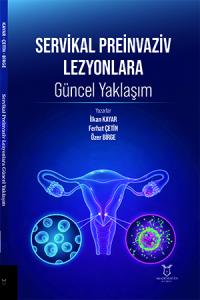
Servikal Preinvaziv Lezyonlara Güncel Yaklaşım
Özet
Referanslar
National Cancer Institute (NCI). Cancer Stat Facts: cervical cancer. NCI website. https://seer.cancer.gov/statfacts/html/cervix.html. Accessed June 28, 2018.
Melnikow J, Henderson JT, Burda BU, et al. Screening for Cervical Cancer With High-Risk Human Papillomavirus Testing: A Systematic Evidence Review for the US Preventive Services Task Force. Evidence Synthesis No. 158. Rockville, MD: Agency for Healthcare Research and Quality; 2018. AHRQ publication 15-05224-EF-1.
Kim JJ, Burger EA, Regan C, Sy S. Screening for Cervical Cancer in Primary Care: A Decision Analysis for the US Preventive Services Task Force. Rockville, MD: Agency for Healthcare Research and Quality; 2018. AHRQ publication 15-05224-EF-2.
Melnikow J, Henderson JT, Burda BU, Senger CA, Durbin S, Weyrich MS. Screening for cervical cancer with high-risk human papillomavirus testing: updated evidence report and systematic review for the US Preventive Services Task Force. JAMA. 2018;320(7):687-705.
Kim JJ, Burger EA, Regan C, Sy S. Screening for cervical cancer in primary care: a decision analysis for the US Preventive Services Task Force. JAMA. 2018;320(7):706-714.
Saslow D, Solomon D, Lawson HW, et al. American Cancer Society, American Society for Colposcopy and Cervical Pathology, and American Society for Clinical Pathology screening guidelines for the prevention and early detection of cervical cancer. J Low Genit Tract Dis. 2012;16(3):175-204.
Huh WK, Ault KA, Chelmow D, et al. Use of primary high-risk human papillomavirus testing for cervical cancer screening: interim clinical guidance. Obstet Gynecol. 2015;125(2):330-7.
Benard VB, Watson M, Castle PE, Saraiya M. Cervical carcinoma rates among young females in the United States. Obstet Gynecol. 2012;120(5):1117-23.
National Center for Health Statistics. Health, United States, 2015: With Special Feature on Racial and Ethnic Health Disparities. Hyattsville, MD: National Center for Health Statistics; 2016. Report 2016-1232.
Beavis AL, Gravitt PE, Rositch AF. Hysterectomy-corrected cervical cancer mortality rates reveal a larger racial disparity in the United States. Cancer. 2017;123(6):1044-50.
Wang SS, Sherman ME, Hildesheim A, Lacey JV Jr, Devesa S. Cervical adenocarcinoma and squamous cell carcinoma incidence trends among white women and black women in the United States for 1976-2000. Cancer. 2004;100(5):1035-44.
Galic V, Herzog TJ, Lewin SN, et al. Prognostic significance of adenocarcinoma histology in women with cervical cancer. Gynecol Oncol. 2012;125(2):287-91.
Benard VB, Thomas CC, King J, Massetti GM, Doria-Rose VP, Saraiya M; Centers for Disease Control and Prevention (CDC). Vital signs: cervical cancer incidence, mortality, and screening--United States, 2007-2012. MMWR Morb Mortal Wkly Rep. 2014;63(44):1004-9.
Andresen EM, Peterson-Besse JJ, Krahn GL, Walsh ES, Horner-Johnson W, Iezzoni LI. Pap, mammography, and clinical breast examination screening among women with disabilities: a systematic review. Womens Health Issues. 2013;23(4):e205-14.
Tracy JK, Schluterman NH, Greenberg DR. Understanding cervical cancer screening among lesbians: a national survey. BMC Public Health. 2013;13:442.
Peitzmeier SM, Reisner SL, Harigopal P, Potter J. Female-to-male patients have high prevalence of unsatisfactory Paps compared to non-transgender females: implications for cervical cancer screening. J Gen Intern Med. 2014;29(5):778-84.
Advisory Committee for Immunization Practices (ACIP), Centers for Disease Control and Prevention (CDC). Human papillomavirus (HPV) ACIP vaccine recommendations. CDC website. https://www.cdc.gov/vaccines/hcp/acip-recs/vacc-specific/hpv.html. Accessed June 28, 2018.
Panel on Opportunistic Infections in HIV-Infected Adults and Adolescents. Guidelines for the prevention and treatment of opportunistic infections in HIV-infected adults and adolescents: human papillomavirus disease. National Institutes of Health website. https://aidsinfo.nih.gov/guidelines/html/4/adult-and-adolescent-oi-prevention-and-treatment-guidelines/343/hpv. Accessed June 28, 2018.
Freeman HP, Wingrove BK. Excess Cervical Cancer Mortality: A Marker for Low Access to Health Care in Poor Communities. Rockville, MD: National Cancer Institute, Center to Reduce Cancer Health Disparities; 2005. NIH publication 05-5282.
American Cancer Society (ACS). Cervix at a glance. ACS website. https://cancerstatisticscenter.cancer.org/#!/cancer-site/Cervix. Accessed June 28, 2018.
Healthy People 2020. Cancer objectives. HealthyPeople.gov website. https://www.healthypeople.gov/2020/topics-objectives/topic/cancer/objectives. Updated June 18, 2018. Accessed June 28, 2018.
U.S. Preventive Services Task Force. Screening for cervical cancer: U.S. Preventive Services Task Force recommendation statement [published correction appears in Ann Intern Med. 2013;158(11):852]. Ann Intern Med. 2012;156(12):880-891, W312.
Vesco KK, Whitlock EP, Eder M, et al. Screening for Cervical Cancer: A Systematic Evidence Review for the US Preventive Services Task Force: Evidence Synthesis No. 86. Rockville, MD: Agency for Healthcare Research and Quality; 2011. AHRQ publication 11-05156-EF-1.
Owens DK, Whitlock EP, Henderson J, et al; U.S. Preventive Services Task Force. Use of decision models in the development of evidence-based clinical preventive services recommendations: methods of the U.S. Preventive Services Task Force. Ann Intern Med. 2016;165(7):501-8.
Sankaranarayanan R, Nene BM, Shastri SS, et al. HPV screening for cervical cancer in rural India. N Engl J Med. 2009;360(14):1385-94.
Insinga RP, Glass AG, Rush BB. Diagnoses and outcomes in cervical cancer screening: a population-based study. Am J Obstet Gynecol. 2004;191(1):105-13.
Kulasingam SL, Havrilesky L, Ghebre R, Myers ER. Screening for Cervical Cancer: A Decision Analysis for the U.S. Preventive Services Task Force. AHRQ Publication No 11-05157-EF-1. Rockville, MD: Agency for Healthcare Research and Quality; 2011.
Ronco G, Giorgi-Rossi P, Carozzi F, et al; New Technologies for Cervical Cancer Screening (NTCC) Working Group. Efficacy of human papillomavirus testing for the detection of invasive cervical cancers and cervical intraepithelial neoplasia: a randomised controlled trial. Lancet Oncol. 2010;11(3):249-57.
Ogilvie G, Krajden M, van Niekerk D, et al. HPV for cervical cancer screening (HPV FOCAL): complete round 1 results of a randomized trial comparing HPV-based primary screening to liquid-based cytology for cervical cancer. Int J Cancer. 2017;140(2):440-8.
Leinonen MK, Nieminen P, Lönnberg S, et al. Detection rates of precancerous and cancerous cervical lesions within one screening round of primary human papillomavirus DNA testing: prospective randomised trial in Finland. BMJ. 2012;345:e7789.
Canfell K, Caruana M, Gebski V, et al. Cervical screening with primary HPV testing or cytology in a population of women in which those aged 33 years or younger had previously been offered HPV vaccination: results of the Compass pilot randomised trial. PLoS Med. 2017;14(9):e1002388
Ronco G, Giorgi-Rossi P, Carozzi F, et al; New Technologies for Cervical Cancer Screening Working Group. Human papillomavirus testing and liquid-based cytology in primary screening of women younger than 35 years: results at recruitment for a randomised controlled trial. Lancet Oncol. 2006;7(7):547-555.
Ronco G, Segnan N, Giorgi-Rossi P, et al; New Technologies for Cervical Cancer Working Group. Human papillomavirus testing and liquid-based cytology: results at recruitment from the new technologies for cervical cancer randomized controlled trial. J Natl Cancer Inst. 2006;98(11):765-774.
Ronco G, Giorgi-Rossi P, Carozzi F, et al; New Technologies for Cervical Cancer Screening Working Group. Results at recruitment from a randomized controlled trial comparing human papillomavirus testing alone with conventional cytology as the primary cervical cancer screening test. J Natl Cancer Inst. 2008;100(7):492-501.
Ogilvie GS, van Niekerk D, Krajden M, et al. Effect of screening with primary cervical HPV testing vs cytology testing on high-grade cervical intraepithelial neoplasia at 48 months: the HPV FOCAL randomized clinical trial. JAMA. 2018;320(1):43-52.
Naucler P, Ryd W, Törnberg S, et al. Human papillomavirus and Papanicolaou tests to screen for cervical cancer. N Engl J Med. 2007;357(16):1589-97.
Elfström KM, Smelov V, Johansson AL, et al. Long term duration of protective effect for HPV negative women: follow-up of primary HPV screening randomised controlled trial. BMJ. 2014;348:g130.
Kitchener HC, Fletcher I, Roberts C, Wheeler P, Almonte M, Maguire P. The psychosocial impact of human papillomavirus testing in primary cervical screening--a study within a randomized trial. Int J Gynecol Cancer. 2008;18(4):743-8.
Kitchener HC, Almonte M, Gilham C, et al; ARTISTIC Trial Study Group. ARTISTIC: a randomised trial of human papillomavirus (HPV) testing in primary cervical screening. Health Technol Assess. 2009;13(51):1-150, iii-iv.
Kitchener HC, Almonte M, Thomson C, et al. HPV testing in combination with liquid-based cytology in primary cervical screening (ARTISTIC): a randomised controlled trial. Lancet Oncol. 2009;10(7):672-82.
Rijkaart DC, Berkhof J, Rozendaal L, et al. Human papillomavirus testing for the detection of high-grade cervical intraepithelial neoplasia and cancer: final results of the POBASCAM randomised controlled trial. Lancet Oncol. 2012;13(1):78-88.
Kitchener HC, Canfell K, Gilham C, et al. The clinical effectiveness and cost-effectiveness of primary human papillomavirus cervical screening in England: extended follow-up of the ARTISTIC randomised trial cohort through three screening rounds. Health Technol Assess. 2014;18(22):1-196.
McCaffery K, Waller J, Forrest S, Cadman L, Szarewski A, Wardle J. Testing positive for human papillomavirus in routine cervical screening: examination of psychosocial impact. BJOG. 2004;111(12):1437-43.
Ronco G, Dillner J, Elfström KM, et al; International HPV Screening Working Group. Efficacy of HPV-based screening for prevention of invasive cervical cancer: follow-up of four European randomised controlled trials. Lancet. 2014;383(9916):524-532.
Zorzi M, Frayle H, Rizzi M, et al; Veneto HPV-screening Working Group. A 3-year interval is too short for re-screening women testing negative for human papillomavirus: a population-based cohort study. BJOG. 2017;124(10):1585-1593.
Katki HA, Kinney WK, Fetterman B, et al. Cervical cancer risk for women undergoing concurrent testing for human papillomavirus and cervical cytology: a population-based study in routine clinical practice. [published correction appears in Lancet Oncol. 2011;12(8):722]. Lancet Oncol. 2011;12(7):663-672.
Castle PE, Fetterman B, Poitras N, et al. Variable risk of cervical precancer and cancer after a human papillomavirus-positive test. Obstet Gynecol. 2011;117(3):650-656.
Gage JC, Katki HA, Schiffman M, et al. Age-stratified 5-year risks of cervical precancer among women with enrollment and newly detected HPV infection. Int J Cancer. 2015;136(7):1665-1671.
Gage JC, Schiffman M, Katki HA, et al. Reassurance against future risk of precancer and cancer conferred by a negative human papillomavirus test. J Natl Cancer Inst. 2014;106(8):dju153.
Katki HA, Schiffman M, Castle PE, et al. Five-year risks of CIN 3+ and cervical cancer among women who test Pap-negative but are HPV-positive. J Low Genit Tract Dis. 2013;17(5)(suppl 1):S56-S63.
Katki HA, Schiffman M, Castle PE, et al. Benchmarking CIN 3+ risk as the basis for incorporating HPV and Pap cotesting into cervical screening and management guidelines. J Low Genit Tract Dis. 2013;17(5)(suppl 1):S28-S35.
Ibáñez R, Autonell J, Sardà M, et al. Protecting the underscreened women in developed countries: the value of HPV test. BMC Cancer. 2014;14:574.
Demarco M, Lorey TS, Fetterman B, et al. Risks of CIN 2+, CIN 3+, and cancer by cytology and human papillomavirus status: the foundation of risk-based cervical screening guidelines. J Low Genit Tract Dis. 2017;21(4):261-267.
Dijkstra MG, van Zummeren M, Rozendaal L, et al. Safety of extending screening intervals beyond five years in cervical screening programmes with testing for high risk human papillomavirus: 14 year follow-up of population based randomised cohort in the Netherlands. BMJ. 2016;355:i4924.
Castle PE, Kinney WK, Xue X, et al. Effect of several negative rounds of human papillomavirus and cytology co-testing on safety against cervical cancer: an observational cohort study. Ann Intern Med. 2018;168(1):20-29.
Coldman AJ, Gondara L, Smith LW, et al. Disease detection and resource use in the safety and control arms of the HPV FOCAL cervical cancer screening trial. Br J Cancer. 2016;115(12):1487-1494.
Cook DA, Mei W, Smith LW, et al. Comparison of the Roche cobas® 4800 and Digene Hybrid Capture® 2 HPV tests for primary cervical cancer screening in the HPV FOCAL trial. BMC Cancer. 2015;15:968.
Ogilvie GS, van Niekerk DJ, Krajden M, et al. A randomized controlled trial of human papillomavirus (HPV) testing for cervical cancer screening: trial design and preliminary results (HPV FOCAL Trial). BMC Cancer. 2010;10:111.
Bulkmans NW, Rozendaal L, Snijders PJ, et al. POBASCAM, a population-based randomized controlled trial for implementation of high-risk HPV testing in cervical screening: design, methods and baseline data of 44,102 women. Int J Cancer. 2004;110(1):94-101.
Luyten A, Buttmann-Schweiger N, Luyten K, et al. Early detection of CIN3 and cervical cancer during long-term follow-up using HPV/Pap smear co-testing and risk-adapted follow-up in a locally organised screening programme. Int J Cancer. 2014;135(6):1408-1416.
Petry KU, Luyten A, Scherbring S. Accuracy of colposcopy management to detect CIN3 and invasive cancer in women with abnormal screening tests: results from a primary HPV screening project from 2006 to 2011 in Wolfsburg, Germany. Gynecol Oncol. 2013;128(2):282-287.
Dinkelspiel H, Fetterman B, Poitras N, et al. Screening history preceding a diagnosis of cervical cancer in women age 65 and older. Gynecol Oncol. 2012;126(2):203-206.
Fox J, Remington P, Layde P, Klein G. The effect of hysterectomy on the risk of an abnormal screening Papanicolaou test result. Am J Obstet Gynecol. 1999;180(5):1104-1109.
Pearce KF, Haefner HK, Sarwar SF, Nolan TE. Cytopathological findings on vaginal Papanicolaou smears after hysterectomy for benign gynecologic disease. N Engl J Med. 1996;335(21):1559-1562.
American Academy of Family Physicians (AAFP). Clinical preventive service recommendation: cervical cancer. AAFP website. https://www.aafp.org/patient-care/clinical-recommendations/all/cervical-cancer.html. 2018. Accessed June 28, 2018.
Committee on Practice Bulletins—Gynecology. Practice Bulletin No. 168: cervical cancer screening and prevention. Obstet Gynecol. 2016;128(4):e111-e130.
Curry SJ, Krist AH, Owens DK, Barry MJ, Caughey AB, Davidson KW, et al. Screening for cervical cancer: U.S. Preventive Services Task Force recommendation statement. U.S. Preventive Services Task Force. JAMA 2018;320:674–86.
Saslow D, Solomon D, Lawson HW, Killackey M, Kulasingam SL, Cain J, et al. American Cancer Society, American Society for Colposcopy and Cervical Pathology, and American Society for Clinical Pathology screening guidelines for the prevention and early detection of cervical cancer. Am J Clin Pathol 2012;137:516–42.
American College of Obstetricians and Gynecologists. Updated guidelines for management of cervical cancer screening abnormalities. Practice Advisory. Washington, DC: American College of Obstetricians and Gynecologists; 2020. Available at: https://www.acog.org/clinical/clinical-guidance/practice-advisory/articles/2020/10/updated-guidelines-for-management-of-cervical-cancer-screening-abnormalities.
Perkins RB, Guido RS, Castle PE, Chelmow D, Einstein MH, Garcia F, et al. 2019 ASCCP risk-based management consensus guidelines for abnormal cervical cancer screening tests and cancer precursors. 2019 ASCCP Risk-Based Management Consensus Guidelines Committee [published erratum appears in J Low Genit Tract Dis 2020;24:427]. J Low Genit Tract Dis 2020;24:102–31.
Fontham ET, Wolf AM, Church TR, Etzioni R, Flowers CR, Herzig A, et al. Cervical cancer screening for individuals at average risk: 2020 guideline update from the American Cancer Society. CA Cancer J Clin 2020;70:321–46. Available at: https://acsjournals.onlinelibrary.wiley.com/doi/10.3322/caac.21628.
Kim JJ, Burger EA, Regan C, Sy S. Screening for cervical cancer in primary care: a decision analysis for the US Preventive Services Task Force. JAMA 2018;320:706–14. Available at: : https://jamanetwork.com/journals/jama/fullarticle/2697702.
Melnikow J, Henderson JT, Burda BU, Senger CA, Durbin S, Weyrich MS. Screening for cervical cancer with high-risk human papillomavirus testing: updated evidence report and systematic review for the US Preventive Services Task Force. JAMA 2018;320:687–705.
Centers for Disease Control and Prevention. HPV-associated cervical cancer rates by race and ethnicity. Available at: https://www.cdc.gov/cancer/hpv/statistics/cervical.htm.
Beavis AL, Gravitt PE, Rositch AF. Hysterectomy-corrected cervical cancer mortality rates reveal a larger racial disparity in the United States. Cancer 2017;123:1044–50. Available at: https://acsjournals.onlinelibrary.wiley.com/doi/10.1002/cncr.30507.
Buskwofie A, David-West G, Clare CA. A review of cervical cancer: incidence and disparities. J Natl Med Assoc 2020;112:229–32.
Yeh PT, Kennedy CE, de Vuyst H, Narasimhan M. Self-sampling for human papillomavirus (HPV) testing: a systematic review and meta-analysis. BMJ Glob Health 2019;4:e001351.
Benard VB, Castle PE, Jenison SA, Hunt WC, Kim JJ, Cuzick J, et al. Population-based incidence rates of cervical intraepithelial neoplasia in the human papillomavirus vaccine era. New Mexico HPV Pap Registry Steering Committee. JAMA Oncol 2017;3:833–7.
Rosenblum HG, Lewis RM, Gargano JW, Querec TD, Unger ER, Markowitz LE. Declines in prevalence of human papillomavirus vaccine-type infection among females after introduction of vaccine—United States, 2003-2018. MMWR Morb Mortal Wkly Rep 2021;70:415–20.
Elam-Evans LD, Yankey D, Singleton JA, Sterrett N, Markowitz LE, Williams CL, et al. National, regional, state, and selected local area vaccination coverage among adolescents aged 13-17 years - United States, 2019. MMWR Morb Mortal Wkly Rep 2020;69:1109–16.
U.S. Department of Health and Human Services. Increase the proportion of adolescents who get recommended doses of the HPV vaccine—IID 08. Healthy People 2030. Available at: https://health.gov/healthypeople/objectives-and-data/browse-objectives/vaccination/increase-proportion-adolescents-who-get-recommended-doses-hpv-vaccine-iid-08.
Agénor M, Pérez AE, Peitzmeier SM, Borrero S. Racial/ethnic disparities in human papillomavirus vaccination initiation and completion among U.S. women in the post-Affordable Care Act era. Ethn Health 2020;25:393–407.
MacLaughlin KL, Jacobson RM, Radecki Breitkopf C, Wilson PM, Jacobson DJ, Fan C, et al. Trends over time in Pap and Pap-HPV cotesting for cervical cancer screening. J Womens Health (Larchmt) 2019;28:244–9.
Sabatino SA, Thompson TD, White MC, Shapiro JA, de Moor J, Doria-Rose VP, et al. Cancer screening test receipt—United States, 2018. MMWR Morb Mortal Wkly Rep 2021;70:29–35. Available at: https://www.cdc.gov/mmwr/volumes/70/wr/mm7002a1.htm.
Johnson NL, Head KJ, Scott SF, Zimet GD. Persistent disparities in cervical cancer screening uptake: knowledge and sociodemographic determinants of Papanicolaou and human papillomavirus testing among women in the United States. Public Health Rep 2020;135:483–91.
Human papillomavirus vaccination. ACOG Committee Opinion No. 809. American College of Obstetricians and Gynecologists Obstet Gynecol 2020;136:e15–21. Available at: https://journals.lww.com/greenjournal/Fulltext/2020/08000/Human_Papillomavirus_Vaccination__ACOG_Committee.48.aspx.
Castle P, Feldman S, Perkins RB. The next generation of cervical cancer screening: should guidelines focus on best practices for the future or current screening capacity? J Low Genit Tract Dis 2018;22:91–6.
Fontham ETH, Wolf AMD, Church TR, et al. Cervical cancer screening for individuals at average risk: 2020 guideline update from the American Cancer Society. CA Cancer J Clin 2020;70:321–46.
Saslow D, Solomon D, Lawson HW, et al. American Cancer Society, American Society for Colposcopy and Cervical Pathology, and American Society for Clinical Pathology screening guidelines for the prevention and early detection of cervical cancer. Am J Clin Pathol 2012;137:516–42.
Min CJ, Massad LS, Dick R, et al. Assessing physician adherence to guidelines for cervical cancer screening and management of abnormal screening results. J Low Genit Tract Dis 2020;24:337–42.
Zhao C, Crothers BA, Ghofrani M, et al. Human papillomavirus genotyping testing practice in 2014: results of a College of American Pathologists National Survey. Arch Pathol Lab Med 2016;140:1364–70.
Rendle KA, Schiffman M, Cheung LC, et al. Adherence patterns to extended cervical screening intervals in women undergoing human papillomavirus (HPV) and cytology cotesting. Prev Med 2018;109:44–50.
Perkins RB, Anderson BL, Gorin SS, et al. Challenges in cervical cancer prevention: a survey of U.S. obstetrician-gynecologists. Am J Prev Med 2013;45:175–81.
Darwish-Yassine M, Garvin AD, Johnston CM, et al. An assessment of gynecological cytology screening practices among health care providers nationwide. Arch Pathol Lab Med 2015;139:650–5.
Saraiya M, Kwan A, Cooper CP. Primary HPV testing: U.S. women's awareness and acceptance of an emerging screening modality. Prev Med 2018;108:111–4.
Silver MI, Rositch AF, Burke AE, et al. Patient concerns about human papillomavirus testing and 5-year intervals in routine cervical cancer screening. Obstet Gynecol 2015;125:317–29.
Gerend MA, Shepherd MA, Kaltz EA, et al. Understanding women's hesitancy to undergo less frequent cervical cancer screening. Prev Med 2017;95:96–102.
Davey DD, Souers RJ, Goodrich K, et al. Bethesda 2014 implementation and human papillomavirus primary screening: practices of laboratories participating in the College of American Pathologists PAP Education Program. Arch Pathol Lab Med 2019;143:1196–202.
Blumenthal D, Fowler EJ, Abrams M, et al. Covid-19—implications for the health care system. N Engl J Med 2020;383:1483–8.
Boersma P, Black LI. Human papillomavirus vaccination among adults aged 18–26, 2013–2018. NCHS Data Brief 2020:1–8.
World Health Organization. 2019. Available at: https://www.who.int/news/item/31-10-2019-major-milestone-reached-as-100-countries-have-introduced-hpv-vaccine-into-national-schedule. Accessed February 10, 2021.
Benard VB, Castle PE, Jenison SA, et al. Population-based incidence rates of cervical intraepithelial neoplasia in the human papillomavirus vaccine era. JAMA Oncol 2017;3:833–7.
Castle PE, Xie X, Xue X, et al. Impact of human papillomavirus vaccination on the clinical meaning of cervical screening results. Prev Med 2019;118:44–50.
Palmer T, Wallace L, Pollock KG, et al. Prevalence of cervical disease at age 20 after immunisation with bivalent HPV vaccine at age 12–13 in Scotland: retrospective population study. BMJ 2019;365:l1161.Cited Here | Google Scholar
Racey CS, Albert A, Donken R, et al. Cervical intraepithelial neoplasia rates in british columbia women: a population-level data linkage evaluation of the school-based HPV immunization program. J Infect Dis 2020;221:81–90.
Porras C, Tsang SH, Herrero R, et al. Efficacy of the bivalent HPV vaccine against HPV 16/18-associated precancer: long-term follow-up results from the Costa Rica Vaccine Trial. Lancet Oncol 2020;21:1643–52.
Shiko Y, Konno R, Konishi H, et al. Effectiveness of HPV vaccination against the development of high-grade cervical lesions in young Japanese women. BMC Infect Dis 2020;20:808.
Drolet M, Benard E, Perez N, et al., Group HPVVIS. Population-level impact and herd effects following the introduction of human papillomavirus vaccination programmes: updated systematic review and meta-analysis. Lancet 2019;394:497–509.
Lei J, Ploner A, Lehtinen M, et al. Impact of HPV vaccination on cervical screening performance: a population-based cohort study. Br J Cancer 2020;123:155–60.
Canfell K, Caruana M, Gebski V, et al. Cervical screening with primary HPV testing or cytology in a population of women in which those aged 33 years or younger had previously been offered HPV vaccination: results of the Compass pilot randomised trial. PLoS Med 2017;14:e1002388.
Wentzensen N, Arbyn M, Berkhof J, et al. Eurogin 2016 roadmap: how HPV knowledge is changing screening practice. Int J Cancer 2017;140:2192–200.
Dilley S, Miller KM, Huh WK. Human papillomavirus vaccination: ongoing challenges and future directions. Gynecol Oncol 2020;156:498–502.
Walker TY, Elam-Evans LD, Yankey D, et al. National, regional, state, and selected local area vaccination coverage among adolescents aged 13–17 years—United States, 2017. MMWR Morb Mortal Wkly Rep 2018;67:909–17.
Bednarczyk RA, Curran EA, Orenstein WA, et al. Health disparities in human papillomavirus vaccine coverage: trends analysis from the National Immunization Survey-Teen, 2008–2011. Clin Infect Dis 2014;58:238–41.
Kellogg C, Shu J, Arroyo A, et al. A significant portion of college students are not aware of HPV disease and HPV vaccine recommendations. Hum Vaccin Immunother 2019;15:1760–6.
U.S. Cancer Statistics Working Group. U.S. Cancer Statistics Data Visualizations Tool, based on 2019 submission data (1999–2017): U.S. Department of Health and Human Services, Centers for Disease Control and Prevention and National Cancer Institute. 2020. Available at: www.cdc.gov/cancer/dataviz. Accessed February 10, 2021.
Abdalla E, Troy R, Fall S, et al. Racial differences in 5-year relative survival rates of cervical cancer by stage at diagnosis, between African American (black) and white women, living in the state of Alabama, USA. BMC Cancer 2020;20:830.
Burger EA, Lee K, Saraiya M, et al. Racial and ethnic disparities in human papillomavirus-associated cancer burden with first-generation and second-generation human papillomavirus vaccines. Cancer 2016;122:2057–66.
Karuri AR, Kashyap VK, Yallapu MM, et al. Disparity in rates of HPV infection and cervical cancer in underserved US populations. Front Biosci (Schol Ed) 2017;9:254–69.
Benard VB, Thomas CC, King J, et al. Vital signs: cervical cancer incidence, mortality, and screening—United States, 2007–2012. MMWR Morb Mortal Wkly Rep 2014;63:1004–9.
Montealegre JR, Varier I, Bracamontes CG, et al. Racial/ethnic variation in the prevalence of vaccine-related human papillomavirus genotypes. Ethn Health 2019;24:804–15.
Vidal AC, Smith JS, Valea F, et al. HPV genotypes and cervical intraepithelial neoplasia in a multiethnic cohort in the southeastern USA. Cancer Causes Control 2014;25:1055–62.
Shokar NK, Doan A, Calderon-Mora J, et al. The prevalence of genital human papillomavirus subtypes in a cohort of hispanic women presenting for cervical cancer screening along the US-Mexico border. Cancer Control 2020;27:1073274820951780.
Curry SJ, Krist AH, Owens DK, et alUS Preventive Services Task Force. Screening for cervical cancer: US preventive services task force recommendation statement. JAMA 2018;320:674–86.
Rositch AF, Nowak RG, Gravitt PE. Increased age and race-specific incidence of cervical cancer after correction for hysterectomy prevalence in the United States from 2000 to 2009. Cancer 2014;120:2032–8.
Yost S, Hoekstra A. Cervical cancer in women over 65: an analysis of screening. Gynecol Oncol Rep 2018;25:48–51.
Beavis AL, Gravitt PE, Rositch AF. Hysterectomy-corrected cervical cancer mortality rates reveal a larger racial disparity in the United States. Cancer 2017;123:1044–50.
Perkins RB, Guido RS, Castle PE, et al. 2019 ASCCP Risk-Based Management Consensus Guidelines for Abnormal Cervical Cancer Screening Tests and Cancer Precursors. J Low Genit Tract Dis 2020;24:102–31.
Dinkelspiel H, Fetterman B, Poitras N, et al. Screening history preceding a diagnosis of cervical cancer in women age 65 and older. Gynecol Oncol 2012;126:203–6.
Islami F, Fedewa SA, Jemal A. Trends in cervical cancer incidence rates by age, race/ethnicity, histological subtype, and stage at diagnosis in the United States. Prev Med 2019;123:316–23.
Castanon A, Landy R, Sasieni PD. Is cervical screening preventing adenocarcinoma and adenosquamous carcinoma of the cervix? Int J Cancer 2016;139:1040–5.
Katki HA, Kinney WK, Fetterman B, et al. Cervical cancer risk for women undergoing concurrent testing for human papillomavirus and cervical cytology: a population-based study in routine clinical practice. Lancet Oncol 2011;12:663–72.
Creasman WT. Cancer and pregnancy. Ann N Y Acad Sci. 2001 Sep;943:281-6.
Smith LH, Danielsen B, Allen ME, Cress R. Cancer associated with obstetric delivery: results of linkage with the California cancer registry. Am J Obstet Gynecol. 2003 Oct;189(4):1128-35.
Al-Halal H, Kezouh A, Abenhaim HA. Incidence and obstetrical outcomes of cervical intraepithelial neoplasia and cervical cancer in pregnancy: a population-based study on 8.8 million births. Arch Gynecol Obstet. 2013 Feb;287(2):245-50.
Kaplan KJ, Dainty LA, Dolinsky B, Rose GS, Carlson J, McHale M, Elkas JC. Prognosis and recurrence risk for patients with cervical squamous intraepithelial lesions diagnosed during pregnancy. Cancer. 2004 Aug 25;102(4):228-32.
Liu Y, Ang Q, Wu H, Xu J, Chen D, Zhao H, Liu H, Guo X, Gu Y, Qiu H. Prevalence of human papillomavirus genotypes and precancerous cervical lesions in a screening population in Beijing, China: analysis of results from China's top 3 hospital, 2009-2019. Virol J. 2020 Jul 13;17(1):104.
Gravitt PE, Winer RL. Natural History of HPV Infection across the Lifespan: Role of Viral Latency. Viruses. 2017 Sep 21;9(10):267.
Perkins RB, Wentzensen N, Guido RS, Schiffman M. Cervical Cancer Screening: A Review. JAMA. 2023 Aug 8;330(6):547-558.
Van Calsteren K, Vergote I, Amant F. Cervical neoplasia during pregnancy: diagnosis, management and prognosis. Best Pract Res Clin Obstet Gynaecol. 2005 Aug;19(4):611-30.
Perkins RB, Guido RS, Castle PE, Chelmow D, Einstein MH, Garcia F, Huh WK, Kim JJ, Moscicki AB, Nayar R, Saraiya M, Sawaya GF, Wentzensen N, Schiffman M; 2019 ASCCP Risk-Based Management Consensus Guidelines Committee. 2019 ASCCP Risk-Based Management Consensus Guidelines for Abnormal Cervical Cancer Screening Tests and Cancer Precursors. J Low Genit Tract Dis. 2020 Apr;24(2):102-131.
Origoni M, Salvatore S, Perino A, Cucinella G, Candiani M. Cervical Intraepithelial Neoplasia (CIN) in pregnancy: the state of the art. Eur Rev Med Pharmacol Sci. 2014;18(6):851-60.
Müller K, Soergel P, Hillemanns P, Jentschke M. Accuracy of Colposcopically Guided Diagnostic Methods for the Detection of Cervical Intraepithelial Neoplasia. Geburtshilfe Frauenheilkd. 2016 Feb;76(2):182-187.
Shaughnessy AF., CIN treatment may increase miscarriages but does not afect fertility. Am Fam Physician. 2015;91(7):490
Fader AN, Alward EK, Niederhauser A, Chirico C, Lesnock JL, Zwiesler DJ, Guido RS, Lofgren DJ, Gold MA, Moore KN. Cervical dysplasia in pregnancy: a multi-institutional evaluation. Am J Obstet Gynecol. 2010 Aug;203(2):113.e1-6.
Coppolillo EF, DE Ruda Vega HM, Brizuela J, Eliseth MC, Barata A, Perazzi BE. High-grade cervical neoplasia during pregnancy: diagnosis, management and postpartum findings. Acta Obstet Gynecol Scand. 2013 Mar;92(3):293-7.
Grimm D, Lang I, Prieske K, Jaeger A, Müller V, Kuerti S, Burandt E, Lezius S, Schmalfeldt B, Woelber L. Course of cervical intraepithelial neoplasia diagnosed during pregnancy. Arch Gynecol Obstet. 2020 Jun;301(6):1503-1512.
Serati M, Uccella S, Laterza RM, Salvatore S, Beretta P, Riva C, Bolis PF. Natural history of cervical intraepithelial neoplasia during pregnancy. Acta Obstet Gynecol Scand. 2008;87(12):1296-300.
Schuster S, Joura E, Kohlberger P. Natural History of Squamous Intraepithelial Lesions in Pregnancy and Mode of Delivery. Anticancer Res. 2018 Apr;38(4):2439-2442.
Massad LS, Einstein MH, Huh WK, Katki HA, Kinney WK, Schiffman M, Solomon D, Wentzensen N, Lawson HW; 2012 ASCCP Consensus Guidelines Conference. 2012 updated consensus guidelines for the management of abnormal cervical cancer screening tests and cancer precursors. J Low Genit Tract Dis. 2013 Apr;17(5 Suppl 1):S1-S27.
Stuebs FA, Schulmeyer CE, Mehlhorn G, Gass P, Kehl S, Renner SK, Renner SP, Geppert C, Adler W, Hartmann A, Beckmann MW, Koch MC. Accuracy of colposcopy-directed biopsy in detecting early cervical neoplasia: a retrospective study. Arch Gynecol Obstet. 2019 Feb;299(2):525-532.
Mailath-Pokorny M, Schwameis R, Grimm C, Reinthaller A, Polterauer S. Natural history of cervical intraepithelial neoplasia in pregnancy: postpartum histo-pathologic outcome and review of the literature. BMC Pregnancy Childbirth. 2016 Apr 7;16:74.
Tainio K, Athanasiou A, Tikkinen KAO, Aaltonen R, Cárdenas J, Hernándes, Glazer-Livson S, Jakobsson M, Joronen K, Kiviharju M, Louvanto K, Oksjoki S, Tähtinen R, Virtanen S, Nieminen P, Kyrgiou M, Kalliala I. Clinical course of untreated cervical intraepithelial neoplasia grade 2 under active surveillance: systematic review and meta-analysis. BMJ. 2018 Feb 27;360:k499.
Kim JY, Shim JY. Cervical intraepithelial neoplasia and cervical cytology in pregnancy. J Pathol Transl Med. 2024 Nov;58(6):283-290. doi: 10.4132/jptm.2024.10.17. Epub 2024 Nov 7.
Stuebs FA, Mergel F, Koch MC, et al. Cervical intraepithelial neoplasia grade 3: development during pregnancy and postpartum. Arch Gynecol Obstet 2023; 307: 1567-72.
Dasgupta S. The fate of cervical dysplastic lesions during pregnancy and the impact of the delivery mode: a review. Cureus 2023; 15: e42100.
Chen C, Xu Y, Huang W, Du Y, Hu C. Natural history of histologically confirmed high-grade cervical intraepithelial neoplasia during pregnancy: meta-analysis. BMJ Open 2021; 11: e048055.
Ehret A, Bark VN, Mondal A, Fehm TN, Hampl M. Regression rate of high-grade cervical intraepithelial lesions in women younger than 25 years. Arch Gynecol Obstet 2023; 307: 981-90.
Han B, Yuan M, Gong Y, et al. The clinical course of untreated CIN2 (HPV16/18+) under active monitoring: a protocol of systematic reviews and meta-analysis. Medicine (Baltimore) 2023; 102: e32855.
Yost NP, Santoso JT, McIntire DD, Iliya FA. Postpartum regression rates of antepartum cervical intraepithelial neoplasia II and III lesions. Obstet Gynecol. 1999 Mar;93(3):359-62.
Zhang X, Gao YL, Yang Y. Treatment and prognosis of cervical cancer associated with pregnancy: analysis of 20 cases from a Chinese tumor institution. J Zhejiang Univ Sci B. 2015 May;16(5):388-94.
Ciavattini A, Serri M, Di Giuseppe J, Liverani CA, Fallani MG, Tsiroglou D, Papiccio M, Delli Carpini G, Pieralli A, Clemente N, Sopracordevole F. Reliability of colposcopy during pregnancy. Eur J Obstet Gynecol Reprod Biol. 2018 Oct;229:76-81.
Chung SM, Son GH, Nam EJ, et al. Mode of delivery influences the regression of abnormal cervical cytology. Gynecol Obstet Invest 2011; 72: 234-8.
Yayınlanan
Lisans
LisansBu İnternet Sitesi içeriğinde yer alan tüm eserler (yazı, resim, görüntü, fotoğraf, video, müzik vb.) Akademisyen Kitabevine ait olup, 5846 sayılı Fikir ve Sanat Eserleri Kanunu ve 5237 sayılı Türk Ceca Kanunu kapsamında korunmaktadır. Bu hakları ihlal eden kişiler, 5846 sayılı Fikir ve Sanat eserleri Kanunu ve 5237 sayılı Türk Ceza Kanununda yer alan hukuki ve cezai yaptırımlara tabi olurlar. Yayınevi ilgili yasal yollara başvurma hakkına sahiptir.
