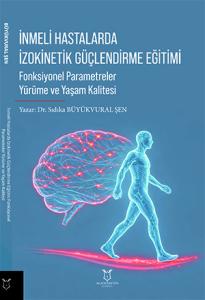
İnmeli Hastalarda İzokinetik Güçlendirme Eğitimi, Fonksiyonel Parametreler, Yürüme ve Yaşam Kalitesi
Özet
-
Referanslar
Oğuz H, Dursun E, Dursun N, Tıbbi Rehabilitasyon. Nobel Tıp Kitapevleri, 2004, 589-617.
Richard LH, Elliot JR and David Yu Rehabilitation in Stroke Syndromes. In; Braddom RL ed. Thırd Edition Phyical medicine and rehabilitation. Saunders, 2000 pp 1175-1212.
World Health Organization: Cerebrovasculer diseases: Prevention, treatment and rehabilitation. WHO Tech Rep Ser No 1971;469: 1-57.
Özcan O. , Tanımlar ve Epidemiyoloji. Hemipleji Rehabilitasyonu. Özcan O. 1-3.
Wolf PA. An overwiev of epidemiology of stroke. Stroke 1990; 21(Suppl 11);4-6.
Roth EJ: Stroke. (Eds):O'Young B, Young MA, Stiens SA. PMR Secrets, Hanley Berfusı Inc,1997:253-261.
Dinçer K: inme. (Ed): Beyazova Mı Gökçe Kutsal Y. Fiziksel Tıp ve Rehabilitasyon. Güneş Kitabevi, 2000:1935-1950.
Lindenstrom E, Boysen G, Nybee J, Appleyard M: Stroke Incidence in Copenhaqen, 1976-1988. Stroke 1992 Jan;23(1):28-32.
Garrison SJ, Rolak LA., Rehabilitation of the stroke patients.(Ed):DeLisa JA. Rehabilitation Medicine. Principles and Practice. Second edition. J.B. Lipincott Company,1993:801-824.
Brandstrater E. M., İnme Rehbilitasyonu Fiziksel Tıp ve Rehabilitasyon, 4. Baskı, De Lisa JA, Gans BM, 1655-1676.
Broderick JP., Philips SJ., Whisnant JP., O'Fallon Wm, Bergstralh EJ: incidence rates of stroke in the eighties: The end of decline in stroke. Stroke 1989;20:577- 582.
Aras MD., Çakçı A., İnme Rehabilitasyonu. Tıbbi Rehabilitasyon, 2. Baskı , Oğuz H., Dursun E., Dursun N., 589-617.
NolI SF, Roth EJ: Stroke Rehabilitation.1. Epidemiyologic Aspects and Acute Management. Arch Phys Med Rehabil.1994 May;Vol 75:38-40.
De Lisa JA. Fiziksel Tıp ve Rehabilitasyon İlkeler ve Uygulamalar. Çeviri Editörü: Tansu Arasıl. Güneş Tıp Kitapevleri, 2007, cilt 2, 1655-1676.
Utku U. İnme tanımı, etiyolojisi, sınıflandırma ve risk faktörleri. Türkiye Fiziksel Tıp ve Rehabilitasyon dergisi 2007 ;53: 1-3.
Modan B, Wagener DK. Some epidemiological aspects of stroke: mortality / morbidity trends, age, sex, race, socioeconomic status. Stroke 1992; 23: 1230-1236.
Dyken ML, Conneally M, Haener AF, et al. Cooperative study of the hospital frequency and charecter o transient iskemic attacs. 1. Background, organization and clinical survey. JAMA 1997;237:882-86.
Feinberg WM, Albers GW, Barnett HJM, et al. Guidelines for the management of transient ischemic attacks. Stroke 1994; 25:1320-1335.
Kannel WB, Dawber TR, Sorlie P, Wolf PA. Components of blood pressure and risk of atherothrombotic brain infarction. The Framingham study. Stroke 1976;7 :327-331.
Braddom RL. Physical Medicine and Rehabilitation. Saunders Elsevier, 2007, Third addition, Volume 2, 1175-1210.
Ellekjaer EF, Wyller TB, SverreJM, Holmen J. Lifestyle factors and risk of cerebral infarction. Stroke 1992 ;23:829-834.
Shinton R, Beevers G. Meta-analysis of relation between cigarette smoking and stroke. BMJ 1989; 298:789-794.
Roth EJ, Harvey RL: Rehabilitation of stroke syndromes. (Ed): Braddom RL. Physical Medicine and Rehabilitation. Second edition. W:B. Saunders Company, 2000:1117-1153.
Adult Treatment Panel 3. National Cholesterol Education Program
Özcan O. Hemipleji rehabilitasyonu. In:(Ed):Oğuz H. Tıbbi Rehabilitasyon İstanbul Nobel Kitabevi 1995:385-398.
Öge E. Nöroloji. Nobel Tıp Kitapevleri, 2004, 223-248.
Sadıkoğlu S: Beyin damar hastalıkları.(Ed):Özcan O. Hemipleji rehabilitasyonu. Nobel Tıp Kitabevleri, 1995: 4-9.
Duus P. Nöroloji, Tanıda Lokalizasyon. çeviren: Yurttaş Oğuz, Sibel Özkaynak, Mehmet Zülküf Önal. Palme Yayıncılık, 2001, 256-324.
Skılbeck CE, Wade DT, Hewer RL. Recovery after stroke. J Neurol Neurosurg Psychiatry 1983;46:5-8.
Hemipleji ve Rehabilitasyonu Sempozyum Kitabı, Gazi Üniversitesi Tıp Fakültesi, Ankara, 8-9 Ekim 1999
Nudo Rl, Plasticity. The Journal of the American Society for Experimental Neuro Therapeutics 2006;3:420-427.
Hlustik P, Mayer M. Paretic hand in stroke: From motor cortical plasticity re search to rehabilitation. Cogn Behav Neuro12006 Mar; 1 9(1):34-40.
Levin HS. Neuroplasticity and brain imaging research: Implications for rehabilitation. Arch Phys Med Rehabil2006;87 Suppl2:S 1.
Twitchell TE. The restoration of motor function following hemiplegia ın man. Brain 1951 ;74:443-480.
Olsen TS. Arm and leg paresis as outcome predictors in stroke rehabilitation. Stroke 1990;21:247-251.
Eyigör S. İnmeli hastalarda genel rehabilitasyon prensipleri, yaşam kalitesi ve son durum değerlendirmesi. Türkiye Fiziksel Tıp ve Rehabilitasyon dergisi 2007;53:19-25.
Aktaş S:Hemiplejik hastanın rehabilitasyon potansiyelini değerlendirme. (Ed): Özcan O. Hemipleji rehabilitasyonu.1995: 11-23.
Mary L. Dombowy, Rita P Bach-y: Clinical observations on recovery form stroke. Advance Neurology 1998;47:265-276.
Özgirgin N. Hemiplejide fonksiyonel rehabilitasyon. Gazi Üniversitesi Tıp Fakültesi, Fiziksel Tıp ve Rehabilitasyon Ana Bilim Dalı, Hemileji ve Rehabilitasyon Sempozyum Kitabı, 1999:61-78
Duncan PW, Zorowitz R, Bates B, Choi JY, Glasberg JJ, Graham GD, et al. Management oj adult stroke rehbilitation care: a clinical practice guideline. Stroke 2005; 36:100-143
Edwards DF, Hahn MG, Baum CM, Perlmutter MS, Sheedy C, Dromerick AW, Screening patients with stroke for rehabilitation needs: validation of the post-stroke rehabilitation guidelines. Neurorehabil Neural Repair 2006;20:42-48
Gokkaya N, Aras M, Cardenas D, Kaya A. Stroke rehabilitation outcome: the Turkısh experince. Int J Rehabil Res 2006; 29:105-111
Gillen G, Burkhardt A., Stroke Rehabilitation: A Function Based Approach. Mosby, 2004, 2.edition, 93-118
Wu CY, Chen CL, Tang SF, Lin KC, Huang YY. Arch Phys Med Rehabil. 2007 Aug; 88(8):964-70.
Szaflarski JP, Page SJ, Kissela BM , et aL. Cortical reorganization following modified constraint-induced movement therapy: a study of 4 patients with chronic stroke. Arch Phys Med Rehabil. 2006 Aug;87(8): 1 052-8
Sütbeyaz S, Yavuzer G, Sezer N, Koseoglu BF. Arch Phys Med Rehabil. 2007 May;88(5):555-9
Eng K, Siekierka E, Pyk P, Chevrier E, et aL. Interactive visuo-motor therapy system for stroke rehabilitation. Med Biol Eng Comput. 2007 Sep;45(9):901 -7.
Barbeu H, Rossingal S. Enhancement of locomotor recovery following spinal cor injury. Curr Opin Neurol. 1994;7.517-24
Özdolap Ş, Karagöz A, Karamercan A, Özgirgin N. Hemiplejik hastaların kinematik yürüme analizi. Romatizma 2001;16(2):95-101.
Davidoff GN, Keren O, Ring H, Solzi P. Acute stroke patients: long-term effects of rehabilitation and maintenance of gains. Arch Phys Med Rehabil 1991;72:869-73.
Thorngren M, Westling B. Rehabilitation and achieved health quality after stroke. A population-based study of 258 hospitalized cases followed for one year. Acta Neurol Scand 1990;82:374-380.
Lin S-I. Motor function and joint position sense in relation to gait performance in chronic stroke patients. Arch Phys Med Rehabil 2005;86:197-203.
Teixeira-Salmela LF, Nadeau S, Mcbride I, Olney SJ. Effects of muscle
strengthening and pysical conditioning trainig on temporal, kinematic and kinetic variables during gait in chronic stroke survivors. J Rehabil Med 2001;33:53-60.
Chou SW, Wong AM, Leong CP, Tang FT, Lin TH. Postural control during sit-to- stand and gait in stroke patients. Am J Phys Med Rehabil 2003;82:42-47.
Chen G, Patent C, Kothari DH, Zajac FE. Gait differences between individuals with post-stroke hemiparesis and non-disabled controls at matched speeds. Gait Posture 2005;22:51-56.
Mah CD, Hulliger M, O'Callaghan IS, Lee RG. Quantitative kinematics of gait patterns during the recovery period after stroke. J Stroke Cerebrovasc Dis 1999;8(5):312-329.
Voigt M, Sinkjaer T, Kinematic and kinetic analysis of the walking pattern in hemiplegic patients with drop foot using a peroneal nevre stimulator. Clin Biomech 2000;15:340-351.
Verdie C, Daviet JC, Borie MJ, Popielarz S, Munoz M, Salle JY, et al. Epidemiology of varus equinus one year after a hemispheral stroke. Ann Readapt Med Phys 2004;47(2):81-86.
Burridge JH, Taylor PN, Hagan SA, Wood DE, Swain ID. The effects of common peroneal stimulation on the effort and speed walking: a randomized controlled trial with chronic hemiplegic patients. Clin Rehabil 1997;11:201-210.
Kinsella S, Moran K. Gait pattern categorization of stroke participants with equinus deformity of the foot. Gait Posture 2008;27:144-151.
Andrews AW, Bohannon RW. Discharge function and length of stay for patients with stroke are predicted by lower extremity muscle force on admission to rehabilitation. Neurorehabil Neural Repair 2001;15(2):93-7
Dean CM, Richards CL, Malouin F. Task-related circuit training improves performance of locomotor tasks in chronic stroke: a randomized, controlled pilot trial. Arch Phys Med Rehabil 2000; 81(4):409-17.
Bourbonnais D, Bilodeau S, Lepage Y, Beaudoin N, Gravel D, Forget R. Effect of force-feedback treatments in patients with chronic motor deficits after a stroke. Am J Phys Med Rehabil 2002; 81(12):890-7
Barclay-Goddard R, Stevenson T, Poluha W, Moffatt MEK, Taback SP. Force Platform feedback for standing balance training after stroke. Cochrane Database Syst Rev 2004, Issue 4. Art. No: CD004129.
Hesse S, Bertelt C, Schaffrin A, Malezic M, Mauritz KH. Restoration of gait in nonambulatory hemiparetic patients by treadmill training with partial body-weight support. Arch Phys Med Rehabil 1994;75(10):1087-93.
Tuncer S. Fonksiyonel değerlendirmede izokinetik sistem kullanımı. Beyazova M, Gökçe-Kutsal Y, editörler. Fiziksel Tıp ve Rehabilitasyon. Güneş Kitabevi Ankara 2000:657-665.
Şahin Ö. Rehabilitasyonda izokinetik değerlendirmeler. Cumhuriyet Tıp Derg 2010; 32: 386-396
Feiring DC, Ellenbecker TS, Derscheid GL. Test-retest reliability of the Biodex isokinetic dynamometer. JOSPT 1990;11:298-300
Hsu AL, Tang PF, Jan MH. Test-retest reliabilityof isokinetic muscle strength of the lower extremities in patients with stroke.Arch Phys Med Rehabil 2002;83(8):1130-7.
Pohl P, Startzell JK, Duncan PW. Reliability of lower extremity isokinetic strength testing in adult with stroke. Clin Rehabil 2000;14:601-7.
Sharp SA, Brouwer BJ. Isokinetic strnght training of the hemiparetic knee. Arch Phys Med Rehabil 1997;78:1231-6.
Wilder PA, Sykes J Using an isokinetic exercise machine to improve the gait pattren in a hemiplegic patient. Phys Ther 1982;62:1291-5.
Tuncer S. İzokinetik egzersizlerin rehabilitasyonda kullanımı. Beyazova M, Gökçe-Kutsal Y, editörler. Fiziksel Tıp ve Rehabilitasyon. Güneş Kitabevi Ankara 2011:1227-37.
Williams LS, Weinberger M, Harris LE, Clark DO, Biller J. Development of a stroke- specific quality of life scale. Stroke 1999;30:1362-9.
Courbon A, Calmes P, Roche F, Ramas J, Rimuad D, Fayolle-Minon I. Relationship between maximal exercise capacity and walking capacity in adult hemiplegic stroke patients. Am J Phys Med Rehabil 2006;85:436-442.
Weis A, Suzuki T, Bean J, Fielding RA. High intensity strength training improves strength and functional performance after stroke. Am J Phys Med Rehabil 2000;79(4):369-376.
Kim CM, Eng JJ. The relationship of lower-extremity muscle torque to locomotor performance in people with stroke. Phys Ther 2003;83: 49-57.
Blum L, Korner-Bitensky N. Usefulness of the Berg balance scale in stroke rehabilitation: A systematic review. Phys Ther 2008;88(5):559-566.
Chou CY, Chien CV, Hsueh IP, Sheu CF, Wang CH, Hsieh CL. Developing a short form of the Berg balance scale for people with stroke. Phys Ther 2006;86:195-204.
Ng Shamay S, Hui-Chan CW. The Timed Up Go test: its reliability and association with lower-lim impairments and locomotor capacities in people with chronic stroke. Arch Phys Med Rehabil 2005;86:1641-7.
Mudge S, Stott S. Timed walking tests correlate with daily step activity in persons with stroke. Arch Phys Med Rehabil 2009;90:296-301.
Donovan K, Lord SE, McNaughton HK, Weatherall M. Mobility beyond the clinic: the effect of environment on gait and its measurment in community-ambulant stroke survivors. Clin Rehabil 2008;22:556-563.
Jorgensen HS, Nakayama H, Raaschou HO, Olsen TS. Recovery of walking function in stroke patients: the Copenhagen Study. Arch Phys Med Rehabil 1995;76:27-32.
Lin P-Y, Yang Y-R, Cheng S-J, Wang R-Y. The relation betweeb ankle impairments and gait velocity and symetry in people with stroke. Arch Phys Med Rehabil 2006;87:562-568.
Titianova EB, Tarkka IM. Assymmetry in walking performance and postural sway in patients with chronic unilateral cerebral infarction. J Rehabil Res Dev 1995;32:236-244.
Goldie PA, Matyas TA, Evans OM. Gait after stroke: initial deficit and changes in temporal patterns for each gait phase. Arch Phys Med Rehabil 2001;82:1057-1065.
Özgirgin N, Bölükbas.i N, Beyazova M, Orkun S. Kinematic gait analysis in hemiplegic patients. Scand J Rehabil Med 1993;25:51-55.
Perry J, Garrett M, Gronley JK, Mulroy SJ. Classification of walking handicap in the stroke population. Stroke 1995;26:982-989.
Hill K, Ellis P, Bernhardt J, Maggs P, Hull S. Balance and mobility outcm-omes for stroke patients: a comprehensive audit. Aust J Physiother 1997;43:173-180.
Shunway-Cook A, Patla AE, Stewart AL, Ferrucci L, Ciol MA, Guralnik JM. Environmental demands associate with and without mobility disabilities. Phys Ther 2002;82:670-681.
Kottink AI, Oostendorp LJ, Buurke JH, Nene AV, Hermans HJ, IJzerman MJ. The orthotic effect of functional electrical stimulation on the improvement of walking in stroke patient with a dropped foot: A systematic review. Artif Organs 2004;28(6):577-86.
Chen SC, Chen YL, Chen CJ, Lai CH, Chiang WH, Chen WL. Effects of surface electrical stimulation on the muscle-tendon junction of spastic gastrocnemius in stroke patients. Disabil Rehabil 2005;27(3):105-10.
Pomeroy VM, King L, Pollck A, Baily-Hallam A, Langhorne P. Electrostimulation for promoting recovery of movement or functional ability after stroke. Cohrane Database Syst Rev 2006;Issue 2. Art No: CD003241.
Bogataj U, Gros N, Malezic M, Kelij B, Kljajic A, Acimovic R. Restorationof gait during two of three weeks of therapy with multichannel electrical stimulation. Phys Ther 69: 319-326, 1989
Bogataj U, Gros N, Kljajic A, Acimovic R, Malezic M. The rehabilitation of gait in patients with hemiplegia: a comparison between conventional therapy and multichannel electrical stimulation therapy. Phys Ther 75:38-52,1995
Bölükbaşı N, Beyazova M, Özgirgin N, Caymaz F, Orkun S. Kinematic gait analysis in hemiplegic patients treated with peroneal functional electrical stimulation. Gazi Medical Journal 5:135-140,1994.
Moreland JD, Thomson MN, Fuoco AR. Electromyografic biofeedback to improve lower extremity function after stroke: a meta-analysis. Arch Phys Med Rehabil 79:134-140,1998.
Teixeira-Salmela LF, Olney SJ, Nadeau S, Brouwer B. Muscle strengthening and physical conditioning to reduce impairment and disability in choronic stroke survivors. Arch Phys Med Rehabil 80:1211-1218,1999.
Flansbjer UB, Michael Miller, David Downham and Jan Lexell MD. Progressive resistance training after stroke: effects on muscle strength, muscle tone, gait performance and perceived partıcıpatıon. J Rehabil Med 2008; 40: 42-48.
Kim CM, Eng JJ, Maclntyre DL. Effects of isokinetic strength training on walking in persons with stroke: a double-blind controlled pilot study. J Stroke Cerebrovasc Dis 2001;10(6):265-273.
Nadeau S, Arsenault AB, Gravel D, et al. analysis of the clinical factors determining natural and maximal gait speeds in adults with a stroke. Am J Phys Med Rehabil 1999;78:123-130.
Sunnerhagen KS, Svantesson U, Lonn L,Krotkiewski M, Grimby G. Upper motor neuron lesions: their effect on muscle performance and appearance in stroke patients with minor motor impairment. Arch Phys Med Rehabil 1999;80:155-61.
ENG J. J, M. J. LOMAGLIO and D. L. MACINTYRE. Muscle Torque Preservation and Physical Activity in Individuals with Stroke. Med. Sci. Sports Exerc., Vol. 41, No. 7, pp. 1353–1360, 2009.
Enright PL, McBurnie MA, Bittner V, et al. The 6-min walk test: a quick measure of functional status in elderly adults. Chest. 2003;123:387–398.
Brodaty H, Low LF, Gibson L, Burns K. What is the best dementia screening instrument for general practitioners to use? Am J Geri Psych. 2006;14:391–400.
Kluding P, Gajewski B. Lower-extremity strength differences predict activity
limitations in people with chronic stroke. Phys Ther 2009;89:73-81.
Flansbjer U-B, Downham D, Lexell J. Knee muscle strength, gait performance, and perceived participation after stroke. Arch Phys Med Rehabil 2006;87:974-80.
Ben-Shlomo LS, Short MA. The effects of physical exercise on self-attitudes. Occup Ther Mental Health 1983; 3:11-28.
Biddle S, Mutrie N. Psychology of physical activity and exercise. London: Springer-Verlag London Ltd; 1991.
Engardt M, Knutsson E, Jonsson M, et al. Dynamic muscle strength training in stroke patients: Effects on knee extension torque, electromyography activity, and motor function. Arch Phys Med Rehabil 1995;76:419-425.
Karimi H. Isokinetic strength training and its effect on the biomechanics of gait in subjects with hemiparesis as a result of stroke. Doctoral dissertation, Queen’s University, Kingston, Ontario, Canada, 1996.
Knutsson E, Martensson A. Dynamic motor capacity in spastic paresis and its relation to prime mover dysfunction, spastic reflexes and antagonist co-activation. Stand J Rehabil Med 1980; 12:93-106.
Nakamura R, Hosokawa T, Tsuji I. Relationship of muscle strength for knee extension to walking capacity in patients with spastic hemiparesis. Tohoku J Exp Med 1985; 145:335-40.
Engardt M, Knutsson E, Jonsson M, Sternhag M. Dynamic muscle strength training in stroke patients: effects on knee extension torque, electromyographic activity, and motor function. Arch Phys Med Rehabil 1995;76:419-25. Wilder PA, Sykes J. Usi
Wilder PA, Sykes J. Using an isokinetic exercise machine to improve the gait pattern in a hemiplegic patient. Phys Ther 1982; 62:1291-5.
Marteniuk RG. Motor skill performance and learning: considerations for rehabilitation. Physiother Can 1979;31:187-202.
Rutherford OM, Jones DA. The role of learning and coordination in strength training. Eur J Appl Physiol 1986;55:100-5.
Mudge S, Stott S. Outcome measures to ases walking ability following stroke: a systematic review of the literature. Physio-therapy 2007;93:189-200.
Bohannon RW. Walking after stroke: confortable versus maximum safe speed. Int J Rehabil Res 1992;15:246-248.
Flansbjer U, Holmback AM, Downham D, Patent C, Lexell J. Reliability of gait performance tests in men and women with hemiparesis after satroke. J Rehabil Med 2005;37:75-82.
Simonsick EM, Montgomery PS, Newman AB, Bauer DC, Haris T. Measuring fitness in healty older adults: the Healt ABC Long Distance Coridor Walk. J Am Geriatr Soc 2001;49:1544-1548.
Steffen TM, Hacker TA, Mollinger L. Age and gender related test performance in community-dwelling elderly people: six minute walk test, Berg balance scale, timed up go test and gait speeds. Phys Ther 2002;82:128-137
Dean CM, Richards CL, Malouin F. Walking speed over 10 metres overestimates locomotor capacity after stroke. Clin Rehabil 2001;15:415-421.
Eng JJ, Chu KS, Dawson AS, Kim CM, Hepburn KE. Functional walk tests in individuals with stroke: relation to perceived exertion and myocardial exertion. Stroke 2002;33:756-761.
Mayo NE, Wood-Dauphinee S, Ahmed S, Gordon C, Higgins J, McEwen S, et al. Disablement following stroke. Disabil Rehabil 1999;21:258-268.
Pohl PS, Duncan PW, Perera S, Liu W, Lai SM, Studenski S, et al. Influence of stroke related impairments on performance in 6-min walk test. J Rehabil Res Dev 2002;39:439-444.
Pohl PS, Perera S, Duncan PW, Maletsky R, Whitman R, Studenski S. Gains in distance walking in a 3-month follow-up post stroke: What changes? Neurorehabil Neural Repair 2004;18:30-36
Pang M, Eng J, Dawson A. Relationship between ambulatory capacity and cardiorespiratory fitness in chronic stroke: influence of stroke-spesific impairments. Chest 2005;127:495-501.
Patterson SL, Forrester LW, Rodgers MM, et al. Determinants of walking function after stroke:differences by deficit severity. Arch Phys Med Rehabil. 2007;88:115-119.
Pang MYC, Eng JJ, Dawson AS. Relationship between ambulatory capacity and cardiorespiratory fitness in chronic stroke: influence of stroke-specific impairments. Chest. 2005;127:495–501.
Pohl PS, Startzell JK, Duncan PW, Wallace D. Reliability of lower extremity isokinetic strength testing in adults with stroke. Clin Rehabil 2000;14:601-607.
Pohl PS, Perera S, Duncan PW, et al. Gains in distance walking in a 3-month follow-up post stroke: what changes? Neurorehabil Neural Repair. 2004;18:30.
Olnev SJ. Griffin MP, McBride ID. Temnoral, kinematic. and kinetic variables related to gait speed with hemiplegia: a regression approach. Phys Ther 1994;74:872-85.
Nakamura R, Hosokawa T, Tsuji I. Relationship of muscle strength for knee extension to walking capacity in patients with spastic hemiparesis. Tohoku J Exp Med 1985;145:335-40.
Bohannon RW, Andrews AW. Correlation of knee extensor muscle torque and spasticity with gait speed in patients with stroke. Arch Phys Med Rehabil 1990;71:330-3.
Bohannon RW, Walsh S. Nature, reliability, and predictive value of muscle performance measures in patients with hemiparesis following stroke. Arch Phys Med Rehabil 1992;73:721-5.
Lindmark B, Hamrin E. Relation between gait speed, knee muscle torque and motor scores in post-stroke patients. Scand J Caring Sci 1995;9:195-202.
Suzuki K, Imada G, Iwaya T, Handa T, Kurogo H. Determinants and predictors of the maximum walking speed during computerassisted gait training in hemiparetic stroke patients. Arch Phys Med Rehabil 1999;80:179-82.
Kligyte I, Lundy-Ekman L, Medeiros JM. Relationship between lower extremity muscle strength and dynamic balance in people post-stroke. Medicina (Kaunas) 2003;39:122-8.
Hsu AL, Tang PF, Jan MH. Analysis of impairments influencing gait velocity and asymmetry of hemiplegic patients after mild to moderate stroke. Arch Phys Med Rehabil 2003;84:1185-93.
Bohannon RW, Walsh S. Nature, reliability, and predictive value of muscle performance measures in patients with hemiparesis following stroke. Arch Phys Med Rehabil. 1992;73:721–725.
LeBrasseur N, Sayers S, Ouellette M, Fielding R. Muscle impairments and behavioral factors mediate functional limitations and disability following stroke. Phys Ther. 2006;86:1342–1350.
Nadeau S, Arsenault A, Gravel D, Bourbonnais D. Analysis of the clinical factors determining natural and maximal gait speeds in adults with stroke. Am J Phys Med Rehabil. 1999;78:123–130.
Lin P-Y, Yang Y-R, Cheng S-J, Wang R-Y. The relation betweeb ankle impairments and gait velocity and symetry in people with stroke. Arch Phys Med Rehabil 2006;87:562-568.
Ng Shamay S, Hui-Chan CW. The Timed Up Go test: its reliability and association with lower-lim impairments and locomotor capacities in people with chronic stroke. Arch Phys Med Rehabil 2005;86:1641-7.
Lamontagne A, Malouin F, Richards CL, Dumas F. Mechanisms of disturbed motor control in ankle weakness during gait after stroke. Gait and Posture 2002;15:244-255.
Podsiadlo D, Richardson S. The timed 'Up Go': a test of basic functional mobility for frail elderly person. J Am Geriatr Soc 1991;39:142-148.
Hughes C, Osman C, Woods AK. Relationship among performance on stair
ambulation, functional reach and timed up and go tests in older adults. Issues Aging 1998;21:18-22.
Newton RA. Balnace screening of an iner city older adult population. Arch Phys Med Rehabil 1997;78:587-591.
Hesse S, Krajinik J, Luecke D, Jahnke MT, Gregoric M, Mauritz KH. Ankle muscle activity before and after botulinum toxin therapy for lower limb extansor spasticity in chronic hemiparetic patients. Stroke 1996;27:455-460.
Hesse S, Luecke D, Malezic M, Bertelt c, Friedrich H, Gregoric M. Botulinum toxin treatment for lower limb extansor spasticity in chronic hemiparetic patients. J Neurol Neurosurg Psychiatry 1994;57:1321-1324.
Riter F, Danni M, Lagalla G, Ceravolo G, Provinciali L. Low-dose botulinum toxin with ankle taping fort he treatment of spastic equinovarus foot after stroke. Arch Phys Med Rehabil 1998;79:532-535.
Hsu AL, Tang PF, Jan MH. Analysis of impairments influencing gait velocity and asymmetry of hemiplegic patients after mild to moderate stroke. Arch Phys Med Rehabil 2003;84:1185-1193.
Eng JJ, Kim CM, MacIntyre DL. Reliability of lower extremity strength measures in persons with chronic stroke. Arch Phys Med Rehabil 2002;83:322-328.
Suzuki K, Imada G, Iwaya T, Handa T, Kurogo H. Determinants and predictors of the maximum walking speed during computer-assisted gait training in hemiparetic stroke patients. Arch Phys Med Rehabil 1999;80:179-182.
Michael KM, Allen JK, Macko RF, Reduced ambulatory activity after stroke: the role of balance, gait and cardiovascular fitness. Arch Phys Med Rehabil 2005;86:1552-1556
Haris JE, Eng JJ, Marigold DS, Tokuno CD, Louis CL. Relationship of balance and mobility to fall incidence in people with chronic stroke. Phys Ther 2005;85:150-158
Gerrits KH, Beltman MJ, Koppe PA, Konijnenbelt H, Elich PD, de Haan A, Janssen TW, Isometric muscle function of knee extansors and the relation with functional performance in patients with stroke. Arch Phys Med Rehabil 2009;90:480-7.
İndir
Yayınlanan
Lisans
LisansBu İnternet Sitesi içeriğinde yer alan tüm eserler (yazı, resim, görüntü, fotoğraf, video, müzik vb.) Akademisyen Kitabevine ait olup, 5846 sayılı Fikir ve Sanat Eserleri Kanunu ve 5237 sayılı Türk Ceca Kanunu kapsamında korunmaktadır. Bu hakları ihlal eden kişiler, 5846 sayılı Fikir ve Sanat eserleri Kanunu ve 5237 sayılı Türk Ceza Kanununda yer alan hukuki ve cezai yaptırımlara tabi olurlar. Yayınevi ilgili yasal yollara başvurma hakkına sahiptir.
