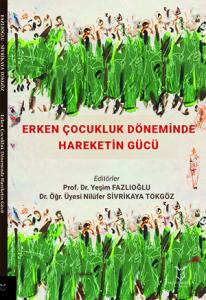
Erken Çocukluk Döneminde Motor Gelişimin Diğer Gelişim Alanlarıyla Olan İlişkisi
Referanslar
Acar, F., Erol, M., & Çimen, E. (2025). Motor gelişim ve dil gelişimi etkileşimleri: Sinirbilimsel ve gelişimsel perspektifler. Gelişim Araştırmaları Dergisi, 12(3), 45-60.
Akil, M., Tokay, B. ve Güngör, MG.,(2024). İşbirlikçi öğrenme yöntemiyle çocuklarda temel motor beceri uygulamalarının bilişsel sağlık sonuçları. BMC Psychol 12 , 522 https://doi.org/10.1186/s40359-024-02006-y
Akyürek, G., Kars, S., & Bumin, G. (2025). Serebral Palsili Çocuklarda Duyusal İşlemleme Becerileri İle Günlük Yaşam Aktiviteleri Arasındaki İlişkisinin İncelenmesi. Hacettepe University Faculty of Health Sciences Journal, 12(2), 342-350.
Andalò, B., Rigo, F., Rossi, G., Majorano, M., & Lavelli, M. (2022). Do motor skills impact on language development between 18 and 30 months of age? Infant Behavior and Development, 66, 101667. https://doi.org/10.1016/j.infbeh.2021.101667
Audiffren, M., & André, N. (2015). The strength model of self-control revisited: Linking acute and chronic effects of exercise on executive functions. Journal of Sport and Health Science, 4(1), 30–46. https://doi.org/10.1016/j.jshs.2014.09.002
Barnett, L. M., et al. (2022). Early motor competence and developmental domains. Early Childhood Research Quarterly, 61, 45–59.
Becker, D., et al. (2022). Montessori motor and cognition linkage. Early Learning Journal.
Billing, J. J. (2021). Fine motor predictors of school tasks. Developmental Psychology.
Brussoni, M., Gibbons, R., Gray, C., Ishikawa, T., Sandseter, E.B.H., Bienenstock, A., Tremblay, M.S. (2015). What is the relationship between risky outdoor play and health in children? A systematic review. International Journal of Environmental Research and Public Health (Vol. 12). https://doi.org/10.3390/ijerph120606423
Brussoni, M.,Ishikawa, T., Brunelle, S., &Herrington, S. (2017). LandscapesForPlay: EffectsOf An İnterventionToPromoteNature-BasedRiskyPlay İn EarlyChildhoodCentres. Journal of Environmental Psychology, 54, 139–150. https://doi.org/10.1016/j.jenvp.2017.11.001
Cairney, J., et al. (2020). Motor skill proficiency and self-concept in children and adolescents: A systematic review. Pediatric Exercise Science.
Çakmak, K., Tican Başaran, S., & Özaydınlık, K. (2025). Okul Öncesi Eğitime Devam Etmekte Olan Çocukların Motor Gelişimi: Uzmanların Görüş ve Önerileri. International Primary Education Research Journal, 9(1), 132-155.
Cameron, C. E., et al. (2022). Motor-based task persistence and school readiness. Developmental Science.
Canli, U., Taşkin, C., & Kurt, C. (2021). Çoklu Beceri Hareket Eğitimi Programı: Okul Öncesi Çocuklarda Vücut Kompozisyonu ve Motor Performans Değişimleri. Uluslararası Bozok Spor Bilimleri Dergisi, 2(1), 156-167.
Capio, C. M., Mendoza, N. B., Jones, R. A., Masters, R. S. W., & Lee, K. (2024). The contributions of motor skill proficiency to cognitive and social development in early childhood. Early Childhood Research Quarterly, Advance online publication. https://doi.org/10.1016/j.ecresq.2024.05.010
Chen, C., ve Nakagawa, S. (2023). Physical activity for cognitive health promotion: An overview of the underlying neurobiological mechanisms. Ageing research reviews, 86, 101868. https://doi.org/10.1016/j.arr.2023.101868
Chung, H. M., Cheah, W. L., & Hazmi, H. (2023). Physical activity and fundamental motor skill outcome: A quasi-experimental study among rural pre-schoolers in Kuching, Sarawak. International Journal of Early Childhood, 55(1), 155–167. https://doi.org/10.1007/s13158-022-00324-0
Çimen, E. (2022). Halk oyunlarında psikomotor. In Ö. Koç (Ed.), Sportif yönleriyle Türk halk oyunları (s. 75). Efe Akademi Yayınları.
Coe, H. A. (2017). EmbracingRisk İn TheCanadianWoodlands: FourChildren’sRiskyPlayAnd Risk-TakingExperiences İn A CanadianForest Kindergarten. Journal of EarlyChildhoodResearch, 15(4), 374–388. https://doi.org/10.1177/1476718X15614042
Cupeiro, R., Rojo-Tirado, M. A., Cadenas-Sanchez, C., Artero, E. G., Peinado, A. B., Labayen, I., … Benito, P. J., & on behalf of the PREFIT project group (2020). The relative age effect on physical fitness in preschool children. Journal of Sports Sciences, 38(13), 1506-1515. DOI: 10.1080/02640414.2020.1746559
Davis, E. E., Pitchford, N. J., & Limback, E. (2011). The interrelation between cognitive and motor development in typically developing children aged 4–11 years is underpinned by visual processing and fine manual control. British Journal of Psychology, 102(3), 569–584. https://doi.org/10.1111/j.2044-8295.2011.02018.x
Diamond, A. (2013). Executive functions. Annu Rev Psychol 64:135–68.
Diamond, A. (2020). Executive functions and movement. Child Development Perspectives, 14(4), 223–229.
Diamond, A., & Ling, D. S. (2016). Conclusions about interventions, programs, and approaches for improving executive functions that appear justified and those that, despite much hype, do not. Developmental Cognitive Neuroscience, 18, 34–48. https://doi.org/10.1016/j.dcn.2015.11.005
Diedrichsen, J., Kornysheva, K. (2015). Motor skill learning between selection and execution. Trends Cognition Science, 19(4), 227-233. https://doi.org/10.1016/j.tics.2015.02.003
Dinçer, Ç., Demiriz, S., & Ergül, A. (2017). Okul öncesi dönem çocukları (36–72 ay) için Özbakım Becerileri Ölçeği-Öğretmen Formu’nun geçerlik ve güvenirlik çalışması. Marmara Üniversitesi Atatürk Eğitim Fakültesi Eğitim Bilimleri Dergisi, 45(45), 59-78. https://doi.org/10.15285/maruaebd.2686
Dyck, M., & Piek, J. (2010). How to distinguish normal from disordered children with poor language or motor skills. International journal of language & communication disorders, 45(3), 336-344.
Fernandes VR, Ribeiro MLS, Melo T ve ark. (2016) Motor coordination correlates with academic achievement and cognitive function in children. Front Psychol 7:318.
Gitmez-Koyuncu, F. (2024). 4 yaş grubu çocuklarda temel hareket eğitiminin motor beceriler üzerine etkisi (Yayınlanmamış yüksek lisans tezi). İstanbul Gelişim Üniversitesi, Lisansüstü Eğitim Enstitüsü.
Goldin-Meadow, S. (2021). Gesture and language–motor systems relation. Trends in Cognitive Sciences, 25(9), 759–768.
Gomes da Silva, S., & Arida, R. M. (2015). Physical activity and brain development. Expert Review of Neurotherapeutics, 15(9), 1041-1051.
Goodway, J. D., Ozmun, J. C., & Gallahue, D. L. (2019). Understanding Motor Development: Infants, Children, Adolescents, Adults. 7th edition, U.S.A.: Jones & Bartlett Learning.
Görkem, A., & Esra, E. (2025). Parallels Between Motor Skill Development and Language Development in Children. International Journal of Holistic Health, Sports and Recreation, 4(1), 23-36.
Gull, C.,Goldstein, S. L., &Rosengarten, T. (2017). BenefitsAndRisks Of TreeClimbing On Child Development AndResiliency. International Journal of EarlyChildhood Environmental Education, 5(2), 10–29.
Hatipoğlu Özcan, G., Özer, D. F., & Pınar, S. (2025). Effects of Motor Intervention Program on Academic Skills, Motor Skills and Social Skills in Children with Autism Spectrum Disorder. Journal of Autism and Developmental Disorders, 55(8), 2628–2642. https://doi.org/10.1007/s10803-024-06384-5
Iverson, J. M. (2009). Developing language in a developing body: The relationship between motor development and language development. Journal of Child Language, 36(2), 297-320.
Iverson, J. M. (2010). Moving on up: The relationship between motor development and language acquisition in infants. Child Development Perspectives, 4(2), 87-94.
Jelleyman, C.,McPhee, J., Brussoni, M., Bundy, A., &Duncan, S. (2019). A crosssectionaldescription of parental perception sandractices related to risky play and in dependent mobility in children: The New Zealandstate of playsurvey. International Journal of Environmental ResearchandPublicHealth, 16(2), 1–19. https://doi.org/10.3390/ijerph16020262
Jing, J. Q., Jia, S. J., ve Yang, C. J. (2024). Physical activity promotes brain development through serotonin during early childhood. Neuroscience, 554, 34–42. https://doi.org/10.1016/j.neuroscience.2024.07.015
Kim, M. J., Doh, H. S., Hong, J. S., & Choi, M. K. (2011). Social skills training and parent education programs for aggressive preschoolers and their parents in South Korea. Children and Youth Services Review, 33(6), 838-845.
Kürkçüoğlu, B. (2010). 0-6 Yaş Arası Çocukların Temel Gelişimsel Özellikleri: Bilişsel Gelişim ve Dil Gelişimi. Erken Çocukluk Eğitimi İçinde. 8. Baskı, Ankara: Pegem Yayınları.
Lämmle, C., Kobel, S., Wartha, O., Wirt, T., & Steinacker, J. M. (2016). Intervention effects of a school-based health promotion program on children’s motor skills. Journal of Public Health, 24(2), 185–192. https://doi.org/10.1007/s10389-016-0711-2
Lavrysen, A.,Bertrands, E., Leyssen, L., Smets, L., Vanderspikken, A., & De Graef, P. (2017). Risky-play at school. Facilitating risk perception and competence in young children. European Early Childhood Education Research Journal, 25(1), 89–105. https://doi.org/10.1080/1350293X.2015.1102412
Lima, R., et al. (2022). Motor proficiency and language development. Scandinavian Journal of Medicine & Science in Sports, 32, 1499–1508.
McNeill, J., Howard, S. J., Vella, S. A., Santos, R., & Cliff, D. P. (2018). Physical activity and modified organized sport among preschool children: associations with cognitive and psychosocial health. Mental Health and Physical Activity, 15, 45–52
Memisevic, H., & Hadzic, S. (2013). Development of fine motor coordination and visual-motor integration in preschool children. Journal of Special Education and Rehabilitation, 14(1-2), 45-53.
Mulé, D., Jeger, I., Dötsch, J., Breido, F., Ferrari, N., & Joisten, C. (2022). Correlation between language development and motor skills, physical activity, and leisure time behaviour in preschool-aged children. Children, 9(3), 431. https://doi.org/10.3390/children9030431
Nalbant S. (2011). 14 Haftalık Fiziksel Aktivite Programının Down Sendromlu Çocukların Motor Gelişimleri ve Günlük Yaşam Aktiviteleri Üzerindeki Etkisinin İncelenmesi. (Yayımlanmamış Doktora Tezi). Akdeniz Üniversitesi, Sağlık Bilimleri Enstitüsü.
Nalbant, Ö. (2020). Çocuk oyun ve hareket eğitimi. Ankara: Nobel Yayınları.
Nicolopoulou, A., et al. (2023). Play narratives & embodied language relation in early childhood.
Oliveira, M. I. A., & Reis, H. I. (2020). Behaviour and Social Skills in Children Aged 3-5: Relationship with Sensory Processing. Journal of Psychology and Psychotherapy Research, 7(1), 76-84.
Özyürek, A., Özkan, İ., Bedge, Z, & Yavuz, N.F. (2015). Okul Öncesı̇ Dönemde Beden Eğı̇tı̇mı̇ Ve Spor. International Journal of ScienceCultureandSport, (3), 479–479. https://doi.org/10.14486/ijscs314
Piaget, J. (1952). The origins of intelligence in children. International Universities Press.
Piek, J. P., et al. (2008). Motor coordination and psychosocial problems in children: A clinical perspective. Journal of Science and Medicine in Sport, 11(5), 416–423.
Reisberg, K., Riso, E. M, & Jurimae, J. (2021). Physical fitness ın preschool children in relation to later body composition at first grade in school. PLoS ONE, 16(1), 1-14.
Rowe, M. L., & Goldin-Meadow, S. (2021). Gestures predict vocabulary growth in early years. Developmental Psychology.
Russ, S., et al. (2022). Creativity and motor play systematic evidence. Frontiers in Child Development.
Schedler, S., Kiss, R., & Muehlbauer, T. (2019). Age and sex differences in human balance performance from 6-18 years of age: a systematic review and meta-analysis. PLOS ONE, 14(4), 1-28.
Sezici, E., & Akkaya, D. D. (2020). The effect of preschool children’s motor skills on self-care skills. Early Child Development and Care, 190(6), 963–970. https://doi.org/10.1080/03004430.2020.1737040
Singh, A., et al. (2023). Play-based motor interventions and multiple developmental transfer effects. Frontiers in Psychology, 14, 1124567.
Şişli, M. (2018). Cimnastik çalışmalarının 6-7 yaş grubu çocuklarda fiziksel uygunluk ve kaba motor beceri gelişimine etkisinin incelenmesi. Yüksek Lisans Tezi. Akdeniz Üniversitesi Sağlık Bilimleri Enstitüsü, Antalya.
Stodden, E. M., et al. (2008). A developmental perspective on the relation between physical activity and health-related physical fitness in children and adolescents. Quest, 60(2), 177–191.
Tachmatzidis, D., & Makris, N. (2017). Mirror neurons and language. Psychology: The Journal of the Hellenic Psychological Society, 22(2), 15–31. https://doi.org/10.12681/psy_hps.23252
Thom, L., et al. (2021). Rhythm-based movement and emotional expression mapping. Psychology of Music.
Travers, B., et al. (2021). Balance pathways enhance executive processing. Journal of Cognition and Development.
Vazou, S., & Mavilidi, M. F. (2021). Cognitively engaging physical activity for targeting motor, cognitive, social, and emotional skills in the preschool classroom: The Move for Thought PreK–K program. Frontiers in Psychology, 12, 729272. https://doi.org/10.3389/fpsyg.2021.729272
Verdine, B. N., et al. (2023). Spatial reasoning and motor construction tasks in preschool play. Cognitive Development.
Verhoef, E., de Hoyos, L., Schlag, F., van der Ven, J., Olislagers, M., Dale, P., Kidd, E., Fisher, S. E., & St Pourcain, B. (2025). Developing language in a developing body: Genetic associations of infant gross motor behaviour and self-care/symbolic actions with emerging language abilities. Journal of Child Psychology and Psychiatry. Advance online publication. https://doi.org/10.1111/jcpp.70021
Wang, M. V., Lekhal, R., Aaro, L. E., Holte, A., & Schjølberg, S. (2014). The developmental relationship between language and motor performance from 3 to 5 years of age: A prospective longitudinal population study. BMC Psychology, 2, 34. https://doi.org/10.1186/s40359-014-0034-4
Westendorp, M., Hartman, E., Houwen, S., & Visscher, C. (2011). Do gross and fine motor skills differentially contribute to language outcomes? A systematic review. Early Childhood Research Quarterly, 26(4), 472–489.
Yaman, H., Bekar, Ş. N., & Nas, S. E. (2025). Öğretmenlerin özel öğrenme güçlüğü olan öğrencilerine yaşam becerileri kazandırma adına yürüttükleri süreçlerin incelenmesi. Kocaeli Üniversitesi Eğitim Dergisi, 8(1), 418-446.
Yeşil, A. M., & Yoldaş, T. Ç. (2025). İnce Motor Alanda Gelişimsel Gecikmeye Yaklaşım. Turkiye Klinikelri Developmental Pediatrics-Special Topics, 3(2), 50-57.
Yılmaz, A. D. (2023). Gelişime ilişkin temel kavramlar. G. Şengün, M. Kanak, & S. Pekdoğan (Eds.), İçinde Çocuk gelişimi (ss. 1–20). Nobel Akademik Yayıncılık.
Yüksel, A., Demirel, N., & Terzioğlu, F. (2024). Hemşirelik Öğrencilerinde Psikomotor Becerilerin Geliştirilmesinde Farklı Öğretim Yöntemlerinin Etkisi. Yükseköğretim ve Bilim Dergisi, 14(3), 387-393.
Zarr, N., Ferguson, R., & Glenberg, A. M. (2013). Language comprehension warps the mirror neuron system. Frontiers in Human Neuroscience, 7, 870. https://doi.org/10.3389/fnhum.2013.00870