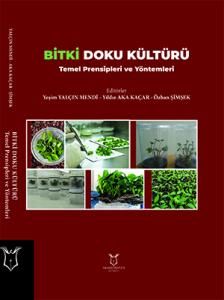
Bitki Doku Kültüründe Karşılaşılan Sorunlar ve Çözüm Önerileri
Özet
Bitki doku kültürü, bitkisel organizmaların tamamının veya farklı gelişim evrelerindeki hücre, doku ya da organlarının, aseptik yapay besin ortamlarında, kontrollü çevresel koşullar sağlanarak in vitro çoğaltılması esasına dayanan bir biyoteknolojik yöntemidir. Bu teknik modern bitki biyoteknolojisinin temel araçlarından birisidir; homojen, sağlıklı, hızlı ve kitlesel üretime olanak sağlamaktadır. Doku kültürü özellikle bitki ıslahı ilenadir ve tehlike altındaki türlere ait genetik kaynakların korunmasında pek çok avantaj sunmaktadır. Bununla birlikte farklı aşamalarda kayıplara neden olabilen çeşitli dezavantajları da söz konusudur. Süreç boyunca ışık şiddeti ve fotoperiyot, sıcaklık, besin konsantrasyonları, karbon kaynağı, büyüme düzenleyicilerinin oranları ve sterilite gibi parametreler kültürün başarısı açısından kritik öneme sahiptir. Doku kültüründe karşılaşılan en yaygın problem kontaminasyon olup, bakteri ve mantar kaynaklı kültürlerin kaybedilmesine yol açmaktadır. Ayrıca kullanılan besin ortamının içeriği, hormon dengesi, ve kültür koşullarına bağlı pek çok sorun da sıklıkla görülmektedir. Bu nedenle ortam bileşenlerinin ve çevresel koşulların optimize edilmesi büyük önem taşır. Bu faktörlerin yanı sıra fizyolojik bozukluklar da bitkilerin sağlıklı gelişimini sınırlayan önemli etmenlerdir. Tüm bu problemler, doku kültürü tekniğinin verimliliğini düşürmekte, başarılı sonuçların elde edilmesini güçleştirmektedir. Bu bölümde, doku kültürüyle elde edilen bitkilerin laboratuvar aşamasından arazi koşullarına adaptasyon süreçlerine kadar karşılaşılan tüm sorunlar ele alınmış; söz konusu problemlerin giderilmesine yönelik olası çözüm stratejileri tartışılmıştır.
Referanslar
Abadie, J. C., Puttsepp, U., Gebauer, G., Faccio, A., Bonfante, P., and Selosse, M. A., 2006. Cephalanthera longifolia (Neottieae, Orchidaceae) Ismixotrophic: A Comparative Study Between Green and Nonphotosynthetic in-Dividuals. Can. J. Bot., 84: 1462-1477.
Abdalla, N., El-Ramady, H., Seliem, M. K., El-Mahrouk, M. E., Taha, N., Bayoumi, Y., Shalaby, T. A., & Dobránszki, J., 2022. An Academic and Technical Overview on Plant Micropropagation Challenges. Horticulturae, 8(8), 677.
Abdelwahd, R., Hakamu, N., Labhilili, M., & Udupa, S. M., 2008. Use of an Adsorbent and Antioxidants to Reduce the Effects of Leached Phenolics in Vitro Plantlet Regeneration of Faba Bean. African Journal of Biotechnology, 7(8), 997-1002.
Ahmad, I., Hussian, T., Ashraf, I., Nefees, M., Marayam, M. R., & Iqbal, M., 2013. Lethal Effects of Secondary Metabolites on Plant Tissue Culture. American-Eurasian Journal of Agricultural & Environmental Sciences, 13(4), 539-547.
Ahmad, I., Jaskani, M. J., Nafees, M., Ashraf, I., & Qures, R., 2016. Control of Media Browning in Micro Propagation of Guava (Psidium guajava L.). Pakistan Journal of Botany, 48(2), 713-716.
Ak, B. E., & Yücel, N. K., 2025. In Vitro Bitki Doku Kültüründe Temel Yaklaşımlar, Problemler ve Yeni Teknolojiler. Livre de Lyon.
Aliyu, O. M., 2005. Application of Tissue Culture to Cashew (Anacardiumoccidentale. P. L.) Breeding: An Appraisal. African Journal of Biotechnology, 4(13), 1485-1489.
Alkhateeb, A.A., 2008. A Review The Problems Facing The Use of Tissue Culture Technique in Date Palm (Phoenix dactylifera L.). Sci. J. King Faisal Univ. (Basic Applied Sci.)., 9: 85-104.
Armijos-González, R., Espinosa-Delgado, L., & Cueva-Agila, A., 2021. Indirect Shoot Regeneration Using 2, 4-D Induces Somaclonal Variations in Cinchona officinalis. Floresta e Ambiente, 28(3), e20210017.
Babaei, N., Abdullah, N. A. P., Saleh, G., & Abdullah, T. L. 2013. Control of Contamination and Explant Browning in Curculigo Latifolia in vitro Cultures. Journal of Medicinal Plants Research, 7(8), 448-454.
Beckman, C. H., 2000. Phenolic-Storing Cells: Keys To Programmed Cell Death And Periderm Formation in Wilt Disease Resistance and in General Defence Responses in Plants? Physiological and Molecular Plant Pathology, 57(3), 101-110.
Benson, E. E., 2004. Plant Conservation and Micropropagation: Tools for Resolving Environmental Resistance. Plant Cell, Tissue and Organ Culture, 77(3), 263-275.
Bhojwani, S. S., Razdan, M. K., 1986. Plant Tissue Culture: Theory and Practice. Elsevier.
Bidabadi, S. S., Sharifi, P., & Jain, S. M., 2021. Plant Breeding Integrated with Genomic-Enabled Prediction. OBM genetics, 5(3), 1-35.
Block, R., & Lankes, C. 1996. Measures to Prevent Tissue Browning of Explants of The Apple Rootstock M9 During In Vitro Establishment.
Cai, X., Wei, H., Liu, C., Ren, X., Thi, L. T., & Jeong, B. R. 2020. Synergistic Effect of NaCl Pretreatment and PVP on Browning Suppression and Callus Induction From Petal Explants of Paeonia Lactiflora Pall. ‘Festival Maxima’. Plants (Basel, Switzerland), 9(3), 346.
Campbell, R., 1985. Plant Microbiology. Arnold, London pp. 191.
Cassells, A.C., 1991. Problems in Tissue Culture: Culture Contamination. In: Debergh, P.C., Zimmerman, R.H. (eds) Micropropagation. Springer, Dordrecht.
Cassells, A.C., 2000.Contamination and its Impact in Tissue Culture. In IV International Symposium on In Vitro Culture and Horticultural Breeding. 560, (pp. 353-359).
Cassells, A. C., 2012. Pathogen and Biological Contamination Management in Plant Tissueculture: Phytopathogens, Vitro Pathogens, and Vitro Pests. Plant Cell Culture Protocols. 57-80.14.
Chae, S. C., Kim, H. H., & Park, S. U., 2012. Ethylene Inhibitors Enhance Shoot Organogenesis of Gloxinia (Sinningia speciosa). The Scientific World Journal, 2012(1), 859381.
Chavan, S. S., Ranade, S. S., Deore, A. C., Deshpande, R. S., & Dhonukshe, B. L. 2000., Cloning of Alphonso mango through vegetative explants. Annals of Plant Physiology, 14(2), 178-181.
Dewir, Y. H., Murty,H. N., Ammar, M. H., Alghandi, S. S., Al-Suhaibani, N. A., Aldason, A. A., and Paek, K. Y., 2016. In vitro Rooting of Leguminous Plants: Difficulties, Alternatives, And Strategies For Improvement. Horticulture, Environment, and Biotechnology, 54 (4), 311-322.
Dineshbabu, K., Sathiamoorthy, N., Chezhiyan, N., Kapil, D., & Singh, N., 2002. In Vitro Establishment of Gynodioecious Papaya Variety CO-7 Influenced By Age of Mother Plants. Orissa Journal of Horticulture, 30(1), 5-7.
Dobránszki, J., & Teixeira da Silva, J. A., 2010. Micropropagation of Apple-A Review. Biotechnology Advances, 28(4), 462–488.
Duta-Cornescu, G., Constantin, N., Pojoga, D. M., Nicuta, D., & Simon-Gruita, A., 2023. Somaclonal Variation Advantage or Disadvantage in Micropropagation of The Medicinal Plants. International Journal of Molecular Sciences, 24(1), 838.
Ersali, Y., 2024. Control of Hyperhydricity of Pistacia khinjuk Stocks in vitro Shoots. BMC Biotechnology, 24(1), 97.
García-Gonzáles, R., Quiroz, K., Carrasco, B., Caligari, P., 2010. Plant Tissue Culture: Currentstatus, Opportunities and Challenges. International Journal of Agriculture and Natural Resources. 37(3), 5-30.15.
Gaspar, T., 1991. Vitrification in Micropropagation. In High-tech and micropropagation I (pp. 116-126). Berlin, Heidelberg: Springer Berlin Heidelberg. L.
George, E. F., & Sherington, P. D., 1984. Plant Propagation By Tissue Culture (pp. 690). England: Exegentics Limited.
George, E. F., 1993. Plant Propagation By Tissue Culture. Part 1: The Technology (No. Ed. 2, pp. viii+-574).
George, E. F., Hall, M. A., De Klerk, G. J., 2007. Plant Propagation By Tissue Culture: Volume 1. The Background.Springer Science & Business Media;2007;1.
George, E. F., & Davies, W., 2008. Effects of the Physical Environment. Plant Propagation by Tissue Culture 1, 423-464. Dordrecht, The Netherlands: Wiley-Blackwell.
Germana, M. A. 2011. Anther Culture for Haploid and Doubled Haploid Production. Plant Cell, Tissue and Organ Culture (PCTOC), 104(3), 283-300.
Gerszberg, A., Hnatuszko-Konka, K., & Kowalczyk, T., 2015. In Vitro Regeneration of Eight Cultivars of Brassica oleracea var. capitata. In vitro Cellular & Developmental Biology. Plant, 51(1), 80–87.
Gerszberg, George, D., Gonzalez, M., & Jones, S., 2017. Microbial Contamination in Plant Tissue Culture: Sources, Detection, And Prevention. Plant Cell Reports, 32(3), 331-345.
Haque, M., Siddique, A. B., & Islam, S. S., 2015. Effect of Silver Nitrate and Amino Acids on High Frequency Plants Regeneration in Barley (Hordeum vulgare L.). Plant Tissue Culture and Biotechnology, 25(1), 37-50.
Hassanein, A.M., Salem, J.M., Faheed, F.A. El-nagish, A., 2018. Effect of Anti-Ethylene Compounds on Isoenzyme Patterns and Genome Stability During Long Term Culture of Moringa oleifera. Plant Cell Tissue Organ Cult. 132, 201-212.
Herman, E. B. 2015., Plant Tissue Culture Contaminastion: Challenges And Opportunities. In IV Internnational Symposium on Production and Establishment of Micropropated Plants, 1155, 231-238.
Hoque, M. T., & Khatun, M., 2014. Contamination in Plant Tissue Culture: Sources, Types, Detection and Control. Journal of Microbiology and Biotechnology Research, 4(2), 16-23.
Ikenganyia, E.E., Anikwe, M.A.N., Omeje T.E. and Adinde, J.O., 2017. Plant Tissue Culture Regeneration And Aseptic Techniques. Asian J. Biotechnol. Bioresour. Technol., 1: 1-6.
Irshad, M., Rizwan, H. M., Debnath, B., Anwar, M., Li, M., Liu, S., He, B., & Qiu, D. 2018., Ascorbic Acid Controls Lethal Browning And Pluronic F-68 Promotes High-Frequency Multiple Shoot Regeneration From Cotyldonary Node Explant of Okra (Abelmoschus esculentus L.). Hortscience, 53(1), 183-190.
Jain, A.K., Shanker, R., Kumar, S., Vishwakarma, R.K., 2017. Contamination in Plant Tissue Culture: Sources, Types and Solutions. Biotechnology Reports, 15: 34-41.
Jones, A. M., & Saxena, P. K., 2013. Inhibition of Phenylpropanoid Biosynthesis in Artemisia annua L.: A Novel Approach To Reduce Oxidative Browning in Plant Tissue Culture. PloS One, 8(10), e76802.
Kabir, K. M. R., Kwon, S.W., & Park, Y. J., 2013. Application of Cobalt Chloride And Silver Nitrate For Efficient Microspore Culture of Brassica Rapa ssp. Plant Tissue Culture and Biotechnology, 23(1), 1-10.
Karakaş, İ., 2023. Bitkilerin Totipotensi Yeteneklerinin Bitki Islahında Kullanılması: Doku Kültürü Teknikleri. Acta Natura & Scientia, 4(2).
Kastrop, P. M., de Graaf-Miltenburg, L. A., Gutknecht, D. R., Weima, S. M., 2007. Microbial Contamination of Embryo Cultures in Anart Laboratory: Sources and Management. Human Reproduction. 2007; 22(8):2243-2248.
Khalid, U., Kainat, W., Anjum, M. N., Mehmood, M., & Joyia, F. A., 2024. Effect of Varying Concentrations of Phytagel, Sorbitol and Mannitol on Hyperhydricity of In Vitro Regenerated Tobacco Shoots. Trends Biotech Plant Sci, 2(1), 11-19.
Kneifel, W. and Leonhardt, W., 1992. Testing of Different Antibiotics Against Gram-Positive and Gram-Negative Bacteria isolated From Plant Tissue Culture. Plant Cell Tissue Organ Cult., 29: 139-144.
Kotomory, S., & Murashige, T., 1965. Some Aspects of Aseptic Propagation of Orchids. American Orchid Society Bulletin, 34, 484-489.
Krishna, H., Sairam, R. K., Singh, S. K., Patel, V. B., Sharma, R. R., Grover, M., Nain, L., & Sachdev, A., 2008. Mango Explants Browning: Effect of Ontogenic Age, Mycorrhization and Pre-Treatments. Scientia Horticulturae, 118(2), 132-138.
Kumar, K., Gambhir, G., Dass, A., Tripathi, A. K., Singh, A., Jha, A. K., Rakshit, S., 2020. Genetically Modified Crops: Current Status and Future Prospects. Planta. 251:1-27.16.
Kumari, M., Clarke, H. J., Small, I., & Siddique, K. H., 2009. Albinism in Plants: A Major Bottleneck İn Wide Hybridization, Androgenesis and Doubled Haploid Culture. Critical Reviews in Plant Science, 28(6), 393-409.
Kyesmu, P. M., Omaliko, C. P. E. and Maduekwe, A., 2004. Basic Facts on Plant Tissue Culture: A Guide to Plant Tissue Culture Practice. Dolio-B Press, Abuja, Nigeria.
Lainé, E., & David, A., 1994. Regeneration of Plants From Leaf Explants of Micropropagated Clonal Eucalyptus Grandis. Plant Cell Reports, 13(8), 473-476.
Laukkanen, H., Rautiainen, L., Taulavuori, E., & Hohtola, A., 2000. Changes in Cellular Structures and Enzymatic Activities During Browning Of Scots Pine Callus Derived From Mature Buds. Tree Physiology, 20(7), 467-475.
Leelavathy, S. and Sankar, P. D., 2016. Curbing the Menace of Contamination in Plant Tissue Culture. J. Pure Applied Microbiol., 10: 2145-2152
Liu, J., Cao, L., & Dou, S., 2017. Bioaccumulation of Heavy Metals And Health Risk Assessment in Three Benthic Bivalves Along The Coast of Laizhou Bay, China. Marine Pollution Bulletin, 117(1-2), 98-110.
Lorenzo, J. C., de los Angeles Blanco, M., Pelaez, O., Gonzalez, A., Cid, M., Iglesias, A., Gonzalez, B., Escalona, M., Espinosa, P., & Borroto, C., 2001. Sugarcane Micropropagation and Phenolic Excretion. Plant Cell, Tissue and Organ Culture, 65, 1-8.
Loannidis, K., Tomprou, I., Mitsis, V., & Koropouli, P., 2022. Genetic Evaluation of in vitro Micropropagated and Regenerated Plants of Cannabis Sativa L. Using SSR Molecular Markers. Plants, 11(19), 2569.
Loyola-Vargas, V.M., Ochoa-Alejo, N., 2018. An Introduction to Plant Tissue Culture: Advances and Perspectives. In: Loyola-Vargas, V., Ochoa-Alejo, N. (eds) Plant Cell Culture Protocols. Methods in Molecular Biology, vol 1815. Humana Press, New York, NY.
Makowska, K., and Oleszczuk, S., 2014. Albinism in Barley Androgenesis. Plant Cell Rep. 33, 385-392.
Manole-Paunescu A., 2014. Biotechnology For Endangered Plant Conservation. Biotechnology and Biodiversity. 181-202.
Mookkan, M., & Andy, G., 2014. AgNO3 Boosted High-Frequency Shoot Regeneration in Vigna mungo (L.) Hepper. Plant Signaling & Behavior, 9(10), e972284.
Murkute, A. A., Shanti Patil, S. P., & Mayakumari, M., 2003. Exudation and Browning in Tissue Culture of Pomegranate. Agricultural Science Digest, 23(1), 29-31.
Naaz, A., Shahzad, A., Anis, M., 2014. Effect of Adenine Sulphate Interaction on Growth and Development of Shoot Regeneration and inhibition of Shoot Tip Necrosis Under in vitro Condition in Adult Syzygium cumini L.-A Multipurpose Tree. Appl. Biochem. Biotechnol. 173, 90-102.
Nassar, M. A., El-Kader, E. M. A., El-Sheikh, M. A., & Saber, G. A., 2018. Microbial Contamination Assessment of Plant Tissue Culture Facilities in Sohag University, Egypt. Plant Cell Biotechnology and Molecular Biology, 19(25-26), 817-823.
Neves, M., Correia, S., & Canhoto, J., 2023. Ethylene Inhibition Reduces De Novo Shoot Organogenesis and Subsequent Plant Development from Leaf Explants of Solanum betaceum Cav. Plants, 12(9), 1854.
Ngomuo, M., Mneney, E., & Ndakidemi, P., 2014. Control of Lethal Browning By Using Ascorbic Acid On Shoot Tip Cultures of A Local Musa spp. (Banana) cv. Mzuzu in Tanzania. African Journal of Biotechnology, 13(16), 1721-1725.
Ochoa-Alejo, N., & Ramirez-Malagon, R., 2001. In vitro Chili Pepper Biotechnology. In Vitro Cell Dev Biol Plant. In Vitro Cellular & Developmental Biology-Plant, 37(6), 701-729.
Onuoha, I. C., Eze, C. J., & Unamba, C. I., 2011. In vitro Prevention of Browning in Plantain Culture. On Line Journal of Biological Sciences, 11(1), 13-17.
Orlikowska, T. and Zawadzka, M., 2006. In vitro Bacteria in Plant Tissue Cultures. Biotechnologia, 4: 64-77
Ozyigit, I. I., 2008. Phenolic Changes During in vitro Organogenesis of Cotton (Gossypium hirsutum L.) Shoot tips. African Journal of Biotechnology, 7(8), 1145-1150.
Panaia, M., Senaratna, T., Bunn, E., Dixon, K. W., & Sivasithamparam, K., 2000. Micropropagation of the Critically Endangered Western Australian Species, Symonanthus bancroftii (F. Muell.) L. Haegi (Solanaceae). Plant Cell, Tissue and Organ Culture, 63(1), 23-29.
Parthasarathy, V. A., Keshavachandran, R., Nazeem, P., Girija, D., John, P. S Peter, K. V., 2007. High Tech Propagation of Horticultural Crops-Accent on Recalcitrance. Recent Trends in Horticultural Biotechnology, Vol. I and II (pp. 85-91). ICAE national Symposium on Biotechnological Interventions for Improvement of Horticultural Crops: Issues and Strategies. Vellanikkara, Kerala, India: New India Publishing Agency.
Pasternak, T. P., & Steinmacher, D., 2024. Plant Growth Regulation in Cell and Tissue Culture in vitro. Plants, 13(2), 327.
Peng, X., Zhang, T.T., Zhang, J., 2015. Effect of Subculture Times on Genetic Fidelity, Endogenous Hormone Level And Pharmaceutical Potential of Tetrastigma hemsleyanum Callus. Plant Cell Tissue Organ Cult. 122, 67-77.
Permadi, N., Nurzaman, M., Alhasnawi, A. N., Doni, F., & Julaeha, E., 2023. Managing Lethal Browning and Microbial Contamination in Musa spp. Tissue Culture: Synthesis And Perspectives. Horticulturae, 9(4), 453.
Pierik, R., 1999. In vitro Culture of Higher Plants. Kluwer Academic Publishers, Dordrecht.
Polivanova, O. B., & Bedarev, V. A., 2022. Hyperhydricity in Plant Tissue Culture. Plants, 11(23), 3313.
Ranghoo-Sanmukhiya, V. M., 2021. Somaclonal Variation and Methods Used for Its Detection. In Propagation and Genetic Manipulation of Plants; Siddique, I., Ed.; Springer Nature: Singapore, 1-18.
Reed, B.M. & Bryce, J.H., 2014. Contamination in Plant Tissue Culture. in: Plant Biotechnology and Agriculture: Prospects for the 21st Century, ed. by A. Altman & P.M. Hasegawa, Chapter 1, pp. 3-21. Elsevier.
Sara, H. C., René, G. H., Rosa, U. C., Angela, K. G., Clelia, D. P., 2020. Agave Angustifolia Albino Plantlets Lose Stomatal Physiology Function by Changing The Development of The Stomatal Complex Due to a Molecular Disruption. Mol. Genet Genom. 295, 787-805.
Selvarajan, E., Veena, R., & Kumar, N. M., 2008. Polyphenol Oxidase, Beyond Enzyme Browning, A Review. In J. Singh, D. Sharma, G. Kumar & N. Sharma (Eds.),
Shen, H. L., 2005. Plant Tissue Culture, 3, 256-261. Beijing, China: China’s Forestry Press.
Singh, P., & Patel, R. M., 2016. Factors Affecting in vitro Degree of Browning and Culture Establishment of Pomegranate. African Journal of Plant Science, 10(2), 43-49.
Sluis, C. J., 2008. Integrating Automation Technologies with Commercial Micropropagation. Plant Tissue Culture Engineering. 231-251.
Smith, J., Johnson, A., & Williams, R., 2018. Preventing Contamination in Plant Tissue Culture Laboratories: Implementing Aseptic Techniques and Standard Operating Procedures. Journal of Plant Science, 25(2), 45-56.
Solano, M.C.P., Ruız, J.S., Arnao, M.R., Castro, O.C., Tovar, M.E.G., Bello, J. J. B., 2019. Evaluation of in vitro Shoot Multiplication And ISSR Marker-Based Assessment Of Somaclonal Variants At Different Subcultures Of Vanilla (Vanilla planifolia Jacks). Physiol. Mol. Biol. Plants. 25, 561-567.
Soumare, A., Diédhiou, A. G., Arora, N. K., Tawfeeq Al-Ani, L. K., Ngom, M., Fall, S., & Sy, M. O., 2021. Potential Role and Utilization of Plant Growth Promoting Microbes in Plant Tissue Culture. Frontiers in Microbiology, 12, 649878.
Sreelekshmi, R., & Siril, E. A., 2020. Influence of Polyamines On Hyperhydricity Reversion and Its Associated Mechanism During Micropropagation of China pink (Dianthus chinensis L.). Physiology and Molecular Biology of Plants, 26(10), 2035-2045.
Sreelekshmi, R., & Siril, E. A., 2021. Effective Reversal of Hyperhydricity Leading to Efficient Micropropagation of Dianthus chinensis L. 3 Biotech, 11(2), 95.
Sahin, E. C., Aydin, Y., & Uncuoglu, A. A., 2024. Molecular Marker Applications in the Selection of Elite Genotypes for Plant Stress Tolerance and Genetic Fidelity. OBM Genetics, 8(3), 1-25.
Tabiyeh, D. T., Bernard, F., & Shacker, H., 2006. Investigation of Glutathione, Salicylic Acid and GA3 Effects on Browning in Pistacia vera Shoot Tips Culture. Acta Horticulturae, 726, 201-204.
Tazeb, A., 2017. Plant Tissue Culture Technique As A Novel Tool in Plant Breeding: A review article. Am.-Eurasian J. Agric. Environ. Sci., 17: 111-118.
Teixeira da Silva, J.A., Nezami-Alanagh, E., Barreal, M. E., Kher, M. M., Wicaksono, A., Gulyás, A., Hidvégi, N., Magyar-Tábori, K., Mendler-Drienyovszki, N., Márton, L., 2020. Shoot Tip Necrosis of In vitro Plant Cultures: A Reappraisal of Possible Causes And Solutions. Planta, 252, 47
Tersi, M., Xynias, I. N., Gouli-Vavdinoudi, E., and Roupakias, D. G., 2005. Effect of Genome, induction Medium and Temperature Pre-Treatment on Green Plant Production in Durum (Triticum turgidum var. durum) x bread wheat (Triticum aestivum L. em Thell) Crosses. Acta Physiol. Plant. 27: 641-649.
Thomas, C. W., 2002. Bureaucratic landscapes:Interagency Cooperation and The Preservation of Biodiversity. Mit Press; 2002.
Thomas, T. D., 2008. The Role of Activated Charcoal in Plant Tissue Culture. Biotechnology Advances, 26(6), 618-631.
Thorpe, T. A., 2007. History of Plant Tissue Culture. Molecular Biotechnology, 37(2), 169-180.
Titov, S., Bhowmik, S. K., Mandal, A., Alam, M. S., & Uddin S. N., 2006. Control of Phenolic Compound Secretion And Effect of Growth Regulators For Organ Formation From Musa spp. cv. Kanthali Floral Bud Explants. American Journal of Biochemistry and Biotechnology, 2(3), 97-104.
Twaij, B. M., Jazar, Z. H., & Hasan, M. N., 2020. Trends in The Use of Tissue Culture, Applications and Future Aspects. International Journal of Plant Biology, 11(1).
Umarusman, M. A., Şimşek, Ö., Biçen, B., Serçe, S., & Aka Kaçar, Y., 2020. Investigation of Micropropagation Opportunities of Different Blackberry (Rubus fruticosus L.) Cultivars with Classical and New Generation Tissue Culture Techniques. Alatarım, 19 (2): 75-84.
Yao, J. L. and Cohen, D., 2000. Multiple Gene Control of Plastome-Genome Incompatibility and Plastid DNA Inheritance in Interspecific Hybrids of Zantedeschia. Theor. Appl. Genet. 101: 400-406.
Yonas, B., 2023. Elimination of Contamination in Plant Tissue Culture Laboratory. Acta Botanica Plantae. https://doi.org/10.51470/ABP.2023.02.03.22