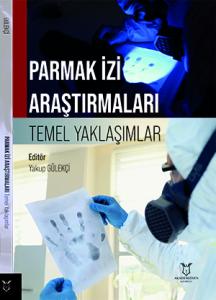
Latent Parmak İzlerinden Adli Dna Profilleme: Moleküler İzler Üzerine Entegre Yaklaşımlar
Özet
Dokunma sonucu yüzeylere aktarılan biyolojik materyal, adli incelemelerde hem DNA hem de latent parmak izi açısından önemli bir potansiyel taşımaktadır. Bu tür delillerde yüzeye temasla birlikte yalnızca papil hatları değil, aynı zamanda hücresel materyal de aktarılmakta ve bu durum biyolojik analiz ile daktiloskopik incelemenin birlikte değerlendirilmesini gerekli kılmaktadır. Dokunma DNA’sının miktarı ve analitik başarısı, bireysel farklılıkların yanı sıra temasın niteliği ve delilin maruz kaldığı çevresel koşullara bağlı olarak önemli ölçüde değişkenlik göstermektedir. Genellikle düşük ve eser düzeyde bulunan bu DNA, delil işleme basamaklarında kayba son derece açıktır. Parmak izi geliştirme ve yüzeyden kaldırma işlemlerinde kullanılan yöntemler, DNA bütünlüğünü ve verimini doğrudan etkileyebilmekte; uygun olmayan uygulamalar çapraz bulaş ve analiz güçlüklerine yol açabilmektedir. Bu nedenle, parmak izi ve DNA incelemelerinin bir arada yürütüldüğü durumlarda örnekleme sırası, kullanılan svap türleri ve izolasyon yöntemlerinin etkinliği kritik önem taşımaktadır. Delil işleme süreçlerinin optimize edilmesi, biyolojik materyalin korunmasını ve DNA veriminin artırılmasını sağlayarak dokunma DNA’sının adli bağlamda daha güvenilir ve yorumlanabilir bir delil türü olarak kullanılmasına katkı sunmaktadır.
Referanslar
Ahyayauch H, Bennouna M, Alonso A, et al. Detergent effects on membranes at subsolubilizing concentrations: Transmembrane lipid motion, bilayer permeabilization, and vesicle lysis/reassembly are independent phenomena. Langmuir, 2010; 26(10), 7307–7313.
Alaeddini R, Walsh SJ, Abbas A. Forensic implications of genetic analyses from degraded DNA—A review. Forensic Science International: Genetics, 2010; 4(3), 148–157.
Alessandrini F, Cecati M, Pesaresi, M. et al. Fingerprints as evidence for a genetic profile: Morphological study on fingerprints and analysis of exogenous and individual factors affecting DNA typing. Journal of Forensic Sciences, 2003; 48(3).
Alketbi SK. The affecting factors of touch DNA. Journal of Forensic Research, 2018; 9(3).
Alketbi SK. Analysis of Touch DNA. [Doctoral Dissertation]. University of Central Lancashire; 2022.
Alketbi SK, Goodwin, W. The effect of surface type, collection and extraction methods on touch DNA. Forensic Science International: Genetics Supplement Series, 2019a; 7(1), 704–706.
Alketbi SK, Goodwin, W. The effect of time and environmental conditions on Touch DNA. Forensic Science International: Genetics Supplement Series, 2019b; 7(1), 701–703.
Alketbi SK, Goodwin, W. H. Validating Touch DNA Collection Techniques Using Cotton Swabs. Journal of Forensic Research, 2019c; 10(3).
Aloraer DB. Evaluation of collection protocols for the recovery of biological samples from crime scenes. [Master’s Thesis]. University of Central Lancashire; 2017.
Aloraer D, Hassan NH, Albarzinji B. et al. Improving recovery and stability of touch DNA. Forensic Science International: Genetics Supplement Series, 2017; 6, e390–e392.
Ambers A, Wiley R, Novroski N, et al. Direct PCR amplification of DNA from human bloodstains, saliva, and touch samples collected with microFLOQ® swabs. Forensic Science International: Genetics, 2018; 32, 80–87.
Anastassopoulou J. Metal–DNA interactions. Journal of Molecular Structure, 2003; 651–653, 19–26.https://doi.org/10.1016/S0022-2860(02)00625-7
Andersen J, Bramble S. The effects of fingermark enhancement light sources on subsequent PCR-STR DNA analysis of fresh bloodstains. Journal of Forensic Sciences, 1997; 42(2), 303–306.
Applied Biosystem. GlobalFiler™ and GlobalFiler™ IQC PCR Amplification Kits. 2019.
Balogh MK, Burger J, Bender K, et al. STR genotyping and mtDNA sequencing of latent fingerprint on paper. Forensic Science International, 2003; 137(2–3), 188–195.
Bathrick AS, Norsworthy S, Plaza DT, et al. DNA recovery after sequential processing of latent fingerprints on copy paper. Journal of Forensic Sciences, 2022; 67(1), 149–160.
Benschop CCG, Wiebosch DC, Kloosterman AD, et al. Post-coital vaginal sampling with nylon flocked swabs improves DNA typing. Forensic Science International: Genetics, 2010; 4(2), 115–121.
Bhoelai B, de Jong BJ, de Puit M, et al. Effect of common fingerprint detection techniques on subsequent STR profiling. Forensic Science International: Genetics Supplement Series, 2011; 3(1), e429–e430.
Bini C, Giorgetti A, Fazio G, et al. Impact on touch DNA of an alcohol-based hand sanitizer used in COVID-19 prevention. International Journal of Legal Medicine, 2023; 137(3), 645–653.
Bogas V, Carvalho M, Anjos MJ, et al. Genetic identification of degraded DNA samples buried in different types of soil. Forensic Science International: Genetics Supplement Series, 2009; 2(1), 169–171. https://doi.org/10.1016/j.fsigss.2009.08.031
Bonnet J, Colotte M, Coudy D, et al. Chain and conformation stability of solid-state DNA: implications for room temperature storage. Nucleic Acids Research, 2010; 38(5), 1531–1546.https://doi.org/10.1093/nar/gkp1060
Bonsu DOM, Higgins D, Austin JJ. Forensic touch DNA recovery from metal surfaces – A review. Science & Justice, 2020; 60(3), 206–215.https://doi.org/10.1016/j.scijus.2020.01.002
Bowman ZE, Mosse KSA, Sungaila AM, et al. Detection of offender DNA following skin-to-skin contact with a victim. Forensic Science International: Genetics, 2018; 37, 252–259.https://doi.org/10.1016/j.fsigen.2018.09.005
Breathnach M, Williams L, McKenna L, et al. Probability of detection of DNA deposited by habitual wearer and/or the second individual who touched the garment. Forensic Science International: Genetics, 2016; 20, 53–60. https://doi.org/10.1016/j.fsigen.2015.10.001
Bright JA, Petricevic SF. Recovery of trace DNA and its application to DNA profiling of shoe insoles. Forensic Science International, 2004; 145(1), 7–12. https://doi.org/10.1016/j.forsciint.2004.03.016
Bruijns B. What are the limitations and challenges of swab-based DNA sampling? Forensic Sciences, 2024; 4(1), 76–95. https://doi.org/10.3390/forensicsci4010006
Burrill J, Daniel B, Frascione N. A review of trace “Touch DNA” deposits: Variability factors and an exploration of cellular composition. Forensic Science International: Genetics, 2019; 39, 8–18. https://doi.org/10.1016/j.fsigen.2018.11.019
Butler J. Fundamentals of forensic DNA typing. Academic Press; 2009.
Cale CM. Forensic DNA evidence is not infallible. Nature, 2015; 526(7575), 611. https://doi.org/10.1038/526611a
Cale CM, Earll ME, Latham KE, et al. Could Secondary DNA Transfer Falsely Place Someone at the Scene of a Crime? Journal of Forensic Sciences, 2016; 61(1), 196–203. https://doi.org/10.1111/1556-4029.12894
Carlin M, Nickel R, Halstead K, et al. Quantifying DNA loss in laboratory-created latent prints due to fingerprint processing. Forensic Science International, 2023; 344, 111595. https://doi.org/10.1016/j.forsciint.2023.111595
Carrara L, Hicks T, Samie L, et al. DNA transfer when using gloves in burglary simulations. Forensic Science International: Genetics, 2023; 63, 102823. https://doi.org/10.1016/j.fsigen.2022.102823
Corradini B, Alù M, Magnanini E, et al. The importance of forensic storage support: DNA quality from 11-year-old saliva on FTA cards. International Journal of Legal Medicine, 2019; 133(6), 1743–1750. https://doi.org/10.1007/s00414-019-02146-6
Coutlée F, Voyer H. Effect of Nonionic Detergents on Amplification of Human Papillomavirus DNA with Consensus Primers MY09 and MY11. Journal of Clinical Microbiology, 1998; 36(4), 1164–1164.
Cowell RG, Lauritzen SL, Mortera J. Probabilistic expert systems for handling artifacts in complex DNA mixtures. Forensic Science International: Genetics, 2011; 5(3), 202–209. https://doi.org/10.1016/j.fsigen.2010.03.008
Dąbrowska AK, Spano F, Derler S, et al. The relationship between skin function, barrier properties, and body‐dependent factors. Skin Research and Technology, 2018; 24(2), 165–174.
Daly DJ, Murphy C, McDermott SD. The transfer of touch DNA from hands to glass, fabric and wood. Forensic Science International: Genetics, 2012; 6(1), 41–46.
Dong H, Wang J, Zhang T, et al. Comparison of preprocessing methods and storage times for touch DNA samples. Croatian Medical Journal, 2017; 58(1), 4–13. https://doi.org/10.1016/j.ejfs.2016.06.003
Dong, H., Wang, J., Zhang, T., Ge, J., Dong, Y., Sun, Q., Liu, C., & Li, C. (2017). Comparison of preprocessing methods and storage times for touch DNA samples. Croatian Medical Journal, 58(1), 4-13. https://doi.org/10.3325/cmj.2017.58.4
Doran AE, Foran DR. Assessment and mitigation of DNA loss utilizing centrifugal filtration devices. Forensic Science International: Genetics, 2014; 13, 187–190. https://doi.org/10.1016/j.fsigen.2014.08.001
Farmen RK, Jaghø R, Cortez P, et al. Assessment of individual shedder status and implication for secondary DNA transfer. Forensic Science International: Genetics Supplement Series, 2008; 1(1), 415–417.https://doi.org/10.1016/j.fsigss.2007.08.015
Farrell RE. Resilient ribonucleases. In: RNA Methodologies, Elsevier; 2010, 155–172.https://doi.org/10.1016/B978-0-12-374727-3.00007-3
Ferrara M, Sessa F, Rendine M, et al. A multidisciplinary approach is mandatory to solve complex crimes: a case report. Egyptian Journal of Forensic Sciences, 2019; 9(1), 11.https://doi.org/10.1186/s41935-019-0116-8
Fieldhouse S, Oravcova E, Walton-Williams L. The effect of DNA recovery on the subsequent quality of latent fingermarks. Forensic Science International, 2016; 267, 78–88.
Fonneløp AE, Johannessen H, Gill P. Persistence and secondary transfer of DNA from previous users of equipment. Forensic Science International: Genetics Supplement Series, 2015; 5, e191–e192.
Frégeau C, Germain O, Fourney R. Fingerprint Enhancement Revisited and the Effects of Blood Enhancement Chemicals on Subsequent Profiler Plus™ Fluorescent Short Tandem Repeat DNA Analysis of Fresh and Aged Bloody Fingerprints. Journal of Forensic Sciences, 2000; 45(2), 354–380.
Frégeau CJ, Germain O, Miller KJ, et al. The effects of blood enhance. Journal of Forensic Sciences.
Frégeau CJ, Lett CM, Fourney RM. Validation of a DNA IQ™-based extraction method for TECAN robotic liquid handling workstations for processing casework. Forensic Science International: Genetics, 2010; 4(5), 292–304.
Gardiner J, Banasiak M, Krosch MN. Sequencing DNA sampling and fingerprint development using DNA-free consumables: fingermark obliteration versus DNA recovery is not a zero-sum game. Australian Journal of Forensic Sciences, 2025; 57(4), 404–417.
Gardner RM, Krouskup DR. Practical crime scene processing and investigation. CRC Press; 2018.
Garrett AD, Patlak DJ, Gunn LE, et al. Exploring the potential of a wet-vacuum collection system for DNA recovery. Journal of Forensic Identification, 2014; 64(5), 429.
Gill P, Whitaker J, Flaxman C, et al. An investigation of the rigor of interpretation rules for STRs derived from less than 100 pg of DNA. Forensic Science International, 2000; 112(1), 17–40.
Goodwin W, Linacre A, Hadi S. An introduction to forensic genetics. John Wiley & Sons Ltd; 2007.
Goray M, Fowler S, Szkuta B, et al. Shedder status—An analysis of self and non-self DNA in multiple handprints deposited by the same individuals over time. Forensic Science International: Genetics, 2016; 23, 190–196.https://doi.org/10.1016/j.fsigen.2016.05.005
Goray M, Mitchell RJ, van Oorschot RAH. Investigation of secondary DNA transfer of skin cells under controlled test conditions. Legal Medicine, 2010; 12(3), 117–120.
Goray M, van Oorschot RAH. Shedder status: Exploring means of determination. Science & Justice, 2021; 61(4), 391–400.
Hallmaier-Wacker LK, Lueert S, Roos C, et al. The impact of storage buffer, DNA extraction method, and polymerase on microbial analysis. Scientific Reports, 2018; 8(1), 6292.
Hammer U, Bulnheim U, Karstädt G, et al. Zur DNA-Typisierung übertragener Hautzellen nach körperlicher Gewalt. Rechtsmedizin, 1997; 7(6), 180–183.
Hegenbart S. The sequential analysis of DNA interpretation and fingerprint ridge patterns on porous paper evidence [Master thesis]. University of California; 2023.
Holland MM, Bonds RM, Holland CA, et al. Recovery of mtDNA from unfired metallic ammunition components with an assessment of sequence profile quality and DNA damage through MPS analysis. Forensic Science International: Genetics, 2019; 39, 86–96.
Holohan C, Feely N, Li P, et al. Role of detergents and nuclease inhibitors in the extraction of RNA from eukaryotic cells in complex matrices. Nanoscale, 2022; 14(33), 12153–12161.
Hytinen ME, Solomon AD, Miller MT, et al. Methods for Obtaining High-Quality Touch DNA from a Nonporous Surface after Latent Fingerprint Collection. Journal of Forensic Identification, 2017; 67(1).
Ip SCY, Lin S, Lai K. An evaluation of the performance of five extraction methods: Chelex® 100, QIAamp® DNA Blood Mini Kit, QIAamp® DNA Investigator Kit, QIAsymphony® DNA Investigator® Kit and DNA IQ™. Science & Justice, 2015; 55(3), 200–208.
Jansson L, Swensson M, Gifvars E, et al. Individual shedder status and the origin of touch DNA. Forensic Science International: Genetics, 2022; 56, 102626. https://doi.org/10.1016/j.fsigen.2021.102626
Kaesler T, Kirkbride KP, Linacre A. DNA deposited in whole thumbprints: A reproducibility study. Forensic Science International: Genetics, 2022; 58, 102683. https://doi.org/10.1016/j.fsigen.2022.102683
Kamphausen T, Schadendorf D, von Wurmb-Schwark N, et al. Good shedder or bad shedder—the influence of skin diseases on forensic DNA analysis from epithelial abrasions. International Journal of Legal Medicine, 2012; 126(1), 179–183.
Kanokwongnuwut P, Kirkbride KP, Kobus H, et al. Enhancement of fingermarks and visualizing DNA. Forensic Science International, 2019; 300, 99–105.
Kanokwongnuwut P, Kirkbride P, Linacre A. Visualising latent DNA on swabs. Forensic Science International, 2018; 291, 115–123.
Kanokwongnuwut P, Kirkbride P, Linacre A. Speed of accumulation of DNA in a fingermark. Australian Journal of Forensic Sciences, 2020; 52(3), 293–302.
Kanokwongnuwut P, Martin B, Kirkbride KP, et al. Shedding light on shedders. Forensic Science International: Genetics, 2018; 36, 20–25.
Kawahata A. Sex differences in sweating. In: Essential Problems in Climatic Physiology, 1960; 169–184.
Khuu A, Chadwick S, Moret S, et al. Impact of one-step luminescent cyanoacrylate treatment on subsequent DNA analysis. Forensic Science International, 2018; 286, 1–7.
Khuu A, Spindler X, Roux C. Detection of latent fingermarks and cells on paper. Forensic Science International, 2020; 309, 110185.
Kirgiz IA, Calloway C. Increased recovery of touch DNA evidence using FTA paper compared to conventional collection methods. Journal of Forensic and Legal Medicine, 2017; 47, 9–15.
Korzik ML, De Alcaraz-Fossoul J, Adamowicz MS, et al. Preliminary Study: DNA Transfer and Persistence on Non-Porous Surfaces Submerged in Spring Water. Genes, 2023; 14(5), 1045.
Köchl, S., Niederstätter, H., & Parson, W. (2005). DNA extraction and quantitation of forensic samples using the phenol–chloroform method and real-time PCR. Içinde Forensic DNA typing protocols (ss. 13-30). Humana Press. https://doi.org/10.1385/1-59259-867-6:013
Köchl S, Niederstätter H, Parson W. DNA extraction and quantitation of forensic samples using the phenol–chloroform method and real-time PCR. In: Forensic DNA typing protocols, 13–30. Humana Press; 2005.
Lee H, Yim J, Eom Y. Effects of fingerprint development reagents on subsequent DNA analysis. Electrophoresis, 2019; 40(14), 1824–1829.
Lee HC, Gaensslen RE. Advances in fingerprint technology (2nd ed.). CRC Press; 2001.
Lee LYC, Tan J, Lee YS, et al. Shedder status—An analysis over time and assessment of various contributing factors. Journal of Forensic Sciences, 2023; 68(4), 1292–1301.
Lehmann VJ, Mitchell RJ, Ballantyne KN, et al. Following the transfer of DNA: How far can it go? Forensic Science International: Genetics Supplement Series, 2013; 4(1), e53–e54.
Lennard C. The Detection and Enhancement of Latent Fingerprints. 13th Interpol Forensic Science Symposium; 2001; 16–19.
Lennard C. Fingermark detection and identification: Current research efforts. Australian Journal of Forensic Sciences, 2018; 1–21.
Levy-Booth DJ, Campbell RG, Gulden RH, et al. Cycling of extracellular DNA in the soil environment. Soil Biology and Biochemistry, 2007; 39(12), 2977–2991.
Li R. Forensic biology (2nd ed.). CRC Press; 2015.
Lin S, Ip SCY, Lam T, et al. Compatibility of DNA IQ™, QIAamp® DNA Investigator, and QIAsymphony® DNA Investigator® with various fingerprint treatments. International Journal of Legal Medicine, 2017; 131(2), 293–301.Linacre, A., Pekarek, V., Swaran, Y. C., & Tobe, S. S. (2010). Generation of DNA profiles from fabrics without DNA extraction. Forensic Science International: Genetics, 4(2), 137-141. https://doi.org/10.1016/j.fsigen.2009.07.006
Linacre A, Templeton JEL. Forensic DNA profiling: state of the art. Research and Reports in Forensic Medical Science, 2014; 25. https://doi.org/10.2147/RRFMS.S60955
Lindahl T. Eminent Victorians and science at the grass roots. Nature, 1993; 362(6422), 700.
Lowe A, Murray C, Whitaker J, et al. The propensity of individuals to deposit DNA and secondary transfer of low level DNA from individuals to inert surfaces. Forensic Science International, 2002; 129(1), 25–34.
Lu X, Xu Z, Niu QS, Tu Z. Application of touch DNA in investigation practice. Fa Yi Xue Za Zhi, 2018; 34(3), 294–298.
Manohar Pandre G, W. Evaluation of Low Trace DNA Recovery Techniques from Ridged Surfaces. Journal of Forensic Research, 2013; 04(04).
Martin B, Blackie R, Taylor D, et al. DNA profiles generated from a range of touched sample types. Forensic Science International: Genetics, 2018; 36, 13–19.
Martin B, Taylor D, Linacre A. Comparison of six commercially available STR kits for their application to touch DNA using direct PCR. Forensic Science International: Reports, 2021; 4, 100243.
Martin NC, Pirie AA, Ford LV, et al. The use of phosphate buffered saline for the recovery of cells and spermatozoa from swabs. Science & Justice, 2006; 46(3), 179–184.
McCartney C. LCN DNA: proof beyond reasonable doubt? Nature Reviews Genetics, 2008; 9(5), 325.
McDonald C, Nolan M, Lepore L, et al. DNA alloys: The enduring story of touch DNA on metals. Forensic Science International: Genetics, 2025; 80, 103335.
Meakin G, Jamieson A. DNA transfer: Review and implications for casework. Forensic Science International: Genetics, 2013; 7(4), 434–443.Montpetit, S., & O’Donnell, P. (2015). An optimized procedure for obtaining DNA from fired and unfired ammunition. Forensic science international: genetics, 17, 70-74. https://doi.org/10.1016/j.fsigen.2015.03.012
Nontiapirom K, Bunakkharasawat W, Sojikul P, et al. Assessment and prevention of forensic DNA contamination in DNA profiling from latent fingerprint. Forensic Science International: Genetics Supplement Series, 2019; 7(1), 546–548. https://doi.org/10.1016/j.fsigss.2019.10.085
Oleiwi AA, Morris MR, Schmerer WM, et al. The relative DNA-shedding propensity of the palm and finger surfaces. Science & Justice, 2015; 55(5), 329–334. https://doi.org/10.1016/j.scijus.2015.04.003
Otten L, Banken S, Schürenkamp M, et al. Secondary DNA transfer by working gloves. Forensic Science International: Genetics, 2019; 43, 102126.
Pages BJ, Ang DL, Wright EP, et al. Metal complex interactions with DNA. Dalton Transactions, 2015; 44(8), 3505–3526.
Pesaresi M, Buscemi L, Alessandrini F, et al. Qualitative and quantitative analysis of DNA recovered from fingerprints. International Congress Series, 2003; 1239, 947–951.
Petcharoen P, Nolan M, Kirkbride KP, et al. Shedding more light on shedders. Forensic Science International: Genetics, 2024; 72, 103065.
Phillips K, McCallum N, Welch L. A comparison of methods for forensic DNA extraction: Chelex-100® and the QIAGEN DNA Investigator Kit (manual and automated). Forensic Science International: Genetics, 2012; 6(2), 282–285.
Phipps M, Petricevic S. The tendency of individuals to transfer DNA to handled items. Forensic Science International, 2007; 168(2–3), 162–168.
Plaza DT, Mealy JL, Lane JN, et al. ESDA®-Lite collection of DNA from latent fingerprints on documents. Forensic Science International: Genetics, 2015; 16, 8–12.
Plaza DT, Mealy JL, Lane JN, et al. Nondestructive Biological Evidence Collection with Alternative Swabs and Adhesive Lifters. Journal of Forensic Sciences, 2016; 61(2), 485–488.Poinar, H. N. (2003). The top 10 list: criteria of authenticity for DNA from ancient and forensic samples. International Congress Series, 1239, 575-579. https://doi.org/10.1016/S0531-5131(02)00624-6
Prasad E, Atwood L, van Oorschot RA, et al. Trace DNA recovery rates from firearms and ammunition as revealed by casework data. Australian Journal of Forensic Sciences, 2023; 55(1), 73–88.https://doi.org/10.6084/m9.figshare.15032845.v1
Proff C, Schmitt C, Schneider PM, et al. Experiments on the DNA contamination risk via latent fingerprint brushes. International Congress Series, 2006; 1288, 601–603.https://doi.org/10.1016/j.ics.2005.10.053
Quinones I, Daniel B. Cell free DNA as a component of forensic evidence recovered from touched surfaces. Forensic Science International: Genetics, 2012; 6(1), 26–30.
Quinque D, Kittler R, Kayser M, et al. Evaluation of saliva as a source of human DNA for population and association studies. Analytical Biochemistry, 2006; 353(2), 272–277.
Raymond JJ, Du Pasquier E. The effect of common fingerprint detection techniques on the DNA typing of fingerprints deposited on different. J Forensic Identif, 2004; 23, 22.
Rinnerthaler M, Bischof J, Streubel M, et al. Oxidative stress in aging human skin. Biomolecules, 2015; 5(2), 545–589.
Schulte J, Rittiner N, Seiberle I, et al. Collecting touch DNA from glass surfaces using different sampling solutions and volumes: Immediate and storage effects on genetic STR analysis. Journal of Forensic Sciences, 2023; 68(4), 1133–1147.
Schwender M, Bamberg M, Dierig L, et al. The diversity of shedder tests and a novel factor that affects DNA transfer. International Journal of Legal Medicine, 2021; 135(4), 1267–1280.
Scruton B, Robins BW, Blott BH. The deposition of fingerprint films. Journal of Physics D: Applied Physics, 1975; 8(6), 714–723.
Semizoğlu İ. Biyolojik Delil. Içinde Adli DNA Analizleri (1. bs, ss. 53–70). Adalet Yayınevi, 2013.
Sessa F, Salerno M, Bertozzi G, et al. Touch DNA: impact of handling time on touch deposit and evaluation of different recovery techniques: An experimental study. Scientific Reports, 2019; 9(1), 9542.https://doi.org/10.1038/s41598-019-46051-9
Sewell J, Quinones I, Ames C, et al. Recovery of DNA and fingerprints from touched documents. Forensic Science International: Genetics, 2008; 2(4), 281–285. https://doi.org/10.1016/j.fsigen.2008.03.006.
Sinelnikov A, Reich K. Materials and methods that allow fingerprint analysis and DNA profiling from the same latent evidence. Forensic Science International: Genetics Supplement Series, 2017; 6, e40–e42. https://doi.org/10.1016/j.fsigss.2017.09.010
Smith PJ, Ballantyne J. Simplified Low‐Copy‐Number DNA Analysis by Post‐PCR Purification. Journal of Forensic Sciences, 2007; 52(4), 820–829. https://doi.org/10.1111/j.1556-4029.2007.00470.x
Solomon AD, Hytinen ME, McClain AM, et al. An Optimized DNA Analysis Workflow for the Sampling, Extraction, and Concentration of DNA obtained from Archived Latent Fingerprints. Journal of Forensic Sciences, 2018; 63(1), 47–57. https://doi.org/10.1111/1556-4029.13504
Stamatas GN, Nikolovski J, Luedtke MA, et al. Infant Skin Microstructure Assessed In Vivo Differs from Adult Skin in Organization and at the Cellular Level. Pediatric Dermatology, 2010; 27(2), 125–131. https://doi.org/10.1111/j.1525-1470.2009.00973.x
Stanciu CE, Philpott MK, Kwon YJ, et al. Optical characterization of epidermal cells and their relationship to DNA recovery from touch samples. F1000Research, 2015; 4, 1360. https://doi.org/10.12688/f1000research.7385.1
Subhani Z, Daniel B, Frascione N, et al. DNA profiles from fingerprint lifts—Enhancing the evidential value of fingermarks through successful DNA typing. Journal of Forensic Sciences, 2019; 64(1), 201–206. https://doi.org/10.1111/1556-4029.13830
Sweet D, Lorente M, Lorente J, et al. An Improved Method to Recover Saliva from Human Skin: The Double Swab Technique. Journal of Forensic Sciences, 1997; 42(2), 320–322. https://doi.org/10.1520/JFS14120J
Szkuta B, Ballantyne KN, van Oorschot RAH, et al. Transfer and persistence of DNA on the hands and the influence of activities performed. Forensic Science International: Genetics, 2017; 28, 10–20. https://doi.org/10.1016/j.fsigen.2017.01.006
Szkuta B, van Oorschot RAH, Ballantyne KN, et al. DNA decontamination of fingerprint brushes. Forensic Science International, 2017; 277, 41–50. https://doi.org/10.1016/j.forsciint.2017.05.009Tan,
Tan J, Lee JY, Lee LYC, et al. Shedder status: Does it really exist? Forensic Science International: Genetics Supplement Series, 2019; 7(1), 360–362. https://doi.org/10.1016/j.fsigss.2019.10.012
Tan X, Ge L, Zhang T, et al. Preservation of DNA for data storage. Russian Chemical Reviews, 2021; 90(2), 280–291. https://doi.org/10.1070/RCR4994
Taylor D, Biedermann A, Samie L, et al. Helping to distinguish primary from secondary transfer events for trace DNA. Forensic Science International: Genetics, 2017; 28, 155–177. https://doi.org/10.1016/j.fsigen.2017.02.008
Templeton JEL, Taylor D, Handt O, et al. Direct PCR improves the recovery of DNA from various substrates. Journal of Forensic Sciences, 2015; 60(6), 1558–1562. https://doi.org/10.1111/1556-4029.12843
Thamnurak C, Bunakkharasawat W, Riengrojpitak S, et al. DNA typing from fluorescent powder dusted latent fingerprints. Forensic Science International: Genetics Supplement Series, 2011; 3(1), e524–e525. https://doi.org/10.1016/j.fsigss.2011.10.009
Thomasma SM, Foran DR. The influence of swabbing solutions on DNA recovery from touch samples. Journal of Forensic Sciences, 2013; 58(2), 465–469. https://doi.org/10.1111/1556-4029.12036
Tobias SHA, Jacques GS, Morgan RM, et al. The effect of pressure on DNA deposition by touch. Forensic Science International: Genetics Supplement Series, 2017; 6, e12–e14. https://doi.org/10.1016/j.fsigss.2017.09.020
Tozzo P, Giuliodori A, Rodriguez D, et al. Effect of dactyloscopic powders on DNA profiling from enhanced fingerprints. American Journal of Forensic Medicine & Pathology, 2014; 35(1), 68–72. https://doi.org/10.1097/PAF.0000000000000081
Tozzo P, Mazzobel E, Marcante B, et al. Touch DNA sampling methods: Efficacy evaluation and systematic review. International Journal of Molecular Sciences, 2022; 23(24), 15541. https://doi.org/10.3390/ijms232415541
Tsai L, Lee C, Chen C, et al. The influence of selected fingerprint enhancement techniques on forensic DNA typing of epithelial cells deposited on porous surfaces. Journal of Forensic Sciences, 2016; 61(S1).https://doi.org/10.1111/1556-4029.12893
van den Berge M, Ozcanhan G, Zijlstra S, et al. Prevalence of human cell material: DNA and RNA profiling of public and private objects and after activity scenarios. Forensic Science International: Genetics, 2016; 21:81-89. https://doi.org/10.1016/j.fsigen.2015.12.012
Van Nieuwerburgh F, Van Hoofstat D, Van Neste C, et al. Retrospective study of the impact of miniSTRs on forensic DNA profiling of touch DNA samples. Science & Justice, 2014; 54(5):369-372. https://doi.org/10.1016/j.scijus.2014.05.009
van Oorschot RA, Ballantyne KN, Mitchell RJ, et al. Forensic trace DNA: a review. Investigative Genetics, 2010; 1(1):14. https://doi.org/10.1186/2041-2223-1-14
van Oorschot RAH, Jones MK, DNA fingerprints from fingerprints. Nature, 1997; 387(6635):767. https://doi.org/10.1038/42838
van Oorschot RAH, Phelan DG, Furlong S, et al. Are you collecting all the available DNA from touched objects? International Congress Series, 2003; 1239:803-807. https://doi.org/10.1016/S0531-5131(02)00498-3
Vela-Romera A, Carriel V, Martín-Piedra MA, et al. Characterization of the human ridged and non-ridged skin: a comprehensive histological, histochemical and immunohistochemical analysis. Histochemistry and Cell Biology, 2019; 151(1):57-73. https://doi.org/10.1007/s00418-018-1701-x
Verdon TJ, Mitchell RJ, van Oorschot RAH, et al. Evaluation of tapelifting as a collection method for touch DNA. Forensic Science International: Genetics, 2014; 8(1):179-186. https://doi.org/10.1016/j.fsigen.2013.09.005
von Wurmb N, Meissner D, Wegener R, et al. Influence of cyanoacrylate on the efficiency of forensic PCRs. Forensic Science International, 2001; 124(1):11-16. https://doi.org/10.1016/S0379-0738(01)00515-1Walsh, P. S.,
Metzger DA, Higuchi R, et al. Chelex 100 as a Medium for Simple Extraction of DNA for PCR-Based Typing from Forensic Material. BioTechniques, 2013; 54(3):134-139. https://doi.org/10.2144/000114018
Wang C, Stanciu CE, Ehrhardt CJ, et al. Nanoscale characterization of forensically relevant epithelial cells and surface associated extracellular DNA. Forensic Science International, 2017; 277:252-258. https://doi.org/10.1016/j.forsciint.2017.06.019
Warshauer DH, Marshall P, Kelley S, et al. An evaluation of the transfer of saliva-derived DNA. International Journal of Legal Medicine, 2012;126(6), 851-861. https://doi.org/10.1007/s00414-012-0743-1
Wickenheiser R. Trace DNA: A review, discussion of theory, and application of the transfer of trace quantities of DNA through skin contact. Journal of Forensic Sciences, 2002;47(3). https://doi.org/10.1520/JFS15284J
Wood I, Park S, Tooke J, et al. Efficiencies of recovery and extraction of trace DNA from non-porous surfaces. Forensic Science International: Genetics Supplement Series, 2017;6, e153-e155. https://doi.org/10.1016/j.fsigss.2017.09.022
Zaghloul NM, Samir T, Megahed HM. Recovery of DNA from Fingerprints on Enhanced Different Paper Types. J Forensic Sci Criminol , 2019:7(2), 202.
Zoppis S, Muciaccia B, D’Alessio A, DNA fingerprinting secondary transfer from different skin areas: Morphological and genetic studies. Forensic science international: Genetics, 2014:11, 137-143. https://doi.org/10.1016/j.fsigen.2014.03.005
Zupanič Pajnič I, Marrubini G, Pogorelc BG. On the long term storage of forensic DNA in water. Forensic Science International, 2019: 305, 110031. https://doi.org/10.1016/j.forsciint.2019.110031