Nükleer Kazalar Sonrası Uzun Vadeli Etkiler ve Rehabilitasyon
Özet
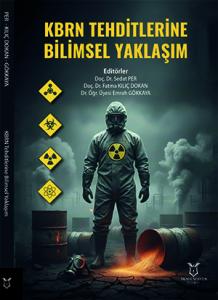
Nükleer enerji, yüksek verimlilik ve düşük karbon salınımı nedeniyle küresel enerji politikalarında stratejik bir konuma sahiptir. Ancak yönetim hataları veya doğal afetler sonucu meydana gelebilecek nükleer kazalar, yalnızca teknik değil; çevresel, sağlık ve sosyoekonomik boyutlarıyla da uzun vadeli etkiler yaratmaktadır. Bu bölüm, Çernobil (1986) ve Fukuşima (2011) örneklerinden hareketle, nükleer kazaların insan sağlığı, ekosistemler ve toplumlar üzerindeki kalıcı sonuçlarını incelemekte ve rehabilitasyon stratejilerini değerlendirmektedir. Radyasyona maruz kalan bireylerde tiroid kanseri, lösemi, genetik mutasyonlar, doğurganlık problemleri ve nörogelişimsel bozukluklar gibi etkiler gözlenmektedir. Ayrıca, psikolojik travmalar, toplumsal çözülme ve ekonomik üretim kayıpları da önemli uzun vadeli sonuçlar arasındadır. Çevresel rehabilitasyon süreçlerinde toprak sıyırma, fitoremediasyon, kimyasal stabilizasyon ve su kaynaklarının arıtımı gibi yöntemler öne çıkmaktadır. Bu yöntemlerin etkinliği; kontaminasyon düzeyi, iklim koşulları ve izotop özelliklerine göre değişmektedir. Çalışma, nükleer kazaların yönetiminde teknik müdahalelerin yanı sıra karar alma süreçlerinin açık, izlenebilir ve hesap verebilir biçimde yürütülmesini, halk sağlığı takibi, psikososyal destek ve uluslararası iş birliğinin zorunluluğuna dikkat çekmektedir. Sonuç olarak, nükleer felaketlerin etkilerini azaltmak, disiplinler arası yaklaşımlar, uzun vadeli planlama ve toplumsal dayanıklılık temelli politikalarla mümkündür.
Referanslar
Bhele, V.D., Ghanekar, T., Bhosale, S.S. ve Jadhav, A.G. (2024). Nuclear Accidents: An In-Depth Analysis of Historical Events and Lessons for Future Safety (September 21, 2024). http://dx.doi.org/10.2139/ssrn.5016274
Cassatt, D.R., Winters, T.A. ve PrabhuDas, M. (2023). Immune Dysfunction from Radiation Exposure. Radiation Research, 1; 200(4): 389-395. https://doi.org/10.1667/RADE-22-00197.1
Christodouleas, J.P., Forrest, R.D., Ainsley, C.G., Tochner, Z., Hahn, S.M. ve Glatstein, E. (2011). Short-term and long-term health risks of nuclear-power-plant accident. New England Journal of Medicine, 364, 2334 – 2341.
Christopher, R., Martinsson, J., Eriksson, M., Ewald, J., Javid, R.G., Hjellström, M., Isaksson, M., Rasmussen, J., Sterner, T. ve Finck, R. (2023). Restoring areas after a radioactive fallout: A multidisciplinary study on decontamination, Journal of Environmental Radioactivity, 270, 107268, ISSN 0265-931X, https://doi.org/10.1016/j.jenvrad.2023.107268.
Cwikel, J., Sergienko, R., Gutvirtz, G., Abramovitz, R., Slusky, D., Quastel, M. ve Sheiner, E. (2020). Reproductive Effects of Exposure to Low-Dose Ionizing Radiation: A Long-Term Follow-Up of Immigrant Women Exposed to the Chernobyl Accident. Journal of Clinical Medicine, 8; 9(6): 1786. doi: 10.3390/jcm9061786.
Epifanova, N.V. ve Tertyshnik, E.G. (2012). Chemical stabilization of radioactive cesium and strontium in soils using ferrocyanide and clay minerals. Radiochemistry, 54(5), 469–474. https://doi.org/10.1134/S1066362212050034
EURATOM (2020). Basic Safety Standards Directive (2013/59/Euratom). Official Journal of the European Union, L13/1.
Evrard, O., Laceby, J. P., Lepage, H., Onda, Y., Cerdan, O. ve Lefèvre, I. (2019). Radiocesium transfer from soils to rivers following the Fukushima Dai-ichi nuclear power plant accident: A review. Journal of Environmental Radioactivity, 198, 196–208. https://doi.org/10.1016/j.jenvrad.2018.03.011
GonzÁlez, A.B., Bouville, A., Rajaraman, P. ve Schubauer-Berigan, M. (2017). 'Ionizing Radiation', in Michael Thun, and others (eds), Cancer Epidemiology and Prevention, 4th edn (New York, Oxford Academic). https://doi.org/10.1093/oso/9780190238667.003.0013
Hasegawa, K. (2015). Facing nuclear risks: Lessons from the Fukushima nuclear disaster. International Journal of Japanese Sociology, 24(1), 121–132. https://doi.org/10.1111/ijjs.12032
Hayashi, F., Ohira, T., Nakano, H., Nagao, M., Okazaki, K., Harigane, M., Yasumura, S., Maeda, M., Takahashi, A., Yabe, H., Suzuki, Y. ve Kamiya, K. (2021). Fukushima Health Management Survey Group. Association between post-traumatic stress disorder symptoms and bone fractures after the Great East Japan Earthquake in older adults: a prospective cohort study from the Fukushima Health Management Survey. BMC Geriatrics. 7; 21(1): 18. https://doi.org/10.1186/s12877-020-01934-9
Higley, K.A. (2006). Environmental consequences of the Chernobyl accident and their remediation: Twenty years of experience. Reportof the chernobyl forum expert group ‘environment’: STI/PUB/1239, International Atomic Energy Agency, Vienna, Austria, 166pp. Radiation Protect Dosimetry, 121, 476–477. https://doi.org/10.1093/rpd/ncl163
IAEA (2006). Environmental consequences of the Chernobyl accident and their remediation: Twenty years of experience. Report of the Chernobyl Forum Expert Group ‘Environment’. Vienna: International Atomic Energy Agency. https://www-pub.iaea.org/MTCD/publications/PDF/Pub1239_web.pdf
IAEA (2021). Preparedness and Response for a Nuclear or Radiological Emergency: General Safety Requirements. IAEA Safety Standards Series No. GSR Part 7. Vienna: International Atomic Energy Agency. https://www.iaea.org/publications/10905
ICRP, (2000). Pregnancy and medical radiation (ICRP Publication 84). Ann. ICRP, 30(1), 1–46.
Kolominsky, Y., Igumnov, S. ve Drozdovitch, V. (1999). The psychologicaldevelopment of children from Belarus exposed in the prenatal periodto radiation from the Chernobyl atomic power plant. Journal of Child Psychology and Psychiatry, and Allied Disciplines, 40(2), 299–305.
Kumar Sharma, A., Shaw, P., Kalonia, A., Yashavarddhan, M.H., Chaudhary, P., Vibhuti, A. ve Kumar Shukla, S. (2021). Recent Perspectives in Radiation-Mediated DNA Damage and Repair: Role of NHEJ and Alternative Pathways. IntechOpen. doi: 10.5772/intechopen.96374
Little, J. (1993). The Chernobyl accident, congenital anomalies and other reproductive outcomes. Paediatric and Perinatal Epidemiology, 1993 Apr;7(2):121-51. https://doi.org/10.1111/j.1365-3016.1993.tb00388.x
Little, M.P. ve Lipshultz, S.E (2015). Low dose radiation and circulatory diseases: a brief narrative review. Cardiooncology. 2015 Nov 26;1(1):4. https://doi.org/10.1186/s40959-015-0007-6
Loganovsky, K.N. ve Vasilenko, Z.L. (2013). Depression and ionizing radiation. Problemy Radiatsiinoi Medytsyny ta Radiobiolohii, (18):200-19. (Ukraynaca)
Longmuir, C. ve Agyapong, V.I.O. (2021). Social and Mental Health Impact of Nuclear Disaster in Survivors: A Narrative Review. Behavioral Sciences (Basel), 23;11(8):113. https://doi.org/10.3390/bs11080113
Malins, A., Kurihara, O., Saito, K. ve Yoshida, M. (2015). Evaluation of topsoil removal and soil mixing for radiocesium decontamination in Fukushima Prefecture. Journal of Environmental Radioactivity, 150, 122–130. https://doi.org/10.1016/j.jenvrad.2015.08.016
Ojiambo, S.B., Lyons, W.B., Welch, K.A., Poreda, R.J. ve Johannesson, K.H. (2003). Strontium isotopes and rareearth elements as tracers of groundwater–lake water inter-actions, Lake Naivasha, Kenya. Applied Geochemistry, 18(11), 1789–1805.
Petrillo, L., Rossi, F., Bianchi, M. ve Capra, L. (2025). Advances in chemical immobilization of radionuclides in contaminated agricultural soils. Environmental Science and Pollution Research, 32(4), 4890–4902. https://doi.org/10.1007/s11356-024-25678-3
Rooney, M.K., Andring, L.M., Corrigan, K.L., Bernard, V., Williamson, T.D., Fuller C.D., Garden, A.S., Gunn, B., Lee A., Moreno, A.C., Morrison, W.H., Phan J., Rosenthal, D.I., Spiotto M. ve Frank, S.J. (2023) Hypothyroidism following Radiotherapy for Head and Neck Cancer: A Systematic Review of the Literature and Opportunities to Improve the Therapeutic Ratio. Cancers (Basel). 29; 15(17): 4321. https://doi.org/10.3390/cancers15174321
Schull, W.J., Otake, M., Neel, J.V. (1981). Genetic effects of the atomic bombs: a reap-praisal. Science, 213, 1220-1227.
Singh, G., Bhadange, S., Bhawna, F., Shewale, P., Dahiya, R., Aggarwal, A. ve ark. (2023). Phytoremediation of radioactive elements, possibilities and challenges: special focus on agricultural aspects. International Journal of Phytoremediation, 25(1), 1-8.
Thomas, G.A. ve Symonds, P. (2016). Radiation Exposure and Health Effects - is it Time to Reassess the Real Consequences? Clinical Oncology (R Coll Radiol). 28 (4): 231-6. doi: 10.1016/j.clon.2016.01.007.
UNSCEAR (2020). Sources, effects and risks of ionizing radiation: UNSCEAR 2019 report, Volume I. United Nations Scientific Committee on the Effects of Atomic Radiation. https://doi.org/10.18356/9789210046722c007
Wdowiak, A., Skrzypek, M., Stec, M. ve Panasiuk, L. (2019). Effect of ionizing radiation on the male reproductive system. Annals Agricultural Environmental Medicine, 17; 26(2): 210-216. https://doi.org/10.26444/aaem/106085
WHO (2013). Health risk assessment from the nuclear accident after the 2011 Great East Japan Earthquake and Tsunami. Geneva: World Health Organization. https://apps.who.int/iris/handle/10665/78218
Yablokov, A. V., Nesterenko, V. B. ve Nesterenko, A. V. (2009). Chernobyl: Consequences of the catastrophe for people and the environment. New York Academy of Sciences. https://doi.org/10.1111/j.1749-6632.2009.04818.x