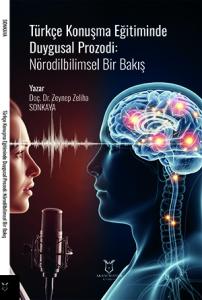
Türkçe Konuşma Eğitiminde Duygusal Prozodi: Nörodilbilimsel Bir Bakış
Özet
-
Referanslar
Abo, M., Senoo, A., Watanabe, S., Miyano, S., Doseki, K., Sasaki, N., . . . Yonemoto, K. (2004). Language-related brain function during word repetition in post-stroke aphasics. Neuroreport, 15(12), 1891-1894.
Akbayır, S. (2007). Dil ve diksiyon: yazılı ve sözlü anlatım bozuklukları: Akçağ Yayınları.
Alba-Ferrara, L., Ellison, A., Mitchell, R. (2012). Decoding emotional prosody: resolving differences in functional neuroanatomy from fMRI and lesion studies using TMS. Brain Stimulation: Basic, Translational, and Clinical Research in Neuromodulation, 5(3), 347-353.
Alba-Ferrara, L., Hausmann, M., Mitchell, R. L., Weis, S. (2011). The neural correlates of emotional prosody comprehension: disentangling simple from complex emotion. PLoS One, 6(12), e28701.
Alder, H. (2000). Sağ beyin yöneticisi: Kişisel ve mesleki başarıya ulaşmada beyin gücünü etkin kullanma: Kariyer Yayıncılık.
Arsic, M. (2008). Electrophysiology of Emotional Prosody Production and Perception. University of Veterinary Medicine Hannover,
Astésano, C., Besson, M., Alter, K. (2004). Brain potentials during semantic and prosodic processing in French. Cognitive Brain Research, 18(2), 172-184.
Ateş, F. E. (2013). Alzheimer Tipi Demans Hastalarında Duygusal Çalışma Belleğinin Fonksiyonel Kızıl Ötesine Yakın Spektroskopi (F-Nirs) ile İncelenmesi.
AVCI, D. E., YAĞBASAN, R. (2008). Beyin yarı kürelerinin baskın olarak kullanılmasına yönelik öğretim stratejileri. Gazi Üniversitesi Gazi Eğitim Fakültesi Dergisi, 28(2).
Aygüneş, M. (2013). Türkçede uyum özelliklerinin Olaya İlişkin Beyin Potansiyelleri (OİP) çerçevesinde incelenmesi. In: Yayımlanmamış doktora tezi. Ankara Üniversitesi.
BAYAZIT, Z. (2012). Türk Edebiyatı İle Dil Ve Anlatım Derslerinde Karşılaşılan Sorunlar Ve Bu Sorunlara Yönelik Çözüm Önerileri. Ankara Üniversitesi Eğitim Bilimleri Enstitüsü, Ankara.
Bekar, I. P. (2016). Türkçede Eylem-Sonu Konumunda Bürün-Sözdizim Etkileşimi Üzerine Elektrofizyolojik Bir İnceleme. (PhD). Ankara Üniversitesi, Ankara.
Belyk, M., Brown, S. (2013). Perception of affective and linguistic prosody: an ALE meta-analysis of neuroimaging studies. Social Cognitive and Affective Neuroscience, 9(9), 1395-1403.
Benjamini, Y., Hochberg, Y. (1995). Controlling the false discovery rate: a practical and powerful approach to multiple testing. Journal of the royal statistical society. Series B (Methodological), 289-300.
Bilgin, M. (2002). Anlamdan Anlatıma Türkçemiz (Vol. 368): TC Kültür Bakanlığı.
Birkenbihl, V. F. (2007). Stroh im Kopf. Vom Gehirn-Besitzer zum Gehirn-Benutzer, 47.
Boas, D. A., Dale, A. M., Franceschini, M. A. (2004). Diffuse optical imaging of brain activation: approaches to optimizing image sensitivity, resolution, and accuracy. Neuroimage, 23, S275-S288.
Bortfeld, H., Fava, E., Boas, D. A. (2009). Identifying cortical lateralization of speech processing in infants using near-infrared spectroscopy. Developmental neuropsychology, 34(1), 52-65.
Boutsen, F. (2003). Prosody: the music of language and speech. ASHA Leader, 5, 7-9.
Bowers, D., Coslett, H. B., Bauer, R. M., Speedie, L. J., Heilman, K. M. (1987). Comprehension of emotional prosody following unilateral hemispheric lesions: Processing defect versus distraction defect. Neuropsychologia, 25(2), 317-328.
Brådvik, B., Dravins, C., Holtås, S., Rosen, I., Ryding, E., Ingvar, D. (1991). Disturbances of speech prosody following right hemisphere infarcts. Acta Neurologica Scandinavica, 84(2), 114-126.
Brain, B. W. R. B., Bannister, R. (1985). Brain's clinical neurology: Oxford University Press, USA.
Breznitz, Z. (2006). Fluency in reading: Synchronization of processes: Routledge.
Brinkman, J., Kuypers, H. (1973). Cerebral control of contralateral and ipsilateral arm, hand and finger movements in the split-brain rhesus monkey. Brain, 96(4), 653-674.
Brück, C., Kreifelts, B., Wildgruber, D. (2011). Emotional voices in context: a neurobiological model of multimodal affective information processing. Physics of Life Reviews, 8(4), 383-403.
Buchanan, T. W., Lutz, K., Mirzazade, S., Specht, K., Shah, N. J., Zilles, K., Jäncke, L. (2000). Recognition of emotional prosody and verbal components of spoken language: an fMRI study. Cognitive Brain Research, 9(3), 227-238.
Bullmore, E., Sporns, O. (2009). Complex brain networks: graph theoretical analysis of structural and functional systems. Nature Reviews Neuroscience, 10(3), 186.
Bulut, M. (2008). Emotional speech resynthesis: University of Southern California.
Bulut, M., Lee, S., Narayanan, S. (2008). Recognition for synthesis: Automatic parameter selection for resynthesis of emotional speech from neutral speech. Paper presented at the Acoustics, Speech and Signal Processing, 2008. ICASSP 2008. IEEE International Conference on.
Byun, K., Hyodo, K., Suwabe, K., Ochi, G., Sakairi, Y., Kato, M., . . . Soya, H. (2014). Positive effect of acute mild exercise on executive function via arousal-related prefrontal activations: an fNIRS study. Neuroimage, 98, 336-345.
Cancelliere, A. E., Kertesz, A. (1990). Lesion localization in acquired deficits of emotional expression and comprehension. Brain and cognition, 13(2), 133-147.
Caplan, D. (1987). Neurolinguistics and linguistic aphasiology: An introduction: Cambridge University Press.
Chomsky, N. (2014). Aspects of the Theory of Syntax (Vol. 11): MIT press.
Cochin, S., Barthelemy, C., Lejeune, B., Roux, S., Martineau, J. (1998). Perception of motion and qEEG activity in human adults. Electroencephalography and clinical neurophysiology, 107(4), 287-295.
Cope, M., Delpy, D. T. (1988). System for long-term measurement of cerebral blood and tissue oxygenation on newborn infants by near infra-red transillumination. Medical and Biological Engineering and Computing, 26(3), 289-294.
Coşkun, M. V. (2009). Ana dili eğitiminde parçalarüstü birimlerin önemi ve teknoloji destekli olarak kavratılması. Bilig, 48, 41-52.
Cruttenden, A. (1997). Intonation Cambridge University Press. In: Cambridge.
Crystal, D. (2011). A dictionary of linguistics and phonetics (Vol. 30): John Wiley Sons.
Damasio, H. (1995). Human brain anatomy in computerized images: Oxford university press.
Dara, C., Pell, M. D. (2006). Effects of right-hemisphere damage on explicit and implicit processing of emotional prosody. Brain and Language, 99(1-2), 51-52.
Darby, D. G. (1993). Sensory aprosodia A clinical clue to lesions of the inferior division of the right middle cerebral artery? Neurology, 43(3 Part 1), 567-567.
Dayan, E., Censor, N., Buch, E. R., Sandrini, M., Cohen, L. G. (2013). Noninvasive brain stimulation: from physiology to network dynamics and back. Nature neuroscience, 16(7), 838.
Dehaene-Lambertz, G., Hertz-Pannier, L., Dubois, J. (2006). Nature and nurture in language acquisition: anatomical and functional brain-imaging studies in infants. TRENDS in Neurosciences, 29(7), 367-373.
Démonet, J.-F., Thierry, G., Cardebat, D. (2005). Renewal of the neurophysiology of language: functional neuroimaging. Physiological reviews, 85(1), 49-95.
Diehl, J. J., Watson, D., Bennetto, L., McDonough, J., Gunlogson, C. (2009). An acoustic analysis of prosody in high-functioning autism. Applied Psycholinguistics, 30(3), 385-404.
Dosenbach, N. U., Fair, D. A., Miezin, F. M., Cohen, A. L., Wenger, K. K., Dosenbach, R. A., . . . Raichle, M. E. (2007). Distinct brain networks for adaptive and stable task control in humans. Proceedings of the National Academy of Sciences, 104(26), 11073-11078.
Doyon, J., Benali, H. (2005). Reorganization and plasticity in the adult brain during learning of motor skills. Current opinion in neurobiology, 15(2), 161-167.
Ergenç, İ. (2000). Dilin Beyindeki Organizasyonu ve Konuşmanın Gerçekleşmesi, Multidisipliner Yaklaşımla Beyin ve Kognisyon. 113-126.
Ergenç, İ. (2008). Dilin Beyindeki Gerçekleşimi ve Konuşma Eylemi. Kognitif Neurobilimler, 169-185.
Esmer, E. (2003). Şizofrenlerin Sözlü Anlatı Metinlerinin Çözümlenmesi. Yayımlanmamış Yüksek Lisans Tezi, Ankara Üniversitesi Sosyal Bilimler Enstitüsü, Ankara.
Essenpreis, M., Elwell, C., Cope, M., Van der Zee, P., Arridge, S., Delpy, D. (1993). Spectral dependence of temporal point spread functions in human tissues. Applied optics, 32(4), 418-425.
Ethofer, T., Bretscher, J., Gschwind, M., Kreifelts, B., Wildgruber, D., Vuilleumier, P. (2011). Emotional voice areas: anatomic location, functional properties, and structural connections revealed by combined fMRI/DTI. Cerebral Cortex, 22(1), 191-200.
Fidan, D. (2002). Türkçede Ezgi Örüntüleri. Ankara Üniversitesi. Yayınlanmamış yüksek lisans tezi.
Fiez, J. A., Raichle, M. E., Balota, D. A., Tallal, P., Petersen, S. E. (1996). PET activation of posterior temporal regions during auditory word presentation and verb generation. Cerebral Cortex, 6(1), 1-10.
Fleiss, J. L. (1971). Measuring nominal scale agreement among many raters. Psychological bulletin, 76(5), 378.
Fodor, J. D. (2002). Psycholinguistics cannot escape prosody. Paper presented at the Speech Prosody 2002, International Conference.
França, A. I. (2004). Introduction to neurolinguistics. Manuscript [Available at: http://www. punksin-science. org/kleanthes/courses/UCY 10S/IBL/mareial/Franca_Nearolinguistics. pdf].
Friederici, A. D. (2002). Towards a neural basis of auditory sentence processing. Trends in cognitive sciences, 6(2), 78-84.
Friederici, A. D., Alter, K. (2004). Lateralization of auditory language functions: a dynamic dual pathway model. Brain and Language, 89(2), 267-276.
Friederici, A. D., Weissenborn, J. (2007). Mapping sentence form onto meaning: The syntax–semantic interface. Brain research, 1146, 50-58.
Frühholz, S., Ceravolo, L., Grandjean, D. (2011). Specific brain networks during explicit and implicit decoding of emotional prosody. Cerebral Cortex, 22(5), 1107-1117.
Frühholz, S., Trost, W., Kotz, S. A. (2016). The sound of emotions—Towards a unifying neural network perspective of affective sound processing. Neuroscience Biobehavioral Reviews, 68, 96-110.
Gazzaniga, M. S. (1967). The split brain in man. Scientific American, 217(2), 24-29.
Gazzaniga, M. S. (2003). The split brain revisited. SCIENTIFIC AMERICAN-AMERICAN EDITION-, 287, 26-31.
George, M. S., Parekh, P. I., Rosinsky, N., Ketter, T. A., Kimbrell, T. A., Heilman, K. M., . . . Post, R. M. (1996). Understanding emotional prosody activates right hemisphere regions. Archives of neurology, 53(7), 665-670.
Goucha, T., Friederici, A. D. (2015). The language skeleton after dissecting meaning: a functional segregation within Broca's Area. Neuroimage, 114, 294-302.
Guranski, K., Podemski, R. (2015). Emotional prosody expression in acoustic analysis in patients with right hemisphere ischemic stroke. Neurologia i neurochirurgia polska, 49(2), 113-120.
Hagoort, P. (2003). How the brain solves the binding problem for language: a neurocomputational model of syntactic processing. Neuroimage, 20, S18-S29.
Hagoort, P. (2005). On Broca, brain, and binding: a new framework. Trends in cognitive sciences, 9(9), 416-423.
Hahne, A., Eckstein, K., Friederici, A. D. (2004). Brain signatures of syntactic and semantic processes during children's language development. Journal of Cognitive Neuroscience, 16(7), 1302-1318.
Hammerschmidt, K., Jürgens, U. (2007). Acoustical correlates of affective prosody. Journal of Voice, 21(5), 531-540.
Hauser, S., Josephson, S. (2013). Harrison's neurology in clinical medicine: McGraw-Hill.
Heeger, D. J., Ress, D. (2002). What does fMRI tell us about neuronal activity? Nature Reviews Neuroscience, 3(2), 142.
Heilman, K. M., Scholes, R., Watson, R. (1975). Auditory affective agnosia. Disturbed comprehension of affective speech. Journal of Neurology, Neurosurgery Psychiatry, 38(1), 69-72.
Herrmann, M. J., Ehlis, A.-C., Fallgatter, A. J. (2003). Prefrontal activation through task requirements of emotional induction measured with NIRS. Biological psychology, 64(3), 255-263.
Hickok, G., Poeppel, D. (2000). Towards a functional neuroanatomy of speech perception. Trends in cognitive sciences, 4(4), 131-138.
Hird, K. (1993). Prosody and Emotion: Acoustic Analysis of “Emotional Tone” in Nondominant Hemisphere Damaged Subjects. Australian Journal of Human Communication Disorders, 21(1), 50-64.
Homae, F., Watanabe, H., Nakano, T., Asakawa, K., Taga, G. (2006). The right hemisphere of sleeping infant perceives sentential prosody. Neuroscience Research, 54(4), 276-280.
Homae, F., Watanabe, H., Nakano, T., Taga, G. (2007). Prosodic processing in the developing brain. Neuroscience Research, 59(1), 29-39.
Hughlings Jacksons, J. (1878). On affections of speech from disease of the brain. Brain, 1, 304-330.
Iida, A., Campbell, N., Higuchi, F., Yasumura, M. (2003). A corpus-based speech synthesis system with emotion. Speech Communication, 40(1-2), 161-187.
Ingram, J. C. (2007). Neurolinguistics: An introduction to spoken language processing and its disorders: Cambridge University Press.
Jan, S., Santin, G., Strul, D., Staelens, S., Assie, K., Autret, D., . . . Bloomfield, P. (2004). GATE: a simulation toolkit for PET and SPECT. Physics in Medicine Biology, 49(19), 4543.
Jobsis, F. F. (1977). Noninvasive, infrared monitoring of cerebral and myocardial oxygen sufficiency and circulatory parameters. Science, 198(4323), 1264-1267.
Jung, T.-D., Kim, J.-Y., Lee, Y.-S., Kim, D.-H., Lee, J.-J., Seo, J.-H., . . . Chang, Y. (2010). Effect of repetitive transcranial magnetic stimulation in a patient with chronic crossed aphasia: fMRI study. Journal of rehabilitation medicine, 42(10), 973-978.
Keleş, E., Çepni, S. (2006). Beyin ve öğrenme. Türk Fen Eğitimi Dergisi, 3(2), 66-82.
Keskin, H. K. (2012). Akıcı okuma yöntemlerinin okuma becerileri üzerindeki etkisi. Yayınlanmamış Doktora Tezi, Gazi Üniversitesi Eğitim Bilimleri Enstitüsü, Ankara.
Kim, H. Y., Seo, K., Jeon, H. J., Lee, U., Lee, H. (2017). Application of Functional Near-Infrared Spectroscopy to the Study of Brain Function in Humans and Animal Models. Molecules and cells, 40(8), 523.
Kimelman, M. D. (1999). Prosody, linguistic demands, and auditory comprehension in aphasia. Brain and Language, 69(2), 212-221.
Konrot, A. (1981). Physical correlates of linguistic stress in Turkish. University of Essex Language Centre Occasional Papers, 24, 26-53.
Kotz, S. A., Kalberlah, C., Bahlmann, J., Friederici, A. D., Haynes, J. D. (2013). Predicting vocal emotion expressions from the human brain. Human brain mapping, 34(8), 1971-1981.
Kotz, S. A., Meyer, M., Alter, K., Besson, M., von Cramon, D. Y., Friederici, A. D. (2003). On the lateralization of emotional prosody: an event-related functional MR investigation. Brain and Language, 86(3), 366-376.
Kotz, S. A., Meyer, M., Paulmann, S. (2006). Lateralization of emotional prosody in the brain: an overview and synopsis on the impact of study design. Progress in brain research, 156, 285-294.
Kroll, J. F., Dussias, P. E. (2013). The comprehension of words and sentences in two languages. The Handbook of Bilingualism and Multilingualism, Second Edition, 216-243.
Kuhn, M. R., Schwanenflugel, P. J., Meisinger, E. B. (2010). Aligning theory and assessment of reading fluency: Automaticity, prosody, and definitions of fluency. Reading Research Quarterly, 45(2), 230-251.
Kuperberg, G. R. (2007). Neural mechanisms of language comprehension: Challenges to syntax. Brain research, 1146, 23-49.
Kutas, M., Hillyard, S. A. (1980). Reading senseless sentences: Brain potentials reflect semantic incongruity. Science, 207(4427), 203-205.
Ladefoged, P. (2003). Phonetic data analysis: An introduction to fieldwork and instrumental techniques: Wiley-Blackwell.
Laird, A. R., Robinson, J. L., McMillan, K. M., Tordesillas-Gutiérrez, D., Moran, S. T., Gonzales, S. M., . . . Fox, P. T. (2010). Comparison of the disparity between Talairach and MNI coordinates in functional neuroimaging data: validation of the Lancaster transform. Neuroimage, 51(2), 677-683.
Lancaster, J. L., Tordesillas‐Gutiérrez, D., Martinez, M., Salinas, F., Evans, A., Zilles, K., . . . Fox, P. T. (2007). Bias between MNI and Talairach coordinates analyzed using the ICBM‐152 brain template. Human brain mapping, 28(11), 1194-1205.
Law, J., Garrett, Z., Nye, C. (2004). The efficacy of treatment for children with developmental speech and language delay/disorder: A meta-analysis. Journal of Speech, Language, and Hearing Research, 47(4), 924-943.
Leff, D. R., Elwell, C. E., Orihuela-Espina, F., Atallah, L., Delpy, D. T., Darzi, A. W., Yang, G. Z. (2008). Changes in prefrontal cortical behaviour depend upon familiarity on a bimanual co-ordination task: an fNIRS study. Neuroimage, 39(2), 805-813.
Levi, S. V. (2005). Acoustic correlates of lexical accent in Turkish. Journal of the International Phonetic Association, 35(1), 73-97.
Liebenthal, E., Silbersweig, D. A., Stern, E. (2016). The language, tone and prosody of emotions: neural substrates and dynamics of spoken-word emotion perception. Frontiers in neuroscience, 10, 506.
Lieberman, P. (2002). On the nature and evolution of the neural bases of human language. American Journal of Physical Anthropology, 119(S35), 36-62.
Loevenbruck, H., Baciu, M., Segebarth, C., Abry, C. (2005). The left inferior frontal gyrus under focus: an fMRI study of the production of deixis via syntactic extraction and prosodic focus. Journal of Neurolinguistics, 18(3), 237-258.
Mahmoodzadeh, M. (2015). The influence of neurolinguistic applications on second language research: Reviewing the issues and refocusing the debate. BRAIN. Broad Research in Artificial Intelligence and Neuroscience, 3(4), 13-18.
Maki, A., Yamashita, Y., Ito, Y., Watanabe, E., Mayanagi, Y., Koizumi, H. (1995). Spatial and temporal analysis of human motor activity using noninvasive NIR topography. Medical physics, 22(12), 1997-2005.
Martin, A., Chao, L. L. (2001). Semantic memory and the brain: structure and processes. Current opinion in neurobiology, 11(2), 194-201.
Martin, J. H. (2012). Neuroanatomy text and atlas: McGraw Hill Professional.
Mayer, J., Dogil, G., Wildgruber, D., Riecker, A., Ackermann, H., Grodd, W. (1999). PROSODY IN SPEECH PRODUCTION: A fMRI STUDY.
McFadden, K. S. (2001). An investigation of attitudes, anxiety, and achievement of college algebra students using brain-compatible teaching techniques.
Mergen, F. (2010). İkidilli bireylerin anadilinde ve ikinci dilinde dilbilgisel ve anlambilimsel işlemlemelerinin nörodilbilimsel açıdan incelenmesi. DEÜ Sosyal Bilimleri Enstitüsü,
Mesulam, M.-M. (1985). Principles of behavioral neurology: Oxford University Press, USA.
Mesulam, M. (2004). Davranışsal ve kognitif nörolojinin ilkeleri. İstanbul: Yelkovan Yayınları.
Mitchell, R. L., Crow, T. J. (2005). Right hemisphere language functions and schizophrenia: the forgotten hemisphere? Brain, 128(5), 963-978.
Mitchell, T. M., Hutchinson, R., Niculescu, R. S., Pereira, F., Wang, X., Just, M., Newman, S. (2004). Learning to decode cognitive states from brain images. Machine learning, 57(1-2), 145-175.
Mohr, B., Difrancesco, S., Harrington, K., Evans, S., Pulvermüller, F. (2014). Changes of right-hemispheric activation after constraint-induced, intensive language action therapy in chronic aphasia: fMRI evidence from auditory semantic processing1. Frontiers in human neuroscience, 8, 919.
Monrad-Krohn, G. H. (1947). Dysprosody or altered" melody of language.". Brain: a journal of neurology.
Montenegro, C. S., Maravillas, E. A. (2015). Acoustic-prosodic recognition of emotion in speech. Paper presented at the Humanoid, Nanotechnology, Information Technology, Communication and Control, Environment and Management (HNICEM), 2015 International Conference on.
Moritz-Gasser, S., Herbet, G., Duffau, H. (2013). Mapping the connectivity underlying multimodal (verbal and non-verbal) semantic processing: a brain electrostimulation study. Neuropsychologia, 51(10), 1814-1822.
Moro, A., Tettamanti, M., Perani, D., Donati, C., Cappa, S. F., Fazio, F. (2001). Syntax and the brain: disentangling grammar by selective anomalies. Neuroimage, 13(1), 110-118.
Nelson, D. G. K., Hirsh-Pasek, K., Jusczyk, P. W., Cassidy, K. W. (1989). How the prosodic cues in motherese might assist language learning. Journal of child Language, 16(1), 55-68.
Newman, S. D., Carpenter, P. A., Varma, S., Just, M. A. (2003). Frontal and parietal participation in problem solving in the Tower of London: fMRI and computational modeling of planning and high-level perception. Neuropsychologia, 41(12), 1668-1682.
Obler, L. K., Gjerlow, K. (1999). Language and the Brain: Cambridge University Press.
Ojemann, G. A. (1983). Brain organization for language from the perspective of electrical stimulation mapping. Behavioral and Brain Sciences, 6(2), 189-206.
Onan, B. (2010). BEYNİN BİLİŞSEL İŞLEVLERİ ÜZERİNE YAPILAN ARAŞTIRMALAR VE ANA DİLİ EĞİTİMİNE YANSIMALARI. Journal of Türklük Bilimi Arastirmalari, 15(27).
Ornstein, R. E. (1997). The right mind: Making sense of the hemispheres: Harcourt.
Osterhout, L., Holcomb, P. J. (1992). Event-related brain potentials elicited by syntactic anomaly. Journal of memory and language, 31(6), 785-806.
Öge, A. (2004). İstanbul Üniversitesi İstanbul Tıp Fakültesi Temel ve Klinik Bilimler Ders Kitapları, Nöroloji. İstanbul: Nobel Tıp Kitapevleri, 367-415.
ÖZBAY, M., ÇETİN, D. (2013). Dinleme becerisinin geliştirilmesinde prozodik farkindaliğin önemi. Sosyal ve beşeri bilimler araştirmalari dergisi(26), 155-175.
Özcan, A. (2009). Beyindilbilimi açısından afazili hastalarda perseverasyon. DEÜ Sosyal Bilimleri Enstitüsü,
Özçelik, Ö., Nagai, M. (2010). Possible syntactic subject positions in Turkish: Evidence from phonology. Paper presented at the Proceedings of the 6th Workshop on Altaic Formal Linguistics (WAFL 6). Cambridge, MA: MIT Working Papers in Linguistics (MITWPL).
Pannekamp, A., Toepel, U., Alter, K., Hahne, A., Friederici, A. D. (2005). Prosody-driven sentence processing: An event-related brain potential study. Journal of Cognitive Neuroscience, 17(3), 407-421.
Papathanassiou, D., Etard, O., Mellet, E., Zago, L., Mazoyer, B., Tzourio-Mazoyer, N. (2000). A common language network for comprehension and production: a contribution to the definition of language epicenters with PET. Neuroimage, 11(4), 347-357.
Paradis, M. (2004). A neurolinguistic theory of bilingualism (Vol. 18): John Benjamins Publishing.
Peele, T. L. (1954). The neuroanatomical basis for clinical neurology: McGraw-Hill New York, Toronto, London.
Pell, M. D. (1999). The temporal organization of affective and non-affective speech in patients with right-hemisphere infarcts. Cortex, 35(4), 455-477.
Pijnenborg, G., Withaar, F., Van den Bosch, R., Brouwer, W. (2007). Impaired perception of negative emotional prosody in schizophrenia. The Clinical Neuropsychologist, 21(5), 762-775.
Plichta, M. M., Gerdes, A. B., Alpers, G. W., Harnisch, W., Brill, S., Wieser, M. J., Fallgatter, A. J. (2011). Auditory cortex activation is modulated by emotion: a functional near-infrared spectroscopy (fNIRS) study. Neuroimage, 55(3), 1200-1207.
Posner, M. I., Petersen, S. E. (1990). The attention system of the human brain. Annual review of neuroscience, 13(1), 25-42.
Pulvermüller, F., Hauk, O., Nikulin, V. V., Ilmoniemi, R. J. (2005). Functional links between motor and language systems. European Journal of Neuroscience, 21(3), 793-797.
Riecker, A., Ackermann, H., Wildgruber, D., Dogil, G., Grodd, W. (2000). Opposite hemispheric lateralization effects during speaking and singing at motor cortex, insula and cerebellum. Neuroreport, 11(9), 1997-2000.
Ritchie, B. W., Hsarrison, G. J., Zantop, D., Harrison, L. (1997). Avian medicine: principles and application, abridged edition. Idaho Falls, ID: Wingers Publishing.
Rosenzweig, M., Breedlove, S., Watson, N. (2005). Biological psychology: An introduction to behavioral and cognitive neuroscience (G. Donini, Ed.). Sunderland, MA: Sinauer Associates.
Ross, E. D. (1981). The aprosodias: Functional-anatomic organization of the affective components of language in the right hemisphere. Archives of neurology, 38(9), 561-569.
Ross, E. D. (2000). Affective prosody and the aprosodias. Principles of behavioral and cognitive neurology, 316-331.
Ross, E. D., Edmondson, J. A., Seibert, G. B., Homan, R. W. (1988). Acoustic analysis of affective prosody during right-sided Wada test: a within-subjects verification of the right hemisphere's role in language. Brain and Language, 33(1), 128-145.
Ross, E. D., Mesulam, M.-M. (1979). Dominant language functions of the right hemisphere?: Prosody and emotional gesturing. Archives of neurology, 36(3), 144-148.
Saito, Y., Kondo, T., Aoyama, S., Fukumoto, R., Konishi, N., Nakamura, K., . . . Toshima, T. (2007). The function of the frontal lobe in neonates for response to a prosodic voice. Early Human Development, 83(4), 225-230.
Sakai, K. L. (2005). Language acquisition and brain development. Science, 310(5749), 815-819.
Sakai, K. L., Miura, K., Narafu, N., Muraishi, Y. (2004). Correlated functional changes of the prefrontal cortex in twins induced by classroom education of second language. Cerebral Cortex, 14(11), 1233-1239.
Salverda, A. P., Dahan, D., Tanenhaus, M. K., Crosswhite, K., Masharov, M., McDonough, J. (2007). Effects of prosodically modulated sub-phonetic variation on lexical competition. Cognition, 105(2), 466-476.
Schirmer, A., Kotz, S. A. (2006). Beyond the right hemisphere: brain mechanisms mediating vocal emotional processing. Trends in cognitive sciences, 10(1), 24-30.
Schlosser, M. J., Aoyagi, N., Fulbright, R. K., Gore, J. C., McCarthy, G. (1998). Functional MRI studies of auditory comprehension. Human brain mapping, 6(1), 1-13.
Selen, N. (1973). Entonasyon analizleri (Vol. 231): Ankara üniversitesi basımevi.
Seliger, H. W. (1982). On the possible role of the right hemisphere in second language acquisition. Tesol Quarterly, 16(3), 307-314.
Seminowicz, D. A., Wideman, T. H., Naso, L., Hatami-Khoroushahi, Z., Fallatah, S., Ware, M. A., . . . Ouellet, J. A. (2011). Effective treatment of chronic low back pain in humans reverses abnormal brain anatomy and function. Journal of Neuroscience, 31(20), 7540-7550.
Sezik, N. (2002). Sınırsız beyin gücü: Hayat Yayıncılık.
Shriberg, L. D., Paul, R., McSweeny, J. L., Klin, A., Cohen, D. J., Volkmar, F. R. (2001). Speech and prosody characteristics of adolescents and adults with high-functioning autism and Asperger syndrome. Journal of Speech, Language, and Hearing Research, 44(5), 1097-1115.
Sidtis, J. J., Sidtis, D. V. L. (2003). A neurobehavioral approach to dysprosody. Paper presented at the Seminars in Speech and Language.
Silverman, K., Beckman, M., Pitrelli, J., Ostendorf, M., Wightman, C., Price, P., . . . Hirschberg, J. (1992). ToBI: A standard for labeling English prosody. Paper presented at the Second international conference on spoken language processing.
Simon, O., Mangin, J.-F., Cohen, L., Le Bihan, D., Dehaene, S. (2002). Topographical layout of hand, eye, calculation, and language-related areas in the human parietal lobe. Neuron, 33(3), 475-487.
Singh, A. K., Okamoto, M., Dan, H., Jurcak, V., Dan, I. (2005). Spatial registration of multichannel multi-subject fNIRS data to MNI space without MRI. Neuroimage, 27(4), 842-851.
Slowiaczek, M. L., Clifton Jr, C. (1980). Subvocalization and reading for meaning. Journal of verbal learning and verbal behavior, 19(5), 573-582.
Smith, A. (1986). İnsan beyni ve yaşamı: İnkılap Kitabevi.
Sonkaya, A. R., Demir, S., Kendirli, M. T., Sivrioglu, A. K., Haholu, A., Ozdag, M. F. (2014). Limbic Encephalitis Association with Tuberculosis 58; a Case Report. Disease and Molecular Medicine, 2(4), 73-76.
Sperry, R. (1982). Some effects of disconnecting the cerebral hemispheres. Bioscience reports, 2(5), 265-276.
Starkstein, S. E., Federoff, J., Price, T., Leiguarda, R., Robinson, R. (1994). Neuropsychological and neuroradiologic correlates of emotional prosody comprehension. Neurology, 44(3 Part 1), 515-515.
Stowe, L. A., Haverkort, M., Zwarts, F. (2005). Rethinking the neurological basis of language. Lingua, 115(7), 997-1042.
Tanrıdag, O. (1993). Afazi. In: Ankara: GATA Basımevi.
Ten Bosch, L. (2003). Emotions, speech and the ASR framework. Speech Communication, 40(1-2), 213-225.
TETİK, M. (2012). Beyin işlevsel yakın kızılötesi ölçümünü etkileyen etmenlerin değerlendirilmesi. DEÜ Sağlık Bilimleri Enstitüsü,
TÜRKBAY, T., Cöngöloğlu, A. (2007). Dilin Prozodik Özellikleri, Disprozodi Ve İlişkili Bozukluklar. Çocuk ve Gençlik Ruh Sağlığı Dergisi, 14(2), 2007.
Tzourio-Mazoyer, N., Josse, G., Crivello, F., Mazoyer, B. (2004). Interindividual variability in the hemispheric organization for speech. Neuroimage, 21(1), 422-435.
Ullman, M. T. (2004). Contributions of memory circuits to language: The declarative/procedural model. Cognition, 92(1-2), 231-270.
Uzun, N. E. (2000). Anaçizgileriyle evrensel dilbilgisi ve Türkçe: Multilingual.
Van Lancker, D. (1980). Cerebral lateralization of pitch cues in the linguistic signal. Research on Language Social Interaction, 13(2), 201-277.
WATANABE, Y., HOSOKAWA, M., SUMITANI, S., Yamamoto, M., Fukuda, S. T., Ohmori, T. (2011). Prefrontal activation during emotional experience as measured by NIRS. JAIRO, 19, 49-57.
Weintraub, S., Mesulam, M.-M., Kramer, L. (1981). Disturbances in prosody: A right-hemisphere contribution to language. Archives of neurology, 38(12), 742-744.
Weiss, R. P. (2000). Brain based learning. Training Development, 54(7), 21-21.
Whalley, K., Hansen, J. (2006). The role of prosodic sensitivity in children's reading development. Journal of Research in Reading, 29(3), 288-303.
Wiethoff, S., Wildgruber, D., Kreifelts, B., Becker, H., Herbert, C., Grodd, W., Ethofer, T. (2008). Cerebral processing of emotional prosody—influence of acoustic parameters and arousal. Neuroimage, 39(2), 885-893.
Wildgruber, D., Ackermann, H., Kreifelts, B., Ethofer, T. (2006). Cerebral processing of linguistic and emotional prosody: fMRI studies. Progress in brain research, 156, 249-268.
Wildgruber, D., Ethofer, T., Grandjean, D., Kreifelts, B. (2009). A cerebral network model of speech prosody comprehension. International Journal of Speech-Language Pathology, 11(4), 277-281.
Wise, R. J., Scott, S. K., Blank, S. C., Mummery, C. J., Murphy, K., Warburton, E. A. (2001). Separate neural subsystems withinWernicke's area'. Brain, 124(1), 83-95.
Wolfe, P. (2010). Brain matters: Translating research into classroom practice: ASCD.
Yaltkaya, K. (2000). Nöroloji ders kitabı: Palme Yayıncılık.
Yi, Z., Criminisi, A., Shotton, J., Blake, A. (2009). Discriminative, semantic segmentation of brain tissue in MR images. Paper presented at the International Conference on Medical Image Computing and Computer-Assisted Intervention.
Zhang, D., Zhou, Y., Yuan, J. (2018). Speech Prosodies of Different Emotional Categories Activate Different Brain Regions in Adult Cortex: an fNIRS Study. Scientific reports, 8(1), 218.
Zhu, H., Fan, Y., Li, X., Huang, D., Guo, H., He, S. (2015). Some Effects of Specific Interest on the Brain of Children with Autism Spectrum Disorder (ASD): A Functional Near-infrared Spectroscopy Study. Paper presented at the Progress in Electromagnetics Research Symposium.
Zubizarreta, M. L. (1998). Prosody, focus, and word order: MIT Press.
Yayınlanan
Lisans
LisansBu İnternet Sitesi içeriğinde yer alan tüm eserler (yazı, resim, görüntü, fotoğraf, video, müzik vb.) Akademisyen Kitabevine ait olup, 5846 sayılı Fikir ve Sanat Eserleri Kanunu ve 5237 sayılı Türk Ceca Kanunu kapsamında korunmaktadır. Bu hakları ihlal eden kişiler, 5846 sayılı Fikir ve Sanat eserleri Kanunu ve 5237 sayılı Türk Ceza Kanununda yer alan hukuki ve cezai yaptırımlara tabi olurlar. Yayınevi ilgili yasal yollara başvurma hakkına sahiptir.
