Toplum Temelli Afet Hazırlığı: Yerel Kapasitenin Geliştirilmesi ve Gönüllülük
Özet
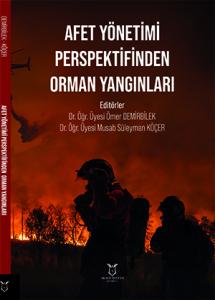
Orman yangınları, doğal veya insan kaynaklı olarak ekosistemler üzerinde olumsuz etkiler yaratabilmekte ve zaman zaman afet boyutuna ulaşabilmektedir. Özellikle küresel ısınma ve iklim değişikliği, dünya genelinde orman yangınlarının sıklığını ve şiddetini artıran önemli faktörler arasında yer almaktadır. Artan sıcaklık ve kuraklık koşullarıyla birlikte bu yangınlar, ekosistemler üzerinde tahrip edici etkiler oluşturmakta ve yerel topluluklar için ciddi tehditlere neden olmaktadır. Bunun yanı sıra, arazi kullanım biçimlerindeki değişiklikler, kırsal alanlardaki demografik dönüşümler ve toplumların doğal kaynakları koruma bilincinin düşük olması da yangınların oluşum ve yayılım süreçlerini etkileyen unsurlar arasındadır. Artan orman yangını riskleriyle mücadele, yalnızca resmî kurumların sorumluluğunda yürütülebilecek bir süreç değildir. Orman yangınlarının önlenmesi, söndürülmesi ve sonrasında yürütülen iyileştirme çalışmaları, toplum tabanlı afet yönetimi anlayışını gerektirmektedir. Bu kapsamda yerel topluluklar, sürecin en önemli aktörlerinden biri olarak öne çıkmaktadır. Yerel toplulukların afetlere hazırlık kapasitelerinin geliştirilmesi, farkındalıklarının artırılması ve afet yönetimi süreçlerine aktif katılımlarının sağlanması büyük önem taşımaktadır. Bu doğrultuda, orman yangınlarına yönelik toplumsal farkındalık ve eğitim programlarının güçlendirilmesi, yerel halkın müdahale süreçlerine katılımını destekleyecek örgütsel yapıların oluşturulması ve olası yangınlarda güvenli tahliye planlarının hazırlanarak halkla paylaşılması gerekmektedir. Bu tür stratejiler hem orman yangınlarının etkilerini azaltmada hem de yerel toplulukların afetlere karşı dayanıklılığını artırmada kritik rol oynamaktadır.
Referanslar
Abedi, R. (2022). Application of multi-criteria decision making models to forest fire management. International Journal of Geoheritage and Parks, 10(1), 84–96. https://doi.org/10.1016/j.ijgeop.2022.02.00
Alfassa, A. I., & Dewi, A. (2024). Communication management on forest and land fires mitigation awareness based on community. In E3S Web of Conferences (Vol. 506, p. 04002). EDP Sciences. https://doi.org/10.1051/e3sconf/202450604002
Ali, M. S. S., Arsyad, M., Kamaluddin, A., Busthanul, N., & Dirpan, A. (2019, February). Community based disaster management: Indonesian experience. In IOP Conference Series: Earth and Environmental Science (Vol. 235, p. 012012). IOP Publishing. https://doi.org/10.1088/1755-1315/235/1/012012
Allen, K. M. (2006). Community‐based disaster preparedness and climate adaptation: local capacity‐building in the Philippines. Disasters, 30(1), 81–101. https://doi.org/10.1111/j.1467-9523.2006.00308.x
Ansari, M. H., Bijani, M., Abbasi, E., & Goli, I. (2024). Determinants of local community participation in forest fire management in the northern Iran. International Journal of Disaster Risk Reduction, 107, 104478. https://doi.org/10.1016/j.ijdrr.2024.104478
Arifudin, Nasrul, B. & Maswadi (2013). Program of community empowerment prevents forest fires in Indonesian peat land. Procedia Environmental Sciences, 17, 129-134. https://doi.org/10.1016/j.proenv.2013.02.020
Artigues, C., Hébrard, E., Pencolé, Y., Schutt, A., & Stuckey, P. J. (2018, August). A study of evacuation planning for wildfires. In The Seventeenth International Workshop on Constraint Modelling and Reformulation (ModRef 2018) (p. 17p).
Atmiş, E., Erdönmez, C., & Kurdoğlu, O. (2023). Orman Yangınlarıyla Mücadelede Gönüllülük. In A. Kavgacı & M. A. Başaran (Eds.), Orman Yangınları (pp. 276–285). Türkiye Ormancılar Derneği.
Baker, D., & Refsgaard, K. (2007). Institutional development and scale matching in disaster response management. Ecological Economics, 63(2–3), 331–343. https://doi.org/10.1016/j.ecolecon.2007.01.007
Başkar Doğan, Ö. (2021). Orman yangınlarında iş sağlığı ve güvenliği (Yüksek Lisans Tezi, Tarsus Üniversitesi, Tarsus).
Buergelt, P. T., & Smith, R. (2015). Wildfires: an Australian perspective. In Wildfire hazards, risks and disasters (pp. 101–121). Elsevier. https://doi.org/10.1016/B978-0-12-410434-1.00006-3
Cook, A. D., Shrestha, M., & Htet, Z. B. (2018). An assessment of international emergency disaster response to the 2015 Nepal earthquakes. International Journal of Disaster Risk Reduction, 31, 535–547. https://doi.org/10.1016/j.ijdrr.2018.05.014
Cook, A.D.B. (2015). World humanitarian day: Voices from the field. Singapore: RSIS Centre for NTS Studies (S. Rajaratnam School of International Studies (RSIS). 26.10.2025 tarihinde https://www.rsis.edu.sg/wp-content/uploads/2015/12/World-Humanitarian-Day-Voices-From-the-Field.pdf adresinden erişildi.
Coşgun, U., & Yıldız, D. (2023). Orman Yangınlarını Önlemede Eğitim ve Bilinçlendirme Çalışmaları. In A. Kavgacı & M. A. Başaran (Eds.), Orman Yangınları (pp. 184–201). Türkiye Ormancılar Derneği.
Coulibaly-Lingani, P., Savadogo, P., Tigabu, M., & Oden, P. C. (2011). Factors influencing people's participation in the forest management program in Burkina Faso, West Africa. Forest Policy and Economics, 13(4), 292–302. https://doi.org/10.1016/j.forpol.2011.02.005
Cova, T. J., Dennison, P. E., & Drews, F. A. (2011). Modeling Evacuate versus Shelter-in-Place Decisions in Wildfires. Sustainability, 3(10), 1662–1687. https://doi.org/10.3390/su3101662
Çar, E., & Akyol, A. (2024). Orman Yangınları Yönetimi ve Organizasyonu İçin Bir Model Önerisi. JENAS Journal of Environmental and Natural Studies, 6(3, In Honour of Nesrin Algan), 176–192. https://doi.org/10.53472/jenas.1546034
Daddoust, L., Asgary, A., McBey, K. J., Elliott, S., & Normand, A. (2021). Spontaneous volunteer coordination during disasters and emergencies: Opportunities, challenges, and risks. International Journal of Disaster Risk Reduction, 65, 102546. https://doi.org/10.1016/j.ijdrr.2021.102546
Degel, D., Wiesche, L., Rachuba, S., & Werners, B. (2014). Reorganizing an existing volunteer fire station network in Germany. Socio-Economic Planning Sciences, 48, 149–157. https://doi.org/10.1016/j.seps.2014.03.001
Ergün, O. F. (2023). Forest fires and volunteering in Turkiye. J Emerg Aid Disaster Science, 3(1), 7–14.
Eriksson, K., & Danielsson, E. (2022). Framing volunteers identifying and integrating volunteers in crises response operations. International Journal of Disaster Risk Reduction, 74, 102912. https://doi.org/10.1016/j.ijdrr.2022.102912
Food and Agriculture Organization of the United Nations (FAO). (2011). Community-based fire management: A review. 10.09.2025 tarihinde https://www.fao.org/3/i2495e/i2495e.pdf adresinden erişildi.
Freise, M., & Walter, A. (2021). Zivilgesellschaft in Nordrhein-Westfalen: Miteinander! Füreinander. Aschendorff Verlag.
Freise, M., & Walter, A. (2024). Motivations and expectations of German volunteer firefighters. Journal of Civil Society, 20(2), 190–208. https://doi.org/10.1080/17448689.2024.2357081
Ganz, D., Troy, A., & Saah, D. (2007). Community involvement in wildfire hazard mitigation and management: community based fire management, fire safe councils and community wildfire protection plans. In Living on the Edge (Vol. 6, pp. 143–164). Emerald Group Publishing Limited. https://doi.org/10.1016/S1569-3740(06)06009-3
Global Fire Monitoring Center (GFMC). (2017). Community-based fire management. 11.09.2025 tarihinde https://gfmc.online/manag/cbifm.html adresinden erişildi.
Górriz-Mifsud, E., Burns, M., & Govigli, V. M. (2019). Civil society engaged in wildfires: Mediterranean forest fire volunteer groupings. Forest Policy and Economics, 102, 119–129. https://doi.org/10.1016/j.forpol.2019.03.007
Guthiga, P. M. (2008). Understanding local communities’ perceptions of existing forest management regimes of a Kenyan rainforest. International Journal of Social Forestry, 1(2), 145–166.
Güngöroğlu, C., Özkara, Z. U., & Tutmaz, V. (2024). Türkiye’de Orman Yangın Yönetimi: Sorunlar ve Çözüm Önerileri. Memleket Siyaset Yönetim, 19(43), 517–570. https://doi.org/10.56524/msydergi.1565981
Handmer, J., Hochrainer-Stigler, S., Schinko, T., Gaupp, F., & Mechler, R. (2020). The Australian wildfires from a systems dependency perspective. Environmental Research Letters, 15(12), 121001. https://doi.org/10.1088/1748-9326/abc0bc
Hang, H. T., Mallick, J., Alqadhi, S., Bindajam, A. A., & Abdo, H. G. (2024). Exploring forest fire susceptibility and management strategies in Western Himalaya: Integrating ensemble machine learning and explainable AI for accurate prediction and comprehensive analysis. Environmental Technology & Innovation, 35, 103655. https://doi.org/10.1016/j.eti.2024.103655
Henderson, A. C., & Sowa, J. E. (2018). Retaining critical human capital: Volunteer firefighters in the Commonwealth of Pennsylvania. Voluntas, 29, 43–58. https://doi.org/10.1007/s11266-017-9831-7
International Association of Fire and Rescue Services (CTIF). (2024). World Fire Statistics (Report No. 29). https://www.ctif.org/sites/default/files/2024-06/CTIF_Report29_ERG.pdf (Erişim: 08.10.2025)
Ito-Morales, K. (2024). Community-based fire management and beyond: Role and problems of volunteer fire department shōbōdan in Japanese urban spaces and peri-urban forest environments. Trees, Forests and People, 16, 100531. https://doi.org/10.1016/j.tfp.2024.100531
Kanat, M. (2023b). Afetlerde sivil toplum kuruluşları: faydaları, tehditleri, sorun alanları ve çözüm önerileri. Aslan Ö. F. ve Coşkun Erdoğan Y. (Ed.). Sosyal Sorunlar 2 (Teoriler, Politikalar, Uygulamalar), 73-92. Efeakademi Yayınları. İstanbul.
Kanat, M. (2023b). Afetlere müdahalede itfaiye eğitimlerinin önemi. Girgin S., (Ed.). Afetlerde Eğitim ve Yönetimi, 345-360. Efeakademi Yayınları. İstanbul.
Karanikola, P., Tampakis, S., Arabatzis, G., & Maheridis, A. (2013a). Study on citizens’ information about forest fires: the case of Kavala. Procedia Technology, 8, 482–487. https://doi.org/10.1016/j.protcy.2013.11.063
Karanikola, P., Tampakis, S., Manolas, E., & Tsantopoulos, G. (2013b). Analyzing the impacts of information in the prevention of forest fires in Greece. Journal of Tourism, Sustainability and Well-being, 1(2), 71–81.
Kavgacı, A., Tolunay, D., Sevgi, O., & Tutmaz, V. (2023). Orman Yangınları Terminolojisi. In A. Kavgacı & M. A. Başaran (Eds.), Orman Yangınları (pp. 2–20). Türkiye Ormancılar Derneği.
Kieft, J., & Nur, A. (2002). Community-based disaster management: A response to increased risks to disaster with emphasis on forest fires. In Communities in Flames: Proceedings of an International Conference on Community Involvement in Fire Management (pp. 81–89).
Kobayashi, Y., Nakamura, K., Watanabe, T., & Nagahama, K. (2018). Issues of transformation of volunteer fire brigade in rural areas where part-time farmer dominates: An analysis of satisfaction and burden associated with engaging in its activities. Journal of Rural Society and Economics, 35(2), 1–8. https://doi.org/10.11617/jrse.35.2_1
Kozjek, T., Zorec Klemenčič, U., & Umek, L. (2025). Volunteer motivation in firefighting organisations: A case of the Slovenian Firefighters Association. Fire, 8(6), 220. https://doi.org/10.3390/fire8060220
Köçer, M. S., & Aslan, R. (2023). Gönüllü Arama Kurtarma Ekiplerinin Orman Yangınlarındaki Tahliye Deneyimleri: 2021 Akdeniz Orman Yangınları. Afet ve Risk Dergisi, 6(3), 829–851. https://doi.org/10.35341/afet.1236021
McLennan, J., & Birch, A. (2005). A potential crisis in wildfire emergency response capability? Australia's volunteer firefighters. Global Environmental Change Part B: Environmental Hazards, 6(2), 101–107. https://doi.org/10.1016/j.hazards.2005.10.003
Mistry J, Bilbao BA, Berardi A. (2016). Community owned solutions for fire management in tropical ecosystems: case studies from Indigenous communities of South America. Philos Trans R Soc Lond B Biol Sci. 5;371(1696):20150174. doi: 10.1098/rstb.2015.0174.
Molina-Terrén, D. M., Cardil, A., & Kobziar, L. N. (2016). Practitioner perceptions of wildland fire management across South Europe and Latin America. Forests, 7(9), 184. https://doi.org/10.3390/f7090184
Monroe, M. C., Ballard, H. L., Oxarart, A., Sturtevant, V. E., Jakes, P. J., & Evans, E. R. (2015). Agencies, educators, communities and wildfire: Partnerships to enhance environmental education for youth. Environmental Education Research, 22(8), 1098–1114. https://doi.org/10.1080/13504622.2015.1057555
NFPA (National Fire Protection Association). (2022). U.S. Fire Department Profile – 2015. 16.09.2025 tarihinde https://www.nfpa.org/-/media/Files/Newsand-Research/Fire-statistics-and-reports/Emergency-responders/osfdprofile.pdf adresinden erişildi.
Nugroho, A. W. (2021, April). Community-Based Forest Management in Indonesia as a Forest Fire Mitigation Strategy in the Threat of Climate Change. In Joint Symposium on Tropical Studies (JSTS-19) (pp. 65-72). Atlantis Press.
Oliveira, F. P., Mello, B., & Rodrigues, A. (2025). Evacuations plans and recommendations. Evacuarfloresta Project: Evacuation Decisions and Plans in Wildfire Scenarios (1st ed., pp. 171–195). https://doi.org/10.34037/978-989-9053-29-8_07_08
Oral, V., & Turan, M. (2023). Fighting anthropogenic forest fires: Implications from forest fires in the Mediterranean region. Kent Akademisi, 16 (Special Issue for the 100th Anniversary of the Republic of Türkiye), 438–454. https://doi.org/10.35674/kent.1343772
Partidário, M., Saad, G., Monteiro, M. B., Dias, J., Martins, R., Ramos, I. L., Ribeiro, H., Teixeira, M., Freitas, M. d. B. C., & Antunes, C. (2022). Using participatory mapping to foster community-based disaster risk reduction in forest fire-prone areas: The case of Monchique in Portugal. Fire, 5(5), 146. https://doi.org/10.3390/fire5050146
Paveglio, T. B., Boyd, A. D., & Carroll, M. S. (2012). Wildfire evacuation and its alternatives in a post-Black Saturday landscape: Catchy slogans and cautionary tales. Environmental Hazards, 11(1), 52–70. https://doi.org/10.1080/17477891.2011.635185
Pektaş, E. (2017). Gönüllü itfaiyecilik örneğinde Türkiye’de belediye hizmetlerine gönüllü katılım. Süleyman Demirel Üniversitesi İktisadi ve İdari Bilimler Fakültesi Dergisi, 22(Kayfor 15 Özel Sayısı), 2095–2107.
Points of Light Foundation, Volunteer Center National Network, NVOAD, UPS Foundation. (2006). Managing spontaneous volunteers in times of disaster: The synergy of structure and good intentions. Washington, DC: Points of Light Foundation. https://www.fema.gov/pdf/donations/ManagingSpontaneousVolunteers.pdf
Resmi Gazete. (2019). Orman yangınlarıyla mücadelede görev yapan gönüllüler hakkında yönetmelik. 11.09.2019, Sayı: 30885. Ankara.
Roberson, B. S. (2017). Wildfire evacuation timing in Southern California's wildland-urban interface: Using survival analysis to identify differences in resident evacuation behavior during the 2016 Blue Cut Fire (Unpublished doctoral dissertation). University of California, Los Angeles.
Rodrigues, A., Santiago, A., Laím, L., Viegas, D. X., & Zêzere, J. L. (2022). Rural fires—Causes of human losses in the 2017 fires in Portugal. Applied Sciences, 12(24), 12561. https://doi.org/10.3390/app122412561
Rozi S, Ritonga AR, Januar J. (2021). 'Local community-based disaster management' The transformation of religious and local wisdom values in preparation to deal with natural hazards in West Sumatra, Indonesia. Jamba. 31;13(1):1020. doi: 10.4102/jamba.v13i1.1020. PMID: 34522286; PMCID: PMC8424724.
Sadowska, B., Grzegorz, Z., & Stępnicka, N. (2021). Forest fires and losses caused by fires–an economic approach. WSEAS Trans. Environ. Dev, 17, 181–191. https://doi.org/10.37394/232015.2021.17.18
Sagala, S., Sitinjak, E., & Yamin, D. (2015). Fostering community participation to wildfire: Experiences from Indonesia. In Wildfire Hazards, Risks and Disasters (pp. 123–144). Elsevier. https://doi.org/10.1016/B978-0-12-410434-1.00007-5
Santiago-Gómez, E., & Rodríguez-Rodríguez, C. (2023). Building forest fires resilience, the incorporation of local knowledge into disaster mitigation strategies. Social Sciences, 12(7), 420. https://doi.org/10.3390/socsci12070420
Sauer, L. M., Catlett, C., Tosatto, R., & Kirsch, T. D. (2014). The utility of and risks associated with the use of spontaneous volunteers in disaster response: A survey. Disaster Med Public Health Prep, 8(1), 65–69. https://doi.org/10.1017/dmp.2014.12
Savaç, N., & Genç, F. N. (2024). Afetlerde Koordinasyon: 2021 Antalya Manavgat Orman Yangını Örneği. Strategic Public Management Journal, 10(17), 61-83. https://doi.org/10.25069/spmj.1433827
Souza-Alonso, P., Omil, B., Sotelino, A., et al. (2024). Service-learning to improve training, knowledge transfer, and awareness in forest fire management. Fire Ecology, 20, 19. https://doi.org/10.1186/s42408-023-00226-y
Tedim, F., Leone, V., & Xanthopoulos, G. (2016). A wildfire risk management concept based on a social-ecological approach in the European Union: Fire Smart Territory. International Journal of Disaster Risk Reduction, 18, 138–153. https://doi.org/10.1016/j.ijdrr.2016
Tedim, F., Xanthopoulos, G., & Leone, V. (2015). Chapter 5—Forest fires in Europe: Facts and challenges. In J. F. Shroder & D. Paton (Eds.), Wildfire Hazards Risks Disasters (pp. 77–99). https://doi.org/10.1016/B978-0-12-410434-1.00005-1
Tutmaz, V., Günşen, H. B., & Başlı, A. O. (2023). Orman Yangınlarına Uyumlu Katılımcı Bir Toplum Oluşturmada Bölgesel Etkinliklerin Planlanması. In A. Kavgacı & M. A. Başaran (Eds.), Orman Yangınları (pp. 173–182). Ankara: Türkiye Ormancılar Derneği.
Ward, M., Tulloch, A. I. T., Radford, J. Q., et al. (2020). Impact of 2019–2020 mega-fires on Australian fauna habitat. Nature Ecology & Evolution, 4, 1321–1326. https://doi.org/10.1038/s41559-020-1251-1
Waugh Jr, W. L., & Streib, G. (2006). Collaboration and leadership for effective emergency management. Public Administration Review, 66, 131–140. https://doi.org/10.1111/j.1540-6210.2006.00673.x
Webb, L. (2013). Impacts on agriculture. Proceedings of the Royal Society of Victoria, 125(1/2), 24–30. https://doi.org/10.1071/RS13012
Wilson, J. (2000). Volunteering. Annual Review of Sociology, 26, 215–240.
DOI: 10.1146/annurev.soc.26.1.215
Wrona, S. (2020). Values in the activities of volunteer fire brigades: A collective case study. International Journal of Contemporary Management, 19(4), 21–40. https://doi.org/10.4467/24498939IJCM.20.012.13483
Yıldırım, S. D., & Yılmaz, G. (2019). Yunanistan Attika bölgesi yangınının değerlendirilmesi. Resilience, 3(2), 201-215.
Yılmaz, G., Usta, G., & Torpuş, K. (2019). Artvin İtfaiye Müdürlüğü'nün 2008–2017 yılları arasında müdahale ettiği köy yangınları üzerine bir inceleme. Journal of International Social Research, 12(62), 1904–1911. http://dx.doi.org/10.17719/jisr.2019.3198
Yükseler, M., Yazgan, J., & Tenikler, G. (2024). Anlık gönüllülük olgusunun Türkiye’deki afet ve acil durum yönetimi açısından değerlendirilmesi. Afyon Kocatepe Üniversitesi İktisadi ve İdari Bilimler Fakültesi Dergisi, 26(1), 1–17. https://doi.org/10.33707/akuiibfd.1311962
Zikeloglou, I., Lekkas, E., Lozios, S., & Stavropoulou, M. (2021). Are they ready to evacuate people with safety during a forest fire? An analysis of the community's evacuation preparedness and response plans for the 2021–2022 fire seasons in Greece. SSRN, 2022. https://doi.org/10.2139/ssrn.4604290
Zikeloglou, I., Lekkas, E., Lozios, S., & Stavropoulou, M. (2024). Community's evacuation planning and response for the 2021–2022 fire seasons in Greece. Safety Science, 172, 106434. https://doi.org/10.1016/j.ssci.2024.106434
6831 Sayılı Kanun. (1956). Orman Kanunu. Resmî Gazete (Tarih: 8/9/1956 Sayı: 9402).