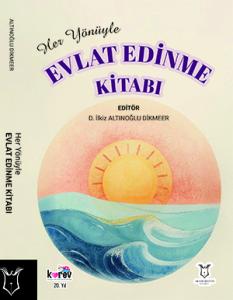
Biyolojik Aileler Çerçevesinden Evlat Edinmeye Bakış
Özet
Evlat edinme süreci ile korunma gereksinimi olan çocukların bir aile ortamında büyümeleri sağlanırken çocuk sahibi olmak isteyen anne babaların da bu arzuları gerçeğe dönüşmektedir. Evlat edinme uygulamalarının ele alındığı araştırmalar ve kaynaklarda daha çok evlat edinilen çocuk ve evlat edinen anne babanın deneyimleri üzerinde çalışılmaktadır. Bununla birlikte bu süreçte biyolojik anne babanın rolü ve deneyimi de daha ayrıntılı incelenmesi gereken bir olgudur. Biyolojik anne babanın bu süreçteki rolleri ele alınırken, evlat edinilen çocukla ilişki ve iletişimlerinin sürüp sürmeyeceği konusuna sıklıkla değinilmektedir. Bu alana dair yürütülmüş çalışmalar incelendiğinde, biyolojik anne babaların evlat edindirdikleri çocuklarıyla iletişimi sürdürüp sürdürmemelerinin sonuçlarına dair farklı bulgulara rastlanmaktadır. Bu durum, her bir olgunun bireysel olarak ele alınmasının önemini vurgulamaktadır. Biyolojik ailelerle yapılan çalışmalarda ele alınan bir diğer konu ise bebeklerini evlat edindirmeye karar vermenin ardındaki gerçekler ve bu karardan sonra biyolojik anne ve babaların yaşadıkları duygusal ve bilişsel süreçlerdir. Biyolojik anne babaların sürece dair deneyimlerini değerlendiren araştırmalar incelendiğinde, onların bu deneyimden genel olarak olumsuz etkilendikleri ve deneyimlerinin birçok etmene göre farklılaştığı görülmektedir. Bölümde aktarılan olgu da değerlendirildiğinde, evlat edinme uygulamalarının biyoloijik anne babalar, evlat edinilen çocuklar ve evlat edinen anne babalar olmak üzere tüm bileşenleri farklı yönleriyle etkileyen ve daha fazla araştırılması gereken bir kavram olduğu görülmektedir.
Referanslar
Anthony, R. E., Paine, A. L. ve Shelton, K. H. (2019). Adverse childhood experiences of children adopted from care: The importance of adoptive parental warmth for future child adjustment. International Journal of Environmental Research and Public Health, 16(12), 1-16. https://doi.org/10.3390/ijerph16122212
Aygün, G. Ç. (2021). Amerikan Hukukunda evlat edinmeye bir bakış: Vermont Eyaleti örneği. Marmara Üniversitesi Hukuk Fakültesi Hukuk Araştırmaları Dergisi, 27(1), 716-740. https://doi.org/10.33433/maruhad.907220
Barbosa-Ducharne, M. A.ve Soaresi J. (2016). Process of adoption communication openness in adoptive families: adopters’ perspective. Psicologia Reflexao e Critica, 29(1), 1-9. https://doi.org/10.1186/s41155-016-0024-x
Bolsby, S., Breen, K. ve Wu, H. (2024). Bringing birth fathers to the forefront: A two decade scoping review of birth father experiences in adoption. Journal of Family Theory & Review, 16, 907-923. https://doi.org/10.1111/jftr.12590
Brodzinsky, D. M. (1992). Adjustment to adoption: A psychosocial perspective. Clinical Psychology Review, 12(1), 25–47. https://doi.org/10.1016/0272-7358(87)90003-1
Brodzinsky, D. M. (2005). Reconceptualizing openness in adoption: Implications for theory, research, and practice. D.M. Brodzinsky ve J. Palacios (Ed.) Psychological issues in adoption: Research and practice içinde (145-166). Praeger Publishers/ Greeenwood Publishing Group. https://psycnet.apa.org/record/2005-05979-007
Brodzinsky, D. M. (2011). Children’s understanding of adoption: Developmental and clinical implications. Professional Psychology: Research and Practice, 42(2), 200–207. https://doi.org/10.1037/a0022415
Carp, E. W. (1998). Family matters: Secrecy and disclosure in the history of adoption. Harvard University Press.
Cantos, A. L., Gries, L. T., ve Slis, V. (1997). Behavioral correlates of visitation in child protective services cases. Child Abuse & Neglect, 21(9), 905–920. https://www.researchgate.net/publication/14149054
Cicchini, M. (1993). Development of responsibility: The experience of birth fathers in adoption. Adoption Research and Counselling Service Inc.
Clapton, G. (2003). Birth fathers and their adoption experiences. Jessica Kingsley Publishers. London.
Clifton, J. (2012). The perspectives and experiences of birth fathers of children adopted from care in relation to their children’s adoption.(Yayınlanmamış doktora tezi). University of East Anglia, Norwich, UK.
Cornefert, P. A., Fernandez, E., Lee, J.ve Clapton, G. (2025). Australian fathers and the adoption of their biological child: disenfranchisement, impact and life-long consequences. Children and Youth Services Review, (baskıda). https://doi.org/10.1016/j.childyouth.2025.108616
Duran, R. (2021). Türkiye aile yapısında evlat edinme üzerine bir değerlendirme. Türkiye Sosyal Hizmet Araştırmaları Dergisi, 5(1), 19-31. https://dergipark.org.tr/tr/download/article-file/1541723
Grotevant, H. D., ve McRoy, R. G. (1998). Openness in adoption: Exploring family connections. SAGE.
Grotevant, H. D. (2008). Openness in adoption: Research with the adoption kinship network. Adoption Quarterly, 4(1), 45–65. https://doi.org/10.1300/J145v04n01_04
Hess, P. (2003). Visiting between children in care and their families: A look at current policy. Child Welfare, 82(5), 541–561. https://public.courts.alaska.gov/web/cip/docs/cinaproj-visit-hess.pdf
Howe, D., ve Feast, J. (2000). Adoption, search and reunion: The long-term experience of adopted adults. Children’s Society.
Kirk, H. D. (1964). Shared fate: A theory of adoption and mental health. Free Press.
Kohler, J. K., Grotevant, H. D., ve McRoy, R. G. (2004). Adopted adolescents’ preoccupation with adoption: The impact of adoptive family relationships. Journal of Marriage and Family, 64(1), 93-104. https://doi.org/10.1111/j.1741-3737.2002.00093.x
Logan, J., ve Smith, C. (2004). After adoption: Direct contact and relationship. Routledge.
MacLean, K. (2003). The impact of institutionalization on child development. Development and Psychopathology, 15(4), 853–884. https://doi.org/10.1017/s0954579403000415
McWey, L. M., ve Cui, M. (2017). Parent–child contact for youth in foster care: Research to inform practice. Family Relations, 66(4), 684-695. https://doi.org/10.1111/fare.12276
McWey, L. M., Acock, A. ve Porter, B. (2010). The impact of continued contact with biological parents upon the mental health of children in foster care. Children and Youth Services Review, 32(10), 1338-1345. https://doi.org/10.1016/j.childyouth.2010.05.003
Memarnia, N., Nolte, L., Norris, C., ve Harborne, A. (2015). “If felt like it was night all the time”: listening to the experiences of birth mothers whose children have been taken into care or adopted. Adoption & Fostering, 39(4), 303-317. https://doi.org/10.1177/0308575915611
Modell, J. (1994). Kinship with strangers: Adoption and interpretations of kinship in American culture. University of California Press.
Neil, E. (2002). Contact after adoption: The role of agencies in making and supporting plans. Adoption & Fostering, 26(1), 25–38. https://doi.org/10.1177/030857590202600105
Neil, E. (2003). Understanding other people’s perspectives: Tasks for adopters in open adoptions. Adoption Quarterly, 6(3), 3–23. https://doi.org/10.1300/J145v06n03_02
Neil, E. (2007). Coming to terms with the loss of a child: The feelings of birth parents and grandparents about adoption and post-adoption contact. Adoption Quarterly, 10(1), 1-23. https://doi.org/10.1300/J145v10n01_01
Neil, E. (2009). The corresponding experiences of adoptive parents and birth relatives in open adoptions. Wrobel, G. M. ve Neil, E. (Ed.) International advances in adoption research for practice içinde. London: British Agengies for Adoption and Fostering içinde. John Wiley & Sons Ltd.
Neil, E. (2013). The mental distress of the birth relatives of adopted children: ‘disease’ or ‘unease’? Findings from a UK study. Health and Social Care in the Community, 21(2), 191-199.
Neil, E., Cossar, J., Lorgelly, P. ve Young, J. (2010). Helping birth families: services, costs and outcomes. British Association for Adoption and Fostering,
Palacios, J., ve Brodzinsky, D. (2010). Adoption research: Trends, topics, outcomes. International Journal of Behavioral Development, 34(3), 270–278. https://doi.org/10.1177/0165025410362837
Passmore, N. L. ve Coles, G. (2009). Birth fathers perspectives on reunions with their relinquished children. Z. J. Hazelwood (ed), Connecting research and practice in relationships: Proceeding of the APS Psychology of Relationships Interest Group, 9th Annual Conference içinde (35-41), Melbourne: Australian Psychological Society içinde. https://research.usq.edu.au/item/9zz22/birth-fathers-perspectives-on-reunions-with-their-relinquished-children.
Pinedo Caro, P. (2024). Evlat Edinmede Rıza. Turhan Kitabevi.
Rosenberg-Lavi, S. (2025). From childhood deprivation to losing their own children to adoption: Poverty, trauma and adoption among marginalized mothers in Israel. Children and Youth Services Review, 172. https://doi.org/10.1016/j.childyouth.2025.108274
Rutter, M., ve The ERA Study Team. (1998). Developmental catch-up and deficit following adoption after severe global early privation. Journal of Child Psychology and Psychiatry, 39(4), 465–476. https://doi.org/10.1111/1469-7610.00343
Santona, A., Tognasso, G., Miscioscia, C. L., Russo, D. ve Gorla, L. (2022). Talking about the birth family since the beginning: The communicative openness in the new adoptive family. International Journal of Environmental Research and Public Health, 19(3), 1203. https://doi.org/10.3390/ijerph19031203
Silverstein, D. N., ve Demick, J. (1994). Toward an organizational- relational model of open adoption. Family Process, 33(2), 111-24.
https://doi.org/10.1111/j.1545-5300.1994.00111.x
Sisson, G. (2022). Who are the women who relinquish infants for adoption? Domestic adoption and contemporary birth motherhood in the United States. Perspectives on Sexual and Reproductive Health, 54(2), 46-53. https://doi.org/10.1363/psrh.12193
Stams, G. J. J. M., Juffer, F., Rispens, J., ve Hoksbergen, R. A. C. (2000). The development and adjustment of 7-year-old children adopted in infancy. Journal of Child Psychology and Psychiatry, 41(8), 1025–1037. https://doi.org/10.1111/1469-7610.00690
Türk Medeni Kanunu (2001). Resmi Gazete (Sayı: 24607). https://www.resmigazete.gov.tr/eskiler/2001/12/20011208.htm#1
van IJzerdoorn, M. H. ve Juffer, F. (2006). Adoption as intervention. Meta-analytic evidence for massive catch-up and plasticity in physical, socio- emotional, and cognitive development. Journal of Child Psychology and Psychiatry, 47(12), 1228-1245. https://doi.org/10.1111/j.1469-7610.2006.01675.x
Von Korff, L., ve Grotevant, H. D. (2011). Contact in adoption and adoptive identity formation. Journal of Family Psychology, 25(3), 393–401. https://doi.org/10.1037/a0023388
Wrobel, G. M., Ayesr-Lopez, S., Grotevant, H. D., McRoy, R. G. ve Friedrick, M. (1996). Openness in adoption and the level of child participation. Child Development, 67(5), 2358-74. https://pubmed.ncbi.nlm.nih.gov/9022246/
Wrobel, G. M., Kohler, J. K., Grotevant, H. D., ve McRoy, R. G. (2003). The family adoption communication (FAC) model: Identifying pathways of adoption- related communication. Adoption Quarterly, 7(2), 53–84. https://doi.org/10.1300/J145v07n02_04
Wrobel, G. M., Kohler, J. K., Grotevant, H. D., ve McRoy, R. G. (2004). Adolescent search for birth parents: Who moves forward? Journal of Adolescent Research, 19(1), 132-151. https://doi.org/10.1177/0743558403258125
Wrobel, G. M., ve Dillon, K. (2012). Adopted adolescents: Who and what are they curious about? International Advances in Adoption Research for Practice, 8, 217-244. https://doi.org/10.1002/9780470741276.ch10
Yıldırım, A. (2022). Geleneksel bir evlat edinme biçimi olarak kardeşler arasındaki çocuk dolaşımı: “Sipariş Bebekler”. Korkut Ata Türkiyat Araştırmaları Dergisi, 8, 794-814. https://doi.org/10.51531/korkutataturkiyat.1131616
Young, J., ve Neil, E. (2004). The contact after adoption study: The perspective of birth relatives after non-voluntary adoption. Neil, E. ve Howe, D. (Ed.) Contact in adoption and permanent foster care: Research, theory and practice içinde. London: British Agengies for Adoption and Fostering.