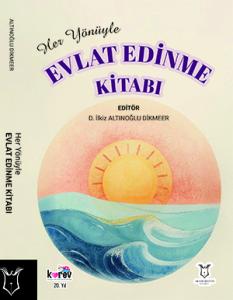
Evlat Edinme ve Eğitim: Öğretmenler için Bir Yol Haritası
Özet
Bu bölüm, evlat edinme olgusunu erken çocukluk eğitimi perspektifinden ele almakta ve öğretmenler için uygulamaya dönük bir rehber sunmaktadır. Evlat edinme, çocukların gelişim, bağlanma, kimlik ve aidiyet süreçlerini doğrudan etkileyen; ancak eğitim ortamlarında sıklıkla göz ardı edilen bir aile çeşitliliği biçimidir. Bölümde, öğretmenlerin evlat edinilmiş çocukları sınıf içinde desteklerken ihtiyaç duyduğu bilgi, beceri ve pedagojik farkındalıklar sistematik bir çerçevede açıklanmıştır. Travma bilgili öğretim, kapsayıcı dil kullanımı, resimli çocuk kitaplarıyla zor konuları konuşma, aile katılımının güçlendirilmesi ve sınıf içi iletişim stratejileri gibi temel bileşenler somut önerilerle desteklenmiştir. Bu bölüm, öğretmenlere yalnızca bilgi aktarmayı değil, sınıf ortamlarında aile çeşitliliğini doğal ve saygılı bir biçimde karşılayabilecek bir pedagojik duruş kazandırmayı amaçlamaktadır. Eğitimcilerin evlat edinme konusundaki rolünün kritik olduğu vurgulanarak, okullarda kapsayıcı uygulamaların yaygınlaşmasına katkı sunulması hedeflenmiştir.
Referanslar
Aves, C. (1998). Assessment for adoption: The child’s perspective. Journal of Social Work Practice, 12(1), 31-38. https://doi.org/10.1080/02650539808415129
Barratt, S. (2012). Adopted children and education: The experiences of a specialist CAMHS
team. Clinical Child Psychology and Psychiatry, 17(1), 141-150. https://doi.org/10.1177/1359104511403559
Barroso, R., Barbosa‐Ducharne, M., ve Coelho, V. (2018). Portuguese adopted adolescents' perception of attachment relationships to parents. Child & Family Social Work, 23(2), 204-211. https://doi.org/10.1111/cfs.12401
Beneke, M., ve Cheatham, G. A. (2015). Speaking up for African American English: Equity and inclusion in early childhood settings. Early Childhood Education Journal, 43, 127-134. https://doi.org/10.1007/s10643-014-0641-x
Bilir-Seyhan, G. (2024). Kırmızı balon ailesi: Bir evlat edinilme hikayesi. BAM Kitap.
Boylan, M., Truelove, L., Pearse, S., O’Brien, S., Sheehan, H., Cowell, T., & Long, E. (2023).
Developing trauma-informed teacher education in England. London Review of Education, 21(1), 29. https://doi.org/10.14324/LRE.21.1.29
Bragg, A. (2020). What is school like? An exploration of the experiences of school from the
perspectives of adoptive parents and adopted children (yayımlanmamış doktora tezi), Newcastle University.
Brodzinsky, D. M., ve Brodzinsky, A. B. (1992). The impact of family structure on the
adjustment of adopted children. Child Welfare, 71(1), 69-76.
Brown, A., ve Shelton, K. (2024). Coherent lives: Making sense of adoptees’ experiences in education through narrative identity. British Educational Research Journal, 50(2), 495-512. https://doi.org/10.1002/berj.3918
Buyse, E., Verschueren, K., ve Doumen, S. (2011). Preschoolers' attachment to mother and risk for adjustment problems in kindergarten: Can teachers make a difference? Social Development, 20(1), 33-50. https://doi.org/10.1111/j.1467-9507.2009.00555.x
Cheatham, G. A., ve Ostrosky, M. M. (2011). Whose expertise?: An analysis of advice giving in early childhood parent-teacher conferences. Journal of Research in Childhood Education, 25(1), 24-44. https://doi.org/10.1080/02568543.2011.533116
Cohen, N. J., ve Farnia, F. (2011). Social-emotional adjustment and attachment in children adopted from China: Processes and predictors of change. International Journal of Behavioral Development, 35(1), 67-77. https://psycnet.apa.org/doi/10.1177/0165025410371602
Cortazar, A., ve Herreros, F. (2010). Early attachment relationships and the early childhood curriculum. Contemporary Issues in Early Childhood, 11(2), 192-202. http://dx.doi.org/10.2304/ciec.2010.11.2.192
Crouter, A. C., ve Crouter, A. C. (2003). Children's influence on family dynamics. Taylor &
Francis.
Crozier, G., ve Davies, J. (2007). Hard to reach parents or hard to reach schools? A discussion of home—school relations, with particular reference to Bangladeshi and Pakistani parents. British Educational Research Journal, 33(3), 295-313. https://doi.org/10.1080/01411920701243578
Darling‐Hammond, L., ve Cook-Harvey, C. (2018). Educating the Whole Child: Improving school climate to support student success. Learning Policy Institute. https://doi.org/10.54300/145.655
Dorado, J. S., Martinez, M., McArthur, L. E., ve Leibovitz, T. (2016). Healthy Environments
and Response to Trauma in Schools (HEARTS): A whole-school, multi-level, prevention and intervention program for creating trauma-informed, safe and supportive schools. School Mental Health, 8(1), 163-176. https://doi.org/10.1007/s12310-016-9177-0
Erol, N. ve Keskingöz, S. (2016). Uğurböceği kapınızı çalarsa. TÜBİTAK Popüler Bilim
Yayınları.
Fisher, P. A. (2015). Adoption, fostering, and the needs of looked‐after and adopted
children. Child and Adolescent Mental Health, 20(1), 5-12. https://doi.org/10.1111/camh.12084
Fults, R. M., ve Harry, B. (2012). Combining family centeredness and diversity in early childhood teacher training programs. Teacher Education and Special Education, 35(1), 27-48. http://dx.doi.org/10.1177/0888406411399784
Garber, K. J., ve Grotevant, H. D. (2015). “YOU were adopted?!” microaggressions toward
adolescent adopted individuals in same-race families. The Counseling Psychologist, 43(3), 435-462. https://doi.org/10.1177/0011000014566471
Gilling, A. (2014). Jasper’s story: ‘Letting me down and picking me up’–one boy’s story of despair and hope at primary schools in England. Adoption & Fostering, 38(1), 60-72. http://dx.doi.org/10.1177/0308575913518001
Goldberg, A. E., ve Grotevant, H. (2023). What do teachers know about adoptive families, and how do they use it to serve adopted children?. Adoption Quarterly, 26(1), 51-76. https://doi.org/10.1080/10926755.2022.2156016
Gupta-Kagan, J. (2014). Non-exclusive adoption and child welfare. Alabama Law Review., 66, 715.
Harris, J., Carrington, S., ve Ainscow, M. (2017). Promoting equity in schools. Routledge.
Henley, D. (2005). Attachment disorders in post-institutionalized adopted children: Art therapy approaches to reactivity and detachment. The Arts in Psychotherapy, 32(1), 29-46. https://doi.org/10.1016/j.aip.2004.11.002
Ioannides, E. (2024). In search of a meaningful story art psychotherapy and adopted children. The Family Journal, 32(1), 17-23. http://dx.doi.org/10.1177/10664807231193437
King, S., Gieve, M., Iacopini, G., Hahne, A. S., ve Stradling, H. (2019). Are the early benefits of the Adoption Support Fund (therapeutic support for adoptive families) sustainable? Journal of Public Mental Health, 18(1), 66-72. http://dx.doi.org/10.1108/JPMH-08-2018-0056
Lagley-Swain, S. (2021). Sıcak bir yuva. Türkiye İş Bankası Kültür Yayınları.
Langton, E. G. (2016). Adopted and permanently placed children in education: From rainbows to reality. Educational Psychology in Practice, 33(1), 16-30. https://doi.org/10.1080/02667363.2016.1217401
Luu, B., de Rosnay, M., Wright, A. C., ve Tregeagle, S. (2018). Identity formation in children and young people in open adoptions from out-of-home care in New South Wales, Australia. Adoption Quarterly, 21(2), 120-139. https://doi.org/10.1080/10926755.2018.1468371
Mahmood, S., & Visser, J. (2015). Adopted children: A question of identity. Support for
Learning, 30(3), 268-285. https://doi.org/10.1111/1467-9604.12095
Majoko, T. (2019). Teacher key competencies for inclusive education: Tapping pragmatic realities of Zimbabwean special needs education teachers. Sage Open, 9(1), 2158244018823455. http://dx.doi.org/10.1177/2158244018823455
McIntosh, S., Woods, K., ve Stother, A. (2022). Continuing in post-16 education: The views of adopted young people. Adoption & Fostering, 46(3), 286-301. https://doi.org/10.1177/03085759221117862
McIntyre, E. M., Baker, C. N., ve Overstreet, S. (2019). Evaluating foundational professional
development training for trauma-informed approaches in schools. Psychological services, 16(1), 95. https://psycnet.apa.org/doi/10.1037/ser0000312
McWayne, C. M., Melzi, G., Limlingan, M. C., ve Schick, A. (2016). Ecocultural patterns of family engagement among low-income Latino families of preschool children. Developmental Psychology, 52(7), 1088. http://dx.doi.org/10.1037/a0040343
Meakings, S., Ottaway, H., Coffey, A., Palmer, C., Doughty, J., ve Shelton, K. (2018). The
support needs and experiences of newly formed adoptive families: Findings from the Wales Adoption Study. Adoption & Fostering, 42(1), 58-75. https://doi.org/10.1177/0308575917750824
Mendelová, E., ve Gužíková, L. (2023). Current parents and children's leisure time. Journal of Vasyl Stefanyk Precarpathian National University, 10(1), 33-48. http://dx.doi.org/10.15330/jpnu.10.1.33-48
Moore, J. E. (2019). ‘The Storying Spiral’: A narrative-dramatic approach to life story therapy with adoptive/foster families and traumatised children. International Journal of Play, 8(2), 204-218. https://doi.org/10.1080/21594937.2019.1643994
Morton, B., ve Berardi, A. A. (2017). Trauma-informed school programing: Applications for mental health professionals and educator partnerships. Journal of Child & Adolescent Trauma, 11(4), 487-483. https://doi.org/10.1007/s40653-017-0160-1
Neil, E., Morciano, M., Young, J., ve Hartley, L. (2020). Exploring links between early
adversities and later outcomes for children adopted from care: Implications for planning post adoption support. Developmental Child Welfare, 2(1), 52-71. https://doi.org/10.1177/2516103220908043
Novara, C., Lenzi, M., ve Santinello, M. (2020). School climate as predictor of teachers’
capacity to meet the educational needs of adopted children in Italy. International Journal of Inclusive Education, 24(3), 310-328. https://doi.org/10.1080/13603116.2018.1459889
Pace, C. S., Di Folco, S., Guerriero, V., Santona, A., ve Terrone, G. (2015). Adoptive parenting and attachment: association of the internal working models between adoptive mothers and their late-adopted children during adolescence. Frontiers in Psychology, 6, 1433. https://doi.org/10.3389/fpsyg.2015.01433
Richmond, M. (2019). Seni öyle çok istedim ki: Bir evlat edinme hikayesi. Anya Yayın.
Roberts, D. (2009). Shattered bonds: The color of child welfare. Basic Books.
Romano, E., Babchishin, L., Marquis, R., ve Fréchette, S. (2014). Childhood Maltreatment
and Educational Outcomes. Trauma, Violence, & Abuse, 16(4), 418-437. https://doi.org/10.1177/1524838014537908
Russell, B. S., Wink, M. N., ve Hutchison, M. (2024). Mixed methods illustration of teachers’
trauma-informed attitudes and practice. Journal of Child & Adolescent Trauma, 17(2), 349-362. https://doi.org/10.1007/s40653-023-00583-5.
Ryan, S. D., ve Nalavany, B. (2003). Adopted children: Who do they turn to for help and
why?. Adoption Quarterly, 7(2), 29-52. https://doi.org/10.1300/J145v07n02_03
Samuels, G. M. (2022). Epistemic trauma and transracial adoption: Author(iz)ing folkways of knowledge and healing. Child Abuse & Neglect, 130(2022), 105588. https://doi.org/10.1016/j.chiabu.2022.105588
Smith, D. T., ve Juárez, B. G. (2014). Race lessons in black and white: How white adoptive parents socialize black adoptees in predominately white communities. Adoption Quarterly, 18(2), 108-137. https://doi.org/10.1080/10926755.2014.895465
Soares, J., Barbosa-Ducharne, M., Palacios, J., ve Fonseca, S. (2017). Being adopted in the school context: Individual and interpersonal predictors. Children and Youth Services Review, 79, 463-470. https://doi.org/10.1016/j.childyouth.2017.06.043
Soares, J., Ralha, S., Barbosa-Ducharne, M., ve Palacios, J. (2019). Adoption-related gains,
losses and difficulties: The adopted child’s perspective. Child and Adolescent Social Work Journal, 36(3), 259-268. https://doi.org/10.1007/s10560-018-0582-0
Stokes, H. (2022). Leading trauma-informed education practice as an instructional model for teaching and learning. Frontiers in Education, 7. https://doi.org/10.3389/feduc.2022.911328
Sutton, C., Beese, J., ve Slater, L. (2024). Supporting transracially adopted children in white K-
12 schools: Strategies for empowerment and inclusion. Equity in Education & Society, 3(2), 152-171. https://doi.org/10.1177/27526461231213122
Suyatno, S., Mardati, A., Wantini, W., Pambudi, D. I., ve Amurdawati, G. (2019). The impact of teacher values, classroom atmosphere, and student-teacher relationship towards student attitude during learning process. International Journal of Learning, Teaching and Educational Research, 18(8), 54-74. https://doi.org/10.26803/ijlter.18.8.4
Tregeagle, S., Moggach, L., Trivedi, H., ve Ward, H. (2019). Previous life experiences and the vulnerability of children adopted from out-of-home care: The impact of Adverse Childhood Experiences and child welfare decision making. Children and Youth Services Review, 96, 55-63. https://doi.org/10.1016/j.childyouth.2018.11.028
Turney, K., ve Wildeman, C. (2017). Adverse childhood experiences among children placed in and adopted from foster care: Evidence from a nationally representative survey. Child abuse & neglect, 64, 117-129. https://doi.org/10.1016/j.chiabu.2016.12.009
Van Den Dries, L., Juffer, F., Van Ijzendoorn, M. H., Bakermans-Kranenburg, M. J., ve Alink, L. R. (2012). Infants' responsiveness, attachment, and indiscriminate friendliness after international adoption from institutions or foster care in China: Application of Emotional Availability Scales to adoptive families. Development and Psychopathology, 24(1), 49-64. https://doi.org/10.1017/S0954579411000654
Wang, R. (2021). The influence of attachment types on academic performance of children. In 2021 4th International Conference on Humanities Education and Social Sciences (ICHESS 2021) (pp. 512-517). Atlantis Press.
Wegar, K. (2000). Adoption, family ideology, and social stigma: Bias in community attitudes,
adoption research, and practice. Family Relations, 49(4), 363-369. https://doi.org/10.1111/j.1741-3729.2000.00363.x
Weistra, S., ve Luke, N. (2017). Adoptive parents’ experiences of social support and attitudes towards adoption. Adoption & Fostering, 41(3), 228-241. http://dx.doi.org/10.1177/0308575917708702
Werum, R., Davis, T., Cheng, S., ve Browne, I. (2018). Adoption context, parental investment,
and children’s educational outcomes. Journal of Family Issues, 39(3), 720-746. https://doi.org/10.1177/0192513X16680010
Wilson, M. R., Greene, J. H., ve Soth, N. (1986). Psychodynamics of the adopted patient. Adoption & Fostering, 10(1), 446. https://doi.org/10.1177/030857598601000113
Yngvesson, B. (2010). Belonging in an adopted world: Race, identity, and transnational adoption. University of Chicago Press.