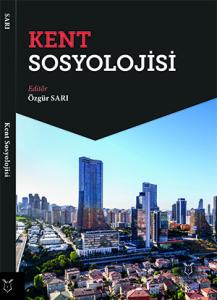
Kentlerin Yapısı, Organizasyonu ve Toplumsal Dönüşümü
Özet
Bu bölüm, 21. yüzyıl kentlerinin dönüşümünü çok boyutlu bir sosyolojik çerçevede ele alarak kentsel mekânın fiziksel, toplumsal ve siyasal dinamikler aracılığıyla nasıl yeniden üretildiğini incelemektedir. İlk olarak, kentleşme süreçlerinin modernite, küresel ekonomi ve mekânsal planlama yaklaşımlarıyla ilişkisi tartışılmış; mekânsal eşitsizlik, sınıfsal ayrışma ve kentsel morfolojinin toplumsal yapı üzerindeki etkileri değerlendirilmiştir. Ardından göç, yerinden edilme ve kent içi hareketlilik gibi demografik değişim süreçlerinin kentlerin sosyal dokusunda yarattığı dönüşümler ele alınmıştır. Kentsel yenileme, gentrifikasyon ve neoliberal dönüşüm politikalarının toplumsal eşitsizlikleri nasıl yeniden ürettiği; sınıfsal yer değiştirme, mülksüzleşme ve kültürel dışlanma eksenlerinde tartışılmıştır. Son bölümde ise kent mekânında ortaya çıkan yeni toplumsal hareketler, barınma hakkı mücadeleleri, feminist ve ekolojik aktivizm ile dijitalleşmenin örgütlenme biçimlerini dönüştüren etkisi üzerinden analiz edilmiştir. Genel olarak çalışma, kent mekânının hem çatışma hem dayanışma alanı olarak yeniden şekillendiğini ve 21. yüzyıl kentlerinin geleceğinin mekânsal adalet, kapsayıcılık, demokratik katılım ve dijital kamusallık eksenlerinde belirleneceğini ortaya koymaktadır.
Referanslar
Adilhan, Ö., & Ünverdi, L. (2018). Kentsel yenileme sürecinde kentsel tasarımın önemi: Aydın-Söke örneği. Adnan Menderes Üniversitesi Sosyal Bilimler Enstitüsü Dergisi, 5(1), 226–261.
Aksoy, A., & Robins, K. (2011). Istanbul: Cool or Arabesque? In D. Göktürk, L. Soysal, & İ. Türeli (Eds.), Istanbul: Living in a global city (pp. 227–240). Routledge.
Alexander, C., Ishikawa, S., & Silverstein, M. (1977). A pattern language: Towns, buildings, construction. Oxford University Press.
Alpman, P. S. (2019). Mekân, kimlik, sınıf: Farklar neden bir arada barınamazlar? İdealKent, 26(10), 373–401. https://doi.org/10.31198/idealkent.519245
Arslan, H. (2013). Kentsel dönüşüm ve sosyal dışlanma: Narlıdere kentsel yenileme projesinin sosyal dışlanma ekseninde incelenmesi. Sosyoloji Araştırmaları Dergisi, 16(1), 1–45.
Atkinson, R. (2003). Domestication by cappuccino or a revenge on urban space? Control and empowerment in the management of public spaces. Urban Studies, 40(9), 1829–1843.
Avcıoğlu, S. (2016). Tarihi çevrelerde kentsel koruma ve kentsel yenileme eğilimleri: Yasal ve yönetsel çerçeve. Kent Araştırmaları Dergisi, 7(20), 698–719.
Aydın, K., Karaboğa, H. A., Yıldız, N. G., & Özalp, H. (2025). Kuşaklararası sosyal hareketlilik: Temel kavramlar, ölçme yöntemleri ve karşılaştırmalı sosyal hareketlilik araştırmaları. SDE Akademi Dergisi, 5(1), 1–50.
Balaban, O. (2012). The negative effects of construction boom on urban planning and environment in Turkey: Unraveling the role of the public sector. Habitat International, 36(1), 26–35.
Bartu Candan, A., & Kolluoğlu, B. (2008). Emerging spaces of neoliberalism: A gated town and a public housing project in Istanbul. New Perspectives on Turkey, 39, 5–46.
Bayraktutan, Y., Akbulut, F., & Özbilgin, M. (2016). Mekânsal ayrışma: İktisadi dinamikleri ve Türkiye üzerine bir değerlendirme. Journal of International Social Research, 9(43), 541–556.
Berghauser Pont, M., & Haupt, P. (2023). Spacematrix: Space, density and urban form (Rev. ed.). TU Delft Open. https://doi.org/10.59490/mg.38
Bibri, S. E. (2021). Data-driven smart sustainable cities: A conceptual framework. Sustainable Cities and Society, 74, 103210.
Bilsel, C. (2018). Kentsel mekânların yeniden üretiminde kentsel morfoloji ve kent mimarlığı yaklaşımı: Paris örneği. In Türkiye Kentsel Morfoloji Ağı II. Sempozyumu bildiriler kitabı (pp. xx–xx). Türkiye Kentsel Morfoloji Ağı.
Bradlow, B. (2024). Urban social movements and local state capacity. World Development, 176, 106478.
Brenner, N., & Katsikis, N. (2020). Operational landscapes: Hinterlands of the global urban age. Urban Studies, 57(4), 889–914.
Castells, M. (1996). The rise of the network society. Blackwell.
Castells, M. (2012). Networks of outrage and hope: Social movements in the Internet age. Polity.
Çelik Gönültaş, A., & Gönültaş, T. (2021). Gecekondu bölgelerinde mekânsal eşitsizlik ve sosyal dışlanma: Karşılaştırmalı bir değerlendirme. Toplum ve Bilim, 155(2), 45–72.
Couch, C., Fraser, C., & Percy, S. (2003). Urban regeneration in Europe. Blackwell.
De Souza, M. L., & de Vincent, C. E. (2018). Social justice and educational inequality in Latin American cities. Urban Education, 53(9), 1073–1091. https://doi.org/10.1177/0042085917735750
Demir, E. (2023). Uluslararası göç teorileri üzerine sosyoekonomik bir değerlendirme. Turkish Academic Research Review, 8(4), 1407–1428.
Demir, E. (2025). Göç sosyolojisi: Göç, göç çeşitleri, sebepler ve etkiler. Turkish Academic Research Review, 10(2), 471–484. https://doi.org/10.30622/tarr.1548522
Denton, N. A., & Massey, D. S. (1993). American apartheid: Segregation and the making of the underclass. Harvard University Press.
Dinçer, İ. (2011). The impact of neoliberal policies on historic urban space: Areas of urban renewal in Istanbul. International Journal of Urban and Regional Research, 35(6), 1307–1331. Taylor & Francis Online
Eraydın, A. (2008). Globalization, urbanization and urban transformation. Routledge.
Erden, G. (2016). Ülkemize gelen mülteci çocukların Türkiye’deki eğitim-öğretim sistemine dahil olması nasıl gerçekleşiyor? Nesne: Psikoloji Dergisi, 4(8), 277–289.
Erdoğan, M. M. (2015). Türkiye'deki Suriyeliler: Toplumsal kabul ve uyum. İstanbul Bilgi Üniversitesi Yayınları.
Erman, T. (2016). Formalization by the state, re-informalization by the people: A gecekondu transformation housing estate as site of multiple discrepancies. International Journal of Urban and Regional Research, 40(2), 425–440.
Eyidiker, U. (2021). Kentsel dönüşüm–kentsel yenileme ayrımı ve Türkiye’de kentsel dönüşüm. PESA International Journal of Social Studies, 7(2), 96–110.
Fainstein, S. (2010). The just city. Cornell University Press.
Fainstein, S., & Campbell, S. (Eds.). (2012). Readings in planning theory (3rd ed.). Wiley-Blackwell.
Fenster, T. (2005). The right to the gendered city: Different formations of belonging in everyday life. Journal of Gender Studies, 14(3), 217–231.
Florida, R. L. (2017). The New Urban Crisis: How Our Cities Are Increasing Inequality, Deepening Segregation, and Failing the Middle Class — And What We Can Do About It. New York: Basic Books.
Glasmeier, A. K., & Farrigan, T. (2004). Living Wage Calculator-Methodology and Data Documentation. Cambridge, MA: MIT. (Çevrim içi) https://livingwage.mit.edu/
Glick Schiller, N. (2018). Theorising transnational migration in our times. Nordic Journal of Migration Research, 8(4), 201–212.
Hall, P. (1988). Cities of tomorrow: An intellectual history of urban planning and design since 1880. Blackwell.
Hall, P. (2014). Cities of tomorrow: An intellectual history of urban planning and design since 1880 (4th ed.). Wiley-Blackwell.
Harvey, D. (1973). Social justice and the city. Edward Arnold.
Harvey, D. (1989). The urban experience. Johns Hopkins University Press.
Harvey, D. (2017). The right to the city. In E. F. Isin & P. Nyers (Eds.), Citizenship between past and future (pp. 465–482). Routledge. (Original work published 2008)
Healey, P. (1997). Collaborative planning: Shaping places in fragmented societies. Macmillan.
Innes, J. E., & Booher, D. E. (2010). Planning with complexity: An introduction to collaborative rationality for public policy. Routledge.
Jacobs, J. (1961). The death and life of great American cities. Random House.
Juhila, K., & Perälä, R. (2024). Seeking spatial justice in urban renewal processes. Social Inclusion, 12(1), 160–171.
Karadeniz, B. (2020). Şehir planlamada bir yöntem olarak kent morfolojisi: Görele. (Yayımlanmamış doktora tezi). Karadeniz Teknik Üniversitesi, Fen Bilimleri Enstitüsü.
Keleş, R. (2015). Kentbilim terimleri sözlüğü (8. baskı). İmge Kitabevi.
Kern, L. (2021). Feminist city: Claiming space in a man-made world. Verso.
Keyder, Ç. (1999). Istanbul: Between the global and the local. Rowman & Littlefield.
Kühn, M. (2015). Peripheralization: Theoretical concepts explaining socio-spatial inequalities. European Planning Studies, 23(2), 367–378.
Kümbül Güler, B., Özsoy Özmen, A., & Sarıipek, D. B. (2015). İç göç ve kent ile bütünleşme: Kocaeli ili alan araştırması. Sosyal Güvenlik Dergisi, 5(2), 37–69.
Kuyucu, T., & Ünsal, Ö. (2010). Urban transformation as state-led property transfer: An analysis of two cases of urban renewal in Istanbul. Urban Studies, 47(7), 1479–1499.
Lale, L. (2022). Suriye göçünün Türkiye’nin kentleşme süreçlerine etkileri: Gaziantep kenti örneği. Avrasya Sosyal ve Ekonomi Araştırmaları Dergisi, 9(4), 75–96.
Larkham, P. J. (2020). Morphology, planning and urban change. In V. Oliveira (Ed.), Urban morphology: An introduction to the study of the physical form of cities (pp. 173–189). Springer. https://doi.org/10.1007/978-3-030-49259-7_10
Lees, L., Slater, T., & Wyly, E. (2008). Gentrification. Routledge.
Lefebvre, H. (1974). La production de l’espace. Anthropos.
Lefebvre, H. (1991). The production of space (D. Nicholson-Smith, Trans.). Blackwell. (Original work published 1974)
Lefebvre, H. (1996). Writings on cities (E. Kofman & E. Lebas, Eds.). Blackwell. (Original essays published 1960s–1970s)
Levitt, P., & Glick Schiller, N. (2004). Conceptualizing simultaneity: A transnational social field perspective on society. International Migration Review, 38(3), 1002–1039.
Lovering, J., & Türkmen, H. (2011). Bulldozer neo-liberalism in Istanbul: The state-led construction of property markets and the displacement of the urban poor. International Planning Studies, 16(1), 73–96.
Lynch, K. (1960). The image of the city. MIT Press.
Marcuse, P. (1985). Gentrification, abandonment, and displacement: Connections, causes, and policy responses in New York City. Journal of Urban and Contemporary Law, 28, 195–240.
Marcuse, P., & Madden, D. (2024). In defense of housing: The politics of crisis (Rev. ed.). Verso Books. Verso
Marmasan, D. (2014). Bir mekânsal ayrışma modeli olarak modern gettolaşma: Televizyon reklamları üzerine bir inceleme. Global Media Journal: TR Edition, 5(9), 1–24.
Massey, D. (1994). Space, place, and gender. University of Minnesota Press.
Melucci, A. (1996). Challenging codes: Collective action in the information age. Cambridge University Press.
Michel, B. (2024). Arts and culture in the city: Peripheral centrality, cultural vitality, and urban change in inner suburbs. Cities, 150, 104983. https://doi.org/10.1016/j.cities.2024.104983 Verso
Mitchell, D. (2003). The right to the city: Social justice and the fight for public space. Guilford Press.
Mouffe, C. (2005). On the political. Routledge.
Mülteci Çocuklar Arasında Okul Terkini Anlamak: İstanbul Esenyurt örneğinde engeller, zorluklar ve fırsatlar – Final raporu. (2022, Ocak). Save the Children Türkiye Ülke Ofisi. Okula Dönüş
Newman, K., & Wyly, E. K. (2006). The right to stay put, revisited: Gentrification and resistance to displacement in New York City. Urban Studies, 43(1), 23–57.
Öncü, A. (2007). The politics of Istanbul’s Ottoman heritage in the era of globalism. In H. Wimmen, F. Mermier, & B. Drieskens (Eds.), Cities of the South: Citizenship and social exclusion in the 21st century (pp. xx–xx). Saqi Books. ayseoncu.com
Ozturk, A. (2025). Göç hikâyeleri: Sinema perdesinde yaşamak. Avrasya Sosyal ve Ekonomi Araştırmaları Dergisi, 12(1), 58–81.
Pazarlıoğlu, M. V. (2007). İzmir örneğinde iç göçün ekonometrik analizi. Yönetim ve Ekonomi Dergisi, 14(1), 121–135.
Peck, J., & Tickell, A. (2002). Neoliberalizing space. Antipode, 34(3), 380–404.
Ren, X. (2021). The peripheral turn in global urban studies. South Asia Multidisciplinary Academic Journal, 23. https://doi.org/10.4000/samaj.7096 DergiPark
Sarkar, S., Cottineau-Mugadza, C., & Wolf, L. J. (2024). Spatial inequalities and cities: A review. Environment and Planning B: Urban Analytics and City Science, 51(7), 1391–1407. https://doi.org/10.1177/23998083241263422
Sassen, S. (1991). The global city: New York, London, Tokyo. Princeton University Press.
Save the Children Türkiye Ülke Ofisi. (2022). Mülteci çocuklar arasında okul terkini anlamak: İstanbul Esenyurt örneğinde engeller, zorluklar ve fırsatlar – Final raporu. Save the Children.
Schmid, C. (2022). Henri Lefebvre and the theory of the production of space. Verso.
Scott, J. C. (1998). Seeing like a state: How certain schemes to improve the human condition have failed. Yale University Press.
Sevtsuk, A., Basu, R., Halpern, D., Hudson, A., Ng, K., & de Jong, J. (2022). A tale of two Americas: Socio-economic mobility gaps within and across American cities before and during the pandemic. Cities, 131, 104006. https://doi.org/10.1016/j.cities.2022.104006
Sheller, M., & Urry, J. (2006). The new mobilities paradigm. Environment and Planning A, 38(2), 207–226.
Smith, N. (1996). The new urban frontier: Gentrification and the revanchist city. Routledge.
Soja, E. W. (2010). Seeking spatial justice. University of Minnesota Press.
Storper, M., & Scott, A. J. (2020). Revisiting the global city. Environment and Planning A: Economy and Space, 52(1), 3–24.
Su, Y., Hu, M., & Wu, Y. (in press). Inclusive urban renewal: Housing demolition and gentrification. Cities. Advance online publication. https://doi.org/10.1016/j.cities.2025.106491
Sykes, H., & Roberts, P. (2000). Urban regeneration: A handbook. Sage.
Tekeli, İ. (2009). Cumhuriyet’in belediyecilik öyküsü (1923–1990). Tarih Vakfı.
Toktogulov, B., & Eshnazarova, A. (2021). Bağımsızlık sonrası dönemde iç ve dış göçün Bişkek kentinde ortaya çıkan mekânsal ayrışma üzerindeki etkileri. Alınteri Sosyal Bilimler Dergisi, 5(1), 51–65. https://doi.org/10.30913/alinterisosbil.932699
Tonucci, J. (2024). Book review of: Schmid, Christian (2022): Henri Lefebvre and the theory of the production of space. Raumforschung und Raumordnung | Spatial Research and Planning, 82(x), 1–3. https://doi.org/10.14512/rur.2248 rur.oekom.de
Touraine, A. (1981). The voice and the eye: An analysis of social movements. Cambridge University Press.
Tufekci, Z. (2017). Twitter and tear gas: The power and fragility of networked protest. Yale University Press.
TÜİK. (2022). İç göç istatistikleri, 2021 (No. 45869). Türkiye İstatistik Kurumu. https://data.tuik.gov.tr/Bulten/Index?p=Ic-Goc-Istatistikleri-2021-45869
Tura, N., & Ojanen, V. (2022). Sustainability-oriented innovations in smart cities: A systematic review and emerging themes. Cities, 126, 103716. Taylor & Francis Online
Türkün, A. (2011). Urban regeneration and hegemonic power relations: The case of Sulukule, Istanbul. International Planning Studies, 16(1), 41–60. IDEAS/RePEc
UN-Habitat. (2020). World cities report 2020: The value of sustainable urbanization. United Nations.
Ünlü, T. (2024). Kentsel morfoloji ve planlama: Hermann Jansen’in planlama anlayışına yönelik bir çözümleme. GRID Mimarlık, Planlama ve Tasarım Dergisi, 7(1), 154–183.
Urban Refugees of Marmara. (2022). Urban refugees of Marmara: Report on the situation of refugees in the Marmara region. Marmara Municipalities Union. https://mbbkulturyayinlari.com/urban-refugees-of-marmara-process-management-of-municipalities
Uzun, N. (2005). The impact of urban renewal and gentrification on urban fabric: Three cases in Turkey. Journal of Housing and the Built Environment, 20(1), 69–84. Academia+1
Vaghefi, S. (2014). Devlet ve diaspora çıkmazında feminizm: Türkiye'deki İranlı sığınmacı kadınların toplumsal dışlanma ve gündelik direniş deneyimleri. Fe Dergi, 6(2), 51–61. http://cins.ankara.edu.tr/12_5.html
Wacquant, L. (2007). Territorial stigmatization in the age of advanced marginality. Thesis Eleven, 91(1), 66–77. https://doi.org/10.1177/0725513607082003
Wacquant, L. (2008). Urban outcasts: A comparative sociology of advanced marginality. Polity.
Wilson, W. J. (1987). The truly disadvantaged: The inner city, the underclass, and public policy. University of Chicago Press.
Zhang, Y., Xu, F., Chen, L., Yuan, Y., Evans, J. A., Bettencourt, L. M. A., & Li, Y. (2024). Counterfactual mobility network embedding reveals prevalent accessibility gaps in U.S. cities. Humanities and Social Sciences Communications, 11(1), Article 53. https://doi.org/10.1057/s41599-023-02570-5
Zuboff, S. (2023). The age of surveillance capitalism. In C. Calhoun, J. Gerteis, J. Moody, S. Pfaff, & I. Virk (Eds.), Social theory re-wired (3rd ed., pp. 203–213). Routledge.