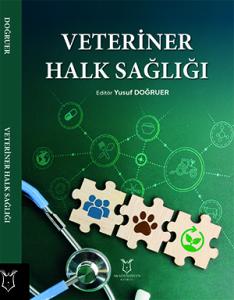
Sürdürülebilir Kalkınma Hedefleri Bağlamında Halk Sağlığı, Veteriner Halk Sağlığı ve Entegre Sağlık Yaklaşımları
Özet
Birleşmiş Milletler tarafından 2015 yılında kabul edilen Sürdürülebilir Kalkınma Hedefleri (SKH), yoksulluğun ortadan kaldırılması, gezegenin korunması ve herkes için refahın sağlanması amacıyla oluşturulmuş evrensel bir kalkınma gündemidir. Bu bölüm, SKH’lerin halk sağlığı ve veteriner halk sağlığı ile olan çok boyutlu ilişkisini incelemektedir. Halk sağlığı açısından SKH’ler; sağlığın sosyal belirleyicileri, eşitlik, kapsayıcılık, önleyici sağlık hizmetleri ve disiplinlerarası iş birliği ilkeleriyle örtüşmektedir. Veteriner halk sağlığı ise zoonotik hastalıkların kontrolü, gıda güvenliği, hayvan refahı, antimikrobiyal dirençle mücadele ve sürdürülebilir hayvancılık sistemleri aracılığıyla SKH’lere doğrudan katkı sunmaktadır. Ayrıca, Tek Sağlık ve Gezegen Sağlığı gibi yaklaşımlar kapsamında, insan, hayvan ve çevre sağlığını entegre eden çok aktörlü bir yönetişim modeli önerilmektedir. Bu bağlamda SKH’ler, yalnızca bir kalkınma aracı değil; aynı zamanda küresel sağlık güvenliği, çevresel sürdürülebilirlik ve sosyal adaletin sağlanması yönünde stratejik bir pusula işlevi görmektedir.
Referanslar
Biermann, F., Kanie, N., & Kim, R. E. (2017). Global governance by goal-setting: The novel approach of the UN Sustainable Development Goals. Current Opinion in Environmental Sustainability, 26-27, 26-31. https://doi.org/10.1016/j.cosust.2017.01.010
Broom, D. M. (2010). Animal welfare: An aspect of care, sustainability, and food quality required by the public. Journal of Veterinary Medical Education, 37(1), 83-88. https://doi.org/10.3138/jvme.37.1.83
Cardona, O. D. (2004). The need for rethinking the concepts of vulnerability and risk from a holistic perspective: a necessary review and criticism for effective risk management. In Mapping vulnerability (pp. 37-51). Routledge.
Cutler, D. M., & Lleras-Muney, A. (2006). Education and health: Evaluating theories and evidence. National Bureau of Economic Research Working Paper No. 12352. https://doi.org/10.3386/w12352
Daszak, P., Cunningham, A. A., & Hyatt, A. D. (2000). Emerging infectious diseases of wildlife–threats to biodiversity and human health. Science, 287(5452), 443-449. https://doi.org/10.1126/science.287.5452.443
Destoumieux-Garzón, D., Mavingui, P., Boetsch, G., Boissier, J., Darriet, F., Duboz, P., Fritsch, C., Giraudoux, P., Le Roux, F., Morand, S., Paillard, C., Pontier, D., Sueur, C., & Voituron, Y. (2018). The One Health Concept: 10 Years Old and a Long Road Ahead. Frontiers in Veterinary Science, 5, 14. https://doi.org/10.3389/fvets.2018.00014
FAO, IFAD, UNICEF, WFP & WHO. (2023). The State of Food Security and Nutrition in the World 2023: Urbanization, agrifood systems transformation and healthy diets across the rural–urban continuum (Vol. 2023). https://www.fao.org/publications
FAO, OIE, & WHO. (2019). Taking a multisectoral, One Health approach: A tripartite guide to addressing zoonotic diseases in countries.
FAO, OIE & WHO. (2021). Tripartite AMR country self-assessment survey (TrACSS) 2020-2021: Global analysis and report.
FAO, OIE, WHO, & UNEP. (2021). One Health Joint Plan of Action (2022-2026). https://www.fao.org/documents/card/en/c/cc2289en
FAO. (2011). Livestock emergency guidelines and standards (LEGS). Food and Agriculture Organization.
FAO. (2018). Sustainable livestock production: Achieving the Sustainable Development Goals.
FAO. (2020a). Sustainable livestock for sustainable lives. Food and Agriculture Organization of the United Nations.
FAO. (2020b). The state of world fisheries and aquaculture 2020. https://www.fao.org/publications/sofia/2020/en/
FAO. (2022). Climate change and animal health. Food and Agriculture Organization of the United Nations.
FAO. (2023). Biodiversity for food and agriculture: Contributing to the SDGs.
Fraser, D. (2008). Understanding animal welfare. Acta Veterinaria Scandinavica, 50(Suppl 1), S1.
Fraser, D. (2023). Understanding animal welfare: The science in its cultural context. John Wiley & Sons.
Frumkin, H., Frank, L., & Jackson, R. (2004). Urban sprawl and public health: Designing, planning, and building for healthy communities. Island Press.
Fukuda-Parr, S. (2016). From the Millennium Development Goals to the Sustainable Development Goals: Shifts in purpose, concept, and politics of global goal setting for development. Gender & Development, 24(1), 43-52. https://doi.org/10.1080/13552074.2016.1145895
Gakidou, E., Cowling, K., Lozano, R., & Murray, C. (2010). Increased educational attainment and its effect on child mortality in 175 countries. The Lancet, 376(9745), 959-974. https://doi.org/10.1016/S0140-6736(10)61257-3
Gibb, R., Redding, D. W., Chin, K. Q., Donnelly, C. A., Blackburn, T. M., Newbold, T., & Jones, K. E. (2020). Zoonotic host diversity increases in human-dominated ecosystems. Nature, 584(7821), 398-402.
Grace, D. (2015). Food safety in low and middle income countries. International Journal of Environmental Research and Public Health, 12(9), 10490-10507.
Intergovernmental Science-Policy Platform on Biodiversity and Ecosystem Services (IPBES). (2020). Workshop Report on Biodiversity and Pandemics. https://ipbes.net/pandemics
International Labour Organization. (2023). World Employment and Social Outlook. https://www.ilo.org
IPCC. (2022). Sixth Assessment Report: Climate Change 2022 – Impacts, Adaptation and Vulnerability. https://www.ipcc.ch
Kanie, N., & Biermann, F. (Eds.). (2017). Governing through goals: Sustainable Development Goals as governance innovation. MIT Press.
Landrigan, P. J., Fuller, R., Acosta, N. J., Adeyi, O., Arnold, R., Baldé, A. B., ... & Zhong, M. (2018). The Lancet Commission on pollution and health. The Lancet, 391(10119), 462-512.
Langford, M. (2016). Lost in transformation? The politics of the Sustainable Development Goals. Ethics & International Affairs, 30(2), 167–176. https://doi.org/10.1017/S0892679416000058
Lund, C., Breen, A., Flisher, A. J., Kakuma, R., Corrigall, J., Joska, J. A., ... & Patel, V. (2010). Poverty and common mental disorders in low and middle income countries: A systematic review. Social Science & Medicine, 71(3), 517-528.
Marmot, M. (2020). Health equity in England: The Marmot review 10 years on. Institute of Health Equity. https://www.instituteofhealthequity.org
Marmot, M. (2020). Health equity in England: the Marmot review 10 years on. BMJ, 368.
Marmot, M., Allen, J., Bell, R., Bloomer, E., & Goldblatt, P. (2012). WHO European review of social determinants of health and the health divide. The Lancet, 380(9846), 1011–1029. https://doi.org/10.1016/S0140-6736(12)61228-8
Marmot, M., Friel, S., Bell, R., Houweling, T. A. J., & Taylor, S. (2008). Closing the gap in a generation: Health equity through action on the social determinants of health. The Lancet, 372(9650), 1661–1669. https://doi.org/10.1016/S0140-6736(08)61690-6
Murthy, R. S., & Lakshminarayana, R. (2006). Mental health consequences of war: A brief review of research findings. World Psychiatry, 5(1), 25–30.
Nutbeam, D. (2008). The evolving concept of health literacy. Social Science & Medicine, 67(12), 2072–2078. https://doi.org/10.1016/j.socscimed.2008.09.050
O’Neill, J. (2016). Tackling drug-resistant infections globally: Final report and recommendations. Review on Antimicrobial Resistance. https://doi.org/10.1007/s10393-009-0235-1
Patel, V., Saxena, S., Lund, C., Thornicroft, G., Baingana, F., Bolton, P., ... & Unützer, J. (2018). The Lancet Commission on global mental health and sustainable development. The Lancet, 392(10157), 1553-1598. https://doi.org/10.1016/S0140-6736(18)31612-X
Prüss-Ustün, A., Wolf, J., Bartram, J., Clasen, T., Cumming, O., Freeman, M. C., ... & Johnston, R. (2019). Burden of disease from inadequate water, sanitation and hygiene for selected adverse health outcomes: An updated analysis with a focus on low-and middle-income countries. International Journal of Hygiene and Environmental Health, 222(5), 765-777.
Romanello, M., McGushin, A., Di Napoli, C., Drummond, P., Hughes, N., Jamart, L., ... & Hamilton, I. (2021). The 2021 report of the Lancet Countdown on health and climate change: code red for a healthy future. The Lancet, 398(10311), 1619-1662.
Sachs, J. D. (2012). From Millennium Development Goals to Sustainable Development Goals. The Lancet, 379(9832), 2206–2211. https://doi.org/10.1016/S0140-6736(12)60685-0
Sen, G., George, A., Ostlin, P., & Ramos, S. (2007). Unequal, Unfair, Ineffective and Inefficient Gender Inequity in Health: Why it exists and how we can change it. Final Report to the WHO Commission on Social Determinants of Health.
Steinfeld, H., Gerber, P., Wassenaar, T. D., Castel, V., & De Haan, C. (2006). Livestock's long shadow: environmental issues and options. Food & Agriculture Org.
Stuckler, D., Basu, S., Suhrcke, M., Coutts, A., & McKee, M. (2009). The public health effect of economic crises and alternative policy responses in Europe: An empirical analysis. The Lancet, 374(9686), 315–323. https://doi.org/10.1016/S0140-6736(09)61124-7
Taylor, L. H., Latham, S. M., & Woolhouse, M. E. (2001). Risk factors for human disease emergence. Philosophical Transactions of the Royal Society of London. Series B: Biological Sciences, 356(1411), 983-989.
UN Women. (2021). The Shadow Pandemic: Violence against women during COVID-19. https://www.unwomen.org/en/news/in-focus/in-focus-gender-equality-in-covid-19-response
UNDP. (2021). Energizing health: Accelerating electricity access in health-care facilities. United Nations Development Programme. https://www.undp.org/publications/energizing-health
United Nations (UN). (2000). United Nations Millennium Declaration. https://www.un.org/millennium/declaration/ares552e.htm
United Nations (UN). (2015). Transforming Our World: The 2030 Agenda for Sustainable Development. https://sdgs.un.org/2030agenda
United Nations Department of Economic and Social Affairs (UNDESA). (2016). Leaving No One Behind: The Imperative of Inclusive Development.
United Nations Development Programme (UNDP). (2020). Human Development Report 2020: The Next Frontier – Human Development and the Anthropocene.
United Nations Environment Programme (UNEP) & World Health Organization (WHO). (2013). State of the science of endocrine disrupting chemicals – 2012. https://www.who.int/publications/i/item/9789289003362
United Nations. (2015). Transforming our world: the 2030 Agenda for Sustainable Development. https://sdgs.un.org/2030agenda
WHO & UN-Habitat. (2016). Global report on urban health: Equitable, healthier cities for sustainable development. https://www.who.int/publications/i/item/9789241565274
WHO & UNICEF. (2021). Progress on household drinking water, sanitation and hygiene 2000-2020: Five years into the SDGs. https://washdata.org
WHO & World Bank. (2021). Tracking universal health coverage: 2021 global monitoring report. https://www.who.int/publications/i/item/9789240040612
WHO. (2022). One Health Joint Plan of Action 2022–2026. WHO, FAO, UNEP, WOAH.
WOAH (World Organisation for Animal Health). (2021). Guidelines on wildlife health and biodiversity.
World Health Organization. (2008). Closing the gap in a generation: Health equity through action on the social determinants of health. https://www.who.int/publications/i/item/WHO-IER-CSDH-08.1
World Health Organization. (2010a). Equity, social determinants and public health programmes. https://www.who.int/publications/i/item/9789241563973
World Health Organization. (2010b). Healthy workplaces: A model for action. https://www.who.int/publications/i/item/9789241599316
World Health Organization. (2010c). Monitoring the building blocks of health systems: A handbook of indicators and their measurement strategies. https://www.who.int/publications/i/item/9789241564055
World Health Organization. (2015a). Connecting global priorities: Biodiversity and human health. https://www.cbd.int/health/sok-biodiversity-en.pdf
World Health Organization. (2015b). Exposure to highly hazardous pesticides: A major public health concern. https://www.who.int/publications/i/item/WHO-CED-PHE-EPE-19.4.6
World Health Organization (WHO). (2015c). Estimates of the global burden of foodborne diseases. WHO Press.
World Health Organization. (2018a). Health inequities and their causes. https://www.who.int/news-room/facts-in-pictures/detail/health-inequities-and-their-causes
World Health Organization. (2018b). Health of refugees and migrants: Practices in addressing the health needs of refugees and migrants. https://www.who.int
World Health Organization. (2018c). Household air pollution and health. https://www.who.int/news-room/fact-sheets/detail/household-air-pollution-and-health
World Health Organization. (2019). Food safety: Heavy metals and food. https://www.who.int/news-room/fact-sheets/detail/food-safety
World Health Organization. (2020). Double burden of malnutrition. https://www.who.int/nutrition/double-burden-malnutrition
World Health Organization. (2021a). Climate change and health. https://www.who.int/news-room/fact-sheets/detail/climate-change-and-health
World Health Organization. (2021b). COVID-19 shows why united action is needed for more robust international health architecture. https://www.who.int/news/item/30-03-2021
World Health Organization. (2021c). Digital health and innovation. https://www.who.int/health-topics/digital-health
World Health Organization. (2021d). Energy access and health: A global overview of off-grid health facility electrification. https://www.who.int
World Health Organization. (2021e). Mental health and psychosocial well-being among children and adolescents. https://www.who.int
World Health Organization. (2022a). Attacks on health care in emergencies. https://www.who.int/news-room/questions-and-answers/item/attacks-on-health-care-in-emergencies
World Health Organization. (2022b). Household air pollution and health. https://www.who.int/news-room/fact-sheets/detail/household-air-pollution-and-health
World Health Organization. (2022c). Mental health and unemployment. https://www.who.int/news-room/fact-sheets/detail/mental-health-and-unemployment
World Health Organization. (2022d). Urban health. https://www.who.int/health-topics/urban-health
World Health Organization. (2023a). Ambient air pollution: A global assessment. https://www.who.int
World Health Organization. (2023b). Health systems resilience: Toolkit for building and strengthening resilient health infrastructure. https://www.who.int
World Health Organization. (2023c). WASH in health care facilities: Global progress report. https://www.who.int
World Health Organization. (2023d). Women’s health and gender inequalities. https://www.who.int/news-room/fact-sheets/detail/women-s-health
World Organisation for Animal Health (WOAH). (2022). Guidelines on disaster risk reduction in animal health.
Zinsstag, J., Schelling, E., Crump, L., Whittaker, M., Tanner, M., & Stephen, C. (Eds.). (2021). One Health: the theory and practice of integrated health approaches. CABI.