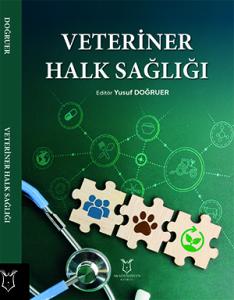
Zoonozlar
Özet
Zoonozlar, hayvanlardan insanlara doğal yollarla bulaşan ve hem insan hem de hayvan sağlığını tehdit eden önemli enfeksiyöz hastalıklardır. Bu hastalıklar, yalnızca bireysel sağlık açısından değil, aynı zamanda hayvancılık, gıda güvenliği, çevre sağlığı ve toplum sağlığı üzerinde de çok yönlü etkiler oluşturur. Tarih boyunca veba, kuduz ve kuş gribi gibi salgınlar, zoonozların yıkıcı sonuçlarını ortaya koymuştur. Günümüzde ise kentleşme, habitat kaybı, küresel ticaret ve iklim değişikliği gibi faktörler zoonotik hastalıkların yayılmasını kolaylaştırmaktadır. Veteriner Halk Sağlığı uygulamaları zoonozlarla mücadelede kritik öneme sahiptir. Bu mücadele; önleyici hekimlik, sürveyans, epidemiyolojik izleme, gıda denetimi ve halk eğitimi gibi çok disiplinli uygulamaları kapsar. Zoonotik hastalıkların kontrolü, toplum sağlığının korunması ve ekosistem dengesinin sürdürülebilmesi açısından küresel bir önceliktir. Bu bölümde, zoonozların tanımı, sınıflandırılması, bulaşma yolları, küresel önemi, korunma ve kontrol yöntemleri ele alınarak, bu karmaşık sağlık tehdidine karşı bütüncül bir bakış sunulacaktır.
Referanslar
Aberth, J. (2005). The Black Death: The Great Mortality of 1348–1350: A brief history with documents. Bedford/St. Martin’s.
Anderson, R. M., & May, R. M. (1991). Infectious diseases of humans: Dynamics and control. Oxford University Press.
Benedictow, O. J. (2004). The Black Death, 1346–1353: The complete history. Boydell & Brewer.
Brooks, S. K., Webster, R. K., Smith, L. E., Woodland, L., Wessely, S., Greenberg, N., & Rubin, G. J. (2020). The psychological impact of quarantine and how to reduce it: Rapid review of the evidence. The Lancet, 395(10227), 912–920. https://doi.org/10.1016/S0140-6736(20)30460-8
Carlson, C. J., Albery, G. F., Merow, C., Trisos, C. H., Zipfel, C. M., Eskew, E. A., Olival, K. J., Ross, N., & Bansal, S. (2022). Climate change increases cross-species viral transmission risk. Nature, 607(7919), 555–562. https://doi.org/10.1038/s41586-022-04788-w
Centers for Disease Control and Prevention. (2020). Principles of epidemiology in public health practice (3rd ed.). U.S. Department of Health and Human Services.
Cleaveland, S., Sharp, J., Abela-Ridder, B., Allan, K. J., Buza, J., Crump, J. A., Davis, A., de Glanville, W. A., Kazwala, R. R., Kibona, T., Lankester, F. J., Lugelo, A., Mmbaga, B. T., Rubach, M. P., & Swai, E. S. (2017). One Health contributions towards more effective and equitable approaches to health in low- and middle-income countries. Philosophical Transactions of the Royal Society B, 372(1725), 20160168. https://doi.org/10.1098/rstb.2016.0168
Codex Alimentarius Commission. (1999). Principles and guidelines for the conduct of microbiological risk assessment. CAC/GL-30.
Daszak, P., Cunningham, A. A., & Hyatt, A. D. (2000). Emerging infectious diseases of wildlife—Threats to biodiversity and human health. Science, 287(5452), 443–449. https://doi.org/10.1126/science.287.5452.443
Daszak, P., Cunningham, A. A., & Hyatt, A. D. (2001). Anthropogenic environmental change and the emergence of infectious diseases in wildlife. Acta Tropica, 78(2), 103–116. https://doi.org/10.1016/S0001-706X(00)00179-0
Day, M. J. (2011a). One Health: The importance of companion animal vector-borne diseases. Parasites & Vectors, 4(1), 49. https://doi.org/10.1186/1756-3305-4-49
Day, M. J. (2011b). One Health: The small animal dimension. Veterinary Record, 168(23), 624–625.
Destoumieux-Garzón, D., et al. (2018). The One Health concept: 10 years old and a long road ahead. Frontiers in Veterinary Science, 5, 14. https://doi.org/10.3389/fvets.2018.00014
EFSA. (2022). The European Union One Health 2021 zoonoses report. EFSA Journal, 20(12), e07666. https://doi.org/10.2903/j.efsa.2022.7666
Food and Agriculture Organization of the United Nations, World Health Organization, & World Organisation for Animal Health. (2021). GLEWS+ – Early warning for health threats at the human-animal-ecosystems interface.
Fraser, D. (2008). Understanding animal welfare: The science in its cultural context. Wiley-Blackwell.
Gibb, R., Redding, D. W., Chin, K. Q., Donnelly, C. A., Blackburn, T. M., Newbold, T., & Jones, K. E. (2020). Zoonotic host diversity increases in human-dominated ecosystems. Nature, 584(7821), 398–402. https://doi.org/10.1038/s41586-020-2562-8
Gibbs, E. P. J. (2014). The evolution of One Health: A decade of progress and challenges for the future. Veterinary Record, 174(4), 85–91. https://doi.org/10.1136/vr.g143
Grace, D., Mutua, F., Ochungo, P., Kruska, R., Jones, K., Brierley, L., ... & Pfeiffer, D. (2012). Mapping of poverty and likely zoonoses hotspots. Nairobi: International Livestock Research Institute (ILRI).
Gubler, D. J. (1998). Resurgent vector-borne diseases as a global health problem. Emerging Infectious Diseases, 4(3), 442–450. https://doi.org/10.3201/eid0403.980326
Haydon, D. T., Cleaveland, S., Taylor, L. H., & Laurenson, M. K. (2002). Identifying reservoirs of infection: A conceptual and practical challenge. Emerging Infectious Diseases, 8(12), 1468–1473. https://doi.org/10.3201/eid0812.010317
Heymann, D. L. (Ed.). (2015). Control of communicable diseases manual (20th ed.). APHA Press.
Holmes, A. H., Moore, L. S. P., Sundsfjord, A., Steinbakk, M., Regmi, S., Karkey, A., ... & Piddock, L. J. V. (2016). Understanding the mechanisms and drivers of antimicrobial resistance. The Lancet, 387(10014), 176–187. https://doi.org/10.1016/S0140-6736(15)00473-0
Jamieson, D. J., Theiler, R. N., & Rasmussen, S. A. (2006). Emerging infections and pregnancy. Emerging Infectious Diseases, 12(11), 1638–1643. https://doi.org/10.3201/eid1211.060152
Jones, B. A., Grace, D., Kock, R., Alonso, S., Rushton, J., Said, M. Y., ... & Pfeiffer, D. U. (2013). Zoonosis emergence linked to agricultural intensification and environmental change. Proceedings of the National Academy of Sciences, 110(21), 8399–8404. https://doi.org/10.1073/pnas.1208059110
Jones, K. E., Patel, N. G., Levy, M. A., Storeygard, A., Balk, D., Gittleman, J. L., & Daszak, P. (2008). Global trends in emerging infectious diseases. Nature, 451(7181), 990–993. https://doi.org/10.1038/nature06536
Karesh, W. B., Cook, R. A., Bennett, E. L., & Newcomb, J. (2005). Wildlife trade and global disease emergence. Emerging Infectious Diseases, 11(7), 1000–1006. https://doi.org/10.3201/eid1107.050194
Karesh, W. B., Dobson, A., Lloyd-Smith, J. O., Lubroth, J., Dixon, M. A., Bennett, M., ... & Heymann, D. L. (2012). Ecology of zoonoses: Natural and unnatural histories. The Lancet, 380(9857), 1936–1945. https://doi.org/10.1016/S0140-6736(12)61678-X
Keesing, F., Belden, L. K., Daszak, P., Dobson, A., Harvell, C. D., Holt, R. D., ... & Ostfeld, R. S. (2010). Impacts of biodiversity on the emergence and transmission of infectious diseases. Nature, 468(7324), 647–652. https://doi.org/10.1038/nature09575
Kuiken, T., Leighton, F. A., Fouchier, R. A., LeDuc, J. W., Peiris, J. S., Schudel, A., ... & Osterhaus, A. D. (2005). Public health: Pathogen surveillance in animals. Science, 309(5741), 1680–1681. https://doi.org/10.1126/science.1113310
Lerner, H., & Berg, C. (2017). A comparison of three holistic approaches to health: One Health, EcoHealth, and Planetary Health. Frontiers in Veterinary Science, 4, 163. https://doi.org/10.3389/fvets.2017.00163
Mackenzie, J. S., & Jeggo, M. (2019). The One Health approach—Why is it so important? Tropical Medicine and Infectious Disease, 4(2), 88. https://doi.org/10.3390/tropicalmed4020088
Martínez, J. L. (2009). Environmental pollution by antibiotics and by antibiotic resistance determinants. Environmental Pollution, 157(11), 2893–2902. https://doi.org/10.1016/j.envpol.2009.05.051
McKibbin, W., & Fernando, R. (2021). The global macroeconomic impacts of COVID-19: Seven scenarios. Asian Economic Papers, 20(2), 1-30.
McMichael, A. J. (2004). Environmental and social influences on emerging infectious diseases: Past, present and future. Philosophical Transactions of the Royal Society B: Biological Sciences, 359(1447), 1049–1058. https://doi.org/10.1098/rstb.2004.1480
Messenger, A. M., Barnes, A. N., & Gray, G. C. (2014). Reverse zoonotic disease transmission (zooanthroponosis): A systematic review of seldom‐documented human biological threats to animals. PLoS One, 9(2), e89055. https://doi.org/10.1371/journal.pone.0089055
Mills, D. S., & Hall, S. S. (2014). Animal-assisted interventions: Making better use of the human-animal bond. Veterinary Record, 174(11), 269–273.
Morens, D. M., & Fauci, A. S. (2013). Emerging infectious diseases: Threats to human health and global stability. PLOS Pathogens, 9(7), e1003467. https://doi.org/10.1371/journal.ppat.1003467
Morens, D. M., Folkers, G. K., & Fauci, A. S. (2004). The challenge of emerging and re-emerging infectious diseases. Nature, 430(6996), 242–249. https://doi.org/10.1038/nature02759
Morse, S. S. (2004). Factors and determinants of disease emergence. Revue Scientifique et Technique – Office International des Epizooties, 23(2), 443–451.
Morse, S. S., Mazet, J. A. K., Woolhouse, M., Parrish, C. R., Carroll, D., Karesh, W. B., ... & Daszak, P. (2012). Prediction and prevention of the next pandemic zoonosis. The Lancet, 380(9857), 1956–1965. https://doi.org/10.1016/S0140-6736(12)61684-5
Neiderud, C. J. (2015). How urbanization affects the epidemiology of emerging infectious diseases. Infection Ecology & Epidemiology, 5(1), 27060. https://doi.org/10.3402/iee.v5.27060
OIE [WOAH]. (2021). OIE Annual Report on Antimicrobial Agents Intended for Use in Animals. World Organisation for Animal Health.
Ostfeld, R. S., & Keesing, F. (2012). Effects of host diversity on infectious disease. Annual Review of Ecology, Evolution, and Systematics, 43, 157–182. https://doi.org/10.1146/annurev-ecolsys-102710-145022
Pappas, G., Papadimitriou, P., Akritidis, N., Christou, L., & Tsianos, E. V. (2006). The new global map of human brucellosis. The Lancet Infectious Diseases, 6(2), 91–99. https://doi.org/10.1016/S1473-3099(06)70382-6
Pearce-Duvet, J. M. C. (2006). The origin of human pathogens: Evaluating the role of agriculture and domestic animals in the evolution of human disease. Biological Reviews, 81(3), 369–382. https://doi.org/10.1017/S1464793106007020
Perry, B. D., & Grace, D. (2009). The impacts of livestock diseases and their control on growth and development processes that are pro-poor. Philosophical Transactions of the Royal Society B: Biological Sciences, 364(1530), 2643–2655. https://doi.org/10.1098/rstb.2009.0097
Plowright, R. K., Parrish, C. R., McCallum, H., Hudson, P. J., Ko, A. I., Graham, A. L., & Lloyd-Smith, J. O. (2017). Pathways to zoonotic spillover. Nature Reviews Microbiology, 15(8), 502–510. https://doi.org/10.1038/nrmicro.2017.45
Reinhard, K. J. (1992). Parasitology as an interpretive tool in archaeology. American Antiquity, 57(2), 231–245. https://doi.org/10.2307/280729
Robertson, I. D., Irwin, P. J., Lymbery, A. J., & Thompson, R. C. A. (2000). The role of companion animals in the emergence of parasitic zoonoses. International Journal for Parasitology, 30(12–13), 1369–1377.
Robinson, T. P., Bu, D. P., Carrique-Mas, J., Fèvre, E. M., Gilbert, M., Grace, D., ... & Woolhouse, M. E. (2016). Antibiotic resistance is the quintessential One Health issue. Transactions of the Royal Society of Tropical Medicine and Hygiene, 110(7), 377–380. https://doi.org/10.1093/trstmh/trw048
Rüegg, S. R., Nielsen, L. R., Buttigieg, S. C., Santa, M., Aragrande, M., Canali, M., ... & Häsler, B. (2018). A systems approach to evaluate One Health initiatives. Frontiers in Veterinary Science, 5, 23.
Scallan, E., Hoekstra, R. M., Angulo, F. J., Tauxe, R. V., Widdowson, M. A., Roy, S. L., ... & Griffin, P. M. (2011). Foodborne illness acquired in the United States—Major pathogens. Emerging Infectious Diseases, 17(1), 7–15. https://doi.org/10.3201/eid1701.P11101
Schwabe, C. W. (1984). Veterinary medicine and human health (3rd ed.). Williams & Wilkins.
Semenza, J. C., & Menne, B. (2009). Climate change and infectious diseases in Europe. The Lancet Infectious Diseases, 9(6), 365–375. https://doi.org/10.1016/S1473-3099(09)70104-5
Semenza, J. C., & Suk, J. E. (2018). Vector-borne diseases and climate change: A European perspective. FEMS Microbiology Letters, 365(2), fnx244. https://doi.org/10.1093/femsle/fnx244
Tatem, A. J., Rogers, D. J., & Hay, S. I. (2006). Global transport networks and infectious disease spread. Advances in Parasitology, 62, 293–343. https://doi.org/10.1016/S0065-308X(05)62009-X
Tauxe, R. V. (1997). Emerging foodborne diseases: An evolving public health challenge. Emerging Infectious Diseases, 3(4), 425–434.
Taylor, L. H., Latham, S. M., & Woolhouse, M. E. (2001). Risk factors for human disease emergence. Philosophical Transactions of the Royal Society B: Biological Sciences, 356(1411), 983–989. https://doi.org/10.1098/rstb.2001.0888
Thrusfield, M., & Christley, R. (2018). Veterinary epidemiology (4th ed.). Wiley-Blackwell.
Torgerson, P. R., & Macpherson, C. N. L. (2011). The socioeconomic burden of parasitic zoonoses: Global trends. Veterinary Parasitology, 182(1), 79–95. https://doi.org/10.1016/j.vetpar.2011.07.017
Weese, J. S., & Evason, M. (2019). Infection control and biosecurity in animal production systems. In J. S. Weese & M. Evason (Eds.), Veterinary infection prevention and control (2nd ed.). Wiley-Blackwell.
WHO/FAO. (1959). Joint WHO/FAO Expert Committee on Zoonoses. World Health Organization Technical Report Series, No. 169.
Wilkinson, R., & Marmot, M. (2003). Social determinants of health: The solid facts (2nd ed.). WHO Regional Office for Europe. https://apps.who.int/iris/handle/10665/326568
Wolfe, N. D., Dunavan, C. P., & Diamond, J. (2007). Origins of major human infectious diseases. Nature, 447(7142), 279–283. https://doi.org/10.1038/nature05775
World Health Organization (WHO). (2004). Laboratory biosafety manual (3rd ed.). WHO Press.
World Health Organization (WHO). (2006). The control of neglected zoonotic diseases: A route to poverty alleviation. WHO Press.
World Health Organization (WHO). (2020). Managing zoonotic public health risks at the human-animal-ecosystem interface. WHO Press.
World Health Organization (WHO). (2022). Zoonoses. https://www.who.int/news-room/fact-sheets/detail/zoonoses
World Health Organization (WHO). (2023). Managing epidemics: Key facts about major deadly diseases (2nd ed.). WHO Press.
World Health Organization (WHO). (2024). Vector-borne diseases. WHO Press.
World Health Organization (WHO), Food and Agriculture Organization of the United Nations (FAO), & World Organisation for Animal Health (WOAH). (2022a). One Health Joint Plan of Action (2022–2026). WHO Press.
World Health Organization (WHO), Food and Agriculture Organization of the United Nations (FAO), World Organisation for Animal Health (WOAH), & United Nations Environment Programme (UNEP). (2022b). One Health Joint Plan of Action 2022–2026. WHO Press.
Zinsstag, J., Schelling, E., Waltner-Toews, D., & Tanner, M. (2011). From “one medicine” to “One Health” and systemic approaches to health and well-being. Preventive Veterinary Medicine, 101(3–4), 148–156. https://doi.org/10.1016/j.prevetmed.2010.07.003