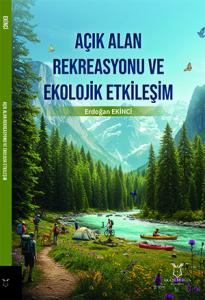
Açık Alan Rekreasyonu ve Ekolojik Etkileşim
Özet
-
Referanslar
Abernethy, V. D. (2001). Carrying capacity: The tradition and policy implications of limits. Ethics in Science and Environmental Politics, 23(1), 9-18.
Adams, L. W. (2005). Urban wildlife ecology and conservation: A brief history of the discipline. Urban Ecosystems, 8, 139-156.
Adedokun, B. C., McHenry, M. T., & Kirkpatrick, J. B. (2023). Informal camping on the margin of wild country: Early indicators of degradation and potential for some positive nature conservation outcomes. Land Degradation & Development, 34(13), 3867-3880.
Alig, R., Stewart, S., Wear, D., & Nowak, D. (2010). Conversions of forest land: Trends, determinants, projections, and policy considerations. M. J. Pye, H. M. Rauscher, Y. Sands, C. D. Lee, J. S. Beatty (Ed.), In. Advances in threat assessment and their application to forest and rangeland management. Gen. Tech. Rep. PNW-GTR-802. Portland, OR: US Department of Agriculture, Forest Service, Pacific Northwest and Southern Research Stations: 802, pp. 1-26.
Alkhodary, D., Abu-AlSondos, I. A., Ali, B. J., Shehadeh, M., & Salhab, H. A. (2022). Visitor management system design and implementation during the covid-19 pandemic. Information Sciences Letters, 11(04), 1059-1067.
Al-Taai, S. H. H. (2021a). Water pollution its causes and effects. IOP Conference Series: Earth and Environmental Science, 790(1), 012009.
Al-Taai, S. H. H. (2021b). Soil pollution-causes and effects. IOP conference series: Earth and Environmental Science, 790(1), 012009.
Apitz, S. E. (2012). Conceptualizing the role of sediment in sustaining ecosystem services: Sediment-ecosystem regional assessment (SEcoRA). Science of the Total Environment, 415, 9-30.
Apollo, M., & Andreychouk, V. (2020). Mountaineering and the natural environment in developing countries: an insight to a comprehensive approach. International Journal of Environmental Studies, 77(6), 942-953.
Arlinghaus, R., Alós, J., Beardmore, B., Daedlow, K., Dorow, M., Fujitani, M., ... & Wolter, C. (2017). Understanding and managing freshwater recreational fisheries as complex adaptive social-ecological systems. Reviews in Fisheries Science & Aquaculture, 25(1), 1-41.
Arni, A. G., & Khairil, W. A. (2013). Promoting collaboration between local community and park management towards sustainable outdoor recreation. Procedia-Social and Behavioral Sciences, 91, 57-65.
Arora, V. K., & Boer, G. J. (2005). Fire as an interactive component of dynamic vegetation models. Journal of Geophysical Research: Biogeosciences, 110(G2).
Assunção, J., Lipscomb, M., Mobarak, A. M., & Szerman, D. (2017). Agricultural productivity and deforestation in Brazil. Climate Policy, 1-46.
Aznar-Sánchez, J. A., Velasco-Muñoz, J. F., Belmonte-Ureña, L. J., & Manzano-Agugliaro, F. (2019). The worldwide research trends on water ecosystem services. Ecological Indicators, 99, 310-323.
Balasubramanian, A. (2008). Ecosystem and its components. Erişim Tarihi: 05.04.2025. Erişim Adresi: https://www.researchgate.net/publication/314213426_ECOSYSTEM_AND_ ITS_COMPONENTS
Bănăduc, D., Simić, V., Cianfaglione, K., Barinova, S., Afanasyev, S., Öktener, A., ... & Curtean-Bănăduc, A. (2022). Freshwater as a sustainable resource and generator of secondary resources in the 21st century: Stressors, threats, risks, management and protection strategies, and conservation approaches. International Journal of Environmental Research and Public Health, 19(24), 16570.
Barbir, F., Veziroǧlu, T. N., & Plass Jr, H. J. (1990). Environmental damage due to fossil fuels use. International journal of Hydrogen Energy, 15(10), 739-749.
Barros, A., & Pickering, C. M. (2015). Impacts of experimental trampling by hikers and pack animals on a high-altitude alpine sedge meadow in the Andes. Plant Ecology & Diversity, 8(2), 265-276.
Bell, M. (2003). Another kind of life: Adventure racing and epic expeditions. Rinehart, R. E. & Sydnor, S. (Ed.), In: To the Extreme: Alternative Sports, Inside And Out. Albany: State University of New York Press. pp. 219-253.
Bellan, G. L., & Bellan‐Santini, D. R. (2001). A review of littoral tourism, sport and leisure activities: Consequences on marine flora and fauna. Aquatic Conservation: Marine and Freshwater Ecosystems, 11(4), 325-333.
Beukering, P. J. H., Papyrakis, E., Bouma, J., & Brouwer, R. (2013). The economics of ecosystem services and poverty. Beukering, P. J. H., Papyrakis, E., Bouma, J., & Brouwer, R. (Ed.), In: Nature’s wealth: The economics of ecosystem services and poverty. Cambridge University Press. pp. 1-30.
Blahna, D. J., Kline, J. D., Williams, D. R., Rogers, K., Miller, A. B., McCool, S. F., & Valenzuela, F. (2020). Integrating social, ecological, and economic factors in sustainable recreation planning and decisionmaking. Selin, S., Cerveny, L. K., Blahna, D. J., Miller, A. B. (Ed.), In: Igniting research for outdoor recreation: linking science, policy, and action. Gen. Tech. Rep. PNW-GTR-987. Portland, OR: US Department of Agriculture, Forest Service, Pacific Northwest Research Station. 257 pp. 173-188.
Blanc, R., Guillemain, M., Mouronval, J. B., Desmonts, D., & Fritz, H. (2006). Effects of non-consumptive leisure disturbance to wildlife. Revue d'ecologie, 61(2), 117-133.
Blye, C. J., & Halpenny, E. (2020). Do Canadians Leave No Trace? Understanding Leave No Trace attitudes of frontcountry and backcountry overnight visitors to Canadian provincial parks. Journal of Outdoor Recreation and Tourism, 29, 100258.
Boggess, L. M., Harrison, G. R., & Bishop, G. (2021). Impacts of rock climbing on cliff vegetation: A methods review and best practices. Applied Vegetation Science, 24(2), e12583.
Borja, A., Bald, J., Franco, J., Larreta, J., Muxika, I., Revilla, M., ... & Valencia, V. (2009). Using multiple ecosystem components, in assessing ecological status in Spanish (Basque Country) Atlantic marine waters. Marine Pollution Bulletin, 59(1-3), 54-64.
Bromley, M., Marion, J., & Hall, T. (2013). Training to Teach Leave No Trace: Efficacy of Master Educator Courses. Journal of Park & Recreation Administration, 31(4).
Buckley, R. (1991). Environmental impacts of recreation in parks and reserves. R. Buckley (Ed.), In. Perspectives in environmental management, Springer. pp. 243-258.
Budowle, R., Sisneros-Kidd, A. M., Stefanich, L., & Smutkoa, L. S. (2022). Narratives of place:
Burgin, S. (2017). Indirect consequences of recreational fishing in freshwater ecosystems: An exploration from an Australian perspective. Sustainability, 9(2), 280.
Cachada, A., Rocha-Santos, T., & Duarte, A. C. (2018). Soil and pollution: An introduction to the main issues. Soil Pollution, 1-28.
Cardona, L. M., Brook, B. W., Harwood, A., & Buettel, J. C. (2024). Measuring the human-dimension of outdoor recreation and its impacts on terrestrial wildlife. Journal of Outdoor Recreation and Tourism, 47, 100808.
Carreño, A., & Lloret, J. (2021). Environmental impacts of increasing leisure boating activity in Mediterranean coastal waters. Ocean & Coastal Management, 209, 105693.
Cerveny, L. K., Selin, S. W., Morse, W. C., & Blahna, D. J. (2022). Sustainability and outdoor recreation management on public lands: New directions. Journal of Park and Recreation Administration, 40(1), 1-8.
Cerveny, L. K., Selin, S. W., Morse, W. C., & Blahna, D. J. (2022). Sustainability and outdoor recreation management on public lands: New directions. Journal of Park and Recreation Administration, 40(1), 1-8.
Chapman, E. J., & Byron, C. J. (2018). The flexible application of carrying capacity in ecology. Global Ecology and Conservation, 13, e00365.
Chardonnet, P., Clers, B. D., Fischer, J., Gerhold, R., Jori, F., & Lamarque, F. (2002). The value of wildlife. Revue Scientifique et Technique-Office Enternational des Epizooties, 21(1), 15-52.
Cheng, C., Liu, Y., Chen, Y., Liu, Y., Zhang, Y., Shen, S., ... & Hong, Y. (2019). Diagnosing cropland’s allowable range and spatial allocation in China’s typical mountainous plateau area: An evaluation framework based on ecological carrying capacity. Science of The Total Environment, 685, 1255-1268.
Cheung, L. T. (2013). Improving visitor management approaches for the changing preferences and behaviours of country park visitors in Hong Kong. Natural Resources Forum, 37(4), 231-241.
Chislock, M. F., Doster, E., Zitomer, R. A., & Wilson, A. E. (2013). Eutrophication: Causes, consequences, and controls in aquatic ecosystems. Nature Education Knowledge, 4(4), 10.
Clough, P. (2013). The value of ecosystem services for recreation. Ecosystem Services in New Zealand - Conditions and Trends, 330-342.
Cole, D. N. (2023). Historical development of recreation ecology. Manfredo, M. J., Vaske, J. J., Bruyere, B. L., Field, D. R., Brown P. J. (Ed.), In: Society and Natural Resources. University Press of Colorado, pp. 107-116.
Dai, A. (2013). Increasing drought under global warming in observations and models. Nature Climate Change, 3(1), 52-58.
Daily, G. C. (1996). What are ecosystem services. Daily, G. C. (Ed.), In: Nature’s services: Societal dependence on natural ecosystems. Island Press. pp. 1-10.
Daniels, M. L., & Marion, J. L. (2005). Communicating Leave No Trace Ethics and Practices: Efficacy of Two-Day Trainer Courses. Journal of Park & Recreation Administration, 23(4).
Daoutis, C., Kantartzis, A., Stathi, A., & Arabatzis, G. (2022). The contribution of footpaths to the protection and utilization of the natural environment by using the VIKOR method for their ranking. In. IOP Conference Series: Earth and Environmental Science, 1123(1), 012007.
Davenport, J., & Davenport, J. L. (2006). The impact of tourism and personal leisure transport on coastal environments: A review. Estuarine, Coastal and Shelf Science, 67(1-2), 280-292.
Del Monte‐Luna, P., Brook, B. W., Zetina‐Rejón, M. J., & Cruz‐Escalona, V. H. (2004). The carrying capacity of ecosystems. Global Ecology and Biogeography, 13(6), 485-495.
Ditmer, M. A., Francis, C. D., Barber, J. R., Stoner, D. C., Seymoure, B. M., Fristrup, K. M., & Carter, N. H. (2021). Light and noise pollution impacts specialist wildlife species disproportionately. bioRxiv, 2021-02.
Duffus, D. A., & Dearden, P. (1990). Non-consumptive wildlife-oriented recreation: A conceptual framework. Biological Conservation, 53(3), 213-231.
Eagleston, H., & Marion, J. L. (2017). Sustainable campsite management in protected areas: A study of long-term ecological changes on campsites in the boundary waters canoe area wilderness, Minnesota, USA. Journal for Nature Conservation, 37, 73-82.
Edo, G. I., Itoje-akpokiniovo, L. O., Obasohan, P., Ikpekoro, V. O., Samuel, P. O., Jikah, A. N., ... & Agbo, J. J. (2024). Impact of environmental pollution from human activities on water, air quality and climate change. Ecological Frontiers, 44(5), 874-889.
Ellert, B. H., Clapperton, M. J., & Anderson, D. W. (1997). An ecosystem perspective of soil quality. Developments in Soil Science, 25, 115-141.
Epiney, A. (2003). Sustainable use of freshwater resources. Zeitschrift für Ausländisches Öffentliches Recht und Völkerrecht (ZaöRV), 377-396.
Estes, J. A., Terborgh, J., Brashares, J. S., Power, M. E., Berger, J., Bond, W. J., ... & Wardle, D. A. (2011). Trophic downgrading of planet Earth. Science, 333(6040), 301-306.
Farrell, T. A., & Marion, J. L. (2002). The protected area visitor impact management (PAVIM) framework: A simplified process for making management decisions. Journal of Sustainable Tourism, 10(1), 31-51.
Ferguson, M. D., Perry, E. E., Lynch, M., Ferguson, L. A., Kiewra, L. A., Leberman, M., ... & Manning, R. E. (2022). Expanding the viewshed: Insights and implications for examining visitor use management across scales and modalities in an Iconic National Forest. Journal of Outdoor Recreation and Tourism, 40, 100570.
Font, T., & Lloret, J. (2014). Biological and ecological impacts derived from recreational fishing in Mediterranean coastal areas. Reviews in Fisheries Science & Aquaculture, 22(1), 73-85.
Fotang, C., Bröring, U., Roos, C., Enoguanbhor, E. C., Abwe, E. E., Dutton, P., ... & Birkhofer, K. (2021). Human activity and forest degradation threaten populations of the Nigeria–Cameroon chimpanzee (Pan troglodytes ellioti) in Western Cameroon. International Journal of Primatology, 42, 105-129.
Freppaz, M., Filippa, G., Corti, G., Cocco, S., Williams, M. W., & Zanini, E. (2013). Soil properties on ski-runs. C. Rixen & A. Rolando (Ed.), In The impacts of skiing and related winter recreational activities on mountain environments. Bentham Science Publishers. pp.45-64.
Ghosh, S. K., & Ghosh, B. K. (2020). Fossil fuel consumption trend and global warming scenario: Energy overview. Global Journal of Engineering Sciences, 5(2), 1-6.
Grizzetti, B., Lanzanova, D., Liquete, C., Reynaud, A., & Cardoso, A. C. (2016). Assessing water ecosystem services for water resource management. Environmental Science & Policy, 61, 194-203.
Haines-Young, R. & Potschin, M. (2012). Common International Classification of Ecosystem Services (CICES): Consultation on Version 4, August-December 2012. Erişim Tarihi: 18.03.2025. Erişim Adresi: https://chrisbroughtonartist.co.uk/content/uploads/sites/8/ 2012/07/CICES-V43_Revised-Final_Report_29012013.pdf
Hammitt, W. E., Cole, D. N., & Monz, C. A. (2015). Wildland recreation: Ecology and management. John Wiley & Sons.
Hammouri, J. A. A., Melnyk, O., Dydiv, I., Yaremenko, O., Zhyvko, Z., & Zaverbnyj, A. (2024). State legal policy for planning sustainable development of recreational areas: Environmental risk assessment for open socio-economic systems. International Journal of Sustainable Development and Planning, 19(4), 1397-1405.
Hardiman, N., & Burgin, S. (2010). Recreational impacts on the fauna of Australian coastal marine ecosystems. Journal of Environmental Management, 91(11), 2096-2108.
Hayakawa, Y. S., Gomez, C., Watanabe, T., Wang, T., Kobayashi, Y., Inomata, M., ... & Imagawa, S. (2025). Effects of ground-contacting gear on trail surface deformation from trampling. Environmental Challenges, 18, 101107.
Hemmat, W., Hesam, A. M., & Atifnigar, H. (2023). Exploring noise pollution, causes, effects, and mitigation strategies: a review paper. European Journal of Theoretical and Applied Sciences, 1(5), 995-1005.
Hermes, J., Van Berkel, D., Burkhard, B., Plieninger, T., Fagerholm, N., von Haaren, C., & Albert, C. (2018). Assessment and valuation of recreational ecosystem services of landscapes. Ecosystem Services, 31, 289-295.
Horal, L., Khvostina, I., Shyiko, V., Radin, M., Korol, S., & Panevnyk, T. (2021). Sustainable development of forest recreation management as a basis for environmental safety. IOP Conference Series: Earth and Environmental Science, 628(1), 012013.
Huddart, D., Stott, T., & Huddart, D. (2019). Recreational climbing and scrambling. D. Huddart & T. Stott (Ed.), In Outdoor recreation: Environmental impacts and management. pp. 73-109, 331-359.
Jain, U., Nagrami, F. U. H., Sharma, B., Parul, & Sharma, U. (2025). Definition, scope, characteristics, and importance of ecosystems. Rana T. (Ed.), In: Epidemiology and environmental hygiene in veterinary public health. Wiley. pp. 365-384.
Jenkins, J., & Pigram, J. (2004). Encyclopedia of leisure and outdoor recreation. Routledge.
Jiang, R., Wang, M., Chen, W., Li, X., Balseiro-Romero, M., & Baveye, P. C. (2019). Ecological risk of combined pollution on soil ecosystem functions: Insight from the functional sensitivity and stability. Environmental Pollution, 255, 113184.
Jim, C. Y. (1989). Visitor management in recreation areas. Environmental Conservation, 16(1), 19-32.
Johnston, J. M., & Crossley Jr, D. A. (2002). Forest ecosystem recovery in the southeast US: soil ecology as an essential component of ecosystem management. Forest Ecology and Management, 155(1-3), 187-203.
Kang, N., Feng, Y., & Lin, J. (2024). Why do chinese glampers recommend it? The role of original ecology environment in a glamping experience. Journal of China Tourism Research, 20(4), 734-752.
Kantor, S., Zeller, K., Ditmer, M., Squires, J., Barber, J., Wilder, J., & Egan, A. (2025). How human-generated noise disrupts wildlife: The unseen impact of outdoor recreation. Science You Can Use Bulletin, 71, 1-12.
Kenchington, R. (1993). Tourism in coastal and marine environments - A recreational perspective. Ocean & Coastal Management, 19(1), 1-16.
Khan, M., & Mohammad, F. (2014). Eutrophication: Challenges and Solutions. A. Ansari, S. Gill, (Ed.), In: Eutrophication: Causes, consequences and control – Vol.2. Springer. pp. 1-15.
Kija, H. K., Ogutu, J. O., Mangewa, L. J., Bukombe, J., Verones, F., Graae, B. J., ... & Nzunda, E. F. (2020). Spatio-temporal changes in wildlife habitat quality in the greater Serengeti ecosystem. Sustainability, 12(6), 2440.
Kolkos, G., Kantartzis, A., Stergiadou, A., & Arabatzis, G. (2024). Development of Semi-Mountainous and Mountainous Areas: Design of Trail Paths, Optimal Spatial Distribution of Trail Facilities, and Trail Ranking via MCDM-VIKOR Method. Sustainability, 16(22), 9966.
Kumar, M., & Kumar, P. (2008). Valuation of the ecosystem services: A psycho-cultural perspective. Ecological Economics, 64(4), 808-819.
Kuss, F. R., & Morgan, J. M. (1986). A first alternative for estimating the physical carrying capacities of natural areas for recreation. Environmental Management, 10, 255-262.
Lauenroth, W. K., Urban, D. L., Coffin, D. P., Parton, W. J., Shugart, H. H., Kirchner, T. B., & Smith, T. M. (1993). Modeling vegetation structure-ecosystem process interactions across sites and ecosystems. Ecological Modelling, 67(1), 49-80.
Lawhon, B., Newman, P., Taff, D., Vaske, J., Vagias, W., Lawson, S., & Monz, C. (2013). Factors influencing behavioral intentions for Leave No Trace behavior in national parks. Journal of Interpretation Research, 18(1), 23-38.
Lee, H., & Lautenbach, S. (2016). A quantitative review of relationships between ecosystem services. Ecological Indicators, 66, 340-351.
Lehel, J., & Murphy, S. (2021). Microplastics in the food chain: Food safety and environmental aspects. Reviews of Environmental Contamination and Toxicology, 259, 1-49.
Lemieux, V., Lavoie, M., Bouffard, V., Robin, C., & Petitclerc, D. (2024). Summer recreational boating impacts on erosion, turbidity, and phosphorus levels in Canadian freshwater lakes. Canadian Water Resources Journal/Revue Canadienne des Ressources Hydriques, 49(3), 355-367.
Leung, Y. F. (2012). Recreation ecology research in East Asia’s protected areas: Redefining impacts?. Journal for Nature Conservation, 20(6), 349-356.
management in protected areas: Guidelines for sustainability. Gland, Switzerland: IuCN.
Lin, L., Yang, H., & Xu, X. (2022). Effects of water pollution on human health and disease heterogeneity: A review. Frontiers in Environmental Science, 10, 880246. https://doi.org/10.3389/fenvs.2022.880246
Mancini, F., Coghill, G. M., & Lusseau, D. (2019). Quantifying wildlife watchers’ preferences to investigate the overlap between recreational and conservation value of natural areas. Journal of Applied Ecology, 56(2), 387-397.
Manning, R. E., Anderson, L. E., & Pettengill, P. (2017). Managing outdoor recreation: Case studies in the national parks. Cabi.
Marion, J. L., Wimpey, J., Arredondo, J., & Meadema, F. (2023). Improving the sustainability of camping management on the pacific crest national scenic trail. Final Report to the USDA Forest Service, Pacific SW Region, Vallejo, CA and the Pacific Crest Trail Association, Sacramento, CA. pp.19-20.
Marion, S., Davies, A., Demšar, U., Irvine, R. J., Stephens, P. A., & Long, J. (2020). A systematic review of methods for studying the impacts of outdoor recreation on terrestrial wildlife. Global Ecology and Conservation, 22, e00917.
Maris, V. (2015). Back to the Holocene: A conceptual, and possibly practical, return to a nature not intended for humans. Routledge. C. Hamilton, C. Bonneuil & F. Gemenne (Ed.), In: The anthropocene and the global environmental crisis, outledge. pp. 123-133.
Mason, P. (2005). Visitor management in protected areas: From ‘hard’to ‘soft’approaches?. Current Issues in Tourism, 8(2-3), 181-194.
May, R., Jackson, C., Bevanger, K., & Røskaft, E. (2019). Servicescape of the Greater Serengeti-Mara Ecosystem: Visualizing the linkages between land use, biodiversity and the delivery of wildlife-related ecosystem services. Ecosystem Services, 40, 101025.
McCool, S. (2012). Limits of acceptable change and tourism. A. Holden & D. Fennel (Ed.), In The Routledge handbook of tourism and the environment (pp. 285-298). Routledge.
McCoy, K. L., Krumpe, E. E., & Allen, S. (1995). Limits of acceptable change planning. International Journal of Wilderness, 1(2), 18-22.
Merrick, J. (1993). Inland water resources: Planning for recreational activities and aquaculture. Australian Planner, 31(1), 45-48.
Meyer, N., Schafft, M., Wegner, B., Wolter, C., Arlinghaus, R., Venohr, M., & von Oheimb, G. (2021). A day on the shore: Ecological impacts of non-motorised recreational activities in and around inland water bodies. Journal for Nature Conservation, 64, 126073.
Miller, A. B., Blahna, D. J., Morse, W. C., Leung, Y. F., & Rowland, M. M. (2022). From recreation ecology to a recreation ecosystem: A framework accounting for social-ecological systems. Journal of Outdoor Recreation and Tourism, 38, 100455. https://doi.org/10.1016/j.jort.2021.100455
Monz, C. A., Pickering, C. M., & Hadwen, W. L. (2013). Recent advances in recreation ecology and the implications of different relationships between recreation use and ecological impacts. Frontiers in Ecology and the Environment, 11(8), 441-446.
Monz, C. A., Pickering, C. M., & Hadwen, W. L. (2013). Recent advances in recreation ecology and the implications of different relationships between recreation use and ecological impacts. Frontiers in Ecology and the Environment, 11(8), 441-446.
Moore, T. J., & Harrison, G. (2012). Outdoor program administration: Principles and practices. Harrison, G. & Erpelding, M. (Ed.), In: Outdoor Program Administration: Principles and Practices. Human Kinetics. pp. 109-128.
Morley, L., Chase, M. R., Day, R. W., & Lawhon, B. (2008). Conviction of the heart: Implementing Leave-No-Trace principles in outdoor recreation. Journal of Physical Education, Recreation & Dance, 79(7), 29-34.
Morony, M., & Kopytko, N. (2024). A qualitative exploration of why high-altitude mountaineers ‘leave a trace’. doi: 10.20944/preprints202408.1158.v1
Muhar, A., Arnberger, A., & Brandenburg, C. (2002). Methods for visitor monitoring in recreational and protected areas: An overview. Monitoring and Management of Visitor Flows in Recreational and Protected Areas. Institut for Landscape Architecture & Landscape Management Bodenkultur University Vienna, pp. 1-6.
Mukherjee, S., Mishra, A., & Trenberth, K. E. (2018). Climate change and drought: A perspective on drought indices. Current Climate Change Reports, 4, 145-163.
Nahuelhual, L., Carmona, A., Lozada, P., Jaramillo, A., & Aguayo, M. (2013). Mapping recreation and ecotourism as a cultural ecosystem service: An application at the local level in Southern Chile. Applied Geography, 40, 71-82.
Naidoo, R., & Burton, A. C. (2020). Relative effects of recreational activities on a temperate terrestrial wildlife assemblage. Conservation Science and Practice, 2(10), e271.
Newport, J., Shorthouse, D. J., & Manning, A. D. (2014). The effects of light and noise from urban development on biodiversity: Implications for protected areas in Australia. Ecological Management & Restoration, 15(3), 204-214.
Oosterzee, P. V. (1984). The recreation opportunity spectrum: its use and misuse. Australian Geographer, 16(2), 97-104.
Orellana, D., Bregt, A. K., Ligtenberg, A., & Wachowicz, M. (2012). Exploring visitor movement patterns in natural recreational areas. Tourism Management, 33(3), 672-682.
Oteros-Rozas, E., Martín-López, B., Fagerholm, N., Bieling, C., & Plieninger, T. (2018). Using social media photos to explore the relation between cultural ecosystem services and landscape features across five European sites. Ecological Indicators, 94, 74-86.
Ouma, O. J., Hayombe, P. O., & Agong, S. G. (2014). Assessing water-based recreational activities to project beach ecotourism potentials in Kisumu County. Journal of Computer Engineering, 16(6), 27-36.
Park, L. O., Manning, R. E., Marion, J. L., Lawson, S. R., & Jacobi, C. (2008). Managing visitor impacts in Parks: A multi-method study of the effectiveness of alternative management practices. Journal of Park & Recreation Administration, 26(1), 97-121.
Parkes, D., Newell, G., & Cheal, D. (2003). Assessing the quality of native vegetation: The ‘habitat hectares’ approach. Ecological Management & Restoration, 4(1), 29-38.
Passarotto, A., Morosinotto, C., & Karell, P. (2025). Experimental noise and light pollution alter prey detection in a nocturnal bird of prey. Journal of Animal Ecology. 9(7), 1319-1473.
Patterson, T. M., & Coelho, D. L. (2009). Ecosystem services: Foundations, opportunities, and challenges for the forest products sector. Forest Ecology and Management, 257(8), 1637-1646.
Peng, B., Li, Y., Elahi, E., & Wei, G. (2019). Dynamic evolution of ecological carrying capacity based on the ecological footprint theory: A case study of Jiangsu province. Ecological Indicators, 99, 19-26.
Perry, E. E., Xiao, X., Iretskaia, T. A., Li, P., Manning, R. E., Valliere, W. A., & Reigner, N. P. (2022). A review of digitalization and sustainability in parks and recreation indicators and thresholds research. Journal of Outdoor Recreation and Tourism, 39, 100550.
Pickering, C. M., Hill, W., Newsome, D., & Leung, Y. F. (2010). Comparing hiking, mountain biking and horse riding impacts on vegetation and soils in Australia and the United States of America. Journal of Environmental Management, 91(3), 551-562.
Pigram, J., & Jenkins, J. (2005). Outdoor recreation management. Routledge.
Pironti, C., Ricciardi, M., Motta, O., Miele, Y., Proto, A., & Montano, L. (2021). Microplastics in the environment: Intake through the food web, human exposure and toxicological effects. Toxics, 9(9), 224.
Ploughe, L. W., & Fraser, L. H. (2022). Find new roads? A systematic review on the impacts of off-road vehicle activity on soil, vegetation, and wildlife. Frontiers in Ecology and Evolution, 9, 805707.
Poudel, J., Munn, I. A., & Henderson, J. E. (2017). Economic contributions of wildlife watching recreation expenditures (2006 & 2011) across the US south: An input-output analysis. Journal of Outdoor Recreation and Tourism, 17, 93-99.
Pradinaud, C., Northey, S., Amor, B., Bare, J., Benini, L., Berger, M., ... & Rosenbaum, R. K. (2019). Defining freshwater as a natural resource: a framework linking water use to the area of protection natural resources. The International Journal of Life Cycle Assessment, 24, 960-974.
Rees, W. E. (1996). Revisiting carrying capacity: area-based indicators of sustainability. Population and Environment, 17(3), 195-215.
Rice, W. L., & Phillips, K. E. (2025). The recreation rationing spectrum: A planning principle for the fair distribution of scarce recreation resources. Leisure Sciences, 47(5), 1136-1148.
Ritchie, H. (2021). Not all forest loss is equal: What is the difference between deforestation and forest degradation?. Our World in Data. https://ourworldindata.org/deforestation-degradation
Riungu, G. K., Hallo, J. C., Backman, K. F., Brownlee, M., Beeco, J. A., & Larson, L. R. (2020). Water-based recreation management: A normative approach to reviewing boating thresholds. Lake and Reservoir Management, 36(2), 139-154.
Rixen, C. (2013). Skiing and vegetation. C. Rixen & A. Rolando (Ed.), In The impacts of skiing and related winter recreational activities on mountain environments. Bentham Science Publishers. pp. 65-78.
Roe, P., Hrymak, V., & Dimanche, F. (2013). Assessing environmental sustainability in tourism and recreation areas: a risk-assessment-based model. Journal of Sustainable Tourism, 22(2), 319-338.
Roe, P., Hrymak, V., & Dimanche, F. (2014). Assessing environmental sustainability in tourism and recreation areas: A risk-assessment-based model. Journal of Sustainable Tourism, 22(2), 319-338.
Rolando, A., Caprio, E., & Negro, M. (2013). The effect of ski-pistes on birds and mammals. C. Rixen & A. Rolando (Ed.), In The impacts of skiing and related winter recreational activities on mountain environments. Bentham Science Publishers. pp. 101-122.
Romero, A. L. N., Moratta, M. A. H., Dalmasso, A. D., & Barros, A. (2019). Quad bike impacts on vegetation and soil physicochemical properties in an arid ecosystem. Acta Oecologica, 97, 14-22.
Ruiz-Jaén, M. C., & Aide, T. M. (2005). Vegetation structure, species diversity, and ecosystem processes as measures of restoration success. Forest Ecology and Management, 218(1-3), 159-173.
Ryan, S. (2015). Theorising outdoor recreation and ecology: Managing to enjoy ‘nature’. Palgrave Macmillan.
Sanin, A. Y., Vasilyev, O. D., & Kulakovskaya, V. A. (2022). On the issue of the impact of recreation on coastal territories. In Conference on physical and mathematical modeling of earth and environment processes. Springer Nature. pp. 557-569.
Sardar, S., & Islam, M. M. (2024). The impact of recreational activities on ecology: An evidence-based systematic review and bibliometric analysis. Sustainability, 17(1), 74.
Schafft, M., Nikolaus, R., Matern, S., Radinger, J., Maday, A., Klefoth, T., ... & Arlinghaus, R. (2024). Impact of water-based recreation on aquatic and riparian biodiversity of small lakes. Journal for Nature Conservation, 78, 126545.
Schägner, J. P., Brander, L., Maes, J., & Hartje, V. (2013). Mapping ecosystem services’ values: Current practice and future prospects. Ecosystem Services, 4, 33-46.
Schirpke, U., Meisch, C., Marsoner, T., & Tappeiner, U. (2018a). Revealing spatial and temporal patterns of outdoor recreation in the European Alps and their surroundings. Ecosystem Services, 31, 336-350.
Schirpke, U., Scolozzi, R., Da Re, R., Masiero, M., Pellegrino, D., & Marino, D. (2018b). Recreational ecosystem services in protected areas: A survey of visitors to natura 2000 sites in Italy. Journal of Outdoor Recreation and Tourism, 21, 39-50.
Sebestyén, T. T. (2024). Evaluation of the carbon footprint of wooden glamping structures by life cycle assessment. Sustainability, 16(7), 2906.
Seidl, I., & Tisdell, C. A. (1999). Carrying capacity reconsidered: from Malthus’ population theory to cultural carrying capacity. Ecological Economics, 31(3), 395-408.
Selin, S. W., Golston, J., & Valenzuela, F. (2022). Developing a capacity building, operational model of a sustainable recreation program. Journal of Park and Recreation Administration, 40(1), 61-78.
Seybold, C. A., Herrick, J. E., & Brejda, J. J. (1999). Soil resilience: A fundamental component of soil quality. Soil Science, 164(4), 224-234.
Shine, K. P., & Forster, P. M. (1999). The effect of human activity on radiative forcing of climate change: a review of recent developments. Global and Planetary Change, 20(4), 205-225.
Simon, G. L., & Alagona, P. S. (2009). Beyond leave no trace. Ethics Place and Environment, 12(1), 17-34.
Sneddon, C. S. (2000). Sustainability in ecological economics, ecology and livelihoods: A review. Progress in Human Geography, 24(4), 521-549.
Stankey, G. H., Cole, D. N., Lucas, R. C., Petersen, M. E., & Frissell, S. S. (1985). The limits of acceptable change (LAC) system for wilderness planning. Gen. Tech. Rep. INT-GTR-176. Ogden, UT: US Department of Agriculture, Forest Service, Intermountain Forest and Range Experiment Station. 37, p. 176.
Stebbins, R. C. (2012). Connecting with nature: A naturalist’s perspective. NSTA Press.
Stinnett, B., & Gibson, F. (2016). Sustainability and recreational sports facilities: An exploratory study regarding levels of ınstitutional adoption. Recreational Sports Journal, 40, 92-104.
Subekti, R. M., & Suroso, D. S. A. (2018). Ecological footprint and ecosystem services models: A comparative analysis of environmental carrying capacity calculation approach in Indonesia. In. IOP Conference Series: Earth and Environmental Science, 158(1), 012026.
Sun, C., Mingie, J. C., Petrolia, D. R., & Jones, W. D. (2015). Economic impacts of nonresidential wildlife watching in the United States. Forest Science, 61(1), 46-54.
Trenberth, K. E. (2018). Climate change caused by human activities is happening and it already has major consequences. Journal of Energy & Natural Resources Law, 36(4), 463-481.
Url-1, (2025). Is glamping an eco-friendly retreat? Exploring its environmental impact. Erişim Tarihi: 25.06.2025, Erişim Adresi: https://lovelycottage.co.uk/is-glamping-an-eco-friendly-retreat-exploring-its-environmental-impact
Venohr, M., Langhans, S. D., Peters, O., Hölker, F., Arlinghaus, R., Mitchell, L., & Wolter, C. (2018). The underestimated dynamics and impacts of water-based recreational activities on freshwater ecosystems. Environmental Reviews, 26(2), 199-213.
Wang, L., Kaseke, K. F., & Seely, M. K. (2017). Effects of non‐rainfall water inputs on ecosystem functions. Wiley Interdisciplinary Reviews: Water, 4(1), e1179.
Wei, J., Zhou, J., Tian, J., He, X., & Tang, K. (2006). Decoupling soil erosion and human activities on the Chinese Loess Plateau in the 20th century. Catena, 68(1), 10-15.
Weyland, F., & Laterra, P. (2014). Recreation potential assessment at large spatial scales: A method based in the ecosystem services approach and landscape metrics. Ecological Indicators, 39, 34-43.
Winter, P. L., Selin, S., Cerveny, L., & Bricker, K. (2019). Outdoor recreation, nature-based tourism, and sustainability. Sustainability, 12(1), 81. https://doi.org/10.3390/su12010081
Winter, P. L., Selin, S., Cerveny, L., & Bricker, K. (2019). Outdoor recreation, nature-based tourism, and sustainability. Sustainability, 12(1), 81.
Wu, C. C., Li, C. W., & Wang, W. C. (2021). Low-impact hiking in natural areas: A study of nature park hikers' negative impacts and on-site leave-no-trace educational program in Taiwan. Environmental Impact Assessment Review, 87, 106544.
Zahoor, I., & Mushtaq, A. (2023). Water pollution from agricultural activities: A critical global review. Int. J. Chem. Biochem. Sci, 23(1), 164-176.
Zelenka, J., & Kacetl, J. (2013). Visitor management in protected areas. Czech Journal of Tourism, 2(1), 5-18.
Zhong, L., Buckley, R. C., Wardle, C., & Wang, L. (2015). Environmental and visitor management in a thousand protected areas in China. Biological Conservation, 181, 219-225.
Zwolak, A., Sarzyńska, M., Szpyrka, E., & Stawarczyk, K. (2019). Sources of soil pollution by heavy metals and their accumulation in vegetables: A review. Water, Air, & Soil Pollution, 230, 1-9.
Yayınlanan
Lisans
LisansBu İnternet Sitesi içeriğinde yer alan tüm eserler (yazı, resim, görüntü, fotoğraf, video, müzik vb.) Akademisyen Kitabevine ait olup, 5846 sayılı Fikir ve Sanat Eserleri Kanunu ve 5237 sayılı Türk Ceca Kanunu kapsamında korunmaktadır. Bu hakları ihlal eden kişiler, 5846 sayılı Fikir ve Sanat eserleri Kanunu ve 5237 sayılı Türk Ceza Kanununda yer alan hukuki ve cezai yaptırımlara tabi olurlar. Yayınevi ilgili yasal yollara başvurma hakkına sahiptir.
