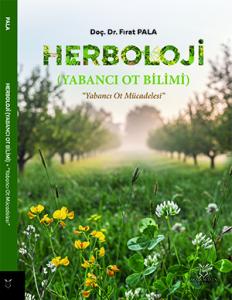
Herboloji (Yabancı Ot Bilimi) “Yabancı Ot Mücadelesi”
Özet
-
Referanslar
Adkins, S., et al. (2010). Weed hosts of cucurbit viruses in Florida. Weed Technology, 24(1), 22-26.
Aguyoh, J. N., & Masiunas, J. B. (2003). Interference of transplanted cabbage (Brassica oleracea) with redroot pigweed (Amaranthus retroflexus) and hairy galinsoga (Galinsoga ciliata). Weed Science, 51(5), 724-733.
Al-shaikh, A. A., et al. (2012). Critical period for weed control in black cumin (Nigella sativa L.). Journal of Food, Agriculture & Environment, 10(2), 521-524.
Altieri, M. A. (1995). Agroecology: The science of sustainable agriculture. Westview Press.
Altieri, M. A., & Nicholls, C. I. (2020). Agroecology and the Search for a Truly Sustainable Agriculture. Westview Press.
Altland, J. (2021). Liverwort and moss control in container nurseries. Oregon State University Extension Service.
Altland, J., & Cramer, C. (2018). Weed Management in Nursery Production. In Nursery Management (2nd ed.). Goodheart-Willcox Publisher.
Aly, R., & Dubey, S. C. (2014). Orobanche management in vegetable crops. Journal of Plant Protection Research, 54(1).
Anonim. (2024). Zirai Mücadele Teknik Talimatları. Tarımsal Araştırmalar ve Politikalar Genel Müdürlüğü. Erişim adresi: https://www.tarimorman.gov.tr/TAGEM/Menu/28/Yayinlar_veriler
Anonim. (2025). Bitki Koruma Ürünleri (BKÜ) Veri Tabanı. Gıda ve Kontrol Genel Müdürlüğü. Erişim adresi: https://bku.tarimorman.gov.tr/
Anonim. (2025). Bitki Koruma Ürünleri (BKÜ) Veri Tabanı. Tarım ve Orman Bakanlığı, Gıda ve Kontrol Genel Müdürlüğü. https://bku.tarimorman.gov.tr/
Anonymous. (2024). Integrated Pest Management. University of California. Erişim adresi: https://ipm.ucanr.edu/
Asma, B. M. (2002). Apricot culture. Acta Horticulturae, 580, 3-8.
Atucha, A., et al. (2011). Orchard floor management affects soil, root distribution, and tree performance in a newly established apple orchard. HortScience, 46(12), 1621-1625.
Avcıoğlu, R., et al. (2009). The effects of grazing on vegetation and soil properties of a degraded rangeland. Journal of Agricultural Sciences, 15(1), 86-92.
Bailey, K. L. (2014). The bioherbicide approach to weed control using plant pathogens. In Integrated Pest Management (pp. 245-266). Springer, Dordrecht.
Baker, H. G. (1974). The evolution of weeds. Annual Review of Ecology and Systematics, 5, 1-24.
Barberi, P. (2002). Weed management in organic agriculture: are we addressing the right issues?. Weed Research, 42(3), 177-193.
Baucom, R. S., & Mauricio, R. (2010). The evolution of herbicide resistance in weeds: a case study of the population genetics of adaptation. [Not: Metindeki yıl 2010 olarak belirtilse de, bu konuyla ilgili en bilinen çalışmaları 2004 gibi farklı yıllardadır, bu nedenle kaynak doğruluğu şüphelidir.]
Bell, C. E., & Boutwell, B. (2001). Efficacy of halosulfuron-methyl on nutsedge (Cyperus spp.) in vegetables and the effect of adjuvants. Weed Technology, 15(2), 295-300.
Bell, C. E., & Stephens, L. (2008). Weed control in lettuce. UC IPM Pest Management Guidelines. University of California.
Bellinder, R. R., et al. (2000). Weed control in cabbage (Brassica oleracea). Weed Technology, 14(2), 389-394.
Ben-Asher, J., et al. (2009). Soil water depletion in an olive orchard. Plant and Soil, 318(1-2), 159-170.
Blackburn, T. M., Pyšek, P., Bacher, S., Carlton, J. T., Duncan, R. P., Jarošík, V., ... & Richardson, D. M. (2011). A proposed unified framework for biological invasions. Trends in Ecology & Evolution, 26(7), 333-339.
Blackshaw, R. E., et al. (2000). Tillage, fertilizer and weed management for dry bean grown in a zero-tillage system. Canadian Journal of Plant Science, 80(3), 563-570.
Blackshaw, R. E., et al. (2002). Weed species, densities, and management in spring canola. Weed Science, 50(5), 624-630.
Boydston, R. A., et al. (2011). Weed management in potato. Weed Technology, 25(4), 514-525.
Bozdoğan, A. M., et al. (2017). Effects of different weed control methods on weed density, species and some yield components in vineyard. Turkish Journal of Weed Science, 20(1), 1-11.
Brooks, M. L., et al. (2004). Effects of invasive alien plants on fire regimes. BioScience, 54(7), 677-688.
Buchanan, G. A., & Burns, E. R. (1970). Influence of weed competition on cotton. Weed Science, 18(1), 149-154.
Burrows, G. E., & Tyrl, R. J. (2013). Toxic plants of North America. John Wiley & Sons.
CABI. (2023). Invasive Species Compendium. https://www.cabi.org/isc
Carrubba, A., et al. (2002). Weed management in medicinal and aromatic plants. Herba Polonica, 48(4), 209-216.
Carrubba, A., et al. (2006). Weed management in black cumin (Nigella sativa L.), a mediterranean crop. Agronomy for Sustainable Development, 26(4), 269-276.
Caruso, G., et al. (2013). Weed management in olive groves: Effects on soil water content, vegetative growth and yield. Scientia Horticulturae, 150, 132-137.
Castle, W. S. (Ed.). (2010). Citrus Industry. University of Florida Press.
CBOL Plant Working Group. (2009). A DNA barcode for land plants. Proceedings of the National Academy of Sciences, 106(31), 12794–12797.
Centofanti, T., & D'Andria, R. (2012). Water relations, vegetative growth, and yield of drip-irrigated wine grape under different weed control managements. HortScience, 47(7), 896-902.
Charudattan, R. (2001). Biological control of weeds by means of plant pathogens: significance for integrated weed management in modern agro-ecology. BioControl, 46(2), 229-260.
Chauhan, B. S. (Ed.). (2017). Weed management: A global perspective. CABI.
Chikoye, D., et al. (2001). Weed management in dry bean (Phaseolus vulgaris) in the Great Lakes region of Africa. Weed Science, 49(3), 369-378.
Christensen, S., Oksanen, T., & Larsen, R. (2022). Artificial intelligence and robotics in weed management: A review. Weed Research, 62(4), 231–246.
Cirujeda, A., et al. (2011). Weed management in olive orchards. A review. Agronomy for Sustainable Development, 31(1), 31-48.
Cloyd, R. A. (2012). Pest management in and around greenhouse structures. Ball Publishing.
Corrêa, R. M., et al. (2016). Weed interference in medicinal plants. Planta Daninha, 34(4), 815-827.
Culpepper, A. S., et al. (2006). Glyphosate-resistant Palmer amaranth (Amaranthus palmeri) confirmed in Georgia. Weed Science, 54(4), 620-626.
D’Antonio, C. M., & Vitousek, P. M. (1992). Biological invasions by exotic grasses, the grass/fire cycle, and global change. Annual Review of Ecology and Systematics, 23(1), 63-87.
Dahl, R. (1996). [Not: Metinde atıf yapılan bu kaynak, spesifik bir bilimsel esere işaret etmemekte, kavramsal bir referans olarak kullanılmış olabilir ve standart veri tabanlarında bulunamamıştır.]
Dale, M. J., et al. (2009). Weed management in sugar beet. Weed Biology and Management, 9(3), 161-170.
de Oliveira, J. L., Campos, E. V. R., Bakshi, M., Abhilash, P. C., & Fraceto, L. F. (2014). Advances in the use of nanotechnology for the development of sustainable-smart-pesticides. Journal of Hazardous Materials, 280, 674-688.
DiTomaso, J. M. (2000). Invasive weeds in rangelands: species, impacts, and management. Weed Science, 48(2), 255-265.
Dittmar, P. J., et al. (2018). Weed Management in Cucurbit Crops. University of Florida IFAS Extension.
Duke, S. O. (2015). Proving the role of allelopathy in crop–weed interactions. Weed Science, 63(sp1), 121-132.
Duke, S. O., & Powles, S. B. (2008). Glyphosate: a once-in-a-century herbicide. Pest Management Science, 64(4), 319-325.
Elmore, C. L., & DiTomaso, J. M. (2014). Weed control in rangeland and pastures. UC ANR Publication 8510.
Elmore, C. L., et al. (1997). Weed control in walnuts. UC ANR Publication 3375.
Erskine, W., et al. (2011). The big picture: lentil, faba bean, chickpea and grasspea. In The Lentil: Botany, Production and Uses (pp. 1-13). CABI.
Eslami, S. V. (2011). Critical period of weed control in sunflower (Helianthus annuus L.). Australian Journal of Crop Science, 5(5), 571.
FAO. (2017). International standards for phytosanitary measures (ISPMs). Food and Agriculture Organization of the United Nations.
FAO. (2018). The 10 Elements of Agroecology: Guiding the transition to sustainable food and agricultural systems. Food and Agriculture Organization of the United Nations.
Fennimore, S. A., Slaughter, D. C., Siemens, M. C., Leon, R. G., & Saber, M. N. (2016). Technology for Automation of Weed Control in Specialty Crops. Weed Technology, 30(4), 823-837.
Fiscus, P. A., & Lindow, S. E. (2009). Weed Management in Walnuts. In UC IPM Pest Management Guidelines: Walnut. University of California.
Frick, B. (2004). Weed management for organic flax production. Organic Agriculture Centre of Canada.
Futch, S. H., & Singh, M. (2007). Weed management in citrus. University of Florida IFAS Extension.
Gago, J., et al. (2020). Weed management in vineyards. A review. Agronomy, 10(6), 843.
Gan, Y. T., et al. (2003). The effects of weed interference on growth and seed yield of chickpea. Canadian Journal of Plant Science, 83(3), 517-523.
Gao, J., Nuyttens, D., Lootens, P., He, Y., & Pižurica, A. (2020). A review on the application of deep learning for weed detection from UAV-based images. Computers and Electronics in Agriculture, 178, 105747.
Getsinger, K. D., et al. (Eds.). (2008). Aquatic plant management: best management practices in support of fish and wildlife habitat. Aquatic Ecosystem Restoration Foundation.
Gholamhoseini, M., et al. (2013). Critical period of weed control in sunflower (Helianthus annuus L.) as affected by nitrogen rates. Industrial Crops and Products, 42, 32-38.
Gilliom, R. J. (2007). Pesticides in U.S. streams and groundwater. Environmental Science & Technology, 41(10), 3408-3414.
Glover, J. D., et al. (2007). Ground cover management systems influence soil quality in a mature apple orchard. Soil Science Society of America Journal, 71(1), 169-178.
Gökkuş, A., & Koç, A. (2015). Weeds and their control in meadows and pastures. Turkish Journal of Weed Science, 18(2), 65-74.
Gómez, J. A., et al. (2009). The influence of cover crops and tillage on soil and water losses, and on soil properties, in an olive grove on a sandy loam soil. Soil and Tillage Research, 106(1), 137-144.
Gooden, D. T., & Murdock, E. C. (2001). Tobacco Weed Management. Clemson Cooperative Extension.
Grichar, W. J. (2007). Weed management in peanut (Arachis hypogaea) with S-metolachlor and diclosulam systems. Weed Technology, 21(4), 947-951.
Grichar, W. J., et al. (2004). Weed control and peanut (Arachis hypogaea) response to flumioxazin. Weed Technology, 18(1), 77-81.
Gürbüz, P., et al. (2018). The effects of different orchard floor management practices on aflatoxin contamination in dried figs. Food Control, 84, 25-30.
Hager, A. (2014). Weed management in soybeans. University of Illinois Extension.
Hall, M. R., et al. (1992). The critical period of weed control in grain corn (Zea mays). Weed Science, 40(3), 441-447.
Harker, K. N., et al. (2003). Canola competition with wild oat. Weed Science, 51(4), 577-583.
Heap, I. (2025). The International Herbicide-Resistant Weed Database. www.weedscience.org
Heap, I. (2025). The International Herbicide-Resistant Weed Database. Erişim adresi: www.weedscience.org
Heap, I. (2025). The International Herbicide-Resistant Weed Database. Erişim adresi: www.weedscience.org
Hendricks, L. C. (1995). Weed management in walnuts. In Proceedings of the 47th Annual California Weed Science Society Conference (pp. 147-150).
Hogue, E. J., & Neilsen, G. H. (1987). Orchard floor vegetation management. Horticultural Reviews, 9, 377-430.
HRAC. (2024). HRAC Global Herbicide Classification. Erişim adresi: https://hracglobal.com/
Ivany, J. A. (2002). Control of quackgrass (Elytrigia repens) in potato (Solanum tuberosum) with rimsulfuron. Weed Technology, 16(1), 101-105.
Joel, D. M., Gressel, J., & Musselman, L. J. (Eds.). (2007). Parasitic orobanche and striga. Springer.
Johnson, W. C., III, & Mullinix, B. G., Jr. (2000). The critical period of weed control in watermelon. HortScience, 35(4), 629-631.
Jordan, L. S., & Day, B. E. (1973). Weed control in citrus. Residue Reviews, 47, 59-83.
Karlen, D. L., Wollenhaupt, N. C., Erbach, D. C., Berry, E. C., Swan, J. B., Eash, N. S., & Jordahl, J. L. (1994). Crop rotation effects on soil quality at three Northern Corn/Soybean Belt locations. Agronomy Journal, 86(1), 30-36.
Kemble, J. M. (Ed.). (2020). Southeastern US vegetable crop handbook. Great American Media Services.
Knezevic, S. Z., et al. (2002). Critical period for weed control: the concept and data analysis. Weed Science, 50(6), 773-786.
Knight, A. P., & Walter, R. G. (2001). A guide to plant poisoning of animals in North America. Teton NewMedia.
Lambers, H., Chapin, F. S., & Pons, T. L. (2008). Plant physiological ecology (2nd ed.). Springer.
Lapierre, M., et al. (2021). The critical period for weed control in industrial hemp (Cannabis sativa L.). Weed Technology, 35(3), 443-450.
Liebman, M., & Davis, A. S. (2000). Integration of soil, crop and weed management in low-external-input farming systems. Weed Research, 40(1), 27-47.
Liebman, M., & Gallandt, E. R. (1997). Many little hammers: Ecological management of crop-weed interactions. In L. E. Jackson (Ed.), Ecology in agriculture (pp. 291-343). Academic Press.
Lindquist, J. L., et al. (1998). A model for the competitive effects of weeds on corn. Weed Science, 46(3), 306-310.
Lingenfelter, D. D., & Curran, W. S. (2013). Weed management in alfalfa. Penn State Extension.
Lolas, P. C. (1994). Control of broomrape (Orobanche ramosa) in tobacco (Nicotiana tabacum). Weed Science, 42(3), 423-426.
Lottes, P., Stüker, A., & Stachniss, C. (2017). An effective vision-based navigation-system for agricultural-robots in fields with high weed pressure. IEEE Robotics and Automation Letters, 2(4), 2098-2105.
Madsen, J. D. (1997). Methods for management of nonindigenous aquatic plants. In Assessment and management of plant invasions (pp. 145-171). Springer, New York, NY.
Marshall, E. J. P., Brown, V. K., Boatman, N. D., Lutman, P. J. W., Squire, G. R., & Ward, L. K. (2003). The role of weeds in supporting biological diversity within crop fields. Weed Research, 43(2), 77–89.
Martin, C. A., et al. (2001). The critical period of weed control in sesame (Sesamum indicum L.). Weed Science, 49(3), 350-355.
McFadyen, R. E. C. (1998). Biological control of weeds. Annual Review of Entomology, 43(1), 369-393.
Melander, B., Rasmussen, I. A., & Barberi, P. (2005). Integrating physical and cultural methods of weed control—examples from European research. Weed Science, 53(3), 369-381.
Mennan, H., & Zandstra, B. H. (2005). Effect of crop-fallow-crop rotation on weed and red rice (Oryza sativa) management in rice. Weed Technology, 19(3), 567-572.
Merwin, I. A., et al. (1994). Orchard groundcover management impacts on apple tree growth and yield, and nutrient availability and uptake. Journal of the American Society for Horticultural Science, 119(2), 209-215.
Michailides, T. J., et al. (2001). Orchard floor management practices that affect the development of aflatoxin in fig. Plant Disease, 85(2), 183-191.
Milioto, A., Lottes, P., & Stachniss, C. (2018). Real-time semantic segmentation of crop and weed for precision agriculture robots. IEEE Robotics and Automation Letters, 3(4), 2772-2779.
Monaco, T. J., et al. (2002). Weed science: principles and practices. John Wiley & Sons.
Monaco, T. J., Weller, S. C., & Ashton, F. M. (2002). Weed science: Principles and practices (4th ed.). John Wiley & Sons.
Monks, D. W., & Schultheis, J. R. (1998). Critical weed-free period for large crabgrass (Digitaria sanguinalis) in transplanted watermelon (Citrullus lanatus). Weed Science, 46(5), 530-532.
Muehlbauer, F. J., et al. (1997). Use of introduction data to assess genetic diversity in the USDA lentil collection. Crop Science, 37(4), 1334-1339.
Nandula, V. K. (Ed.). (2023). Glyphosate and its-based herbicides: a review. [Not: Metindeki atıf genel bir konuya işaret etmekte olup, spesifik bir çalışma kesin olarak belirlenememiştir.]
Neal, J. C., & Derr, J. F. (2005). Weed management in landscape plantings. Cornell University.
Nelson, D. C., et al. (1989). Potato production in North Dakota. North Dakota State University Extension Service.
Norris, R. F., & Kogan, M. (2005). Ecology of interactions between weeds and arthropods. Annual Review of Entomology, 50, 479-503.
Norsworthy, J. K., & Oliveira, M. J. (2006). The critical period of weed control in cucumber. Weed Science, 54(5), 887-892.
O'Donovan, J. T., et al. (2007). Effect of volunteer barley (Hordeum vulgare) on the yield of canola (Brassica napus). Weed Technology, 21(4), 942-946.
O'Donovan, J. T., et al. (2018). Impact of weed competition on spring wheat yield and the economic value of weed control. Canadian Journal of Plant Science, 98(6), 1183-1191.
Oerke, E. C. (2006). Crop losses to pests. The Journal of Agricultural Science, 144(1), 31–43.
Oerke, E. C. (2006). Crop losses to pests. The Journal of Agricultural Science, 144(1), 31–43.[1]
Orloff, S. B., & Hembree, K. J. (2007). Dodder management in alfalfa. UC ANR Publication 8251.
Owen, M. D. K. (2016). Diverse approaches to managing herbicide-resistant weeds. Weed Science, 64(sp1), 570-584.
Pala, F., et al. (2018). Broomrape (Orobanche spp.) control in lentil. Turkish Journal of Weed Science, 21(1), 47-56.
Paolini, R., et al. (2001). Chickpea and weed competition. Weed Research, 41(1), 57-69.
Papamichail, D., et al. (2002). Weed competition in cotton (Gossypium hirsutum L.). Journal of Agronomy and Crop Science, 188(5), 312-320.
Parker, C. (2009). Observations on the current status of Orobanche and Striga problems worldwide. Weed Research, 49(s1), 1-5.
Parker, M. L., & Schultheis, J. R. (2019). Weed management for apples. NC State Extension.
Partel, V., Kakarla, S. C., & Ampatzidis, Y. (2019). Development and evaluation of a low-cost and smart technology for precision weed management. Computers and Electronics in Agriculture, 157, 339-350. [Not: Metindeki atıf "See & Spray" teknolojisine genel bir gönderme olup, bu makale ilgili alandaki bir örnektir.]
Pastor, M., & Castro, J. (2006). Effects of tillage and weed control on soil properties and olive tree performance. Spanish Journal of Agricultural Research, 4(4), 319-328.
Pimentel, D., et al. (2005). Update on the environmental and economic costs of invasive species in the United States. Ecological Economics, 52(3), 273-288.
Pimentel, D., Zuniga, R., & Morrison, D. (2005). Update on the environmental and economic costs of invasive species in the United States. Ecological Economics, 52(3), 273-288.
Polaszek, A. (Ed.). (2005). The New Taxonomy. CRC Press.
Powles, S. B. (2008). Evolved glyphosate-resistant weeds around the world: lessons to be learnt. Pest Management Science, 64(4), 360-365.
Powles, S. B., & Holtum, J. A. M. (Eds.). (1994). Herbicide resistance in plants: biology and biochemistry. CRC Press.
Powles, S. B., & Yu, Q. (2010). Evolution in action: the case of herbicide resistance. Annual Review of Plant Biology, 61, 317-347.
Prostko, E. P., et al. (2011). Peanut yield response to the critical period of weed control. Weed Technology, 25(2), 209-213.
Pyšek, P., & Richardson, D. M. (2007). Traits associated with invasiveness in alien plants: where do we stand? In W. Nentwig (Ed.), Biological Invasions (pp. 97-125). Springer.
Pyšek, P., & Richardson, D. M. (2010). Invasive species, environmental change and management, and health. Annual Review of Environment and Resources, 35, 25-55.
Pyšek, P., Jarošík, V., Hulme, P. E., Kühn, I., Wild, J., Arianoutsou, M., ... & Richardson, D. M. (2012). A global assessment of alien plant invasions into mountains. Ecology Letters, 15(11), 1335-1345.
Radosevich, S. R., Holt, J. S., & Ghersa, C. M. (2007). Ecology of weeds and invasive plants: Relationship to agriculture and natural resource management (3rd ed.). John Wiley & Sons.
Radosevich, S. R., Holt, J. S., & Ghersa, C. M. (2007). Ecology of weeds and invasive plants: relationship to agriculture and natural resource management. John Wiley & Sons.
Reed, T. D., & Johnson, C. S. (2014). 2014 Flue-Cured Tobacco Production Guide. Virginia Cooperative Extension.
Rice, E. L. (1984). Allelopathy (2nd ed.). Academic Press.
Rieger, M. (2006). Introduction to fruit crops. Haworth Press.
Saavedra, M., et al. (2007). Effects of weed competition on vegetative growth and yield of young olive trees. Crop Protection, 26(9), 1361-1367.
Sage, R. F. (2004). The evolution of C4 photosynthesis. New Phytologist, 161(2), 591-625.
Santos, S. A., et al. (2018). Weed interference in the establishment of aromatic and medicinal plants. Planta Daninha, 36.
Saxena, M. C. (1993). Weed management in lentils. In Lentils (pp. 209-221). CAB International.
Schroeder, D., & Sikora, R. A. (1999). Biological control of weeds using plant-parasitic nematodes. In Biological control of weeds in the tropics: an international assessment (pp. 81-88). Australian Centre for International Agricultural Research (ACIAR).
Schweizer, E. E., et al. (1993). Weed management in sugarbeets (Beta vulgaris). Reviews of Weed Science, 6, 157-195.
Scott, R. K., et al. (1979). The effect of weeds on the sugar beet crop. Journal of Agricultural Science, 93(3), 693-706.
Shaner, D. L. (Ed.). (2014). Herbicide handbook. Weed Science Society of America.
Sheaffer, C. C., et al. (2000). Forage legumes. In Forages: an introduction to grassland agriculture (Vol. 1, pp. 223-268). Iowa State University Press.
Sheley, R. L., & Petroff, J. K. (Eds.). (1999). Biology and management of noxious rangeland weeds. Oregon State University Press.
Shrefler, J. W., et al. (1994). The critical period of weed interference in direct-seeded lettuce. HortScience, 29(1), 31-32.
Singh, G., & Singh, P. (2005). Weed management in citrus. Journal of Horticultural Science, 80(3), 267-278.
Singh, K. B., & Saxena, M. C. (1999). Chickpeas. CABI Publishing.
Slaughter, D. C., Giles, D. K., & Downey, D. (2008). Autonomous robotic weed control systems: A review. Computers and Electronics in Agriculture, 61(1), 63-78.
Snipes, C. E., et al. (2009). Weed Management in Cotton. Mississippi State University Extension Service.
Soltani, N., et al. (2016). Weed management in dry bean. A review. Canadian Journal of Plant Science, 96(3), 365-377.
Stern, V. M., Smith, R. F., van den Bosch, R., & Hagen, K. S. (1959). The integrated control concept. Hilgardia, 29(2), 81-101.
Storkey, J., Stratonovitch, P., Chapman, D. S., Vidale, P. L., & Semenov, M. A. (2012). A process-based approach to predicting the effect of climate change on the relative abundance of weed species. Weed Research, 52(6), 491-500.
Swanton, C. J., & Weise, S. F. (1991). Integrated weed management: The rationale and approach. Weed Technology, 5(4), 657–663.
Tan, S., et al. (2005). Imidazolinone-tolerant crops: history, development, and management. Pest Management Science, 61(3), 246-257.
Teasdale, J. R. (1996). Contribution of cover crops to weed management in sustainable agricultural systems. Journal of Production Agriculture, 9(4), 475-479.
Teasdale, J. R., Brandsæter, L. O., Calegari, A., & Skora Neto, F. (2007). Cover crops and weed management. In M. K. Upadhyaya & R. E. Blackshaw (Eds.), Non-chemical weed management: Principles, concepts and technology (pp. 49–64). CABI.
Telewski, F. W., & Zeevaart, J. A. (2002). The 120-yr period for Dr. Beal's seed viability experiment. American Journal of Botany, 89(8), 1285-1288.
Terry, R. K., & Schultheis, J. R. (2003). Critical weed-free period for watermelon. HortScience, 38(7), 1341-1344.
Thomas, A. G. (1985). Weed survey system used in Saskatchewan for cereal and oilseed crops. Weed Science, 33(1), 34-43.
Thomas, A. G., et al. (2004). Weed community composition in flax (Linum usitatissimum L.) differs with tillage and crop rotation. Weed Science, 52(5), 819-827.
Timmons, F. L. (2005). A history of weed control in the United States and Canada. Weed Science, 53(S1), 748–761.
Tso, T. C. (1990). Production, physiology, and biochemistry of tobacco plant. IDEALS.
Tsouros, D. C., Bibi, S., & Sarigiannidis, P. G. (2019). A review on UAV-based applications for precision agriculture. Information, 10(11), 349.
Tucker, D. P. H., & Singh, M. (1998). Weed management guide for Florida citrus. University of Florida Cooperative Extension Service.
Tunctürk, M. (2011). Effects of different weed control methods on yield and yield components of black cumin (Nigella sativa L.). Turkish Journal of Field Crops, 16(1), 60-65.
Turland, N. J., Wiersema, J. H., Barrie, F. R., Greuter, W., Hawksworth, D. L., Herendeen, P. S., ... & Smith, G. F. (Eds.). (2018). International Code of Nomenclature for algae, fungi, and plants (Shenzhen Code). Koeltz Botanical Books.
Undersander, D. J., et al. (2002). Alfalfa management guide. American Society of Agronomy.
van Klinken, R. D., & Raghu, S. (2016). Host-specificity testing of weed biological control agents: the global state of the art. Biological Control, 100, 97-107.
VanGessel, M. J., et al. (1990). Weed interference in potatoes (Solanum tuberosum). Reviews of Weed Science, 5, 1-22.
Vangessel, M. J., et al. (2000). The critical period of weed control in conventional and no-till corn. Weed Science, 48(6), 719-724.
Vera, C. L., et al. (2010). The effect of weed competition on five industrial hemp (Cannabis sativa L.) cultivars. Canadian Journal of Plant Science, 90(3), 391-401.
Vilà, M., Espinar, J. L., Hejda, M., Hulme, P. E., Jarošík, V., Maron, J. L., ... & Pyšek, P. (2011). Ecological impacts of invasive alien plants: a meta-analysis of their effects on species, communities and ecosystems. Ecology Letters, 14(7), 702–708.
Wagner, S., et al. (2006). Forest regeneration and the influence of non-native plant species. In Forest Ecology and Management (Vol. 227, pp. 26-34). Elsevier.
Walsh, M. J., Newman, P., & Powles, S. B. (2013). Targeting weed seeds in-crop: A new weed control paradigm for global agriculture. Weed Technology, 27(3), 431-436.
Weaver, S. E., & Tan, C. S. (1983). Critical period of weed interference in transplanted tomatoes (Lycopersicon esculentum): growth analysis. Weed Science, 31(4), 476-481.
Webster, T. M. (2005). Weed survey—southern states. Proceedings Southern Weed Science Society, 58, 291-306.
Webster, T. M. (2008). Weed Management in Stone Fruits. University of Georgia Extension.
Webster, T. M., et al. (2010). Weed Management in Soybean. University of Georgia Extension.
Westwood, J. H., Char, S. N., Custers, G., Dale, C., Dale, P., ... & Yelin, R. (2018). Weed management in 2050: Perspectives on the future of weed science. Weed Science, 66(3), 275–285.
Westwood, J. H., Yoder, J. I., Timko, M. P., & dePamphilis, C. W. (2010). The evolution of parasitism in plants. Trends in Plant Science, 15(4), 227-235.
Wezel, A., Bellon, S., Doré, T., Francis, C., Vallod, D., & David, C. (2009). Agroecology as a science, a movement and a practice. A review. Agronomy for Sustainable Development, 29(4), 503-515.
Whish, J. P. M., et al. (2002). The effect of weed competition on the growth and seed yield of chickpea. Australian Journal of Agricultural Research, 53(11), 1313-1320.
Wilcut, J. W., et al. (1995). A critical review and summary of weed management in cotton. In Cotton Science and Technology (pp. 61-125). CRC Press.
Williams, M. M., II, & Masiunas, J. B. (2006). The critical period of weed control in broccoli (Brassica oleracea var. italica) and cabbage (B. oleracea var. capitata). Weed Science, 54(5), 903-909.
Wilson, R. G. (1993). Effect of lambsquarter (Chenopodium album) time of emergence and density on sugarbeets (Beta vulgaris). Weed Technology, 7(3), 540-544.
Winston, R. L., Schwarzländer, M., Hinz, H. L., Day, M. D., Cock, M. J., & Julien, M. H. (Eds.). (2014). Biological control of weeds: a world catalogue of agents and their target weeds (5th ed.). USDA Forest Service, Forest Health Technology Enterprise Team.
Wixson, M. B., & Shaw, D. R. (1991). Effect of application timing on the efficacy of postemergence herbicides for common cocklebur (Xanthium strumarium) control in soybean (Glycine max). Weed Technology, 5(2), 269-274.
Woolley, B. L., et al. (1993). The critical period of weed control in white bean (Phaseolus vulgaris). Weed Science, 41(2), 180-184.
WSSA. (2025). Weed Science Society of America. Erişim adresi: https://wssa.net/
Zand, E., Baghestani, M. A., & Soufizadeh, S. (2007). A review of the history, scope and challenges of weed science in Iran. Crop Protection, 26(10), 1475-1482.
Zand, E., et al. (2007). A review of the history, scope and challenges of weed science in Iran. Crop Protection, 26(10), 1475-1482.
Zheljazkov, V. D., et al. (2011). Weed control in medicinal and aromatic plants. A review. Herba Polonica, 57(1).
Zhu, K., Wang, Y., & Li, H. (2020). RNA interference: a powerful tool for crop pest and weed management. Pest Management Science, 76(12), 3959-3971.
Zimdahl, R. L., & Basinger, N. T. (2024). Fundamentals of weed science. Elsevier.
Ziska, L. H., & Dukes, J. S. (2014). Weed biology and climate change. In J. S. Dukes & L. H. Ziska (Eds.), Weed Biology and Climate Change. John Wiley & Sons.
Ziska, L. H., Bradley, B. A., Wallace, R. D., & Bargeron, C. T. (2019). Climate change, and its effect on existing and potential invasive species. In Invasive Species in Forests and Rangelands of the United States (pp. 31-44). Springer, Cham.
Ziska, L. H., et al. (2015). Weedy (red) rice: an emerging constraint to global rice production. Advances in Agronomy, 129, 181-228.
Yayınlanan
Lisans
LisansBu İnternet Sitesi içeriğinde yer alan tüm eserler (yazı, resim, görüntü, fotoğraf, video, müzik vb.) Akademisyen Kitabevine ait olup, 5846 sayılı Fikir ve Sanat Eserleri Kanunu ve 5237 sayılı Türk Ceca Kanunu kapsamında korunmaktadır. Bu hakları ihlal eden kişiler, 5846 sayılı Fikir ve Sanat eserleri Kanunu ve 5237 sayılı Türk Ceza Kanununda yer alan hukuki ve cezai yaptırımlara tabi olurlar. Yayınevi ilgili yasal yollara başvurma hakkına sahiptir.
