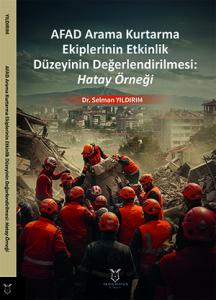
Afad Arama Kurtarma Ekiplerinin Etkinlik Düzeyinin Değerlendirilmesi: Hatay Örneği
Özet
Bu tez, 6 Şubat 2023 tarihinde Kahramanmaraş merkezli olarak meydana gelen depremlerin ardından, Hatay ilinde yürütülen arama-kurtarma faaliyetlerinde sahada görev alan ekiplerin başta Afet ve Acil Durum Yönetimi Başkanlığı(AFAD) olmak üzere, Ulusal Medikal Kurtarma Ekipleri (UMKE), Jandarma Arama Kurtarma (JAK) birimleri, itfaiye teşkilatları ve çeşitli sivil toplum kuruluşlarına bağlı grupların ilk müdahale sürecindeki operasyonel etkinliğini değerlendirmeyi amaçlamaktadır.
Çalışma kapsamında, afet sahasında doğrudan görev almış 39 arama kurtarma personeliyle yapılan görüşmelerde, önceden hazırlanan yarı yapılandırılmış soru seti temel alınmış; görüşme esnasında takip ve ek sorularla derinleştirme yapılmıştır. Elde edilen saha verileri, MAXQDA 2024 nitel analiz yazılımı kullanılarak tematik düzeyde çözümlenmiştir. Araştırma bulguları, arama kurtarma süreçlerinin sadece teknik yeterlilikle değil; aynı zamanda kurumsal koordinasyon, ekipman standardizasyonu, lojistik yönetimi, personel eğitimi ve psikososyal dayanıklılık gibi çok boyutlu unsurlarla doğrudan ilişkili olduğunu ortaya koymuştur. Özellikle ilk müdahale saatlerinde yaşanan iletişim ve koordinasyon sorunları, müdahale hızını ve başarı oranını olumsuz etkilemiştir. Ayrıca, Türkiye Afet Müdahale Planı’nın teorik çerçevesi ile sahadaki uygulama arasındaki kopukluklar, afet yönetimi yapısında yapısal reform ihtiyacını açıkça göstermektedir. Bu çalışmada, arama kurtarma ekiplerinin etkinliğini artırmak amacıyla geliştirilen politika önerileri; sahaya özgü planlamaların güçlendirilmesi, afetlere hazırlık düzeyinin artırılması, teknoloji destekli erken uyarı ve veri sistemlerinin yaygınlaştırılması ile AFAD ve diğer arama kurtarma faaliyetleri yürüten kuruluşların uluslararası standartlara uyum sağlayacak şekilde yeniden yapılandırılmasını öngören kapsamlı bir dönüşüm çerçevesi sunmaktadır. Çalışma, afet yönetimi literatürüne sahaya dayalı özgün verilerle katkı sunmayı hedeflemektedir.
This thesis aims to evaluate the operational effectiveness of the teams that took part in the search and rescue activities carried out in Hatay province following the earthquakes that occurred on 6 February 2023, centered on Kahramanmaraş, in the first response process of the teams affiliated with the Disaster and Emergency Management Authority (AFAD), National Medical Rescue Teams (UMKE), Gendarmerie Search and Rescue (JAK) units, fire brigades, and various non-governmental organizations.
Within the scope of the study, in-depth semi-structured interviews were conducted with 39 search and rescue personnel who were directly involved in the disaster area; the field data obtained were analyzed at the thematic level using MAXQDA 2024 qualitative analysis software. The research findings revealed that search and rescue processes are directly related not only to technical competence but also to multidimensional factors such as institutional coordination, equipment standardization, logistics management, personnel training, and psychosocial resilience. Communication and coordination problems, especially during the first response hours, negatively affected the response speed and success rate. In addition, the gaps between the theoretical framework of the Turkish Disaster Response Plan (TAMP) and its implementation in the field clearly show the need for structural reform in the disaster management structure. The policy recommendations developed in this study to increase the effectiveness of search and rescue teams provide a comprehensive transformation framework that envisions strengthening site-specific planning, increasing disaster preparedness, expanding technology-supported early warning and data systems, and restructuring AFAD and other organizations conducting search and rescue activities to comply with international standards. The study aims to contribute to the disaster management literature with original field-based data.
Referanslar
Abdalla, M., Alarabi, L., Hendawi, A. (2021). Crisis management art from the risks to the control: a review of methods and directions. Information, 12(1), 18. https://doi.org/10.3390/info12010018
Acosta, J., Chandra, A. (2013). Harnessing a Community for Sustainable Disaster Response and Recovery: An Operational Model for Integrating Nongovernmental Organizations. Disaster Medicine and Public Health Preparedness, 7(4), 361–368. doi:10.1017/dmp.2012.1
Adana Valiliği. (2018a). Afet Acil Arama ve Kurtarma Birlik Müdürlüğü Haberleşme Planı. Adana: AFAD.
Adana Valiliği. (2018b). Afet Acil Arama ve Kurtarma Birlik Müdürlüğü (Bao) Konuşlanma Alanı Planı. Adana: AFAD.
Adana Valiliği. (2018c). Afet Acil Arama ve Kurtarma Birlik Müdürlüğü Saha Oprasyon Planı. Adana: AFAD.
Adana Valiliği. (2018d). Afet Acil Arama ve Kurtarma Birlik Müdürlüğü Tahliye Planı. Adana: AFAD.
Adenle, A. A., De Steur, H., Mwongera, C., Rola-Rubzen, F., de Barcellos, M. D., Vivanco, D. F., … Chertow, M. (2023). Global UN 2030 agenda: how can science, technology and innovation accelerate the achievement of sustainable development goals for all?. PLOS Sustainability and Transformation, 2(10), e0000085. https://doi.org/10.1371/journal.pstr.0000085
Adnan, A., Ramli, M. Z., Abd Razak, S. K. M. (2015). Disaster management and mitigation for earthquakes: are we ready. 9th Asia Pacific structural engineering and construction conference (APSEC2015).
AFAD. (2014). Açıklamalı Afet Yöneti̇mi Teri̇mleri̇ Sözlüğü Ankara: Afet ve Acil Durum Yönetimi Başkanlığı Yayınları. Ankara
AFAD. (2018). Türkiye’de Afet Yönetimi ve Doğa Kaynaklı Afet İstatistikleri. Afet ve Acil Durum Yönetimi Başkanlığı Yayınları. Ankara
AFAD. (2022). Afet Yönetimi Karar Destek Sistemi. Erişim adresi: https://www.afad.gov.tr/afet-yonetim-ve-karar-destek-sistemi-projesi-aydes21, Erişim tarihi: 27.11.2024.
AFAD. (2023a). AFAD 2022 Yılı İdare Faaliyet Raporu. Afet ve Acil Durum Yönetimi Başkanlığı Yayınları Ankara: AFAD.
AFAD. (2023b). Kentsel Arama ve Kurtarma Akreditasyon Sistemi (KAVKAS) ve INSARAG Tanımlı Ulusal Akreditasyon Sistemi (IRNAP/ITUAS) Klavuzu, Afet ve Acil Durum Yönetimi Başkanlığı Yayınları Ankara
AFAD. (2023c). Kahramanmaraş Depremleri Ön Değerlendirme Raporu, Afet ve Acil Durum Yönetimi Başkanlığı Yayınları Ankara
AFAD. (2024a). Afete Hazır Türkiye Erişim adresi: https://afad.gov.tr/afete-hazir-turkiye, Erişim Tarihi 11.06.2024.
AFAD. (2024b). AFAD Gönüllük Projesi. Erişim adresi: https://www.afad.gov.tr/afad-gonulluluk-projesi, Erişim Tarihi 12.06.2024.
AFAD. (2024c). AFAD Performans Programı, Afet ve Acil Durum Yönetimi Başkanlığı Yayınları. Ankara
AFAD. (2024d). AFAD hakkında. Erişim adresi: https://afad.gov.tr/afadhakkinda, Erişim Tarihi 27.11.2024.
AFAD. (2024e). Kentsel Arama ve Kurtarma Akreditasyon Sistemi (KAVKAS) ve INSARAG Tanımlı Ulusal Akreditasyon Sistemi (IRNAP/ITUAS) Kılavuzu, Afet ve Acil Durum Yönetimi Başkanlığı Yayınları Ankara
AFAD Basın Bülteni 37. (2023). Kahramanmaraş’ta Meydana Gelen Depremler Hakkında. Erişim adresi: https://www.afad.gov.tr/kahramanmaras-merkezli-yurutulen-calismalar-hakkinda--basin-bulteni--37. Erişim Tarihi 17.10.2024.
AFAD Stratejik Plan. (2024). AFAD Stratejik Plan 2024-2028. Afet ve Acil Durum Yönetimi Başkanlığı Yayınları Ankara.
Afet ve Acil Durum Yönetimi Başkanlığının Teşkilat ve Görevleri Hakkında Kanun. (17 Haziran 2009). Resmi Gazete (Sayı: 5902). Erişim Adresi: https://www.resmigazete.gov.tr/eskiler/2009/06/20090617-1.htm Erişim Tarihi: 15.04.2025.
Afet ve Acil Durum Yönetimi Başkanlığı Afet ve Acil Durumlara İlişkin Hizmet Standartları ve Akreditasyon Esaslarının Belirlenmesi Hakkında Yönetmelik. (2020). Resmi Gazete (Sayı: 31200). Erişim adresi: https://www.resmigazete.gov.tr/eskiler/2020/07/20200729-1.htm. Erişim Tarihi: 15.04.2025.
Aitsi-Selmi, A., Egawa, S., Sasaki, H., Wannous, C., Murray, V. (2015). The Sendai framework for disaster risk reduction: Renewing the global commitment to people’s resilience, health, and well-being. International Journal of Disaster Risk Science, 6, 164–176. https://doi.org/10.1007/s13753-015-0050-9
Akay, A., Akgün, F. K. (2014). Türkiye’de Planlamada Dönüşüm Süreci: Çevre ve Koruma mı? Kentleşme ve Yapılaşma mı? Amme İdaresi Dergisi, 47(4).
Akbari, M. E., Farshad, A. A., Asadi-Lari, M. (2004). The devastation of Bam: an overview of health issues 1 month after the earthquake. Public Health, 118(6), 403–408. https://doi.org/10.1016/j.puhe.2004.05.010
Akl, E. A., El-Jardali, F., Bou Karroum, L., El-Eid, J., Brax, H., Akik, C., … Farha, A. (2015). Effectiveness of mechanisms and models of coordination between organizations, agencies and bodies providing or financing health services in humanitarian crises: a systematic review. PloS One, 10(9), e0137159. https://doi.org/10.1371/journal.pone.0137159
Aktaş Salman, U., Arık, B. M., Gencer, E. G., Tunca, E., Kesbiç, K., Korlu, Ö., Akay, S. S. (2023). Şubat 2023 Tarihli Kahramanmaraş Merkezli Depremlerin Eğitime Etkileri Bilgi Notu-1. Eğitim Reformu Girişimi.
Al-Zu’bi, H. A., ALabdallat, T. T., AL-Zou’bi, E. H. (2019). Investigating the Impact of Mental Abilities for Decision Makers on Crisis Management. International Journal of Academic Reserach in Economics and Management Sciences, 8(3).
Alcántara-Ayala, I. (2002). Geomorphology, Natural Hazards, Vulnerability And Prevention Of Natural Disasters İn Developing Countries. Geomorphology, 47(2–4), 107–124. https://doi.org/10.1016/S0169-555X(02)00083-1
Aldemir, T. (2023). Doğal Afetler Sonrasi Afetzedelerin Beslenmesi: 2023 Kahramanmaraş Depremi Örneği. Avrasya Sosyal ve Ekonomi Araştırmaları Dergisi, 10(4), 686–701.
Alexander, D. E. (2015). Disaster and emergency planning for preparedness, response, and recovery. Oxford University Press. https://doi.org/:10.10939780199389407
Alipour, F., Ahmadi, S. (2020). Social support and posttraumatic stress disorder (PTSD) in earthquake survivors: A systematic review. Social Work in Mental Health, 18(5), 501–514. https://doi.org/10.1080/15332985.2020.1795045
Alkın, R. C. (2021). Bütünleşik Afet Yönetimine Sosyolojik Bakış: Toplumsal Yapı, İşlev ve Temel Kavramlar Işığında Bir Okuma Denemesi. Medeniyet ve Toplum Dergisi, 5(1), 18–34. https://dergipark.org.tr/tr/pub/metder/issue/63307/959898.
Altun, F. (2017). Uluslararası kuruluşların afetlere yönelik sosyal yardım ve sosyal hizmet faaliyetlerinin incelenmesi. Sosyal Çalışma Dergisi, 1(1), 32–54. Erişim Adresi: https://dergipark.org.tr/tr/pub/asead/issue/80484/1358358
Amini‐Hosseini, K., Hosseinioon, S. (2012). Evaluation of recent developments in laws and regulations for earthquake risk mitigation and management in Iran. Risk, Hazards & Crisis in Public Policy, 3(1), 1–20. https://doi.org/10.1515/1944-4079.1066
Anadolu Ajansı. (2023). Depremlerin ardından 90 ülkeden arama kurtarma ekipleri Türkiye’deki çalışmalara destek verdi. Erişim adresi: https://www.aa.com.tr/tr/asrin-felaketi/depremlerin-ardindan-90-ulkeden-arama-kurtarma-ekipleri-turkiyedeki-calismalara-destek-verdi/2838218, Erişim tarihi: 27.11.2024
Angus, D. C., Pretto, E. A., Abrams, J. I., Safar, P. (1993). Recommendations for Life-Supporting First-Aid training of the lay public for disaster preparedness. Prehospital and Disaster Medicine, 8(2), 157–160. doi:10.1017/S1049023X00040231
Arslan, E. (2022). Nitel Araştirmalarda Geçerlilik ve Güvenilirlik. Pamukkale Üniversitesi Sosyal Bilimler Enstitüsü Dergisi, (51), 395–407. https://doi.org/10.30794/pausbed.1116878
Arslan, S. (2018). Osmanlı’dan günümüze sivil toplum kuruluşları ve vatandaşlık eğitimine katkıları. Uluslararası Yönetim ve Sosyal Araştırmalar Dergisi, 5(9), 59–76. Erişim adresi: https://dergipark.org.tr/en/pub/uysad/issue/37764/436053
Asprone, D., Manfredi, G. (2015). Linking disaster resilience and urban sustainability: a glocal approach for future cities. Disasters, 39(1), s96–s111. https://doi.org/10.1111/disa.12106
Atatürk Ansiklopedisi. (2023). Atatürk Dönemi İskân Kanunları. Erişim adresi: https://ataturkansiklopedisi.gov.tr/bilgi/ataturk-donemi-iskan-kanunlari/, Erişim Tarihi 09.06.2024.
Aven, T. (2011). Quantitative Risk Assessment: The Scientific Platform. Cambridge university press. Cambridge
Aydemir, A. (2021). Afet Yönetim Sisteminin İncelenmesinde Gönüllülük Hizmetleri ve Bazı Sivil Toplum Kuruluşları TT - Volunteering Services and Some Non-Governmental Organizations in Examining the Disaster Management System. Afet ve Risk Dergisi, 4(2), 387–394. doi:10.35341/afet.986933
Aydın, R., Demirbaş, M. (2020). 21. Yüzyılın En Büyük Tehdidi: Küresel İklim Değişikliği. Ecological Life Sciences, 15(4), 163–179. Erişim adresi: https://dergipark.org.tr/en/pub/nwsaecolife/issue/57517/814041.
Ayvaz, E., Arpacıoğlu, Ü. (2024). Afet Sonrası Geçici Barınma Alanları İçin Konteyner Model Önerilerinin Geliştirilmesi. Mimarlık ve Yaşam, 9(1), 169–193. https://doi.org/10.26835/my.1396352
Baltacı, A. (2019). Nitel Araştırma Süreci: Nitel Bir Araştırma Nasıl Yapılır?. Ahi Evran Üniversitesi Sosyal Bilimler Enstitüsü Dergisi, 5(2), 368–388. doi:10.31592/aeusbed.598299
Barnitt, E. (2012). US Bioterrorism Preparedness: A Case Study of Minnesota, New York, and Texas (Master Thesis). America: The Hubert H. Humphrey School of Public Affairs The University of Minnesota.
Barsky, L. E., Trainor, J. E., Torres, M. R., Aguirre, B. E. (2007). Managing volunteers: FEMA’s Urban Search and Rescue programme and interactions with unaffiliated responders in disaster response. Disasters, 31(4), 495–507. https://doi.org/10.1111/j.1467-7717.2007.01021.
Başaran, İ., Akyüz, D. (2022). Afet Yönetiminde Bir Sivil Toplum Kuruluşu: Türk Kızılay TT - A Non-Governmental Organization in Disaster Management: Turkish Kızılay. Medeniyet Araştırmaları Dergisi, 7(1), 76–91. doi:10.52539/mad.1126125
Bashiri, Y. (2021). İran’da Afet Yönetimin Teşkilatlanması. Bitlis Eren Üniversitesi Sosyal Bilimler Dergisi, 10(2), 58–71. doi:10.47130/bitlissos.1006004
Belediye İtfaiye Yönetmeliği. (2006). Resmi Gazete (Sayı: 26077). Erişim Adresi: https://www.resmigazete.gov.tr/eskiler/2006/10/20061021.htm.
Bell, A. T. (2012). Assessment Teams for First Responders in Humanitarian Assistance/Disaster Relief (HA/DR) Missions. Information and Communications Technology (ICT), 3. Master’s thesis, Naval Postgraduate School. Erişim Adresi: https://apps.dtic.mil/sti/pdfs/ADA560687.pdf
Below, R., Wirtz, A., Guha-Sapir, D. (2009). Disaster category classification and peril terminology for operational purposes. https://doi.org/10.3390/info12010018
Berg, B. L., Lune, H. (2019). Sosyal Bilimlerde Nitel Araştırma Yöntemleri 9. baskıdan çeviri 4. Baskı. Eğitim Yayinevi.
Biricik, A. S. (2013). Yeryuvarı’nda Doğal Olaylar ve Afetler. Marmara Coğrafya Dergisi, (3), 7–26. https://dergipark.org.tr/en/pub/marucog/issue/450/565393.
Birkmann, J. (2006). Measuring vulnerability to promote disaster-resilient societies: Conceptual frameworks and definitions. Measuring Vulnerability To Natural Hazards: Towards Disaster Resilient Societies, 1(9), 3–7. doi: 10.1177/00223433080450010802
Blaikie, P., Cannon, T., Davis, I., Wisner, B. (2014). At risk: natural hazards, people’s vulnerability and disasters. Routledge. https://doi.org/10.4324/9780203714775
BNPB. (2024a). Istem Penanggulangan Bencana. Erişim Adresi: https://bnpb.go.id/sistem-penanggulangan-bencana, Erişim Tarihi: 03.072024,
BNPB. (2024b). Badan Nasional Penanggulangan Bencana. Erişim Adresi: https://bnpb.go.id/berita/sejarah-lembaga-bnpb, Erişim tarihi: 01 .07. 2024,
Börühan, G., Ersoy, P. (2013). Lojistik Süreçler Açısından Afet Lojistiğinin Önemi. Finans Politik & Ekonomik Yorumlar, 50(578), 75–86. Erişim Adresi: https://www.researchgate.net/publication/284285042_lojıstık_surecler_acısından afetlojıstıgının_onemı
Brugh, W., Sorokin, G., Bar-Yam, Y. (2013). Combining Distributed and Centralized Systems in Disaster Response. Erişim Adresi: https://mutualaiddisasterrelief.org/wp-content/uploads/2020/12/Combining-Distributed-and-Centralized-Systems-in-Disaster-Response.pdf
Chandra, A., Acosta, J., Howard, S., Uscher-Pines, L., Williams, M., Yeung, D., … Meredith, L. S. (2011). Building community resilience to disasters: A way forward to enhance national health security. Rand health quarterly, 1(1). https://doi.org/10.1108/DPM-05-2016-0097
Chatjuthamard, P., Singh, S., Jiraporn, P., Lee, S. M. (2024). Climate change exposure, shareholder wealth, and the adoption of the Paris agreement: A text-based approach. International Review of Financial Analysis, 94, 103327. doi:https://doi.org/10.1016/j.irfa.2024.103327
Chaudhary, M. T., Piracha, A. (2021). Natural disasters—origins, impacts, management. Encyclopedia, 1(4), 1101–1131. https://doi.org/10.3390/encyclopedia1040084
Cheng, C.-S., Luo, L., Murphy, S., Lee, Y.-C., Leite, F. (2024). A framework to enhance disaster debris estimation with AI and aerial photogrammetry. International Journal of Disaster Risk Reduction, 107, 104468. https://doi.org/10.1016/j.ijdrr.2024.104468
Chisty, M. A., Muhtasim, M., Biva, F. J., Dola, S. E. A., Khan, N. A. (2022). Sendai Framework for Disaster Risk Reduction (SFDRR) and disaster management policies in Bangladesh: How far we have come to make communities resilient?. International Journal of Disaster Risk Reduction, 76, 103039. doi:https://doi.org/10.1016/j.ijdrr.2022.103039
Chiu, Y.-Y., Omura, H., Chen, H.-E., Chen, S.-C. (2020). Indicators for post-disaster search and rescue efficiency developed using progressive death tolls. Sustainability, 12(19), 8262. https://doi.org/10.3390/su12198262
Christodoulou, N. (2024). Disaster Psychiatry: An urgent field in psychiatry posing a pertinent question. Psychiatrike Psychiatriki. https://doi.org/10.22365/jpsych.2024.022
Chua, B. H. (2013). Integration of Multiple Unmanned Systems in an Urban Search and Rescue Environment. Erişim Adresi: https://hdl.handle.net/10945/32805
Cimellaro, G. P., Domaneschi, M., Scutiero, G., Mahin, S. (2018). Modelling interdependencies among critical infrastructures at urban scale. 11th US National Conference on Earthquake Engineering (11NCEE), Earthquake Engineering Research Institute (EERI).
Comfort, L. K. (2007). Inter-organizational design for disaster management: Cognition, communication, coordination and control. Journal of seismology and earthquake engineering, 9(1-2), 61–71. Erişim Adresi: https://www.jsee.ir/article_240549_05a377b12029bd22e3df92b8825d7888.pdf
Contreras-Moreno, M. E. G. A., Alejandra, G. (2018). Design of a mechatronic system to relief search and rescue of victims after an earthquake disaster. Master Thesis. Diss. Fachhochschule Aachen.
Coppola, D. (2006). Introduction To İnternational Disaster Management. Elsevier. https://doi.org/10.1016/C2009-0-64027-7
Creswell, J. W., Creswell, J. D. (2018). Research Design: Qualitative, Quantitative, And Mixed Methods Approaches. Sage Publications.
Cronqvist, M., Farbøl, R., Sylvest, C. (2022). Cold War Civil Defence in Western Europe: Sociotechnical İmaginaries of Survival and Preparedness. Springer Nature. https://doi.org/10.1007/978-3-030-84281-9
Curtis, S., Gesler, W., Smith, G., Washburn, S. (2000). Approaches to sampling and case selection in qualitative research: examples in the geography of health. Social Science & Medicine, 50(7), 1001–1014. https://doi.org/10.1016/S0277-9536(99)00350-0
Czulda, R. (2017). Iran’s Problems with Territorial Non-state Actors: A Case Study of Sistan and Balochistan. Unrecognized States and Secession in the 21st Century (137–152). Springer. https://doi.org/10.1007/978-3-319-56913-08
Çağlayan, S., Pilan, Z. (2023). Ulusal ve Uluslararası Boyutlarıyla Afet Müdahale Hukuku ve 6 Şubat Depremleri. Türk Deprem Araştırma Dergisi, 5(2), 233–247. https://doi.org/10.46464/tdad.1358110
Çakoğlu, A. H. (2024). Bina İnşaatı Yapım Süreçlerinin Denetim ve Nitelik Yönünden Analizi, Deprem Bölgesi Örneği. Ordu Üniversitesi Bilim ve Teknoloji Dergisi, 14(1), 52–63. doi:10.54370/ordubtd.1335914
Çelik, İ. H., Galip, U., YILMAZ, G., Yakupoğlu, M. (2020). Türkiye’de yaşanan teknolojik afetler (2000-2020) üzerine bir değerlendirme. Artvin Çoruh Üniversitesi Uluslararası Sosyal Bilimler Dergisi, 6(2), 49–57. https://doi.org/10.22466/acusbd.776580
Çoban, H. (2019). Afet Sonrası İyileştirme Planı Hazırlanması. Resilience, 3(2). doi:10.32569/resilience.618181
Çokluk, Ö., YILMAZ, K., Oğuz, E. (2011). Nitel Bir Görüşme Yöntemi: Odak Grup Görüşmesi. Kurumsal Eğitim Bilim, 4(1), 95-107, 2011 Erişim adresi: https://keg.aku.edu.tr/arsiv/c4s1/c4s1m6.pdf
ÇŞİDB. (2023). Depremler Sonrası Hasar Tespit Çalışmaları. Erişim adresi: https://www.csb.gov.tr/bakan-kurum-582-bin-bagimsiz-bolum-ve-202-bin-binanin-acil-yikilacak-agir-hasarli-veya-yikik-oldugu-tespitini-yaptik-b, Ankara: Çevre, Şehircilik ve İklim Değişikliği Bakanlığı.
ÇŞİDB. (2024). Afet Koordinasyon Hizmetlerine Dair Yönerge. Ankara: Çevre, Şehircilik ve İklim Değişikliği Bakanlığı.
De Anda, H. H., Freeman, C. L., Braithwaite, S. (2023). EMS Criteria For Disaster Declaration. StatPearls Publishing, Treasure Island (FL): Washington University in St. Louis. Erişim Adresi: http://europepmc.org/abstract/MED/30969625.
Demir, İ., Bayramlar, K. (2023). Kahramanmaraş Merkezli Depremler Sonrası Psikolojik Etkilere Yönelik Fizyoterapi ve Rehabilitasyon Yaklaşımları. Gevher Nesıbe Journal Of Medıcal and Health Scıences, 8(4), 899–904. https://doi.org/10.5281/zenodo.10045559
Demir, P., Kayali, N. (2020). Proactive Risk Management Approach in Reducing The Agricultural Supply Chain Risks. Journal of Economics, 7(3). https://doi.org/10.17261/Pressacademia.2020.1294
Demiralp, S. (2023). Türkiye’deki Depremlerin Ekonomik Etkileri Ve Politika Önerileri. İstanbul Politik Araştırmalar Enstitüsü, (2023–004). Erişim adresi: https://istanpol.org/Uploads/ContentManagementFile/2023-004-turkiyedeki-depremlerin-ekonomik-etkileri-ve-politika-onerileri.pdf
Demirci, K., Özçelik, E. (2021). İzmir Büyükşehir Belediyesi İtfaiye Dairesi Başkanlığının Afetlerde Etkinlik Kapasitesinin Değerlendirilmesi. Erciyes Üniversitesi İktisadi ve İdari Bilimler Fakültesi Dergisi, (59), 221–244. https://doi.org/10.18070/erciyesiibd.924922
Deniz, E., Yalçınalp, E., Meral, A. (2024). Afet Sonrası Bir Kriz Yönetimi Bileşeni Olarak Kent Parkları; Malatya Örneği. Düzce Üniversitesi Orman Fakültesi Ormancılık Dergisi, 20(1), 326–347. https://doi.org/10.58816/duzceod.1441688
Diker, S. A. (2022). Giovanni Aldini’nin Yangından Korunmayı Sağlayan İcadının Saraya Takdimi. FSM İlmi Araştırmalar İnsan ve Toplum Bilimleri Dergisi, (19), 399–419. https://doi.org/10.16947/fsmia.1136519
Dimitrov, R., Hovi, J., Sprinz, D. F., Sælen, H., Underdal, A. (2019). Institutional and environmental effectiveness: Will the Paris Agreement work?. Wiley Interdisciplinary Reviews: Climate Change, 10(4), e583. https://doi.org/10.1002/wcc.583
Disaster Terminology. (2005). Prehospital and Disaster Medicine. Erişim adresi: https://www.preventionweb.net/files/3913_VL206323.pdf. Erişim Tarihi: 15.04.2025.
Djalante, R. (2018). A systematic literature review of research trends and authorships on natural hazards, disasters, risk reduction and climate change in Indonesia. Natural Hazards and Earth System Sciences, 18(6), 1785–1810. https://doi.org/10.5194/nhess-18-1785-2018
Donahue, A., Tuohy, R. (2006). Lessons we don’t learn: A study of the lessons of disasters, why we repeat them, and how we can learn them. Homeland Security Affairs, 2(2). Erişim adresi: https://www.hsaj.org/articles/167
Doyran, M. (2023). 1939 ve 1992 Yıllarında Meydana Gelen Depremlerin Cumhuriyet Gazetesi’ne Yansımaları. Mavi Atlas, 11(2), 321–334. https://doi.org/10.18795/gumusmaviatlas.1352193
DPT. (1963). Beş Yıllık Kalkınma Planı. Ankara: Başbakanlık Devlet Planlama Teşkilatı.
DPT. (1968). Kalkınma Planı (İkinci Beş Yıl) 1968-1972. Ankara: Başbakanlık Devlet Planlama Teşkilatı.
Drabek, T. E., McEntire, D. A. (2003). Emergent phenomena and the sociology of disaster: Lessons, trends and opportunities from the research literature. Disaster Prevention and Management: An International Journal, 12(2), 97–112. https://doi.org/10.1108/09653560310474214
Dugan, J., Mohagheghi, S., Kroposki, B. (2021). Application of mobile energy storage for enhancing power grid resilience: A review. Energies, 14(20), 6476. https://doi.org/10.3390/en14206476
Dünya Bankası. (2024a). Groundswell: Acting on Internal Climate Migration. Erişim Adresi: https://www.worldbank.org/en/news/press-release/2021/09/13/climate-change-could-force-216-million-people-to-migrate-within-their-own-countries-by-2050, Erişim Tarihi: 01.07.2024.
Dünya Bankası. (2024b). Dünya Bankası, Erişim Adresi: https://www.worldbank.org/tr/news/press-release/2023/02/27/earthquake-damage-in-turkiye-estimated-to-exceed-34-billion-world-bank-disaster-assessment-report. Erişim Tarihi: 12.06.2024.
Edgington, D. (2011). Reconstruction After Natural Disasters: The Opportunities And Constraints Facing Our Cities. Town Planning Review, 82(6), 5–12. https://doi.org/10.3828/tpr.2011.35
El‐Tawil, S., Aguirre, B. (2010). Search and rescue in collapsed structures: engineering and social science aspects. Disasters, 34(4), 1084–1101. https://doi.org/10.1111/j.1467-7717.2010.01184
Eren, T., Danışan, T. (2024). AFAD Akreditasyon Sistemi’ne Başvuru Yapan Bir Kuruluşta Kentsel Arama Kurtarma Ekibi için Personel Seçimi. Politeknik Dergisi, 27(6), 2161–2171. doi:10.2339/politeknik.10964
Fakhruddin, B., Bostrom, A., Cui, P., Yu, L., Zou, Q., Sillmann, J., … Chan, G. K. W. (2019). Integrated Research on Disaster Risk (IRDR). Contributing Paper to GAR.
FAO. (2016). The impact of disasters and crises on agriculture and food security. Food and Agriculture Organization of the United Nations. Erişim Adresi: https://openknowledge.fao.org/server/api/core/bitstreams/30c0d98d-1c21-48ef-b5d9-8d988e6fa6f2/content
Farooqui, M., Quadri, S. A., Suriya, S. S., Khan, M. A., Ovais, M., Sohail, Z., … Hassan, M. (2017). Posttraumatic stress disorder: a serious post-earthquake complication. Trends in Psychiatry and Psychotherapy, 39(2), 135–143. https://doi.org/10.1590/2237-6089-2016-0029
Fawzy, S., Osman, A. I., Doran, J., Rooney, D. W. (2020). Strategies for mitigation of climate change: a review. Environmental Chemistry Letters, 18, 2069–2094. https://doi.org/10.1007/s10311-020-01059-w
FDMA. (2025). Fire and Disaster Management Agency (FDMA). Abost Us. Erişim Adresi: https://www.fdma.go.jp/en/.
FEMA. (1979). History, Erişim Adresi: https://www.fema.gov/about/history. Erişim Tarihi: 01.02.2024.
FEMA. (2020). Urban Search and Rescue, Erişim Adresi: https://www.fema.gov/emergency-managers/national preparedness/frameworks/urban-search-rescue. Erişim Tarihi: 14.04. 2025.
Fernandez, S., Cheema, F. (2024). Testing the effects of merit appointments and bureaucratic autonomy on governmental performance: Evidence from African bureaucracies. Public Administration Review. doi:https://doi.org/10.1111/puar.13896
Flick, U. (2018). Designing Qualitative Research. (2. baskı). SAGE Publications. London
Folke, C. (2006). Resilience: The emergence of a perspective for social–ecological systems analyses. Global Environmental Change, 16(3), 253–267. doi:https://doi.org/10.1016/j.gloenvcha.2006.04.002
Fu, Q., Zhang, X. (2024). Promoting community resilience through disaster education: Review of community-based interventions with a focus on teacher resilience and well-being. PLoS One, 19(1), e0296393. https://doi.org/10.1371/journal.pone.0296393
Gerber, B. J. (2007). Disaster management in the United States: Examining key political and policy challenges. Policy Studies Journal, 35(2), 227–238. https://doi.org/10.1111/j.1541-0072.2007.00217.x
Gheitanchi, M.-R., Raeesi, M. (2004). Analysis of the 1997 Zirkuh (Ghean-Birjand) aftershock sequence in east-central Iran. Acta Seismologica Sinica, 17, 38–46. https://doi.org/10.1007/BF03191393
Giyik, C. (2024). 6 Şubat 2023 Depremi Sonrası Geçici Barınma Uygulamaları: Gaziantep Nurdağı Örneği. Doğal Afetler ve Çevre Dergisi, 10(1), 113–124. doi:10.21324/dacd.1357076
Goto, E. A., Domingue, S. J., Kalafatis, S., Ramos, R. G., Şalap-Ayça, S. (2023). Do the type of impact and vulnerability dimension matter when assessing natural hazard vulnerability?. International Journal of Disaster Risk Reduction, 98, 104069. doi:https://doi.org/10.1016/j.ijdrr.2023.104069
Graveline, M.-H., Germain, D. (2022). Disaster risk resilience: Conceptual evolution, key issues, and opportunities. International Journal of Disaster Risk Science, 13(3), 330–341. https://doi.org/10.1007/s13753-022-00419-0
Gray, B., Hanna, F., Reifels, L. (2020). The integration of mental health and psychosocial support and disaster risk reduction: A mapping and review. International journal of Environmental Research and Public Health, 17(6), 1900. https://doi.org/10.3390/ijerph17061900
Grigorieva, E. A., Livenets, A. S. (2022). Risks to the health of Russian population from floods and droughts in 2010–2020: a scoping review. Climate, 10(3), 37. https://doi.org/10.3390/cli10030037
Gromek, P., Feltynowski, M., Wojakowska, M. (2023). Shaping National Security: International Emergency Mechanisms and Disaster Risk Reduction. Taylor & Francis. https://doi.org/10.4324/9781003402626
Guha-Sapir, D., Hoyois, P., Wallemacq, P., Below, R. (2017). Annual disaster statistical review 2016. The numbers and Trends, 1–91. Erişim Adresi: https://www.emdat.be/sites/default/files/adsr_2016.pdf
Güleç, A. (2024). Kahramanmaraş Depreminin Yığma Yapılar Üzerindeki Etkilerinin Araştırılması. Gazi Journal of Engineering Sciences, 9(3), 634–650. Erişim Adresi: https://dergipark.org.tr/en/pub/gmbd/issue/82372/1295296.
Günaydın, M., Tatlı, Ö., Ersöz Genç, E. (2017). Arama Kurtarma Örgütleri ve UMKE. Doğal Afetler ve Çevre Dergisi, doi:10.21324/dacd.267345
Gupta, A., Shukla, A. K. (2024). Optimal approaches in global warming mitigation and adaptation strategies at city scale. Discover Sustainability, 5(1), 272. https://doi.org/10.1007/s43621-024-00497-8
Habertürk. (2024). Deprem Alarmı, Erişim Adresi: https://www.haberturk.com/dorduncu-seviye-alarm-verildi-4-seviye-alarm-ne-demek-deprem-seviyeleri-4-seviye-deprem-alarmi-nedir-3562748/3 Erişim Tarihi: 01.11.2024.
Haçin, İ. (2014). 1939 Erzincan Büyük Depremi. Atatürk Araştırma Merkezi Dergisi, 30(88), 37–70. Erişim Adresi: https://dergipark.org.tr/tr/download/article-file/675865
Haupt, B. (2021). The Use of Crisis Communication Strategies in Emergency Management. Journal of Homeland Security and Emergency Management, 18(2). doi:10.1515/jhsem-2020-0039
Heale, R., Twycross, A. (2018). What is a case study?. Evidence-Based Nursing, 21(1), 7-8. https://doi.org/10.1136/eb-2017-102845
Hell, P. M., Varga, P. J. (2024). Classification of Drones in Disaster Management. 2024 IEEE 7th International Conference and Workshop Óbuda on Electrical and Power Engineering (CANDO-EPE), IEEE.
Henley, D. E. F. (2021). Fertility, food and fever: population, economy and environment in North and Central Sulawesi, 1600-1930. Brill.
Hewitt, K., Mehta, M. (2012). Rethinking Risk and Disasters in Mountain Areas. Journal of Alpine Research| Revue De Géographie Alpine, 100–1. https://doi.org/10.4000/rga.1653
Hirt, L. F., De Pryck, K. (2023). Diversifying Knowledge For Climate Change Mitigation: Illuminating The Common Good And Desirable Futures. PLOS Climate, 2(12), e0000321. https://doi.org/10.1371/journal.pclm.0000321
Houston, J. B., Hawthorne, J., Perreault, M. F., Park, E. H., Goldstein Hode, M., Halliwell, M. R., McElderry, J. A. (2015). Social media and disasters: a functional framework for social media use in disaster planning, response, and research. Disasters, 39(1), 1–22. https://doi.org/10.1111/disa.12092
Hugelius, K., Murphy, J., Blomberg, K. (2024). Health problems among disaster responders to the 2023 Turkey-Syria earthquake: a cross-sectional study. BMC Emergency Medicine, 24(1), 226. https://doi.org/10.1186/s12873-024-01143
Ibrion, M., Parsizadeh, F., Naeini, M. P., Mokhtari, M., Nadim, F. (2015). Handling of dead people after two large earthquake disasters in Iran: Tabas 1978 and Bam 2003 – Survivors’ perspectives, beliefs, funerary rituals, resilience and risk. International Journal of Disaster Risk Reduction, 11, 60–77. doi:https://doi.org/10.1016/j.ijdrr.2014.11.006
İçişleri Bakanlığı. (2024a). Jandarma Arama Kurtarma, Erişim Adresi: https://www.jandarma.gov.tr/asayis/arama-ve-kurtarma-timleri, Erişim Tarihi: 18.05.2024.
İçişleri Bakanlığı. (2024b). Türkiye’nin Birlik ve Dayanışma Gücü Depremle Sınandı: Asrın Felaketi, Asrın Dayanışmasına Dönüştü. Erişim Adresi: https://www.icisleri.gov.tr/turkiyenin-birlik-ve-dayanisma-gucu-depremle-sinandi-asrin-felaketi-asrin-dayanismasina-donus, Erişim Tarihi: 25.09.2024. Ankara: İçişleri Bakanlığı.
İDASEP. (2024). İklim değişikliğine uyum stratejisi ve eylem planı 2024–2030. Çevre, Şehircilik ve İklim Değişikliği Başkanlığı Yayınları Ankara. Erişim Adresi:https://iklim.gov.tr/db/turkce/icerikler/files/İklim%20Değişikliğine%20Uyum%20Stratejisi%20ve%20Eylem%20Planı.pdf
İğci, T., Çobanoğlu, N. (2019). İklim değişikliğinin ve iklim değişikliğiyle ilgili küresel anlaşmaların çevre etiği bakımından değerlendirilmesi. Ankara Üniversitesi Çevrebilimleri Dergisi, 7(2), 130–146. Erişim Adresi: https://dergipark.org.tr/tr/download/article-file/902452
İletişim Başkanlığı. (2023). Asrın Felaketi: 06 Şubat 2023 Kahramanmaraş Depremleri.Cumhurbaşkanlığı İletişim Başkanlığı. Ankara: Erişim Adresi: https://www.iletisim.gov.tr/images/uploads/dosyalar/Asrin-Felaketi-TR.pdf. Erişim Tarihi 12.06.2024.
İlhan, A. M. (2013). Afetler ve İnsani Yardım Operasyonlarında Silahlı Kuvvetlerin Rolü. Güvenlik Bilimleri Dergisi, 2(1), 107–129. https://doi.org/10.28956/gbd.239720
İmar Kanunu. (29 Temmuz 1956). Resmi Gazete (Sayı:6785). Erişim Adresi: https://www.resmigazete.gov.tr/arsiv/9359.pdf.
Imperiale, A. J., Vanclay, F. (2021). Conceptualizing community resilience and the social dimensions of risk to overcome barriers to disaster risk reduction and sustainable development. Sustainable Development, 29(5), 891–905. doi:https://doi.org/10.1002/sd.2182
INSARAG. (2015). INSARAG Guidelines Volume I: Policy. United Nations Office for the Coordination of Humanitarian Affairs. Erişim Adresi: https://insarag.org/wpcontent/uploads/2016/04/INSARAG_Guidelines_V1_Policy1.pdf
INSARAG. (2023). After action review 2023 | Türkiye and Syria earthquakes: A comprehensive report of INSARAG’s largest international search and rescue operation. INSARAG: Geneva.
IPCC. (2013). Sea Level Change. PM Cambridge University Press. https://doi.org/10.1017/CBO9781107415324.026
IPCC. (2021). Climate Change 2021: The Physical Science Basis. Contribution of Working Group I to the Sixth Assessment Report of the Intergovernmental Panel on Climate Change [Masson-Delmotte, V., Zhai, P., Pirani, A., Connors, S.L., Péan, C., Berger, S., Caud, N., Che. https://doi.org/10.1017/9781009157896
İRAP. (2021). Afet Risk Azaltma Planı Hazırlama Kılavuzu (3. Baskı). Ankara: Afet ve Acil Durum Yönetimi Başkanlığı Yayınları. Erişim adresi: https://irap.afad.gov.tr/upload/Node/42062/files/I_RAP_KILAVUZ_tu_m_v9.pdf (Erişim tarihi: 14.02.2025).
Jackovics, P. (2020). A műszaki mentés művelete összeomlott épületnél, a földrengéskutató és mentőcsapatok tevékenysége 1. rész. Hadmérnök, 15(4), 61–88. https://doi.org/10.32567/hm.2020.4.5
Jackson, S. (2010). The Edge of Disaster Rebuilding a Resilient Nation. INSIGHT, 13(2). doi:10.1002/inst.201013265
Japan International Cooperation Agency. (2023). [Earthquake in Türkiye and Syria] Interpreters as “Unsung Hero” of Earthquake Response Supported the Japan Disaster Relief Team. Japan International Cooperation Agency.Erişim Adresi: https://www.jica.go.jp/english/overseas/turkey/information/topics/2023/230627.html. Erişim Tarihi 12.06.2024.
Jiang, Y., Yuan, Y. (2019). Emergency logistics in a large-scale disaster context: Achievements and challenges. International Journal of Environmental Research and Public Health, 16(5), 779. doi:10.3390/ijerph16050779
Jones, H., Dorahy, M. J., Britt, E., Rowlands, A., Renouf, C., Carter, J. D., Hanna, D. (2019). Predictors of posttraumatic stress symptom trajectories following the fatal 2011 Christchurch, New Zealand earthquake. Journal of Traumatic Stress, 32(2), 206–214. https://doi.org/10.1002/jts.22387
Jotshi, A., Gong, Q., Batta, R. (2009). Dispatching and routing of emergency vehicles in disaster mitigation using data fusion. Socio-Economic Planning Sciences, 43(1), 1–24. https://doi.org/10.1016/j.seps.2008.02.005
Kagai, F., Branch, P., But, J., Allen, R., Rice, M. (2024). Rapidly Deployable Satellite-Based Emergency Communications Infrastructure. IEEE Access. https://doi.org/10.1109/ACCESS.2024.3465512
Kahraman, S., Polat, E., Korkmazyürek, B. (2021). Afet yönetim döngüsündeki ana terimler. Avrasya Terim Dergisi, 9(3).
Kalkan, M. (2023). Türkiye’deki Kentleşme Odaklı Afet Politikalarının 1923-2023 Yılları Arasındaki Analizi TT - Analysis of Urbanization-Oriented Disaster Policies in Türkiye Between 1923-2023. Kent Akademisi, 16(Türkiye Cumhuriyetinin 100. Yılı Özel Sayısı | Special Issue for the 100th Anniversary of the Republic of Türkiye), 544–558. doi:10.35674/kent.1350885
Kamil, P. A., Utaya, S., Utomo, D. H. (2020). Strengthen disaster preparedness for effective response on young people through geography education: A case study at school in the tsunami affected area of Banda Aceh City, Indonesia. IOP Conference Series: Earth and Environmental Science, IOP Publishing.
Kapucu, N. (2007). Non-profit response to catastrophic disasters. Disaster Prevention and Management: An International Journal, 16(4). doi:10.1108/09653560710817039
Kapucu, N. (2008). Collaborative emergency management: better community organising, better public preparedness and response. Disasters, 32(2), 239–262.
Karakaş Ateş, Ç., Kutlu, Y. A. (2019). Türkiye’deki INSARAG Uyum Sürecinin Katılımcı Gözlemci Yöntemi İle Araştırılması. Journal of Awareness, 3(5), 617–624. doi:10.26809/joa.2018548674
Karaman, Z. T. (2017). Afet yönetimine giriş ve Türkiye’de örgütlenme. Bütünleşik Afet Yönetimi, 1–38.
Karaman, Z. T. (2018). Afetlerde erken uyarı ve toplumsal farkındalık yaratmada etkili kamu politikaları. Bitlis Eren Üniversitesi Sosyal Bilimler Dergisi, 7(2), 493–517.
Kaya, Ç. M., Kartal, M. E., Yavuz, F. (2024). Ege Denizi Depremi Sonrası Barınma Çözümleri: Acil, Geçici ve Kalıcı Barınma Yaklaşımları. Afet ve Risk Dergisi, 7(2), 560–571. doi:10.35341/afet.1386500
Kelman, I., Gaillard, J.-C., Mercer, J. (2015). Climate change’s role in disaster risk reduction’s future: Beyond vulnerability and resilience. International Journal of Disaster Risk Science, 6, 21–27.
Kemaloğlu, M. (2015). Türkiye’de afet yönetiminin tarihi ve yasal gelişimi. Akademik Bakış Dergisi, 52, 126–147.
Kepenek, E., Gençel, Z. (2016). Türkiye’de afet zararlarını azaltma çalışmaları: mevzuat açısından genel bir değerlendirme. Journal of Architectural Sciences and Applications, 1(1), 44–50.
Klomp, J., Sseruyange, J. (2021). Earthquakes and Economic Outcomes: Does Central Bank Independence Matter?. Open Economies Review, 32(2), 335–359. doi:10.1007/s11079-020-09593-4
Köksoy, F. (2017). Uluslararası Kızılhaç komitesi’nin faaliyetleri ekseninde insani diplomasi. Batman Üniversitesi Yaşam Bilimleri Dergisi, 7(1/1), 99–109.
Korkut, S., Altinarik, S., Türk, O., Türkmen, F., Uğurlu, Y., Yilmaz, E., … Türkdoğan, K. A. (2022). Importance of team experience and coordination in disaster response: Building collapse. Disaster Medicine and Public Health Preparedness, 16(4), 1341–1345.
Küçükyağcı, T. (2024). Afetle mücadelede yerel yönetimlerin rolü ve etkisi: Japonya-Türkiye karşılaştırması TT - The role and impact of local governments in disaster response: A comparison between Japan and Türkiye. Nevşehir Hacı Bektaş Veli Üniversitesi SBE Dergisi, 14(Türkiye-Japonya İlişkileri 100. Yıl Özel Sayısı), 237–255. doi:10.30783/nevsosbilen.1523658
Kusumasari, B., Alam, Q., Siddiqui, K. (2010). Resource capability for local government in managing disaster. Disaster Prevention and Management: An International Journal, 19(4), 438–451.
Leider, J. P., DeBruin, D., Reynolds, N., Koch, A., Seaberg, J. (2017). Ethical guidance for disaster response, specifically around crisis standards of care: a systematic review. American Journal of Public Health, 107(9), e1–e9.
Lettieri, E., Masella, C., Radaelli, G. (2009). Disaster management: findings from a systematic review. Disaster Prevention and Management: An International Journal, 18(2), 117–136.
Liu, W., Qian, J., Wu, S. (2024). How to improve smart emergency preparedness for natural disasters? Evidence from the experience of ten pilot provinces in China for smart emergency. Heliyon, 10(11), e32138. doi:https://doi.org/10.1016/j.heliyon.2024.e32138
López-Carresi, A., Fordham, M., Wisner, B., Kelman, I., Gaillard, J. C. (2013). Disaster Management: International Lessons in Risk Reduction, Response and Recovery. Routledge.
Macatulad, E., Biljecki, F. (2024). Continuing from the Sendai Framework midterm: Opportunities for urban digital twins in disaster risk management. International Journal of Disaster Risk Reduction, 102, 104310. doi:https://doi.org/10.1016/j.ijdrr.2024.104310
Macit, İ. (2019). Bütünleşik afet yönetiminde Sendai çerçeve eylem planının beklenen etkisi. Doğal Afetler ve Çevre Dergisi, 5(1), 175–186. https://doi.org/10.21324/dacd.421564
Maryani, E. (2021). The role of education and geography on disaster preparedness. IOP Conference Series: Earth and Environmental Science, IOP Publishing. https://doi.org/10.1088/1755-1315/683/1/012043
Masum, M., Akbar, M. A. (2019). The Pacific ring of fire is working as a home country of geothermal resources in the world. IOP Conference Series: Earth and Environmental Science, IOP Publishing. https://doi.org/10.1088/1755-1315/249/1/012005
Mavroulis, S., Mavrouli, M., Vassilakis, E., Argyropoulos, I., Carydis, P., Lekkas, E. (2023). Debris management in Turkey provinces affected by the 6 February 2023 earthquakes: Challenges during recovery and potential health and environmental risks. Applied Sciences, 13(15), 8823. https://doi.org/10.3390/app13158823
Memiş, L., Babaoğlu, C. (2020). Acil Durum ve Afet Yönetiminde Süreç Yaklaşımı ve Teknoloji. Omer Halisdemir Universitesi Iktisadi ve Idari Bilimler Fakültesi Dergisi, 13(4). https://doi.org/10.25287/ohuiibf.748164
Meschede, C. (2020). The sustainable development goals in scientific literature: A bibliometric overview at the meta-level. Sustainability, 12(11), 4461. https://doi.org/10.3390/su12114461
Mikušová, M., Horváthová, P. (2019). Prepared for a crisis? Basic elements of crisis management in an organisation. Economic Research-Ekonomska Istrazivanja, 32(1). doi:10.1080/1331677X.2019.1640625
Moe, T. L., Pathranarakul, P. (2006). An integrated approach to natural disaster management: public project management and its critical success factors. Disaster Prevention and Management: An International Journal, 15(3), 396–413. https://doi.org/10.1108/09653560610669882
MOFA Japan. (2025). Disasters and Disaster Prevention in Japan. Erişim adresi: https://www.mofa.go.jp/policy/disaster/21st/2.html. Erişim Tarihi 14.03.2025
Muhari, A., Harjito, T., Utomo, A. C., Irawan, F., Rosyida, A., Astuti, N. M. K., … Zharfan, N. D. (2024). INFOBENCANA: Data dan Informasi Kebencanaan Bulanan Teraktual. INFOBENCANA: Data dan Informasi Kebencanaan Bulanan Teraktual, Pusat Data Informasi dan Komunikasi Kebencanaan BNPB. Erişim adresi: https://gis.bnpb.go.id.
Mulaphong, D. (2023). Does meritocracy produce desirable outcomes for public organizations? Results of a worldwide expert survey from 149 nations. Public Integrity, 25(6), 578–598. https://doi.org/10.1080/10999922.2022.2074763
National Disaster Management Organization of Iran. (2019). National disaster management strategy of the Islamic Republic of Iran. Tehran: Ministry of Interior, Islamic Republic of Iran.
OCHA. (2020). INSARAG Guidelines Volume II: INSARAG External Classification and Reclassification (IEC/R). United Nations Office for the Coordination of Humanitarian Affairs, Erişim Adresi: https://insarag.org/methodology/insarag-guidelines. Erişim Tarihi: 11.03.2023.
OED. (2025). 3 results for "RİSK", Erişim Adresi: https://www.oed.com/search/dictionary/?scope=Entries&q=R%C4%B0SK Erişim Tarihi: 04.05.2023.
Ogata, T. (2016). Disaster Management in Japan. Japan Medical Association Journal: JMAJ, 59(1), 27.
Okita, Y., Mınato, Y., Shaw, R. (2019). Possibility of utilising international USAR teams for early recovery and non-earthquake disasters. JSDRR Annual Conference, Japan: Tottori.
Okita, Y., Shaw, R. (2020a). Standards-setting and its implementation through the classification system for international urban search and rescue teams. Journal of Emergency Management, 18(3), 237–245. https://doi.org/10.5055/jem.2020.0479
Okita, Y., Shaw, R. (2020b). Search and rescue team classification: BASARNAS of Indonesia. Australian Journal of Emergency Management, 35(2), 73–79.
Okita, Y., Shaw, R., Minato, Y. (2021). Regulating incoming international search and rescue teams in the response phase. Journal of Contingencies and Crisis Management, 29(1), 108–114. https://doi.org/10.1111/1468-5973.12344
Okita, Y., Sugita, M., Katsube, T., Minato, Y. (2018). Capacity building of international search and rescue teams through the classification system: example from Japan Disaster Relief team and INSARAG External Classification and Reclassification. Journal of Japan Association for Earthquake Engineering, 18(6), 6_23-6_40. https://doi.org/10.5610/jaee.18.6_23
Oktay, G., Çiğdem, T. (2012). Teoride ve Pratikte Afet yönetimi Çalışmaları. Ankara: Afet ve Acil Durum Yönetimi Başkanlığı Yayınları.
Özdamar, L., Ekinci, E., Küçükyazici, B. (2004). Emergency logistics planning in natural disasters. Annals of Operations Research, 129, 217–245.
Özger, Y. (2020). Sultan II. Abdülhamid Döneminde İstanbul’da Deprem Tahmini Tartışmaları ve Josef Nowack’ın Padişaha Gönderdiği Rapor. History Studies, (13094688), 12(1). doi:10.9737/hist.2020.828
Özgür, H., Azaklı, S. (2001). Osmanlı’da yangınlar ve itfaiye hizmetleri. Gazi Üniversitesi İktisadi ve İdari Bilimler Fakültesi Dergisi, 3(1), 153–172.
Özlemiş, Ş., Eren, T. (2024). Afet Sonrası Kullanılacak Geçici Barınma Alanlarının Çok Kriterli Karar Verme Yöntemleri Kullanılarak Seçilmesi Üzerine Bir Uygulama. International Journal of Engineering Research and Development, 16(2), 861–880. https://doi.org/10.29137/umagd.1469270
Özmen, B., Özden, T. (2013). Türkiye’nin afet yönetim sistemine ilişkin eleştirel bir değerlendirme. İstanbul Üniversitesi Siyasal Bilgiler Fakültesi Dergisi, (49).
Palinkas, L. A., Horwitz, S. M., Green, C. A., Wisdom, J. P., Duan, N., Hoagwood, K. (2015). Purposeful sampling for qualitative data collection and analysis in mixed method implementation research. Administration and Policy in Mental Health and Mental Health Services Research, 42, 533–544.
Paton, D., Johnston, D. (2001). Disasters and communities: vulnerability, resilience and preparedness. Disaster Prevention and Management: An International Journal, 10(4), 270–277. doi:10.1108/EUM0000000005930
Perry, R. W., Lindell, M. K. (2003). Preparedness For Emergency Response: Guidelines For The Emergency Planning Process. Disasters, 27(4), 336–350. https://doi.org/10.1111/j.0361-3666.2003.00237
Pezzica, C., Cutini, V., Bleil de Souza, C., Aloini, D. (2022). The making of cities after disasters: Strategic planning and the Central Italy temporary housing process. Cities, 131, 104053. doi:https://doi.org/10.1016/j.cities.2022.104053
Polastri, M., Truisi, M. C. (2017). Meritocracy? Ask yourself. Journal of the Intensive Care Society, SAGE Publications Sage UK: London, England. https://doi.org/10.1177/1751143717714679
Quarantelli, E L. (1988). Dısaster Crısıs Management: A Summary Of Research Fındıngs. Journal of Management Studies, 25(4), 373–385. doi:https://doi.org/10.1111/j.1467-6486.1988.tb00043.x
Quarantelli, Enrico L. (1997). Ten criteria for evaluating the management of community disasters. Disasters, 21(1), 39–56. https://doi.org/10.1111/1467-7717.00043
Rahman, M. T., Majchrzak, T. A., Sein, M. K. (2022). Making decisions for effective humanitarian actions: a conceptual framework for relief distribution. Journal of International Humanitarian Action, 7(1), 24. https://doi.org/10.1186/s41018-022-00132-z
Raphael, B., Singh, B., Bradbury, L., Lambert, F. (1984). Who helps the helpers? The effects of a disaster on the rescue workers. OMEGA-Journal of Death and Dying, 14(1), 9–20. https://doi.org/10.2190/5J74-H2QM-FEPM-JNEP
Redman, C. L. (1999). Human Impact on Ancient Environments. University of Arizona Press.
Rindrasih, E., Witte, P. (2021). Reinventing the post-disaster cultural landscape of heritage tourism in Kotagede, Yogyakarta, Indonesia. Journal of Heritage Tourism, 16(2), 136–150. https://doi.org/10.1080/1743873X.2020.1781870
Rosen, M. A. (2021). Energy sustainability with a focus on environmental perspectives. Earth Systems and Environment, 5(2), 217–230. https://doi.org/10.1007/s41748-021-00217-6
Sağlık Bakanlığı. (2023a). Sağlık Bakanlığı Stratejik Plan (2024-2028). Ankara: Sağlık Bakanlığı.
Sağlık Bakanlığı. (2023b). 2023 Yılı Faaliyet Raporu. Ankara: Sağlık Bakanlığı.
Sağlık Bakanlığı. (2024). Umke, Erişim Adresi: https://ashgmafetacildb.saglik.gov.tr/TR-80255/ulusal-medikal-kurtarma-ekibi-birimi-umke.html. Erişim Tarihi: 15.05.2024.
Şahin, A. U. (2020). Afet Yönetimi ve Planlaması Perspektifinden Türkiye Afet Müdahale Planının Değerlendirilmesi. Resilience, 4(1). doi:10.32569/resilience.638838
Şahin, Ş. (2019). Türkiye’de Afet Yönetimi ve 2023 Hedefleri. Türk Deprem Araştırma Dergisi, 1(2). doi:10.46464/tdad.600455
Saja, A. M. A., Goonetilleke, A., Teo, M., Ziyath, A. M. (2019). A critical review of social resilience assessment frameworks in disaster management. International Journal of Disaster Risk Reduction, 35, 101096. doi:https://doi.org/10.1016/j.ijdrr.2019.101096
Šakić Trogrlić, R., van den Homberg, M., Budimir, M., McQuistan, C., Sneddon, A., Golding, B. (2022). Early warning systems and their role in disaster risk reduction. Towards The “Perfect” Weather Warning: Bridging Disciplinary Gaps Through Partnership And Communication. Springer International Publishing Cham. https://doi.org/10.1007/978-3-030-98989-7
Salik Ata, N. (2023). Kahramanmaraş Merkezli 6 Şubat Depremlerinin Kriz Yönetimi Bağlamında Değerlendirilmesi. Meriç Uluslararası Sosyal ve Stratejik Araştırmalar Dergisi, 7(Özel Sayı), 59–77. doi:10.54707/meric.1327520
Sarani, M. (2019). Iran Earthquake Risk Profile. Emergency and Disaster Reports, 6(3), 5–23.
Sarı, B. (2021). Evaluatıon Of Inter-Instıtutıonal Coordınatıon In Dısaster Management. Hastane Öncesi Dergisi, 6(3). doi:10.54409/hod.979044
Sarı, B. (2023). Hıstorıcal Development Of Dısaster Management. Academic Studies in Social, Human and Administrative Sciences, 97.
Sawalha, I. H. (2020). A contemporary perspective on the disaster management cycle. Foresight, 22(4), 469–482.
Şen, S. (2023). Kahramanmaraş Depremlerinin Ekonomiye Etkisi. Diplomasi ve Strateji Dergisi, (1), 1–55.
Sezer, Ö., Tozbey, Ş. (2023). Türkiye’de afet yönetiminin merkezi ve yerel düzeyde örgütlenmesi üzerine bir değerlendirme. Siyasal Bilgiler Fakültesi Dergisi, 8(1), 79–102.
Shabani, A., Asgarian, B., Gharebaghi, S. A., Salido, M. A., Giret, A. (2019). A new optimization algorithm based on search and rescue operations. Mathematical Problems in Engineering, 2019(1), 2482543.
Shah, A. A., Gong, Z., Pal, I., Sun, R., Ullah, W., Wani, G. F. (2020). Disaster risk management insight on school emergency preparedness – A case study of Khyber Pakhtunkhwa, Pakistan. International Journal of Disaster Risk Reduction, 51, 101805. doi:https://doi.org/10.1016/j.ijdrr.2020.101805
Sinaga, O., Umam, F., Swastiwi, A. W., Rosari, R., Suacana, I. W. G. (2024). The Role of International Organizations in Global Governance: Challenges and Opportunities. Global International Journal of Innovative Research, 2(2), 539–545. , P-ISSN – 2984-7567; E-ISSN - 2945-3577
Sinn, H.-W. (2012). The Green Paradox: A Supply-Side Approach to Global Warming. MIT press.
Şirin, M., Ocak, F. (2020). Gümüşhane Şehri’nde Afet Ve Acil Durum Toplanma Alanlarının Coğrafi Bilgi Sistemleri Ortamında Değerlendirilmesi. Doğu Coğrafya Dergisi, 25(44), 85–106. https://doi.org/10.17295/ataunidcd.790893
Sköld Gustafsson, V., Hjerpe, M., Strandberg, G. (2023). Construction of a national natural hazard interaction framework: The case of Sweden. IScience, 26(4), 106501. doi:https://doi.org/10.1016/j.isci.2023.106501
Söylemez, A. (2012). Bir Yerel Hizmet Birimi Olarak İtfaiye’nin Tarihi. Sosyal Bilimler Meslek Yüksekokulu Dergisi, 15(2).
Speckens, S. F. S. (2017). SA enhanced tactical display system features for first and successive USAR sorties. Erişim Adresi: https://research.tue.nl/files/56906244/Speckens_2017.pdf.
Statheropoulos, M., Agapiou, A., Pallis, G. C., Mikedi, K., Karma, S., Vamvakari, J., Thomas, C. L. P. (2015). Factors that affect rescue time in urban search and rescue (USAR) operations. Natural Hazards, 75, 57–69.
Strateji ve Bütçe Başkanlığı. (2023). 2023 Kahramanmaraş ve Hatay Depremleri Raporu. Ankara: Strateji ve Bütçe Başkanlığı.
Suppasri, A., Goto, K., Muhari, A., Ranasinghe, P., Riyaz, M., Affan, M., … Imamura, F. (2015). A decade after the 2004 Indian Ocean tsunami: the progress in disaster preparedness and future challenges in Indonesia, Sri Lanka, Thailand and the Maldives. Pure and Applied Geophysics, 172, 3313–3341. https://doi.org/10.1007/s11069-014-1304-3
Syugiarto, S. (2021). Disaster Management System in Indonesia. Sumatra Journal of Disaster, Geography and Geography Education, 5(2), 87–96. doi: 10.24036/sjdgge.v5i2.377
Şenol Balaban, M., Çabalar, A. F., Karancı, A. N., Doğulu, C., İkizer, G., Akoğlu, H., Akın, M., Akdede, N., Karakayalı, O., Özdemir, Ö., Yılmaz, S., Güzel, S., Yılmaz, S., Tekeli Yeşil, S., Ajobiewe, T., Ünsal, Y. (2023). Orta Doğu Teknik Üniversitesi 6 Şubat 2023 Kahramanmaraş-Pazarcık Mw= 7.7 ve Elbistan Mw= 7.6 Depremleri Ön Değerlendirme Raporu. Ankara: Ortadoğu Üniversitesi.
T.C. Dışişleri Bakanlığı. (2024). Amerika Birleşik Devletleri Siyasi Görünümü. Erişim Adresi: https://www.mfa.gov.tr/amerika-birlesik-devletleri-siyasi-gorunumu.tr.mfa. Erişim Tarihi 12.06.2024.
T.C. İçişleri Bakanlığı. (2024). İçişleri Bakanımız Sayın Ali Yerlikaya Afet ve Acil Durum Yönetimi Merkezinde açıklamalarda bulundu. https://www.icisleri.gov.tr/icisleri-bakanimiz-sayin-ali-yerlikaya-afet-ve-acil-durum-yonetimi-merkezinde-aciklamalarda-bulundu
T.C. Kalkınma Bakanlığı. (2013). Onuncu Kalkınma Planı (2014–2018): Afet Yönetiminde Etkinlik – Özel İhtisas Komisyonu Raporu. Ankara: T.C. Kalkınma Bakanlığı Yayınları.
TAMP. (2022). Türkiye Afet Müdahale Planı (TAMP). Ankara: Afet ve Acil Durum Yönetimi Başkanlığı Planma ve Risk Azaltma Dairesi.
Tekle, A. (1995). The Role of the World Health Organization in Disasters. The Management of Burns and Fire Disasters: Perspectives, 2000, 582–585. https://doi.org/10.1007/978-94-009-0361-6_98
Tenikler, G. (2023). Türkiye’de Planlı Dönemin Başlangıcından Günümüze Afetler Ve Ulusal Kalkınma Politikaları İlişkisi Üzerine Bir Değerlendirme. Hastane Öncesi Dergisi, 7(3), 379–409. doi:10.54409/hod.1214321
Tercan, B. (2018). Türkiye’de afet politikaları ve kentsel dönüşüm. Abant Kültürel Araştırmalar Dergisi, 3(5), 63–74.
Tierney, K. (2012). Disaster governance: Social, political, and economic dimensions. Annual review of Environment and Resources, 37(1), 341–363. https://doi.org/10.1146/annurev-environ-020911-095618
Tin, D., Cheng, L., Le, D., Hata, R., Ciottone, G. (2024). Natural disasters: a comprehensive study using EMDAT database 1995–2022. Public Health, 226, 255–260. doi:https://doi.org/10.1016/j.puhe.2023.11.017
Tokmak, M. (2012). Doğal Afetlerde Türk Silahlı Kuvvetleri’nin (TSK) Etkin Kullanımı: Kocaeli ve Van Depremi Örneği. (Yüksek Lisans). Aydın: Adnan Menderes Üniversitesi/Sosyal Bilimler Enstitüsü.
Tokyo Fire Deparmant. (2025). History. Tokyo 23 City Volunteer Fire Corps. Erişim adresi: https://tokyo23city-syobodan.jp/about/history/index.html.
Tominga, A., Silm, S., Orru, K., Vent, K., Klaos, M., Võik, E.-J., Saluveer, E. (2023). Mobile positioning-based population statistics in crisis management: An Estonian case study. International Journal of Disaster Risk Reduction, 96, 103887. doi:https://doi.org/10.1016/j.ijdrr.2023.103887
Tong, L., Yang, W., Zheng, X., Yang, X., Guan, N. (2020). Psychological Support for Medical Rescue Teams in Emergencies. Journal of Sun Yat-sen University (Medical Sciences), 41(2), 174–179.
Triyanti, A., Surtiari, G. A. K., Lassa, J., Rafliana, I., Hanifa, N. R., Muhidin, M. I., Djalante, R. (2023). Governing systemic and cascading disaster risk in Indonesia: where do we stand and future outlook. Disaster Prevention and Management: An International Journal, 32(1), 27–48. https://doi.org/10.1108/DPM-07-2022-0156
Tselios, V., Tompkins, E. L. (2019). What causes nations to recover from disasters? An inquiry into the role of wealth, income inequality, and social welfare provisioning. International Journal of Disaster Risk Reduction, 33, 162–180. doi:https://doi.org/10.1016/j.ijdrr.2018.10.003
TÜBİTAK. (2023). Türkiye’de Son 100 Yılda Gerçekleşen 7 ve 7’nin Üzerindeki Büyüklüklerdeki Depremler. Erişim Adresi: https://bilimgenc.tubitak.gov.tr/turkiyede-son-yuzyilda-gerceklesen-buyuk-depremler.
Tuğaç, Ç. (2021). Bütünleşik Afet Riski Azaltımı ve İklim Değişikliğine Uyum Yaklaşımı Üzerine Bir Değerlendirme. Afet ve Risk Dergisi, 4(1), 1–19 https://doi.org/10.35341/afet.891478.
Tuğaç, Ç. (2022). İklim Değişikliği Krizi ve Şehirler. Çevre Şehir ve İklim Dergisi, 1(1), 38–60.
TÜİK. (2021). Bina ve Konut Nitelikleri Araştırması. Erişim adresi: https://www.tuik.gov.tr/.
Tunç, A., Atıcı, F. Z. (2020). Dünyada ve Türkiye’de Pandemilerle Mücadele: Risk ve Kriz Yönetimi Bağlamında Bir Değerlendirme. Çanakkale Onsekiz Mart Üniversitesi Uluslararası Sosyal Bilimler Dergisi, 5(2). doi:10.31454/usb.808685
Turan A. (2018). Türkiye’nin Yeni Yönetim Düzeni: Cumhurbaşkanlığı Hükümet Sistemi. Social Sciences Research Journal, 7(3), 42–91.
Turan, M., Çamaş, T. (2023). Afet Yönetiminde Yeni Bir Model: Türkiye Ulusal Risk Kalkanı Modeli. Çevre Şehir ve İklim Dergisi, 2(4), 238–261. Erişim Adresi: https://dergipark.org.tr/en/pub/csid/issue/79302/1327136.
Türkeş, M. (2012). Türkiye’de gözlenen ve öngörülen iklim değişikliği, kuraklık ve çölleşme. Ankara Üniversitesi Çevrebilimleri Dergisi, 4(2), 1-32. https://doi.org/10.1501/Csaum_0000000063
UDSEP. (2013). Ulusal Deprem Stratejisi ve Eylem Planı 2012-2023. Resmî Gazete, (Sayı: 28029).
UN. (1992). Birleşmiş Milletler İklim Değişikliği Çerçeve Sözleşmesi. Rio de Janeiro, Brezilya. Erişim Adresi: https://unfccc.int/resource/docs/convkp/conveng.pdf.
Ünal, Y., Işık, E., Şahin, S., Yeşil, S. T. (2017). Sağlık afet çalışanlarının depremlere ilişkin bireysel hazırlık düzeylerinin değerlendirilmesi: Ulusal Medikal Kurtarma Ekipleri (UMKE) Derneği örneği. Dokuz Eylül Üniversitesi Tıp Fakültesi Dergisi, 31(2), 71–80.
UNFCCC. (1994). United Nations Framework Convention on Climate Change.Erişim Adresi: https://unfccc.int/resource/docs/convkp/conveng.pdf
UNISDR. (2005). Hyogo framework for action 2005-2015: building the resilience of nations and communities to disasters. Extract from the final report of the World Conference on Disaster Reduction (A/CONF. 206/6), The United Nations International Strategy for Disaster Reduction Geneva. Erişim Adresi: https://www.unisdr.org/files/1037_hyogoframeworkforactionenglish.pdf
UNISDR. (2009). Terminology On Disaster Risk Reduction. UNISDR. Geneva, Switzerland.
UNISDR. (2015). Resilience in the 2030 Agenda for Sustainable Development. UNDRR. Geneva, Switzerland.
UNISDR. (2017). UNISDR terminology on disaster risk reduction. Terminology on Disaster Risk Reduction. United Nations Office for Disaster Risk Reduction (UNISDR).
United Nations. (2015a). United Nations Office for Disaster Risk Reduction. (2015). Sendai Framework for Disaster Risk.
United Nations. (2015b). Paris Agreement. Retrieved from. Erişim Adresi: https://unfccc.int/process-and-meetings/the-paris-agreement/the-paris-agreement.
Ünsal, R. B. (2024). İklim Değişikliği ile Mücadelede Paris Anlaşması ve İklim Adaleti. Ekonomi Yönetim Politika, 2(2), 112–126.
Uslu, F., Demir, E. (2023). Nitel Bir Veri Toplama Tekniği: Derinlemesine Görüşme. Hacettepe Üniversitesi Edebiyat Fakültesi Dergisi, 40(1), 289-299. https://doi.org/10.32600/huefd.1184085
Utada, H., Takahashi, Y., Morita, Y., Koyama, T., Kagiyama, T. (2007). Actıve system for monitoring volcanic activity: A case study of the Izu-Oshima Volcano, Central Japan. Journal of Volcanology and Geothermal Research, 164(4), 217–243. doi:https://doi.org/10.1016/j.jvolgeores.2007.05.010
VanWynsberghe, R., Khan, S. (2007). Redefining case study. International Journal of Qualitative Methods, 6(2), 80–94. https://doi.org/10.1177/16094069070060020
Vatsa, K. S. (2004). Risk, vulnerability, and asset‐based approach to disaster risk management. International Journal of Sociology and Social Policy, 24(10/11), 1–48. doi:10.1108/01443330410791055
Velimirovic, B. (1980). Non‐Natural Dısasters–An Epıdemıologıcal Revıew. Disasters, 4(2), 237–246. https://doi.org/10.1111/j.1467-7717.1980.tb00277.x
VijayaVenkataRaman, S., Iniyan, S., Goic, R. (2012). A review of climate change, mitigation and adaptation. Renewable and Sustainable Energy Reviews, 16(1), 878–897.
vonRosenberg, J. (2022). The Impact of Peer Support on Chronic Job Stressors. Air Medical Journal, 41(1), 34. doi:https://doi.org/10.1016/j.amj.2021.11.016
Wang, W., Seifert, R. (2020). BAME staff and public service motivation: The mediating role of perceived fairness in English local government. Journal of Business Ethics, 161(3), 653–664. https://doi.org/10.1007/s10551-018-3953-8
Waugh Jr, W. L. (1994). Regionalizing emergency management: Counties as state and local government. Public Administration Review, 253–258. https://doi.org/10.2307/976728
Waugh Jr, W. L., Streib, G. (2006). Collaboration and leadership for effective emergency management. Public Administration Review, 66, 131–140. https://doi.org/10.1111/j.1540-6210.2006.00673.x
Wells, K. (2008). Child saving or child rights: Depictions of children in international NGO campaigns on conflict. Journal of Children and Media, 2(3), 235–250 https://doi.org/10.1080/17482790802327475.
WHO. (2014). Quantitative Risk Assessment of The Effects of Climate Change oOn Selected Causes of Death, 2030s and 2050s. World Health Organization.
WHO. (2019). Health emergency and disaster risk management framework.Erişim Adresi: https://apps.who.int/iris/handle/10665/326106
WMO. (2023). Provisional State of the Global Climate 2023 (pp. 14–15). World Meteorological Organization. Erişim Adresi https://wmo.int/publication-series/provisional-state-of-global-climate-2023.
World Bank. (2021). How Indonesia strengthened its disaster response with risk finance and insurance, Erişim Adresi: https://www.worldbank.org/en/news/feature/2021/11/17/how-indonesia-strengthened-its-disaster-response-with-risk-finance-and-insuran. Erişim tarihi: 03.07.2024.
Yağar, F., Dökme, S. (2018). Niteliksel Araştirmalarin Planlanması: Araştirma Sorulari, Örneklem Seçimi, Geçerlik Ve Güvenirlik. Gazi Sağlık Bilimleri Dergisi, 3(3), 1–9.
Yavuz, Ö., Bozatay, Ş. A. (2015). Türkiye’de itfaiye hizmetlerinin örgütlenmesi ve etkinliği sorunu. Çankırı Karatekin Üniversitesi İktisadi ve İdari Bilimler Fakültesi Dergisi, 5(2), 785–804.
Yıldırım, A., Simsek, H. (2016). Sosyal Bilimlerde Nitel Araştırma Yöntemleri (10 baski). Ankara: Seckin Yayıncılık.
Yıldırım, T., Avşar, E., Yıldırım, S. (2020). KBRN Ekiplerinin Olay Müdahale Yöntemlerinin İncelenmesi ve Değerlendirilmesi: Adana AFAD Örnek Olayı. Social Sciences Studies Journal (SSSJournal), 7(78), 653-660. doı: 10.26449/sssj.2925
Yılmaz, B., Salar, R., Aslan, B., Sözbilir, M., Keskin, A. (2023). Yükseköğretimde Kalite Ve Akreditasyon: Program Akreditasyonunda Atatürk Üniversitesi’nin Uygulamaları. Kalite ve Strateji Yönetimi Dergisi, 3(2), 67–87. doi:10.56682/ksydergi.1284982
Yılmaz, G., Demiröz Yıldırım, S. (2020). Afetlerde Kentsel Arama ve Kurtarmada Kullanılan Yöntemler ve Güncel Yaklaşımların Değerlendirilmesi TT - Methods Used in Urban Search and Rescue in Disasters and Evaluation of Current Approaches. Doğal Afetler ve Çevre Dergisi, 6(1), 196–208. doi:10.21324/dacd.533639
Yükseler, M., Yazgan, J., Tenikler, G. (2024). Anlık gönüllülük olgusunun Türkiye’deki afet ve acil durum yönetimi açısından değerlendirilmesi. Afyon Kocatepe Üniversitesi İktisadi ve İdari Bilimler Fakültesi Dergisi, 26(1), 1–17. https://doi.org/10.33707/akuiibfd.1311962
Zahos, H., Crilly, J., Ranse, J. (2022). Psychosocial problems and support for disaster medical assistance team members in the preparedness, response and recovery phases of natural hazards resulting in disasters: A scoping review. Australasian Emergency Care, 25(3), 259–266. doi:https://doi.org/10.1016/j.auec.2021.12.005
Zamanifar, M., Hartmann, T. (2020). Optimization-based decision-making models for disaster recovery and reconstruction planning of transportation networks. Natural Hazards, 104(1), 1–25. https://doi.org/10.1007/s11069-020-04192-5
Zengin, O., Göre, B., Göv, M., Göktaş, M. D., Sevimli, F. Ş., Doğru, M., … Dede, F. (2025). Türkiye’deki Deprem Sonrası Acil Dahiliye Servisi Yatışlarının Analizi: Mağdurların Demografik ve Klinik Sonuçları. Ankara Üniversitesi Tıp Fakültesi Mecmuası. doi: 10.4274/atfm.galenos.2024.61224
Zhang, Y., Chao, Q.-C., Zheng, Q.-H., Huang, L. (2017). The withdrawal of the U.S. from the Paris Agreement and its impact on global climate change governance. Advances in Climate Change Research, 8(4), 213–219. doi:https://doi.org/10.1016/j.accre.2017.08.005
Zuccaro, G., Leone, M. F., Martucci, C. (2020). Future research and innovation priorities in the field of natural hazards, disaster risk reduction, disaster risk management and climate change adaptation: a shared vision from the ESPREssO project. International Journal of Disaster Risk Reduction, 51, 101783 https://doi.org/10.1016/j.ijdrr.2020.101783
Yayınlanan
Lisans
LisansBu İnternet Sitesi içeriğinde yer alan tüm eserler (yazı, resim, görüntü, fotoğraf, video, müzik vb.) Akademisyen Kitabevine ait olup, 5846 sayılı Fikir ve Sanat Eserleri Kanunu ve 5237 sayılı Türk Ceca Kanunu kapsamında korunmaktadır. Bu hakları ihlal eden kişiler, 5846 sayılı Fikir ve Sanat eserleri Kanunu ve 5237 sayılı Türk Ceza Kanununda yer alan hukuki ve cezai yaptırımlara tabi olurlar. Yayınevi ilgili yasal yollara başvurma hakkına sahiptir.
