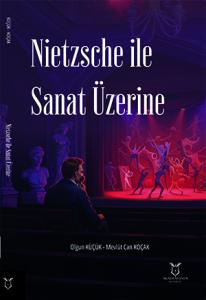
Nietzsche ile Sanat Üzerine
Özet
-
Referanslar
Adorno, T. W. (2016). Negatif Diyalektik (Ş. Öztürk, Çev.). İstanbul: Metis Yayınları.
Alburquerque, C. (2015). Nietzsche en Lacan, Lacan en Nietzsche. Anais do Seminário de Pesquisa do Programa de Pós-Graduação em Teoria Psicanalítica, 115.
Anderson, L. (1980). Freud, Nietzsche. Salmagundi, (47/48), 3–29.
Anderson, R. L. (2022). Nietzsche’nin Felsefesi (S. Dilmaç, Çev.). İstanbul: Beyoğlu Kitabevi.
Anton, J. P. (1993). Nietzsche’nin Aristoteles’in trajik duygular teorisine yönelik eleştirisi. In Trajedi ve Felsefe (ss. 19–38). Londra: Palgrave Macmillan UK.
Arak, H. (2009). Thomas Mann’ın Venedik’te Ölüm başlıklı eserinde sanatçı imajı. Bilimnâme, 17(2), 281–292.
Aras, K. (2023). Yaşamı Olumlama Olarak Güç İstenci. EKEV Akademi Dergisi, (Özel Sayı), 188–204.
Arslan, A. (2009). Felsefeye Giriş. Ankara: Adres Yayınları.
Baker, G. (2003). Nietzsche, Artaud, and tragic politics. Comparative Literature, 55(1), 1–23.
Battaglia, R. A. (1986). Yeats, Nietzsche, and the aristocratic ideal. College Literature, 13(1), 88–94.
Baugh, H. (1926). Nietzsche and his music. The Musical Quarterly, 12(2), 238–247.
Beiser, F. (2019). Hegel (S. Bayazit, Çev.). İstanbul: Alfa Basım Yayınları.
Benson, B. E. (2007). Nietzsche’s musical askesis for resisting decadence. Journal of Nietzsche Studies, (34), 28–46.
Bentley, E. R. (1942). D. H. Lawrence, John Thomas ve Dionysos. New Mexico Quarterly, 12(2), 3.
Bett, R. (2019). Nietzsche and Plato. In Brill's Companion to German Platonism (ss. 249–270). Brill.
Bishop, P. (2006, January). Aesthetic life and tragic insight in Nietzsche’s use of Goethe. In Colloquia Germanica (39[1], ss. 57–68). Narr Francke Attempto Verlag GmbH Co. KG.
Blank, G. K. (1985). Yeats and Nietzsche: An exploration of major Nietzschean echoes in the writings of William Butler Yeats. [Yayınevi bilgisi eksik].
Blankenagel, J. C. (1948). A Nietzsche episode in Thomas Mann's Doktor Faustus. Modern Language Notes, 63(6), 387–390.
Blondel, E. (1999). Nietzsche and Freud, or: How to be within philosophy while criticizing it from without. In J. Golomb, W. Santaniello, & R. Lehrer (Eds.), Nietzsche and depth psychology. Albany, NY: State University of New York Press.
Bodur, R. (2023). Hermann Hesse’nin Demian adlı eserine düalist yaklaşım. Korpusgermanistik, 2(2), 14–23.
Borbély, Ş. (2006). Hermann Hesse’s spiritual formula. Philologica Jassyensia, 2(1[02]), 13–22.
Bouchard, S. (2007). Sartre le maître du soupçon: Critique de l’étude sur Nietzsche et Sartre: Le nihilisme est-il un humanisme? Laval Théologique et Philosophique, 63(3), 597–604.
Bower, D., Rupp, G., & Dunn, S. M. (2024). Nietzsche, Friedrich. In Encyclopedia of Religious Psychology and Behavior (ss. 1–4). Cham: Springer Nature Switzerland.
Bradley, E. (2022). An exploration of secular and Christian political thought.
Burnham, D., & Jesinghausen, M. (2010). Nietzsche’s The Birth of Tragedy. [Kitap mı, makale mi? Eksik bilgi var — birlikte gözden geçirebiliriz.]
Cartwright, D. E. (1984). Kant, Schopenhauer, and Nietzsche on the morality of pity. Journal of the History of Ideas, 45(1), 83–98.
Carus, P. (1911). Max Stirner, the predecessor of Nietzsche. The Monist, 21(3), 376–397. Oxford University Press.
Chapman, A. H., & Chapman-Santana, M. (1995). The influence of Nietzsche on Freud's ideas. The British Journal of Psychiatry, 166(2), 251–253.
Chukwudi, U. C. (2024). Transcending humanity: Nietzsche’s notion of the overman and transhumanism ethos. [Yayınevi bilgisi eksik – tamamlarsan formatlayabilirim.]
Clowes, E. W. (1988). The revolution of moral consciousness: Nietzsche in Russian literature, 1890–1914. DeKalb, IL: Northern Illinois University Press.
Coker, J. C. (1994). Nietzsche's philosophy of art. Retrieved from https://www.jstor.org/stable/3333372
Cook, S. (1983). Nietzsche and Hesse: An influence study [Yüksek lisans tezi, Durham University]. Durham E-Theses Online. http://etheses.dur.ac.uk/7861/
Corngold, S. (1980). Mann as a reader of Nietzsche. Boundary 2, (9/10), 47–74.
Cömert, B. (2013). Estetik. Ankara: De Ki Basım Yayınları.
Çelikkan, Ş. (2017). Sigmund Freud’da Yaratmanın Psikolojisi: Psikanalitik. Sosyal Bilimler Dergisi, 4(11), 220–227.
Del Caro, A. (2012). The birth of tragedy. In K. Ansell-Pearson (Ed.), A companion to Friedrich Nietzsche (ss. 54–79). Oxford: Blackwell.
Deleuze, G. (2000). Kant Üzerine Dört Ders (U. Baker, Çev.). Ankara: Öteki Yayınları.
Deleuze, G. (2016). Nietzsche ve Felsefe (F. Taylan, Çev.). İstanbul: Norgunk Yayıncılık.
Demir, A. B. (2022). Schopenhauer ve Nietzsche’de sanat ve yaşam. FLSF Felsefe ve Sosyal Bilimler Dergisi, (34), 123–141.
Di Bianco, L. E. (1972). The influence of Nietzsche in D. H. Lawrence's Women in Love. [Yayınevi veya yayın türü eksik.]
Dimalanta, C. (2020). Not the super man, but the saved man: Fyodor Dostoevsky’s Crime and Punishment. Micronesian Educator, (28), 75.
Diş, S. B. (2022). Dionysosçu Nietzsche Apolloncu Sokrates’e karşı. Ankara: Nobel Yayınları.
Doğan, M. H. (1975). 100 Soruda Estetik. İstanbul: Gerçek Yayınevi.
Dolson, G. N. (1901). The influence of Schopenhauer upon Friedrich Nietzsche. The Philosophical Review, 10(3), 241–250.
Dostoyevski, F. (1999). Suç ve Ceza. İstanbul: Parıltı Yayınları.
Duran, N. (2020). Hayatın Filozofu Nietzsche: Din, Toplum ve İnsan. Ankara: SR Yayınevi.
Duvall, W. E. (1989). The Nietzsche temptation in the thought of Albert Camus. History of European Ideas, 11, 955–962.
Er, S. E. (2012). Gilles Deleuze’un fark felsefesi (Bergson, Nietzsche ve Spinoza okuması). Konya: Çizgi Kitabevi.
Erbaş, I. (2018). Nietzschean concept of metamorphosis in A Portrait of the Artist as a Young Man. Proceedings Book, 83.
Ercole, V. (2021). Nietzsche and music. Nietzsche-Studien, 50(1), 329–339.
Eroler, S., Günay, M., Temiz, S., & Varolun, O. (2020). Türk düşüncesi'nde Nietzsche alımlaması: Eğilimler ve figürler. Beytulhikme: An International Journal of Philosophy, 10(1).
Eyuboğlu, İ. Z. (2002). Nietzsche Eylem Ödevi – Yaşamı, Düşüncesi ve Yapıtlarında Seçmeler. İstanbul: Broy Yayınevi.
Ghedini, F. (2024). Nietzsche’s Plato, between symbol and caricature. Estudios Nietzsche: Revista de la Sociedad Española de Estudios sobre Friedrich Nietzsche, (24), 57–74.
Gibson, J. E. (1991). Celebration and transgression: Nietzsche on ritual. Journal of Ritual Studies, 1, 1–13.
Goedert, G. (1978). Nietzsche und Schopenhauer. Nietzsche-Studien, 7(1), 1–26.
Gonçalves, J. A. H. R. (2019). Entre a modernidade e algo por vir: Hermann Hesse leitor de Friedrich Nietzsche. A Palo Seco – Escritos de Filosofia e Literatura, 61–75.
Goodman, R. B. (1993). Nietzsche and Emerson: An elective affinity. [Yayınevi bilgisi eksik – kitap mı, makale mi olduğunu belirtirsen tamamlayabilirim.]
Greer, S. (2002). Freud’s “bad conscience”: The case of Nietzsche’s Genealogy. Journal of the History of the Behavioral Sciences, 38(3), 303–315.
Gromard, M.-G. N.-Q. (2017). Sartre pro Nietzsche. Études Sartriennes, 21, 35–60.
Güncan, Ö., & Çelik, D. (2024). Örgün ve yaygın eğitimde sanatın rolü: Lübnan modeliyle çok kültürlü toplumlarda kültürel mirası koruma. Yegâh Müzikoloji Dergisi, 7(4), 874–900.
Güneş, F. Ş. (2023). Hegel’de Bilgi ve Sanat İlişkisi. FLSF Felsefe ve Sosyal Bilimler Dergisi, (36), 239–256.
Hemelsoet, D., Hemelsoet, K., & Devreese, D. (2008). The neurological illness of Friedrich Nietzsche. Acta Neurologica Belgica, 108(1), 9.
Henrichs, A. (2006). Nietzsche on Greek tragedy and the tragic. In J. Gregory (Ed.), A companion to Greek tragedy (ss. 444-458). USA: Blackwell Publishing.
Higgins, K. (1986). Nietzsche on music. Journal of the History of Ideas, 47(4), 663–672.
Hill, C. (1948). Hermann Hesse and Germany. The German Quarterly, 21(1), 9–15.
Holub, R. C. (1995). Nietzsche and the Jewish question. New German Critique, (66), 94–121.
Holub, R. C. (2005). Nietzsche: Socialist, anarchist, feminist. In L. A. Maeve & K. Mueller (Eds.), German culture in nineteenth-century America: Reception, adaptation, transformation (ss. 129–149). Rochester, NY: Camden House.
Huisman, D. (1992). Estetik (C. Muhtaroğlu, Çev.). İstanbul: İletişim Yayınları.
Humma, J. B. (1974). D. H. Lawrence as Friedrich Nietzsche. Philological Quarterly, 53(1), 110.
Humphreys, A. R., & Adataş, P. (2018). Bugünkü İngiliz şiiri. Ankara Üniversitesi Dil ve Tarih-Coğrafya Fakültesi Dergisi, 1(5), 59–72.
İlhan, A. (2021). Spinoza, Kant, Schopenhauer ve Nietzsche Felsefesinde Duyguların Anatomisi Ve Şiirsel İzdüşümleri. İstanbul: Mitani Basın ve Yayıncılık.
İrigaray, L. (2011). Nietzsche’nin Deniz Aşığı. İstanbul: Kabalcı Yayınları.
Jackson, R. L. (1982). Nietzsche and Dostoevsky: Counterpoint. The Comparatist, (6), 24–34.
Jaspers, K. (2013). Nietzsche: Nasıl Felsefe Yapıyoruz? (M. Batmankaya, Çev.). İstanbul: Alfa Yayınları.
Jules-Rosette, B. (2007). Jean-Paul Sartre and the philosophy of négritude: Race, self, and society. Theory and Society, 36, 265–285.
Karakaş, T. (2018). Jenealojinin jenealojisi: İnsanca, Pek İnsanca’dan İyinin ve Kötünün Ötesine’ye Nietzsche felsefesinde jenealojik analize giden yol. FLSF Felsefe ve Sosyal Bilimler Dergisi, 13(26), 315–327.
Kardelis, N. (2022). The links between colour, composition, and representational content in Čiurlionis’ painting: A philosophical view. In Ž. Svigaris & L. Ivanova (Eds.), Sonatiniai M. K. Čiurlionio garsovaizdžiai. Vilnius: Lithuanian Culture Research Institute.
Kaufmann, F. (1944). Thomas Mann und Nietzsche. Monatshefte für Deutschen Unterricht, 36(7), 345–350.
Kaufmann, W. (2009). İnsanı Anlamak II: Nietzsche, Heidegger, Buber (A. Yardımlı, Çev.). İstanbul: İdea Yayınları.
Kılınç, L., & Yılmaz, Z. (2024). Nietzsche düşüncesinde müzik: Varlığın en içteki uçurumunun sesi. Beytulhikme: An International Journal of Philosophy, 14(4).
Kranak, J. (2014). Nietzsche's revaluation of all values (Doctoral dissertation, Marquette University).
Kuçuradi, İ. (2009). Sanata Felsefeyle Bakmak. Ankara: Türkiye Felsefe Kurumu.
Kula, O. B. (2010). Hegel Estetiği Ve Edebiyat Kuramı. İstanbul: İstanbul Bilgi Üniversitesi Yayınları.
Kula, O. B. (2017). Edebiyat Neyi, Nasıl Sanatsallaştırır? Thomas Mann, Anna Seghers ve Zülfü Livaneli açısından bir çözümleme. Journal of Awareness (JoA), 2(Special Issue), 1–10.
Küçük, O., & Can Koçak, M. (2024). Sanat ve Estetik Üzerine Düşünceler I. Akademisyen Kitabevi. https://doi.org/10.37609/akya.1003
Küçükalp, D. (2017). Nietzsche’nin Ahlak Ve Politika Felsefesi. İstanbul: Bora Yayınları.
Labry, R. (1951). Alexandre Blok et Nietzsche. Revue des Études Slaves, 27, 201–208.
Langone, L. (2022). Nietzsche and Emerson on history. The Agonist, 16(2), 95–103.
Lehrer, R. (1999). Freud and Nietzsche, 1892–1895. In J. Golomb, W. Santaniello, & R. Lehrer (Eds.), Nietzsche and depth psychology (ss. 181–203). Albany, NY: State University of New York Press.
Ljubičić, I. (2023). Albert Camus i Friedrich Nietzsche: Analiza egistencijalističkog pristupa autoru (Yayınlanmamış doktora tezi, Josip Juraj Strossmayer University of Osijek, Faculty of Humanities and Social Sciences, Department of Philosophy).
Love, F. R. (1979). Nietzsche, music and madness. Music & Letters, 60(2), 186–203.
Ludovici, M. (2011). Nietzsche: Hayatı ve Eserleri (D. Çimiçin, Çev.). İstanbul: Parşömen Yayıncılık.
Lukács, G. (1975). Çağdaş Gerçekliğin Anlamı (C. Çapan, Çev.). İstanbul: Payel Yayınları.
Lukács, G. (1988). Estetik III (A. Cemal, Çev.). İstanbul: Payel Yayınları.
Lukács, G. (2014). Nietzsche: Emperyalist irrasyonalizmin kurucusu (V. Yıldırım, Çev.). Ankara: Epos Yayınları.
Lyons, S. (2021). Unmasking the Übermensch: The evolution of Nietzsche’s Overman from David Bowie to Westworld. Otherness: Essays and Studies, 8(1), 128–152.
Makari, G. J. (1991). German philosophy, Freud, and the riddle of the woman. Journal of the American Psychoanalytic Association, 39(1), 183–213.
Mann, T. (2000). Schopenhauer, Nietzsche, Freud. Madrid: Alianza Editorial.
Mann, T. (2006). Yusuf ve Kardeşleri (Z. C. Arda, Çev.). Ankara: Hece Yayınları.
Mann, T. (2014). Doktor Faustus (Z. Kurttekin, Çev.). İstanbul: Can Yayınları.
Marx, F. (1988). Thomas Mann und Nietzsche: Eine Auseinandersetzung in Königliche Hoheit. Deutsche Vierteljahrsschrift für Literaturwissenschaft und Geistesgeschichte, 62, 326–341.
Massé, O. (2015). L’influence décisive de Nietzsche sur le jeune Camus. Phares, XV(8), 147–165.
Mazlish, B. (1968). Freud and Nietzsche. Psychoanalytic Review, 55(3), 360.
Megill, A. (1998). Nietzsche, Heidegger, Foucault, Derrida (T. Birkan, Çev.). Ankara: Bilim ve Sanat Yayınları.
Midgley, N. (1995). Yeats, Nietzsche and the conquest of the sea. The Harp, (12), 30–39.
Milton, C. (1975). Friedrich Nietzsche and the early works of D. H. Lawrence (Doctoral dissertation). University of Aberdeen, United Kingdom.
Montinari, M. (2001). Friedrich Nietzsche. Paris: Presses Universitaires de France.
Nehamas, A. (1985). Edebiyat Olarak Hayat (C. Soydemir, Çev.). İstanbul: Ayrıntı Yayınları.
Nietzsche, F. (2005). Tragedyanın Doğuşu (M. Tüzel, Çev.). İstanbul: İthaki Yayınları.
Nietzsche, F. (2007a). Mektuplar I (S. Umran, Çev.). İstanbul: Birey Yayınları.
Nietzsche, F. (2007b). Tan Kızıllığı: Ahlaksal Önyargılar Üzerine Düşünceler (H. Salihoğlu & Ü. Özdağ, Çev.). Ankara: İmge Kitabevi.
Nietzsche, F. (2010a). Güç istenci (N. Epçeli, Çev.). İstanbul: Say Yayınları.
Nietzsche, F. (2010b). İnsanca, Pek İnsanca – 1 (M. Tüzel, Çev.). İstanbul: Türkiye İş Bankası Yayınları.
Nietzsche, F. (2010c). Putların Alacakaranlığı (M. Tüzel, Çev.). İstanbul: Kültür Yayınları.
Nietzsche, F. (2010d). Richard Wagner Bayreuth’ta (M. O. Toklu, Çev.). İstanbul: Say Yayınları.
Nietzsche, F. (2011a). Müziğin Ruhundan: Tragedyanın Doğuşu (İ. Z. Eyuboğlu, Çev.). İstanbul: Say Yayınları.
Nietzsche, F. (2011b). Yunan Tragedyası Üzerine İki Konferans (M. Kahraman, Çev.). İstanbul: Say Yayınları.
Nietzsche, F. (2011c). Ecce Homo: Kişi Nasıl Kendisi Olur (C. Alkor, Çev.). İstanbul: Türkiye İş Bankası Yayınları.
Nietzsche, F. (2014). Tan Kızıllığı: Ahlaksal Önyargılar Üzerine Düşünceler (H. Salihoğlu & Ü. Özdağ, Çev.). Ankara: İmge Kitabevi.
Nietzsche, F. (2015). İyinin Ve Kötünün Ötesinde (A. İman, Çev.). İstanbul: Say Yayınları.
Nietzsche, F. (2016). Böyle Söyledi Zerdüşt (M. Tüzel, Çev.). Ankara: Türkiye İş Bankası Yayınları.
Oates, J. C. (1969). Yeats: Violence, tragedy, mutability. The Bucknell Review, 17(3), 1–10.
Onay Çöker, D. (2024). Nietzsche Felsefesi Bağlamında Hakikate İlişkin Bir Düşünüm. İnterdisipliner Medya ve İletişim Çalışmaları, 1(2).
Page, J. (2024). Nietzsche contra Schopenhauer on art and truth. The Monist, 107(4), 378–392.
Parkes, G. (1990). Nietzsche in Russia. Retrieved from https://www.jstor.org/stable/1399360
Parmeggiani, M. (2023). The roles of agency and contemplation in aesthetic and ethical dimensions of ancient Greek tragedy, according to late Nietzsche. Synthesis Philosophica, 38(1), 183–200.
Pellauer, D., & Parkes, G. (2004). Nietzsche and music. Retrieved from https://philpapers.org/rec/PELNAM (Erişim tarihi: 28.04.2025)
Pinkard, T. (2012). Hegel (M. B. Albayrak, Çev.). Ankara: Türkiye İş Bankası Kültür Yayınları.
Platon. (2011). Devlet (C. Saraoğlu & V. Atayman, Çev.). İstanbul: Siyah Beyaz Yayınları.
Poisot-Cervantes, H. (2018). Nietzsche's idea of the overman and the current state of collective consciousness (Master’s thesis, Queen’s University, Canada).
Porter, J. I. (2005). Nietzsche and tragedy. In R. S. White (Ed.), A companion to tragedy (ss. 68–87). Oxfo Reichert, H. W. (1975). The impact of Nietzsche on Hermann Hesse. Retrieved from https://www.jstor.org/stable/10.5149/9781469658193_reichert.11 (Erişim tarihi: 11.05.2025)
Rivas, R. F. (2024). On the Possibility and Impossibility of a Theoretical Dialogue between Nietzsche and Lacan. Trans/Form/Ação, 47(3), e02400216
Robinson, D. (2000). Nietzsche ve postmodernizm (K. H. Ökten, Çev.). İstanbul: Everest Yayıncılık.
Rosenshield, G. (2021). Merezhkovsky and Napoleon. The Slavic and East European Journal, 65(3), 436–458.
Rosenthal, B. G. (1974). Rusya’da Nietzsche: Merezhkovsky vakası. Slavic Review, 33(3), 429–452.
Saritaş, İ. (2018). Richard Wagner’in sanatında inşa ettiği politik ve kültürel düşünce dünyası. Amme İdaresi Dergisi, 51(4), 89–115.
Sartre, J. P. (1943). No exit. New York, NY: Random House.
Sartre, J. P. (2008). Edebiyat nedir? (B. Onaran, Çev.). İstanbul: Can Sanat Yayınları.
Sartre, J. P. (2009). Varlık ve Hiçlik: Fenomenolojik Ontoloji Denemesi (T. Ilgaz & G. Ç. Eksen, Çev.). Ankara: İthaki Yayınları: Blackwell Publishing.
Schatzki, T. R. (1991). Nietzsche'nin Wesensethik’i. Nietzsche-Studien, 20, 68–87.
Ségeral, N. (2016). Camus, Albert. In The Encyclopedia of Postcolonial Studies (ss. 1–3). [Yayınevi bilgisi eksik – birlikte tamamlayabiliriz.]
Sineokaia, I. V. (2003). The problem of the Overman in Solov'ev and Nietzsche. Russian Studies in Philosophy, 41(3), 63–81.
Skees, M. (2004). Nietzsche and the fate of art. Journal of the History of Philosophy, 42(2), 227–229.
Sloane, D. A. (1986). Aleksandr Blok’s Ital’janskie stixi: Confrontation and disillusionment. [Yayın bilgileri eksik – makale mi, tez mi belirtirsen tamamlayabilirim.]
Sloterdijk, P. (2022). Nietzsche’nin Beşinci “İncil”i (M. Tüzel, Çev.). İstanbul: Ayrıntı Yayınları.
Soysal, S. (2008). Güç İstenci ve Yorum. Tabula Rasa: Felsefe ve Teoloji, (23).
Spitzer, M. (2008). Nietzsche and music [Kitap incelemesi: Georges Liébert, Nietzsche and Music]. [Yayın bilgisi eksik – dergi adı eklenirse tamamlayabilirim.]
Spoerl, J. S. (2015). Nietzsche, Camus, and the ghost of Christianity. Información Filosófica, 12(23), 5–12.
Stewart, J. F. (1989). Lawrence and Nietzsche: A study in influence. [Yayınevi bilgisi eksik – eklersen tamamlayabilirim.]
Strathern, P. (2008). 90 Dakika Nietzsche. İstanbul: Ayraç Sanal Yayın.
Strauss, L. (2018). Nietzsche: İyinin Ve Kötünün Ötesinde – 1971–1972’de verilen ders (Ö. Orhan, Çev.). İstanbul: Pinhan Yayımcılık.
Strong, T. B. (2014). Nietzsche, Friedrich Wilhelm (1844–1900). In M. Gibbons (Ed.), The encyclopedia of political thought (ss. 2562–2575). Hoboken, NJ: Wiley-Blackwell.
Surette, L. (1991). Yeats, pound, and Nietzsche. Paideuma, 20(3), 17–30.
Sweet, D. (1999). The birth of The Birth of Tragedy. Journal of the History of Ideas, 60(2), 345–359.
Thompson, N. (2008). Existentialist ethics: From Nietzsche to Sartre and beyond. Ethics and Social Welfare, 2(1), 10–23.
Thomson, G. (t.y.). Tragedyanın kökeni (M. H. Doğan, Çev.). İstanbul: Yordam Kitapevi.
Timuçin, A. (2013). Estetik. İstanbul: Bulut Yayınları.
Tolstoy, L. N. (t.y.). Sanat Nedir? (M. Beyhan, Çev.). İstanbul: Türkiye İş Bankası Kültür Yayınları.
Vandenabeele, B. (2003). Schopenhauer, Nietzsche, and the aesthetically sublime. Journal of Aesthetic Education, 37(1), 90–106.
Vernant, J. P., & Naquet, P. V. (2012). Eski Yunan’da Mit Ve Tragedya (Çev. bilinmiyor). İstanbul: Kabalcı Yayınları.
Walhout, D. (1979). Hopkins and Nietzsche: A reflection. The Hopkins Quarterly, 6(2), 51–58.
Williams, L. L. (1996). Will to power in Nietzsche's published works and the Nachlass. Journal of the History of Ideas, 57(3), 447–463.
Wolf, K. (1999). Nietzsche as educator. In M. A. Oliker, D. Blacker, C. Cunningham, & T. I. Stark (Eds.), [Kitap adı eksik] (s. 205). [Yayınevi bilgisi eksik – birlikte tamamlayabiliriz.]
Wotling, P. (2009). Nietzsche est un philosophe poétisant. Idées Reçues, 21–25.
Yüksel, U. S., & Ateş, A. E. (2019). Nietzsche ve realizm: Nietzsche’de güç istenci kavramı. Philosophy, 21, 215–230.
Zalusky, S. (1988). Lawrence, Nietzsche, and the will to power (Doctoral dissertation). [Üniversite adı eksik.]
Žižek, S. (Ed.). (2018). Lacan: Los interlocutores mudos (Vol. 21). Madrid: Ediciones Akal.
Zudeick, P. (2005). Şipşak Nietzsche. İstanbul: Doğan Yayıncılık.
Zupančič, A. (2005). Nietzsche’nin İki Felsefesi (S. Bozkurt, Çev.). İstanbul: Encore Yayınları.
Zweig, S. (1990). Dünya Fikir Mimarları: Kendileri ile Savaşanlar (G. Aytaç, Çev.). Ankara: Türkiye İş Bankası Kültür Yayınları.
Yayınlanan
Lisans
LisansBu İnternet Sitesi içeriğinde yer alan tüm eserler (yazı, resim, görüntü, fotoğraf, video, müzik vb.) Akademisyen Kitabevine ait olup, 5846 sayılı Fikir ve Sanat Eserleri Kanunu ve 5237 sayılı Türk Ceca Kanunu kapsamında korunmaktadır. Bu hakları ihlal eden kişiler, 5846 sayılı Fikir ve Sanat eserleri Kanunu ve 5237 sayılı Türk Ceza Kanununda yer alan hukuki ve cezai yaptırımlara tabi olurlar. Yayınevi ilgili yasal yollara başvurma hakkına sahiptir.
