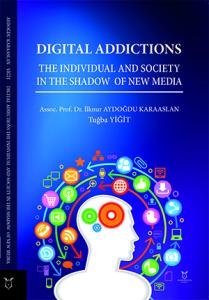
Digital Addictions The Individual and Society in the Shadow of New Media
Özet
-
Referanslar
Abi-Jaoude, E., Naylor, K. T., Pignatiello, A. (2020). Smartphones, social media use and youth. Canadian Medical Association Journal, 192(6), 136-141.
Addiction Help. (2023). Video game addiction statistics. https://www.addictionhelp.com/video-game-addiction/statistics/
Adıgüzel, M. (2016). Globalization of technology and an evaluation in terms of Turkey. http://www.yeniturkiye.com/Conference2016/Present/1_3_3_2_Muhittin_Adiguzel.pdf
Agarwal, D. S. (2013). A study of factors affecting online shopping behavior of consumers in Mumbai region. Tactful Management Research Journal, 4(10), 99-104. Retrieved from https://oldtm.lbp.world/SeminarPdf/346.pdf
Agçadağ, İ. (2024). Virtual shopping. International Journal of Humanities and Education (IJHE), 10(24), 164–176. https://dergipark.org.tr/tr/download/article-file/3710979
Aka, V. (2023). Gambling addiction and social work: A field study from an ecological perspective [Doctoral dissertation, Istanbul University-Cerrahpaşa, Graduate School of Education].
Akbulut, Y. (2013). Developmental consequences of computer and internet use in children and adolescents. Trakya University Journal of Education Faculty, 3(2), 53–68.
Akçayır, M., Nicoll, F., & Baxter, D. G. (2023). Emerging gambling problems and suggested interventions: a systematic review of empirical research. Journal of Gambling Studies, 39(2), 857-882.
Akhtar, S. (1989). Narcissistic personality disorder. descriptive features and differential diagnıosis. Psychiatr Clin North America, 12(3), 505-529.
Akmeşe, Z., & Deniz, K. (2017). Stalking: Tracing the self. Ege University Faculty of Communication Journal of New Ideas, (8), 23–32.
Aksoy, M. E. (2018). A Qualitative Study on the Reasons for Social Media Addiction. European Journal of Educational Research, 7(4), 861-865. https://doi.org/10.12973/eu-jer.7.4.861
Aktaş, H., & Yilmaz, N. (2016). Smartphone addiction in terms of the elements of loneliness and shyness of university youth. International Journal of Social Sciences and Education Research, 3, 85-100.
Akyol, M. E. (2024). A Step-by-Step Destructive Addiction: Online Gambling. Retrieved June 1, 2025, from https://ytt.org.tr/adim-adim-yok-eden-bir-bagimlilik-sanal-kumar
Alemdar, M., İşbilen, D., Demirel, K., & Telli, N. G. T. (2017). Can selfie behaviour be an indicator of narcissism? A qualitative research to define the relationship between selfies and narcissism. Global Media Journal TR Edition, 8, 15.
Alyanak, P. D. B. (2016). Internet addiction. Journal of Clinical Medicine Pediatrics, 8(5), 20–24.
American Psychiatric Association. (2022). Diagnostic and statistical manual of mental disorders (5th ed., text rev.). American Psychiatric Publishing. https://www.mredscircleoftrust.com/storage/app/media/DSM%205%20TR.pdf
American Psychiatric Association. (2013). Diagnostic and statistical manual of mental disorders (5th ed.). Arlington, VA: American Psychiatric Publishing.
American Psychiatric Association. (2013). Internet Gaming Disorder. In Diagnostic and Statistical Manual of Mental Disorders (5th ed.). https://www.psychiatry.org/File%20Library/Psychiatrists/Practice/DSM/APA_DSM-5-Internet-Gaming-Disorder.pdf
Amofah-Serwaa, N., Dadzie, P. S. (2015). Social media use and its implications on child. International Journal of Social Media and Interactive Learning Environments, 3(1), 49-62.
Andreassen, C. S. (2015). Online social network site addiction: A comprehensive review. Current addiction reports, 2(2), 175-184.
Andreassen, C. S., Torsheim, T., & Pallesen, S. (2014). Predictors of use of social network sites at work-a specific type of cyberloafing. Journal of Computer-Mediated Communication, 19(4), 906-921.
Andreassen, C. S., Torsheim, T., Brunborg, G. S., & Pallesen, S. (2012). Development of a Facebook Addiction Scale. Psychological Reports, 110(2), 501–517.
Arıcak, O. T., Dinç, M., Yay, M., & Griffiths, M. D. (2018). Adapting the short form of the internet gaming disorder scale into Turkish: Validity and reliability. Addicta: The Turkish Journal on Addictions, 5(4), 615-636
Arıduru Ayazoğlu, B., Aksu, M., Ünübol, H., & Hızlı Sayar, G. (2019). Shopping addiction. Etkileşim, 4, 44–64. https://dergipark.org.tr/tr/download/article-file/825238
Arısoy, Ö. (2009). Internet addiction and its treatment. Current Approaches in Psychiatry, 1(1), 55–67.
Armağan, E., & Temel, E. (2015). An empirical study on online compulsive buying behaviour in Turkey. Dokuz Eylül University Journal of the Institute of Social Sciences, 20(4), 621–653. https://doi.org/10.16953/deusosbil.346859
Arslan, A. (2020). An investigation of university students’ digital addiction levels in terms of various variables. International e-Journal of Educational Studies (IEJES), 4(7), 27–41. https://doi.org/10.31458/iejes.600483
Aslan, N. (2019). A study on internet addiction among adolescents: Prevalence, causes, and consequences. Journal of International Social Research, 12(65).
Augner C, Hacker CW. Associations Between Problematic Mobile Phone Use and Psychological Parameters in Young Adults. International Journal of Public Health. 2012;57: 437-41.
Australian Institute of Family Studies. (2022). Literature review on the harms associated with loot boxes, simulated gambling and in-game purchases (s. 18).
Avcı, K., & Avşar, Z. (2016). Digital health games. Dijital Medya, 1(2), 474–485. https://doi.org/10.2149/9446
Aydoğan, F., & Akyüz, A. (Eds.). (2010). Internet in the Second Media Age. Istanbul: Alfa Publications.
Babayiğit, B. (2018). Acts of gambling and providing places and means for gambling. Journal of Turkish Justice Academy, (34), 283–315.
Bakır, E., & Özmen, N. (2024). An analysis of online shopping addiction levels among university students and solution proposals within the scope of social work practices. Pamukkale University Journal of Social Sciences Institute, (65), 91–108. https://doi.org/10.30794/pausbed.1495309
Bal, F., & Okkay, İ. (2022). Internet-based problematic shopping behaviour: Online shopping addiction. Journal of Addiction, 23(1), 111–120. https://doi.org/10.51982/bagimli.973306
Balcı, Ş., Bekiroğlu, O., & Karaman, S. Y. (2019). Self-esteem as a determinant of social media addiction: A case study in Konya. Journal of Communication Theory and Research, (48), 35–64.
Balcı, Ş., Gölcü, A., & Arsal Gölcü, A. (2019). Is there a link between social media use, self-concealment, and life satisfaction? Afyon Kocatepe University Journal of Social Sciences, (21)(1), 173–190.
Barker, E (2016) This is the best way to overcome fear of missing out. Time Magazine. https://time.com/4358140/overcome-fomo/
Baş, Ö., Audry, A. S., İnceoğlu, İ., Kaya, Y. B., Cöbek, G., & Alkurt, S. V. (2023). An examination of social media usage and sharing types among young adults in Turkey. Intermedia International E-journal, 10(18), 136–159.
Baştürk Akca, E., & Sayımer, İ. (2017). The concept, types, and associated factors of cyberbullying: An evaluation based on current research. AJIT-E: Academic Journal of Information Technology, 8(30), 7–19. https://doi.org/10.5824/1309-1581.2017.5.001.x
Bauman, S., Cross, D., & Walker, J. L. (Eds.). (2013). Principles of cyberbullying research: Definitions, measures, and methodology. Routledge. https://doi.org/10.4324/9780203077882
Bayram Saptır, A. (2020). Social media addiction and self-censorship: An examination in terms of certain variables (Master’s thesis). Sakarya University Open Academic Archive System. Retrieved from https://hdl.handle.net/20.500.12619/74602
Bischof, A., Rumpf, H.-J., & Meyer, C. (2020). Prevalence of gambling problems in Germany: Results from a national survey. BMC Public Health, 20, 370.
Black, D. W. (2007). A review of compulsive buying disorder. World Psychiatry, 6(1), 14–18. https://www.ncbi.nlm.nih.gov/pmc/articles/PMC1805733/
Brown, I. (1997). A theoretical model of the behavioural addictions - Applied to offending. In J. E. Hodge, M. McMurran ve C. R. Hollins (Eds.), Addicted to crime?. Chichester, UK: John Wiley, 13-65.
Bittner, B., Nagy, A. S., & Ujhelyi, M. (2021). The effects of using mobile and smart devices at work.
Boyd, D. M., & Ellison, N. B. (2007). Social network sites: Definition, history, and scholarship. Journal of Computer-Mediated Communication, 13(1), 210-230.
Bozkur, B., & Gündoğdu, M. (2017). The relationship between shyness, self-concealment, and attitudes toward social media among adolescents. Mustafa Kemal University Journal of Graduate School of Social Sciences, 14(37), 147–159.
Böhmer, J. F. (2022). Social media use and its relationship with well-being: the associations between social media use, need fulfilment, negative side effects, and well-being (Bachelor's thesis, University of Twente).
Buchanan, J., Kelley, B., & Hatch, A. (2016). Digital workplace and culture: How digital technologies are changing the workforce and how enterprises can adapt and evolve. Deloitte Digital, 1-12. https://www.scribd.com/document/740942339/Us-Cons-Digital-Workplace-and-Culture?utm_source=chatgpt.com
Büyükgebiz Koca, E., & Tunca, M. Z. (2020). A study on the effects of Internet and social media addiction on students. Alanya Academic Review, 4(1), 77–103.
Başaran, F. (2006). The history of the Internet as a technological innovation: National innovation system, public policies, and standards. Culture and Communication, 9(18), 9–32.
Bektaş, M. (2018). Behavioral addiction: Definition, types, and classification. In Addiction as a Public Policy: Struggling Against Addiction. Ankara: Nobel Publishing.
Bilge, M. (2025). A comparison of Turkey and South Korea in preventing Internet addiction. Journal of Addiction, 26(2), 264–273.
Bingöl, B. (2018). A new way of life: Augmented reality (AR). Etkileşim, (1), 44–55.
Bozkurt, A. (2014). Network society and knowledge. Turkish Librarianship, 28(4), 510–525.
Bozkurt, A., Hamutoğlu, N. B., Liman Kaban, A., Taşçı, G., et al. (2021). The digital knowledge age: Digital society, digital transformation, digital education, and digital competencies. Journal of Open and Distance Education Practices and Research, 7(2), 35–63. https://doi.org/10.51948/auad.911584
Briggs, P., Nicholson, J., & Lukins, R. (2025). Human and digital ecosystems in the modern household. Frontiers in Psychology, 15, 1426804.
Calado, F., Alexandre, J., Rosenfeld, L., Pereira, R., & Griffiths, M. D. (2020). The efficacy of a gambling prevention program among high-school students. Journal of gambling studies, 36(2), 573-595.
Caratıquıt, K. D., & Caratıquıt, L. J. C. (2023). Influence of Social Media Addiction on Academic Achievement In Distance Learning: Intervening Role of Academi Procrastination. Turkish Online Journal of Distance Education, 24(1), 1-19. https://doi.org/10.17718/tojde.1060563
Castells, M., & Cardoso, G. (Eds.). (2006). The network society: From knowledge to policy (pp. 3-23). Washington, DC: Johns Hopkins Center for Transatlantic Relations.
Castells, M. (1996). The Rise of the Network Society
Ceres, P. (2018). Parental mediation strategies in social media use among adolescents. Journal of Digital Media.
Cheever, N. A., Rosen, L. D., Carrier, L. M., & Chavez, A. (2014). Out of sight is not out of mind: The impact of restricting wireless mobile device use on anxiety levels among low, moderate and high users. Computers in Human Behavior, 37, 290-297.
Chen, Y., Lu, J., Wang, L., & Gao, X. (2023). Effective interventions for gaming disorder: A systematic review of randomized control trials. Frontiers in Psychiatry, 14, Article 1172489. https://doi.org/10.3389/fpsyt.2023.1172489
Cheung, J. C. S., Chan, K. H. W., Lui, Y. W., Tsui, M. S., & Chan, C. (2018). Psychological well-being and adolescents’ internet addiction: A school-based cross-sectional study in Hong Kong. Child and Adolescent Social Work Journal, 35, 477-487.
Cheng, C., Li, A. Y., Zeng, G., & Luk, J. W. (2019). Gamification for Internet gaming disorder prevention: Evaluation of Wise IT-Use. Frontiers in Psychology, 10, Article 2468. https://doi.org/10.3389/fpsyg.2019.02468
Choliz, M. (2012). Mobile-Phone Addiction in Adolescence: The Test of Mobile Phone Dependence (TMD), Progress in Health Sciences, 2 (1), 33-44.
Chotpitayasunondh, V.,& Douglas, K.M. (2016). How “phubbing” becomes the norm: The antecedents and consequences of snubbing via smartphone. Computers in Human Behavior, 63, 9–18.
Coogan, K. & Kangas, S. (2001). Nuoret ja kommunikaatioakrobatia, 16-18 vuotiaiden nuorten k. annykk. a-ja internetkulttuurit. nuorisotutkimusverkosto ja elisa ommunications. Elisa Tutkimuskeskus. Raportti 158.
Cooper, M. L., & Frone, M. R. (2010). Substance Use and Abuse: Sociological and Psychological Approaches. Wiley-Blackwell.
Çakır, G. (2020). An Investigation of the Relationship Between Gambling Tendency and Depression Among Problem and Pathological Gamblers [Master’s thesis, Near East University, Institute of Social Sciences].
Çakmak, S., & Tamam, L. (2018). Gambling disorder: An overview. Journal of Addiction, 19(3), 78–97.
Çalışkan, M., & Mencik, Y. (2015). The new face of the changing world: Social media. Academic View: International Peer-Reviewed Social Sciences Journal, (50), 254–277.
Çam, E., & İşbulan, O. (2012). A new addiction for teacher candidates: Social networks. The Turkish Online Journal of Educational Technology, 11(3), 14–19.
Çaycı, B., Çaycı, A. E., & Eken, İ. (2019). A quantitative study on the relationship between narcissism and selfie sharing. Akdeniz University Journal of Communication Faculty, (31), 60–88.
Çelik İnce, S., & Çelik Bekleviç, A. (2024). An examination of online shopping addiction among university students: A cross-sectional study. Journal of Health and Life Sciences, 6(2), 70–76. https://doi.org/10.33308/2687248X.202462335
Çelik, K. (2023). Metaverse and Artificial Intelligence: Media, Gaming, Shopping, Entertainment, Technology, Communication. Nobel Scientific Publications.
Çelik, B. (2013). The struggle for identity through technology: Kurdish youth and mobile phones. In H. Ergül (Ed.), Voices from the Field: Ethnographic Method in Communication Research (pp. 257–277). Istanbul: Bilgi University Press.
Çiftçi, H. (2018). Social media addiction among university students. MANAS Journal of Social Studies, 7(4), 417–434.
Çömlekçi, M. F., & Başol, O. (2019). An analysis of the relationship between social media usage purposes and social media addiction among youth. Manisa Celal Bayar University Journal of Social Sciences, 17(4), 173–188. https://doi.org/10.18026/cbayarsos.525652
Damian, M., Oltean, A., & Damian, C. (2018). The Impact of Sedentary Behavior on Health and the Need for Physical Activity in Children and Adolescents. Romanian Journal for Multidimensional Education/Revista Românească pentru Educaţie Multidimensională, 10(1).
Davis, R. A. (2001). A cognitive-behavioral model of pathological Internet use. Computers in human behavior, 17(2), 187-195.
De Kerckhove, D., & De Almeida, C. M. (2013). What is a digital persona?. Technoetic Arts: A Journal of Speculative Research, 11(3), 277-287.
De-Sola Gutiérrez J, Rodríguez de Fonseca F and Rubio G (2016) Cell-Phone Addiction: A Review. Front. Psychiatry 7:175. doi: 10.3389/fpsyt.2016.00175
Deci, E.L. and Ryan, R.M., (2000). The “What” and “Why” of Goal Pursuits: Human Needs and the Self-Determination of Behavior. Psychological Inquiry, 4, 227–268.
Deniz, L., & Gürültü, E. (2018). Social media addictions of high school students. Kastamonu Education Journal, 26(2), 355–367.
Dinç, M. (2024). Gambling addiction surpasses drug addiction in Türkiye. https://www.turkiyetoday.com/turkiye/gambling-addiction-surpasses-drug-addiction-in-turkiye-94390/ Erişim 10.6.2025.
Dinç, M. (2020). New behavioral addictions in the context of Internet addiction. In Y. S. Zavalsız (Ed.), Social Work and All Aspects of Addiction. Ankara: Grafiker Publishing.
Dodig Hundric, D., Mandic, S. and Ricijas, N. (2021). Short-term effectiveness of the youth gambling prevention program “who really wins?”—Results from the first national implementation. International journal of environmental research and public health, 18(19), 10100.
Doğan, D. (2017). A new illness caused by smartphones: Telepressure. Gazete Vatan. Retrieved from https://www.gazetevatan.com/arsiv/akilli-telefonlarin-yarattigi-yeni-hastalik-telebaski-1125314
Doğan Keskin, A., & Aral, N. (2021). Gaming addiction: A current review. Journal of Addiction, 22(3), 327–339. https://doi.org/10.51982/bagimli.880679
Dong, G., & Potenza, M. N. (2014). A cognitive-behavioral model of internet gaming disorder: Theoretical underpinnings and clinical implications. Journal of Psychiatric Research, 58, 7–11. https://doi.org/10.1016/j.jpsychires.2014.07.005
Dossey, L. (2014). FOMO, digital dementia, and our dangerous experiment. Explore: The Journal of Science and Healing, 10(2), 69-73.
Dresp-Langley, B. (2020). Children’s health in the digital age. Frontiers in Human Neuroscience, 14, 559584. https://doi.org/10.3389/fnhum.2020.559584
Duman, Ö. D. (2021). A literature review on gambling and gaming components from the perspective of internet addiction. Communication and Diplomacy, (5), 123–139.
Duran, S., Demirci, Ö., & Akgenç, F. (2024). Investigation of Gambling Behavior, Self-Confidence and Psychological Resilience Levels of University Students. Journal of Gambling Studies, 40(4), 1937-1949.
Durkee, T., Kaess, M., Carli, V., Parzer, P., Wasserman, C., Floderus, B., ... & Wasserman, D. (2012). Prevalence of pathological internet use among adolescents in E urope: demographic and social factors. Addiction, 107(12), 2210-2222.
Dursun, A., & Eraslan Çapan, B. (2018). Digital game addiction and psychological needs in adolescents. Inonu University Journal of the Faculty of Education, 19(2), 128–140. https://doi.org/10.17679/inuefd.336272
Duvarcı, İ. (1998). Pathological gambling: A descriptive study on its diagnosis and accompanying characteristics. [Unpublished doctoral dissertation]. Ege University, Faculty of Medicine, İzmir.
Ekici, A., Joseph Sirgy, M., Lee, D. J., Yu, G. B., & Bosnjak, M. (2018). The effects of shopping well-being and shopping ill-being on consumer life satisfaction. Applied Research in Quality of Life, 13, 333-353.
Ektiricioğlu, C., Arslantaş, H., & Yüksel, R. (2020). The disorder of the era in adolescents: Technology addiction. Archives Medical Review Journal, 29(1), 51–64. https://doi.org/10.17827/aktd.498947
Eldeniz, L. (2010). The Internet in the Second Media Age. İstanbul: Alfa.
Ellison, N. B., Steinfield, C., & Lampe, C. (2007). The benefits of Facebook “friends:” Social capital and college students’ use of online social network sites. Journal of computer‐mediated communication, 12(4), 1143-1168.
Erciş, A., Deligöz, K., & Mutlu, M. (2021). An application on students’ FoMO and impulsive buying behaviors. Atatürk University Journal of Economics and Administrative Sciences, 35, 219–243.
Erden, N. (2019). A study on the effect of high school students’ self-confidence levels on Internet addiction (Master’s thesis, Marmara University, Istanbul, Turkey).
Erdoğdu, Y. (2019). Interpretative phenomenological analysis of gambling experiences of individuals with gambling problems. Addicta: The Turkish Journal on Addictions, 6, 871–906.
Ergin Çağatay, H. H. (2024). Digital addiction as a consequence of technology and the Internet. Bitlis Eren Journal of Social Research, 2(2), 146–158.
Ertemel, A. V., & Aydın, G. (2018). Technology addiction and solution proposals in the digital economy. (No journal or publisher information provided)
Eryılmaz, S., & Çukurluöz, Ö. (2018). Examination of high school students’ digital addictions: The case of Çankaya District, Ankara Province. Electronic Journal of Social Sciences, 17(67), 889–912.
Eşgi, N. (2013). A comparison of perceptions of digital native children and digital immigrant parents regarding Internet addiction. Hacettepe University Journal of Education, 28, 181–194.
Eysenck, H. J. (1997). Addiction, personality and motivation. Human Psychopharmacology: Clinical and Experimental, 12(S2), S79-S87.
Eyyüpoğlu, E., & Özbay, Y. (2018). An investigation of Internet addiction symptoms among university students in terms of psychological needs. Education Sciences, 13(4), 121–131.
Faraji, H., & Dağ, E. D. (2022). An evaluation of the relationship between gambling addiction and suicide. Current Research and Reviews in Psychology and Psychiatry, 2(2), 184–200.
Fouh, E., Breakiron, D. A., Hamouda, S., Farghally, M. F., & Shaffer, C. A. (2012). The role of visualization in computer science education. Computers in the Schools, 29(2–3), 95–117. https://doi.org/10.1080/07380569.2012.651422
Friedman, T. L. (2005). The World is Flat: A Brief History of the Twenty-First Century
Gainsbury, S. M. (2015). Online gambling addiction: the relationship between internet gambling and disordered gambling. Current addiction reports, 2(2), 185-193.
Ghelfi, M., Scattola, P., Giudici, G., & Velasco, V. (2023). Online gambling: A systematic review of risk and protective factors in the adult population. Journal of Gambling Studies. https://doi.org/10.1007/s10899-023-10258-3
Game Quitters. (2023). Video game addiction statistics 2023. https://gamequitters.com/video-game-addiction-statistics/
Georgiadou, E. (2002). McLuhan’s global village and the internet. In 1st International Conference on Typography & Visual Communication.
Gezgin, D. M. (2019). The socio-psychological effects of developing technology on university students in Turkey. Cataloging-In-Publication Data, 238.
Gezgin, D. M., Ümmet, D., & Hamutoğlu, N. B. (2020). Smartphone addiction among university students: The predictive role of multidimensional loneliness. Trakya Journal of Education, 10(2), 317–329. https://doi.org/10.24315/tred.553035
Giddens, A. (2005). Sociology (C. Güzel, Trans.). Ankara: Ayraç Publishing.
Giddens A. (1990). The consequences of modernity. Cambridge: Polity
Good, B., & Fang, L. (2015). Promoting smart and safe Internet use among children with neurodevelopmental disorders and their parents. Clinical Social Work Journal, 43(2), 179-188.
Goodman,A. (1990). Addiction:definition and implication. British Journal of Addiction, (85),1404-1408.
Göldağ, B. (2018). An analysis of high school students’ digital game addiction levels in terms of demographic characteristics. Van Yüzüncü Yıl University Journal of Education Faculty, 15(1), 1287–1315.
Göymen, R., & Ayas, T. (2019). An investigation of the relationship between smartphone addiction and gaming addiction. Online Journal of Technology Addiction and Cyberbullying, 6(2), 36–52.
Griffiths, M. (2007). Gambling addiction on the Internet. Internet addiction: A handbook and guide to evaluation and treatment, 91-111.
Griffiths, M.D. A (2005).“components” model of addiction within a biopsychosocial framework. J. Subst. Use, 10, 191–197.
Griffiths, M. D., Davies, M. N. O., & Chappell, D. (2004). Demographic factors and playing variables in online computer gaming. CyberPsychology & Behavior, 7(4), 479–487. https://doi.org/10.1089/cpb.2004.7.479
Griffiths, M. (1999). Internet addiction: Fact or fiction? The Psychologist, 12(5), 246–250. Alat, K. (Trans.). Internet addiction: Real or imaginary? Türk Psikoloji Bülteni. ISSN: 1300-7408.
Griffiths, M.D. (1996). Nicotine, tobacco and addiction. Nature,(384).18
Griffiths, M. D. (1996). Internet addiction: An issue for clinical psychology? Clinical Psychology Forum, 97, 32–36.
Grinevich, V. P., Zakirov, A. N., Berseneva, U. V., Gerasimova, E. V., Gainetdinov, R. R., & Budygin, E. A. (2022). Applying a Fast-Scan Cyclic Voltammetry to Explore Dopamine Dynamics in Animal Models of Neuropsychiatric Disorders. Cells, 11(9), 15-33.
Günüç, S., & Doğan Keskin, A. (2016). Online shopping addiction: Symptoms, causes, and effects. Addicta: The Turkish Journal on Addictions, 3(1), 339–364. https://doi.org/10.15805/addicta.2016.3.0104
Gür, S. H., Bakırcı, Ö., Karabaş, B. N., Bayoğlu, F., & Atli, A. (2018). The effects of social media addiction on academic procrastination behaviors of university students. Inonu University Journal of the Graduate School of Education, 5(10), 68-77.
Habermas, J. (1984d). The Theory of Communicative Action Vol. I: Reason and theRationalization of Society, Translator in English Thomas McCarthy, Boston: Beacon Press,
Hafer, J., Ran, B., & Duimering, P. R. (2023). Social identity dynamics in a networked society. Frontiers in Psychology, 14, 1264534.
Han, J. W. (2025). Effects of mobile gacha games on gambling behavior and psychological health. arXiv. https://arxiv.org/abs/2504.00057
Hassan, N. M., Kassim, E. S., Maon, S. N., Demong, N. A. R., & Kholed, S. N. S. (2017). Technology, Social network, Physiology and Psychology as Risks Factors to Mobile Phone Addiction. Pertanıka Journal Of Socıal Scıence And Humanıtıes, 25, 341-349.
High Council for Combating Addictions. (2024). National strategy document and action plan for combating behavioral addictions 2024–2028. https://hsgm.saglik.gov.tr/depo/Yayinlarimiz/Eylem_Planlari/DBM_EYLEM_PLANI_2024-2028.pdf
Information and Communication Technologies Authority (ICTA). (2023). Activity report on access restrictions to illegal betting and gambling websites.
Irles, D. L. and Perona, V. C. (2019). Prevención del juego de apuestas en adolescentes: ensayo piloto de la eficacia de un programa escolar. Revista de psicología clínica con niños y adolescentes, 6(3), 55-61.
Irmak, A. Y., & Erdoğan, S. (2016). Digital game addiction in adolescents and young adults: A current perspective. Turkish Journal of Psychiatry, 27(2), 128–137.
Işık, M., & Kaptangil, İ. (2018). The relationship between smartphone addiction, social media use, and five-factor personality traits: A study on university students. Journal of the Human and Social Science Researches, 7(2), 695–717. https://doi.org/10.15869/itobiad.361081
İncekara, H. İ., & Taş, B. (2022). An examination of sociodemographic variables associated with gambling addiction in adults. Journal of Addiction, 23(4), 464–472.
İpek, I. (2020). Understanding consumer behavior in technology-mediated spaces. Digital transformation in business and society: Theory and cases, 169-189.
İşman, A. (2003). Technology and technique: An educational perspective. The Turkish Online Journal of Educational Technology, 2(1), 28–33. Retrieved from https://www.tojet.net/
Jo, Y. S., Bhang, S. Y., Choi, J. S., Lee, H. K., Lee, S. Y., & Kweon, Y. S. (2019). Clinical characteristics of diagnosis for internet gaming disorder: comparison of DSM-5 IGD and ICD-11 GD diagnosis. Journal of clinical medicine, 8(7), 945.
Jun, W. (2017). An analysis work on correlation of internet addiction and school age groups. Cluster Computing, 20(1), 879-882.
Kalaman, S., & Önür, N. (2024). Digital everyday life: New socialities and digital alienation. The Journal of Academic Social Science, 4(35), 269–289.
Kalkan, A. (2021). Technology addiction and conscious media use. Ensar Publishing.
Kaplan, A. M., & Haenlein, M. (2010). Users of the world, unite! The challenges and opportunities of social media. Business Horizons, 53(1), 59–68. https://doi.org/10.1016/j.bushor.2009.09.003
Karaahmetoğlu, G. U., & Arabacı, Z. (2024). University students’ problematic mobile phone use. Journal of Higher Education and Science, 14(2), 177–185.
Karabulut, A. (2023). The effect of addiction education on university students’ levels of digital addiction. Journal of Medical Social Work (21), 1–25. https://doi.org/10.46218/tshd.1166817
Karaca, M. (2007). Internet youth as a sociological phenomenon: The case of Elazığ (Doctoral dissertation, Fırat University, Institute of Social Sciences).
Karahan, A. S. (2023). A review of interventions for behavioral addictions. AYNA Journal of Clinical Psychology, 10(3), 356–375.
Karaibrahimoğlu, A., Batmaz, K., Kaçmaz, E., Öztop, R., Kişioğlu, A. N., Uskun, E., & Önal, Ö. (2023). The relationship between online gambling addiction and loneliness: A university sample from Turkey. Süleyman Demirel University Journal of Faculty of Medicine, 30(3), 410–423.
Karakartal, D. (2023). An evaluation of the psychosocial problems caused by gambling addiction. International Anatolian Journal of Social Sciences, 7(4), 1007–1016.
Karapınar, D. Ç., & Fidan, A. B. (2019). Technology addiction emerging with technological development and digital detox. Final Proceedings, 112.
Karakaş, R. (2002). The experience of freedom. In S. Yedig & H. Akman (Eds.), Journalism in the Internet Age (pp. 76–78). İstanbul: Metis Publishing.
Kawabe, K., Horiuchi, F., Ochi, M., Oka, Y., & Ueno, S. i. (2016). Internet addiction: Prevalence and relation with mental states in adolescents. Psychiatry and clinical neurosciences, 70(9), 405-412.
Keen, B., Blaszczynski, A. and Anjoul, F. (2017). Systematic review of empirically evaluated schoolbased gambling education programs. Journal of gambling studies, 33, 301-325.
Kimmons, R., Veletsianos, G., & Woodward, S. (2017). Institutional uses of Twitter in US higher education. Innovative higher education, 42, 97-111.
King, D. L., Delfabbro, P. H., & Griffiths, M. D. (2010). Video game structural characteristics: A new psychological taxonomy. International Journal of Mental Health and Addiction, 8(1), 90–106. https://doi.org/10.1007/s11469-009-9206-4
Király, O., Nagygyörgy, K., Griffiths, M. D., & Demetrovics, Z. (2014). Problematic online gaming. In Behavioral addictions (pp. 61-97). Academic Press.
Király, O., Sleczka, P., Pontes, H. M., Urbán, R., Griffiths, M. D., & Demetrovics, Z. (2017). Validation of the Ten-Item Internet Gaming Disorder Test (IGDT-10) and evaluation of the nine DSM-5 Internet Gaming Disorder criteria. Addictive Behaviors, 64, 253–260. https://doi.org/10.1016/j.addbeh.2015.11.005
Kiran, S., Sanjana, J., & Reddy, N. J. (2019, March). Mobile phone addiction: symptoms, impacts and causes-a review. In Int Conf Trends Ind Value Eng Bus Soc Innov (Vol. 2019, pp. 81-86).
Kircaburun, K., Griffiths, M. D., & Billieux, J. (2019). Trait emotional intelligence and problematic online behaviors among adolescents: The mediating role of mindfulness, rumination, and depression. Personality and individual differences, 139, 208-213.
Kim, J., Lee, S., Lee, D., Shim, S., Balva, D., Choi, K. H., ... & Ahn, W. Y. (2022). Psychological treatments for excessive gaming: a systematic review and meta-analysis. Scientific Reports, 12(1), 20485.
Ko, C. H., Yen, J. Y., Yen, C. F., Chen, C. S., & Chen, C. C. (2012). The association between Internet addiction and psychiatric disorder: a review of the literature. European Psychiatry, 27(1), 1-8.
Koca, E. B., & Tunca, M. Z. (2020). A study on the effects of internet and social media addiction on students. Alanya Academic Review, 4(1), 77–103.
Koçak, M., & Uzunay, Y. (2005). Digital evidence within the scope of cybercrimes. Proceedings of the Academic Informatics Conference, 2–4.
Korkmaz, N. (2004). E-commerce and E-business Explained through Questions (New Trends in Business Management Series; Publication No. 2004-27). Istanbul Chamber of Commerce.
Ko, C. H., Liu, G. C., Hsiao, S., Yen, J. Y., Yang, M. J., Lin, W. C., Yen, C. F., & Chen, C. S. (2009). Brain activities associated with gaming urge of online gaming addiction. Journal of Psychiatric Research, 43(7), 739–747. https://doi.org/10.1016/j.jpsychires.2008.09.012
Koçak, Ç., & Yiğit, T. (2020). Classification of technology addiction using fuzzy logic. Journal of Engineering Sciences and Design, 8(5), 126–132. https://doi.org/10.21923/jesd.829756
Kowalski, R. M., Giumetti, G. W., Schroeder, A. N., & Lattanner, M. R. (2014). Bullying in the digital age: A critical review and meta-analysis of cyberbullying research among youth. Psychological Bulletin, 140(4), 1073–1137. https://doi.org/10.1037/a0035618
Köroğlu, E. (2012). Clinical psychiatry (2nd ed.). HYB Publishing.
Köksoy Vayısoğlu, S., Öncü, E. ve Güven, V., 2019, The frequency of gambling among university students and its relationships to their sensation-seeking behaviors, Addicta, 6 (1), 69-90.
Kuss, D. J., & Griffiths, M. D. (2017). "Social networking sites and addiction: Ten lessons learned." International Journal of Environmental Research and Public Health, 14(3), 311.
Kuss, D. J., & Griffiths, M. D. (2012). Internet gaming addiction: A systematic review of empirical research. International Journal of Mental Health and Addiction, 10(2), 278–296. https://doi.org/10.1007/s11469-011-9318-5
Kuss, D.J.; Griffiths, M.D. (2011). Online social networking and addiction—A review of the psychological literature. Int. J. Environ. Res. Public Health, 8, 3528–3552.
Kuss, D.J.; Shorter, G.W.; van Rooij, A.J.; Griffiths, M.D. (2014). Schoenmakers, T. Assessing Internet addiction using the parsimonious Internet addiction components model—A preliminary study. Int. J. Ment. Health Addict. 12, 351–366.
Kuyucu, M. (2017). Smartphone usage and smartphone addiction problem among youth: “Smartphone-(holic)” university students. Global Media Journal TR Edition, 7(14), 328–359.
Kwok, C., Leung, P. Y., Poon, K. Y., & Fung, X. C. (2021). The effects of internet gaming and social media use on physical activity, sleep, quality of life, and academic performance among university students in Hong Kong: A preliminary study. Asian Journal of Social Health and Behavior, 4(1), 36-44.
Lemmens, J. S., Valkenburg, P. M., & Peter, J. (2009). Development and Validation of a Game Addiction Scale for Adolescents. Media Psychology, 12(1), 77–95. https://doi.org/10.1080/15213260802669458
Lissak, G. (2018). Adverse physiological and psychological effects of screen time on children and adolescents: Literature review and case study. Environmental research, 164, 149-157.
Liu, C., Liao, M., & Smith, D. C. (2012). An empirical review of internet addiction outcome studies in China. Research on Social Work Practice, 22(3), 282-292.
Livingstone, S., & Smith, P. K. (2014). Annual research review: Harms experienced by child users of online and mobile technologies: The nature, prevalence and management of sexual and aggressive risks in the digital age. Journal of Child Psychology and Psychiatry, 55(6), 635–654. https://doi.org/10.1111/jcpp.12197
Mangold, W. G., & Faulds, D. J. (2009). Social media: The new hybrid element of the promotion mix. Business Horizons, 52(4), 357-365.
Marienfeld, Carla. (2020). Absolute Addiction Psychiatry Review an Essential Board Exam Study Guide: An Essential Board Exam Study Guide.
Marionneau, V., Egerer, M., & Raisamo, S. (2023). Frameworks of gambling harms: a comparative review and synthesis. Addiction Research & Theory, 31(1), 69-76.
Martin, F., Wang, C., Petty, T., Wang, W., Wilkins, P. (2018). Middle school students’ social media use. Educational Technology and Society, 21(1), 213-224.
McLuhan, M. (1962). The Gutenberg Galaxy: The Making of Typographic Man. University of Toronto Press.
McMahon, N., Thomson, K., Kaner, E. and Bambra, C. (2019). Effects of prevention and harm reduction interventions on gambling behaviours and gambling related harm: An umbrella review. Addictive Behaviors, 90, 380-388.
Metin B, Pehlivan R, Tarhan N (2017) Reliability and validity of Uskudar Fear of Missing Out Scale. The Journal of Neurobehavioral Sciences, 4(2):43-46.
Minaz, A., & Çetinkaya Bozkurt, Ö. (2017). Investigation of university students’ smartphone addiction levels and usage purposes in terms of different variables. Mehmet Akif Ersoy University Journal of Social Sciences Institute, 9(21), 268–286. https://doi.org/10.20875/makusobed.306903
Ministry of Transport and Infrastructure. (2024, February 6). 86.5% of our population is online; 93.8% is mobile. https://sgb.uab.gov.tr/haberler/nufusumuzun-yuzde-86-5-i-cevrimici-yuzde-93-8-i-mobil
Mobisad (2023), Mobil İletişim Sektörü Raporu 2023 Türkiye’nin ve Dünyanın Dijital Karnesini, https://mobisad.org/wp-content/uploads/rapor-2023.pdf.
Mohanty, S. P., Choppali, U., & Kougianos, E. (2016). Everything you wanted to know about smart cities: The Internet of things is the backbone. IEEE consumer electronics magazine, 5(3), 60-70.
Monaghan S. (2009) Responsible gambling strategies for Internet gambling: the theoretical and empirical base of using pop-up messages to encourage self-awareness. Comput Hum Behav. 25(1): 202–207.
Montiel, I., Basterra-González, A., Machimbarrena, J. M., Ortega-Barón, J., & González-Cabrera, J. (2022). Loot box engagement: A scoping review of primary studies on prevalence and association with problematic gaming and gambling. PLoS One, 17(1), e0263177. https://doi.org/10.1371/journal.pone.0263177
Muralı, V., Rajashree, R. and Shaffiullha, M. (2012). “Shopping addiction”, Advances in psychiatric treatment, volume: 18, sh. 263–269. doi: 10.1192/apt.bp.109.007880.
Muezzin, E. E. (2023). Investigation of the relationship between smartphone addiction and psychological symptoms. Adıyaman University Journal of Social Sciences Institute, (45), 353–375. https://doi.org/10.14520/adyusbd.1357208
Nagle J. (2018). Twitter, cyber-violence and the need for a critical social media literacy in teacher education: A review of the literatüre. Teaching and Teacher Education, 76(6), 86-94.
Nazir, T., & Pişkin, M. (2016). Phubbing: A technological invasion which connected the world but disconnected humans. The International Journal of Indian Psychology, 3(4), 39-46.
Nelson, S. E., Edson, T. C., Louderback, E. R., Tom, M. A., Grossman, A., & LaPlante, D. A. (2021). Changes to the playing field: A contemporary study of actual European online sports betting. Journal of Behavioral Addictions, 10(3), 396-411.
New Horizons Recovery Centers. (2023). Video game addiction statistics. https://www.newhorizonscenters.com/blog/video-game-addiction-statistics/
Ng, B. D., & Wiemer-Hastings, P. (2005). Addiction to the internet and online gaming. CyberPsychology & Behavior, 8(2), 110–113. https://doi.org/10.1089/cpb.2005.8.110
O'Brien, J. E., Li, W., Snyder, S. M., & Howard, M. O. (2016). Problem Internet overuse behaviors in college students: Readiness-tochange and receptivity to treatment. Journal of evidence-informed social work, 13(4), 373-385.
O'Connell, C. (2020). How FOMO (Fear of missing out), the smartphone, and social media may be affecting university students in the Middle East. North American Journal of Psychology, 22(1).
Ögel, K. (2020). Addiction and its treatment: A basic textbook. İstanbul: IQ Kültür Sanat Publishing.
Özcan, B. (2019). The relationship between sleep quality and smartphone addiction among Pamukkale University students (Specialization thesis). Pamukkale University.
Özdinçler, A. R., Rezaei, D. A., Abanoz, E. Ş., Atay, C., Keleş, Y. A., Tahran, Ö., & Köroğlu, F. (2019). The effect of technology addiction on posture and body awareness in school-age children. Journal of Addiction, 20(4), 185–196.
Öze, N. (2016). Practices of Internet and Social Network Usage in Everyday Life: A Case Study of Northern Cyprus. Intermedia International E-Journal, 3(5), 278–300.
Öztürk, U. C. (2015). To Stay Connected or Not: That Is the Fear – Fear of Being Without the Internet and Its Organizational Reflections. Journal of International Social Research, 8(37).
Öztürk, Ö., Odabaşıoğlu, G., Eradan, D., Genç, Y., & Kalyoncu, A. (2007). Internet addiction: Clinical aspects and treatment. Journal of Addiction, 8(1), 36–41.
Park, N., & Lee, H. (2012). Social implications of smartphone use: Korean college students' smartphone use and psychological well-being. Cyberpsychology, Behavior, and Social Networking, 15(9), 491–497.
Pearson, N., Braithwaite, R. E., Biddle, S. J., van Sluijs, E. M., & Atkin, A. J. (2014). Associations between sedentary behaviour and physical activity in children and adolescents: a meta‐analysis. Obesity reviews, 15(8), 666-675.
Petry N. M, Rehbein F, Gentile D. A, Lemmens J. et al. (2014). An international consensus for assessing internet gaming disorder using the new DSM-5 approach. Addiction. 109:1399–1406
Picone, I. (2022). Jenkins, H.(2019). Participatory culture. Interviews. Medford, MA: Polity Press. 239 pp.
Pitafi, Z. R., & Awan, T. M. (2024). Perspective Chapter: The Rise of Influencer Culture-Marketing, Monetization, and Authenticity in the Social Sphere.
Primack, B. A., Shensa, A., Sidani, J. E., Whaite, E. O., yi Lin, L., Rosen, D., ... & Miller, E. (2017). Social media use and perceived social isolation among young adults in the US. American journal of preventive medicine, 53(1), 1-8.
Republic of Türkiye Ministry of Health. (2022). Türkiye Addiction Combat Strategy Document and Action Plan 2022–2024. General Directorate of Public Health, Ministry of Health.
Rogers, A. P., & Barber, L. K. (2019). Addressing FoMO and telepressure among university students: Could a technology intervention help with social media use and sleep disruption?. Computers in Human Behavior, 93, 192-199.
Rose, S., & Dhandayudham, A. (2014). Towards an understanding of Internet-based problem shopping behaviour: The concept of online shopping addiction and its proposed predictors. Journal of behavioral addictions, 3(2), 83-89.
Rosenthal, R. J., & Lesieur, H. R. (1992). Self‑reported withdrawal symptoms and pathological gambling. American Journal on Addictions, 1(2), 150–154.
Sağır, A., & Eraslan, H. (2019). The impact of smartphones on the daily lives of young people: The case of university youth in Turkey. OPUS International Journal of Society Researches, 10(17), 48–78.
Sapadin, L. (2015). Fear of missing out. Published October, 12, 2015.
Saravanakumar, K., & Deepa, K. (2016). On privacy and security in social media–a comprehensive study. Procedia computer science, 78, 114-119.
Sharkey, J., & Brandt, D. S. (2008). Integrating technology literacy and information literacy. In Online and Distance Learning: Concepts, Methodologies, Tools, and Applications (pp. 580-588). IGI Global.
Shaw, M. & Black, D. W. (2008). Internet addiction: Definition, assessment, epidemiology, and clinical management. CNS Drugs, 22(5), 353-365.
Shinse, O. & Baek, S. (2013). The Influence of Adolescents Smart Phone Addiction on Aggression. Korean Review of Crisis and Emergency Management, 9(11), 345-362.
Söyleyici Mert, T. (2024). The relationship between smartphone addiction, metacognition, self-compassion, and alexithymia among high school students in Denizli province (Master’s thesis or Doctoral dissertation)
St-Pierre, R. and Derevensky, J. L. (2016). Youth gambling behavior: Novel approaches to prevention and intervention. Current Addiction Reports, 3, 157-165.
Subramaniam, M. (2020). Digital ecosystems and their implications for competitive strategy. Journal of Organization Design, 9, 1-10.
Şahin, A. İ., Öztürk, İ., & Dirik, G. (2024). Online shopping addiction: A systematic review. Journal of Addiction, 25(3), 320–335. https://doi.org/10.51982/bagimli.1390015
Şata, M., Çelik, İ., Ertürk, Z., & Taş, U. E. (2016). Adaptation study of the Smartphone Addiction Scale (SAS) for Turkish high school students. Journal of Measurement and Evaluation in Education and Psychology, 7(1), 156–169. https://doi.org/10.21031/epod.95432
Şentürk, H. (2021). Programs implemented to prevent digital game addiction. International Journal of Psycho-Social Educational Research, 1(1), 1–14. https://www.upsead.com/files/94/PUB/MA/679CBAA0AF335/M5966-145720.pdf
Şiran, B. (2020). Examination of gambling behavior, impulsivity, and psychological resilience among university students [Master’s thesis, Üsküdar University, Institute of Health Sciences].
Talipoğlu, Ü. (2023). Digital media addiction: A semiotic analysis of the film Catfish. AJIT-e: Academic Journal of Information Technology, 14(53), 105–125.
Tandoc Jr, E. C., Ferrucci, P., & Duffy, M. (2015). Facebook use, envy, and depression among college students: Is facebooking depressing?. Computers in human behavior, 43, 139-146.
Tanhan, F., Özok, H. İ., & Tayiz, V. (2022). Fear of missing out (FoMO): A current review. Current Approaches in Psychiatry, 14, 74–85.
Tarhan, N., & Nurmedov, S. (2020). Coping with virtual or real addiction. Timaş Publishing.
Tarhan, N., Tutgun-Ünal, A., & Ekinci, Y. (2021). A new generation disease, cyberchondria: The relationship between generations’ cyberchondria levels and health literacy in the new media era. OPUS International Journal of Society Researches, 17, 4253–4297.
Taşlıyan, M., Karakuş, F. N., & Çakıroğlu, Z. (2021). Investigation of the relationship between digital addiction and creative thinking tendency: A research on university students. Journal of Academic Research and Studies, 13, 503–517. https://doi.org/10.20990/kilisiibfakademik.969504
Tateno, M., Teo, A. R., Shirasaka, T., Tayama, M., Watabe, M., & Kato, T. A. (2016). Internet addiction and self-evaluated attention-deficit hyperactivity disorder traits among Japanese college students. Psychiatry and clinical neurosciences, 70(12), 567-572.
Temel, H. Y., & Yapraklı, H. (2015). Unemployment in a globalizing world. İCEP (p. 1.12). Macedonia: ResearchGate.
Tilly, C. (1995). Globalization threatens labor's rights. International labor and working-class history, 47, 1-23
Tokunaga, R. S. (2010). Following you home from school: A critical review and synthesis of research on cyberbullying victimization. Computers in Human Behavior, 26(3), 277–287. https://doi.org/10.1016/j.chb.2009.11.014
Tossell C, Kortum P, Shepard C, Rahmati A, Zhong L. (2015). Exploring Smartphone Addiction: Insights from Long-Term Telemetric Behavioral Measures 9(2):37–43.
Tran, D. (2016). Classifying nomophobia as smart-phone addiction disorder. UC Merced Undergraduate Research Journal, 9(1).
Trotter, T. (1804). An essay, medical, philosophical, and chemical, on drunkenness and its effects on the human body. London: Longman, Hurst, Rees, and Orme.
Tufekci, Z. (2017). Twitter And Tear Gas: The Power and Fragility of Networked Protest. Yale University Press.
Turel, O., & Serenko, A. (2012). The benefits and dangers of enjoyment with social networking websites. European journal of information systems, 21(5), 512-528.
Turgay, T., & Yılbaş, B. (2022). The relationship between smartphone addiction and musculoskeletal pain, depression, and sleep quality among university students. Journal of Addiction, 23(2), 153–161.
Turner, N., Macdonald, J., Bartoshuk, M., & Zangeneh, M. (2008). The evaluation of a 1-hour prevention program for problem gambling. International Journal of Mental Health and Addiction, 6, 238–243.
Turkish Language Association (Türk Dil Kurumu). Teknoloji [Technology]. Contemporary Turkish Dictionary. https://sozluk.gov.tr/ (Accessed: March 7, 2024)
Uddin, I., Baig, A., & Minhas, A. A. (2018). A controlled environment model for dealing with smartphone addiction. International Journal of Advanced Computer Science and Applications, 9(9), 10–14569.
Uğur, A. (2003). Cultural continent atlas. Istanbul: Yapı Kredi Publishing.
UK Gambling Commission. (2022). Gambling participation in 2022: A survey of gambling behaviour in Great Britain. UK Gambling Commission.
Van den Eijnden, R. J., Lemmens, J. S., & Valkenburg, P. M. (2016). The social media disorder scale. Computers in human behavior, 61, 478-487.
Van den Eijnden, R. J. J. M., Koning, I., Doornwaard, S. M., van Gurp, F., & ter Bogt, T. F. M. (2018). The impact of heavy and disordered use of games and social media on adolescents’ psychological, social, and school functioning. Journal of Behavioral Addictions, 7(3), 697–706. https://doi.org/10.1556/2006.7.2018.65
Van Dijk, J. A. (2020). The network society. Sage Publication
Vieira, C., Kuss, D. J., & Griffiths, M. D. (2023). Early maladaptive schemas and behavioural addictions: A systematic literature review. Clinical psychology review, 105, 102340.
Vural, Z., & Bat, M. (2010). Social media as a new communication environment: A study on Ege University Faculty of Communication. Journal of Yasar University, 5(20), 3348–3382. https://doi.org/10.19168/jyu.65130
We are Social (2024). We Are Social Digital 2024. https://wearesocial.com/
Weinstein, A., & Lejoyeux, M. (2010). Internet addiction or excessive internet use. The American journal of drug and alcohol abuse, 36(5), 277-283.
Weibel, D., Wissmath, B., Habegger, S., Steiner, Y., & Groner, R. (2008). Playing online games against computer- vs. human-controlled opponents: Effects on presence, flow, and enjoyment. Computers in Human Behavior, 24(5), 2274–2291. https://doi.org/10.1016/j.chb.2007.11.002
Weinstein, A. M. (2010). Computer and video game addiction— a comparison between game users and non-game users. The American Journal of Drug and Alcohol Abuse, 36(5), 268-276.
Weng, C. B., Qian, R. B., Fu, X. M., Lin, B., Han, X. P., Niu, C. S., & Wang, Y. H. (2013). Gray matter and white matter abnormalities in online game addiction. European journal of radiology, 82(8), 1308-1312
Williams, R. J., Wood, R. T. and Currie, S. R. (2010). Stacked deck: An effective, school-based program for the prevention of problem gambling. The journal of primary prevention, 31, 109-125.
Wong-Padoongpatt, S., King, D. L., & Demetrovics, Z. (2023). Gaming linked to problem gambling and psychological distress. Computers in Human Behavior. https://doi.org/10.1016/j.chb.2023.107831
World Health Organization. (2024). Gambling [Fact sheet]. WHO. Retrieved June 20, 2025
World Health Organization. (2018, September 11). Addictive behaviours: Gaming disorder. https://www.who.int/news-room/questions-and-answers/item/addictive-behaviours-gaming-disorder
Wright, M. F. (2017). Parental mediation, cyberbullying, and cybertrolling: The role of gender. Computers in Human Behavior, 71, 189–195. https://doi.org/10.1016/j.chb.2017.01.059
Yargıç, İ. (2014). A behavioral addiction: Gambling addiction. Yeşilay Journal of Health, Education, and Culture, 967, 26–29.Yee, N. (2006). Motivations for play in online games. CyberPsychology & Behavior, 9(6), 772–775. https://doi.org/10.1089/cpb.2006.9.772
Yavuz, U. (2020). Internet gambling addiction. (Unpublished manuscript or gray literature if no publisher is available—revise if official publication info exists).
Yayan, E. H., SunaDağ, Y., &Düken, M. E. (2019). The effects of technology use on working young loneliness and social relationships. Perspectives in Psychiatric Care, 55(2), 194-200.
Yeşilay. (2023). 2023 report on combating addiction. Yeşilay Official Website. https://www.yesilay.org.tr/tr/yayinlar (Accessed: March 10, 2025)
Yıldırım, S., Sayar, G. H., & Ergüzel, T. T. (2019). Akıllı Telefon Bağımlılığı. Current Addiction Research, 3(1), 25-30. https://doi.org/10.5455/car.105-1558585853
Yıldırım, S., & Kişioğlu, A. N. (2018). New diseases brought by technology: Nomophobia, netlessphobia, and FoMO. Medical Journal of Süleyman Demirel University, 25(4), 473–480.
Yıldırım Şahan, T., Oral, M. A., Bezgin, S., & Demirci, C. (2021). Comparison of posture, upper extremity functionality, body mass index, neck pain, and sleep duration in young adults with and without smartphone addiction. Türkiye Klinikleri Journal of Health Sciences, 6(1).
Yıldırım Şen, İ. (2022). Digital literacy and social media. Anadolu University Publications.
Yıldız, K., Kurnaz, D., & Kırık, A. M. (2020). Nomophobia, netlessphobia, and fear of missing out: A study on young adult athletes. Manisa Celal Bayar University Journal of Social Sciences, 18(Special Issue), 321–338. https://doi.org/10.18026/cbayarsos.669601
Yıldız, E., & Koçak, O. (2020). An evaluation of the relationship between social media addiction and perceived social support among university students. Journal of Society and Social Work, 31(3), 1102–1126. https://doi.org/10.33417/tsh.681389
Yılmaz, T., İkiz, G., & Avcı, F. M. (2022). A psychometric investigation of the Turkish version of the Online Shopping Addiction Scale. Journal of Addiction, 23(2), 205–215.
Yılmaz, G., Şar, A. H., & Civan, S. (2015). The relationship between mobile phone addiction and social anxiety in adolescents. Online Journal of Technology Addiction and Cyberbullying, 2(2), 20–37.
Young, K. S. (2009). Internet addiction test. Center for on-line addictions.
Young KS. (2007). Cognitive behavior therapy with internet addicts: treatment outcomes and implications. Cyberpsychol Behav, 10: 671-679.
Young KS. (2004). Internet Addiction. Am Behav Sci, 48: 402-441.
Young, K. S. (1998). Caught in the net: How to recognize the signs of Internet addiction—and a winning strategy for recovery. John Wiley & Sons. https://archive.org/details/caughtinnethowto0000youn/mode/1up
Young, K. S. (1998). Internet addiction: The emergence of a new clinical disorder. CyberPsychology & Behavior, 1(3), 237–244. https://doi.org/10.1089/cpb.1998.1.237
Young, K. S. (1999). Internet Addiction: Symptoms, Evaluation, and Treatment. Innovations in Clinical Practice: A Source Book, 17, 19-31.
Li, H., Ma, X., Fang, J., Liang, G., Lin, R., Liao, W., & Yang, X. (2022). Student stress and online shopping addiction tendency among college students in Guangdong Province, China: the mediating effect of the social support. International Journal of Environmental Research and Public Health, 20(1), 176.
Yanardağ, M. Z., Bilge, M., & Yanardağ, U. (2020). A discussion on social work practices for clients with behavioral addictions. Celal Bayar University Journal of Health Sciences Institute, 7(4), 551–560.
Yayınlanan
Lisans
LisansBu İnternet Sitesi içeriğinde yer alan tüm eserler (yazı, resim, görüntü, fotoğraf, video, müzik vb.) Akademisyen Kitabevine ait olup, 5846 sayılı Fikir ve Sanat Eserleri Kanunu ve 5237 sayılı Türk Ceca Kanunu kapsamında korunmaktadır. Bu hakları ihlal eden kişiler, 5846 sayılı Fikir ve Sanat eserleri Kanunu ve 5237 sayılı Türk Ceza Kanununda yer alan hukuki ve cezai yaptırımlara tabi olurlar. Yayınevi ilgili yasal yollara başvurma hakkına sahiptir.
