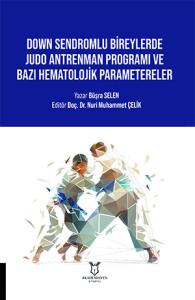
Down Sendromlu Bireylerde Judo Antrenman Programı ve Bazı Hematolojik Parametereler
Özet
Bu araştırmada, Down sendromlu bireylere uygulanan sekiz haftalık judo antrenman programının bazı hematolojik ve biyokimyasal parametreler üzerindeki etkileri incelenmiştir. Çalışma, deney ve kontrol grubu olmak üzere iki ayrı grupla yürütülmüş; yalnızca deney grubuna düzenli judo antrenmanları uygulanmıştır. Ön test ve son test verileri karşılaştırmalı olarak değerlendirilmiş ve analizlerde parametrik testler kullanılmıştır; çünkü normallik testleri verilerin normal dağılıma uygun olduğunu göstermiştir.
Deney grubunda, judo antrenmanı sonrasında HDL düzeylerinde anlamlı bir artış, buna karşılık LDL, total kolesterol, CRP, AST, ALT ve trigliserit düzeylerinde anlamlı azalmalar tespit edilmiştir (p<0.05). Bu bulgular, judo antrenmanının metabolik sağlık üzerinde olumlu etkiler sağladığını göstermektedir. Kontrol grubunda ise egzersiz yapılmamasına rağmen bazı parametrelerde anlamlı değişiklikler gözlenmiş, ancak bu değişimlerin çoğu fizyolojik açıdan olumsuz yönde gerçekleşmiştir.
Sonuç olarak, sekiz haftalık judo antrenman programının Down sendromlu bireylerde hematolojik ve biyokimyasal profili olumlu yönde etkilediği, özellikle metabolik sağlık risk faktörlerini azalttığı belirlenmiştir. Bu bulgular, Down sendromlu bireyler için yapılandırılmış egzersiz programlarının hem sağlık gelişimi hem de yaşam kalitesi açısından desteklenmesi gerektiğini ortaya koymaktadır.
Referanslar
American College of Sports Medicine (ACSM). (2018). ACSM's guidelines for exercise testing and prescription (10th ed.). Lippincott Williams and Wilkins.
American Diabetes Association (ADA). (2022). Standards of Medical Care in Diabetes—2022. Diabetes Care, 45(Suppl 1), S1–S264. https://doi.org/10.2337/dc22-Sint
Aydoğdu, Ö., ve Şahin, F. (2017). Down Sendromlu Çocuklarda Düzenli Egzersiz Programının Motor Beceriler Üzerine Etkisi. Türkiye Çocuk Hastalıkları Dergisi, 11(2), 89-95.
Ballenger, J., Smith, A., and Johnson, L. (2023). Health outcomes of physical activity interventions in adults with Down syndrome: A systematic review. Journal of Physical Activity and Health, 20(3), 123–135.
Bartlo, P., and Klein, P. J. (2011). Physical activity benefits and needs in children with developmental disabilities: implications for physical therapy practice. Pediatric Physical Therapy, 23(1), 2-9. https://doi.org/10.1097/MPG.0b013e3181f8a8b3
Belleri, P., Corsini, A., Brambilla, M., Bosisio, C., Scarpini, F., and Zuccotti, G. (2024). The Role of Diet and Physical Activity in Obesity and Overweight in Children with Down Syndrome in Developed Countries. Children, 11(9), 1056. https://doi.org/10.3390/children11091056
Belleri, P., Mazzuca, G., Pietrobelli, A., Zampieri, N., Piacentini, G., Zaffanello, M., and Pecoraro, L. (2024). The role of diet and physical activity in obesity and overweight in children with Down syndrome in developed countries. Children, 11(9), 1056. https://doi.org/10.3390/children11091056
Bergström, H., Hagströmer, M., Hagberg, J., and Elinder, L. S. (2013). A multi-component universal intervention to improve physical activity among children with intellectual disabilities in Sweden. Research in Developmental Disabilities, 34(9), 2836–2845. https://doi.org/10.1016/j.ridd.2013.05.034
Birrer, D., Röthlin, P., and Morgan, G. (2012). Mindfulness to enhance athletic performance: Theoretical considerations and possible impact mechanisms. Mindfulness, 3(3), 235–246. https://doi.org/10.1007/s12671-012-0109-2
Boguszewski, D. (2011). Techniques of direct attack in judo contests. Journal of Combat Sports and Martial Arts, 2(2), 109–113.
Brittain, I. (2016). The Paralympic Games Explained. Routledge. https://doi.org/10.4324/9780203885567
Brunelli, A. V., Araujo, T. B., Oliveira, M. C., and Medeiros, M. D. (2019). Effects of physical exercise on lipid profile of individuals with intellectual disabilities: A systematic review. Journal of Physical Education and Sport, 19(5), 1672–1678.
Bruni, M., Camerini, G., and Lucibello, S. (2016). Motor development in Down syndrome: The role of hypotonia. Journal of Pediatric Rehabilitation Medicine, 9(3), 223–230.
Bull, M. J. (2020). Down syndrome. New England Journal of Medicine, 382(24), 2344–2352. https://doi.org/10.1056/NEJMra1706537
Capodaglio, P., Vismara, L., Menegoni, F., Baccalaro, G., Galli, M., and Ferrario, M. (2008). Effects of strength training on muscle architecture and strength in individuals with Down syndrome. Disability and Rehabilitation, 30(2), 124–130.
Caspersen, C. J., Powell, K. E., and Christenson, G. M. (1985). Physical activity, exercise, and physical fitness: Definitions and distinctions for health-related research. Public Health Reports, 100(2), 126–131.
Centers for Disease Control and Prevention. (2023). Facts about Down Syndrome. https://www.cdc.gov/ncbddd/birthdefects/downsyndrome.html
Convertino, V. A. (1991). Blood volume: its adaptation to endurance training. Medicine and Science in Sports and Exercise, 23(12), 1338-1348. https://doi.org/10.1249/00005768-199112000-00013
Çakır, H., ve Koca, C. (2020). Down Sendromlu Çocuklarda Uyumlu Futbol Eğitimi Programının Etkisi. Spor Eğitim Dergisi, 4(2), 134-142.
Demirel, H., Yıldız, Y., ve Akbulut, G. (2021). Down Sendromlu Bireylerin Fiziksel Özelliklerinin Değerlendirilmesi. Spor Bilimleri Dergisi, 32(2), 135–142.
Detanico, D., and Branco, B. H. M. (2011). Movement patterns and muscle activation in judo techniques: A review. Sports Biomechanics, 10(4), 356–366. https://doi.org/10.1080/14763141.2011.629198
Enright, P. L., Kronmal, R. A., Higgins, M., Schenker, M. B., and Haponik, E. F. (2010). Hematologic predictors of mortality in persons with impaired lung function. American Journal of Respiratory and Critical Care Medicine, 163(6), 1268-1273.
Feigenbaum, M. S., and Pollock, M. L. (1999). Prescription of resistance training for health and disease. Medicine and Science in Sports and Exercise, 31(1), 38–45.
Fernhall, B., and Pitetti, K. H. (2001). Limitations to physical work capacity in individuals with mental retardation. Clinical Exercise Physiology, 3(4), 176–185.
Franchini, E., Bertuzzi, R. C. M., Takito, M. Y., and Kiss, M. A. P. D. M. (2009). Effects of recovery type after a judo match on blood lactate and performance in specific and non‑specific judo tasks. European Journal of Applied Physiology, 107(4), 377–383. https://doi.org/10.1007/s00421-009-1134-2
Franchini, E., Del Vecchio, F. B., Matsushigue, K. A., and Artioli, G. G. (2011). Physiological profiles of elite judo athletes. Sports Medicine, 41(2), 147–166. https://doi.org/10.2165/11538580-000000000-00000
Freeman, S. B., Taft, L. F., Dooley, K. J., Allran, K., Sherman, S. L., Hassold, T. J., and Saker, D. M. (1998). Population-based study of congenital heart defects in Down syndrome. American Journal of Medical Genetics, 80(3), 213–217.
Garber, C. E., et al. (2011). American College of Sports Medicine position stand. Quantity and quality of exercise for developing and maintaining cardiorespiratory, musculoskeletal, and neuromotor fitness in apparently healthy adults. Medicine and Science in Sports and Exercise, 43(7), 1334–1359. https://doi.org/10.1249/MSS.0b013e318213fefb
García-González, J., Rubio, V. J., Sánchez-Miguel, P. A., and García-Tascón, M. (2020). The Influence of a Judo Program on the Psychosocial Area of Children with Autism Spectrum Disorder: A Pilot Study. International Journal of Environmental Research and Public Health, 17(4), 1404. https://doi.org/10.3390/ijerph17041404
Gleeson, M., Bishop, N. C., Stensel, D. J., Lindley, M. R., Mastana, S. S., and Nimmo, M. A. (2011). The anti-inflammatory effects of exercise: Mechanisms and implications for the prevention and treatment of disease. Nature Reviews Immunology, 11(9), 607–615. https://doi.org/10.1038/nri3041
Gürsoy, R., Yılmaz, İ., ve Koç, H. (2018). Down sendromlu bireylerde spor aktivitelerinin psikososyal gelişime etkisi. Spor ve Performans Araştırmaları Dergisi, 9(1), 43–49.
Grundy, S. M., Cleeman, J. I., Merz, C. N. B., Brewer, H. B., Clark, L. T., Hunninghake, D. B., ... and Stone, N. J. (2004). Implications of recent clinical trials for the National Cholesterol Education Program Adult Treatment Panel III guidelines. Circulation, 110(2), 227–239. https://doi.org/10.1161/01.CIR.0000133317.49796.0E
Hawley, J. A., and Lessard, S. J. (2008). Exercise training-induced improvements in insulin action. Acta Physiologica, 192(1), 127–135. https://doi.org/10.1111/j.1748-1716.2007.01783.x
Heller, T., Hsieh, K., and Rimmer, J. H. (2012). Attitudinal and psychosocial outcomes of a fitness and health education program for adults with Down syndrome. American Journal on Intellectual and Developmental Disabilities, 117(3), 209-223. https://doi.org/10.1352/0895-8017(2004)109<175:AAPOOA>2.0.CO;2
Heyward, V. H., and Wagner, D. R. (2004). Applied body composition assessment (2nd ed.). Human Kinetics.
Hotamisligil, G. S. (2006). Inflammation and metabolic disorders. Nature, 444(7121), 860–867. https://doi.org/10.1038/nature05485
International Judo Federation (2022). Sport and Organization Rules IJF. [Online] https://www.ijf.org/ijf/documents/18
Kano, J. (1986). Kodokan Judo: The Essential Guide to Judo by Its Founder Jigoro Kano. Kodansha International.
Kaya, D., Karakuş, S., ve Özkara, A. (2019). Düzenli egzersizin karaciğer enzim düzeylerine etkisi. Türkiye Klinikleri Spor Bilimleri Dergisi, 11(3), 214–220.
Kliegman, R. M., St. Geme, J. W., Blum, N. J., Shah, S. S., and Tasker, R. C. (2020). Nelson Textbook of Pediatrics (21st ed.). Elsevier.
Kraus, W. E., Houmard, J. A., Duscha, B. D., Knetzger, K. J., Wharton, M. B., McCartney, J. S., ... and Slentz, C. A. (2002). Effects of the amount and intensity of exercise on plasma lipoproteins. New England Journal of Medicine, 347(19), 1483–1492. https://doi.org/10.1056/NEJMoa020194
Kuo, H.-T., Lee, T.-H., Su, L.-A., Yang, C.-C., and Lin, Y.-C. (2024). Impact of resistance training on body composition and physical function in individuals with Down syndrome. Diagnostics, 14(23), 2620. https://doi.org/10.3390/diagnostics14232620
Li, C., Chen, S., How, Y. M., and Zhang, A. L. (2013). Benefits of physical exercise intervention on fitness of individuals with Down syndrome: A systematic review of randomized-controlled trials. International Journal of Rehabilitation Research, 36(3), 187–195.
Magno, F., Fiorilli, G., Buonsenso, A., Fantozzi, S., Messina, G., and Di Cagno, A. (2018). Effects of a Judo Program on Social Skills and Self-Efficacy in Individuals with Intellectual Disability. Journal of Physical Education and Sport, 18(3), 1477–1482.
Matsumoto, D., Takeuchi, M., Nakajima, T., and Nakamura, M. (2013). The History and Development of Judo in Japan and Around the World. International Journal of Sport and Health Science, 11, 1-9.
Méndez-Martínez, M., and Rodríguez-Grande, E. I. (2023). Effects of therapeutic exercise on the motor function of adults with Down syndrome: A systematic review and meta-analysis. Scientific Reports, 13, 21962.
Merzbach, V., and Gordon, D. (t.y.). The Benefits of Exercise to a Down’s Syndrome Population. Intellectual Disability and Health. Erişim adresi: https://example.edu/downsyndrome_exercise_benefits
Nakano, M. (2016). Judo as a Culture: Its Transformation and Transmission. International Journal of Sport and Health Science, 14, 1-8.
Nieman, D. C. (2007). Exercise and immunity: Nutritional countermeasures. Canadian Journal of Applied Physiology, 29(1), 106–119.
Ordonez, F. J., Rosety, I., Rosety, M. A., Camacho, A., de Moraes, A. C., and Rosety-Rodriguez, M. (2013). Aerobic training improved low-grade inflammation in Down syndrome. Scandinavian Journal of Medicine and Science in Sports, 23(6), 723-729. https://doi.org/10.1111/j.1600-0838.2012.01469.x
Oreskovic, N. M., Baumer, N. T., Di Camillo, C., Cornachia, M., Franklin, C., Hart, S. J., ... and Skotko, B. G. (2023). Cardiometabolic profiles in children and adults with overweight and obesity and Down syndrome. American Journal of Medical Genetics Part A, 191(3), 813–822. https://doi.org/10.1002/ajmg.a.63088
Pecoraro, L., Belleri, P., Zaffanello, M., and Pietrobelli, A. (2023). Health promotion in children with Down syndrome: Role of physical activity and nutrition. International Journal of Environmental Research and Public Health, 20(4), 3207. https://doi.org/10.3390/ijerph20043207
Pecoraro, L., Bin, M., Mohn, A., Fintini, D., Pietrobelli, A., and Maffeis, C. (2024). Lipid Profile, Eating Habit, and Physical Activity in Children with Down Syndrome: A Prospective Study. Diseases, 12(4), 68. https://doi.org/10.3390/diseases12040068
Pedersen, B. K., and Hoffman-Goetz, L. (2000). Exercise and the immune system: regulation, integration, and adaptation. Physiological Reviews, 80(3), 1055-1081. https://doi.org/10.1152/physrev.2000.80.3.1055
Peluso, M. A. M., and Guerra de Andrade, L. H. S. (2005). Physical activity and mental health: The association between exercise and mood. Clinics, 60(1), 61–70. https://doi.org/10.1590/S1807-59322005000100012
Peña-Sagredo, J. L., Galindo-Villardón, P., Martinez-Martinez, M. L., and Arias-Vásquez, A. (2022). Immune dysregulation and inflammation in Down syndrome: A meta-analysis. Frontiers in Immunology, 13, 878593.
Pitetti, K. H., Climstein, M., Mays, M. J., and Barrett, P. J. (1992). Physical training for adolescents with Down syndrome: A case report. Adapted Physical Activity Quarterly, 9(1), 54–64.
Poirier, P., Giles, T. D., Bray, G. A., Hong, Y., Stern, J. S., Pi-Sunyer, F. X., and Eckel, R. H. (2006). Obesity and cardiovascular disease: Pathophysiology, evaluation, and effect of weight loss. Circulation, 113(6), 898–918. https://doi.org/10.1161/CIRCULATIONAHA.106.171016
Purcell, R. (2020). Adaptive Judo: The Benefits and Challenges of Judo for People with Disabilities. Physical Disabilities: Education and Related Services, 39(1), 1-18.
Rimmer, J. H., and Rowland, J. L. (2008). Physical activity for youth with disabilities: A critical need in an underserved population. Developmental Neurorehabilitation, 11(2), 141–148. https://doi.org/10.1080/17518420701688649
Rimmer, J. H., and Yamaki, K. (2006). Obesity and intellectual disability. Mental Retardation and Developmental Disabilities Research Reviews, 12(1), 22–27. https://doi.org/10.1002/mrdd.20091
Roizen, N. J., and Patterson, D. (2003). Down’s syndrome. The Lancet, 361(9365), 1281–1289. https://doi.org/10.1016/S0140-6736(03)12987-X
Rubin, S. S., Rimmer, J. H., Chicoine, B., Braddock, D., and McGuire, D. E. (1998). Overweight prevalence in persons with Down syndrome. Mental Retardation, 36(3), 175–181.
Selikowitz, M. (1997). Health problems and health checks in school children with Down syndrome. Journal of Paediatrics and Child Health, 33(4), 305–308.
Shahani, M. R., İsmail, B., Rafi, M., and Ahmad, M. (2023). Effect of a 12-Week Exercise Program on Lipid Profiles of Individuals with Intellectual Disabilities. Journal of Exercise Rehabilitation, 19(1), 50–57. https://doi.org/10.12965/jer.2345208.001
Shields, N., Taylor, N. F., and Dodd, K. J. (2017). Effects of a community-based progressive resistance training program on muscle performance and physical function in adults with Down syndrome: a randomized controlled trial. Archives of Physical Medicine and Rehabilitation, 98(4), 777-784. https://doi.org/10.1016/j.apmr.2016.12.015
Shumway-Cook, A., and Woollacott, M. H. (2012). Motor control: Translating research into clinical practice (4th ed.). Lippincott Williams and Wilkins.
Sterkowicz-Przybycień, K. (2010). Technical and tactical preparation of judokas in the Olympic tournament in Beijing (2008). Archives of Budo, 6(4), 189–194.
Stevens, J. (2013). The Way of Judo: A Portrait of Jigoro Kano and His Students. Shambhala.
Türkiye Judo Federasyonu Engelli Judo: https://www.judo.gov.tr/engelli-judo
Türkiye Özel Sporcular Spor Federasyonu (2023). https://www.tossfed.gov.tr
Ulusal Down Sendromu Derneği. (2023). Down Sendromlu Bireylerde Psiko-Sosyal Gelişim Rehberi. İstanbul: UDSD Yayınları.
Uluslararası Judo Federasyonu Engelli Judo Kılavuzu: https://www.ijf.org/ijf/documents/20
UNESCO (2017). Judo for the World: Physical Education and Values Education. https://en.unesco.org/news/judo-world
Van Tittelboom, R. A., Oliveira, M. R., and Corrêa, N. C. (2021). Effect of aerobic exercise on insulin sensitivity and inflammatory markers in individuals with Down syndrome: A randomized trial. Journal of Sports Science and Medicine, 20(2), 304–310.
Van Trotsenburg, A. S., Heymans, H. S., Tijssen, J. G., de Vijlder, J. J., and Vulsma, T. (2006). Comorbidity, hospitalization, and medication use in children with Down syndrome: A nationwide study. Pediatrics, 118(4), 1179–1186.
Vigario, P., Borges, L. H., de Andrade, J. S., Marquezine, G. F., and Tavares, D. R. (2012). Physical activity, hematological and biochemical indicators in children with Down syndrome. Revista Brasileira de Medicina do Esporte, 18(1), 35-38.
Weijerman, M. E., and de Winter, J. P. (2010). Clinical practice: The care of children with Down sendroma. European Journal of Pediatrics, 169(12), 1445–1452.
WHO. (2023). Body mass index – BMI. World Health Organization. https://www.who.int/data/gho/data/themes/topics/topic-details/GHO/body-mass-index
Yazıcı, E. (2023). Otizm Spektrum Bozukluğu Olan Çocuklarda Judo Eğitiminin Motor ve Sosyal Gelişim Üzerine Etkisi. Spor Bilimleri Dergisi, 34(2), 112–120.
Yıldız, M., Koç, A., ve Tunç, S. (2020). Özel gereksinimli bireylerde egzersiz programının biyokimyasal parametrelere etkisi. Uluslararası Spor Bilimleri Dergisi, 4(2), 25–33.
Zolghadr, H., Yahyaei, M., Sedaghati, P., and Ahmadabadi, S. (2025). The impact of exercise interventions on postural control in individuals with Down syndrome: A systematic review and meta-analysis. BMC Sports Science, Medicine and Rehabilitation, 17, 35.
Yayınlanan
Lisans
LisansBu İnternet Sitesi içeriğinde yer alan tüm eserler (yazı, resim, görüntü, fotoğraf, video, müzik vb.) Akademisyen Kitabevine ait olup, 5846 sayılı Fikir ve Sanat Eserleri Kanunu ve 5237 sayılı Türk Ceca Kanunu kapsamında korunmaktadır. Bu hakları ihlal eden kişiler, 5846 sayılı Fikir ve Sanat eserleri Kanunu ve 5237 sayılı Türk Ceza Kanununda yer alan hukuki ve cezai yaptırımlara tabi olurlar. Yayınevi ilgili yasal yollara başvurma hakkına sahiptir.
