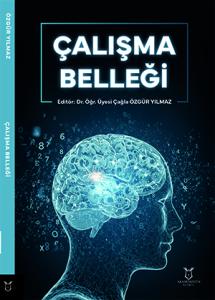
Çalışma Belleği ve Öğrenme Güçlüğü
Özet
Bu bölümde, öğrenme güçlüğü olan çocukların belirlenmesinde ve müdahalelerde çalışma belleğinin rolü ve önemi ele alınmaktadır. Öğrenme güçlüğü akademik becerilerdeki güçlükler ile karakterize nörogelişimsel bir bozukluk olarak tanımlanmaktadır. Çalışma belleği; bilgilerin geçici olarak depolandığı ve işlendiği aktif bir bilişsel sistem olarak, dil gelişimi, okuma, yazma ve matematik gibi temel alanlarda belirleyici rol oynamaktadır. Araştırmalar, öğrenme güçlüğü yaşayan çocukların çalışma belleği kapasitesinin genellikle yetersiz olduğunu ya da var olan kapasitelerini etkin olarak kullanamadıklarını göstermektedir. Bu durum öğrenme güçlüğü olan çocukların okuma, yazma, matematik gibi alanlardaki performansını doğrudan etkilemektedir. Çalışma belleği performansının erken çocukluk döneminde belirlenmesi, öğrenme güçlüğü risk grubundaki çocukların belirlenmesinde ve erken dönem müdahalelerinde önemli bir rol oynamaktadır.
Referanslar
Allen, R. J., Giofrè, D., Higgins, S., & Adams, J. W. (2019). Working memory predictors of mathematical skills: A meta-analysis. Review of Educational Research, 89(3), 459-496. https://doi.org/10.3102/0034654319843496
Alloway, T. P., & Alloway, R. (2010). Investigating the predictive roles of working memory and IQ in academic attainment. Journal of Experimental Child Psychology, 106, 20-29.
Alloway, T. P., & Archibald, L. M. D. (2008). Working memory and learning in children with developmental coordination disorder and specific language impairment. Journal of Learning Disabilities, 3, 251-262.
Alloway, T. P., Gathercole, S. E., & Pickering, S. J. (2006). Verbal and visuospatial short-term and working memory in children: Are they separable? Child Development, 77(6), 1698-1716.
Alkan, G. B. (2021). Disgrafi tanısı almış öğrencilerin yazım hatalarının giderilmesi [Master's thesis, Uşak University].
Anthony, J. L., & Francis, D. J. (2005). Development of phonological awareness. Current Directions in Psychological Science, 14(5), 255-259.
American Psychiatric Association. (2013). Diagnostic and statistical manual of mental disorders (5th ed.). Washington, DC: American Psychiatric Association.
Apriani, E., & Supardan, D. (2018). Language learning disabilities: How can I help my students with dyslexia? English Franca Academic Journal of English Language and Education, 2(2), 188-200.
Aral, N., & Gürsoy, F. (2009). Özel eğitim gerektiren çocuklar ve özel eğitime giriş. Morpa Yayınları.
Augur, J. (1994). Dyslexia: Early help, better future. British Dyslexia Association.
Baddeley, A. (2000). The episodic buffer: A new component of working memory. Trends in Cognitive Sciences, 11, 417-422. https://doi.org/10.1016/S1364-6613(00)01538-2
Baddeley, A. (2003). Working memory and language processing.
Barth, K. (2006). Öğrenme güçlüklerini erken tespit etmek (Çev. A. Kanat). İlya İzmir Yayınevi.
Bayhan, P. S., & Artan, İ. (2009). Çocuk gelişimi ve eğitimi. Morpa Kültür Yayınları.
Bayraktar, A., & Seçkin, Ş. (2015). Yazma güçlükleri ve öğretim yöntemleri. In S. S. Yıldırım Doğru (Ed.), Öğrenme güçlükleri (pp. 167-192). Eğiten Kitap.
Beacham, N., & Trott, C. (2005). Screening for dyscalculia within HE. MSOR Connections, 5(1), 1-4.
Biotteau, M., Danna, J., Baudou, É., Puyjarinet, F., Velay, J. L., Albaret, J. M., & Chaix, Y. (2019). Developmental coordination disorder and dysgraphia: Signs and symptoms, diagnosis, and rehabilitation. Neuropsychiatric Disease and Treatment, 15, 1873.
Bryant, D. P., Bryant, B. R., Shin, M., & Pfannenstiel, K. H. (2014). Learning disabilities: Mathematics characteristics and instructional exemplars. In The Routledge International Handbook of Dyscalculia and Mathematical Learning Difficulties (pp. 243-255). Routledge.
Bull, R., Espy, K. A., & Wiebe, S. A. (2008). Short-term memory, working memory, and executive functioning in preschoolers: Longitudinal predictors of mathematical achievement at age 7 years. Developmental Neuropsychology, 33(3), 205-228. https://doi.org/10.1080/8756564080198231
Carretti, B., Borella, E., Cornoldi, C., & De Beni, R. (2009). Working memory and reading comprehension abilities in children. Reading and Writing, 22(2), 179–204. https://doi.org/10.1007/s11145-007-9118-6
Chung, P. J., Patel, D. R., & Nizami, I. (2020). Disorder of written expression and dysgraphia: Definition, diagnosis, and management. Translational Pediatrics, 9(Suppl 1), S46.
Comblain, A. (1994). Theories of language acquisition and specific language impairment in children. International Journal of Language & Communication Disorders, 29(1), 1–15. https://doi.org/10.3109/13682829409061329
Commodari, E. (2013). Preschool teacher attachment, school readiness and risk of learning difficulties. Early Childhood Research Quarterly, 28(1), 123-133.
Çakır, R., & Ergül, C. (2022). Düşük erken matematik başarısı gösteren çocukların çalışma belleği performanslarının incelenmesi. Eğitim ve Bilim, 47(209), 133-153. https://doi.org/10.15390/EB.2022.10389
Demirci, N., & Demirci, P. T. (2016). Özel öğrenme güçlüğü olan çocukların kaba ve ince motor becerilerinin değerlendirilmesi. İnönü Üniversitesi Beden Eğitimi ve Spor Bilimleri Dergisi, 3(1), 47-57.
Dogan, M. (2011). Çocuklarda çalışma belleği, akademik öğrenme ve öğrenme yetersizlikleri. Türk Psikoloji Yazıları, 14(27), 48.
Doğru, S. S. Y., Alabay, E., & Kayılı, G. (2010). Determination of word knowledge and comprehension levels in normal developing and learning disorder children. Elementary Education Online, 9(3).
Döhla, D., & Heim, S. (2016). Developmental dyslexia and dysgraphia: What can we learn from the one about the other? Frontiers in Psychology, 6, 2045.
Ergül, C., & Özgür Yılmaz, Ç. (2021). Özgül öğrenme bozukluğunda erken tanılama. In F. Toros & Ş. Torun (Eds.), Özgül Öğrenme Bozukluğu (pp. 41-45). Akademisyen Kitapevi.
Fanari, R., Meloni, C., & Massidda, D. (2019). Visual and spatial working memory abilities predict early math skills: A longitudinal study. Frontiers in Psychology, 10, 2460. https://doi.org/10.3389/fpsyg.2019.02460
Fostick, L., & Revah, H. (2018). Dyslexia as a multi-deficit disorder: Working memory and auditory temporal processing. Acta Psychologica, 183, 19-28.
Gathercole, S. E., & Alloway, T. P. (2008). Working memory and learning: A practical guide for teachers. SAGE Publications.
Gathercole, S. E., & Baddeley, A. D. (1990). Phonological memory deficits in language disordered children: Is there a causal connection?
Gutierrez-Clellen, V. F., Calderon, J., & Weismer, S. E. (2004). Verbal memory in children with specific language impairment.
Gough, P. B., & Tunmer, W. E. (1986). Decoding, reading, and reading disability. Remedial and Special Education, 7(1), 6-10.
Graham, L., & Bellert, A. (2004). Difficulties in reading comprehension for students with learning disabilities. In Learning about learning disabilities (pp. 251-279). Academic Press.
Hannell, G. (2005). Dyscalculia action plans for successful learning in mathematics. David Fulton Publishers.
Hartas, D. (2013). Dyslexia in the early years: A practical guide to teaching and learning. Routledge.
International Dyslexia Association (IDA). (2002). Definition of dyslexia. https://dyslexiaida.org/definition-of-dyslexia/
Kırcaali-İftar, G. (2004). Öğrenme güçlükleri. In S. Eripek (Ed.), Özel Eğitim (pp. 57-68). Anadolu Üniversitesi Açık Öğretim Fakültesi Yayınları.
Kroesbergen, E. H., Van’t Noordende, J. E., & Kolkman, M. E. (2012). Training working memory in kindergarten children: Effects on working memory and early numeracy. Child Neuropsychology, 1, 23–37.
Laufer, K. (2000). Accommodating students with specific writing disabilities. Journalism and Mass Communication Educator, 54(4), 29-36.
Learning Disabilities Association of America (LDA). (2002). Definition of dyslexia. https://dyslexiaida.org/definition-of-dyslexia/
McNamara, D. S., & Scott, J. L. (2001). Working memory capacity and strategy use. Memory & Cognition, 29(1), 10–17. https://doi.org/10.3758/BF03195734
Minear, M., & Shah, P. (2006). Training and transfer effects in task switching. Memory & Cognition, 34(7), 1470–1483. https://doi.org/10.3758/BF03195911
Montague, P. R., & Person, D. D. (1995). Bee foraging in uncertain environments using predictive learning. Nature, 377(6551), 725-728.
National Center for Learning Disabilities (NCLD). (2014). The state of learning disabilities: Facts, trends and emerging issues. National Center for Learning Disabilities Inc.
Özkubat, U., & Özmen, E. R. (2018). Öğrenme güçlüğü olan öğrencilerin matematik problemi çözme süreçlerinin incelenmesi: Sesli düşünme protokolü uygulaması. Ankara Üniversitesi Eğitim Bilimleri Fakültesi Özel Eğitim Dergisi, 19(1), 155-180.
Paquette, P. H., & Tuttle, C. G. (2006). Learning disabilities: The ultimate teen guide. The Scarecrow Press.
Peltzman, B. R. (1992). Guidelines for early identification and strategies for early intervention of at-risk learning disabled children. (ERIC Document Reproduction Service No. 351111)
Peng, P., Barnes, M., Wang, C., Wang, W., Li, S., Swanson, H. L., ... & Tao, S. (2018). A meta-analysis on the relation between reading and working memory. Psychological Bulletin, 144(1), 48–76. https://doi.org/10.1037/bul0000124
Rebouche, R. A. (1990). Early identifiers of learning disabilities in preschool children. (Doctoral dissertation, University of Northern Iowa, USA).
Reid, G. (2016). Dyslexia: A practitioner's handbook. John Wiley & Sons.
Roitsch, J., & Watson, S. M. (2019). An overview of dyslexia: Definition, characteristics, assessment, identification, and intervention. Science Journal of Education, 7(4).
Rief, S., & Stern, J. (2010). The dyslexia checklist: A practical reference for parents and teachers. Jossey-Bass.
Scarborough, H. S. (1998). Predicting the future achievement of second graders with reading disabilities: Contributions of phonemic awareness, verbal memory, rapid naming, and IQ. Annals of Dyslexia, 48(1), 115-136.
Shapiro, B. K., Palmer, F. B., Antell, S., Bilker, S., Ross, A., & Capute, A. J. (1990). Precursors of reading delay: Neurodevelopmental milestones. Pediatrics, 85(3), 416-420.
Smirni, P., Vetri, L., Misuraca, E., Cappadonna, M., Operto, F. F., Pastorino, G. M. G., & Marotta, R. (2020). Misunderstandings about developmental dyslexia: A historical overview. Pediatric Reports, 12(2), 8505.
Snowling, M. J., Hayiou-Thomas, M. E., Nash, H. M., & Hulme, C. (2020). Dyslexia and developmental language disorder: Comorbid disorders with distinct effects on reading comprehension. Journal of Child Psychology and Psychiatry, 61(6), 672-680.
St Clair-Thompson, H. L., & Gathercole, S. E. (2006). Executive functions and achievements in school: Shifting, updating, inhibition, and working memory. The Quarterly Journal of Experimental Psychology, 59(4), 745-759. https://doi.org/10.1080/17470210500162854
Steele, M. M. (2004). Making the case for early identification and intervention for young children at risk for learning disabilities. Early Childhood Education Journal, 32, 2.
Sultan, K., AK, A. S., & Melekoğlu, M. A. (2022). Özel öğrenme güçlüğünde erken müdahale ve erken tanı: Müdahaleye tepki modeli. Milli Eğitim Dergisi, 51(236), 3679-3692.
Şenel Günayer, H. (1996). Öğrenme yetersizliği ile dikkat eksikliği- aşırı hareketlilik bozukluğunun karşılaştırılması. Özel Eğitim Dergisi, 2(2), 76-90.
Swanson, H. L. (2006). Learning disabilities and dynamic testing. In S. J. Pickering & G. D. Phye (Eds.), Working memory and education (pp. 129-172). Elsevier Academic Press.
Swanson, L., & Hsieh, C. J. (2009). Yetişkinlerde okuma güçlüğü: Literatürün seçici bir meta analizi. Eğitim Araştırmalarının Gözden Geçirilmesi, 79, 1362-1390. https://doi.org/10.3102/0034654309350931
Swanson, H. L., Kehler, P., & Jerman, O. (2010). Working memory, strategy knowledge, and strategy instruction in children with reading disabilities. Journal of Learning Disabilities, 43(1), 24–47. https://doi.org/10.1177/0022219409338743
Unsworth, N., & McMillan, B. D. (2013). Mind-wandering and reading comprehension: Examining the roles of working memory capacity and interest. Journal of Experimental Psychology: Learning, Memory, and Cognition, 39(3), 832–842. https://doi.org/10.1037/a0029669
Tirosh, E., Cohen, A., Berger, J., Davidovitch, M., & Cohen-Ophir, M. (2001). Neurodevelopmental and behavioural characteristics in learning disabilities and attention deficit disorder. European Journal of Pediatric Neurology, 5(6), 253-258.
Thakran, S. (2015). Learning disabilities-types and symptoms. International Journal of Applied Research, 1(5), 149-152.
Turan, F., & Yükselen, A. (2004). Öğrenme güçlüğü olan çocukların dil özellikleri. Eğitim ve Bilim, 29(132).
Vidyadharan, V., & Tharayil, H. M. (2019). Learning disorder or learning disability: Time to rethink. Indian Journal of Psychological Medicine, 41(3), 276-278.
Visser, T. A., Boden, C., & Giaschi, D. E. (2004). Children with dyslexia: Evidence for visual attention deficits in perception of rapid sequences of objects. Vision Research, 44(21), 2521-2535.
Yavuz, T., Yavuz, I. S., Deveci, B., & Fidan, T. (2022). Dyslexia in education in Turkey. In The Routledge International Handbook of Dyslexia in Education (pp. 324-334). Routledge.
Yeh, S. S., & Connell, D. B. (2008). Effects of rhyming, vocabulary and phonemic awareness instruction on phoneme awareness. Journal of Research in Reading, 31(2), 243-256.
Yopp, H. K., & Yopp, R. H. (2000). Supporting phonemic awareness development in the classroom. The Reading Teacher, 54, 130-138.