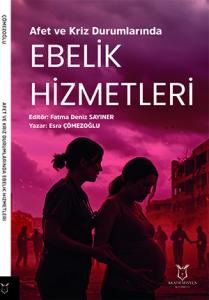
Afet ve Kriz Durumlarında Ebelik Hizmetleri
Özet
-
Referanslar
Afet ve Acil Durum Yönetimi Başkanlığı.(2019) Afet ve Acil Durum Çantası Nasıl Hazırlanmalı? (Son Erişim: 05.09.2023) https://www.afad.gov.tr/afet-ve-acil-durum-cantasi-nasil-hazirlanmali
Afet ve Acil Durum Yönetimi Başkanlığı, (2023a). Açıklamalı Afet Yönetimi Terimleri Sözlüğü. (Son Erişim: 01.06.2023) https://www.afad.gov.tr/aciklamali-afet-yonetimi-terimleri-sozlugu
Afet ve Acil Durum Yönetimi Başkanlığı, (2023b). AFAD ve Tarihçesi. (Son Erişim: 05.07.2023) https://www.afad.gov.tr/afad-hakkinda
Afet ve Acil Durum Yönetimi Başkanlığı, (2023c). Bütünleşik Afet Yönetim Sistemi. (Son Erişim: 12.07.2023) hakkindahttps://www.afad.gov.tr/butunlesik-afet-yonetim-sistemi
Afet ve Acil Durum Yönetimi Başkanlığı, (2023d). Afet Yönetim ve Karar Destek Sistemi Projesi (AYDES) (Son Erişim: 23.07.2023) https://www.afad.gov.tr/afet-yonetim-ve-karar-destek-sistemi-projesi-aydes21
Afet ve Acil Durum Yönetimi Başkanlığı, (2023e). Afete Hazır İşyeri (Son Erişim: 23.09.2023) https://www.afad.gov.tr/afadem/afete-hazir-isyeri
Afet ve Acil Durum Yönetimi Başkanlığının Teşkilat ve Görevleri Hakkında Kanun,( 2009 ). Resmî Gazete, Sayı : 5902, 17 Haziran 2009.
Akut Arama Kurtarma Derneği (2023). Acil durum çantası. (Son Erişim: 12.09.2023) https://www.akut.org.tr/akut-acil-durum-cantasi?gclid=CjwKCAjwgZCoBhBnEiwAz35Rws7i1ITnVmdmtyy1MPFCVwiNMX5NiIr5t3e58TAAiZ1OyJcddS2wgRoCEIcQAvD_BwE
American Red Cross.(2023).Ready rating (Son Erişim: 15.09.2023) https://www.readyrating.org/
Aydın, G., & Karakurt, İ. (2021). Yeraltı maden işletmeciliğinde sağlık ve güvenlik sorunları. Teknik Bilimler Dergisi, 11(1), 1-12.
Cebeci, H. İ., & Odabaş, D. (2019). Kimyasal, biyolojik, radyolojik ve nükleer afetleri yönetmek için bir karar destek sistemi modeli önerisi. Sakarya Üniversitesi İşletme Enstitüsü Dergisi, 1(1), 41-50.
Centers For Disease Control and Prevention (2023).Tips before Entering a Shelter. (Son Erişim: 12.09.2023) https://www.cdc.gov/nceh/radiation/emergencies/enteringshelter.htm.
Çelik, İ. H., Galip, U.., Yılmaz, G., & Yakupoğlu, M. (2020). Türkiye’de yaşanan teknolojik afetler (2000-2020) üzerine bir değerlendirme. Artvin Çoruh Üniversitesi Uluslararası Sosyal Bilimler Dergisi, 6(2), 49-57.
Elnashai, A. S., & Di Sarno, L. (2015). Fundamentals of earthquake engineering: from source to fragility. John Wiley & Sons.
EM-DAT International Disaster Database.(2023). Emergency Disaster Database.(Son erişim: Mart 2023).https://www.Em-dat .be/
Federal Emergency Management Agency ,(2023a). Glossary of terms. (Son Erişim: 01.06.2023). http://www.fema.gov/about/glossary/m
Federal Emergency Management Agency ,(2023b). We are fema. (Son Erişim: 03.06.2023). https://www.fema.gov/about/action/we-are-fema
Federal Emergency Management Agency ,(2023c). National Preparedness (Son Erişim: 03.09.2023). http://www.fema.gov/emergency-managers/national-preparedness
Girgin, M. (1995). Kütle Hareketleri Nedeniyle Yeri Değiştirilen Yerleşmelere Bir Örnek: Gördes (Manisa). Doğu Coğrafya Dergisi, 1(1).
Girgin, S., & Yetiİ, Ü. (2007). Seçilmiİ Uluslararası Veri Tabanlarında Türkiye’de Yaşanmış Endüstriyel Kazalar. Türkiye Kazalar ve Çevre, 1.
Han L, Ma Q, Zhang F, Zhang Y, Zhang J, Bao Y, Zhao J. Risk Assessment of An Earthquake-Collapse-Landslide Disaster Chain by Bayesian Network and Newmark Models. Int J Environ Res Public Health. 2019 Sep 10;16(18):3330. doi: 10.3390/ijerph16183330. PMID: 31509982; PMCID: PMC6765995.
Hanbay-Çakır, E., & Karabacak, H. (2019). Mülteci Kadınlara Yönelik Toplumsal Cinsiyet Temelli Ayrımcılık ve Şiddetle Mücadele El Kitapçığı
Hastane Afet Ve Acil Durum Planı (Hap) Hazırlama Kılavuzu (2021). ISBN: 978-975-590-809-0 T.C. Sağlık Bakanlığı Yayın Numarası: 1195 https://dosyasb.saglik.gov.tr/Eklenti/40879,haphazirlamaklavuzusurum214062021pdf.pdf?0
Integrated Research on Disaster Risk. (2014). Peril Classification and Hazard Glossary (IRDR DATA Publication No. 1). Beijing: Integrated Research on Disaster Risk. https://www.irdrinternational.org/uploads/files/2020/08/2h6G5J59fs7nFgoj2zt7hNAQgLCgL55evtT8jBNi/IRDR_DATA-Project-Report-No.-1.pdf(Son Erişim 20 Haziran 2023).
IntegratedResearch on Disaster Risk. (2023). Integrated Research on Disaster Risk (IRDR) (Son Erişim: 01.06.2023) https://www.irdrinternational.org/what_we_do/overview
International Decade for Natural Disaster Reduction.(1994). Yokohama Strategy And Plan Of Action For A Safer World. https://www. preventionweb.net/files/8241_doc6841contenido 1.pdf
IPCC. (2012). Managing the Risks of Extreme Events and Disasters to Advance Climate Change Adaptation. Cambridge University Press.
İlerisoy, Z. Y., Gökşen, F., Soyluk, A., & Takva, Y. (2022). Deprem Kaynaklı İkincil Afetler ve Türkiye Örneklemi. Online Journal of Art & Design, 10(2).
İnternational Confederation of Midwives (2015). Role of the midwife in disaster/emergency preparedness. PS2014_003. TheHague: International Confederation of Midwives; 2015.
İşçi,C., (2008). Deprem nedir ve nasıl korunuruz?. Journal of Yasar University, 3(9), 959-983. https://dergipark.org.tr/en/download/article-file/179169
Japaneese Nursing Association (JNA). (2013). Guidelines for the development of disaster preparednes manuals for delivery facilities. https://www.nurse.or.jp/english/midwifery/index.html (Son Erişim: 10.13.2023)
Jayasuriya, S. K., & McCawley, P. (2010). The Asian tsunami: aid and reconstruction after a disaster. Edward Elgar Publishing.
Kadıoğlu Mikdat, 2011. Afet Yönetimi Beklenilmeyeni Beklemek, En Kötüsünü Yönetmek
Kalafat, D., Güneş, Y., Kara, M., Deniz, P., Kekovalı, K., Kuleli, S., ... & Özel, N. (2007). Bütünleştirilmiş Homojen Türkiye Deprem Kataloğu (1900-2005; M≥ 4.0). Kandilli Rasathanesi ve Deprem Araştırma Enstitüsü Deprem Kataloğu. İstanbul, Turkey: Boğaziçi Üniversitesi Yayınları. https://www.researchgate.net/profile/Dogan-Kalafat-2/publication/301891911_A_revised_and_extented_earthquake_cataloque_for_Turkey_since_1900_M40/links/572b95d708ae2efbfdbdd9e9/A-revised-and-extented-earthquake-cataloque-for-Turkey-since-1900-M40.pdf
Kaya, Ç. M., & Yücel, B. (2022). Karmaşık Bir Sosyo-Ekolojik Afet Olarak Göç ve Göç Araştırmalarında CBS. Afet ve Risk Dergisi, 5(2), 380-394.
Kemer, N. (2022). Orman Yangınları ve Sonrası: Orman Ekosistem Restorasyonu. Avrupa Bilim ve Teknoloji Dergisi, (33), 373-381.
Kerr, Richard, Eli Kintisch, and Erik Stokstad. 2010. Will Deepwater Horizon set a new standard for catastrophe?. Science 328: 674–675. https://www.science.org/doi/full/10.1126/science.328.5979.674
Kirchsteiger, C. (1999). Trends in accidents, disasters and risk sources in Europe. Journal of loss prevention in the process industries, 12(1), 7-17.
Kirmencioğlu, B. (2015). Türkiye’de dere yataklarına müdahalelerin taşkınlar üzerindeki etkilerinin değerlendirilmesi. Uzmanlık Tezi, Orman ve Su İşleri Bakanlığı.
Koraltürk, G. (2000). Deprem Sonrası Yangınlar ve Modellemesi (Doctoral dissertation, Fen Bilimleri Enstitüsü).
Macit, İ. (2018). Bütünleşik afet yönetim sistemlerinde karar destek sistemi geliştirilmesi: mobil uygulama örneği. Uluslararası Yönetim Bilişim Sistemleri ve Bilgisayar Bilimleri Dergisi, 2(1), 23-41.
Macit, İ. (2019). Bütünleşik afet yönetiminde Sendai çerçeve eylem planının beklenen etkisi. Artvin Çoruh Üniversitesi Doğal Afetler Uygulama ve Araştırma Merkezi Derleme / Review, Doğ Afet Çev Derg, 2019; 5(1): 175-186, DOI: 10.21324/dacd.421564
Manesh-Khorram, A. (2017). Handbook of Disaster and Emergency Management (First ed.). İSBN :978-91-639-3200-7
Mehmet Ali Özdemir -Hülya Kaymak .(2022).16 Haziran 2022 Tarımsal Arazilere Zarar Veren Ayazini (Afyonkarahisar) Sel ve Taşkını. SOCIAL SCIENCES STUDIES JOURNAL (SSSJournal)
Mielke, R., & Prepas, R. (2019). When Disaster Strikes in Rural America—Call the Midwife! The Journal Of Perinatal & Neonatal Nursing, 33(3), 205-208.doi: 10.1097/JPN.0000000000000417
Necmioğlu, Ö. (2022). Türkiye’de Etkin Bir Tsunami Erken Uyarı Sistemi ve Tsunami Risk Azaltımı İçin Gereksinimler. Afet ve Risk Dergisi, 5(1), 216-228.
Nicola M, Alsafi Z, Sohrabi C, Kerwan A, Al-Jabir A, Iosifidis C, Agha M, Agha R.(2020) The socio-economic implications of the coronavirus pandemic (COVID-19): A review. Int J Surg. Jun;78:185-193. doi: 10.1016/j.ijsu.2020.04.018.
Olcay, Z.(2012). Mülteci-göçmen belirsizliğinde iklim mültecileri. Türkiye Barolar Birliği Dergisi, 99(232-233), 201
Occupational Safety and Health Administration.(2023). Biological hazard: Examples of biohazards & how to prevent them.(Son erişim: 10.08.2023) https://www.osha.com/blog/biological-hazards.
Özdoğan, S. (1993). Türkiye’nin deprem bölgeleri. Türkiye Coğrafyası Araştırma ve Uygulama Merkezi Dergisi, 2, 53-68. http://evreninsirlari.net/dosyalar/161_s16_05.pdf
Pandey, B., & Choudhary, K. K. (2019). Air pollution: role in climate change and its impact on crop plants. In Climate change and agricultural ecosystems (pp. 211-247). Woodhead Publishing. doi{https://doi.org/10.1016/B978-0-12-816483-9.00009-8}
Peduzzi, P., et al. (2015). Global Patterns of Urban Hazard Risk: Geophysical Research Letters, 42(2), 345-353.
Plate, E. J., & Kron, W. (1994). The international decade for natural disaster reduction (IDNDR): A challenge to science. Soil Dynamics and Earthquake Engineering, 13(1), 45-48. https://doi.org/10.1016/0267-7261(94)90040-X
Rahiem, M. D., Rahim, H., & Ersing, R. (2021). Why did so many women die in the 2004 Aceh Tsunami? Child survivor accounts of the disaster. International journal of disaster risk reduction, 55, 102069. https://doi.org/10.1016/j.ijdrr.2021.102069
Stewart, R. M., Brasel, K., Shock, H. S., Stewart, R. M., Brasel, K., & Henry, S. (2018). Advanced trauma life support student course manual. American College of Surgeons, The Committee on Trauma, 3, 43-61.
Sastry, N. Forest fires, air pollution, and mortality in Southeast Asia. Demography 39, 1–23 (2002). https://doi.org/10.1353/dem.2002.0009
Scawthorn, C., & Porter, K. (2019). Enhancing resilience through risk-based design and benefit-cost analysis. The Bridge, 49(2), 16-25. https://www.sparisk.com/wpcontainer/wp-content/uploads/2019/07/Scawthorn-Porter_Bridge492.pdf
Sharma, R. K. (2010). Chemical, biological, radiological, and nuclear disasters: Pitfalls and perils.
Southern California Earthquake Center (SCEC).(2023). Seven Steps to Earthquake Safety. (Son Erişim 12.09.2023). https://www.earthquakecountry.org/sevensteps/
Şentuna, B., Çakı F., (2020). Balıkesir örnekleminde bir ölçek geliştirme çalışması: Afet hazırbulunuşluk ölçeği. İdealkent, 11(31),1959 1983. https://doi.org/10.31198/idealkent.728896
T.C. İç İşleri Bakanlığı Afet ve Acil Durum Yönetim Başkanlığı (n.d.) AFAD ve Tarihçesi. (Son Erişim: 8.05.2023). https://www.afad.gov.tr/afad-hakkinda
T.C. Marmara Belediyeler Birliği Yayını birinci basım. İstanbul.
Tarap (2022)T.C. İç İşleri Bakanlığı Afet ve Acil Durum Yönetim Başkanlığı , Türkiye Afet Risk Azaltma Planı, (Son Erişim: 08.09.2023) https://www.afad.gov.tr/kurumlar/afad.gov.tr/e_Kutuphane/Planlar/28032022-TARAP-kitap_V6.pdf
The International Red Cross and Red Crescent Movement IFRC (2023a). What is a disaster? (Son erişim 12.06.2023) https://www.ifrc.org/our-work/disasters-climate-and-crises/what-disaster
The International Red Cross and Red Crescent Movement IFRC (2023a). Who we are? (Son erişim 12.06.2023) https://www.ifrc.org/who-we-are/about-ifrc
The International Red Cross and Red Crescent Movement IFRC (2023b). Who we are? (Son erişim 17.06.2023) https://www.ifrc.org/our-work/disasters-climate-and-crises/what-disaster/volcanic-eruptions
İstanbul Büyükşehir Belediyesi Deprem ve Zemin İnceleme Şube Müdürlüğü. (2023a). Marmara’da Tsunami Riski. (Son Erişim:09.08.2023) https://depremzemin.ibb.istanbul/tsunami/marmarada-tsunami-riski/
İstanbul Büyükşehir Belediyesi Deprem ve Zemin İnceleme Şube Müdürlüğü. (2023b). Marmara’da Tsunami Riski. (Son Erişim:01.09.2023) İstanbul İli Marmara Kıyılarında Tsunami Kaynaklı Risk Araştırması
Tourani, M., Çağlayan, A., Veysel, I. Ş. I. K., & Saber, R. (2022). İran’da iklim değişikliğinin, klimatolojik, meteorolojik ve hidrolojik afetlere etkisi. Türk Coğrafya Dergisi, (80), 97-114.
TUĞAÇ, Ç. (2021). Bütünleşik Afet Riski Azaltımı ve İklim Değişikliğine Uyum Yaklaşımı Üzerine Bir Değerlendirme. Afet ve Risk Dergisi, 4(1), 1-19.
Tübitak Bilim ve Teknik dergisi, 1999 İzmit Tsunamisi, Ekim 1999 syf: 34-39
Türkeş, M. (2008). Küresel iklim değişikliği nedir? Temel kavramlar, nedenleri, gözlenen ve öngörülen değişiklikler. İklim Değişikliği ve Çevre, 1(1), 26-37.
Türk Kızılay Genç. (2023).Afetlerden Korunma Bilinci.(Son erişim:12.09.2023). https://genckizilay.org.tr/media/15072/10-03882859_afetlerden-korunma-bilinci.pdf
United Nations General Assembly, 1987. International Decade for Natural Disaster Reduction: resolution / adopted by the General Assembly. Volume 1, 15 September-21 December 1987, A/42/49.
United Nations Report of the open-ended intergovernmental expert working group on indicators and terminology relating to disaster risk reduction. (2016). A/71/644. 21184(December):1–41.
United Nations International Strategy for Disaster Reduction. (2015). Sendai Framework For Disaster Risk Reduction 2015–2030. UNISDR, Geneva.
United Nations Office for Disaster Risk Reduction.(2023b),Hazard. (son erişim 05.05.2023) https://www.preventionweb.net/understanding-disaster-risk/component-risk/hazard
United Nations International Strategy for Disaster Reduction. (2005). Hyogo Framework for Action 2005–2015: Building The Resilience Of Nations And Communities To Disasters. https://www.unisdr.org/files/1037_hyogoframe workforactionenglish.pdf
United Nations Office for Disaster Risk Reduction.(2023a).Disaster. (Son Erişim: 01.06.2023).https://www.undrr.org/terminology/disaster#:~:text=A%20serious%20disruption%20of%20the,and%20environmental%20losses%20and%20impacts.
United Nations.(2023). What Is Climate Change?. (Son Erişim: 05.06.2023). https://www.un.org/en/climatechange/what-is-climate-change
Uzel,T., (2023). Etrafı faylarla çevrili arazilerde tektonik levha hareketleri. Geomatik, 8(1), 72-78.https://doi.org/10.29128/geomatik.1181893https://dergipark.org.tr/en/pub/geomatik/issue/72079/1181893
Water Quality and Health Council.(2023a) Nurse barbara’s go bag.( Son Erişim 05.09.2023) https://waterandhealth.org/nurse-barbara/
Water Quality and Health Council.(2023b) Dr. Ralph’s emergency preparedness closet.( Son Erişim 07.09.2023) https://waterandhealth.org/dr-ralph/
World Health Organization,(2007). Mass casualty management systems : strategies and guidelines for building health sector capacity. ISBN 978 92 4 159605 3 https://iris.who.int/bitstream/handle/10665/43804/9789241596053_eng.pdf?sequence=1
World Meteorological Organization, (2023),Disaster Risk Knowledge.(Son Erişim 05.04.2023) https://public.wmo.int/en/our-mandate/focus-areas/natural-hazards-and-disaster-risk-reduction/mhews-checklist/knowledge
Aasheim, V., Nilsen, A.,B.,V., Reinar, L., M., Lukasse, M.(2017). Perineal techniques during the second stage of labour for reducing perinea ltrauma. Cochrane Database Syst Rev. 6(6):CD006672. doi: 10.1002/14651858.CD006672.
Acil Sağlık Hizmetleri Genel Müdürlüğü. ( 22 Haziran 2021). Kanamalarda İlk Yardım. https://acilafet.saglik.gov.tr/TR-84262/kanamalarda-ilk-yardim.html
Advanced Trauma Life Support (ATLS). (2018). Student Course Manual,Tenth Edition . American College of Surgeons.ISBN 78-0-9968262-3-5 Akyılmaz, F., Karka, O. (2011). Afetlerde psikolojik ilkyardım. İstanbul: AFAD.
American Red Cross (ARC).(2023). Staying Safe After a Disaster. https://www.redcross.org/get-help/disaster-relief-and-recovery-services/safety- immediate-aftermath.html (Son erişim:09.08.2023)
Arıca, F., Çakır, C., & Kağnıcı, D. (2023). Kırılgan Gruplar Özelinde Afetlerde Psikososyal Hizmetler. Afet ve Risk Dergisi, 6(1), 176-187.
Aygin, D., & Atasoy, İ. (2008). Crush Sendromu Tedavi ve Bakımı. Anadolu Hemşirelik ve Sağlık Bilimleri Dergisi, 11(1), 93-100.
Basic emergency care: approach to the acutely ill and injured. Geneva: World Health Organization (WHO) and the International Committee of the Red Cross (ICRC) 2018. Licence: CC BY-NC-SA 3.0 IGO. https://www.who.int/publications-detail-redirect/basic-emergency-care-approach-to-the-acutely-ill-and-injured
Başterzin D. A., Yüksel Ş., Aker A.T., Engindeniz N.,Yıldırım A.E. (2023).Büyük Çaplı Taşımacılık Kazalarıyla Oluşan Kitlesel Travmalar Sonrası Ruhsal Açıdan Değerlendirme ve İlk Müdahale Rehberi. Türkiye Psikiyatri Derneği. https://psikiyatri.org.tr/TPDData/Uploads/files/BuyukCapliKazaSonrasiTPD2.pdf Son Erişim Ağustos 2023.
Batur, A. L. İ. (2023). Travmatik Rabdomiyoliz (CRUSH Yaralanması) Yönetimi. AnatolianJournal of EmergencyMedicine, 6(1), 41-46.
.Bayram ,B.(2023).Hastane Öncesi Travma Yönetim Algoritmaları https://acilci.net/hastane-oncesi-travma-yonetim-algoritmalari/ (Son erişim:01.07.2023)
.Bıçakcı, A. B., & Okumuş, F. E. E. (2023). Depremin psikolojik etkileri ve yardım çalışanları. Avrasya Dosyası, 14(1), 206-236.
Bilkent üniversitesi.(2023). Turnike (Boğucu Sargı) Uygulaması. http://bilheal.bilkent.edu.tr/aykonu/ay2004/agustos2004/turnikeay.
Centers for Disease Control and Prevention(CDC). (2023). Bioterrorism Agents/Diseases. https://emergency.cdc.gov/agent/agentlist-category.asp#catdef
Dağlar, B. Deprem yaralanmalı hastada kompartman sendromu. TOTBİD Dergisi 2022;21:283-288 Derleme / Reviewhttps://doi.org/10.5578/totbid.dergisi.2022.38
Daub,C.(2023) The Rhombus of Michaelis. birthworks. https://birthworks.org/the-rhombus-of-michaelis/(Son Erişim: 12.13.2023)
Demiralp, N. (2023). Türkiye’de Hemşirelerin Kimyasal, Biyolojik, Radyasyon Ve Nükleer (KBRN) Olaylara Yönelik Bilgi, Tutum Ve Farkındalıkları: Sistematik Derleme. Hastane Öncesi Dergisi, 8(1), 137-158.
Demircioğlu, M., Şeker, Z., & Aker, A. T. (2019). Psikolojik ilk yardım: Amaçları, uygulanışı, hassas gruplar ve uyulması gereken etik kurallar. Psikiyatride Güncel Yaklaşımlar, 11(3), 351-362.
DePasse, J. M., Sargent, R., Fantry, A. J., Bokshan, S. L., Palumbo, M. A., & Daniels, A. H. (2017). Assessment of malpractice claims associated with acute compartment syndrome. JAAOS-Journal of theAmerican Academy of Orthopaedic Surgeons, 25(6), e109-e113.
Dezenfeksiyon antisepsi sterilizasyon derneği(DAS). (2023)Acil Ve Afet Durumlarında Hijyen Rehberi.https://www.das.org.tr/kitaplar/Acil_ve_Afet_Durumlar%C4%B1nda_Hijyen.pdf
Downe ,S., Byrom, S.(2022).Doğumu Anlamak Çemberin Karesi(F.D.Sayıner, E.Çömezoğlu,Çev.).Akademisyen Kitabevi.
Ekşi, A. (2016). Afetlerden sonra ortaya çıkabilecek çevresel risklerin yönetimi. Hastane Öncesi Dergisi, 1(2), 15-25.
Esin, S.,A., Oğuzhan,T., Kaya, C., K., Ergüder T., Özkan T.,A., Yüksel,İ.(2001). Afetlerde Sağlık Hizmetleri Yönetimi ,24-28 Ekim 2000-Yalova, Kurs Notları. T.C. Sağlık Bakanlığı Sağlık Projesi Genel Koordinatörlüğü, Ankara. https://www.recepakdur.com/media/1295/09-akdur-r-afetlere-hazirlik-ve-afet-yo-netimi-sayfa-1-38.pdf (Son Erişim: 1.09.2023)
Görman, Ö.(24.03.2022). Akut Kompartman Sendromu.Acilci.net. https://acilci.net/akut-kompartman-sendromu/ (Son erişim: 16.09.2023).
Gülen,Y.(2016). Glasgow Koma Skalası. https://www.resusitasyon.com/glaskow-koma-skalasi/
Güler, Ç.,Bilir, N.,Ç,(1994).T.C. Sağlık Bakanlığı Temel Sağlık Hizmetleri Genel Müdürlüğü.Temel İlk Yardım A düzeyi. Çevre Sağlığı Kaynak dizisi no:14 Birinci Baskı Ankara .
Hoffman, M. (October 28, 2021).Internal Bleeding Due To Trauma. Webmd https://www.webmd.com/first-aid/internal-bleeding-causes-signs (Son Erişim: 15.10.2023).
Hoffman, M.(05.10.2022). Compartment Syndrome. Webmd. https://www.webmd.com/pain-management/compartment-syndrome-causes-treatments(Son Erişim: 15.09.2023).
Hyldmo, P. K., Vist, G. E., Feyling, A. C., Rognås, L., Magnusson, V., Sandberg, M., & Søreide, E. (2015). Is the supine position associated with loss of airway patency in unconscious trauma patients? A systematic review and meta-analysis. Scandinavian journal of trauma, resuscitation and emergency medicine, 23(1), 1-14.
İkizer, G., Gül, E. (2017).Afetlerin Yetişkinler Üzerindeki Psikososyal Etkileri. Turkiye Klinikleri J Psychol-Special Topics, 2(3):172-9
Karababa, A. O. (2002). Olağandışı durumlarda sağlık hizmetleri: Sağlık çalışanının el kitabı. Türk Tabipleri Biriliği yayını, Ankara.
Karahan, S., Bozkul, G., & Sağdıç, B. Ç. (2023). Depreme Bağlı Yaşanan Ezilme Sendromu ve Hemşirelik Bakımı. Cumhuriyet Üniversitesi Sağlık Bilimleri Enstitüsü Dergisi, 8(1), 99-104.
Kocak, H., Kinik, K., Caliskan, C., Aciksari, K. (2021).TheScience of DisasterMedicine: FromResponseto Risk Reduction. Medeniyet MedicalJournal. 36(4):333-342. DOI: 10.4 274/mmj.galenos.2021.50375. PMID: 34939400; PMCID: PMC8694167.
Oğur, U. D. R., Tekbaş, Ö. F., &Hasde, M. (2004). Klorlama Rehberi (İçme ve Kullanma Sularının Klorlanması) Gülhane Askeri Tıp Akademisi, Halk Sağlığı Ana Bilim Dalı, Ankara 2004.
Okumura, T., Suzuki, K., Fukuda, A., Kohama, A., Takasu, N., Ishimatsu, S., & Hinohara, S. (1998). The Tokyo subway sarin attack: disaster management, part 2: hospital response. Academic Emergency Medicine, 5(6), 618-624.
Ortobiyoloji BiyolojikTedaviler.(2023) Kemik Kırıkları. https://ortobiyoloji.com/kemik-kiriklari/(Son Erişim: 19.09.2023).
OTA Survival School.(06.09.2016).Pressure Points to Control Bleeding. https://otasurvivalschool.com/survival-first-aid/pressure-points-to-control-bleeding/
Özkaya, U., & Yalçın, M., B. (2022). Deprem yaralanmalı hastada kompartman sendromu ve ezilme (crush) sendromu ayrımı: Fasyotomi kime ve ne zaman. TOTBİD Dergisi, 21(3), 312-5.
Pınar, H. U. (2023). Travmatik Resüsitasyonda Kan Yönetimi. Türk Resüsitasyon Dergisi, 2(2), 46-61.
Pierce-Williams, R., A., M., Saccone, G., Berghella, V. (2021). Hands-on versushands-off techniques for the prevention of perineal trauma during vaginal delivery: a systematic review and meta-analysis of randomized controlled trials. J Matern Fetal Neonatal Med. 34(6):993-1001. doi: 10.1080/14767058.2019.1619686.
Rossaint, R., Afshari, A., Bouillon, B., Cerny, V., Cimpoesu, D., Curry, N., ... &Spahn, D. R. (2023). TheEuropeanguideline on management of majorbleedingandcoagulopathyfollowingtrauma. Critical Care, 27(1), 80.
Sampson, M. (2021). A guide to airway management. British Journal of Cardiac Nursing, 16(3), 1-13.
Schultz, C. H., Koenig,K. L& Noji E.K.(1996). Medical Disaster Response to Reduce Immediate Mortality after an Earthquake. New England Journal of Medicine,334:438-444 DOI: 10.1056/NEJM199602153340706
Sever,M. Ş. (2012).Kitlesel Afetlerde Temel Sağlık Hizmetleri ( Afet Sahası Rehberi) https://nefroloji.org.tr/uploads/pdf/1AFET%20REHBERI%20TURKCE%20%28SAHA%29.pdf (Son erişim:01.07.2023)
Sphere. WaterSupply, SanitationandHygienePromotion, in Humanitarian Charter and Minimum Standards in HumanitarianResponse. 2018. p. 90- 156.
Subcommittee, A. T. L. S., & International ATLS Working Group. (2013). Advanced trauma life support (ATLS®): the ninth edition. The journal of trauma and acute care surgery, 74(5), 1363-1366.
Suner, S. (2015). History of disastermedicine. TurkishJournal of EmergencyMedicine, 15, 1-4.https://doi.org/10.5505/1304.7361.2015.69376
Swiner,C. (12 .10.2022).Broken Leg.Webmd. https://www.webmd.com/first-aid/broken-leg(Son Erişim: 19.09.2023).
Şimşek, D. Ö. (2018). Triyaj Sistemlerine Genel Bakiş ve Türkiye’de Acil Servis Başvurularini Etkileyen Faktörlerin Lojistik Regresyon ile Belirlenmesi. Sosyal Güvence, (13), 84-115.
Şimşek, S. (2021). İzmir/Basmane merkezinde bulunan hanelerde su, sanitasyon ve hijyen belirleyicileri. Ege Üniversitesi Tıp Fakültesi Halk Sağlığı Anabilim Dalı Uzmanlık Tezi.
T.C. İçİşleri Bakanlığı Afet ve Acil Durum Başkanlığı (AFAD).(2018). Deprem Anında Neler Yapmalısınız?https://www.afad.gov.tr/deprem-aninda-neleryapmalisiniz#:~:text=Ba%C5%9F%-C4%B1n%C4%B1z%C4%B1%20iki%20elinizin%20aras%C4%B1na%20alarak,durana%20 kadar%20oldu%C4%9Funuz%20yerde%20kal%C4%B1n. (Son erişim:09.08.2023)
T.C. Millî Eğitim Bakanlığı (MEB) (2016) Sağlık Hizmetleri, Kanama ve Yaralanmalarda İlk Yardım, Ankara. https://megep.meb.gov.tr/mte_program_modul/moduller/Kanama%20ve%20Yaralanmalarda%20%C4%B0lk%20Yard%C4%B1m.pdf
T.C. Sağlık Bakanlığı Acil Sağlık Hizmetleri Genel Müdürlüğü .(02 Şubat 2021 )Uçak Ambulans. (Son erişim:05.08.2023 )https://acilafet.saglik.gov.tr/TR-78200/ucak-ambulans.html
T.C. Sağlık Bakanlığı Sağlık Eğitimi Genel Müdürlüğü.(2008). Eğitimciler İçin Eğitim Rehberi İlk Yardım Modülleri, Ankara. https://www.ilkyardim.org.tr/dokumanlar/Saglik-Bakanligi-Ilk-Yardim2.pdf
Teesside First Aid (16.08.2018) Improvısed Tournıquets. https://www.teessidefirstaid.com/improvised-tourniquets/
Tek.E., ( 5 Aralık 2017), Hastane öncesi alanda kısa nörolojik muayene.https://www.resusitasyon.com/hastane-oncesi-alanda-kisa-norolojik-muayene/
The Singapore Resuscitation and First Aid Council (SRFAC). (2020).Standart First Aid Provider Manual.https://redcross.sg/images/pdfs/SFA-Manual-Rev-1-2020.pdf
Titiz G.(2021).KBRN Tehditleri Yönetimine Hastane Öncesi Acil Sağlık Hizmetleri Açısından Bir Değerlendirme: Swot Analizi (Yüksek Lisans Tezi). İskenderun Teknik Üniversitesi.Mühendislikve Fen Bilimleri Enstitüsü.http://openaccess.iste.edu.tr/xmlui/bitstream/handle/20.500.12508/1910/gamze_titiz.pdf?sequence=1&isAllowed=y
Türk Hemşireler Derneği,Halk Sağlığı Hemşireliği Derneği Psikiyatri Hemşireleri Derneği,Türk Nefroloji, Diyaliz ve Transplantasyon Hemşireleri Derneği Acil Hemşireleri Derneği,Ortopedi ve Travmatoloji Hemşireleri Derneği Acıbadem Üniversitesi.(2023). Afet Bölgesi Halk Sağlığı Yönetimi. Sayfa:36. https://www.thder.org.tr/afet-bolgesinde-halk-sagligi-yonetimi (Son Erişim:01.09.2023)
Türk Kızılay.(2023)., Hasta Yaralının Değerlendirilmesi. https://www.ilkyardim.org.tr/yetiskinler-icin-ilk-yardim.html
Türk Psikolojik Danışma ve Rehberlik Derneği (PDR). (2014). Psikolojik İlk Yardım: Saha Çalışanları İçin Rehber. http://apps.who.int/iris/bitstream/handle/10665/44615/9789759225445_tur.pdf?sequence=48. Erişim 27 Eylül 2023.
Uğraş,E.(2015). Kafa Travmasında Ultrasonla Ölçülen Optik Sinir Kılıf Çapının İntrakraniyel Patolojileri Öngörmedeki Rolü ve Hasta Takibindeki Prognostik Önemi. Recep Tayyip Erdoğan Üniversitesi Tıp Fakültesieğitim Ve Araştırma Hastanesi Acil Tıp Anabilim Dalı, Uzmanlık Tezi.
Ulusal Medikal Kurtarma Ekibi Birimi (UMKE).(2023). Acil Sağlık Hizmetleri Genel Müdürlüğü Afet ve Acil Durum Yönetimi Daire Başkanlığı https://ashgmafetacildb.saglik.gov.tr/TR-80255/ulusal-medikal-kurtarma-ekibi-birimi-umke.html Son erişim: 01.09.2023
Unifirst, Fırst Aıd Safety. (2023). Different Types Of Bleeding And How To Control Them. https://unifirstfirstaidandsafety.com/3-different-types-of-bleeding-and-how-to-control-them/ (Son erişim: 05.09.2023).
Yazici, R., İlçin, C., Özsu, T., Demirtakan, T., Kalafat, U. M., & Doğan, S. (2023). A Comprehensive Review for Refreshing the Crush Syndrome Knowledge After the Devastating Earthquake in Türkiye. Comprehensive Medicine, 15(2), 165-170.
Yıldırım, A. Ö., Bozbek, M., & Urfa, S. (2022). Afet durumunda triyaj ve acil servis yönetimi. TOTBİD Dergisi, 21(3), 260-267.
Yılmaz S.(2015). Kitle İmha Silahları ve Silahsızlanma: Orta Doğu Örneği.Yüksek Lisans Tezi. Gazi Üniversitesi Sosyal Bilimler Enstitüsü
Yılmaz,T., E., (2021). Sağlıkta afet yönetiminde aile hekimliği. Türkiye Aile Hekimleri Uzmanlık Derneği. ISBN: 978-625-00-9517-1
Wildwood Birth Collective.(2023).Purple line dilation. Wildwoodbirthpdx. https://www.wildwoodbirthpdx.com/purple-line-dilation(Son Erişim: 12.13.2023)
Williams, D. (2004). Givingbirth “in place”: a guide to emergency preparedness for childbirth. TheJournal of Midwifery&Women’sHealth, 49(S1), 48-52.
Abdel Rahim, A., Tam, A., Holmes, M., & Mittapalli, D. (2022). The effect of amputation level on patient mental and psychological health, prospective observational cohort study. Annals of Medicine and Surgery, 84(November), 104864. https://doi.org/10.1016/j.amsu.2022.104864
ACNM. (2023). How Midwives Can Prepare their Practices for Disaster. American College of Nurse-Midwives.
ACOG. (2010). Committee on health care for underserved women. Committee Opinion Number 457. Obstetrics and Gynecology, 115(6), 1339–1342. https://doi.org/10.1097/01.AOG.0000443278.06393.d6
ACOG. (2013). Hypertension in Pregnancy. Obstetrics & Gynecology, 5, 1122–1131. https://doi.org/10.1016/j.ccl.2012.04.005
ACOG. (2017). Hospital disaster preparedness for obstetricians and facilities providing maternity care. Committee Opinion 726. Obstetrics and Gynecology, 130(6), e291–e297. https://doi.org/10.1097/AOG.0000000000002413
ACOG. (2020). Hospital-Based Triage of Obstetric Patients. Committee Opinion No. 667. Obstet Gynecol, 128(667), 16–19.
Afshar, M., Raju, M., Ansell, D., & Bleck, T. P. (2011). Annals of Internal Medicine Review Narrative Review : Tetanus — A Health Threat After Natural Disasters in. Annals of Internal Medicine, 154, 329–336. http://www.ncbi.nlm.nih.gov/pubmed/21357910
Balali-Mood, M., Moshiri, M., & Etemad, L. (2014). Bio Warfare and Terrorism: Toxins and Other Mid-Spectrum Agents. In Encyclopedia of Toxicology: Third Edition (Third Edition, Vol. 1). Elsevier. https://doi.org/10.1016/B978-0-12-386454-3.00589-3
Barone, M. A., Faisel, A. J., Andrews, L., Ahmed, J., Rashida, B., & Kristensen, D. (1997). Adaptation and validation of a portable steam sterilizer for processing intrauterine device insertion instruments and supplies in low-resource settings. American Journal of Infection Control, 25(4), 350–356. https://doi.org/10.1016/S0196-6553(97)90028-6
Bartels, S. A., & Vanrooyen, M. J. (2012). Medical complications associated with earthquakes. The Lancet, 379(9817), 748–757. https://doi.org/10.1016/S0140-6736(11)60887-8
Bartholdson, S., & von Schreeb, J. (2018). Natural Disasters and Injuries: What Does a Surgeon Need to Know? Current Trauma Reports, 4(2), 103–108. https://doi.org/10.1007/s40719-018-0125-3
Beek, K., McFadden, A., & Dawson, A. (2019). The role and scope of practice of midwives in humanitarian settings: A systematic review and content analysis. Human Resources for Health, 17(1), 1–16. https://doi.org/10.1186/s12960-018-0341-5
Bhuvaneswar, C. G., Epstein, L. A., & Stern, T. A. (2007). Reactions to amputation: Recognition and treatment. Primary Care Companion to the Journal of Clinical Psychiatry, 9(4), 303–308. https://doi.org/10.4088/PCC.v09n0408
Bloem, C. M., & Miller, A. C. (2013). Disasters and women’s health: Reflections from the 2010 earthquake in Haiti. Prehospital and Disaster Medicine, 28(2), 150–154. https://doi.org/10.1017/S1049023X12001677
Callaghan, W. M., Rasmussen, S. A., Jamieson, D. J., Ventura, S. J., Farr, S. L., Sutton, P. D., Mathews, T. J., Hamilton, B. E., Shealy, K. R., Brantley, D., & Posner, S. F. (2007). Health concerns of women and infants in times of natural disasters: Lessons learned from Hurricane Katrina. Maternal and Child Health Journal, 11(4), 307–311. https://doi.org/10.1007/s10995-007-0177-4
Carpenter, M., Hodge, J. G., & Pepe, R. P. (2008). Deploying and using volunteer health practitioners in response to emergencies: proposed uniform state legislation provides liability protections and workers’ compensation coverage. American Journal of Disaster Medicine, 3(1), 17—23. http://europepmc.org/abstract/MED/18450275
Centers for Disease Control and Prevention(CDC). (2023). Bioterrorism Agents/Diseases. https://emergency.cdc.gov/agent/agentlist-category.asp#catdef
Chi, P. C., Urdal, H., Umeora, O. U. J. U. J., Sundby, J., Spiegel, P., & Devane, D. (2018). Improving maternal, newborn and women’s reproductive health in crisis settings. Cochrane Database of Systematic Reviews, 2018(8). https://doi.org/10.1002/14651858.CD011829.pub2
Clark, D. P., & Pazdernik, N. J. (2016). Biological Warfare: Infectious Disease and Bioterrorism. In Biotechnology. https://doi.org/10.1016/b978-0-12-385015-7.00022-3
Collins, S., White, J., Ramsay, M., & Amirthalingam, G. (2015). The importance of tetanus risk assessment during wound management. IDCases, 2(1), 3–5. https://doi.org/10.1016/j.idcr.2014.11.003
Daniels, K., Oakeson, A. M., & Hilton, G. (2014). Steps toward a national disaster plan for obstetrics. Obstetrics and Gynecology, 124(1), 154–158. https://doi.org/10.1097/AOG.0000000000000326
De Ville De Goyet, C. (2004). Epidemics caused by dead bodies: A disaster myth that does not want to die. Revista Panamericana de Salud Publica/Pan American Journal of Public Health, 15(5), 297–299. https://doi.org/10.1590/S1020-49892004000500002
DeFraites, R. F., Hickey, P., Sharp, T. W., & Beadling, C. W. (2020). The Health Care Response to Disasters, Complex Emergencies, and Population Displacement. In Hunter’s Tropical Medicine and Emerging Infectious Diseases (Tenth Edition). Elsevier Inc. https://doi.org/10.1016/b978-0-323-55512-8.00029-6
Diwanji, V. S., Arpan, L., Ulak, M. B., Hou, J. (Jove), Ozguven, E. E., & Arghandeh, R. (2020). Understanding citizens’ communication channel preferences during natural disasters: A synchronicity-based, mixed-methods exploration using survey and geospatial analysis. International Journal of Disaster Risk Reduction, 47(May), 101646. https://doi.org/10.1016/j.ijdrr.2020.101646
Djalali, A., Ingrassia, P. L., Corte, F. Della, Foletti, M., Gallardo, A. R., Ragazzoni, L., Kaptan, K., Lupescu, O., Arculeo, C., Von Arnim, G., Friedl, T., Ashkenazi, M., Heselmann, D., Hreckovski, B., Khorrram-Manesh, A., Komadina, R., Lechner, K., Patru, C., Burkle, F. M., & Fisher, P. (2014). Identifying deficiencies in national and foreign medical team responses through expert opinion surveys: Implications for education and training. Prehospital and Disaster Medicine, 29(4), 364–368. https://doi.org/10.1017/S1049023X14000600
Doona, C. J., Feeherry, F. E., Kustin, K., Olinger, G. G., Setlow, P., Malkin, A. J., & Leighton, T. (2015). Fighting Ebola with novel spore decontamination technologies for the military. Frontiers in Microbiology, 6(JUN), 1–25. https://doi.org/10.3389/fmicb.2015.00663
Doona, C. J., Feeherry, F. E., Setlow, P., Malkin, A. J., & Leighton, T. J. (2014). The portable chemical sterilizer (PCS), D-FENS, and D-FEND ALL: Novel chlorine dioxide decontamination technologies for the military. Journal of Visualized Experiments, 88, 1–9. https://doi.org/10.3791/4354
Earhart, K., Vafakolov, S., Yarmohamedova, N., Michael, A., Tjaden, J., & Soliman, A. (2009). Risk factors for brucellosis in Samarqand Oblast, Uzbekistan. International Journal of Infectious Diseases, 13(6), 749–753. https://doi.org/10.1016/j.ijid.2009.02.014
Fast, L. A., Freeman, C. F., O’Neill, M., & Rowley, E. (2013). In acceptance we trust? Conceptualising acceptance as a viable approach to NGO security management. Disasters, 37(2), 222–243. https://doi.org/10.1111/j.1467-7717.2012.01304.x
Giarratano, G., Sterling, Y. M., Orlando, S., Mathews, P., Deeves, G., Bernard, M. L., & Danna, D. (2010). Targeting Prenatal Emergency Preparedness Through Childbirth Education. JOGNN - Journal of Obstetric, Gynecologic, and Neonatal Nursing, 39(4), 480–488. https://doi.org/10.1111/j.1552-6909.2010.01159.x
Haeri, S., & Marcozzi, D. (2015). Emergency preparedness in obstetrics. Obstetrics and Gynecology, 125(4), 959–970. https://doi.org/10.1097/AOG.0000000000000750
Hall, V., Johnson, D., & Torresi, J. (2018). Travel and biologic therapy: Travel-related infection risk, vaccine response and recommendations. Journal of Travel Medicine, 25(1), 1–17. https://doi.org/10.1093/jtm/tay018
Harville, E., Xiong, X., & Buekens, P. (2010). Disasters and perinatal health: A systematic review. Obstetrical and Gynecological Survey, 65(11), 713–728. https://doi.org/10.1097/OGX.0b013e31820eddbe
Hays, K. E., & Prepas, R. (2015). The Professionalization of International Disaster Response: It Is Time for Midwives to Get Ready. Journal of Midwifery and Women’s Health, 60(4), 348–359. https://doi.org/10.1111/jmwh.12339
Hicks, M. I., & Elston, D. M. (2009). Scabies. Dermatologic Therapy, 22(4), 279–292. https://doi.org/10.1111/j.1529-8019.2009.01243.x
Hofmeister, M. G., Foster, M. A., & Teshale, E. H. (2019). Epidemiology and transmission of hepatitis a virus and hepatitis e virus infections in the United States. Cold Spring Harbor Perspectives in Medicine, 9(4), 1–14. https://doi.org/10.1101/cshperspect.a033431
Hosseini-Shokouh, S.-J., Sheikhi, R. A., Hosseini, S. M. R., & Moradimajd, P. (2021). The biological weapons threats and coping strategies for health promotion. Journal of Education and Health Promotion, 10, 1–8. https://doi.org/10.4103/jehp.jehp
Huang, M. E., Johns, J. S., White, J., & Sanford, K. (2005). Venous Thromboembolism in a Rehabilitation Setting After Major Lower-Extremity Amputation. Archives of Physical Medicine and Rehabilitation, 86(7), 1381–1388. https://doi.org/10.1016/j.apmr.2004.12.029
Huls, C. K., & Detlefs, C. (2018). Trauma in pregnancy. Seminars in Perinatology, 42(1), 13–20. https://doi.org/10.1053/j.semperi.2017.11.004
Hunt, M. R. (2011). Establishing moral bearings: Ethics and expatriate health care professionals in humanitarian work. Disasters, 35(3), 606–622. https://doi.org/10.1111/j.1467-7717.2011.01232.x
Hunt, M. R., Schwartz, L., & Fraser, V. (2013). “How Far Do You Go and Where Are the Issues Surrounding That?” Dilemmas at the Boundaries of Clinical Competency in Humanitarian Health Work. Prehospital and Disaster Medicine, 28(5), 502–508. https://doi.org/10.1017/S1049023X13008698
ICM. (2014). Position Statement Role. Role of the Midwife in Disaster/Emergency Preparedness. International Confederation of Midwives.
ICRC. (2014). Sterilization guidelines. In International Committee of the Red Cross. https://doi.org/10.1016/0002-9378(76)90869-3
Jayasekara, P. K. (2019). Role of Facebook as a disaster communication media. International Journal of Emergency Services, 8(2), 191–204. https://doi.org/10.1108/IJES-04-2018-0024
Jo, S.-H., Kang, S.-H., Seo, W.-S., Koo, B.-H., Kim, H.-G., & Yun, S.-H. (2021). Psychiatric understanding and treatment of patients with amputations. Yeungnam University Journal of Medicine, 38(3), 194–201. https://doi.org/10.12701/yujm.2021.00990
Joseph, N. T., Curtis, B. H., & Goodman, A. (2023). Disaster settings: Care of pregnant patients. UpToDate.
Kalapatapu, V. (2022). Lower extremity amputation. UpToDate. https://www.uptodate.com/contents/lower-extremity-amputation?search=Disaster Area Amputation &source=search_result&selectedTitle=3~150&usage_type=default&display_rank=3
Kanchanasut, K., Tunpan, A., Awal, M. A., Kumar Das, D., Wongsaardsakul, T., & Tsuchimoto, Y. (2007). DUMBONET: a multimedia communication system for collaborative emergency response operations in disaster-affected areas. Int. J. Emergency Management, 4(4), 670–681.
Karataş Yeni, D., Büyük, F., Ashraf, A., & Salah ud Din Shah, M. (2021). Tularemia: a re-emerging tick-borne infectious disease. Folia Microbiologica, 66, 1–14.
Kelson, M., Burnett, J., Girgis, S., & Bakr, M. (2022). Tularemia: The Resurgence of a Diagnostic Challenge and Clinical Dilemma in the United States. Cureus, 14(7), 6–9. https://doi.org/10.7759/cureus.27363
Keszler, M. S., Wright, K. S., Miranda, A., & Hopkins, M. S. (2020). Multidisciplinary Amputation Team Management of Individuals with Limb Loss. Current Physical Medicine and Rehabilitation Reports, 8(3), 118–126. https://doi.org/10.1007/s40141-020-00282-4
Kınıklı, S., & Cesur, S. (2020). Afetlerde enfeksiyon kontrol önlemleri. Int J Cont Health Sci, 1, 15–23.
Knowlton, L. M., Gosney, J. E., Chackungal, S., Altschuler, E., Black, L., Burkle, F. M., Casey, K., Crandell, D., Demey, D., Di Giacomo, L., Dohlman, L., Goldstein, J., Gosselin, R., Ikeda, K., Le Roy, A., Linden, A., Mullaly, C. M., Nickerson, J., O’Connell, C., … McQueen, K. (2011). Consensus statements regarding the multidisciplinary care of limb amputation patients in disasters or humanitarian emergencies: Report of the 2011 humanitarian action summit surgical working group on amputations following disasters or conflict. Prehospital and Disaster Medicine, 26(6), 438–448. https://doi.org/10.1017/S1049023X12000076
Knox, R. W., Demons, S. T., & Cunningham, C. W. (2015). A novel method to decontaminate surgical instruments for operational and austere environments. Wilderness and Environmental Medicine, 26(4), 509–513. https://doi.org/10.1016/j.wem.2015.03.030
Kouadio, I. K., Aljunid, S., Kamigaki, T., Hammad, K., & Oshitani, H. (2012). Infectious diseases following natural disasters: Prevention and control measures. Expert Review of Anti-Infective Therapy, 10(1), 95–104. https://doi.org/10.1586/eri.11.155
Köse, Ş., Senger, S. S., Akkoçlu, G., Kuzucu, L., Ulu, Y., Ersan, G., & Oǧuz, F. (2014). Clinical manifestations, complications, and treatment of brucellosis: Evaluation of 72 cases. Turkish Journal of Medical Sciences, 44(2), 220–223. https://doi.org/10.3906/sag-1112-34
Kydyshov, K., Usenbaev, N., Sharshenbekov, A., Aitkuluev, N., Abdyraev, M., Chegirov, S., Kazybaeva, J., Brangsch, H., Melzer, F., Neubauer, H., & Pletz, M. W. (2022). Brucellosis in Humans and Animals in Kyrgyzstan. Microorganisms, 10(7), 1–21. https://doi.org/10.3390/microorganisms10071293
Lastória, S., Rollo, H. A., Yoshida, W. B., Giannini, M., Moura, R., & Francisco, H. A. (2006). Prophylaxis of deep-vein thrombosis after lower extremity amputation . Comparison of low molecular weight heparin with unfractionated heparin 1 Profilaxia da trombose venosa profunda após amputação de membros inferiores . Comparação entre heparina de baix. Acta Cirúrgica Brasileira, 21(3), 184–186.
Lateef, F. (2011). Ethical issues in disasters. Prehospital and Disaster Medicine, 26(4), 289–292. https://doi.org/10.1017/S1049023X1100642X
Leaper, D. J., & Edmiston, C. E. (2017). World Health Organization: global guidelines for the prevention of surgical site infection. Journal of Hospital Infection, 95(2), 135–136. https://doi.org/10.1016/j.jhin.2016.12.016
Liu, M. A. (2011). DNA vaccines: An historical perspective and view to the future. Immunological Reviews, 239(1), 62–84. https://doi.org/10.1111/j.1600-065X.2010.00980.x
Lloyd, M. S., Teo, T. C., Pickford, M. A., & Arnstein, P. M. (2005). Preoperative management of the amputated limb. Emergency Medicine Journal, 22(7), 478–480. https://doi.org/10.1136/emj.2003.008797
Magee, L. A., Pels, A., Helewa, M., Rey, E., von Dadelszen, P., Audibert, F., Bujold, E., Côté, A. M., Douglas, M. J., Eastabrook, G., Firoz, T., Gibson, P., Gruslin, A., Hutcheon, J., Koren, G., Lange, I., Leduc, L., & Logan, A. G. (2014). Diagnosis, Evaluation, and Management of the Hypertensive Disorders of Pregnancy: Executive Summary. Journal of Obstetrics and Gynaecology Canada, 36(5), 416–438. https://doi.org/10.1016/S1701-2163(15)30588-0
Maher, M. J. (2019). Emergency Preparedness in Obstetrics: Meeting Unexpected Key Challenges. Journal of Perinatal and Neonatal Nursing, 33(3), 238–245. https://doi.org/10.1097/JPN.0000000000000421
Mardani, M. (2018). Tetanus in Area Affected by Earthquake: Risk, Prevention and Management. Arch Clin Infect Dis, 13(5), e87049. Published online 2018 December 5. doi: https://doi.org/10.5812/archcid.87049
Mavrouli, M., Mavroulis, S., Lekkas, E., & Tsakris, A. (2023). The Impact of Earthquakes on Public Health: A Narrative Review of Infectious Diseases in the Post-Disaster Period Aiming to Disaster Risk Reduction. Microorganisms, 11(2). https://doi.org/10.3390/microorganisms11020419
Merchant, R. M., Leigh, J. E., & Lurie, N. (2010). Health Care Volunteers and Disaster Response — First, Be Prepared. New England Journal of Medicine, 362(10), 872–873. https://doi.org/10.1056/nejmp1001737
Morgan, O. (2004). Infectious disease risks from dead bodies following natural disasters. Revista Panamericana de Salud Publica/Pan American Journal of Public Health, 15(5), 307–312. https://doi.org/10.1590/S1020-49892004000500004
Murray, C. D., Havlin, H., & Molyneaux, V. (2023). Considering the psychological experience of amputation and rehabilitation for military veterans: a systematic review and metasynthesis of qualitative research. Disability and Rehabilitation, 0(0), 1–20. https://doi.org/10.1080/09638288.2023.2182915
Nehler, M. R., Coll, J. R., Hiatt, W. R., Regensteiner, J. G., Schnickel, G. T., Klenke, W. A., Strecker, P. K., Anderson, M. W., Jones, D. N., Whitehill, T. A., Moskowitz, S., & Krupski, W. C. (2003). Functional outcome in a contemporary series of major lower extremity amputations. Journal of Vascular Surgery, 38(1), 7–14. https://doi.org/10.1016/S0741-5214(03)00092-2
O’Malley Floyd, B. (2013). Lessons learned preparing volunteer midwives for service in Haiti: After the earthquake. Journal of Midwifery and Women’s Health, 58(5), 558–568. https://doi.org/10.1111/jmwh.12021
Onyango, M. A., Hixson, B. L., & McNally, S. (2013). Minimum Initial Service Package (MISP) for reproductive health during emergencies: Time for a new paradigm? Global Public Health, 8(3), 342–356. https://doi.org/10.1080/17441692.2013.765024
Payne, B., Magee, L. A., & Von Dadelszen, P. (2011). Assessment, surveillance and prognosis in pre-eclampsia. Best Practice and Research: Clinical Obstetrics and Gynaecology, 25(4), 449–462. https://doi.org/10.1016/j.bpobgyn.2011.02.003
Petersen, J. M., Mead, P. S., & Schriefer, M. E. (2009). Francisella tularensis: An arthropod-borne pathogen. Veterinary Research, 40(2). https://doi.org/10.1051/vetres:2008045
Pfeiffer, J., Avery, M. D., Benbenek, M., Prepas, R., Summers, L., Wachdorf, C. M., & O’Boyle, C. (2008). Maternal and Newborn Care During Disasters: Thinking Outside the Hospital Paradigm. Nursing Clinics of North America, 43(3), 449–467. https://doi.org/10.1016/j.cnur.2008.04.008
Ran, Y. (2011). Considerations and suggestions on improvement of communication network disaster countermeasures after the wenchuan earthquake. IEEE Communications Magazine, 49(1), 44–47. https://doi.org/10.1109/MCOM.2011.5681013
Renfrew, M. J., McFadden, A., Bastos, M. H., Campbell, J., Channon, A. A., Cheung, N. F., Silva, D. R. A. D., Downe, S., Kennedy, H. P., Malata, A., McCormick, F., Wick, L., & Declercq, E. (2014). Midwifery and quality care: Findings from a new evidence-informed framework for maternal and newborn care. The Lancet, 384(9948), 1129–1145. https://doi.org/10.1016/S0140-6736(14)60789-3
Rigal, S. (2012). Extremity amputation: How to face challenging problems in a precarious environment. International Orthopaedics, 36(10), 1989–1993. https://doi.org/10.1007/s00264-012-1548-z
Roșca, A. C., Baciu, C. C., Burtăverde, V., & Mateizer, A. (2021). Psychological Consequences in Patients With Amputation of a Limb. An Interpretative-Phenomenological Analysis. Frontiers in Psychology, 12(May). https://doi.org/10.3389/fpsyg.2021.537493
Rowinski, A., & Von Schreeb, J. (2021). Decontamination of surgical instruments for safe wound care surgeries in disasters: What are the options? a scoping review. Prehospital and Disaster Medicine, 36(5), 645–650. https://doi.org/10.1017/S1049023X2100090X
Ruhl, C., Scheich, B., Onokpise, B., & Bingham, D. (2015). Content Validity Testing of the Maternal Fetal Triage Index. JOGNN - Journal of Obstetric, Gynecologic, and Neonatal Nursing, 44(6), 701–709. https://doi.org/10.1111/1552-6909.12763
Russell, T. C., & Crawford, P. F. (2013). Ultrasound in the austere environment: A review of the history, indications, and specifications. Military Medicine, 178(1), 21–28. https://doi.org/10.7205/MILMED-D-12-00267
Rutala, W. A., & Weber, D. J. (2016). Disinfection, sterilization, and antisepsis: An overview. American Journal of Infection Control, 44(5), e1–e6. https://doi.org/10.1016/j.ajic.2015.10.038
Rutala, W. A., Weber, D. J., & Healthcare Infection Control Practices Advisory Committee. (2019). Guideline for Disinfection and Sterilization in Healthcare Facilities (2008). In CDC. Centers for Disease Control and Prevention. https://doi.org/10.1016/j.idc.2021.04.004
Said, N. B., Molassiotis, A., & Chiang, V. C. L. (2020). Psychological preparedness for disasters among nurses with disaster field experience: An international online survey. International Journal of Disaster Risk Reduction, 46(January), 101533. https://doi.org/10.1016/j.ijdrr.2020.101533
Sauer, L. M., Catlett, C., Tosatto, R., & Kirsch, T. D. (2014). The utility of and risks associated with the use of spontaneous volunteers in disaster response: A survey. Disaster Medicine and Public Health Preparedness, 8(1), 65–69. https://doi.org/10.1017/dmp.2014.12
Schmitz, J. E., & Stratton, C. W. (2014). Neisseria meningitidis. In Molecular Medical Microbiology. Elsevier Ltd. https://doi.org/10.1016/B978-0-12-397169-2.00098-6
Shittu, E., Parker, G., & Mock, N. (2018). Improving communication resilience for effective disaster relief operations. Environment Systems and Decisions, 38(3), 379–397. https://doi.org/10.1007/s10669-018-9694-5
Shomali, M., Opie, D., Avasthi, T., & Trilling, A. (2015). Nitrogen dioxide sterilization in low-resource environments: A feasibility study. PLoS ONE, 10(6), 1–11. https://doi.org/10.1371/journal.pone.0130043
Shorter, M., & MacIas, D. J. (2012). Portable handheld ultrasound in austere environments: Use in the Haiti disaster. Prehospital and Disaster Medicine, 27(2), 172–177. https://doi.org/10.1017/S1049023X12000611
Snowden J, Simonsen KA. Tularemia. [Updated 2023 Jul 17]. In: StatPearls [Internet]. Treasure Island (FL): StatPearls Publishing; 2023 Jan-. Available from: https://www.ncbi.nlm.nih.gov/books/NBK430905/
Şimsek, N., Kucuk Ozturk, G., & Nahya, Z. N. (2017). Psychosocial Problems And Care Of Patients With Amputatiton. Eurasian Journal of Medical Investigation, 1(1), 6–9. https://doi.org/10.14744/ejmi.2017.22931
Taghizadeh, Z., Khoshnam Rad, M., & Kazemnejad, A. (2018). Midwives’ professional competencies for preventing maternal mortality in disasters: A cross-sectional study in Iran. Disaster Medicine and Public Health Preparedness, 12(3), 305–311. https://doi.org/10.1017/dmp.2017.58
Titiz G.(2021).KBRN Tehditleri Yönetimine Hastane Öncesi Acil Sağlık Hizmetleri Açısından Bir Değerlendirme: Swot Analizi (Yüksek Lisans Tezi). İskenderun Teknik Üniversitesi.Mühendislikve Fen Bilimleri Enstitüsü.http://openaccess.iste.edu.tr/xmlui/bitstream/handle/20.500.12508/1910/gamze_titiz.pdf?sequence=1&isAllowed=y
Trelles Centurion, M., Van Den Bergh, R., & Gray, H. (2017). Anesthesia Provision in Disasters and Armed Conflicts. Current Anesthesiology Reports, 7(1), 1–7. https://doi.org/10.1007/s40140-017-0190-0
Tuna, A. (2023). Infection diseases that can be seen post-earthquake. Intercontinental Journal of Emergency Medicine, 1(1), 4–10. https://doi.org/10.51271/icjem-0002
UNFPA. (2013). Addressing Violence Focusing on the Issue.
Van Aken, J., & Hammond, E. (2002). Closing loopholes in the Biological Weapons Convention. Medicine, Conflict, and Survival, 18(2), 194–198. https://doi.org/10.1080/13623690208409624
Vardarlıer, P., & Öztürk, C. (2020). Sağ ileti̇şi̇mi̇nde sosyal medya kullaniminin rolü. Sosyolojik Düşün, 5(1), 1–18. https://doi.org/10.37991/sosdus.730815
Walsh, L., Subbarao, I., Gebbie, K., Schor, K. W., Lyznicki, J., Strauss-Riggs, K., Cooper, A., Hsu, E. B., King, R. V., Mitas, J. A., Hick, J., Zukowski, R., Altman, B. A., Steinbrecher, R. A., & James, J. J. (2012). Core competencies for disaster medicine and public health. Disaster Medicine and Public Health Preparedness, 6(1), 44–52. https://doi.org/10.1001/dmp.2012.4
Wawszczak, M., Banaszczak, B., & Rastawicki, W. (2022). Tularaemia – a diagnostic challenge. Annals of Agricultural and Environmental Medicine, 29(1), 12–21. https://doi.org/10.26444/aaem/139242
Weissbecker, I. (2009). Mental health as a human right in the context of recovery after disaster and conflict. Counselling Psychology Quarterly, 22(1), 77–84. https://doi.org/10.1080/09515070902761065
WHO and Pan American Health Organization. (2016). Decontamination and Reprocessing of Medical Devices for Health-care Facilities. WHO, 1–118. https://www.who.int/infection-prevention/publications/decontamination/en/
WHO. (2004). Public health response to biological and chemical weapons. In World Health Organization (2nd ed.). World Health Organization.
WHO. (2005a). Communicable Disease Control in Emergencies: A Field Manual. In M. A. Connolly (Ed.), World Health Organization. https://doi.org/10.1016/j.jen.2006.05.006
WHO. (2005b). Epidemiology and Management of Common Skin Diseases in Children in Developing Countries. In World Health Organization. https://doi.org/10.1118/1.3250842
WHO. (2007a). Guidelines on Tularaemia. In World Health Organization. http://www.who.int/publications/guidelines/nutrition/en/
WHO. (2007b). The Contribution of Nursing and Midwifery.
WHO. (2012). Integrating sexual and reproductive health into health emergency and disaster risk management. World Health Organization, October, 4. http://www.who.int/hac/techguidance/preparedness/SRH_policybrief/en/
WHO. (2013). Prevention and management of wound infection. World Health Organization. https://www.who.int/publications/i/item/prevention-and-management-of-wound-infection
WHO. (2017). Emergency response framework. In World Health Organization (Vol. 69, Issue 4).
WHO. (2022). Cholera. World Health Organization. https://www.who.int/news-room/fact-sheets/detail/cholera
WHO. (2023). Biological weapons. World Health Organization. https://www.who.int/health-topics/biological-weapons#tab=tab_1
Williams, D. (2004). Giving birth “in place”: A guide to emergency preparedness for childbirth. Journal of Midwifery and Women’s Health, 49(4 SUPPL.), 48–52. https://doi.org/10.1016/j.jmwh.2004.04.030
Williams, J. H., Phillips, T. D., Jolly, P. E., Stiles, J. K., Jolly, C. M., & Aggarwal, D. (2004). Human aflatoxicosis in developing countries: A review of toxicology, exposure, potential health consequences, and interventions. American Journal of Clinical Nutrition, 80(5), 1106–1122. https://doi.org/10.1093/ajcn/80.5.1106
Women’s Refugee Commission. (2011). Minimum initial service package (MISP) for reproductive health in crisis situations (3rd ed.). Women’s Refugee Commission. http://misp.rhrc.org/pdf/cheat sheet/MISP cheat sheet rev.04 2010.pdf
Wuthisuthimethawee, P., Lindquist, S. J., Sandler, N., Clavisi, O., Korin, S., Watters, D., & Gruen, R. L. (2015). Wound management in disaster settings. World Journal of Surgery, 39(4), 842–853. https://doi.org/10.1007/s00268-014-2663-3
Yamaguchi, J., & Kinoshita, K. (2023). The threat of a new tetanus outbreak due to urban flooding disaster requires vigilance: a narrative review. Acute Medicine & Surgery, 10(1), 1–9. https://doi.org/10.1002/ams2.839
Yılmaz S.(2015). Kitle İmha Silahları ve Silahsızlanma: Orta Doğu Örneği.Yüksek Lisans Tezi. Gazi Üniversitesi Sosyal Bilimler Enstitüsü
Zhang, N., Huang, H., Su, B., Zhao, J., & Zhang, B. (2014). Information Dissemination Analysis of Different Media towards the Application for Disaster Pre-Warning. 9(5). https://doi.org/10.1371/journal.pone.0098649
Zotti, M. E., Williams, A. M., Robertson, M., Horney, J., & Hsia, J. (2013). Post-disaster reproductive health outcomes. Maternal and Child Health Journal, 17(5), 783–796. https://doi.org/10.1007/s10995-012-1068-x
Abrahams, J., & Murray, V. (2017). Health Emergency and Disaster Risk Management. World Health Organization, Public Health England and Partners, December, 1–2.
Akdur, R. (2001). Afetlere hazırlık ve afet yönetimi, eds. (Esin S., Oğuzhan, T., Kaya, K. C., Ergüder, T., Özkan, A. T. ve Yüksel, İ.) Afetlerde Sağlık Hizmetleri Yönetimi
Anık, Y., & Ege, E. (2019). Erken Evlilikler ve Adölesan Gebeliklerde Hemşirelik Yaklaşımı. In Çelebioğlu A (Ed.), Türkiye Klinikleri; (1. Baskı, Issue July, pp. 46–55).
Arı M., Kokaçya M.H., Çöpoglu Ü.S., Yengil E., Kivrak Y., Sahpolat M., Budak B., (2016), Suriye-Türkiye sinirindaki Reyhanli'da bombali saldiri sonrasi stres tepkisi, anksiyete ve depresyon düzeyleri, Anadolu Psikiyatri Dergisi, 17(3), 203-208.
Azzollini S., Depaula P.D., Cosentino A.C., Bail Pupko V., (2018), Applications of Psychological First Aid in disaster and emergency situations: its relationship with decision making,Athens Journal of Social Sciences, 5(2), 201-213.
Bal, M. D., & Yılmaz, S. D. (2017). Ebelere Yönelik Kapsamlı Doğum. Akademisyen kitapevi.
Bayram Değer, V., & Balçı, E. (2018). Adölesan Dönemde Üreme Sağlığı, Cinsellik ve Cinsel Eğitimin Önemi. Journal of Turkish Studies, 13(Volume 13 Issue 4), 1423–1448. https://doi.org/10.7827/turkishstudies.13152
Boztaş M.H., Aker A.T., Munir K., Çelik F., Aydin A., Karasu U., Mutlu E.A. (2019), Post traumatic stress disorder among adults in the aftermath of 2011 Van-Ercis earthquake in Turkey, Turk J Clin Psychiatry, 23, 380-388.
Can, R. K., Guides, P. C., & Studies, E. B. (2015). Doğum Sonrası Bakım Rehberlerinin Kanıt Temelli Çalışmalarla Gözden Geçirilmesi Overview of Postpartum Care Guides by Evidence Based Studies. 5(2), 40–47.
Cankardaş S., Sofuoğlu Z., (2019).Deprem ya da yangin deneyimlemis kisilerde travma sonrası Stres bozukluğu belirtileri ve belirtilerin yordayıcıları, Turkish Journal of Psychiatry, 30(3), 151-156.
Çetin, S. A. (2016). Doğum Sonrası Cinsellik. Turkiye Klinikleri J Obstet Womens Health Dis Nurs-Special Topics 2016;2(1), 2(1).
Çetinkaya, E., & Yamaç, S. U. (2022). Ebeler ve Hemşireler için Postpartum Dönem. Akademisyen Kitabevi.
Damerell, J. (2011). Sphere Projesi-İnsani Yardım Sözleşmesi ve İnsani Yardımda Asgari Standartlar. https://spherestandards.org/wp-content/uploads/2018/06/The_Sphere_Handbook_2011_Turkish.pdf
Dedeoğu, N. (2011). Afetlerde Sağlık Hizmetlerinin Yönetimi ve Organizasyonu, Toplum ve Hekim, 26(5).
Demir, E., & Gerçek Öter, E. (2023). Afet ve Acil Durumlarda Toplumsal Cinsiyet ve Kadın Sağlığına Etkileri. In International Conference on Scientific and Academic Research, 1, 332–341.
Durmazoğlu, G., Serttaş, M., Kuru Oktay, A., Tatarlar, A., Göçmen, F., Bezirgan, S., & Toksoy, S. (2016). Postpartum Depresyonun Hemşire ve Ebeler Tarafından Öngörülmesi. Anadolu Hemşirelik ve Sağlık Bilimleri Dergisi, 19, 33–37.
Erdoğan, M. S. (2021). Afet tibbi. In İstanbul Üniversitesi Açık Ve Uzaktan Eğitim Fakültesi. https://docplayer.biz.tr/205283494-Afet-tibbi-prof-dr-mehmet-sarper-erdogan-istanbul-universitesi-acik-ve-uzaktan-egitim-fakultesi.html
Erenel, A. Ş., & Sezer, N. Y. (2017). Doğum Sonu Dönemde Kullanilabi̇lecek Ai̇le Planlamasi Yöntemleri̇ ve Hemşi̇releri̇n Rolleri̇. Gazi Sağlık Bilimleri Dergisi, 2(2), 32–38. https://dergipark.org.tr/gsbdergi/issue/32176/357036
Erman, A., De Vries Robbe, S. A., Thies, S. F., Kabir, K., & Maruo, M. (2021). Gender Dimensions of Disaster Risk and Resilience. In International Bank for Reconstruction and Development. https://doi.org/10.1596/35202
Esin, S., Oğuzhan, T., Kaya, K. C., Ergüder, T., Özkan, A. T., & Yüksel, İ. (2001). Afetlerde Sağlık Hizmetleri Yönetimi (24-28 Ekim 2000-Yalova) Kurs Notları. Sağlık Bakanlığı Sağlık Projesi Genel Koordinatörlüğü. https://www.recepakdur.com/media/1295/09-akdur-r-afetlere-hazirlik-ve-afet-yo-netimi-sayfa-1-38.pdf
Evliyaoǧlu, N. (2007). Sağlam çocuk izlemi. Turk Pediatri Arsivi, 42(SUPPL.), 6–10.
Field J.E., Wehrman J.D., Yoo M.S., (2017), Helping the Weeping, Worried, and Willful: Psychological First Aid for Primary and Secondary Students, Journal of Asia Pacific Counseling, 7(2), 169-180.
Gerçek Öter, E., Yıldırm, D. F., & Demir, E. (2021). Sustaining Breastfeeding in Disaster and Emergency Situations: Traditional Review. Turkiye Klinikleri Journal of Nursing Sciences, 13(2), 412–417. https://doi.org/10.5336/nurses.2020-78685
Girardi F.J., Miconi D., Lyke C., Rousseau C., (2020). Creative expression workshops as Psychological First Aid (PFA) for asylum-seeking children: An exploratory study in temporary shelters in Montreal,Clinical child psychology and psychiatry, 25(2), 483-493.
Gökkoca, F. Z. U. (2001). Sağlık eğitimi açısından temel ilkeler. Sted, 10(10), 371–374.
Gündoğdu, G. (2023). Güncel Gelişmeler Doğrultusunda Aile Planlaması Yöntemleri. Sağlık Bilimlerinde Yenilikçi Çalışmalar, 0–2.
Güneş, E., & Işık, C. (2023). Maternal - Paternal Bağlanmayı Etki̇leyen Faktörler ve Ebelik Yaklaşımları. Sağlık Profesyonelleri Araştırma Dergisi, 5(1), 89–95. https://doi.org/10.57224/jhpr.1158640
IAWG. (2020). Adolescent Sexual and Reproductive Health Toolkit for Humanitarian. In Inter-Agency Working Group on Reproductive Health in Crises. https://cdn.iawg.rygn.io/documents/ASRH Toolkit 2020 Edition/English/ASRH Toolkit/IAWG-Toolkit_Full.pdf?mtime=20210719200645&focal=none
Inter-Agency Working Group For Reproductive Health in Crises. (2011). Manual for Reproductive Health Kits for Crisis Situations. 42. http://www.unfpa.org/webdav/site/global/shared/procurement/06_for_customers/02_gccp-erhkits/RH Kits Manual 2011.pdf
Jan Egeland. (2003). Guidelines for HIV/AIDS interventions in emergency settings. In Inter-Agency Standing Committee. https://doi.org/10.1007/978-1-349-13233-1_19
Karabulut D., Bekler T., (2019)., Doğal afetlerin çocuklar ve ergenler üzerindeki etkileri, Doğal Afetler ve Çevre Dergisi, 5(2), 368-376.
Kavlak, O., & Şirin, A. (2007). Anne Ve Babaya Ait Bağlanma Ve Hemşirenin Rolü Maternal. Ege Üniversitesi Hemşirelik Yüksek Okulu Dergisi, 23(2), 183–194. http://dergipark.gov.tr/download/issue-file/10101
Kılıç N., &Şimşek N., (2018), Psikolojik ilk yardım ve hemşirelik, Psikiyatri Hemşireliği Dergisi, 9(3), 212-218.
Köse, Ş., & Çavdar, G. (2021). Afetlerde Aşılama ve Profilaksi. Türkiye Klinikleri, 1, 37–41.
Limoncu S., Atmaca A.B., (2018), Çocuk Merkezli Afet Yönetimi, Megaron, 13(1), 132-144.
Manav, G., & Nazik, F. (2023). Doğal Afetlerde Çocuk Sağlığı Ve Pediatri Hemşiresinin Rolü. Gevher Nesıbe Journal Of Medıcal & Health Scıences, 8(2), 347–353.
MEB, (2017), Afet ve travmalarda psikolojik destek, Milli Eğitim Bakanlığı, http://www.megep.meb.gov.tr/mte_program_modul/ moduller/Afet%20ve%20Travmalarda%20Psikolojik%20Destek.pdf, [Erişim 15.09.2020].
Nacar, E. H., & Gökkaya, F. (2019). Bağlanma ve Maternal Bağlanma Konusunda Bir Derleme. Cyprus Turkish Journal of Psychiatry and Psychology, 1(1), 49–55. https://doi.org/10.35365/ctjpp.19.1.06
Oğul, Z. (2021). Adölesan ve Gençlerde Cinsel Sağlık Üreme Sağlığı : Etkileyen Faktörler ve Sorunlar. Kadın Sağlığı Hemşireliği Dergisi, 7(2), 0–3.
Özentürk, M. G., Meseri, R., & Yücel, U. (2019). Ebelik ve Toplum Sağlığı (M. G. Özentürk, R. Meseri, & U. Yücel ). Nobel Tıp Kitabevleri.
Özer, A., Reyhan, Ç., & Ali, Y. (2018). HIV/AIDS: Güncel Yaklaşımlar. Tıp Fakültesi Klinikleri Cilt 1 Sayı 1-Nisan, 2018(38), 19–31.
Pfeiffer, J., Avery, M. D., Benbenek, M., Prepas, R., Summers, L., Wachdorf, C. M., & O’Boyle, C. (2008). Maternal and Newborn Care During Disasters: Thinking Outside the Hospital Paradigm. Nursing Clinics of North America, 43(3), 449–467. https://doi.org/10.1016/j.cnur.2008.04.008
Sağlık Bakanlığı. (2019). Türkiye HIV/AIDS Kontrol Programı (2019-2024). https://hsgm.saglik.gov.tr/depo/birimler/Bulasici-hastaliklar-db/hastaliklar/HIV-ADS/Tani-Tedavi_Rehberi/HIV_AIDS_Kontrol_Programi.pdf
Sajow, H. S. (2020). Better Preparedness for Better Responses: Integrating Maternal and Reproductive Health into Disaster Risk Management: A Qualitative Case Study from Indonesia. Auckland University of Technology.
Sataloff, R. T., Johns, M. M., & Kost, K. M. (2016). WHO recommendations on antenatal care for a positive pregnancy experience.
Schafer A., Snider L., Sammour R., (2016), A reflective learning report about the implementation and impacts of psychological first Aid (PFA) in Gaza, Disaster Health, 3(1), 1-10, doi: 10.1080/21665044.2015.1110292.
Sönmez, M. O., & Turan, Z. (2021). Üreme sağlığı ve aile planlaması (M. O. Sönmez & Z. Turan (eds.)). NOBEL Akademik Yayıncılık Eğitim Danışmanlık Tic. Ltd. Şti.
Swathi, J. M., González, P. A., & Delgado, R. C. (2017). Disaster management and primary health care: implications for medical education. International journal of medical education, 8, 414–415. https://doi.org/10.5116/ijme.5a07.1e1b
Şahin, E., & Yazıcı, S. (2022). Ebeveynliğe Hazırlık - Ebeler ve Hemşireler İçin (E. Şahin & S. Yazıcı (Ed.)). Nobel Akademik Yayıncılık.
Şahin, H. (2006). Eğitim Program Geli̇şti̇rme Süreci̇nde Önemli̇ Bi̇r Aşama: İhti̇yaç Beli̇rleme. Tıp Eğitimi Dünyası, 22(22), 1–9. https://dergipark.org.tr/en/pub/ted/issue/21305/228631
T.C. Sağlık Bakanlığı Halk Sağlığı Genel Müdürlüğü. (2018). Bebek, Çocuk, Ergen İzlem Protokolleri.https://ekutuphane.saglik.gov.tr/Ekutuphane/kitaplar/Bebek_Cocuk_Ergen_Izlem_Protokolleri_2018.pdf
T.C. Sağlık Bakanlığı Türkiye Halk Sağlığı Kurumu. (2014). Doğum Sonu Bakım Yönetim Rehberi. http://www.ghbook.ir/index.php? name=فرهنگ و رسانه های نوین &option=com_dbook&task=readonline&book_id=13650&page=73&chkhashk= ED9C9491B4&Itemid=218&lang=fa&tmpl=component
T.C. Sağlık Bakanlığı Türkiye Halk Sağlığı Kurumu. (2014). Temel Yeni̇doğan Bakımı. In T.C. Sağlık Bakanlığı Türkiye Halk Sağlığı Kurumu Çocuk ve Ergen Sağlığı Daire Başkanlığı. https://www.istanbulsaglik.gov.tr/w/sb/cekus/docs/8- temel_yenidogan_bakimi.pdf
T.C. Sağlık Bakanlığı. (2018). Doğum Öncesi̇ Bakim Yöneti̇m Rehberi̇ (Vol 1).
T.C. Sağlık Bakanlığı. (2023). Afet Durumlarında Bebek Beslenmesi. https://deprem.saglik.gov.tr/halk-sagligina-yonelik-bilgiler/anne-ve-cocuk-sagligi/afet-durumlarinda-bebek-beslenmesi.html
Topal, Y., Topal, H., İnanç, B. B., & Özkoç, H. H. (2017). Türkiye’de sağlam çocuk izlemi verilerinin değerlendirilmesi. Muğla Sıtkı Koçman Üniversitesi Tıp Dergisi, 4(2), 6–10.
Torlak, P., & Ertuğral, Y. (2022). HIV ile Mücadeleye Acil Eylem Planı İhtiyacı. EURO Politika, 16(53), 53–59. https://dergipark.org.tr/en/pub/europ/issue/76371/1273201
Tran, N. T., Tappis, H., Moon, P., Christofield, M., & Dawson, A. (2021). Sexual and reproductive health self-care in humanitarian and fragile settings: where should we start? Conflict and Health, 15(1), 1–7. https://doi.org/10.1186/s13031-021-00358-5
Türk Hemşireler Derneği. (2023). Afet bölgesi̇ halk sağliği yöneti̇mi̇. https://www.thder.org.tr/afet-bolgesinde-halk-sagligi-yonetimi
Türk Hemşireler Derneği. (2023). Afet bölgesi̇ halk sağliği yöneti̇mi̇. https://www.thder.org.tr/afet-bolgesinde-halk-sagligi-yonetimi
Türk Tabipleri Birliği Merkez Konseyi. (2016). Savas, Göç ve Saglik. In Türk Tabipleri Birliği Yayınları. https://www.ttb.org.tr/kutuphane/siginmacilar_rpr.pdf
Türk Tabipleri Birliği Merkez Konseyi. (2016). Savas, Göç ve Saglik. In Türk Tabipleri Birliği Yayınları. https://www.ttb.org.tr/kutuphane/siginmacilar_rpr.pdf
Ulusoy Gökkoca, Z. (2001). Sağlık Eğitimi Açısından Yetişkin Eğitimi. Sürekli Tıp Eğitimi Dergisi (STED), 10(11), 412–414.
UNAIDS. (2010). Guidelines for Addressing HIV in Humanitarian Settings. In IASC (Issue March).
United Nations High Commissioner for Refugees. (2007). Handbook for emergencies. https://www.refworld.org/pdfid/46a9e29a2.pdf
WHO. (2002). Gender and Health in Disasters. In World Health Organızatıon Department of Gender and Women’s Health. https://www.rcrc-resilience-southeastasia.org/document/gender-and-health-in-disasters/
WHO/Jhpiego. (2015). Postnatal Care for Mothers and Newborns Highlights from the World Health Organization 2013 Guidelines. Postnatal Care Guidelines, April, 1–8. http://www.who.int/maternal_child_adolescent%5CnWHO
Women’s Refugee Commission. (2019). Minimum Initial Service Package MISP for sexual and reproductive health (SRH) in crisis situations: A distance learning module. https://cdn.iawg.rygn.io/documents/IAWG-MISP-DLM-English.pdf?mtime=20200911153206&focal=none
Yakut, H. İ., & Erkılınç, S. (2013). Adolesanlarda ci̇nsel yolla bulaşan hastaliklar. The Journal of Gynecology - Obstetrics and Neonatology, 10(39), 1623–1626.
Yavuz, M. Y., & Bilge, Ç. (2022). Annelik Hüznünden Postpartum Depresyon ve PSİKOZA. Haliç Üniversitesi Sağlık Bilimleri Dergisi, 5(1), 1–10. https://doi.org/10.48124/husagbilder.845299
Yavuz, N. Ş., & Sağlam, H. Y. (2023). Afet Sürecinde Aile Planlaması Hizmetlerine Erişim. Ases Uluslararası Afet Kongresi, 14-16 Nisan. https://www.researchgate.net/profile/Cengiz-Ipek/publication/370453160_Depreme_Maruz_Betonarme_Yapilarda_Yumusak_Kat_Duzensizliginin_Incelenmesi/links/6451046d809a535021423b8e/Depreme-Maruz-Betonarme-Yapilarda-Yumusak-Kat-Duezensizliginin-Incelenmesi.pdf#page=78
Yeşilçiçek Çalık, K., Daştan Yılmaz, A., & Günal, N. T. (2023). Dünya Sağlık Örgütünün Pozitif Bir Gebelik Deneyimi İçin Antenatal Bakıma Yönelik Önerileri. Ankara Sağlık Bilimleri Dergisi, 12(1), 99–113. https://doi.org/10.46971/ausbid.1188344
Yılmaz, M., & Yar, D. (2021). Gebelik ve Postpartum Dönemde Kadın Ruh Sağlığı: Derleme Çalışması. Adnan Menderes Üniversitesi Sağlık Bilimleri Fakültesi Dergisi, 5(1), 93–100. https://doi.org/10.46237/amusbfd.693233
Yurdakul, Ş., & Mehmet, N. (2023). Epidemiological Studies on Hiv/Aids inTürki̇ye: a Review. ESTÜDAM Halk Sağlığı Dergisi, 8(1), 80–86. https://doi.org/10.35232/estudamhsd.1137597
Yücel, Ü. (2018). Normal Doğum ve Sonrası Dönem (K. Yeşilçiçek Çalık & F. C. Çetin (Ed.); 1.Baskı). İstanbul Tıp Kitabevi.
Zara A., (2011), Krizler ve travmalar yaşadıkça psikolojik sorunlar ve başa çıkma yollarının içinde (Zara A., Ed.), İmge Kitabevi Yayınları, İstanbul, ss.91-121.
Yayınlanan
Lisans
LisansBu İnternet Sitesi içeriğinde yer alan tüm eserler (yazı, resim, görüntü, fotoğraf, video, müzik vb.) Akademisyen Kitabevine ait olup, 5846 sayılı Fikir ve Sanat Eserleri Kanunu ve 5237 sayılı Türk Ceca Kanunu kapsamında korunmaktadır. Bu hakları ihlal eden kişiler, 5846 sayılı Fikir ve Sanat eserleri Kanunu ve 5237 sayılı Türk Ceza Kanununda yer alan hukuki ve cezai yaptırımlara tabi olurlar. Yayınevi ilgili yasal yollara başvurma hakkına sahiptir.
