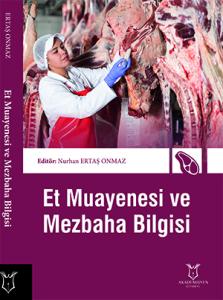
Et Muayenesi: Tarihsel Gelişim, Güncel Uygulamalar ve Gıda Güvenliği Üzerine Etkileri
Özet
Gıda güvenliğinde kritik bir rol oynayan et muayenesi, kesim öncesi ve sonrası hijyen standartları ile risk yönetimini içerir. Tarih boyunca dini ve kültürel uygulamalar et muayenesini şekillendirmiştir; ancak günümüzde bu süreç, modern bilim, teknoloji ve yasal düzenlemelerle desteklenmektedir. Veteriner hekimler, hayvan sağlığını ve hijyen standartlarını koruma görevleriyle etin güvenli tüketimini sağlamada önemli bir rol oynar. Görsel incelemeler, mikrobiyal testler ve büyük veri analitiği gibi yeni teknolojiler, patojenlerin ve kontaminantların tespitini kolaylaştırarak gıda kaynaklı hastalık risklerini azaltır. Artan hayvan refahı ve çevresel sürdürülebilirlik bilinciyle, et üretiminde etik ve güvenlik standartlarına uyulması zorunludur. Bu çalışma, et muayenesinin tarihsel gelişimini, mevcut uygulamaları, halk sağlığı ve gıda güvenliği üzerindeki etkilerini incelemektedir.
Meat inspection plays a crucial role in ensuring food safety, encompassing pre and post slaughter examinations, hygiene standards, and risk management protocols. Historically influenced by religious and cultural practices, today’s meat inspection processes are enhanced by modern science, technology, and regulatory frameworks. Veterinarians are essential in safeguarding meat for consumption by maintaining animal health and hygiene standards. Through visual assessments, microbial testing, and big data analytics, new technologies in meat inspection help identify pathogens and contaminants, reducing the risks of foodborne diseases. Additionally, increasing awareness around animal welfare and environmental sustainability has made adherence to ethical and safety standards essential in meat production. This study examines the historical evolution of meat inspection, current practices, and their impacts on public health and food safety.
Referanslar
Tayar M, Atasever M. Et Muayenesi. Erzurum: Atatürk Üniversitesi Veteriner Fakültesi Yayın Ünitesi; 2006.
Atasever M, Alişarlı M. Helâl gıda, Journal of Halal Life Style. 2020; 2(2), 95-101.
Cohen YA, Stefon M. Dietary law - Islamic Halal, Kosher, Taboo. Encyclopaedia Britannica. Updated September 11, 2024. Erişim adresi: https://www.britannica.com/topic/dietary-law.
Seetah K. The Middle Ages on the Block: Animals, Guilds and Meat in the Medieval Period. In: Pluskowski A, ed. Breaking and Shaping Beastly Bodies: Animals as Material Culture in the Middle Ages. Oxbow Books; 2007.
Oksana. The Medieval Butcher: Meats, Markets, and Methods. Knights Templar. Published 2021. https://knightstemplar.co/
Magner LN. A History of Medicine. London: CRC Press; 2005.
Warriss PD. Meat Science. 2nd Edition: An Introductory Text,. Wallingford, UK: CABI Publishers; 2010.
Linnekin BJ. The Food-Safety Fallacy: More Regulation Doesn’t Necessarily Make Food Safer. Northeastern University Law Journal. 2011;4(1):1-45.
Tucker JA. When Government Spreads Disease: The 1906 Meat Inspection Act. Foundation for Economic Education. Published December 18, 2017. https://fee.org/articles/
Hardy A. Cholera, quarantine and the English preventive system, 1850-1895. Med Hist. 1993 Jul;37(3):250-69. doi: 10.1017/s0025727300058440. PMID: 8377544; PMCID: PMC1036746.
Schwabe CW. Veterinary Medicine and Human Health. Williams & Wilkins; 1984.
Heredia N, García S. Food Microbiology. Academic Press; 2018.
European Food Safety Authority (EFSA). Meat inspection: Scientific Advice and Technical Support. EFSA Journal. 2020. Available from: https://www.efsa.europa.eu.
Food And Agriculture Organization (FAO). Good Practices for the Meat Industry. Rome: FAO; 2006. Available from: https://openknowledge.fao.org.
World Organisation for Animal Health (OIE). Control of hazards of public health and animal health importance through ante- and postmortem meat inspection, 2005. Available from: https://doc.woah.org/dyn/portal/digidoc.xhtml?statelessToken=qi3W54UFDCbEuA32VQxCuhy93DrPXrUmr6Pa2n5zqxk=&actionMethod=dyn%2Fportal%2Fdigidoc.xhtml%3AdownloadAttachment.openStateless
Council Directive 96/23/EC. Official Journal of the European Communities; 1996.
Leo M, Nollet L, Toldra F, Advanced Technologies for Meat Processing: Taylor&Francis, London; 2006.
McMichael AJ, Powles JW, Butler CD, Uauy R. Food, livestock production, energy, climate change, and health. Lancet; 2007; 370(9594):1253-63. doi: 10.1016/S0140-6736(07)61256-2. PMID: 17868818.
Verbeke, W, and I Vackier.Profile and effects of consumer involvement in fresh meat. Meat Science. 2004; 67:159-168.
Echegaray N, Hassoun A, Jagtap S, Tetteh-Caesar M, Kumar M, Tomasevic I, Goksen G, Lorenzo JM. Meat 4.0: Principles and Applications of Industry 4.0 Technologies in the Meat Industry. Applied Sciences. 2022; 12(14):6986. https://doi.org/10.3390/app12146986
Durmaz G. Food Safety in the Ottoman Empire: The Problem of Adulterated Olive Oil in the Context of Public Health and International Trade. Osmanlı Araştırmaları - The Journal of Ottoman Studies. 2019;54:277-305. https://doi.org/10.18589/oa.632435.
Singer A. Starting with Food: Culinary Approaches to Ottoman History. Princeton University; 2011.
Resmi Gazete. Veteriner Hizmetleri, Bitki Sağlığı, Gıda ve Yem Kanunu. T.C. Resmi Gazete, 13 Haziran 2010, Kanun no: 5996.
European Food Safety Authority (EFSA). The European Union One Health 2021 Zoonoses Report. Scientific Report: 2021; doi: 10.2903/j.efsa.2022.766
Food Safety and Inspection Service (FSIS), USDA. Inspection of Meat Products. 2021. Available from: https://www.fsis.usda.gov.
Food Safety and Inspection Service (FSIS), USDA. Public Health Veterinarian (PHV) Responsibilities. 2021. Available from: https://www.fsis.usda.gov.
Gbashi S., Njobeh, P. B. Enhancing Food Integrity through Artificial Intelligence and Machine Learning: A Comprehensive Review. Applied Sciences. 2024; 14(8), 3421. https://doi.org/10.3390/app14083421.
Liu Z, Wang S, Zhang Y, Feng Y, Liu J, Zhu H. Artificial Intelligence in Food Safety: A Decade Review and Bibliometric Analysis. Foods; 2023; 12(6), 1242. https://doi.org/10.3390/foods12061242.
Almansour AM, Alhadlaq MA, Alzahrani KO, Mukhtar LE, Alharbi AL, Alajel SM. The Silent Threat: Antimicrobial-Resistant Pathogens in Food-Producing Animals and Their Impact on Public Health. Microorganisms. 2023; 11(9):2127. https://doi.org/10.3390/microorganisms11092127
Conceição S, Queiroga MC, Laranjo M. Antimicrobial Resistance in Bacteria from Meat and Meat Products: A One Health Perspective. Microorganisms. 2023; 11(10), 2581. https://doi.org/10.3390/microorganisms11102581