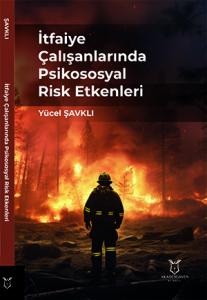
İtfaiye Çalışanlarında Psikososyal Risk Etkenleri
Özet
-
Referanslar
Abbasi, A., Hossain, L., Hamra, J., & Owen, C. (2010, December). Social networks perspective of firefighters' adaptive behaviour and coordination among them. In 2010 IEEE/ACM Int'l Conference on Green Computing and Communications & Int'l Conference on Cyber, Physical and Social Computing (pp. 819-824). IEEE.
Alharbi, B. H., Pasha, M. J., & Al-Shamsi, M. A. S. (2021). Firefighter exposures to organic and inorganic gas emissions in emergency residential and industrial fires. Science of the Total Environment, 770, 145332.
Almeida, F., Morais, J., & Pereira, A. (2022). Portuguese volunteer firefighters in the context of the challenges posed by the COVID-19 pandemic. Social Sciences, 11(7), 285.
Amerikan Psikiyatri Birliği. (2018). DSM-5 tanı ölçütleri başvuru el kitabı (Çev., Prof. Dr. Ertuğrul Köroğlu). HYB Yayıncılık. (Orijinal eserin yayın tarihi 2013).
Andrews, K. L., Gallagher, S., & Herring, M. P. (2019). The effects of exercise interventions on health and fitness of firefighters: A meta‐analysis. Scandinavian Journal of Medicine & Science in Sports, 29(6), 780-790.
Barber, E., & Warn, J. (2005). Leadership in project management: From firefighter to firelighter. Management Decision, 43(7/8), 1032-1039.
Becker, J. P., & Quartilho, M. J. (2020). A relational model for stress: A systematic review of the risk and protective factors for stress-related diseases in firefighters. Psych, 2(1), 74-84. https://doi.org/10.3390/psych2010008
Bernanke, B. S., Geithner, T. F., & Paulson Jr, H. M. (2019). Firefighting: The financial crisis and its lessons. Penguin.
Bhojani, F. A., Castillejo-Picco, L. A., Cathcart, D., Emmett, E. A., Frangos, S., Glencross, P. M., ... & Turner, D. E. (2018). Fitness-for-duty assessments of industrial firefighters: Guidance for occupational medicine physicians. Journal of Occupational and Environmental Medicine, 60(2), e82-e89.
Blaney, L., & Brunsden, V. (2015). Resilience and health promotion in high-risk professions: A pilot study of firefighters in Canada and the United Kingdom. The International Journal of Interdisciplinary Organizational Studies, 10(2), 23–32.
Boag-Munroe, F., Donnelly, J., Van Mechelen, D., & Elliot-Davies, M. (2017). Police officers’ promotion prospects and intention to leave the police. Policing: A Journal of Policy and Practice, 11, 132–145.
Bogue, R. (2021). The role of robots in firefighting. Industrial Robot: The International Journal of Robotics Research and Application, 48(2), 174-178.
Branlat, M., Fern, L., Voshell, M., & Trent, S. (2009, October). Understanding coordination challenges in urban firefighting: A study of critical incident reports. In Proceedings of the Human Factors and Ergonomics Society Annual Meeting (Vol. 53, No. 4, pp. 284-288). Los Angeles, CA: SAGE Publications.
Brooks, S. K., Dunn, R., Amlôt, R., Greenberg, N., & Rubin, G. J. (2016). Social and occupational factors associated with psychological distress and disorder among disaster responders: A systematic review. BMC Psychology, 4(1), 1-13.
Brumfield, L., Miner, S., Tydings, D., & Carey, M. (2023). Occupational firefighting: A detriment to good health. Journal of Occupational and Environmental Medicine, 65(5), 387-393.
Butry, D. T., Webb, D., Gilbert, S., & Taylor, J. (2019). The economics of firefighter injuries in the United States (p. 44). Gaithersburg, MD, USA: US Department of Commerce, National Institute of Standards and Technology.
Carpenter, T. P., Pennington, M. L., Seebeck, J., Gomez, D. R., Denman, T. C., Kimbrel, N. A., Cammarata, C. M., Leto, F., Ostiguy, W. J., & Gulliver, S. B. (2020). Dispositional self-forgiveness in firefighters predicts less help-seeking stigma and fewer mental health challenges. Stigma and Health, 5(1), 29–37. https://doi.org/10.1037/sah0000172
Castro, K. C., Fisher, A. B., Geczik, A. M., Boyer, S. L., Resick, C. J., Lee, J., ... & Allen, J. A. (2023). By nature, we're doers and problem solvers: Evolving job demands and resources in response to COVID-19 among US-based fire service personnel (The RAPID Study II). Journal of Occupational and Environmental Medicine, 65(4), e195-e203.
Chamberlin, M. J., & Green, H. J. (2010). Stress and coping strategies among firefighters and recruits. Journal of Loss and Trauma, 15(6), 548-560.
Chang, R. H., Peng, Y. T., Choi, S., & Cai, C. (2022). Applying artificial intelligence (AI) to improve fire response activities. Emergency Management Science and Technology, 2(1), 1-6.
Chen, X., Zhang, L., Peng, Z., & Chen, S. (2020). Factors influencing the mental health of firefighters in Shantou City, China. Psychology Research and Behavior Management, 13, 529. https://doi.org/10.2147/PRBM.S249650
Chmiel, K., Chmiel, M., & Smyk, S. (2023). Logistic protection of volunteer firefighting units of the national rescue and firefighting system during long-term rescue operations on the example of floods. Safety & Fire Technology, 61(1), 152-165.
Cho, I. K., Lee, H. S., Song, K., Ahmed, O., Lee, D., Kim, J., ... & Chung, S. (2023). Assessing stress and anxiety in firefighters during the coronavirus disease-2019 pandemic: A comparative adaptation of the stress and anxiety in the viral epidemic–9 items and stress and anxiety in the viral epidemics–6 items scales. Psychiatry Investigation, 20(11), 1095.
Chung, S., Lee, H. S., Jang, S., Shin, Y. W., Kim, J. H., & Jun, J. Y. (2023). Pandemic grief reaction and intolerance of uncertainty on the cognitive-behavioral model of COVID-related hypochondriasis among firefighters. Psychiatry Investigation, 20(9), 826.
Cicioğlu, M., & Çalhan, A. (2020). Internet of Things-based firefighters for disaster case management. IEEE Sensors Journal, 21(1), 612-619.
Cohen, H. W., Zeig-Owens, R., Joe, C., Hall, C. B., Webber, M. P., Weiden, M. D., ... & Prezant, D. J. (2019). Long-term cardiovascular disease risk among firefighters after the World Trade Center disaster. JAMA Network Open, 2(9), e199775-e199775.
Conway, R. R., & Waring, S. (2020). Facilitators and barriers to developing firefighter resilience. Disaster Prevention and Management: An International Journal. Advanced online publication. https://doi.org/10.1108/DPM-06-2018-0186
Cordner, A. (2024). External drivers of changes in wildland firefighter safety policies and practices. International Journal of Wildland Fire, 33(11).
Dahles, H., & Van Hees, E. (2004). Firefighters across frontiers: Two fire brigades cooperating in the Dutch–German borderland. Culture and Organization, 10(4), 315-328.
Delisle, A. T., Delisle, A. L., Chaney, B. H., Stopka, C. B., & Northcutt, W. (2013). Methods for fostering a community academic partnership in a firefighter community. American Journal of Health Behavior, 37(6), 721-733.
Denkova, E., Zanesco, A. P., Rogers, S. L., & Jha, A. P. (2020). Is resilience trainable? An initial study comparing mindfulness and relaxation training in firefighters. Psychiatry Research, 285, 112794.
Dinan, W., Ford, A., McConnell, A., & Pyper, R. (2006). Policy responses to crisis: The case of the UK firefighters’ dispute. Policy & Politics, 34(2), 307-323.
Edelman, P., Osterloh, J., Pirkle, J., Caudill, S. P., Grainger, J., Jones, R., ... & Prezant, D. (2003). Biomonitoring of chemical exposure among New York City firefighters responding to the World Trade Center fire and collapse. Environmental Health Perspectives, 111(16), 1906-1911.
Ericson, M., & Mellström, U. (2016). Firefighters, technology and masculinity in the micro-management of disasters: Swedish examples. In Men, masculinities and disaster (pp. 164-174). Routledge.
Ericson, M., & Mellström, U. (2016). Firefighters, technology, and masculinity in the micro-management of disasters: Swedish examples. In Men, Masculinities, and Disaster (pp. 164-174). Routledge.
Fahy, R. F., LeBlanc, P. R., & Molis, J. L. (2012). Firefighter fatalities in the United States–2011 (Vol. 1, pp. 1-36). Emmitsburg, MD: NFPA.
Federal Emergency Management Agency. (2017). National Incident Management System (NIMS) (3rd ed.). U.S. Department of Homeland Security. https://www.fema.gov/emergency-managers/nims
Fedorowicz, J., Gogan, J. L., & Williams, C. B. (2007). A collaborative network for first responders: Lessons from the CapWIN case. Government Information Quarterly, 24(4), 785-807.
Fender, D. L. (2003). Controlling risk-taking among firefighters. Professional Safety, 48(7), 14.
Fent, K. W., & Evans, D. E. (2011). Assessing the risk to firefighters from chemical vapors and gases during vehicle fire suppression. Journal of Environmental Monitoring, 13(3), 536-543.
Fent, K. W., Alexander, B., Roberts, J., Robertson, S., Toennis, C., Sammons, D., ... & Horn, G. (2017). Contamination of firefighter personal protective equipment and skin and the effectiveness of decontamination procedures. Journal of Occupational and Environmental Hygiene, 14(10), 801-814.
Flynn, M. (2018). New report says massive 'fire tornado' killed a California firefighter in July. The Washington Post.
Fraess-Phillips, A., Wagner, S., & Harris, R. L. (2017). Firefighters and traumatic stress: A review. International Journal of Emergency Services, 6(1), 67-80.
Fraess-Phillips, A., Wagner, S., & Harris, R. L. (2017). Firefighters and traumatic stress: A review. International Journal of Emergency Services, 6(1), 67-80.
Freudenberger, H. J. (1974). Staff burnout. Journal of Social Issues, 30, 159–165.
Fushimi, M. (2012). Posttraumatic stress in professional firefighters in Japan: Rescue efforts after the Great East Japan Earthquake (Higashi Nihon Dai-shinsai). Prehospital and Disaster Medicine, 27(5), 416-418.
Galatzer-Levy, I. R., Brown, A. D., Henn-Haase, C., Metzler, T. J., Neylan, T. C., & Marmar, C. R. (2013). Positive and negative emotion prospectively predict trajectories of resilience and distress among high-exposure police officers. Emotion, 13(3), 545-553. https://doi.org/10.1037/a0031314
Giannini, K. A. (2024). The lived experience of family stress in partners of firefighters during the COVID-19 pandemic.
Graham, E. L., Khaja, S., Caban-Martinez, A. J., & Smith, D. L. (2021). Firefighters and COVID-19: An occupational health perspective. Journal of Occupational and Environmental Medicine, 63(8), e556-e563.
Griffith, J. C., & Roberts, D. L. (2020). How we roll: A fire engine to every call? Fire department resource allocation and firefighter support in the United States. International Journal of Emergency Services, 9(3), 409-419. https://doi.org/10.1108/IJES-12-2019-0066
Gulliver, S. B., Pennington, M. L., Torres, V. A., Steffen, L. E., Mardikar, A., Leto, F., … Kimbrel, N. A. (2019). Behavioral health programs in fire service: Surveying access and preferences. Psychological Services, 16(2), 340–345.
Ha, J., Kim, D. I., Seo, B. S., Kim, W. S., Ryu, S., & Kim, S. G. (2008). Job stress and psychosocial stress among firefighters. Annals of Occupational and Environmental Medicine, 20(2), 104-111.
Herzog, J., O'Dare, K., King, E., Rotunda, R., & Dillard, D. (2023). Trauma symptoms and suicidal ideation in firefighters with consideration of exposure to natural disaster. Traumatology, 29(3), 383.
Heydari, P., Babamiri, M., Tapak, L., Golmohammadi, R., & Kalatpour, O. (2022). Weighing and prioritization of individual factors affecting the performance of industries firefighters. Fire Safety Journal, 127, 103512.
Hodges, J. L., Lattimer, B. Y., & Champlin, V. L. (2022). The role of artificial intelligence in firefighting. In Handbook of Cognitive and Autonomous Systems for Fire Resilient Infrastructures (pp. 177-203). Cham: Springer International Publishing.
International Fire Service Training Association. (2013). Essentials of firefighting and fire department operations (6th ed.). Fire Protection Publications, Oklahoma State University.
International Labour Organization. (1985). Occupational safety and health (OSH) conventions (No. 174). https://www.ilo.org/dyn/normlex/en/f?p=NORMLEXPUB:12100:0::NO::P12100_ILO_CODE:C174
Isaac, G. M., & Buchanan, M. J. (2021). Extinguishing stigma among firefighters: An examination of stress, social support, and help-seeking attitudes. Psychology, 12(3), 349-373.
Iyama, K., Takano, Y., Takahashi, T., & Hasegawa, A. (2020). Factors associated with the intention to participate in activities during a nuclear disaster situation among firefighters. Journal of Radiation Research, 61(6), 871-875.
Jacobsson, A., Backteman-Erlanson, S., & Egan Sjolander, A. (2020). Diversity, preventive work and education—matters of health and well-being in firefighter discourse. International Journal of Qualitative Studies on Health and Well-being, 15(1), 1817661.
Jahnke, S. A., Poston, W. S. C., Haddock, C. K., & Murphy, B. (2016). Firefighting and mental health: Experiences of repeated exposure to trauma. Work, 53(4), 737-744.
Johansson, N., & Svensson, S. (2019). Review of the use of fire dynamics theory in fire service activities. Fire Technology, 55, 81-103.
Joyce, S., Shand, F., Tighe, J., Laurent, S. J., Bryant, R. A., & Harvey, S. B. (2017). The road to resilience: A systematic review. BMJ Open, 8(6), e017858. https://doi.org/10.1136/bmjopen-2017-017858
Karacaoğlu, Ö. C. (2024). Basic disaster skills during and after disaster according to the opinions of firefighters. European Journal of Arts, Humanities and Social Sciences, 1(2), 18-32.
Kehl, D., Knuth, D., Galea, E., Hulse, L., Sans, J., Valles, L., ... & Schmidt, S. (2014). Advancing disaster relief: Development of a self-report questionnaire for firefighters. International Perspectives in Psychology, 3(3), 167-183.
Khan, M. N. H., & Neustaedter, C. (2019, May). An exploratory study of the use of drones for assisting firefighters during emergency situations. In Proceedings of the 2019 CHI Conference on Human Factors in Computing Systems (pp. 1-14).
Khana, N., Leea, D., Alia, A. K., & Parka, C. (2020, October). Artificial intelligence and blockchain-based inspection data recording system for portable firefighting equipment. In Proceedings of the International Symposium on Automation and Robotics in Construction, Kitakyushu, Japan (pp. 27-28).
Kim, J. M., & Lee, H. J. (2008). Hazards exposed to firefighters in fire-physical, chemical, and biologic factors. Journal of the Korean Medical Association, 51(12), 1072-1077.
Kim, K. S. (2010). Health hazards in firefighters. Hanyang Medical Reviews, 30(4), 296-304.
Klimley, K. E., Van Hasselt, V. B., & Stripling, A. M. (2018). Posttraumatic stress disorder in police, firefighters, and emergency dispatchers. Aggression and Violent Behavior, 43, 33-44.
Krok, D. (2016). Can meaning buffer work pressure? An exploratory study on styles of meaning in life and burnout in firefighters. Archives of Psychiatry and Psychotherapy, 18(1), 31–42.
Krzemińska, S., & Szewczyńska, M. (2020). Analysis and assessment of hazards caused by chemicals contaminating selected items of firefighter personal protective equipment–a literature review. Safety & Fire Technology, 56(2), 92-109.
Kula, S. (2017). Occupational stress, supervisor support, job satisfaction, and work-related burnout: Perceptions of Turkish National Police (TNP) members. Police Practice and Research, 18, 146–159.
Lambert, K., Merci, B., Gryspeert, C., & Jekovec, N. (2021). Search & rescue operations during interior firefighting: A study into crawling speeds. Fire Safety Journal, 121, 103269.
Landen, S. M., & Wang, C. C. D. (2010). Adult attachment, work cohesion, coping, and psychological well-being of firefighters. Counselling Psychology Quarterly, 23(2), 143-162.
Lee, J. H., Lee, D., Kim, J., Jeon, K., & Sim, M. (2017). Duty‐related trauma exposure and posttraumatic stress symptoms in professional firefighters. Journal of Traumatic Stress, 30(2), 133-141.
Lee, J. S., Ahn, Y. S., Jeong, K. S., Chae, J. H., & Choi, K. S. (2014). Resilience buffers the impact of traumatic events on the development of PTSD symptoms in firefighters. Journal of Affective Disorders, 162, 128-133.
Lee, J. Y., Park, J., Park, H., Coca, A., Kim, J. H., Taylor, N. A., ... & Tochihara, Y. (2015). What do firefighters desire from the next generation of personal protective equipment? Outcomes from an international survey. Industrial Health, 53(5), 434-444.
Lentz, L., Smith-MacDonald, L., Malloy, D. C., Anderson, G. S., Beshai, S., Ricciardelli, R., ... & Carleton, R. N. (2022). A qualitative analysis of the mental health training and educational needs of firefighters, paramedics, and public safety communicators in Canada. International Journal of Environmental Research and Public Health, 19(12), 6972.
Lesniak, A. Y., Bergstrom, H. C., Clasey, J. L., Stromberg, A. J., & Abel, M. G. (2020). The effect of personal protective equipment on firefighter occupational performance. The Journal of Strength & Conditioning Research, 34(8), 2165-2172.
Leykin, D., Lahad, M., & Bonneh, N. (2013). Posttraumatic symptoms and posttraumatic growth of Israeli firefighters, at one month following the Carmel fire disaster. Psychiatry Journal, 1–5. https://doi.org/10.1155/2013/274121
Li'an, Z. H. A. N. G., Huifei, W. A. N. G., Jue, O. U., Yaxin, H. O. U., & Ming, Y. A. N. G. (2021). Research status and suggestions on occupational safety and health risks and safeguard measures of firefighters. Journal of Environmental and Occupational Medicine, 38(2), 163-168.
Lima, E. D. P., Vasconcelos, A. G., Corrêa, L. R. T., & Batista, A. G. (2020). Frontline losses: Absenteeism among firefighters during the fight against the COVID-19 pandemic. Revista Brasileira de Saúde Ocupacional, 45, e27.
Lovejoy, S., Gillespie, G. L., & Christianson, J. (2015). Exploring physical health in a sample of firefighters. Workplace Health & Safety, 63(6), 253-258.
Mao, X., Fung, O. W. M., Hu, X., & Loke, A. Y. (2018). Psychological impacts of disaster on rescue workers: A review of the literature. International Journal of Disaster Risk Reduction, 27, 602–617.
Marek, W., Marzena, P., & Bożena, K. (2017). The explosion of tanks containing compressed flammable gas as a risk for firefighters at work. Safety & Fire Technology, 48(4), 70-78.
Martinez-Fiestas, M., Rodríguez-Garzón, I., & Delgado-Padial, A. (2020). Firefighter perception of risk: A multinational analysis. Safety Science, 123, 104545.
Maslach, C. (2015). Burnout: The cost of caring. Malor Books.
McAlearney, A. S., Gaughan, A. A., MacEwan, S. R., Gregory, M. E., Rush, L. J., Volney, J., & Panchal, A. R. (2022). Pandemic experience of first responders: Fear, frustration, and stress. International Journal of Environmental Research and Public Health, 19(8), 4693.
McKinnon, M. B., DeCrane, S., & Kerber, S. (2020). Four firefighters injured in lithium-ion battery energy storage system explosion–Arizona. Underwriters Laboratory, Firefighter Safety Research Institute.
Meyer, E. C., Zimering, R., Daly, E., Knight, J., Kamholz, B. W., & Gulliver, S. B. (2012). Predictors of posttraumatic stress disorder and other psychological symptoms in trauma-exposed firefighters. Psychological Services, 9(1), 1–15.
Meyer, E. C., Zimering, R., Daly, E., Knight, J., Kamholz, B. W., & Gulliver, S. B. (2012). Predictors of posttraumatic stress disorder and other psychological symptoms in trauma-exposed firefighters. Psychological Services, 9(1), 1.
Molnár, A. (2024). A systematic collaboration of volunteer and professional fire units in Hungary. International Journal of Disaster Risk Management, 6(1), 1-13.
Monares, Á., Ochoa, S. F., Pino, J. A., Herskovic, V., Rodriguez-Covili, J., & Neyem, A. (2011). Mobile computing in urban emergency situations: Improving the support to firefighters in the field. Expert Systems with Applications, 38(2), 1255-1267.
Moura, D., & Oliveira, E. (2007, March). Fighting fire with agents: An agent coordination model for simulated firefighting. In Proceedings of the 2007 Spring Simulation Multiconference (Vol. 2, pp. 71-78).
Nam, C. Y., Kim, H. S., & Kwon, S. H. (2013). Effects of a stress management program providing cognitive behavior therapy on problem-focused coping, job stress, and depression in firefighters. Journal of Korean Academy of Psychiatric and Mental Health Nursing, 22(1), 12-21.
National Fire Protection Association. (2019). NFPA 1500: Standard on fire department occupational safety, health, and wellness program. NFPA. https://www.nfpa.org/codes-and-standards/all-codes-and-standards
Nunavath, V., Prinz, A., & Comes, T. (2016). Identifying first responders' information needs: Supporting search and rescue operations for fire emergency response. International Journal of Information Systems for Crisis Response and Management (IJISCRAM), 8(1), 25-46.
Obuobi-Donkor, G., Oluwasina, F., Nkire, N., & Agyapong, V. I. (2022). A scoping review on the prevalence and determinants of post-traumatic stress disorder among military personnel and firefighters: Implications for public policy and practice. International Journal of Environmental Research and Public Health, 19(3), 1565.
Ogińska-Bulik, N., & Zadworna-Cieślak, M. (2015). Spirituality and the negative and positive effects of traumatic experiences in a group of emergency service workers. Polish Journal of Applied Psychology, 13(2), 9-24.
O'Hagan, J. (2023). Utilizing psychoeducation for preventative health for firefighters and emergency medical services: A pilot study (Doctoral dissertation, Alliant International University).
Omidi, S., Feridooni, G. J., Farmanbar, R., & Heidari, M. (2021). The effect of an educational intervention based on the theory of planned behavior on firefighters' risk perception in operational units. Journal of Health & Safety at Work, 11(2).
Oosthuizen, R. M., & Koortzen, P. (2006). Stress-management strategies of firefighters: A fortigenic approach. Southern African Business Review, 10(3), 94-114.
Özdemir, P. G., Okmen, A. C., & Yılmaz, O. (2018). Vardiyalı çalışma bozukluğu ve vardiyalı çalışmanın zihinsel ve fiziksel etkileri. Psikiyatride Güncel Yaklaşımlar, 10(2), 71+.
Öztürk, M. O., & Uluşahin, A. (2011). Ruh sağlığı ve bozuklukları. Nobel Tıp Kitabevleri.
Park, H., Kim, S., Morris, K., Moukperian, M., Moon, Y., & Stull, J. (2015). Effect of firefighters' personal protective equipment on gait. Applied Ergonomics, 48, 42-48.
Park, H., Park, J., Lin, S. H., & Boorady, L. M. (2014). Assessment of firefighters’ needs for personal protective equipment. Fashion and Textiles, 1, 1-13.
Park, J. (2019). The adverse impact of personal protective equipment on firefighters' cognitive functioning. The Research Journal of the Costume Culture, 27(1), 1-10.
Pennington, M. L., Carpenter, T. P., Synett, S. J., Torres, V. A., Teague, J., Morissette, S. B., ... & Gulliver, S. B. (2018). The influence of exposure to natural disasters on depression and PTSD symptoms among firefighters. Prehospital and Disaster Medicine, 33(1), 102-108.
Pham, V. T., Le, Q. B., Nguyen, D. A., Dang, N. D., Huynh, H. T., & Tran, D. T. (2019). Multi-sensor data fusion in a real-time support system for on-duty firefighters. Sensors, 19(21), 4746.
Pines, A. M., & Keinan, G. (2005). Stress and burnout: The significant difference. Personality and Individual Differences, 39, 625–635.
Punakallio, A., Lusa, S., & Luukkonen, R. (2003). Protective equipment affects balance abilities differently in younger and older firefighters. Aviation, Space, and Environmental Medicine, 74(11), 1151-1156.
Ras, J., Kengne, A. P., Smith, D. L., Soteriades, E. S., November, R. V., & Leach, L. (2022). Effects of cardiovascular disease risk factors, musculoskeletal health, and physical fitness on occupational performance in firefighters—A systematic review and meta-analysis. International Journal of Environmental Research and Public Health, 19(19), 11946.
Ras, J., Smith, D. L., Kengne, A. P., Soteriades, E. E., & Leach, L. (2022). Cardiovascular disease risk factors, musculoskeletal health, physical fitness, and occupational performance in firefighters: A narrative review. Journal of Environmental and Public Health, 2022(1), 7346408.
Ras, J., Smith, D. L., Soteriades, E. S., Kengne, A. P., & Leach, L. (2023). Association between physical fitness and cardiovascular health in firefighters. International Journal of Environmental Research and Public Health, 20(11), 5930.
Regehr, C. (2001). Crisis debriefing groups for emergency responders: Reviewing the evidence. Brief Treatment & Crisis Intervention, 1(2).
Regehr, C. (2009). Social support as a mediator of psychological distress in firefighters. The Irish Journal of Psychology, 30(1-2), 87-98.
Regehr, C., Hill, J., & Glancy, G. D. (2000). Individual predictors of traumatic reactions in firefighters. The Journal of Nervous and Mental Disease, 188(6), 333-339.
Regehr, C., Hill, J., Knott, T., & Sault, B. (2003). Social support, self‐efficacy and trauma in new recruits and experienced firefighters. Stress and Health, 19(4), 189-193.
Richmond, V. L., Rayson, M. P., Wilkinson, D. M., Carter, J. M., & Blacker, S. D. (2008). Physical demands of firefighter search and rescue in ambient environmental conditions. Ergonomics, 51(7), 1023-1031.
Rodríguez-Garzón, I., Martínez-Fiestas, M., Delgado-Padial, A., & Lucas-Ruiz, V. (2016). Perception of occupational risk of firefighters in Quito (Ecuador). Fire Technology, 52, 753-773.
Roldán-Gómez, J. J., González-Gironda, E., & Barrientos, A. (2021). A survey on robotic technologies for forest firefighting: Applying drone swarms to improve firefighters’ efficiency and safety. Applied Sciences, 11(1), 363.
Roldán-Gómez, J. J., González-Gironda, E., & Barrientos, A. (2021). A survey on robotic technologies for forest firefighting: Applying drone swarms to improve firefighters’ efficiency and safety. Applied Sciences, 11(1), 363.
Schlauderer, S., Overhage, S., & Weidinger, J. (2016, January). New vistas for firefighter information systems? Towards a systematic evaluation of emerging technologies from a task-technology fit perspective. In 2016 49th Hawaii International Conference on System Sciences (HICSS) (pp. 178-187). IEEE.
Scholz, M., Gordon, D., Ramirez, L., Sigg, S., Dyrks, T., & Beigl, M. (2013). A concept for support of firefighter frontline communication. Future Internet, 5(2), 113-127.
Schulte, N., & Thielsch, M. T. (2019). Evaluation of firefighter leadership trainings. International Journal of Emergency Services, 8(1), 34-49.
Semino, E. (2021). “Not soldiers but fire-fighters”–metaphors and COVID-19. Health Communication, 36(1), 50-58.
Serrano-Ibanez, E. R., Corras, T., Del Prado, M., Diz, J., & Varela, C. (2023). Psychological variables associated with post-traumatic stress disorder in firefighters: A systematic review. Trauma, Violence, & Abuse, 24(4), 2049-2066.
Serrano-Ibanez, E. R., Corras, T., Del Prado, M., Diz, J., & Varela, C. (2023). Psychological variables associated with post-traumatic stress disorder in firefighters: A systematic review. Trauma, Violence, & Abuse, 24(4), 2049-2066.
Shakeriaski, F., & Ghodrat, M. (2022). Challenges and limitations of wearable sensors used in firefighters’ protective clothing. Journal of Fire Sciences, 40(3), 214-245.
Shelley, C. H., Cole, A. R., & Markley, T. E. (2007). Industrial firefighting for municipal firefighters. Fire Engineering Books.
Shi, Y., Kang, J., Xia, P., Tyagi, O., Mehta, R. K., & Du, J. (2021). Spatial knowledge and firefighters’ wayfinding performance: A virtual reality search and rescue experiment. Safety Science, 139, 105231.
Slottje, P. L., Twisk, J. W., Smidt, N., Huizink, A. C., Witteveen, A. B., Van Mechelen, W., & Smid, T. (2007). Health-related quality of life of firefighters and police officers 8.5 years after the air disaster in Amsterdam. Quality of Life Research, 16, 239-252.
Slottje, P., Witteveen, A. B., Twisk, J. W., Smidt, N., Huizink, A. C., Van Mechelen, W., & Smid, T. (2008). Post-disaster physical symptoms of firefighters and police officers: Role of types of exposure and post-traumatic stress symptoms. British Journal of Health Psychology, 13(2), 327-342.
Smith, B. W., Ortiz, J. A., Steffen, L. E., Tooley, E. M., Wiggins, K. T., Yeater, E. A., ... & Bernard, M. L. (2011). Mindfulness is associated with fewer PTSD symptoms, depressive symptoms, physical symptoms, and alcohol problems in urban firefighters. Journal of Consulting and Clinical Psychology, 79(5), 613.
Smith, S. M. (2017). Exploring firefighters' views of personal impact, coping strategies, and social support following work-related crises. The Florida State University.
Smith, T. D., DeJoy, D. M., & Dyal, M. A. (2020). Safety-specific transformational leadership, safety motivation, and personal protective equipment use among firefighters. Safety Science, 131, 104930.
Smith, T. D., DeJoy, D. M., & Dyal, M. A. (2020). Safety-specific transformational leadership, safety motivation, and personal protective equipment use among firefighters. Safety Science, 131, 104930.
Son, S. Y., Bakri, I., Muraki, S., & Tochihara, Y. (2014). Comparison of firefighters and non-firefighters and the test methods used regarding the effects of personal protective equipment on individual mobility. Applied Ergonomics, 45(4), 1019-1027.
Soteriades, E. S., Vogazianos, P., Tozzi, F., Antoniades, A., Economidou, E. C., Psalta, L., & Spanoudis, G. (2022). Exercise and occupational stress among firefighters. International Journal of Environmental Research and Public Health, 19(9), 4986.
Sun, X., Li, X., Huang, J., & An, Y. (2020). Prevalence and predictors of PTSD, depression and posttraumatic growth among Chinese firefighters. Archives of Psychiatric Nursing, 34(1), 14-18. https://doi.org/10.1016/j.apnu.2019.12.007
Taborri, J., Pasinetti, S., Cardinali, L., Perroni, F., & Rossi, S. (2021). Preventing and monitoring work-related diseases in firefighters: A literature review on sensor-based systems and future perspectives in robotic devices. International Journal of Environmental Research and Public Health, 18(18), 9723. https://doi.org/10.3390/ijerph18189723
Tao, R., Kim, S. J., Lu, L., Kang, J., & McLeod, D. (2024). Fighting fire or fighting war: Examining the framing effects of COVID-19 metaphors. Health Communication, 39(10), 2026-2040.
Taylor, R., Macy, G., Hwang, J., Golla, V., Cann, C., & Sanyang, E. (2022). Using collaborative partnerships to engage firefighters in rural communities. International Journal of Environmental Research and Public Health, 19(4), 2009.
Tedeschi, R. G., & Calhoun, L. G. (1996). The posttraumatic growth inventory: Measuring the positive legacy of trauma. Journal of Traumatic Stress, 9(3), 455–471.
Theleritis, C., Psarros, C., Mantonakis, L., Roukas, D., Papaioannou, A., Paparrigopoulos, T., & Bergiannaki, J. D. (2020). Coping and its relation to PTSD in Greek firefighters. The Journal of Nervous and Mental Disease, 208(3), 252-259.
Tochihara, Y., Lee, J. Y., & Son, S. Y. (2022). A review of test methods for evaluating mobility of firefighters wearing personal protective equipment. Industrial Health, 60(2), 106-120.
Torres, V. A., & Gulliver, S. B. (2020). Firefighters: An occupational case study of resilience. In S. E. Schulenberg (Ed.), Positive psychological approaches to disaster: Meaning, resilience, and posttraumatic growth (pp. 99–114). Oxford.
Torun, F. (2020). Depresyon: Bilişsel davranışçı terapi ışığında kendine yardım kılavuzu (5. bs). Psikonet Yayınları.
Toups Dugas, P. O., & Kerne, A. (2007, April). Implicit coordination in firefighting practice: Design implications for teaching fire emergency responders. In Proceedings of the SIGCHI Conference on Human Factors in Computing Systems (pp. 707-716).
Türkçapar, M. H. (2020). Depresyondan çıkış yolu. Epsilon Yayınevi.
Türkiye Bilimler Akademisi. (2021). Türkçe bilim terimleri sözlüğü. http://terim.tuba.gov.tr/ adresinden alınmıştır.
Türkiye Cumhuriyeti İçişleri Bakanlığı. (2007). İtfaiye Teşkilatı Kuruluş, Görev ve Çalışma Esaslarına Dair Yönetmelik. Resmî Gazete, 26481. https://www.mevzuat.gov.tr/mevzuat?MevzuatNo=20071342&MevzuatTur=7&MevzuatTertip=5
Türkiye Cumhuriyeti. (1986). İtfaiye Personelinin Görev, Yetki ve Sorumluluklarına Dair Kanun Hükmünde Kararname (KHK 3065). Resmî Gazete, 19127. https://www.mevzuat.gov.tr/mevzuat?MevzuatNo=3065&MevzuatTur=7&MevzuatTertip=5
Türkiye Cumhuriyeti. (2004). Belediye İtfaiye Yönetmeliği. Resmî Gazete, 25605. https://www.mevzuat.gov.tr/mevzuat?MevzuatNo=20041093&MevzuatTur=7&MevzuatTertip=5
Ungar, M., Ghazinour, M., & Richter, J. (2013). Annual research review: What is resilience within the social ecology of human development? Journal of Child Psychology and Psychiatry, 54(4), 348-366. https://doi.org/10.1111/jcpp.12025
United Nations Office for Disaster Risk Reduction. (2015). Sendai framework for disaster risk reduction 2015–2030. United Nations. https://www.undrr.org/publication/sendai-framework-disaster-risk-reduction-2015-2030
Useem, M., Cook, J. R., & Sutton, L. (2005). Developing leaders for decision making under stress: Wildland firefighters in the South Canyon Fire and its aftermath. Academy of Management Learning & Education, 4(4), 461-485.
Ütük, A., & Baraçlı, H. (2024). Evaluation of the knowledge and awareness of firefighters in Turkey in disaster risk management. Sustainability, 16(9), 3720.
Van Scotter, J. R., & Leonard, K. M. (2022). Clashes of cultures during crises: Coordinating firefighter, police and paramedic interactions. Disaster Prevention and Management: An International Journal, 31(4), 374-386.
Varenikova, M. (2020). Battling wildfire and pandemic, Ukraine faces a new foe: Landmines. The New York Times, 3.
Vujanovic, A. A., & Tran, J. K. (2021). Providing psychological services to firefighters. Journal of Health Service Psychology, 47(3), 137-148.
Wagner, S. L., White, N., Randall, C., Regehr, C., White, M., Alden, L. E., ... & Krutop, E. (2021). Mental disorders in firefighters following large-scale disaster. Disaster Medicine and Public Health Preparedness, 15(4), 504-517.
Walker, A., Driller, M., Brearley, M., Argus, C., & Rattray, B. (2014). Cold-water immersion and iced-slush ingestion are effective at cooling firefighters following a simulated search and rescue task in a hot environment. Applied Physiology, Nutrition, and Metabolism, 39(10), 1159-1166.
Wallace, D., Wallace, R., Wallace, D., & Wallace, R. (2021). Pandemic firefighting vs. pandemic fire prevention. In COVID-19 in New York City: An ecology of race and class oppression (pp. 57-64).
Weidinger, J. (2022). What is known and what remains unexplored: A review of the firefighter information technologies literature. International Journal of Disaster Risk Reduction, 78, 103115.
Weidinger, J., Schlauderer, S., & Overhage, S. (2021). Information technology to the rescue? Explaining the acceptance of emergency response information systems by firefighters. IEEE Transactions on Engineering Management, 70(1), 14-28.
Westnes, E., & Hjortdahl, M. (2024). Firefighters and police search dog handlers’ experiences working closely with paramedics in urban search and rescue incidents: A qualitative focus group study from Oslo. Scandinavian Journal of Trauma, Resuscitation and Emergency Medicine, 32(1), 22.
Wild, J., Greenberg, N., Moulds, M. L., Sharp, M. L., Fear, N., Harvey, S., … & Bryant, R. A. (2020). Pre-incident training to build resilience in first responders: Recommendations on what to and what not to do. Psychiatry, 83(2), 128-142. https://doi.org/10.1080/00332747.2020.1750215
Woliński, M., Półka, M., & Kukfisz, B. (2017). The explosion of tanks containing compressed flammable gas as a risk for firefighters at work. Bezpieczenstwo i Technika Pozarnicza, 48(4), 70-78.
Wolny, P., Tuśnio, N., & Mikołajczyk, F. (2022). Explosion risks during firefighting operations in storage rooms and the transport of ammonium nitrate-based fertilizers. Sustainability, 14(14), 8565.
Yamada, K., Yamaguchi, I., Urata, H., & Hayashida, N. (2020). Survey of awareness of radiation disasters among firefighters in a Japanese prefecture without nuclear power plants. PLOS ONE, 15(7), e0236640.
Yamada, K., Yamaguchi, I., Urata, H., & Hayashida, N. (2020). Survey of awareness of radiation disasters among firefighters in a Japanese prefecture without nuclear power plants. PLOS ONE, 15(7), e0236640.
Yang, M., Lee, E., Choi, J. W., & Kim, H. J. (2012). PTSD and related factors among dispatched firefighters to rescue sites after the great Japanese earthquake (Running head: Dispatched firefighters' PTSD). Korean Journal of Occupational and Environmental Medicine, 24(2), 167-179.
Yfantis, E. A. (2019, January). A UAV with autonomy, pattern recognition for forest fire prevention, and AI for providing advice to firefighters fighting forest fires. In 2019 IEEE 9th Annual Computing and Communication Workshop and Conference (CCWC) (pp. 0409-0413). IEEE.
Young, P. M., Partington, S., Wetherell, M. A., St Clair Gibson, A., & Partington, E. (2014). Stressors and coping strategies of UK firefighters during on‐duty incidents. Stress and Health, 30(5), 366-376.
Zhang, Y., Zhang, X., & Huang, X. (2023). Design a safe firefighting time (SFT) for major fire disaster emergency response. International Journal of Disaster Risk Reduction, 88, 103606.
Yayınlanan
Lisans
LisansBu İnternet Sitesi içeriğinde yer alan tüm eserler (yazı, resim, görüntü, fotoğraf, video, müzik vb.) Akademisyen Kitabevine ait olup, 5846 sayılı Fikir ve Sanat Eserleri Kanunu ve 5237 sayılı Türk Ceca Kanunu kapsamında korunmaktadır. Bu hakları ihlal eden kişiler, 5846 sayılı Fikir ve Sanat eserleri Kanunu ve 5237 sayılı Türk Ceza Kanununda yer alan hukuki ve cezai yaptırımlara tabi olurlar. Yayınevi ilgili yasal yollara başvurma hakkına sahiptir.
