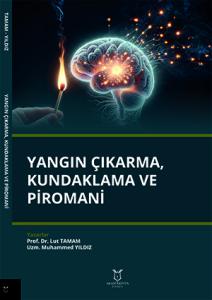
Yangın Çıkarma, Kundaklama ve Piromani
Özet
-
Referanslar
Addison, C.C., Campbell-Jenkins, B.W., Sarpong, D.F., Kibler, J., Singh, M., Dubbert, P., Wilson, G., Payne, T., & Taylor, H. (2007). Psychometric evaluation of a Coping Strategies Inventory Short-Form (CSI-SF) in the Jackson heart study cohort. International Journal of Environmental Research and Public Health, 4(4), 289-295.
Andrews, J. (2010). From stack-firing to pyromania: medico-legal concepts of insane arson in British, US and European contexts, c.1800-1913. Part 2. History of Psychiatry, 21(84 Pt 4), 387-405.
Anwar, S., Långström, N., Grann, M., & Fazel, S. (2011). Is arson the crime most strongly associated with psychosis? A national case-control study of arson risk in schizophrenia and other psychoses. Schizophrenia Bulletin, 37, 580-586.
APA. (2013). Diagnostic and statistical manual of mental disorders, 5th edition (DSM-5). Washington, DC, American Psychiatric Association.
Ashworth, S., Mooney, P., & Tully, R.J. (2017). A case study demonstrating the effectiveness of an adapted-DBT program upon increasing adaptive emotion management skills, with an individual diagnosed with mild learning disability and emotionally unstable personality disorder. Journal of Forensic Psychology Research and Practice, 17(1), 38-60.
Barker, A.F. (1994). Arson: A review of the psychiatric literature. Oxford University Press.
Barnett, W., & Spitzer, M. (1994). Pathological fire-setting 1951-1991: A review. Medicine, Science and the Law, 34(1), 4-20.
Barnett, W., Richter, P., Sigmund, D., & Spitzer, M. (1997). Recidivism and concomitant criminality in pathological firesetters. Journal of Forensic Sciences, 42(5), 879-883.
Barnoux, M., & Gannon, T.A. (2014). A new conceptual framework for revenge firesetting. Psychology, Crime & Law, 20(5), 497-513.
Barnoux, M., Gannon, T.A., & Ó Ciardha, C. (2015). A descriptive model of the offence chain for imprisoned adult male firesetters (descriptive model of adult male firesetting). Legal and Criminological Psychology, 20(1), 48-67.
Battle, J. (1992). Culture-free Self-Esteem Inventories (2nd ed.). PRO-ED.
Bell, R., Doley, R., & Dawson, D. (2018). Developmental characteristics of firesetters: Are recidivist offenders distinctive?. Legal and Criminological Psychology, 23(2), 163-175.
Bennett, G.D. (1954). Physical evidence in arson cases. The Journal of Criminal Law, Criminology, and Police Science, 44(5), 652-660.
Biggs, M. (2005). Dying without killing: Self-immolations, 1963-2002. Making Sense of Suicide Missions, ed. Diego Gambetta, Oxford University Press, (pp.173-208).
Blanco, C., Alegría, A.A., Petry, N.M., Grant, J.E., Simpson, H.B., Liu, S.M., Grant, B.F., & Hasin, D.S. (2010). Prevalence and correlates of fire-setting in the United States: Results from the National Epidemiologic Survey on Alcohol and Related Conditions (NESARC). The Journal of Clinical Psychiatry, 71(9), 1218-1225.
Blum, A.W., Odlaug, B.L., & Grant, J.E. (2018). Cognitive inflexibility in a young woman with pyromania. Journal of Behavioral Addictions, 7(1), 189-191.
Boling, L., & Brotman, C. (1975). A firesetting epidemic in a state mental health center. American Journal of Psychiatry, 132, 946-950.
Bosshart, H., & Capek, S. (2011). An unusual case of random fire-setting behavior associated with lacunar stroke. Forensic Science International, 209(1-3), e8-e10.
Bourget, D., & Bradford, J. (1987). Fire fetishism, diagnostic and clinical implications: A review of two cases. The Canadian Journal of Psychiatry, 32(6), 459-462.
Bourget, D., & Bradford, J.M. (1989). Female arsonists: A clinical study. Journal of the American Academy of Psychiatry and the Law Online, 17(3), 293-300.
Bradford, J.M. (1982). Arson: A clinical study. The Canadian Journal of Psychiatry, 27(3), 188-193.
Brereton, A.L., Lamade, R.V., Lee, A.F., Schuler, A., & Prentky, R.A. (2020). Retrospective study of fire setting among boys in a child welfare sample. Youth Violence and Juvenile Justice, 18(3), 256-273.
Brett, A. (2004). ‘Kindling theory’in arson: how dangerous are firesetters?. Australian & New Zealand Journal of Psychiatry, 38(6), 419-425.
Britannica, T. (2022). Pyromania. Encyclopedia Britannica.
Brown, J.A., Russell, S., Hattouni, E., & Kincaid, A. (2020). Psychoeducation. In Oxford Research Encyclopedia of Education.
Burton, P.R., McNiel, D.E., & Binder, R.L. (2012). Firesetting, arson, pyromania, and the forensic mental health expert. Journal of the American Academy of Psychiatry and the Law Online, 40(3), 355-365.
Butler, H., & Gannon, T. A. (2015). The scripts and expertise of firesetters: A preliminary conceptualization. Aggression and Violent Behavior, 20, 72-81.
Canter, D., & Fritzon, K. (1998). Differentiating arsonists: A model of firesetting actions and characteristics. Legal and Criminological Psychology, 3(1), 73-96.
Carpenter, P.K., & King, A.L. (1989). Epilepsy and arson. British Journal of Psychiatry, 154, 554-556.
Caudill, J.W., Diamond, B., Trulson, C.R., DeLisi, M., & Marquart, J.W. (2012). Sifting through the ashes: Processing arsonists in juvenile justice. American Journal of Criminal Justice, 37, 306-320.
Chand, S.P., Kuckel, D.P., Huecker, M.R. (2023). Cognitive behavior therapy. In: StatPearls. Treasure Island (FL): StatPearls Publishing.
Chen, Y.H., Arria, A.M., & Anthony, J.C. (2003). Firesetting in adolescence and being aggressive, shy, and rejected by peers: New epidemiologic evidence from a national sample survey. Journal of the American Academy of Psychiatry and the Law Online, 31(1), 44-52.
Choi, J. (2015). Fire, arson and fire insurance in late imperial Russia. Slavonic & East European Review, 93(3), 451-492.
Ciardha, C.Ó. (2015). The relationship between firesetting and sexual offending. In The Psychology of Arson: A Practical Guide to Understanding and Managing Deliberate Firesetters (Edt: Rebekah M. Doley, Geoffrey L. Dickens, Theresa A. Gannon) (pp.198-207). Routledge.
Clare, I.C., Murphy, G.H., Cox, D., & Chaplin, E.H. (1992). Assessment and treatment of fire‐setting: A single‐case investigation using a cognitive‐behavioural model. Criminal Behaviour and Mental Health, 2(3), 253-268.
Clarke, J. (2024). The Burning of Bédoin: Crime, complicity, and civil war in Revolutionary France. French Historical Studies, 47(2), 219-254.
Cocis, N. (2014). Man uses arson to try to cover up murder: What are some of the ways people try to interfere with a criminal investigation? Law Office of Nicolai Cocis.
Cox-Jones, C., Lubetsky, M.J., Fultz, S.A., & Kolko, D.J. (1990). Case study: Inpatient psychiatric treatment of a young recidivist firesetter. Journal of the American Academy of Child & Adolescent Psychiatry, 29(6), 936-941.
D’Imperio, A., Saccaro, L.F., Lo, J., Mavromati, M., & Jantzi, C. (2024). Klinefelter syndrome and fire setting behaviors: A case report and scoping review. The Journal of Forensic Psychiatry & Psychology, 35(2), 191-205.
Dadswell, K., Sambol, S., Zervos, M., Harris, M., & Ball, M. (2023). Youth misuse of fire: Measuring the risk of firesetting behaviour using explicit and implicit methods. Journal of Psychopathology and Behavioral Assessment, 45(3), 781-792.
Dalhuisen, L. (2016). Firesetting and firesetters in the Netherlands: Individualization, identification and treatment. Doctoral Dissertation. Eleven International Publishing.
Davis, J.A., & Lauber, K.M. (1999). Criminal behavioral assessment of arsonists, pyromaniacs, and multiple firesetters: The burning question. Journal of Contemporary Criminal Justice, 15(3), 273-290.
Del Bove, G. (2005). An empirically derived classification system for juvenile firesetters: Implications for firesetting behaviour, mental health, outcome and treatment. Retrieved from ProQuest Dissertations & Theses Global. (NR07561).
Del Bove, G.D., & MacKay, S. (2011). An empirically-derived classification system for juvenile firesetters. Criminal Justice and Behavior, 38(8), 796-817.
Delshadian, S. (2003). Playing with fire: Art therapy in a prison setting. Psychoanalytic Psychotherapy, 17(1), 68-84.
DeSalvatore, G. (2002). Residential treatment of latency-aged youth with firesetting behavior. In Handbook on firesetting in children and youth (pp.337-352). Academic Press.
Dickens, G., Sugarman, P., Ahmad, F., Edgar, S., Hofberg, K., & Tewari, S. (2007). Gender differences amongst adult arsonists at psychiatric assessment. Medicine, Science and the Law, 47(3), 233-238.
Dickens, G., Sugarman, P., Ahmad, F., Edgar, S., Hofberg, K., & Tewari, S. (2008). Characteristics of low IQ arsonists at psychiatric assessment. Medicine, Science, and The Law, 48(3), 217-220.
Dickens, G.L., & Doyle, M. (2015). Mentally disordered firesetters in secure mental health care: A forensic mental health nursing perspective. In The Psychology of Arson (pp.260-275). Routledge.
Dixon, M.R., Hinman, J.M., Johnson, T.E. (2020). Impulse-control disorders. In: Functional Analysis in Clinical Treatment (Edt: Peter Sturmey). Elsevier Inc. (pp.479-500).
Dolan, M., Millington, J., & Park, I. (2002). Personality and neuropsychological function in violent, sexual and arson offenders. Medicine, Science and the Law, 42(1), 34-43.
Drummond, L.M. (2001). Behavior therapy: Psychiatric aspects. In. International Encyclopedia of the Social & Behavioral Sciences. (N.J. Smelser (Editor), P.B. Baltes (Editor) (pp.1076-1081). Elsevier Ltd.
Ducat, L., Ogloff, J.R., & McEwan, T. (2013). Mental illness and psychiatric treatment amongst firesetters, other offenders and the general community. Australian & New Zealand Journal of Psychiatry, 47(10), 945-953.
Eisler, R.M. (1972). Crisis intervention in the family of a firesetter. Psychotherapy: Theory, Research & Practice, 9(1), 76-79.
Elliott, E.J. (2002). Juvenile justice diversion and intervention. In Handbook on firesetting in children and youth (pp.383-394). Academic Press.
Eytan, A., Paoloni-Giacobino, A., Thorens, G., Eugster, N., & Graf, I. (2002). Fire-setting behavior associated with Klinefelter syndrome. International Journal of Psychiatry in Medicine, 32, 395-299.
Feeney, J.A., Noller, P., & Hanrahan, M. (1994). Assessing adult attachment. In M.B. Sperling & W.H. Berman (Eds.), Attachment in adults: Clinical and developmental perspectives (pp.128-152). The Guilford Press.
FEMA. (2016). Youth firesetter program manager. U.S. Fire Administration.
Fineman, K.R. (1980). Firesetting in childhood and adolescence. Psychiatric Clinics of North America, 3(3), 483-500.
Fineman, K.R. (1995). A model for the qualitative analysis of child and adult fire deviant behavior. American Journal of Forensic Psychology, 13(1), 31-60.
Fineman, K.R., Brudo, C.J., Brudo, E.S., Michaelis, L., Morris, C., Day, J.B. (1988). Preadolescent firesetter handbook (Ages 7-13). Federal Emergency Management Agency. United States Fire Administration. Washington, DC.
Fineman, K., Brudo, C.S., Brudo, E.S., Morris, C., Michaelis, L., Day, J.B. (1979). Interviewing and counseling juvenile firesetters. The child under seven years of age. National Criminal Justice Reference Service. National Institute of Justice United States Department of Justice, Washington, DC.
Franklin, G.A., Pucci, P.S., Arbabi, S., Brandt, M.M., Wahl, W.L., & Taheri, P.A. (2002). Decreased juvenile arson and firesetting recidivism after implementation of a multidisciplinary prevention program. Journal of Trauma and Acute Care Surgery, 53(2), 260-266.
Fritzon, K. (2011). Theories on arson: The action systems model. In: Dickens, G., Sugarman, P., Gannon, T. (eds). Firesetting and Mental Health. London: RCPsych Publications, (pp.28-47).
Gannon, T.A. (2010). Female arsonists: Key features, psychopathologies and treatment needs. Psychiatry: Interpersonal and Biological Processes, 73, 173-189.
Gannon, T.A., & Barrowcliffe, E. (2012). Firesetting in the general population: The development and validation of the Fire Setting and Fire Proclivity Scales. Legal and Criminological Psychology, 17(1), 105-122.
Gannon, T.A., & Pina, A. (2010). Firesetting: Psychopathology, theory and treatment. Aggression and Violent Behavior, 15(3), 224-238.
Gannon, T.A., Alleyne, E., Butler, H., Danby, H., Kapoor, A., Lovell, T., ... & Ciardha, C.Ó. (2015). Specialist group therapy for psychological factors associated with firesetting: Evidence of a treatment effect from a non-randomized trial with male prisoners. Behaviour Research and Therapy, 73, 42-51.
Gannon, T.A., Ciardha, C.Ó., Doley, R.M., & Alleyne, E. (2012). The multi-trajectory theory of adult firesetting (M-TTAF). Aggression and Violent Behavior, 17(2), 107-121.
Gannon, T.A., Olver, M.E., Alleyne, E., Butler, H., Lister, V., Ó Ciardha, C., ... & Tyler, N. (2023). The development and validation of the firesetting questionnaire. Journal of Psychopathology and Behavioral Assessment, 45(1), 27-47.
Gannon, T.A., Tyler, N., Ciardha, C.Ó., & Alleyne, E. (2022). Adult deliberate firesetting: Theory, assessment, and treatment. John Wiley & Sons.
Gaynor, J. (1993). The juvenile firesetter/arson control and prevention program user's guide. U.S. Department of Justice National Institute of Justice.
Gaynor, J., Karchmer, C. (1988). Adolescent firesetter handbook (Ages 14-18). Federal Emergency Management Agency. United States Fire Administration. Washington, DC.
Geller, J.L. (1987). Firesetting in the adult psychiatric population. Hospital and Community Psychiatry, 38(5), 501-506.
Geller, J.L. (1992). Arson in review: From profit to pathology. Hospital and Community Psychiatry, 15, 623-645.
Geller, J.L., & Bertsch, G. (1985). Fire-setting behavior in the histories of a state hospital population. The American Journal of Psychiatry, 142(4), 464-468.
Geller, J.L., Erlen, J., & Pinkus, R.L. (1986). A historical appraisal of America's experience with “pyromania”-A diagnosis in search of a disorder. International Journal of Law and Psychiatry, 9(2), 201-229.
Geller, J.L., Fisher, W.H., & Bertsch, G. (1992). Who repeats? A follow-up study of state hospital patients' firesetting behavior. Psychiatric Quarterly, 63(2), 143-157.
Geller, J.L., Fisher, W.H., & Moynihan, K. (1992). Adult lifetime prevalence of firesetting behaviors in a state hospital population. Psychiatric Quarterly, 63(2), 129-142.
Geller, J.L., McDermeit, M., & Brown, J.M. (1997). Pyromania? What does it mean?. Journal of Forensic Sciences, 42(6), 1052-1057.
Gould, C.M., Sanders, K.M. (2008). Impulse-control disorders. In: Massachusetts General Hospital Comprehensive Clinical Psychiatry. (Edt: Theodore A. Stern, Maurizio Fava, Scott L. Rauch, Jerrold F. Rosenbaum, Joseph Biederman). Elsevier Inc. (pp.305-317).
Grant, J.E. (2006). SPECT imaging and treatment of pyromania. The Journal of Clinical Psychiatry, 67(6), 998.
Grant, J.E., & Kim, S.W. (2007). Clinical characteristics and psychiatric comorbidity of pyromania. The Journal of Clinical Psychiatry, 68(11), 1717-1722.
Grant, J.E., Levine, L., Kim, D., & Potenza, M.N. (2005). Impulse control disorders in adult psychiatric inpatients. The American Journal of Psychiatry, 162(11), 2184-2188.
Grant, J.E., Thomarios, N., Odlaug, B.L. (2010). Pyromania. In. Encyclopedia of Behavioral Neuroscience. (Edt: George F. Koob, Michel Le Moal, Richard F. Thompson). Elsevier Ltd. (pp.144-148).
Grant, J.E., Williams, K.A., & Potenza, M.N. (2007). Impulse-control disorders in adolescent psychiatric inpatients: Co-occurring disorders and sex differences. The Journal of Clinical Psychiatry, 68(10), 1584-1592.
Green, B., Lowry, T., Pathé, M., & McVie, N. (2014). Firesetting patterns, symptoms and motivations of insanity acquittees charged with arson offences. Psychiatry, Psychology and Law, 21(6), 937-946.
Hagenauw, L.A., Karsten, J., Akkerman-Bouwsema, G.J., de Jager, B.E., & Lancel, M. (2015). Specific risk factors of arsonists in a forensic psychiatric hospital. International Journal of Offender Therapy and Comparative Criminology, 59(7), 685-700.
Häkkänen, H., Puolakka, P., & Santtila, P. (2004). Crime scene actions and offender characteristics in arsons. Legal and Criminological Psychology, 9(2), 197-214.
Hamling, J. (1995). A psychodynamic classification system for pathological firesetters with treatment strategies for each subgroup.
Hardesty, V.A., & Gayton, W.F. (2002). The problem of children and fire: An historical perspective. In Handbook on firesetting in children and youth (pp.1-13). Academic Press.
Harmon, R.B., Rosner, R., & Wiederlight, M. (1985). Women and arson: A demographic study. Journal of Forensic Sciences, 30(2), 467-477.
Harris, G., & Rice, M. (1996). A typology of mentally disordered firesetters. Journal of Interpersonal Violence, 11(3), 351-363.
Harris, G.T., & Rice, M.E. (1984). Mentally disordered firesetters: Psychodynamic versus empirical approaches. International Journal of Law and Psychiatry, 7, 19-34.
Heidrich, A., Schmidtke, A., Lesch, K.P., Hofmann, E., & Becker, T. (1996). Cerebellar arachnoid cyst in a firesetter: The weight of organic lesions in arson. Journal of Psychiatry and Neuroscience, 21(3), 202-206.
Henderson, J.L. (2003). Factors affecting adoption and implementation of a communitybased children’s mental health program: The TAPP-C example. Doctoral dissertation. University of Toronto.
Henderson, J.L., MacKay, S., & Peterson-Badali, M. (2006). Closing the research-practice gap: Factors affecting adoption and implementation of a children’s mental health program. Journal of Clinical Child and Adolescent Psychology, 35, 2-12.
Hickle, K.E., & Roe‐Sepowitz, D.E. (2010). Female juvenile arsonists: An exploratory look at characteristics and solo and group arson offences. Legal and Criminological Psychology, 15(2), 385-399.
Hill, R.W., Langevin, R., Paitich, D., Handy, L., Russon, A., & Wilkinson, L. (1982). Is arson an aggressive act or a property offence? A controlled study of psychiatric referrals. Canadian Journal of Psychiatry, 27(8), 648-654.
Hillier, B., Cherukuru, S., & Sethi, F. (2015). Care pathway process proposal and rationale for the assessment and management of firesetting in the inpatient setting. Journal of Psychiatric Intensive Care, 11(2), 119-127.
Hinds-Aldrich, M. (2009). The seductions of arson: Ritualized political violence and the revelry of arson. Journal of Criminal Justice and Popular Culture, 16(1), 103-135.
Hodges, B.E. (1998). Hodges’ health career model. Original Course Notes.
Hollin, C.R., Davies, S., Duggan, C., Huband, N., McCarthy, L., & Clarke, M. (2013). Patients with a history of arson admitted to medium security: Characteristics on admission and follow-up postdischarge. Medicine, Science and the Law, 53(3), 154-160.
Horley, J., & Bowlby, D. (2011). Theory, research, and intervention with arsonists. Aggression and Violent Behavior, 16(3), 241-249.
Horsley, F.K. (2021). The fire-fire user relationship: A grounded theory of criminalised fire users’ experiences. The Journal of Forensic Psychiatry & Psychology, 32(6), 902-916.
Horsley, F.K. (2022). New perspectives on arson and firesetting the human-fire relationship. Routledge.
Hurley, W., & Monahan, T.M. (1969). Arson: The criminal and the crime. British Journal of Criminology, 9, 4-21.
Icove, D., & Estepp, M. (1987). Motive-based offender profiles of arson and fire related crimes. FBI Law Enforcement Bulletin, 59(4), 17-23.
Iwuh, D. (2023). The emotion-processing part of brain and Pyromania-Can more be known?. Biomedical Journal of Scientific & Technical Research, 48(3), 39830-39836.
Jackson, H.F. (1994). Assessment of fire-setters. In M. McMurran, & J. Hodge (Eds.), The assessment of criminal behaviours in secure settings (pp.94-126). London: Jessica Kingsley.
Jackson, H.F., Glass, C., & Hope, S. (1987). A functional analysis of recidivistic arson. British Journal of Clinical Psychology, 26(3), 175-185.
Jackson, H.F., Hope, S., & Glass, C. (1987). Whay are arsonists not violent offenders? International Journal of Offender Therapy and Comparative Criminology, 31, 143-151.
Jackson, M., Shea, M. (2016). Youth firesetter intervention manual Volume 2. Justice Institute of British Columbia; School of Public Safety, Fire & Safety Division.
Jayaraman, A., & Frazer, J. (2006). Arson: A growing inferno. Medicine, Science and The Law, 46(4), 295-300.
Johansson, N., Wahlqvist, J., & Van Hees, P. (2012). Detection of a typical arson fire scenario - Comparison between experiments and simulations. Journal of Fire Protection Engineering, 22(1), 23-44.
Johnson, R.S., & Netherton, E. (2017). Fire setting and the Impulse-Control Disorder of Pyromania. American Journal of Psychiatry Residents’ Journal, 11(7), 14-16.
Johnston, K., & Tyler, N. (2024). Comparing the characteristics of firesetting and non-firesetting adults in a New Zealand un-apprehended community sample. Psychiatry, Psychology and Law, 1-22.
Kanehisa, M., Morinaga, K., Kohno, H., Maruyama, Y., Ninomiya, T., Ishitobi, Y., ... & Akiyoshi, J. (2012). An uncommon case of random fire-setting behavior associated with Todd paralysis: A case report. BMC Psychiatry, 12, 1-6.
Karamustafalıoğlu, O., Saygılı, S., Çalışkan, M., Kükürt, M. (1991). Yangın çıkaran vakaların incelenmesi. Haseki Tıp Bülteni, 31(1), 63-65.
Kaufman, I., Heims, L.W., & Reiser, D.E. (1961). A re-evaluation of the psychodynamics of firesetting. American Journal of Orthopsychiatry, 31(1), 123-136.
Kerr, J.A., Tyler, N., Foulds, J.A., & Boden, J.M. (2024). Adolescent Firesetting as a Risk Marker for Adult Externalizing and Internalizing Problems: Analysis of a 40-Year Birth Cohort Study. Criminal Justice and Behavior, 51(10), 1530-1547.
Kishimoto, T., Matsumoto, H., Kawabata, Y., Sakabe, Y., Yumizaki, Y., Masuda, N.,…Nakamuro, T. (1995). Incendiarism and localized right cerebral lesion. Journal of Nara Medical Association, 46, 142-147.
Kocsis, R., & Cooksey, R. (2002). Criminal psychological profiling of serial arson crimes. International Journal of Offender Therapy and Comparative Criminology, 46(6), 631-656.
Kolko, D.J. (2002a). Child, parent, and family treatment: Cognitive-behavioral interventions. In Handbook on firesetting in children and youth (pp.305-336). Academic Press.
Kolko, D.J. (2002b). Research studies on the problem. In Handbook on firesetting in children and youth (pp. 33-56). Academic Press.
Kolko, D.J., & Kazdin, A.E. (1988). Prevalence of firesetting and related behaviors among child psychiatric patients. Journal of Consulting and Clinical Psychology, 56(4), 628-630.
Kolko, D.J., & Kazdin, A.E. (1989a). Assessment of dimensions of childhood firesetting among child psychiatric patients and nonpatients. Journal of Abnormal Child Psychology, 17, 157-176.
Kolko, D.J., & Kazdin, A.E. (1989b). The Children’s Firesetting Interview with psychiatrically referred and nonreferred children. Journal of Abnormal Child Psychology, 17, 609-624.
Kolko, D.J., & Kazdin, A.E. (1991). Motives of childhood firesetters: Firesetting characteristics and psychological correlates. Journal of Child Psychology and Psychiatry, 32, 535-550.
Kolko, D.J., & Kazdin, A.E. (1992). The emergence and recurrence of child firesetting: A one-year prospective study. Journal of Abnormal Child Psychology, 20, 17-37.
Kolko, D.J., & Kazdin, A.E. (1994). Children’s descriptions of their firesetting incidents: Characteristics and relationship to recidivism. Journal of the American Academy of Child and Adolescent Psychiatry, 33, 114-122.
Kolko, D.J., Wilcox, D.K., Nishi-Strattner, L., & Kopet, T. (2002). Clinical assessment of juvenile firesetters and their families: Tools and tips. In Handbook on firesetting in children and youth (pp.177-217). Academic Press.
Koson, D.F., & Dvoskin, J. (1982). Arson: A diagnostic study. The Bulletin of the American Academy of Psychiatry and the Law, 10(1), 39-49.
Kroner, D.G., & Mills, J.F. (2002). The criminal attribution inventory: User guide. Unpublished instrument and user guide.
Labree, W., Nijman, H., Van Marle, H., & Rassin, E. (2010). Backgrounds and characteristics of arsonists. International Journal of Law and Psychiatry, 33(3), 149-153.
Lande, S.D. (1980). A combination of orgasmic reconditioning and overt sensitisation in the treatment of a fire fetish. Journal of Behavioural Therapy and Experimental Psychiatry, 11(4), 291-296.
Leander, N.P., & Chartrand, T.L. (2017). On thwarted goals and displaced aggression: A compensatory competence model. Journal of Experimental Social Psychology, 72, 88-100.
Lees-Warley, G.T. (2014). Deliberate firesetting by adults with developmental disabilities. Doctoral dissertation. University of Birmingham.
Lejoyeux, M., & Germain, C. (2011). Pyromania: Phenomenology and epidemiology. In: The Oxford Handbook of Impulse Control Disorders. (Jon E. Grant (Editor), Marc N. Potenza (Editor). (pp.136-148). Oxford University Press.
Lejoyeux, M., Arbaretaz, M., McLoughlin, M., & Adès, J. (2002). Impulse control disorders and depression. The Journal of Nervous and Mental Disease, 190(5), 310-314.
Lejoyeux, M., Feuché, N., Loi, S., Solomon, J., & Adès, J. (1999). Study of impulse-control disorders among alcohol-dependent patients. The Journal of Clinical Psychiatry, 60(5), 302-305.
Leong G.B. (1992). A psychiatric study of persons charged with arson. Journal of Forensic Sciences, 37(5), 1319-1326.
Lévy, B.T., Prudent, C., Liétard, F., & Evrard, R. (2017). From querulous to suicidal: Self-immolation in public places as a symbolic response to the feeling of ınjustice. Frontiers in Psychology, 8, 1901.
Lewis, N.D.C., & Yarnell, H. (1951). Pathological firesetting (Pyromania). Nervous and Mental Disease Monograph Series, 82. New York, Coolidge Foundation.
Lindberg, N., Holi, M.M., Tani, P., & Virkkunen, M. (2005). Looking for pyromania: Characteristics of a consecutive sample of Finnish male criminals with histories of recidivist fire-setting between 1973 and 1993. BMC Psychiatry, 5, 1-5.
Logan, C. (2014). The HCR-20 version 3: A case study in risk formulation. International Journal of Forensic Mental Health, 13(2), 1-9.
Lowenstein, L.F. (1981). The diagnosis of child arsonists. Acta Paedopsychiatrica: International Journal of Child & Adolescent Psychiatry, 47(3), 151-154.
Lowenstein, L.F. (1989). The etiology, diagnosis and treatment of the fire-setting behaviour of children. Child Psychiatry and Human Development, 19(3), 186-194.
Lowenstein, L.F. (2001). Recent research into arson (1992-2000) Incidence, causes and associated features, predictions, comparative studies, and prevention and treatment. The Police Journal, 74(2), 108-119.
MacKay, S., & Henderson, J. (2009). A brief actuarial tool to predict firesetting recidivism in youth. Poster Presented at the Annual Meeting of the American Academy of Child and Adolescent Psychiatry, Honolulu, HI.
MacKay, S., Feldberg, A., Ward, A.K., & Marton, P. (2012). Research and practice in adolescent firesetting. Criminal Justice and Behavior, 39(6), 842-864.
MacKay, S., Henderson, J., Del Bove, G., Marton, P., Warling, D., & Root, C. (2006). Fire interest and antisociality as risk factors in the severity and persistence of juvenile firesetting. Journal of the American Academy of Child and Adolescent Psychiatry, 45(9), 1077-1084.
MacKay, S., Henderson, J., Root, C., Warling, D., Gilbert, B., & Johnstone, J. (2004). TAPP-C clinician’s manual for preventing and treating juvenile fire involvement. Toronto, Ontario, Canada: Centre for Addiction and Mental Health Press.
Madanes, C. (1981). Strategic family therapy. San Francisco. Jossey-Bass.
Madanes, C. (1984). Behind the one-way mirror: Advances in the practice of strategic therapy. San Francisco. Jossey-Bass.
McCarty, C.A., McMahon, R.J., & Conduct Problems Prevention Research Group. (2005). Domains of risk in the developmental continuity of fire setting. Behavior Therapy, 36(2), 185-195.
McKerracher, D.W., & Dacre, A.J.I. (1966). A study of arsonists in a special security hospital. The British Journal of Psychiatry, 112(492), 1151-1154.
McMullin, B.A., Moss, J.E, Muller, F., Price, J.W., Robinson, R.D., Seyse, D.L., Thompson, D.A., Van Keuren, M.J., Wagner, R.F., Zoellick, D.L. (1983). Arson to conceal other crimes. Fire/Arson Investigation Research Paper.
Mills, J.F., & Kroner, D.G. (2001). Measures of Criminal Attitudes and Associates (MCAA). Unpublished instrument and user guide.
Minuchin, S. (1974). Families and family therapy. Cambridge, MA: Harvard University Press.
Moore Jr, J.M., Thompson-Pope, S.K., & Whited, R.M. (1996). MMPI-A Profiles of Adolescent Boys With a History of Firesetting. Journal of Personality Assessment, 67(1), 116-126.
Murphy, G.H., & Clare, I.C. (1996). Analysis of motivation in people with mild learning disabilities (Mental handicap) who set fires. Psychology, Crime and Law, 2(3), 153-164.
Nanayakkara, V. (2020). Classifying subgroups of firesetters: Exploring differences in individual, clinical and contextual variables. Doctoral Dissertation. Swinburne University of Technology.
NASFM. (2000). Juvenile firesetter intervention research project final report. A Semi-Annual Report submitted to the Department of Justice's Office of Juvenile Justice and Delinquency Prevention.
Newton, J. (1976). Suicide by fire. Medicine, Science and the Law, 16(3), 177-179.
Nielsen, J. (1970). Criminality among patients with Klinefelter’s syndrome and the XXY syndrome. British Journal of Psychiatry, 188, 365-369.
Novaco, R.W. (2003). The Novaco Anger Scale and provocation inventory: NAS-PI. Western Psychological Services.
Nowicki, S., Jr. (1976). Adult Nowicki-Strickland Internal-External Locus of Control Scale. Test Manual available from S. Nowicki, Jr., Department of Psychology, Emory University, 30322.
Ó Ciardha, C., Tyler, N., & Gannon, T.A. (2015). A practical guide to assessing adult firesetters’ fire-specific treatment needs using the four factor fire scales. Psychiatry: Interpersonal and Biological Processes, 78(4), 293-304.
O'Sullivan, G.H., & Kelleher, M.J. (1987). A study of firesetters in the South-West of Ireland. The British Journal of Psychiatry, 151, 818-823.
Palermo, G.B. (2015). A look at firesetting, arson, and pyromania. International Journal of Offender Therapy and Comparative Criminology, 59(7), 683-684.
Parker, V.J. (2020). Deliberate firesetting: Exploring crime scene behaviours and developing firesetter types. Doctoral Dissertation. University of Birmingham.
Parks, R.W., Green, R.D., Girgis, S., Hunter, M.D., Woodruff, P.W., & Spence, S.A. (2005). Response of Pyromania to biological treatment in a homeless person. Neuropsychiatric Disease and Treatment, 1(3), 277-280.
Patton, J.H., Stanford, M.S., & Barratt, E.S. (1995). Factor structure of the Barratt Impulsiveness Scale. Journal of Clinical Psychology, 51(6), 768-774.
Persson, S., & Uhnoo, S. (2019). Deliberate firesetting: Hotspot schools as arenas and preventive actors. Nordic Journal of Criminology, 20(2), 176-195.
Pinsonneault, I. (2002). Developmental perspectives on children and fire. In Handbook on Firesetting in Children and Youth (pp.15-32). Academic Press.
Pinsonneault, I.L., Richardson Jr, J.P., & Pinsonneault, J. (2002). Three models of educational interventions for child and adolescent firesetters. In Handbook on firesetting in children and youth (pp.261-282). Academic Press.
Pisani, A.L. (1982). Identifying arson motives. Fire and Arson Investigator, 32(4), 18-25.
Pontius, A.A. (1999). Motiveless firesetting: Implicating partial limbic seizure kindling by revived memories of fires in “limbic psychotic trigger reaction”. Perceptual and Motor Skills, 88(3), 970-982.
Porth, D., Dodson, K., Charette, C., Osmonson, K., Harr, D., & Kivisalu, T. (2018). Youth firesetting behaviors: A review for education professionals. Annals of Psychiatry and Clinical Neuroscience, 1(1), 1007.
Potts, B.C. (1980). Arson-insurance fraud is a prime motive. Fire and Arson Investigator, 30(4), 47-54.
Prins, H. (1995). Classification of fire-setters. The British Journal of Psychiatry, 166(6), 821.
Prins, H., Tennent, G., & Trick, K. (1985). Motives for arson (Fire raising). Medicine, Science and the Law, 25(4), 275-278.
Puri, B.K., Baxter, R., & Cordess, C.C. (1995). Characteristics of firesetters: A study and proposed multiaxial psychiatric classification. British Journal of Psychiatry, 166(3), 393-396.
Putnam, C.T., & Kirkpatrick, J.T. (2005). Juvenile firesetting: A research overview. Juvenile Justice Bulletin. Office of Juvenile Justice and Delinquency Prevention, Washington, DC.
Radley, J., & Shaherbano, Z. (2011). Asperger syndrome and arson: A case study. Advances in Mental Health and Intellectual Disabilities, 5(6), 32-36.
Raines, J.C., & Foy, C.W. (1994). Extinguishing the fires within: Treating juvenile firesetters. Families in Society, 75(10), 595-607.
Räsänen, P., Hakko, H., & Väisänen, E. (1995). Arson trend increasing-a real challenge to psychiatry. Journal of Forensic Sciences, 40(6), 976-979.
Räsänen, P., Hirvenoja, R., Hakko, H., & Isänen, E.V. (1994). Cognitive functioning ability of arsonists. Journal of Forensic Psychiatry, 5(3), 615-620.
Räsänen, P., Puumalainen, T., Janhonen, S., & Väisänen, E. (1996). Fire-setting from the viewpoint of an arsonist. Journal of Psychosocial Nursing, 34(3), 16-21.
Regehr, C., & Glancy, G., (1991). Families of firesetters. Journal of Forensic Psychiatry, 2(1), 27-36.
Repo, E., & Virkkunen, M. (1997). Criminal recidivism and family histories of schizophrenic and non-schizophrenic fire setters: Comorbid alcohol dependence in schizophreinc fire setters. Journal of the American Academy of Psychiatry and Law, 25(2), 207-215.
Repo, E., Virkkunen, M., Rawlings, R., & Linnoila, M. (1997). Criminal and psychiatric histories of Finnish arsonists. Acta Psychiatrica Scandinavica, 95(4), 318-323.
Rice, M.E., & Chaplin, T.C. (1979). Social skills training for hospitalized male arsonists. Journal of Behavior Therapy and Experimental Psychiatry, 10(2), 105-108.
Rice, M.E., & Harris, G.T. (1990). Firesetters admitted to a maximum security psychiatric institution: Characteristics of offenders and offenses. Penetanguishene Mental Health Center Research Report, 7(2), 1-27.
Rice, M.E., & Harris, G.T. (1991). Firesetters admitted to a maximum security psychiatric institution. Journal of Interpersonal Violence, 6, 461-475.
Rice, M.E., & Harris, G.T. (1996). Predicting the recidivism of mentally disordered firesetters. Journal of Interpersonal Violence, 11(3), 364-375.
Rice, M.E., & Harris, G.T. (2008). Arson. In V. Parrillo, (Ed.), The Encyclopedia of Social Problems (pp. 1-3). Thousand Oaks, CA: Sage.
Richardson Jr, J.P. (2002). Secure residential treatment for adolescent firesetters. In Handbook on Firesetting in Children and Youth (pp.353-381). Academic Press.
Ritchie, E.C., & Huff, T.G. (1999). Psychiatric aspects of arsonists. Journal of Forensic Sciences, 44(4), 733-740.
Rix, K.J. (1994). A psychiatric study of adult arsonists. Medicine, Science and the Law, 34(1), 21-34.
Robbins, E., & Robbins, L. (1967). Arson: With special reference to pyromania. New York State Journal of Medicine, 67(6), 795-798.
Roe‐Sepowitz, D., & Hickle, K. (2011). Comparing boy and girl arsonists: Crisis, family, and crime scene characteristics. Legal and Criminological Psychology, 16(2), 277-288.
Root, C., MacKay, S., Henderson, J., Del Bove, G., & Warling, D. (2008). The link between maltreatment and juvenile firesetting: Correlates and underlying mechanisms. Child Abuse and Neglect, 32, 161-176.
Rothstein, R. (1963). Explorations of ego structures of firesetting children. Archives of General Psychiatry, 9(3), 246-253.
Roy, A., Virkkunen, M., Guthrie, S., & Linnoila, M. (1986). Indices of serotonin and glucosemetabolism in violent offenders, arsonists, and alcoholics. In J. J. Mann & M. Stanley (Eds.), Psychology of suicidal behavior (pp. 202-220). New York: Academy of Science.
Royer, F.L., Flynn, W.F., & Osadca, B.H. (1971). Case history: Aversion therapy for fire setting by a deteriorated schizophrenic. Behavior Therapy, 2(2), 229-232.
Ryden, B.E. (1988). Arson-in spite, fun and profit. Journal of the Minnesota Academy of Science, 54(1), 13-16.
Sambrooks, K., Olver, M.E., Page, T.E., & Gannon, T.A. (2021). Firesetting reoffending: A meta-analysis. Criminal Justice and Behavior, 48(11), 1634-1651.
Sambrooks, K., Tyler, N., & Gannon, T.A. (2024). Single versus multiple firesetting: an examination of demographic, behavioural and psychological factors. Psychiatry, Psychology and Law, 1-26.
SAMHSA (1999). Brief psychodynamic therapy. In: Brief Interventions and Brief Therapies for Substance Abuse. Substance Abuse and Mental Health Services Administration. Rockville (MD).
Sarkhel, S., Singh, O. P., & Arora, M. (2020). Clinical practice guidelines for psychoeducation in psychiatric disorders general principles of psychoeducation. Indian Journal of Psychiatry, 62(Suppl 2), 319-323.
Sasaki, Y., Hakosima, Y., Inazaki, K., Mizumoto, Y., Okada, T., Mikami, K., ... & Usami, M. (2023). Clinical characteristics of child and adolescent psychiatric outpatients engaging in fireplay or arson: A case-control study. Child and Adolescent Psychiatry and Mental Health, 17(1), 119.
Saunders, E.B., & Awad, G.A. (1991). Adolescent female firesetters. The Canadian Journal of Psychiatry, 36(6), 401-404.
Segal, Y., Gill, G., Yadav, G., Singh, G., & Riess, P. (2024). Unraveling the Inferno: An arson case series. Cureus, 16(5), e60127.
Siegel, L. (1957). Case study of a thirteen-year-old fire-setter: A catalyst in the growing pains of a residential treatment unit. American Journal of Orthopsychiatry, 27(2), 396-410.
Stadolnik, R. (2016). Promising practice in the development of assessment and treatment models for juvenile firesetting/arson. In R.M. Doley, G.L. Dickens, & T.A. Gannon (Eds.), The psychology of arson: A practical guide to understanding and managing deliberate firesetters (pp.243-259). Routledge/Taylor & Francis Group.
Stadolnik, R.F. (2000). Drawn to the flame: Assessment and treatment of juvenile firesetting behavior. Sarasota, FL: Professional Resource Press.
Stanley, J., & Read, P. (2015). Current and future directions for the place of community in the prevention of bushfire arson. In The Psychology of Arson (pp.147-164). Routledge.
Stewart, L.A. (1993). Profile of female firesetters: Implications for treatment. The British Journal of Psychiatry, 163, 248-256.
Symes, S.A., Rainwater, C.W., Chapman, E.N., Gipson, D.R., & Piper, A.L. (2015). Patterned thermal destruction in a forensic setting. In The analysis of burned human remains (pp.17-59). Academic Press.
Tamam, L. (2007). Başka türlü sınıflandırılmamış dürtü kontrol bozuklukları. In Psikiyatri Temel Kitabı (Eds E Köroğlu, C Güleç, S Şenol). Ankara, MedicoGraphics Matbaası.
Tamam, L. (2009). Piromani (Patolojik yangın çıkarma). In: Dürtü Kontrol Bozuklukları (pp.67-114), Ankara: Hekimler Yayın Birliği.
Tamam, L., Paltaci, Ö., & Keskin, N. (2017). Prevalence and characteristics of impulse control disorders in a group of medical students. Anatolian Journal of Psychiatry, 18(2), 113-120.
Tamam, L., Yıldız, M. (2023). Dürtü kontrol bozuklukları ve dürtüsellikte kullanılan ölçekler. Akademisyen Kitabevi, Ankara.
Tamam, L., Zengin, M., Karakus, G., & Ozturk, Z. (2008). Impulse control disorders in an inpatient psychiatry unit of a university hospital. Klinik Psikofarmakoloji Bülteni, 18(3), 153-161.
Tangur, R. (2001). Sivas il merkezinde başka bir yerde sınıflandırılmamış dürtü kontrol bozuklukları: Epidemiyoloji, komorbidite, belirti tarama listesi ve aile işlevlerinin değerlendirilmesi. Tıpta Uzmanlık Tezi, Sivas: Cumhuriyet Üniversitesi Tıp Fakültesi.
Taylor, J.L., & Thorne, I. (2012). Pathological firesetting by adults: Assessing and managing risk within a functional analytic framework. In Managing clinical risk (Edited by Caroline Logan and Lorraine Johnstone) (pp.142-164). Routledge Taylor & Francis Group.
Taylor, J.L., & Thorne, I. (2018). Assessment and treatment of firesetting behaviour. The Wiley handbook on offenders with intellectual and developmental disabilities: Research, Training and Practice, 272-288.
Taylor, J.L., Thorne, I., Robertson, A., & Avery, G. (2002). Evaluation of a group intervention for convicted arsonists with mild and borderline intellectual disabilities. Criminal Behaviour and Mental Health, 12(4), 282-293.
Taylor, S., Workman, L. (2020). Why do fire-setters set fires? Can knowing why help with intervention?. Open Access Journal of Behavioural Science & Psychology, 3(1), 180039.
Tennent, T.G., McQuaid, A., Loughnane, T., & Hands, J. (1971). Female arsonists. British Journal of Psychiatry, 119, 497-502.
Tran, H., & Lambie, I. (2024). Location, location, location: Predictors and risk factors associated with adolescents referred for firesetting at home and away from home. Psychiatry, Psychology and Law, 1-12.
Tranah, T., & Nicholas, J. (2013). Interventions for young people with intellectual disabilities who commit arson. Advances in Mental Health and Intellectual Disabilities, 7(2), 72-81.
Tyler, N., & Barnoux, M.F. (2022). Adult perpetrated firesetting. In Clinical Forensic Psychology: Introductory Perspectives on Offending (pp.397-413). Cham: Springer International Publishing.
Tyler, N., & Gannon, T.A. (2012). Explanations of firesetting in mentally disordered offenders: A review of the literature. Psychiatry, 75(2), 150-166.
Tyler, N., & Gannon, T.A. (2021). The classification of deliberate firesetting. Aggression and Violent Behavior, 59, 101458.
Tyler, N., Gannon, T.A., Lockerbie, L., & Ó Ciardha, C. (2018). An evaluation of a specialist firesetting treatment programme for male and female mentally disordered offenders (the FIP‐MO). Clinical Psychology & Psychotherapy, 25(3), 388-400.
Tyler, N., Gannon, T.A., Lockerbie, L., King, T., Dickens, G.L., & De Burca, C. (2014). A firesetting offense chain for mentally disordered offenders. Criminal Justice and Behavior, 41(4), 512-530.
Varghese, M., Kirpekar, V., & Loganathan, S. (2020). Family Interventions: Basic Principles and Techniques. Indian Journal of Psychiatry, 62(Suppl 2), 192-200.
Vaughn, M.G., Fu, Q., Delisi, M., Wright, J.P., Beaver, K.M., Perron, B.E., & Howard, M.O. (2010). Prevalence and correlates of fire-setting in the United States: Results from the National Epidemiological Survey on Alcohol and Related Conditions. Comprehensive Psychiatry, 51(3), 217-223.
Virkkunen, M. (1984). Reactive hypoglycemic tendency among arsonists. Acta Psychiatrica Scandinavia, 69, 445-452.
Virkkunen, M., De Jong, J., Bartko, J., & Linnoila, M. (1989b). Psychobiological concomitants of history of suicide attempts among violent offenders and impulsive fire setters. Archives of General Psychiatry, 46, 604-606.
Virkkunen, M., De Jong, J., Bartko, J., Goodwin, F.K., & Linnoila, M. (1989a). Relationship of psychobiological variables to recidivism in violent offenders and impulsive fire setters. Archives of General Psychiatry, 46, 600-603.
Virkkunen, M., Kallio, E., Rawlings, R., Tokola, R., Poland, R., Guidotti, A.,…Linnoila, M. (1994). Personality profiles and state aggressiveness in Finnish alcoholic, violent offenders, fire setters, and healthy volunteers. Archives of General Psychiatry, 51, 28-33.
Virkkunen, M., Nuutila, A., Goodwin., F.K., & Linnoila, M. (1987). Cerebrospinal fluid monamine metabolite levels in male arsonists. Archives of General Psychiatry, 44, 241-247.
Vreeland, R.G., & Waller, M.B. (1978). The psychology of firesetting: A review and appraisal. Washington, DC: US Department of Commerce, National Bureau of Standards.
Walsh, D.P., & Lambie, I. (2013). “If he had 40 cents he’d buy matches instead of lollies” motivational factors in a sample of new zealand adolescent firesetters. International Journal of Offender Therapy and Comparative Criminology, 57(1), 71-91.
Wells, K.D., Thompson, K.E., Vice, D.M., Viano, F.C., Wydra, W.B., Jackson, E. (1981). Profile of a Pyromaniac. Fire/Arson Investigation Research Paper, 13-31.
Willis, M. (2004). Bushfire arson: A review of the literature. Canberra: Australian Institute of Criminology. Research and Public Policy Series No. 61.
Woodward, C.D. (1994). The motives of arson. Fire Prevention, 273, 13-16.
World Health Organization (2022). 6C70 Pyromania. Geneva: World Health Organization, Switzerland.
Yayınlanan
Lisans
LisansBu İnternet Sitesi içeriğinde yer alan tüm eserler (yazı, resim, görüntü, fotoğraf, video, müzik vb.) Akademisyen Kitabevine ait olup, 5846 sayılı Fikir ve Sanat Eserleri Kanunu ve 5237 sayılı Türk Ceca Kanunu kapsamında korunmaktadır. Bu hakları ihlal eden kişiler, 5846 sayılı Fikir ve Sanat eserleri Kanunu ve 5237 sayılı Türk Ceza Kanununda yer alan hukuki ve cezai yaptırımlara tabi olurlar. Yayınevi ilgili yasal yollara başvurma hakkına sahiptir.
