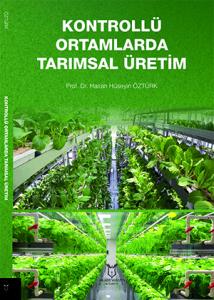
Kontrollü Ortamlarda Tarımsal Üretim
Özet
-
Referanslar
Adler, P.R.; Harper, J.K.; Wade, E.M.; Takeda, F.; Summerfelt, S.T. Economic Analysis of an Aquaponic System for the Integrated Production of Rainbow Trout and Plants. Int. J. Recirc. Aquac. 2000, 1, 15–34.
Aguilar-Rodriguez, E.R.; Flores-Velazquez, J.; Ojeda-Bustamante, W.; Rojano, F.; Iñiguez-Covarrubias, M. Valuation of the Energy Performance of a Greenhouse with an Electric Heater Using Numerical Simulations. Processes 2020, 8, 600.
Ahamed, M.S.; Guo, H.; Tanino, K. Energy Saving Techniques for Reducing the Heating Cost of Conventional Greenhouses. Biosyst. Eng. 2019, 178, 9–33.
Ahamed, S.; Sultan, M.; Shamshiri, R.R.; Rahman, M.; Aleem, M.; Balasundram, K.S. Present status and challenges of fodder production in controlled environments: A review. Smart Agric. Technol. 2022, 3, 100080.
Alexandria, V.A. Challenges, Opportunıtıes And Strategıes For Nus As Fsf For Zero Hunger.
Allen, W., 2012. Good Food Revolution: Growing Healthy Food, People and Communities. Gotham Books, USA, p. 256.
Al-Rifai, P. et al. 2017. Linking the Economics of Water, Energy and Food: A Nexus Modeling Approach. Egypt, Strategy Support Program; Egypt SSP Working Paper 04. IFRPRI, Washington DC.
Al-Shrouf, A. Hydroponics, Aeroponic and Aquaponic as Compared with Conventional Farming. Am. Acad. Sci. Res. J. Eng. Technol. Sci. 2017, 27, 247.
AMR, (2021) Allied Medical Research. Medical Cannabis Market by Product Type (Buds/Marijuana Flower and Cannabis Extracts), Application (Chronic Pain, Mental Disorders, Cancer, and Others), and End User (Pharmaceutical and Research & Development Centers): Global Opportunity Analysis and Industry Forecast, 2021–2030. 2021.
Backer, R.; Schwinghamer, T.; Rosenbaum, P.; McCarty, V.; Eichhorn Bilodeau, S.; Lyu, D.; Ahmed, M.B.; Robinson, G.; Lefsrud, M.; Wilkins, O.; et al. Closing the Yield Gap for Cannabis: A Meta-Analysis of Factors Determining Cannabis Yield. Front. Plant Sci. 2019, 10, 495.
Baddadi, S.; Bouadila, S.; Ghorbel, W.; Guizani, A. Autonomous Greenhouse Microclimate through Hydroponic Design and Refurbished Thermal Energy by Phase Change Material. J. Clean. Prod. 2019, 211, 360–379.
Banakar, A.; Montazeri, M.; Ghobadian, B.; Pasdarshahri, H.; Kamrani, F. Energy analysis and assessing heating and cooling demands of closed greenhouse in Iran. Therm. Sci. Eng. Prog. 2021, 25, 101042.
Barbosa, G.; Gadelha, F.; Kublik, N.; Proctor, A.; Reichelm, L.; Weissinger, E.; Wohlleb, G.; Halden, R. Comparison of Land, Water, and Energy Requirements of Lettuce Grown Using Hydroponic vs. Conventional Agricultural Methods. Int. J. Environ. Res. Public Health 2015, 12, 6879–6891.
Benli, H. A Performance Comparison between a Horizontal Source and a Vertical Source Heat Pump Systems for a Greenhouse Heating in the Mild Climate Elazi ˘g, Turkey. Appl. Therm. Eng. 2013, 50, 197–206.
Bouadila, S.; Baddadi, S.; Skouri, S.; Ayed, R. Assessing heating and cooling needs of hydroponic sheltered system in mediter ranean climate: A case study sustainable fodder production. Energy 2022, 261, 125274.
Bradley, P.; Marulanda, C. Simplified hydroponics to reduce global hunger. Acta Hortic. 2001, 554, 289–296.
Buchholz, M. The New Generation of Greenhouses. Saving Water and Improving Nutrition: Unlocking the Potential of Protected Agriculture in the Countries of the Gulf Cooperation Council; Food and Agriculture Organization Publications: Cairo, Egypt, 2021; p. 97.
Butsic, V.; Brenner, J.C. Cannabis (Cannabis Sativa or C. Indica) Agriculture and the Environment: A Systematic, Spatially-Explicit Survey and Potential Impacts. Environ. Res. Lett. 2016, 11, 044023.
Carmassi, G.; Incrocci, L.; Maggini, R.; Malorgio, F.; Tognoni, F.; Pardossi, A. Modeling Salinity Build-up in Recirculating Nutrient Solution Culture. J. Plant Nutr. 2005, 28, 431–445.
CBT, (2022) Cannabis Business Times. Measuring Yield.
CBT, (2022). Cannabis Business Times. Energy Spending.
CCC, (2022) Cannabis Control Commission. Guidance on Best Management Practices for Water Use.
Chaitanya, S. A Reconsideration of Cannabis Water Use—Ganjier.
Christie, E. Water and Nutrient Reuse within Closed Hydroponic Systems. Master’s Thesis, Department of Mechanical Engineer ing, Georgia Southern University, Statesboro, GA, USA, 2014.
Cortada, U.; Hidalgo, M.C.; Martínez, J.; Rey, J. Impact in Soils Caused by Metal (Loid)S in Lead Metallurgy. The Case of La Cruz Smelter (Southern Spain). J. Geochem. Explor. 2018, 190, 302–313.
Croft, M.M.; Hallett, S.G.; Marshall, M.I. Hydroponic Production of Vegetable Amaranth (Amaranthus cruentus) for Improving Nutritional Security and Economic Viability in Kenya. Renew. Agric. Food Syst. 2017, 32, 552–561.
Cuce, E.; Harjunowibowo, D.; Cuce, P.M. Renewable and Sustainable Energy Saving Strategies for Greenhouse Systems: A Comprehensive Review. Renew. Sustain. Energy Rev. 2016, 64, 34–59.
Dach, J.; Starmans, D. Heavy Metals Balance in Polish and Dutch Agronomy: Actual State and Previsions for the Future. Agric. Ecosyst. Environ. 2005, 107, 309–316.
Despommier, D., 2010. The Vertical Farm: Feeding the World in the 21st Century. St. Martin’s Press, New York, 305 pp.
Djevic, M.; Dimitrijevic, A. Energy Consumption for Different Greenhouse Constructions. Energy 2009, 34, 1325–1331.
Drotleff, L. Cannabis Requires More Water than Commodity Crops, Researchers Say.
Egbuikwem, P.N.; Mierzwa, J.C.; Saroj, D.P. Evaluation of Aerobic Biological Process with Post-Ozonation for Treatment of Mixed Industrial and Domestic Wastewater for Potential Reuse in Agriculture. Bioresour. Technol. 2020, 318, 124200.
Engler, N.; Krarti, M. Review of Energy Efficiency in Controlled Environment Agriculture. Renew. Sustain. Energy Rev. 2021, 141, 110786.
EPA, (2012). Guidelines for Water Reuse: US-EPA. 2012.
FAO. 1996. The State of Food and Agriculture. The Food and Agriculture Organization.1996, Rome.
FAO. 2006. World agriculture: towards 2030/2050. Interim report, Prospects for food, nutrition, agriculture and major commodity groups, June 2006, FAO, Rome.
FAO. 2011. The State of Food and Agriculture for 2010-2011, The Food and Agriculture Organization of the United Nations (FAO), Rome.
FAO. 2011. Energy-Smart Food For People And Clımate Issue Paper. Chief, Publishing Policy and Support Branch Offi ce of Knowledge Exchange, Research and Extension FAO Viale delle Terme di Caracalla 00153 Rome Italy.
FAO. 2013. International Year of Quinoa 2013. FAO, Rome. FAO. 2016. FAO Statistics, FAO, Rome. FAO. 2017. The Future of Food and Agriculture, Trends and Challenges. Rome, 2017.
FAO, (2017). Food and Agriculture Organization. The State of Food Security and Nutrition in the World Building Resilience for Peace and Food Security. 2017.
FAO, (2011). Food and Agriculture Organization. Energy-smart Food for People and Climate: Issue Paper. 2011.
FAO, (2021). Food and Agriculture Organization. The State of the World’s Land and Water Resources for Food and Agriculture—Managing Systems at Risk; Food and Agriculture Organization Publications: Rome, Italy, 2011.
FAO, (2022). Food and Agriculture Organization. The Future of Food & Agriculture: Alternative Pathways to 2050—Summary Version.
FAOSTAT. 2010. The Food and Agriculture Organization of the United Nations 1996, Rome.
FAO, (2012). Coping with Water Scarcity an Action Framework for Agriculture and Food Security; Food and Agriculture Organization Publica tion: Rome, Italy, 2012.
FAO, (2021). Unlocking the Potential of Protected Agriculture in the Countries of the Gulf Cooperation Council— Saving Water and Improving Nutrition; Food and Agriculture Organization Publications: Cairo, Egypt, 2021.
FAO, (2019) Food and Agriculture Organization. Early Warning Early Action Report on Food Security and Agriculture; Food and Agriculture Organization Publications: Rome, Italy, 2019.
FAO, (2014). Food and Agriculture Organization. The State of World Fisheries and Aquaculture—Opportunities and Challenges; Food and Agriculture Organization Publications: Rome, Italy, 2014.
FAO, (2012) Coping with Water Scarcity an Action Framework for Agriculture and Food Security; Food and Agriculture Organization Publica tion: Rome, Italy, 2012.
FAOSTAT. 2013. Food and Agriculture Data, 2013.
FAOSTAT. 2017. fao.org/quinoa/en (retrieved on 3 September 2017).
Fayezizadeh, M.R.; Ansari, N.A.Z.; Albaji, M.; Khaleghi, E. Effects of Hydroponic Systems on Yield, Water Productivity and Stomatal Gas Exchange of Greenhouse Tomato Cultivars. Agric. Water Manag. 2021, 258, 107171.
Fitton, N.; Alexander, P.; Arnell, N.; Bajzelj, B.; Calvin, K.; Doelman, J.; Gerber, J.S.; Havlik, P.; Hasegawa, T.; Herrero, M.; et al. The Vulnerabilities of Agricultural Land and Food Production to Future Water Scarcity. Glob. Environ. Change 2019, 58, 101944.
Fu, T.-T.; Liu, J.-T.; Hammitt, J.K. Consumer Willingness to Pay for Low-Pesticide Fresh Produce in Taiwan. J. Agric. Econ. 2008, 50, 220–233.
Fuentes, F.F. et al. 2008. Assessment of genetic diversity patterns in Chilean quinoa (Chenopodium quinoa Willd.) germplasm using multiplex fuorescent microsatellite (PDF). Springer Science+Business Media. Retrieved 14 February 2016. Government of Western Australia. 2016. Quinoa research trial harvest underway in WA, Media Statement by Department of Agriculture and Food, South Perth, Australia.
Garnett, T., 2001. Urban agriculture in London: rethinking our food economy. City Case Study London. 477-500. In: Bakker, N., Dubbeling, M., Guendel, S., Sabel Koshella, U., deZeeuw, H. (Eds.), Growing Cities, Growing Food: Urban Agriculture on the Policy. DSE, Feldafing, Germany.
Giacomini, D.G.; Moyer, J. Production Standards for Terrestrial Plants in Containers and Enclosures (Greenhouses)—Formal Recommendation by the National Organic Standards Board (NOSB) to the National Organic Program (NOP). 2010.
Goddek, S.; Delaide, B.; Mankasingh, U.; Ragnarsdottir, K.; Jijakli, H.; Thorarinsdottir, R. Challenges of Sustainable and Commercial Aquaponics. Sustainability 2015, 7, 4199–4224.
Gorjian, S.; Calise, F.; Kant, K.; Ahamed, M.S.; Copertaro, B.; Najafi, G.; Zhang, X.; Aghaei, M.; Shamshiri, R.R. A Review on Opportunities for Implementation of Solar Energy Technologies in Agricultural Greenhouses. J. Clean. Prod. 2021, 28, 124807.
Grewal, H.S.; Maheshwari, B.; Parks, S.E. Water and Nutrient Use Efficiency of a Low-Cost Hydroponic Greenhouse for a Cucumber Crop: An Australian Case Study. Agric. Water Manag. 2011, 98, 841–846.
Gruda, N.; Bisbis, M.; Tanny, J. Impacts of Protected Vegetable Cultivation on Climate Change and Adaptation Strategies for Cleaner Production—A Review. J. Clean. Prod. 2019a, 225, 324–339.
Gruda, N.; Bisbis, M.; Tanny, J. Influence of Climate Change on Protected Cultivation: Impacts and Sustainable Adaptation Strategies—A Review. J. Clean. Prod. 2019b, 225, 481–495.
GT, (2022). Greentechnology. Water and Cannabis: Use, Waste and Conservation.
Gwynn-Jones, D.; Dunne, H.; Donnison, I.; Robson, P.; Sanfratello, G.M.; Schlarb-Ridley, B.; Hughes, K.; Convey, P. Can the Optimisation of Pop-up Agriculture in Remote Communities Help Feed the World? Glob. Food Secur. 2018, 18, 35–43.
Halbert-Howard, A.; Häfner, F.; Karlowsky, S.; Schwarz, D.; Krause, A. Evaluating Recycling Fertilizers for Tomato Cultivation in Hydroponics, and Their Impact on Greenhouse Gas Emissions. Environ. Sci. Pollut. Res. 2021, 28, 59284–59303.
Hardin, C.; Mehlitz, T.; Yildiz, I.; Kelly, S.F. Simulated performance of a renewable energy technology—Heat pump systems in semi-arid California greenhouses. Acta Hortic. 2008, 797, 347–352.
Hassanien, R.H.E.; Li, M.; Dong Lin, W. Advanced Applications of Solar Energy in Agricultural Greenhouses. Renew. Sustain. Energy Rev. 2016, 54, 989–1001.
Heilig, G. World Population Prospects: Analyzing the 1996 UN Population Projections.
Heller, M. Food Product Environmental Footprint Literature Summary—The Oregon Sustainability Board a Report; Center for Sustainable Systems, University of Michigan: Ann Arbor, MI, USA, 2017.
Hof, H. 2011. Understanding the Nexus. Background Paper for Bonn 2011 Conference: The Water, Energy and Food Security Nexus: Stockholm Environment Institute. International Plant Genetic Resources Institute. 2002. Neglected and underutilized plant species: strategic action plan of IPGRI, IPGRI, Rome.
Huo, S.; Liu, J.; Addy, M.; Chen, P.; Necas, D.; Cheng, P.; Li, K.; Chai, H.; Liu, Y.; Ruan, R. The Influence of Microalgae on Vegetable Production and Nutrient Removal in Greenhouse Hydroponics. J. Clean. Prod. 2020, 243, 118563.
HS, (2022) Hydroponic Systems. Advantages of Tomato Growing in Hydroponic Systems.
Hui, C.M.S., 2011. Green roof urban farming for buildings in high-density urban areas. In: Proceedings of Hainan China World Green Roof Conference.
Hunter, D., Borelli, T., Beltrame, D.M.O., Oliveira, C.N.S., Coradin, L., Wasike, V.W., Wasilwa, L., Mwai, J., Manjella, A., Samarasinghe, G.W.L., Madhujith, T., Nadeeshani, H.V.H., Tan, A., Ay, S.T., Güzelsoy, N., Lauridsen, N., Gee, E., Tartanac, F. 2019. The potential of neglected and underutilized species for improving diets and nutrition. Planta 250: 709-729.
Iddio, E.; Wang, L.; Thomas, Y.; McMorrow, G.; Denzer, A. Energy Efficient Operation and Modeling for Greenhouses: A Literature Review. Renew. Sustain. Energy Rev. 2020, 117, 109480.
Ijichi, H., 2018. Plant factory business in Japan. Agric Biotechnol 2 (6), 19-23.
IPCC. Climate Change 2007: The Physical Science Basis; Cambridge University Press: Cambridge, UK, 2007; p. 996.
Jan, S.; Rashid, Z.; Ahmad Ahngar, T.; Iqbal, S.; Abbass Naikoo, M.; Majeed, S.; Ahmad Bhat, T.; Gul, R.; Insha Nazir, I. Hydroponics—A Review. Int. J. Curr. Microbiol. Appl. Sci. 2020, 9, 1779–1787.
Jan, J.Y.; Xiujie, S.; Wu, L.L.; Mohyuddin Mirza, M. Developing BMPs for Medical Cannabis Crops. Grow Opportunities: For Canadian Cannabis Producers.
Janatová, A.; Fra ˇnková, A.; Tlustoš, P.; Hamouz, K.; Božik, M.; Klouˇcek, P. Yield and Cannabinoids Contents in Different Cannabis (Cannabis sativa L.) Genotypes for Medical Use. Ind. Crops Prod. 2018, 112, 363–367.
Jin, D.; Jin, S.; Chen, J. Cannabis Indoor Growing Conditions, Management Practices, and Post-Harvest Treatment: A Review. Am. J. Plant Sci. 2019, 10, 925–946.
Johnson, R. Hemp as an Agricultural Commodity; Congressional Research Service: Washington, DC, USA, 2018.
Joshi, N.; Joshi, A. Green Spaces: Create Your Own, 1st ed.; Notion Press Inc.: Chennai, India, 2018.
Karaşahin, M. Effects of different applications on dry matter and crude protein yields in hydroponic barley grass production as a forage source. Ziraat Fak. Derg. Süleyman Demirel Univ. 2014, 9, 27–33.
Karlowsky, S.; Gläser, M.; Henschel, K.; Schwarz, D. Seasonal Nitrous Oxide Emissions from Hydroponic Tomato and Cucumber Cultivation in a Commercial Greenhouse Company. Front. Sustain. Food Syst. 2021, 5, 626053.
Killebrew, K.; Wolff, H. Environmental impacts of agriculture technologies. Evans Sch. Policy Anal. Res. 2010.
Knight, G.; Hansen, S.; Connor, M.; Poulsen, H.; McGovern, C.; Stacey, J. The Results of an Experimental Indoor Hydroponic Cannabis Growing Study, Using the “Screen of Green” (ScrOG) Method—Yield, Tetrahydrocannabinol (THC) and DNA Analysis. Forensic Sci. Int. 2010, 202, 36–44.
Kolata, A.L. 2009. Quinoa: Production, Consumption and Social Value in Historical Context. Department of Anthropology, The University of Chicago. United States.
Kolwey, N. A budding Opportunity: Energy efficiency best practices for cannabis grow operations–SWEEP.
Komiyama, H., 2014. Beyond the Limits to Growth: New Ideas for Sustainability from Japan. Springer Open, Heidelberg, p. 100.
Konig, B.; Junge, R.; Bittsanszky, A.; Villarroel, M.; Komives, T. On the Sustainability of Aquaponics. Ecocycles 2016, 2, 26–32.
Kozai, T., 2013a. Sustainable plant factory: closed plant production system with artificial light for high resource use efficiencies and quality produce. Acta Hortic. 1004, 27-40.
Kozai, T., 2013b. Resource use efficiency of closed plant production system with artificial light: concept, estimation and application to plant factory. Proc. Japan Acad. Ser. B 89, 447-461.
Kozai, T., 2013c. Plant factory in Japan: current situation and perspectives. Chron. Hortic. 53 (2), 8-11.
Kozai, T., Fujiwara, K., Runkle, E. (Eds.), 2016. LED Lighting for Urban Horticulture. Springer, p. 454.
Kozai, T. (Ed.), 2018. Smart Plant Factory: The Next Generation Indoor Vertical Farms. Springer, 456 pages.
Kozai, T., Uraisami, K., Kai, K., Hayashi E., 2019. Some thoughts on productivity indexes of plant factory with artificial lighting (PFAL). Proceedings of International symposium on environment control technology for value-added plant production, Aug. 28-30. Beijing, China, 29 pages.
Kozai, T., Nui, G. 2020a. Role of the plant factory with artificial lighting (PFAL) in urban areas. In: Plant Factory An Indoor Vertical Farming System for Efficient Quality Food Production Second Edition Edited by Toyoki Kozai Genhua Niu Michiko Takagaki. Elsevier Academic Pres. ISBN: 978-0-12-816691-8.
Kozai, T., Nui, G. 2020b. Conclusions: resource-saving and resource-consuming characteristics of PFALs. In: Plant Factory An Indoor Vertical Farming System for Efficient Quality Food Production Second Edition Edited by Toyoki Kozai Genhua Niu Michiko Takagaki. Elsevier Academic Pres. ISBN: 978-0-12-816691-8.
Kozai, T., Sakaguchi, S., Akiyama, T., Yamada, K., Ohshima, K. 2020. Design and management of PFALs. In: Plant Factory An Indoor Vertical Farming System for Efficient Quality Food Production Second Edition Edited by Toyoki Kozai Genhua Niu Michiko Takagaki. Elsevier Academic Pres. ISBN: 978-0-12-816691-8.
Kubota, C., 2020. PFAL business and R&D in Asia and North America: status and perspectives. In: Plant Factory An Indoor Vertical Farming System for Efficient Quality Food Production Second Edition Edited by Toyoki Kozai Genhua Niu Michiko Takagaki. Elsevier Academic Pres. ISBN: 978-0-12-816691-8.
Labbate, E. Hydroponic Growing Systems & Quality Control for Medical Marijuana.
La Rosa-Rodríguez, R.D.; Lara-Herrera, A.; Trejo-Téllez, L.I.; Padilla-Bernal, L.E.; Solis-Sánchez, L.O.; Ortiz-Rodríguez, J.M. Water and Fertilizers Use Efficiency in Two Hydroponic Systems for Tomato Production. Hortic. Bras. 2020, 38, 47–52.
Langenfeld, N.J.; Pinto, D.F.; Faust, J.E.; Heins, R.; Bugbee, B. Principles of Nutrient and Water Management for Indoor Agriculture. Sustainability 2022, 14, 10204.
Love, D.C.; Uhl, M.S.; Genello, L. Energy and Water Use of a Small-Scale Raft Aquaponics System in Baltimore, Maryland, United States. Aquac. Eng. 2015, 68, 19–27.
Li, X.. Siddique, K.H.M. 2018. Future Smart Food – Rediscovering hidden treasures of neglected and underutilized species for Zero Hunger in Asia, Bangkok, 242 pp.
Lindberg, H.; Go, A.; Runkle, E. How Do I Use Less Energy to Heat My Greenhouse? Michigan State University: East Lansing, MI, USA, 2021.
Magazine, S.; Fox, A. Growing an Ounce of Pot Indoors Can Emit as Much Carbon as Burning a Full Tank of Gas.
Manning, A. Insatiable demand for cannabis has created a giant carbon footprint. 2021.
Marcelis, L.F.M.; Heuvelink, E. Achieving Sustainable Greenhouse Cultivation, 1st ed.; Burleigh Dodds Science Publishing: Cambridge, UK, 2019.
Martin, G., 2013. Urban agriculture’s synergies with ecological and social sustainability: food, nature and community. In: Proceedings of the European Conference on Sustainability, Energy and the Environment, p. 12.
Martinez-Mate, M.A.; Martin-Gorriz, B.; Martínez-Alvarez, V.; Soto-García, M.; Maestre-Valero, J.F. Hydroponic System and Desalinated Seawater as an Alternative Farm-Productive Proposal in Water Scarcity Areas: Energy and Greenhouse Gas Emissions Analysis of Lettuce Production in Southeast Spain. J. Clean. Prod. 2018, 172, 1298–1310.
McDaniel, R.L.; Munster, C.; Nielsen-Gammon, J. Crop and Location Specific Agricultural Drought Quantification: Part III. Forecasting Water Stress and Yield Trends. Trans. ASABE 2017, 60, 741–752.
Mougeot, L. J., 2000. Urban Agriculture: Definition, Presence, Potentials and Risks. Growing Cities, Growing Food: Urban Agriculture on the Policy Agenda, 1, 42.
Muñoz, H. Hydroponics Manual: Home-Based Vegetable Production System. Inter-American Institute for Cooperation on Agricul ture (IICA): San Jose, Costa Rica, 2022.
Murphy, K., Matanguihan, J. & Gomez-Pando, L. 2015. Quinoa Breeding. In Quinoa: Improvement and Sustainable Production. Chapter 6. Wiley-Blackwell, John Wiley and Sons, Inc.
Nederhoff, E.; Stanghellini, C. Water use efficiency of tomatoes—In greenhouses and hydroponics. Pract. Hydroponics Greenh. 2010, 115, 1321.
Nerlich, A.; Karlowsky, S.; Schwarz, D.; Förster, N.; Dannehl, D. Soilless Tomato Production: Effects of Hemp Fiber and Rock Wool Growing Media on Yield, Secondary Metabolites, Substrate Characteristics and Greenhouse Gas Emissions. Horticulturae 2022, 8, 272.
NSS (2022). NoSoilSolutions. How to Grow Hydroponic Tomatoes.
O’Hare, M.; Sanchez, D.L.; Alstone, P. Environmental Risks and Opportunities in Cannabis Cultivation—Report, BOTEC Analysis Corporation; I-502 Project#430–5d; University of California: Berkeley, CA, USA, 2013.
Ohyama, K., Takagaki, M., Kurasaka, H., 2008. Urban horticulture: its significance to environmental conservation. Sustain. Sci. 3, 241-247.
Ohyama, K., 2015. Actual management conditions on a large-scale plant factory with artificial lighting (written in Japanese: Dai-kibo keiei de no keiei jittai). JGHA Prot. Hortic. (JGHA Shisetsu to Engei) 168, 30-33.
Orozko, L.; Rico-Romero, L.; Escartin, E.F. Microbiological Profile of Greenhouses in a Farm Producing Hydroponic Tomatoes. J. Food Prot. 2008, 71, 60–65.
OWD, (2022a). Our World in Data. Fertilizers—Fertilizer Use per Hectare of Cropland.
OWD, (2022b). Our World in Data. Pesticides—Pesticide Use per Hectare of Cropland.
OWD, (2022c). Our World in Data. What Share of Electricity Comes from Fossil Fuels? Share of Electricity Production from Fossil Fuels.
Ozkan, B.; Ceylan, R.F.; Kizilay, H. Energy Inputs and Crop Yield Relationships in Greenhouse Winter Crop Tomato Production. Renew. Energy 2011, 36, 3217–3221.
Padulosi, S., ed. 1999a. Priority Setting for underutilized and neglected plant species of the Mediterranean region. Report of the IPGRI Conference, 9-11 February 1998, ICARDA, Aleppo. Syria. International Plant Genetic Resources Institute, Rome.
Padulosi, S. 1999b. Criteria for priority setting in initiatives dealing with underutilized crops in Europe. pp. 236-247 in Implementation of the Global Plan of Action in Europe – Conservation and Sustainable Utilization of Plant Genetic Resources for Food and Agriculture. T. Gass, F. Frese, E. Begemann and E. Lipman, eds., Proceedings of the European Symposium, 30 June-3 July 1998, Braunschweig, Germany. International Plant Genetic Resources Institute, Rome p. 396.
Padulosi, S., Eyzaguirre, P. & Hodgkin, T. 1999. Challenges and strategies in promoting conservation and use of underutilized and neglected species. pp. 140-145 in Perspective on New Crops and New Uses, J. Janick, ed., Proceedings of the Fourth National Symposium on New Crops and New Uses. Biodiversity and Agricultural Sustainability, 8-11 November 1998, Phoenix, Arizona. ASHS Press.
Padulosi, S., Hodgkin, T., Williams J.T. & Haq N. 2006. Underutilized crops: trends, challenges and opportunities in the 21st Century. Proceedings of the Conference on Moringa and other nutritious plant resources: strategies, standards and markers for better impact on nutrition in Africa. Accra, Ghana, 16-18 November 2006.
Padulosi, S., Hoeschle-Zeledon I. & Bordoni, P. 2008. Minor crops and underutilized species: lessons and prospects In: N. Maxted, B. V. Ford-Lloyd, S. P. Kell, J.M. Iriondo, M. E. Dulloo, J. Turok eds. Crop wild relatives, conservation and use. Wallingford, UK. CAB International.
Padulosi, S., Heywood, V., Hunter, D. & Jarvis, A. 2011. Underutilized species and climate change: current status and outlook. S. S. Yadav, R. J. Redden, J. L. Hatfeld, H. Lotze-Campen, A. E. Hall, eds. Crop adaptation to climate change, First Edition. Hoboken, NJ: John Wiley and Sons.
Padulosi, S. et al. 2013. Experiences and lessons learned in the framework of a global UN efort in support of neglected and underutilized species. Acta Horticulturae 979: pp. 517-53.
Paris, B.; Vandorou, F.; Balafoutis, A.T.; Vaiopoulos, K.; Kyriakarakos, G.; Manolakos, D.; Papadakis, G. Energy Use in Greenhouses in the EU: A Review Recommending Energy Efficiency Measures and Renewable Energy Sources Adoption. Appl. Sci. 2022, 12, 5150.
Pistorius, R. 1997. Scientists, Plants and Politics – A history of the Plant Genetic Resources Movement. International Plant Genetic Resources Institute, Rome. p. 134.
Pomoni, D.I.; Koukou, M.K.; Vrachopoulos, M.G.; Vasiliadis, L. A Review of Hydroponics and Conventional Agriculture Based on Energy and Water Consumption, Environmental Impact, and Land Use. Energies 2023, 16, 1690. https://doi.org/10.3390/en16041690.
PSCI., (2020). The future of farming: Hydroponics. 2020.
Popoola, J., Ojuederie, O., Omonhinmin, C., Adegbite, A., 2019. Neglected and Underutilized Legume Crops: Improvement and Future Prospects.
Rakocy, J.E. Chapter 14: Aquaponics-Integrating Fish and Plant Culture. In Aquaculture Production Systems, 1st ed.; Tidwell, J., Ed.; John Wiley & Sons, Inc.: Hoboken, NJ, USA, 2012; pp. 344–386.
Romeo, D.; Vea, E.B.; Thomsen, M. Environmental Impacts of Urban Hydroponics in Europe: A Case Study in Lyon. Procedia CIRP 2018, 69, 540–545.
Runkle, E.; Both, A. Greenhouse Energy Conservation Strategies; Extension Buletin E3160; Michigan State University: East Lansing, MI, USA, 2011.
Russo, G.; Scarascia Mugnozza, G. LCA Methodology Applied to Various Typology of Greenhouses. Acta Hortic. 2005, 691, 837–844.
Sardare, M.D.; Admane, S.V. A review on plant without soil-Hydroponics. Int. J. Res. Eng. Technol. 2013, 2, 299–304.
Sathaiah, M.; Chandrasekaran, M. A Bio-Physical and Socio-Economic Impact Analysis of Using Industrial Treated Wastewater in Agriculture in Tamil Nadu, India. Agric. Water Manag. 2020, 241, 106394.
Seaman, C.; Bricklebank, N. Soil-free farming. Chem. Ind. Mag. 2011, 19.
Shamshiri R R, Kalantari F, Ting K C, Thorp K R, Hameed I A, Weltzien C, et al. Advances in greenhouse automation and controlled environment agriculture: A transition to plant factories and urban agriculture. Int J Agric & Biol Eng, 2018; 11(1): 1–22. DOI: 10.25165/j.ijabe.20181101.3210.
Sholl, L. Hydroponic vs. Soil Cannabis Cultivation—Royal Queen Seeds.
Sims, R.; Flammini, A.; Puri, M.; Bracco, S. Opportunities for Agri-Food Chains to Become Energy-Smart; Food and Agriculture Organization: Rome, Italy, 2015.
Smil, V. How Much Energy Does It Take to Grow a Tomato? IEEE Spectrum: Piscataway, NJ, USA, 2021.
Smit, J., Nasr, J., 1992. Urban agriculture for sustainable cities: using wastes and idle land and water bodies as resources. Environ. Urban. 4 (2), 141.
SO, (2010). Statistik, S.O. Energy Use in Greenhouses; Statistics Sweden Center: Stockholm, Sweden, 2010.
Sonneveld, C. Effects of Salinity on Substrate Grown Vegetables and Ornamentals in Greenhouse Horticulture. Ph.D. Thesis, University of Wageningen, Wageningen, The Netherlands, 2000. Available online: https://edepot.wur.nl/121235 (accessed on 13 October 2022).
Souza, S.V.; Gimenes, R.M.T.; Binotto, E. Economic Viability for Deploying Hydroponic System in Emerging Countries: A Differentiated Risk Adjustment Proposal. Land Use Policy 2019, 83, 357–369.
Su, Y.; Li, C.; Wang, K.; Deng, J.; Shahtahmassebi, A.R.; Zhang, L.; Ao, W.; Guan, T.; Pan, Y.; Gan, M. Quantifying the Spatiotemporal Dynamics and Multi-Aspect Performance of Non-Grain Production during 2000–2015 at a Fine Scale. Ecol. Indic. 2019, 101, 410–419.
Suhl, J.; Dannehl, D.; Kloas, W.; Baganz, D.; Jobs, S.; Scheibe, G.; Schmidt, U. Advanced Aquaponics: Evaluation of Intensive Tomato Production in Aquaponics vs. Conventional Hydroponics. Agric. Water Manag. 2016, 178, 335–344.
Sumberg, J.; Giller, E.K. What is ‘conventional’ agriculture? Glob. Food Secur. 2022, 32, 100617.
Sutar, K.A.; Wadkar, S.; Kiran, G.; Jadhav, S.; Turambekar, V. Study on Use of Waste Water in Hydroponic System instead of Nutrient Solution. Int. J. Res. Appl. Sci. Eng. Technol. 2018, 6, 2035–2039.
Supraja, K.V.; Behera, B.; Balasubramanian, P. Performance Evaluation of Hydroponic System for Co-Cultivation of Microalgae and Tomato Plant. J. Clean. Prod. 2020, 272, 122823.
Taki, M.; Rohani, A.; Rahmati-Joneidabad, M. Solar Thermal Simulation and Applications in Greenhouse. Inf. Process. Agric. 2018, 5, 83–113.
Tataraki, K.G.; Kavvadias, K.C.; Maroulis, Z.B. Combined Cooling Heating and Power Systems in Greenhouses. Grassroots and Retrofit Design. Energy 2019, 189, 116283.
Toonen, M.; Ribot, S.; Thissen, J. Yield of Illicit Indoor Cannabis Cultivation in the Netherlands. J. Forensic Sci. 2006, 51, 1050–1054.
Trang, N.T.D.; Brix, H. Use of Planted Biofilters in Integrated Recirculating Aquaculture-Hydroponics Systems in the Mekong Delta, Vietnam. Aquac. Res. 2012, 45, 460–469.
Tyson, R.V.; Treadwell, D.D.; Simonne, E.H. Opportunities and Challenges to Sustainability in Aquaponic Systems. HortTechnology 2011, 21, 6–13.
Tzilivakis, J.; Warner, D.J.; May, M.; Lewis, K.A.; Jaggard, K. An Assessment of the Energy Inputs and Greenhouse Gas Emissions in Sugar Beet (Beta Vulgaris) Production in the UK. Agric. Syst. 2005, 85, 101–119.
Vadiee, A.; Martin, V. Energy Analysis and Thermoeconomic Assessment of the Closed Greenhouse—The Largest Commercial Solar Building. Appl. Energy 2013, 102, 1256–1266.
Vadiee, A.; Martin, V. Energy Management Strategies for Commercial Greenhouses. Appl. Energy 2014, 114, 880–888.
Vanhove, W.; Van Damme, P.; Meert, N. Factors Determining Yield and Quality of Illicit Indoor Cannabis (Cannabis spp.) Production. Forensic Sci. Int. 2011, 212, 158–163.
Venter, G. Hydroponic Water Requirements. Farmer’s Weekly SA: Johannesburg, South Africa, 2017.
Vourdoubas, J. Overview of Heating Greenhouses with Renewable Energy Sources a Case Study in Crete—Greece. J. Agric. Environ. Sci. 2015, 4, 70–76.
WB, (2014) The World Bank. World Bank Open Data. 2014.
Williams, J. T., & Haq, N. 2002. Global Research on underutilized crops; an assessment of current activities and proposals for enhanced cooperation. Southampton, UK: International Centre for Underutilized Crops.
Wilson. 1992. The diversity of life. Penguin, London, UK.
Wilson, H.; Bodwitch, H.; Carah, J.; Daane, K.; Getz, C.; Grantham, T.E.; Butsic, V. First Known Survey of Cannabis Production Practices in California. Calif. Agric. 2019, 73, 119–127.
UN, (2017). United Nations. The United Nations World Water Development Report 2017: Wastewater: The Untapped Resource; United Nations Educational, Scientific and Cultural Organization: Paris, France, 2017.
UN, (2007). United Nations. Coping with the Water Scarcity: Challenge of the Twenty-First Century; United Nations Educational, Scientific and Cultural Organization: Paris, France, 2007.
UN, (2009). United Nations. Water in a Changing World: The United Nations World Water Development Report; United Nations Educational, Scientific and Cultural Organization: Paris, France, 2009;
UN. 2012. Resolution adopted by the General Assembly announcing 2013 as the International Year of Quinoa.
UN, (2022). United Nations. World Population Prospects: The 2000 Revision—Highlights; ESA/P/WP.165; United Nations: New York, NY, USA.
Xie, K.; Rosentrater, K. Life Cycle Assessment (LCA) and Techno-Economic Analysis (TEA) of Tilapia-Basil Aquaponics. In Proceedings of the 2015 ASABE International Meeting, New Orleans, LA, USA, 26–29 July 2015.
Yano, A.; Cossu, M. Energy Sustainable Greenhouse Crop Cultivation Using Photovoltaic Technologies. Renew. Sustain. Energy Rev. 2019, 109, 116–137.
Zheng, Z.; Fiddes, K.; Yang, L. A Narrative Review on Environmental Impacts of Cannabis Cultivation. J. Cannabis Res. 2021, 3, 1–10.
Zou, Y.; Hu, Z.; Zhang, J.; Guimbaud, C.; Wang, Q.; Fang, Y. Effect of Seasonal Variation on Nitrogen Transformations in Aquaponics of Northern China. Ecol. Eng. 2016, 94, 30–36
Yayınlanan
Lisans
LisansBu İnternet Sitesi içeriğinde yer alan tüm eserler (yazı, resim, görüntü, fotoğraf, video, müzik vb.) Akademisyen Kitabevine ait olup, 5846 sayılı Fikir ve Sanat Eserleri Kanunu ve 5237 sayılı Türk Ceca Kanunu kapsamında korunmaktadır. Bu hakları ihlal eden kişiler, 5846 sayılı Fikir ve Sanat eserleri Kanunu ve 5237 sayılı Türk Ceza Kanununda yer alan hukuki ve cezai yaptırımlara tabi olurlar. Yayınevi ilgili yasal yollara başvurma hakkına sahiptir.
