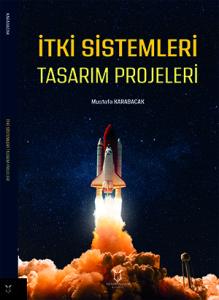
İTKİ Sistemleri Tasarım Projeleri
Özet
Hipersonik uçuş ve süperseyir yeteneğine sahip gelecek nesil bir savaş uçağı veya bombardıman uçağı için motor tasarımı bu çalışmanın konusunu oluşturmaktadır. Yapılan inceleme sonucunda Mach sayısı arttıkça optimum kompresör basınç oranının düştüğü ve 2.43 Mach’ın üzerindeki uçuş hızlarında optimum kompresör basınç oranının 1’in altına düştüğü görülmüştür. Yapılan literatür araştırması sonucu kompresör basınç oranının 1’in altına düştüğü konseptin ters Brayton çevrimli motor konsepti olduğu belirlenmiştir. Ters Brayton çevrimli bir motor, bir ramjet motora kıyasla 5 uçuş Mach sayısında yaklaşık %45.2 ve 5.5 uçuş Mach sayısında yaklaşık %95.4 oranında daha yüksek bir özgül itki üretiği görülmüştür. Hipersonik uçuş performansı için ters Brayton çevrimli motorun bir diğer üstünlüğü, itkinin üretilemediği uçuş Mach sayısının ters Brayton çevrimli bir motor için 6.2950 ve bir ramjet için 5.9160 olmasıdır. 3 farklı kompresör basınç oranına (10, 20 ve 50) sahip turbojet motorları, ters Brayton çevrimli motora kıyasla 1 ila 4 uçuş Mach sayısı arasında yaklaşık %30-60 daha düşük özgül yakıt tüketimine sahip olduğu gözlemlenmiştir. Bu nedenle, ters Brayton çevrimli motor süperseyir için uygun olmadığı görülmüştür. Ancak bu konsept değişken çevrimli motor konseptine uygulanmasıyla, süperseyir ve hipersonik uçuş kabiliyetine sahip uçaklar için uygun hale gelmektedir. Bu çalışmada ters Brayton çevrimli motorun hava araçlarına hipersonik uçuş kabiliyeti kazandırmak için uygun bir konsept olduğu sonucuna varılmıştır.
Referanslar
Sziroczak, D. and Smith, H. (2016). A review of design issues specific to hypersonic flight vehicles. Progress in Aerospace Sciences, 84, 1-28.
H. Taguchi, A. Murakami, T. Sato and T. Tsuchiya, Conceptual study on hypersonic airplanes using pre-cooled turbojet, AIAA 2008–2503, in: Proceedings of the 15th AIAA April–1 May, 2008, Dayton, Ohio.
Goodall, J. C. (2021). 75 Years of the Lockheed Martin Skunk Works. Bloomsbury Publishing.
Takahashi, T. T. (2023). Flying with Eyes Wide Shut-A Reflection on the Hollywood View of Real World Aircraft Performance. In AIAA AVIATION 2023 Forum (p. 3518).
Sherman, J. (2017). MDA approves preliminary design,‘dual-pol’tech for LRDR. Inside Missile Defense, 23(9), 1-5.
Saccone, G., Ispir, A. C., Saracoglu, B. H., Cutrone, L., Marini, M. (2022).Computational evaluations of emissions indexes released by the STRATOFLY air-breathing combined propulsive system. Aircraft Engineering and Aerospace Technology, 94(9), 1499-1507.
Knudsen, B. (2017). An examination of US hypersonic weapon systems. George Washington University, Washington, DC.
Abdulrahman, G. A., Qasem, N. A., Imteyaz, B., Abdallah, A. M., Habib, M. A. (2023). A review of aircraft subsonic and supersonic combustors. Aerospace Science and Technology, 132, 108067.
Kyprianidis, K. G., Rolt, A. M. and Grönstedt, T. (2013, June). Multi-disciplinary analysis of a geared fan intercooled core aero-engine. In Turbo Expo: Power for Land, Sea, and Air (Vol. 55133, p. V002T07A027). American Society of Mechanical Engineers.
Kyprianidis, K. G. and Rolt, A. M. (2014, June). On the optimisation of a geared fan intercooled core engine design. In Turbo Expo: Power for Land, Sea, and Air (Vol. 45653, p. V03AT07A018). American Society of Mechanical Engineers.
Sato, T., Tanatsugu, N., Naruo, Y., Omi, J., Tomike, J. I., Nishino, T. (2000). Development study on ATREX engine. Acta Astronautica, 47(11), 799-808.
Webber, H., Bond, A. and Hempsell, M. (2006). Sensitivity of pre-cooled air-breathing engine performance to heat exchanger design parameters. In 57th International Astronautical Congress (pp. D2-P).
Dong, P., Tang, H. and Chen, M. (2018). Study on multi-cycle coupling mechanism of hypersonic precooled combined cycle engine. Applied Thermal Engineering, 131, 497-506.
Yu, X., Wang, C. and Yu, D. (2020). Thermodynamic design and optimization of the multi-branch closed Brayton cycle based precooling-compression system for a novel hypersonic aeroengine. Energy Conversion and Management, 205, 112412.
Murray, J. J., Guha, A. and Bond, A. (1997). Overview of the development of heat exchangers for use in air-breathing propulsion pre-coolers. Acta astronautica, 41(11), 723-729.
Di Battista, D., Fatigati, F., Carapellucci, R., Cipollone, R. (2019). Inverted Brayton Cycle for waste heat recovery in reciprocating internal combustion engines. Applied Energy, 253, 113565.
Kennedy, I., Chen, Z., Ceen, B., Jones, S., Copeland, C. D. (2019). Experimental investigation of an inverted Brayton cycle for exhaust gas energy recovery. Journal of Engineering for Gas Turbines and Power, 141(3).
Huang, W., Du, Z. B., Yan, L., Xia, Z. X. (2019). Supersonic mixing in airbreathing propulsion systems for hypersonic flights. Progress in Aerospace Sciences, 109, 100545.
Huang, W., Pourkashanian, M., Ma, L., Ingham, D. B., Luo, S. B., Wang, Z. G. (2011). Investigation on the flameholding mechanisms in supersonic flows: backward-facing step and cavity flameholder. Journal of Visualization, 14, 63-74.
Khan, A., Akram, S. and Kumar, R. (2020). Experimental study on enhancement of supersonic twin-jet mixing by vortex generators. Aerospace Science and Technology, 96, 105521.
Verma, K. A., Pandey, K. M. and Sharma, K. K. (2021). Study of Fuel Injection Systems in Scramjet Engine—A Review. Recent Advances in Mechanical Engineering: Select Proceedings of ICRAME, 2020, 931-940.
Verma, K. A., Kapayeva, S., Pandey, K. M., Sharma, K. K. (2021). The recent development of supersonic combustion ramjet engines for augmentation of the mixing performance and improvement in combustion Efficiency: A review. Materials Today: Proceedings, 45, 7058-7062.
Verma, K. A., Pandey, K. M., Ray, M., Sharma, K. K. (2021). Effect of transverse fuel injection system on combustion efficiency in scramjet combustor. Energy, 218, 119511.
Zhang, W., Chen, L., Sun, F., Wu, C. (2007). Second-law analysis and optimisation for combined Brayton and inverse Brayton cycles. International Journal of Ambient Energy, 28(1), 15-26.
McClinton, C. R. (2007) High speed/hypersonic aircraft propulsion technology development. Advances on propulsion technology for high-speed aircraft, 1, pp.1-32.
Choubey, G. and Pandey, K. M. (2016) Effect of variation of angle of attack on the performance of two-strut scramjet combustor. international journal of hydrogen, 41(26), pp. 11455-11470.
Verma, K. A., Pandey, K. M. and Sharma, K. K. (2019) Computational investigation on design of scramjet combustor–A review. Int. J. Recent Technol. Eng.7(6), pp.544-548.
Urzay, J. (2018) Supersonic combustion in air-breathing propulsion systems for hypersonic flight. Annual Review of Fluid Mechanics. 50, pp.593-627.
Kummitha, O. R. (2017) Numerical analysis of passive techniques for optimizing the performance of scramjet combustor. International journal of hydrogen energy. 42(15), pp.10455-10465.
Farokhi, S. (2020) Future propulsion systems and energy sources in sustainable aviation. 2nd edition West Sussex, UK: J. Wiley.
Mattingly, J. D., Heiser, W. H. and Pratt, D. T. (2002). Aircraft engine design. Reston, Virginia: American Institute of Aeronautics and Astronautics.
Raymer, D. P. . (2018) Aircraft Design: A Conceptual Approach:6th edtion Reston, Virginia: AIAA Education Series.
Ascione, F., Bianco, N., Mauro, G. M., Napolitano, D. F. (2019) Building envelope design: Multi-objective optimization to minimize energy consumption, global cost and thermal discomfort. Application to different Italian climatic zones. Energy. 174,pp. 359-374.
Dimitrova, Z., and Maréchal, F. (2015) Techno-economic design of hybrid electric vehicles using multi objective optimization techniques. Energy. 91, pp.630-644
Hong, T., Kim, J. and Lee, M. A. (2019) multi-objective optimization model for determining the building design and occupant behaviors based on energy, economic, and environmental performance. Energy. 174, pp.823-834.
Gertler J. (2017) Air Force B-21 Raider Long-Range Strike Bomber. Congressional Research Service (CRS).7
http-1 http://www.dailymail.co.uk/sciencetech/article3437793/Northrop-Grumman-teases-sixth-generationsupersonic-superfighter-laser-weapons-stealth-bomberset-replace-B-2-Superbowl-ad.html ( Erişim tarihi 22.02.2016)
Matsui, K., Thu, K. and Miyazaki, T. A. (2020) hybrid power cycle using an inverted Brayton cycle with an indirect evaporative device for waste-heat recovery. Applied Thermal Engineering. 170, p.115029
Kurzke. J. (2020) Gasturb13. Aachen. Germany.
Pesyridis, A. and Cooper, M. (2017). Ramjet Nozzle Analysis for Transport Aircraft Configuration for Sustained Hypersonic Flight.
Tsujıkawa, Y., Kaneko, K. and Tokumoto, S. (2005) Inverted Turbo-Jet Engine for Hypersonic Propulsion. In: Turbo Expo: Power for Land, Sea, and Air. p. 343-349.
Huang, W., Du, Z. B., Yan, L., Moradi, R. (2018) Flame propagation and stabilization in dual-mode scramjet combustors: a survey. Progress in Aerospace Sciences. 101, pp.13-30.
Choubey, G., Yadav, P. M., Devarajan, Y., Huang, W. (2021) Numerical investigation on mixing improvement mechanism of transverse injection based scramjet combustor. Acta Astronautica. 188, pp.426-437.
Kummitha, O. R. (2017) Numerical analysis of passive techniques for optimizing the performance of scramjet combustor. International journal of hydrogen energy. 42(15), pp.10455-10465.
Wang, Z. G., Sun, X. W., Huang, W., Li, S. B., Yan, L. (2016) Experimental investigation on drag and heat flux reduction in supersonic/hypersonic flows: A survey. Acta Astronautica. 129, pp.95-110.
Experimental investigation of an inverted Brayton cycle for exhaust gas energy recovery Proceedings of the ASME turbo expo 2013: turbine technical conference and exposition (2018) Paper GT2018-75386
D. Di Battista, F. Fatigati, R. Carapellucci, R. Cipollon (2019) İnverted Brayton cycle for waste heat recovery in reciprocating internal combustion engines Appl Energy, 253, p. 113565
Zheng, J., Tang, H., Chen, M., Yin, F. J. (2018) Equilibrium running principle analysis on an adaptive cycle engine. Applied Thermal Engineering. 132, pp.393-409.
Aygun, H. and Turan, O. (2020) Exergetic sustainability off-design analysis of variable-cycle aero-engine in various bypass modes. Energy. 195, p.117008
Lyu, Y., Tang, H. and Chen, M. A. (2016) study on combined variable geometry regulation of adaptive cycle engine during throttling. Applied Sciences. 6(12), p. 374.
http-2 https://light.fi/why-heat-pipe-is-better-than-traditional-heat-sink/ (Erişim tarihi 10.08.2022)
Pennington, W.A. (January 1959) Choice of engines for aircraft, Shell Aviation News, pp 14–19
Farokhi, S. (2014). Aircraft propulsion. John Wiley & Sons.
http-3 http://www.swarmintelligence.org [Erişim tarihi 16.05.2016 ]
Kennedy, J. and Eberhart, R. (1995, November). Particle swarm optimization. In Proceedings of ICNN'95-international conference on neural networks (Vol. 4, pp. 1942-1948). IEEE
Beltrán-Prieto, J. C., Komínková Oplatková, Z., Torres Friás, R., Escoto Hernández, J. L. (2016). A time performance comparison of particle swarm optimization in mobile devices. In MATEC Web of Conferences 20th International Conference on Circuits, Systems, Communications and Computers (CSCC 2016). EDP Sciences.
Mattingly, J. D., Boyer, K. M. and von Ohain, H. (2006). Elements of propulsion: gas turbines and rockets (pp. 276-277). Reston, VA: American Institute of Aeronautics and Astronautics.
Anderson, J. D. and Bowden, M. L. (2005). Introduction to flight (Vol. 582). New York, NY, USA: McGraw-Hill Higher Education.
Cornell, W. G. (1956). The flow in a Vee-gutter cascade. Transactions of the American Society of Mechanical Engineers, 78(3), 573-580.
Cooper, J. and Dingle, L. (2005). Engineering an afterburner for a miniature gas turbine engine. Aircraft Engineering and Aerospace Technology, 77(2), 104-108.
Colket III, M. B. and Spadaccini, L. J. (2001). Scramjet fuels autoignition study. Journal of propulsion and power, 17(2), 315-323.
Abrosimov, K. A., Baccioli, A. and Bischi, A. (2020). Techno-economic analysis of combined inverted Brayton–Organic Rankine cycle for high-temperature waste heat recovery. Energy Conversion and Management, 207, 112336.
http-4: https://www2.virginia.edu/ms/research/wadley/high-temp.html. (Erişim tarihi 26.5.2021)
An CH, Kang DW, Baek ST, Myong RS, Kim WC., Choi SM. (2016) Analysis of plume infrared signatures of s-shaped nozzle configurations of aerial vehicle. Journal of Aircraft. 53: 1768-78.
Yaravintelimath, A., Raghunandan, B. N., Moríñigo, J. A. (2016). Numerical prediction of nozzle flow separation: Issue of turbulence modeling. Aerospace Science and Technology, 50, 31-43.
Zukoski E., (1967) “Turbulent Boundary-Layer Separation in front of a Forward-Facing Step”, AIAA Journal, Vol. 5, No. 10, Page 1746-1753
Schmucker R., (1973) “Strömungsvorgänge beim Betrieb überexpandierter Düsen chemischer Raketentriebwerke, Teil 1:Strömungsablösung”, Bericht TB-7, Tech. Univ. Munich.
Titterton, D. H. (2006). Development of infrared countermeasure technology and systems. In Mid-infrared semiconductor optoelectronics (pp. 635-671). Springer, London.
Irfan, S. and Shah, S. I. A. (2016, October). Modeling and analysis of velocity profile of a rectangular aircraft exhaust nozzle. In 2016 International Conference on Emerging Technologies (ICET) (pp. 1-6). IEEE.
Xiao-lin, S., Zhan-xue, W., Li, Z., Jing-wei, S. and Wen, C. (2019). Internal flow and external jet characteristics of double serpentine nozzle with different aspect ratio. Proceedings of the Institution of Mechanical Engineers, Part G: Journal of Aerospace Engineering, 233(2), 545-560.
Mahulikar SP, Rao GA and Sonawane HR. (2008) Infrared signature studies of airborne target, International Conference on Aerospace Science and Technology, Bangalore.
Li JW, Liu Y and Qin LZ. (2007) Numerical simulation of flow and heat transfer in round-to-rectangular nozzles. Numerical Heat Transfer, Part A: Applications. 51: 267-91.
Ab-Rahman MS and Hassan MR . (2009) Lock-on range of infrared heat seeker missile,International Conference on Electrical Engineering and Informatics IEEE
Yayınlanan
Lisans
LisansBu İnternet Sitesi içeriğinde yer alan tüm eserler (yazı, resim, görüntü, fotoğraf, video, müzik vb.) Akademisyen Kitabevine ait olup, 5846 sayılı Fikir ve Sanat Eserleri Kanunu ve 5237 sayılı Türk Ceca Kanunu kapsamında korunmaktadır. Bu hakları ihlal eden kişiler, 5846 sayılı Fikir ve Sanat eserleri Kanunu ve 5237 sayılı Türk Ceza Kanununda yer alan hukuki ve cezai yaptırımlara tabi olurlar. Yayınevi ilgili yasal yollara başvurma hakkına sahiptir.
