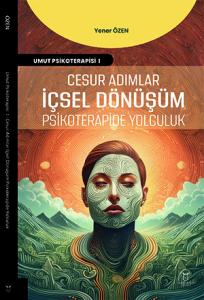
Cesur Adımlar, İçsel Dönüşüm: Psikoterapide Yolculuk
Özet
-
Referanslar
Aghababaei, N., ve Tabik, M. (2015). Patience and Mental Health in Iranian Students. Iranian Journal of Psychiatry and Behavioral Sciences, 9.
Ajadi, O. (2023). Conceptual Foreknowings: Integrative Review on Having Courage. Nursing Science Quarterly, 37, 56-63.
Allan, B. A., ve diğ. (2014). The impact of patience on psychological well-being. The Journal of Positive Psychology, 9(3), 263-274.
Altman, I., ve Taylor, D. A. (1973). Social penetration: The development of interpersonal relationships. Holt, Rinehart ve Winston.
Anthropological Measurements of Philosophical Research. (2019). Relıgıous Faıth: Exıstentıal-Anthropologıcal Meanıngs.
Audulv, Å., Asplund, K., ve Norbergh, K.-G. (2012). The integration of chronic illness self-management. Qualitative Health Research, 22(3), 332-345.
Avolio, B. J., ve Gardner, W. L. (2005). Authentic leadership development: Getting to the root of positive forms of leadership. The Leadership Quarterly, 16(3), 315-338.
Babakhanian, M., ve Zarghami, M. (2017). Effectiveness of Hope Therapy Protocol on Depression and Hope in Amphetamine Users. international journal high risk behaviors ve addiction, 6.
Bandura, A. (1977). Self-efficacy: Toward a unifying theory of behavioral change. Psychological Review, 84(2), 191-215.
Batson, C., ve Shaw, L. L. (1991). Evidence for Altruism: Toward a Pluralism of Prosocial Motives. Psychological Inquiry, 2, 107-122.
Batson, C., ve Shaw, L. L. (1991). Evidence for Altruism: Toward a Pluralism of Prosocial Motives. Psychological Inquiry, 2, 107-122.
Baumeister, R. F., ve Leary, M. R. (1995). The need to belong: Desire for interpersonal attachments as a fundamental human motivation. Psychological Bulletin, 117(3), 497-529.
Beck, A. T., Rush, A. J., Shaw, B. F., ve Emery, G. (1979). Cognitive therapy of depression. New York: Guilford.
Bergin, L., ve Walsh, S. (2005). The role of hope in psychotherapy with older adults. Aging ve Mental Health, 9, 7-15.
Bockorny, K. M., ve Youssef-Morgan, C. M. (2019). Entrepreneurs’ Courage, Psychological Capital, and Life Satisfaction. Frontiers in Psychology, 10.
Bommarito, N. (2020). Seeing Clearly. 10.1093/oso/9780190887506.003.0029.
Bonanno, G. A., ve Diminich, E. D. (2013). Annual Research Review: Positive adjustment to adversity – Trajectories of minimal-impact resilience and emergent resilience. Journal of Child Psychology and Psychiatry, 54(4), 378-401.
Bordin, E. S. (1979). The generalizability of the psychoanalytic concept of the working alliance. Psychotherapy: Theory, Research ve Practice, 16(3), 252-260.
Bournes, D. A. (2000). Concept Inventing: A Process for Creating a Unitary Definition of Having Courage. Nursing Science Quarterly, 13, 143-149.
Bowlby, J. (1982). Attachment and loss: Vol. 1. Attachment. New York: Basic Books.
Branden, N. (1994). The six pillars of self-esteem. Bantam.
Brewin, C. (1996). Theoretical foundations of cognitive-behavior therapy for anxiety and depression. Annual review of psychology, 47, 33-57.
Canale, J. R. (1990). Altruism and forgiveness as therapeutic agents in psychotherapy. Journal of Religion and Health, 29, 297-301.
Canale, J. R., White, R. M., ve Kelly, K. (1996). The use of altruism and forgiveness in therapy. Journal of Religion and Health, 35, 225-230.
Castonguay, L. G., Constantino, M. J., ve Holtforth, M. G. (2006). The working alliance: Where are we and where should we go? Psychotherapy: Theory, Research, Practice, Training, 43(3), 271-279.
Cheavens, J. S., ve diğ. (2006). Hope and depression: A light in the darkness. Journal of Clinical Psychology, 62(6), 711-725.
Cheavens, J., ve Whitted, W. M. (2022). Hope therapy. Current opinion in psychology, 49, 101509.
Cheavens, J., Feldman, D. B., Gum, A., Michael, S. T., ve Snyder, C. R. (2006). Hope Therapy in a Community Sample: A Pilot Investigation. Social Indicators Research, 77, 61-78.
Cheng, C., ve Huang, X. (2017). An exploration of courage in Chinese individuals. The Journal of Positive Psychology, 12, 141-150.
Chockalingam, M., ve Norton, P. (2018). Facing fear-provoking stimuli: The role of courage and influence of task-importance. The Journal of Positive Psychology, 14, 603-613.
Clavien, C. (2012). Altruistic Emotional Motivation: An Argument in Favour of Psychological Altruism.
Cohen, R. (1972). Altruism: Human, Cultural, or What? Journal of Social Issues, 28, 39-57.
Comer, D., ve Sekerka, L. (2014). Taking time for patience in organizations. Journal of Management Development, 33(6), 6-23.
Cooper, M., O'Hara, M., Schmid, P. F., ve Bohart, A. C. (2013). The effectiveness of person-centered therapies: A meta-analysis. Psychotherapy Research, 23(3), 316-340.
Costa, A. C. (2003). Work team trust and effectiveness. Personnel Review, 32(5), 605-622.
Cunningham, A. (2008). The healing journey: incorporating psychological and spiritual dimensions into the care of cancer patients. Current Oncology, 15, s107.es37 - s107.es41.
Darlington, P. J. (1978). Altruism: its characteristics and evolution. Proceedings of the National Academy of Sciences of the United States of America, 75(1), 385-9.
De Waal, F. (2008). Putting the Altruism Back into Altruism: The Evolution of Empathy. Annual Review of Psychology, 59, 279-300
Defife, J. A., ve Hilsenroth, M. (2011). Starting Off on the Right Foot: Common Factor Elements in Early Psychotherapy Process. Journal of Psychotherapy Integration, 21, 172-191.
Derman-Sparks, L., ve Edwards, J. O. (2010). Anti-bias education for young children and ourselves. National Association for the Education of Young Children.
Diener, E., ve Seligman, M. E. P. (2002). Very happy people. Psychological Science, 13(1), 81-84.
Durkheim, E. (1912). The elementary forms of the religious life. Free Press.
Edwards-Stewart, A., ve Norcross, J. (2019). Integrating self-help and psychotherapy. In Handbook of Psychotherapy Integration.
Eliüşük Bülbül, A. (2021). The effect of patience training on university students’ patience and life satisfaction levels. African Educational Research Journal.
Elliott, R., ve James, E. (1989). Varieties of client experience in psychotherapy: An analysis of the literature. Clinical Psychology Review, 9, 443-467.
Erikson, E. H. (1950). Childhood and society. New York: Norton.
Erikson, E. H. (1959). Identity and the life cycle. New York: International Universities Press.
Evans, P., ve White, D. G. (1981). Towards an empirical definition of courage. Behaviour Research and Therapy, 19, 419-424.
Fagerström, L., Gustafson, Y., Jakobsson, G., Johansson, S., ve Vartiainen, P. (2011). Sense of security among people aged 65 and 75: external and inner sources of security. Journal of advanced nursing, 67(6), 1305-1316.
Fehr, E., ve Fischbacher, U. (2003). The nature of human altruism. Nature, 425, 785-791.
Feudtner, C. (2005). Hope and the prospects of healing at the end of life. Journal of alternative and complementary medicine, 11(Suppl 1), S23-30.
Finfgeld, D. (1999). Courage as a Process of Pushing Beyond the Struggle. Qualitative Health Research, 9, 803-814.
Foreman, S. E. (2017). The role of faith in healthcare: Philosophy, psychology, and practice. Journal of Religion and Health, 56(6), 2052-2063.
Frankl, V. E. (1946). Man's Search for Meaning. Beacon Press.
Frankl, V. E. (1985). Man's Search for Meaning. (Original work published 1946). New York: Simon ve Schuster.
Frankl, V. E. (2006). Man's Search for Meaning.
Gabbard, G. (2000). A neurobiologically informed perspective on psychotherapy. British Journal of Psychiatry, 177, 117-122.
Gallagher, M. W., Long, L. J., Richardson, A., D’Souza, J. M., Boswell, J. F., Farchione, T. J., ve Barlow, D. H. (2020). Examining hope as a transdiagnostic mechanism of change across anxiety disorders and CBT treatment protocols. Behavior Therapy, 51(1), 190-202.
Gans, J. S. (2005). A Plea for Greater Recognition and Appreciation of our Group Members’ Courage. International Journal of Group Psychotherapy, 55(4), 575-594.
Geertz, C. (1973). The interpretation of cultures: Selected essays. Basic Books.
Gilman, R., Schumm, J. A., ve Chard, K. M. (2012). Hope as a change mechanism in the treatment of posttraumatic stress disorder. Psychological Trauma: Theory, Research, Practice, and Policy, 4(3), 270-277.
Goldberg, C., ve Simon, J. (1982). Toward a psychology of courage: Implications for the change (healing) process. Journal of Contemporary Psychotherapy, 13, 107-128.
Goleman, D. (1995). Emotional intelligence. New York: Bantam Books.
Goleman, D., Boyatzis, R. E., ve McKee, A. (2002). Primal leadership: Learning to lead with emotional intelligence. Boston, MA: Harvard Business School Press.
Goud, N. H. (2005). Courage: Its Nature and Development. The Journal of Humanistic Counseling, Education and Development, 44, 102-116.
Granqvist, P., ve Kirkpatrick, L. A. (2004). Religious conversion and perceived childhood attachment: A meta-analysis. International Journal for the Psychology of Religion, 14(3), 223-250.
Granqvist, P., ve Kirkpatrick, L. A. (2016). Attachment and religious representations and behavior. In Handbook of Attachment: Theory, Research, and Clinical Applications (3rd ed., pp. 856-878). New York: Guilford Press.
Gross, J. J. (1998). The emerging field of emotion regulation: An integrative review. Review of General Psychology, 2(3), 271-299.
Haase, J. (1987). Components of courage in chronically ill adolescents: a phenomenological study. Advances in Nursing Science, 9, 64–80.
Hall, E. T. (1976). Beyond culture. Anchor Books.
Handzo, G. F., ve Koenig, H. G. (2004). Spiritual care: Whose job is it anyway? Southern Medical Journal, 97(12), 1242-1244.
Hannah, S., Sweeney, P., ve Lester, P. (2007). Toward a courageous mindset: The subjective act and experience of courage. The Journal of Positive Psychology, 2, 129-135.
Herman, J. L. (1992). Trauma and recovery. Basic Books.
Hersey, P., ve Blanchard, K. H. (1969). Life cycle theory of leadership. Training ve Development Journal, 23(5), 26-34.
Herth, K. (1992). Abbreviated instrument to measure hope: Development and psychometric evaluation. Journal of Advanced Nursing, 17(10), 1251-1259.
Hilbig, B. E., ve diğ. (2015). Personality and prosocial behavior: Linking basic traits and social value orientations. Journal of Personality and Social Psychology, 109(3), 530-542.
Hill, C. E., ve Knox, S. (2002). Self-disclosure and interactive therapy: Therapist interventions and client reactions. Journal of Counseling Psychology, 49(4), 419-427.
Hodge, D. R. (2001). Spiritual assessment: A review of major qualitative methods and a new framework for assessing spirituality. Social Work, 46(3), 203-214.
Hoffman, E., Gonzalez-Mujica, J., Acosta-Orozco, C., ve Compton, W. C. (2020). The Psychological Benefits of Receiving Real-Life Altruism. Journal of Humanistic Psychology, 60, 187-204.
Hoffman, M. (1978). Psychological and Biological Perspectives on Altruism. International Journal of Behavioral Development, 1, 323-339.
Hopson, D. (1992). The role of faith in the context of psychotherapy. Journal of Psychology and Christianity, 11(4), 342-350.
Horvath, A. O., ve Greenberg, L. S. (1989). Development and validation of the Working Alliance Inventory. Journal of Counseling Psychology, 36(2), 223-233.
Howard, M. C. (2018). Applying the approach/avoidance framework to understand the relationships between social courage, workplace outcomes, and well-being outcomes. The Journal of Positive Psychology, 14, 734-748.
Hübner, M., ve Vannoorenberghe, G. (2015). Patience and long-run growth. Economics Letters, 137, 163-167.
Iivonen, M. (2004). Trust building as a management strategy.
Indumathy, J., ve DivvyalakshmiN. (2018). ALTRUISM AND PERSONAL WELL – BEING AMONG ADULTS. Journal of emerging technologies and innovative research.
James, E. H., ve Wooten, L. P. (2005). Leadership as (Un)usual: How to Display Competence InTimes of Crisis. Organizational Dynamics, 34(2), 141-152.
Kabat-Zinn, J. (2003). Mindfulness-based interventions in context: Past, present, and future. Clinical Psychology: Science and Practice, 10(2), 144-156.
Kardinal, C. (2010). Altruism as a form of hope for patients with advanced cancer. Journal of Clinical Oncology, 29 15_suppl, e11023.
Kerr, B., Godfrey-Smith, P., ve Feldman, M. (2004). What is altruism? Trends in Ecology ve Evolution, 19(3), 135-140.
Kitcher, P. (2010). Varıetıes Of Altruısm. Economics and Philosophy, 26, 121-148.
Koehn, C., O’Neill, L., ve Sherry, J. (2012). Hope-Focused Interventions in Substance Abuse Counselling. International Journal of Mental Health and Addiction, 10(4), 441-452.
Koenig, H. G. (2012). Religion, spirituality, and health: The research and clinical implications. ISRN Psychiatry, 2012, 278730.
Koerner, M. M. (2014). Courage as identity work: Accounts of workplace courage. Academy of Management Journal, 57, 63-93.
Kotter, J. P. (1996). Leading change. Harvard Business Press.
Kuhl, J., Quirin, M., ve Koole, S. (2015). Being Someone: The Integrated Self as a Neuropsychological System. Social and Personality Psychology Compass, 9, 115-132.
Labouvie-Vief, G. (2003). Dynamic Integration: Affect Optimization and Differentiation in Development. Current Directions in Psychological Science, 12, 201-206
Lachman, V. D. (2010). Strategies Necessary for Moral Courage. OJIN: The Online Journal of Issues in Nursing.
Larsen, D. J., ve diğ. (2017). The effect of hope therapy on levels of self-compassion in a sample of depressed individuals. Journal of Clinical Psychology, 73(5), 666-677.
Lazarus, R. S., ve Folkman, S. (1984). Stress, appraisal, and coping. Springer Publishing Company.
Lee, J. I., ve Sitkin, S. B. (2018). New directions in building and rebuilding trust. Academy of Management Proceedings.
Leichsenring, F., Abbass, A., Hilsenroth, M., Luyten, P., Munder, T., Rabung, S., ve Steinert, C. (2018). “Gold Standards,” Plurality and Monocultures: The Need for Diversity in Psychotherapy. Frontiers in Psychiatry, 9.
Linden, D. (2006). How psychotherapy changes the brain – the contribution of functional neuroimaging. Molecular Psychiatry, 11, 528-538.
Lopez, S. J., Pedrotti, J. T., ve Snyder, C. R. (2003). The Psychology of Hope.
Luthar, S. S., Cicchetti, D., ve Becker, B. (2000). The construct of resilience: A critical evaluation and guidelines for future work. Child Development, 71(3), 543-562.
MacLeod, A. K., ve diğ. (2019). Hope interventions in the schools: Enhancing the academic motivation and performance of students. Journal of Positive Psychology, 14(4), 530-540.
Mafile’o, T., ve Api, U. K. (2009). Understanding Youth Resilience in Papua New Guinea through Life Story. Qualitative Social Work, 8(4), 469-488
Magnano, P., Paolillo, A., Platania, S., ve Santisi, G. (2017). Courage as a potential mediator between personality and coping. Personality and Individual Differences, 111, 13-18.
Mahdiani, H. (2021). Resilience Stories. Lettre. DOI: 10.14361/9783839458365.
Majidi, G. (2017). Effectiveness of Patience Training On Self-Control and Risk Taking Behavior in Adolescents. Imperial Journal of Interdisciplinary Research, 3.
Marcia, J. E. (1966). Development and validation of ego-identity status. Journal of Personality and Social Psychology, 3(5), 551-558.
Maslow, A. H. (1968). Toward a psychology of being. D. Van Nostrand Company.
Masten, A. S. (2001). Ordinary magic: Resilience processes in development. American Psychologist, 56(3), 227-238.
May, F., ve Monga, A. (2014). When Time Has a Will of Its Own, the Powerless Don't Have the Will to Wait: Anthropomorphism of Time Can Decrease Patience. Journal of Consumer Research, 40, 924-942.
Mayer, R. C., Davis, J. H., ve Schoorman, F. D. (1995). An integrative model of organizational trust. Academy of Management Review, 20(3), 709-734.
McAdams, D. P. (2001). The psychology of life stories. Review of General Psychology, 5(2), 100-122.
McCoy, L., Hermos, J., Bokhourm, B. G., ve Frayne, S. (2005). Conceptual bases of Christian, faith-based substance abuse rehabilitation programs. Substance Abuse, 25, 1-11.
Meyer, J. G., Stanley, M. A., Hersen, M., ve Kazdin, A. E. (1987). Evidence-based psychological interventions. Clinical Psychology Review, 7(4), 419-437.
Mezirow, J. (1997). Transformative learning: Theory to practice. New Directions for Adult and Continuing Education, 74, 5-12.
Morrison, N., ve Severino, S. (2007). Altruısm: Toward A Psychobıospırıtual Conceptualızatıon. Zygon, 42, 25-40.
Murphy, J. T. (2006). Building trust in economic space. Progress in Human Geography, 30(4), 427-450.
Neff, J., Shorkey, C., ve Windsor, L. (2006). Contrasting faith-based and traditional substance abuse treatment programs. Journal of Substance Abuse Treatment, 30(1), 49-6
Norcross, J. C., ve Lambert, M. J. (2011). Evidence-based therapy relationships. Psychotherapy, 48(1), 4-8.
Norcross, J. C., ve Wampold, B. E. (2018). Relationships and responsiveness in the psychological treatment of trauma: The tragedy of the APA Clinical Practice Guideline. Psychotherapy, 55(3), 391-399.
Norton, P., ve Weiss, B. J. (2009). The role of courage on behavioral approach in a fear-eliciting situation: A proof-of-concept pilot study. Journal of anxiety disorders, 23(2), 212-217.
Olsthoorn, P. (2007). Courage in the Military: Physical and Moral. Journal of Military Ethics, 6, 270-279.
OMEGA — Journal of Death and Dying. (2001). Existential Questions and their Moral Implications.
Pals, J. L. (2006). Narrative identity processing of difficult life experiences: Pathways of personality development and positive self-transformation in adulthood. Journal of Personality, 74(4), 1079-1109.
Papadopoulou, P., Andreou, A., Kanellis, P., ve Martakos, D. (2001). Trust and relationship building in electronic commerce. Internet Research, 11(4), 322-332.
Pargament, K. I. (1992). The psychology of religion and coping: Theory, research, practice. New York: Guilford Press.
Park, C. L. (2007). Religiousness/spirituality and health: A meaning systems perspective. Journal of Behavioral Medicine, 30(4), 319-328.
Park, C. L. (2010). Making sense of the meaning literature: An integrative review of meaning making and its effects on adjustment to stressful life events. Psychological Bulletin, 136(2), 257-301.
Park, H.-D., ve Blanke, O. (2019). Coupling Inner and Outer Body for Self-Consciousness. Trends in Cognitive Sciences, 23, 377-388.
Pettit, J. W., ve diğ. (2015). The impact of hope on outcomes in patients with chronic illness: A review of the literature. Clinical Psychology Review, 35, 37-45.
Pettit, J. W., Roberts, R., Lewinsohn, P. M., Seeley, J. R., ve Monteith, L. L. (2015). The long-term course of depression: Development of an empirical index and identification of early adult outcomes. Psychological Medicine, 45(5), 1111-1120.
Piccirillo, M., ve Rodebaugh, T. (2019). Foundations of idiographic methods in psychology and applications for psychotherapy. Clinical psychology review, 71, 90-100.
Plante, T. G. (2007). Integrating spirituality and psychotherapy: Ethical issues and principles to consider. Journal of Clinical Psychology, 63(9), 891-902.
Pope, K. S., ve Vasquez, M. J. T. (2016). Ethics in psychotherapy and counseling: A practical guide. John Wiley ve Sons.
Post, B. C., ve Wade, N. G. (2009). Religion and spirituality in psychotherapy: A practice-friendly review of research. Journal of Clinical Psychology, 65(2), 131-146.
Post, S. (2005). Altruism, happiness, and health: it’s good to be good. International Journal of Behavioral Medicine, 12, 66-77
Putnam, R. D. (2000). Bowling alone: The collapse and revival of American community. Simon ve Schuster.
Radovanović, B. (2019). Altruism in behavioural, motivational and evolutionary sense. Filozofija i drustvo.
Randall, W. L. (2013). The importance of being ironic: Narrative openness and personal resilience in later life. The Gerontologist. DOI: 10.1093/geront/gns048.
Randall, W. L., Baldwin, C., McKenzie-Mohr, S., McKim, E., ve Furlong, D. (2015). Narrative and resilience: A comparative analysis of how older adults story their lives. Journal of aging studies, 34, 155-161.
Rate, C., Clarke, J. A., Lindsay, D., ve Sternberg, R. (2007). Implicit theories of courage. The Journal of Positive Psychology, 2, 80-98.
Reiss-Brennan, B. (2014). Mental health integration. Journal of Primary Care ve Community Health, 5(2), 55-60.
Richards, P. S., ve Bergin, A. E. (2005). A spiritual strategy for counseling and psychotherapy. American Psychological Association.
Rijamampianina, R. (2018). Leaders and decision making: a study of the drivers of courage. Problems and Perspectives in Management, 16(1), 320-329.
Ripley, J. S., ve Worthington, E. L. (2017). Couple Therapy: A New Hope-Focused Approach. Journal of Psychology and Christianity, 36, 85.
Ripley, J., ve Worthington, E. (2002). Hope-Focused and Forgiveness-Based Group Interventions To Promote Marital Enrichment. Journal of Counseling and Development, 80, 452-463.
Rogers, C. R. (1951). Client-centered therapy: Its current practice, implications, and theory. Houghton Mifflin.
Rogers, C. R. (1957). The necessary and sufficient conditions of therapeutic personality change. Journal of Consulting Psychology, 21(2), 95-103.
Rogers, C. R. (1959). A theory of therapy, personality and interpersonal relationships as developed in the client-centered framework. In S. Koch (Ed.), Psychology: A study of a science. Study 1, Volume 3: Formulations of the person and the social context (pp. 184-256). McGraw Hill.
Russell, L. (2022). Life Story Interviewing as a Method to Co-Construct Narratives About Resilience. The Qualitative Report. DOI: 10.46743/2160-3715/2022.5183.
Ryff, C. D., ve Keyes, C. L. M. (1995). The structure of psychological well-being revisited. Journal of Personality and Social Psychology, 69(4), 719-727.
Saboor, Z., Pordanjani, T. R., ve Ebrahimi, A. (2019). Effect of hope therapy on general self-efficacy among substance abusers. Journal of Research and Health.
Sakız, H. (2016). Göçmen çocuklar ve okul kültürleri: Bir bütünleştirme çalışması. 3, 65-81.
Santisi, G., Lodi, E., Magnano, P., Zarbo, R., ve Zammitti, A. (2020). Relationship between Psychological Capital and Quality of Life: The Role of Courage. Sustainability.
Sarason, I. G., Sarason, B. R., ve Pierce, G. R. (1990). Social support: The search for theory. Journal of Social and Clinical Psychology, 9(1), 133-147.
Schnitker, S. A. (2012). An examination of patience and well-being. The Journal of Positive Psychology, 7(4), 263-280.
Schnitker, S. A., ve Emmons, R. A. (2007). Patience as a virtue: Religious and psychological perspectives. In Research in the Social Scientific Study of Religion, 18, 177-207.
Schnitker, S. A., Felke, T. J., Fernandez, N. A., Redmond, N., ve Blews, A. E. (2017). Efficacy of self-control and patience interventions in adolescents. Applied Developmental Science, 21(3), 165-183.
Schnitker, S. A., Ro, D. B., Foster, J., Abernethy, A., Currier, J., vanOyen Witvliet, C., Root Luna, L. R., Putman, K. M., VanHarn, K., ve Carter, J. (2019). Patient patients: Increased patience associated with decreased depressive symptoms in psychiatric treatment. The Journal of Positive Psychology, 15, 300-313.
Schrank, B., Stanghellini, G., ve Slade, M. (2008). Hope in psychiatry: A review of the literature. Acta Psychiatrica Scandinavica, 118
Schwartz, S. H. (1992). Universals in the content and structure of values: Theoretical advances and empirical tests in 20 countries. Advances in Experimental Social Psychology, 25, 1-65.
Scott, J. G., Warber, S. L., Dieppe, P., Jones, D., ve Stange, K. C. (2017). Healing journey: A qualitative analysis of the healing experiences of Americans suffering from trauma and illness. BMJ Open, 7, e016771.
Scribano, A. (2021). Beyond Distances: towards Overcoming the Altruism or Selfishness Dichotomy. The American Sociologist, 53, 22-28.
Seelig, B. J., ve Rosof, L. S. (2001). Normal and Pathological Altruism. Journal of the American Psychoanalytic Association, 49, 933-959.
Seligman, M. E. P., ve Csikszentmihalyi, M. (2000). Positive psychology: An introduction. American Psychologist, 55(1), 5-14.
Shafranske, E. P. (2009). Spiritually oriented psychodynamic psychotherapy. Journal of Clinical Psychology, 65(2), 147-157
Shafranske, E. P., ve Malony, H. N. (1990). Clinical psychologists' religious and spiritual orientations and their practice of psychotherapy. Psychotherapy, 27(1), 72-78.
Shapiro, E. L., ve Gans, J. S. (2008). The Courage of the Group Therapist. International Journal of Group Psychotherapy, 58(3), 345-361.
Simmons, B., Gooty, J., Nelson, D., ve Little, L. (2009). Secure attachment: implications for hope, trust, burnout, and performance. Journal of Organizational Behavior, 30(2), 233-247.
Simpson, J. A. (2007). Psychological foundations of trust. Current Directions in Psychological Science, 16(5), 264-268.
Slattery, J. M., ve Park, C. L. (2016). The role of spirituality and religion in mental health. Psychological Science in the Public Interest, 17(2), 85-92.
Snyder, C. R., ve diğ. (2002). Hope Theory: Rainbows in the Mind. Psychological Inquiry, 13(4), 249-275.
Snyder, C. R., Harris, C., Anderson, J. R., Holleran, S. A., Irving, L. M., Sigmon, S. T., Yoshinobu, L., Gibb, J., Langelle, C., ve Harney, P. (1991). The will and the ways: Development and validation of an individual-differences measure of hope. Journal of Personality and Social Psychology, 60(4), 570-585.
Soosai-Nathan, L. (2015). Altruism: A pathway for psychological well-being. Indian journal of positive psychology, 6, 90-92.
Sperry, L. (2005). Spirituality in clinical practice: Incorporating the spiritual dimension in psychotherapy and counseling. Routledge.
Stambaugh, T., Fecht, E., ve Finn, K. (2021). Transformations in stories and arguments.
Starr, K. E. (2008). Faith as the fulcrum of psychic change: Metaphors of transformation in Jewish mysticism and psychoanalysis. Psychoanalytic Dialogues, 18(2), 203-229.
Staub, E., ve Vollhardt, J. (2008). Altruism born of suffering: the roots of caring and helping after victimization and other trauma. The American journal of orthopsychiatry, 78 3, 267-80.
Steger, M. F., Frazier, P., Oishi, S., ve Kaler, M. (2006). The meaning in life questionnaire: Assessing the presence of and search for meaning in life. Journal of Counseling Psychology, 53(1), 80-93.
Sue, D. W., ve Sue, D. (2013). Counseling the culturally diverse: Theory and practice. John Wiley ve Sons.
Sue, S., Zane, N., Nagayama Hall, G. C., ve Berger, L. K. (2009). The case for cultural competency in psychotherapeutic interventions. Annual Review of Psychology, 60, 525-548.
Swank, J. M., Ohrt, J. H., ve Robinson, E. H. (2013). A Qualitative Exploration of Counseling Students' Perception of Altruism. The Journal of Humanistic Counseling, 52, 23-38.
Tedeschi, R. G., ve Calhoun, L. G. (2004). Posttraumatic growth: Conceptual foundations and empirical evidence. Psychological Inquiry, 15(1), 1-18.
Thase, M. (1997). Psychotherapy of refractory depressions. Depression and Anxiety, 5, 190-201.
Tillich, P. (1952). The courage to be. Yale University Press.
Trivers, R. (1971). The Evolution of Reciprocal Altruism. The Quarterly Review of Biology, 46, 35-57.
Van der Ryn, S. (2013). Journey to the Inner Self and Outer World.
Wampold, B. E. (2001). The great psychotherapy debate: Models, methods, and findings. Lawrence Erlbaum Associates Publishers.
Weeks, T. L., ve Pasupathi, M. (2011). Stability and change self-integration for negative events: the role of listener responsiveness and elaboration. Journal of Personality, 79(3), 469-498.
Wein, S. (2007). Is Courage the Counterpoint of Demoralization?. Journal of Palliative Care, 23, 40-43.
Weis, R., ve Speridakos, E. C. (2011). A meta-analysis of hope enhancement strategies in clinical and community settings. Psychology of Well-Being: Theory, Research and Practice, 1(1), 5.
Welch, M., Saunders, A., Buergelt, P., Gilpin-Jackson, Y., Ferguson, J., ve Marsick, V. (2020). Your story, our story: The transformative power of life narratives. Reflective Practice, 21(5), 861-876.
Whitlock, F. A. (1990). The psychodynamics of religion. Journal for the Scientific Study of Religion, 29(3), 351-357.
Woodard, R. (2016). Becoming Brave Writers and Writing Teachers: Teachers Recognizing Emotional Dimensions of Writing and Transforming their Classroom Instruction. In Transforming Literacy Practices in Preschool. Brill.
Woodruff, P. (2019). Finding Courage. The Garden of Leaders.
Worthington, E., Ripley, J., Hook, J., ve Miller, A. J. (2007). The Hope-Focused Approach to Couple Therapy and Enrichment. Journal of Psychology and Christianity, 26, 132
Xi, J., Lee, M. T., Lesuer, W., Barr, P., Newton, K., ve Poloma, M. M. (2017). Altruism and Existential Well-Being. Applied Research in Quality of Life, 12, 67-88.
Yalom, I. D. (1980). Existential psychotherapy. Basic Books.
Young, I. M. (1990). Justice and the politics of difference. Princeton University Press.
Zavaliy, A., ve Aristidou, M. (2014). Courage: A Modern Look at an Ancient Virtue. Journal of Military Ethics, 13(2), 174-189.
Zenger, J., ve Folkman, J. (2002). The extraordinary leader: Turning good managers into great leaders. McGraw-Hill.
Yayınlanan
Lisans
LisansBu İnternet Sitesi içeriğinde yer alan tüm eserler (yazı, resim, görüntü, fotoğraf, video, müzik vb.) Akademisyen Kitabevine ait olup, 5846 sayılı Fikir ve Sanat Eserleri Kanunu ve 5237 sayılı Türk Ceca Kanunu kapsamında korunmaktadır. Bu hakları ihlal eden kişiler, 5846 sayılı Fikir ve Sanat eserleri Kanunu ve 5237 sayılı Türk Ceza Kanununda yer alan hukuki ve cezai yaptırımlara tabi olurlar. Yayınevi ilgili yasal yollara başvurma hakkına sahiptir.
