Dijital Tedarik Zinciri Yönetimi ve Büyük Veri
Özet
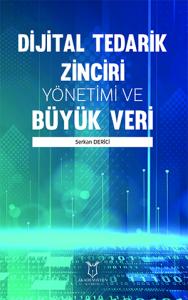
\"Dijital Tedarik Zinciri Yönetimi ve Büyük Veri\" adlı kitap, tedarik zinciri yönetimi disiplininin tarihsel süreçte nasıl geliştiğini ve dijital araçların kullanımıyla nasıl karmaşık bir hale geldiğini ele almaktadır. Kitap, klasik tedarik zinciri yönetimi yapısını anlatmanın yanı sıra, dijital tedarik zinciri yönetimi ve büyük veri kavramlarını da içermektedir. Bu kitap, sektör çalışanları, öğrenciler ve akademisyenler için bir kılavuz niteliği taşımaktadır.
The book titled \"Digital Supply Chain Management and Big Data\" discusses how the discipline of supply chain management has evolved over the historical process and has become more complex with the use of digital tools. In addition to explaining the classical structure of supply chain management, the book also covers the concepts of digital supply chain management and big data. This book serves as a guide for industry professionals, students, and academics.
Referanslar
Abdel-Basset M, Manogaran G & Mohamed M (2018). Internet of Things (IoT) and its impact on supply chain: A framework for building smart, secure and efficient systems. Future Generation Computer Systems, 86(9), 614-628.
Acar AZ & Köseoğlu AM (2014). Lojistik yaklaşımıyla tedarik zinciri yönetimi. Nobel Yayınevi.
Ageron B, Bentahar O & Gunasekaran A (2020). Digital supply chain: challenges and future directions. In Supply Chain Forum: An International Journal (Vol. 21, No. 3, pp. 133-138). Taylor & Francis.
Akben İ & Avşar ÖGİİ (2017). Digital Supply Chain and Cloud Computing. El-Ruha, 104.
Akter J (2014). Bootstrapped Durbin–Watson test of autocorrelation for small samples. ABC Journal of Advanced Research, 3(2), 137-142.
Alam M (2012). Cloud algebra for cloud database management system. In Proceedings of the Second International Conference on Computational Science, Engineering and Information Technology (pp. 26-29).
Almaslamani F, Abuhussein R, Saleet H, AbuHilal L & Santarisi N (2020). Using big data analytics to design an intelligent market basket-case study at sameh mall. Int. J. Eng. Res. Technol, 13(11), 3444-3455.
Altiparmak F, Gen M, Lin L & Paksoy T (2006). A genetic algorithm approach for multi-objective optimization of supply chain networks. Computers & industrial engineering, 51(1), 196-215.
Amanullah MA, Habeeb RAA, Nasaruddin FH, Gani A, Ahmed E, Nainar ASM, ... & Imran M (2020). Deep learning and big data technologies for IoT security. Computer Communications, 151, 495-517.
Arumugam S, Rajak S, Vimal KEK, Parthiban J, Sivaraman SK, Kandasamy J & Duque AA (2022). Multi-objective mixed-integer linear optimization model for sustainable closed-loop supply chain network: A case study on remanufacturing steering column. Environment, Development and Sustainability, 24(5), 6481-6507.
Bakoğlu R & Yılmaz E (2001). Tedarik Zinciri Tasarımının Rekabet Avantajı Yaratması Açısından Değerlendirilmesi. 6. Ulusal Pazarlama Kongresi.
Ballou RH (1978). Basic business logistics: transportation, materials management, physical distribution (No. 2). Prentice Hall.
Ballou, R. H. (1992). Business Logistics Managelnent.
Ballou RH (2007). The evolution and future of logistics and supply chain management. European business review.
Bello-Orgaz G, Jung JJ & Camacho D (2016). Social big data: Recent achievements and new challenges. Information Fusion, 28, 45-59.
Benton WC (2019). Distributed function generation with shared structures. U.S. Patent No. 10,241,767. Washington, DC: U.S. Patent and Trademark Office.
Bhargava B, Ranchal R & Othmane LB (2013). Secure information sharing in digital supply chains. In 2013 3rd IEEE international advance computing conference (IACC) (pp. 1636-1640). IEEE.
Blazquez D & Domenech J (2018). Big Data sources and methods for social and economic analyses. Technological Forecasting and Social Change, 130, 99-113.
Bora DJ (2019). Big data analytics in healthcare: A critical analysis. In Big Data Analytics for Intelligent Healthcare Management (pp. 43-57). Academic Press.
Borade AB & Bansod SV (2007). Domain Of Supply Chain Management-A State Of Art. Journal of Technology Management & Innovation, 2(4), 109-121.
Braganza A (2002). Enterprise integration: creating competitive capabilities. Integrated Manufacturing Systems, 13(8), 562-572.
Bulbul A, Cipiloglu Z & Capin T (2009). A face tracking algorithm for user interaction in mobile devices. In 2009 International Conference on CyberWorlds (pp. 385-390). IEEE.
Burns, R. (2015). Rethinking big data in digital humanitarianism: Practices, epistemologies, and social relations. GeoJournal, 80, 477-490.
Büyüközkan G & Göçer F (2018). Digital Supply Chain: Literature review and a proposed framework for future research. Computers in Industry, 97, 157-177.
Calatayud A, Mangan J & Christopher M (2019). The self-thinking supply chain. Supply Chain Management: An International Journal, 24(1), 22-38.
Chandra C & Tumanyan A (2005). Supply chain system taxonomy: a framework and methodology. Human Systems Management, 24(4), 245-258.
Charles V & Gherman T (2013). Achieving competitive advantage through big data. Strategic implications. Middle-East Journal of Scientific Research, 16(8), 1069-1074.
Chaudhary K & Alam M (2022). Big Data Analytics: Applications in Business and Marketing. Auerbach Publications.
Chen H, Chiang RH & Storey V. (2012). Business intelligence and analytics: From big data to big impact. MIS quarterly, 1165-1188.
Cheng X, Fang L, Hong X & Yang L (2017). Exploiting mobile big data: Sources, features, and applications. IEEE Network, 31(1), 72-79.
Chopra S, Meindl P & Kalra DV (2007). Supply Chain Management by Pearson. Pearson Education India.
Christopher M (1992). Logistics and Supply Chain Management. Pitman Publishing. London, Edition, 13, 343-376.
Cooper MC, Douglas ML & Janus DP (1997). Supply Chain Management: More Than a New Name for Logistics. The International Journal of Logistics Management, Vol.8No.1, pp.1–14.
Council SC (2008). Supply chain operations reference model. Overview of SCOR version, 5(0).
Cox BA, Preston JF, Rebeiz PP & Breitbach T (2021). Developing a resilient, robust and efficient supply network in Africa. Journal of Defense Analytics and Logistics, 5(2), 224-241.
Cox M & Ellsworth D (1997). Managing big data for scientific visualization. In ACM siggraph (Vol. 97, No. 1, pp. 21-38). MRJ/NASA Ames Research Center.
Croxton KL, Garcia-Dastugue SJ, Lambert DM & Rogers DS (2001). The supply chain management processes. The international journal of logistics management, 12(2), 13-36.
Çizmeci, F. (2002). Tedarik zinciri yönetimi. Alfa Basım Yayım, 1.
Dahlgaard JJ & Dahlgaard‐Park S (2006). Lean production, six sigma quality, TQM and company culture. The TQM magazine, 18(3), 263-281.
Dai HN, Wang H, Xu G, Wan J & Imran M (2020). Big data analytics for manufacturing internet of things: opportunities, challenges and enabling technologies. Enterprise Information Systems, 14(9-10), 1279-1303.
Damodar N & Porter DC (2020). Çev. Şenesen Ü & Şeneen GG. Temel Ekonometri. Literatür Yayıncılık.
Davenport TH, Barth P & Bean R (2012). How'big data'is different.
Demirtaş B & Argan M (2015). Big data and change in marketing: A theoretical approach. Journal of Marketing and Marketing Research, 15, 1-21.
Dinç Y (2019). Lojistik sektöründe büyük veri kullanımı: Mersin ili örneği (Master's thesis).
Dong M (2006). Development of supply chain network robustness index. International Journal of Services Operations and Informatics, 1(1-2), 54-66.
Dong XL & Srivastava D (2013). Big data integration. In 2013 IEEE 29th international conference on data engineering (ICDE) (pp. 1245-1248). IEEE.
Dreischmeier R, Close K & Trichet P (2015). The digital imperative. BCG Perspectives.
Drucker P F (1998). Management’s new paradigms. Forbes magazine, 10(2), 98-99.
Eaton D, Deroos T, Deutsch G, Lapis & Zikopoulos PC (2012). Understanding Big Data: Analytics for Enterprise Class Hadoop and Streaming Data, Mc Graw-Hill Companies.
Ebner K, Bühnen T & Urbach N (2014). Think big with big data: Identifying suitable big data strategies in corporate environments. In 2014 47th Hawaii International conference on system sciences (pp. 3748-3757). IEEE.
Einav L & Levin J (2014). Economics in the age of big data. Science, 346(6210), 1243089.
Erol İ, Nurtanış Velioğlu M & Sivrikaya Şerifoğlu F (2006). AB uyum yasaları ve sürdürülebilir kalkınma bağlamında tersine tedarik zinciri yönetimi: Türkiye’ye yönelik araştırma fırsatları ve önerileri. İktisat İşletme ve Finans, 21 (44): 86–106.
Eskandarpour M, Dejax P, Miemczyk J & Péton O (2015). Sustainable supply chain network design: An optimization-oriented review. Omega, 54, 11-32.
Eymen, U. E. (2007). Tedarik zinciri yönetimi. Kalite Ofisi Yayınları, 15.
Fan J, Han F & Liu H (2014). Challenges of big data analysis. National science review, 1(2), 293-314.
Fawcett SE & Magnan GM (2002). The rhetoric and reality of supply chain integration. International Journal of Physical Distribution & Logistics Management, 32(5), 339-361.
Fawcett SE, Magnan GM & McCarter MW (2008). Benefits, barriers, and bridges to effective supply chain management. Supply chain management: An international journal.
Fernie J (1999). Quick Response in retail distribution: An international perspective. Quick Response in the Supply Chain, 173-187.
Fischer C, Pardos ZA, Baker RS, Williams JJ, Smyth P, Yu R, ... & Warschauer M (2020). Mining big data in education: Affordances and challenges. Review of Research in Education, 44(1), 130-160.
Forrester JW (1958). Industrial Dynamics: A Major Breakthrough for Decision Makers, Harvard Business Review, vol. 36, no. 4, pp. 37-66.
Forrester JW (1997). Industrial dynamics. Journal of the Operational Research Society, 48(10), 1037-1041.
Frazzon EM, Rodriguez CMT, Pereira MM, Pires MC & Uhlmann I. (2019) Towards supply chain management 4.0. Brazilian Journal of Operations & Production Management, 16(2), 180-191.
Gantz J & Reinsel D (2012). The digital universe in 2020: Big data, bigger digital shadows, and biggest growth in the far east. IDC iView: IDC Analyze the future, 2007(2012), 1-16.
Gao RX, Wang L, Helu M & Teti R (2020). Big data analytics for smart factories of the future. CIRP annals, 69(2), 668-692.
George G, Haas MR & Pentland A (2014). Big data and management. Academy of management Journal, 57(2), 321-326.
Ghemawat S, Gobioff H & Leung ST (2003). The Google file system. In Proceedings of the nineteenth ACM symposium on Operating systems principles (pp. 29-43).
Görçün ÖF (2010). Tedarik zinciri yönetimi. İstanbul, Beta Yayın Evi.
Gripsrud G, Jahre M & Persson G (2006). Supply chain management–back to the future?. International Journal of Physical Distribution & Logistics Management.
Guide VDR (2000). Production planning and control for remanufacturing: industry practice and research needs. Journal of operations Management, 18(4), 467-483.
Guide VDR, Harrison TP & Van Wassenhove LN (2003). The challenge of closed-loop supply chains. Interfaces, 33(6), 3-6.
Gunasekaran A, Hong P & Fujimoto T. (2014). Building supply chain system capabilities in the age of global complexity: Emerging theories and practices. International journal of production economics, 147(PART B), 189-197.
Gupta UG & Gupta A (2016). Vision: a missing key dimension in the 5V Big Data framework. Journal of International Business Research and Marketing, 1(3), 50-56.
Habib MM & Jungthirapanich C (2008). An integrated framework for research and education supply chain for the universities. In 2008 4th IEEE International Conference on Management of Innovation and Technology (pp. 1027-1032). IEEE.
Habib M (2009). An integrated educational supply chain management (ITESCM). Graduate School of Information Technology.
Habib M (2014). Supply chain management (SCM): Its future implications. Open Journal of Social Sciences, 2(09), 238.
Halldorsson A, Kotzab H, Mikkola JH & Skjøtt‐Larsen T (2007). Complementary theories to supply chain management. Supply chain management: An international journal, 12(4), 284-296.
Handfield RB & Nıcholas EL (1999). Introduction to Supply Chain Management, Prentice-Hall, Inc., New Jersey.
Harjeet S, Jaggi Mr & Sunny SK (2016). Integration of Spark framework in Supply Chain Management, Procedia Computer Science.
Harper RL (2010). Warehouse technology in the supply chain management systems. In 2010 Proceedings-Annual Reliability and Maintainability Symposium (RAMS) (pp. 1-5). IEEE.
Hashem IAT, Yaqoob I, Anuar NB., Mokhtar S, Gani A & Khan SU (2015). The rise of “big data” on cloud computing: Review and open research issues. Information systems, 47, 98-115.
Hendricks KB & Singhal VR (2003). The effect of supply chain glitches on shareholder wealth. Journal of operations Management, 21(5), 501-522.
Hendry C, Jones A & Arthur M (1991). Skill supply, training and development in the small-medium enterprise. International Small Business Journal, 10(1), 68-72.
Heskett JL, Glaskowsky NA & Ivie RM (1973). Business logistics: Physical distribution and materials management (Vol. 1). New York: Ronald Press Company.
Hobbs JE (1996). A transaction cost approach to supply chain management. Supply Chain Management: An International Journal, 1(2), 15-27.
Hofmann E & Rüsch M (2017). Industry 4.0 and the current status as well as future prospects on logistics. Computers in industry, 89, 23-34.
Hollmann D (2011). Supply Chain network design under uncertainty and risk (Doctoral dissertation, Brunel University, School of Information Systems, Computing and Mathematics).
Holten R, Dreiling A, Muehlen M & Becker J (2002). Enabling technologies for supply chain process management. In Information Ressource Management Association International Conference, Seattle, Washington.
Hugos MH (2002). Essentials of supply chain management. John Wiley & Sons.
Hung CC & Hsieh CC (2017). Big data management on wireless sensor networks. In big data analytics for sensor-network collected intelligence (pp. 99-116). Academic Press.
Hunter NA & Valentino P (1995). Quick response–ten years later. International Journal of Clothing Science and Technology, 7(4), 30-40.
Inukollu VN, Arsi S & Ravuri SR (2014). Security issues associated with big data in cloud computing. International Journal of Network Security & Its Applications, 6(3), 45.
Jagadish HV, Gehrke J, Labrinidis A, Papakonstantinou Y, Patel JM, Ramakrishnan R & Shahabi C (2014). Big data and its technical challenges. Communications of the ACM, 57(7), 86-94.
Jayaraman V & Ross A (2003). A simulated annealing methodology to distribution network design and management. European Journal of Operational Research, 144(3), 629-645.
Jin X, Wah BW, Cheng X, & Wang Y (2015). Significance and challenges of big data research. Big data research, 2(2), 59-64.
Jüttner U, Christopher M & Baker S (2007). Demand chain management-integrating marketing and supply chain management. Industrial marketing management, 36(3), 377-392.
Kaliraj P & Devi T (2022). Big Data Applications in Industry 4.0. CRC Press.
Karaboğa T & Zehir C (2020). Büyük Verinin Etkin Yönetiminde Stratejik Uyum ve Veri Odaklı Kültür. IBAD Sosyal Bilimler Dergisi, (8), 63-76.
Katal A, Wazid M & Goudar RH (2013). Big data: issues, challenges, tools and good practices. In 2013 Sixth international conference on contemporary computing (IC3) (pp. 404-409). IEEE.
Kaya A & Alumur AS (2017). Kapalı Döngü Tedarik Zinciri Ağı Tasarımı. Endüstri Mühendisliği Dergisi, 28(2):2-18.
Kehoe D & Boughton N (2001). Internet based supply chain management: A classification of approaches to manufacturing planning and control. International Journal of Operations & Production Management.
Khan M, Wu X, Xu X & Dou W (2017). Big data challenges and opportunities in the hype of Industry 4.0. In 2017 IEEE International Conference on Communications (ICC) (pp. 1-6). IEEE.
Khoo LP & Yin XF (2003). An extended graph-based virtual clustering-enhanced approach to supply chain optimisation. The International Journal of Advanced Manufacturing Technology, 22, 836-847.
Kitchens B, David D, Jingjing L & Ahmed A (2018). Advanced Customer Analytics: Strategic Value Through Integration of Relationship Oriented Big Data. Journal of Management Information Systems. c.35. s.2: 540-574.
Kleab K (2017). Important of supply chain management. International Journal of Scientific and Research Publications, 7(9), 397-400.
Klibi W, Martel A & Guitouni A (2010). The design of robust value-creating supply chain networks: a critical review. European Journal of Operational Research, 203(2), 283-293.
Kobu B (2010). Üretim Yönetimi. Beta Yayınları, İstanbul.
Koseleva N & Ropaite G (2017). Big data in building energy efficiency: understanding of big data and main challenges. Procedia Engineering, 172, 544-549.
Kothari SS, Jain SV & Venkteshwar A (2018). The impact of IOT in supply chain management. International Research Journal of Engineering and Technology, 5(8), 257-259.
Krikke H, Blanc IL & van de Velde S (2004). Product modularity and the design of closed-loop supply chains. California management review, 46(2), 23-39.
Kung,L, Kung HJ, Jones-Farmer A & Wang Y (2015). Managing big data for firm performance: a configurational approach.
Kwon O, Lee N & Shin B (2014). Data quality management, data usage experience and acquisition intention of big data analytics. International journal of information management, 34(3), 387-394.
La Londe BJ & James MM. (1994). Emerging Logistics Strategies: Blueprintsfor the Next Century. International Journal of Physical Distribution and Logistics Management, Vol. 24, No. 7, pp. 35-47.
La Londe BJ (1997). Supply Chain Management: Myth or Reality?. Supply Chain Management Review,Vol. 1, Spring, pp. 6-7.
Lalwani CS, Disney SM & Naim MM (2006). On assessing the sensitivity to uncertainty in distribution network design. International Journal of Physical Distribution & Logistics Management.
Lamba HS & Dubey SK (2015). Analysis of requirements for big data adoption to maximize IT business value. In 2015 4th International Conference on Reliability, Infocom Technologies and Optimization (ICRITO)(Trends and Future Directions) (pp. 1-6). IEEE.
Lambert DM, Cooper MC & Pagh JD. (1998). Supply chain management: implementation issues and research opportunities. The international journal of logistics management, 9(2), 1-20.
Lambert DM & Cooper MC (2000). Issues in supply chain management. Industrial marketing management, 29(1), 65-83.
Lambert DM & Stock JR (1993). Strategic logistics management (Vol. 69). Homewood, IL: Irwin.
Laney D (2001). 3D data management: Controlling data volume, velocity and variety. META group research note, 6(70), 1.
Langley P (2016). Explainable agency in human-robot interaction. In AAAI fall symposium series.
Larson PD & Rogers DS (1998). Supply chain management: definition, growth and approaches. Journal of Marketing Theory and Practice, 6(4), 1-5.
Lazer D, Kennedy R, King G & Vespignani A (2014). The parable of Google Flu: traps in big data analysis. science, 343(6176), 1203-1205.
Lee Y & Kincade DH (2003). US apparel manufacturers’ company characteristic differences based on SCM activities. Journal of Fashion Marketing and Management: An International Journal.
Lemoine OW & Skjoett‐Larsen T (2004). Reconfiguration of supply chains and implications for transport: a Danish study. International Journal of Physical Distribution & Logistics Management.
Lu HE, Potter A, Sanchez Rodrigues V & Walker H (2018). Exploring sustainable supply chain management: a social network perspective. Supply Chain Management: An International Journal, 23(4), 257-277.
Lummus RR & Vokurka RJ (1999). Defining supply chain management: a historical perspective and practical guidelines. Industrial management & data systems.
Luthra S & Mangla SK (2018). Evaluating challenges to Industry 4.0 initiatives for supply chain sustainability in emerging economies. Process Safety and Environmental Protection, 117, 168-179.
Manovich L (2011). Trending: The promises and the challenges of big social data. Debates in the digital humanities, 2(1), 460-475.
Manson-Jones NB & Towill D (2000). Engineering the Leagile Supply Chain International. Journal of Agile Management Systems, 2(1), 54-61.
McAfee A, Brynjolfsson E, Davenport TH, Patil DJ & Barton D (2012). Big data: the management revolution. Harvard business review, 90(10), 60-68.
McKinsey Global Institute: Manyika J, Chui M, Brown B, Bughin J, Dobbs R, Roxburgh C & Hung Byers A (2011). Big data: The next frontier for innovation, competition, and productivity.
McIvor R & Humphreys P (2004). Early supplier involvement in the design process: lessons from the electronics industry. Omega, 32(3), 179-199.
Melo T, Nickel S & Gama F (2007). Facility location and supply chain management–a comprehensive review.
Melo MT, Nickel S & Saldanha-Da-Gama F (2009). Facility location and supply chain management–A review. European journal of operational research, 196(2), 401-412.
Mentzer JT, DeWitt W, Keebler JS, Min S, Nix NW, Smith CD & Zacharia ZG. (2001). Defining supply chain management. Journal of Business logistics, 22(2), 1-25.
Mentzer JT & Moon MA (2004). Sales forecasting management: a demand management approach. Sage Publications.
Min H & Zhou G (2002). Supply chain modeling: past, present and future. Computers & industrial engineering, 43(1-2), 231-249.
Miyazaki H, Kamei M, Shigesato Y & Yasui I (1999). Influence of unbalanced magnetron and penning ionization for RF reactive magnetron sputtering. Japanese journal of applied physics, 38(1R), 186.
Monczka RM & Morgan J (1997). What’s wrong with supply chain management. Purchasing, 122(1), 69-73.
Morabito V (2015). Big data and analytics. Strategic and organisational impacts.
Mowat A & Collins R (2000). Consumer behaviour and fruit quality: supply chain management in an emerging industry. Supply Chain Management: An International Journal, 5(1), 45-54.
Mulvey JM, Vanderbei RJ & Zenios SA (1995). Robust optimization of large-scale systems. Operations research, 43(2), 264-281.
Narasimhan R & Narayanan S (2013). Perspectives on supply network–enabled innovations. Journal of Supply Chain Management, 49(4), 27-42.
Nikbakhsh E (2009). Green supply chain management. Supply Chain and Logistics in National, International and Governmental Environment: Concepts and Models, 195-220.
Oh J & Jeong B (2019). Tactical supply planning in smart manufacturing supply chain. Robotics and Computer-Integrated Manufacturing, 55, 217-233.
Ohno T (1998). The Toyota production system: beyond large scale production. Productivity Press, Cambridge. 143 p.
Oliver RK & Webber MD (1992). Supply chain management: Logistic catches up with strategy. 1982. Outlook cit. Christopher, M., Logistics, the Strategic Issues.
Onay A (2020). Büyük Veri Çağında İç Denetimin Dönüşümü. Muhasebe Bilim Dünyası Dergisi, 22(1), 127-163.
Özal ÖM (2011). Yalın Tedarik Zinciri Yönetimi ve İmalat Sektöründe Tedarikçi Seçim Uygulaması, Yüksek Lisans Tezi, Hava Harp Okulu Havacılık ve Uzay Teknolojileri Enstitüsü, İstanbul.
Özarı İM & Arslan A (2018). Dijital Sanayi Devriminin Lojistik Sektörüne Getireceği Yenilikler ve Etkileri, 7. Ulusal Lojistik ve Tedarik Zinciri Kongresi, ULTZK, 3-5.
Özdemir Aİ (2004). Tedarik zinciri yönetiminin gelişimi, süreçleri ve yararları. Erciyes Üniversitesi İktisadi ve İdari Bilimler Fakültesi Dergisi, (23).
Öztaş K & Uçan H (2002). Turizm sektöründe mutfak hizmetleri, Nobel Yayın Dağıtım, Ankara.
Paksoy T (2005). Tedarik Zinciri Yönetiminde Dağıtım Ağlarının Tasarımı Ve Optimizasyonu: Malzeme İhtiyaç Kısıtı Altında Stratejik Bir Üretim-Dağıtım Modeli. Selçuk Üniversitesi Sosyal Bilimler Enstitüsü Dergisi, (14), 435-454.
Pence HE (2014). Will Big Data Mean the End of Privacy?. Journal of educational technology systems, 44(2), 253-267.
Power D (2005). Supply chain management integration and implementation: a literature review. Supply chain management: an International journal, 10(4), 252-263.
Radivojević G & Milosavljević L (2019). The concept of logistics 4.0. In 4th Logistics International Conference (pp. 23-25).
Raj A, Dwivedi G, Sharm, A, de Sousa Jabbour ABL & Rajak S (2020). Barriers to the adoption of industry 4.0 technologies in the manufacturing sector: An inter-country comparative perspective. International Journal of Production Economics, 224, 107546.
Rodrigue JP (2020). The geography of transport systems. Routledge.
Rogers DS & Tibben‐Lembke R (2001). An examination of reverse logistics practices. Journal of business logistics, 22(2), 129-148.
Ross DF (1997). Competing through supply chain management: creating market-winning strategies through supply chain partnerships. Springer Science & Business Media.
Ross DF (1998). Meeting the challenge of supply chain management. In Competing Through Supply Chain Management: Creating Market-Winning Strategies Through Supply Chain Partnerships (pp. 1-35). Boston, MA: Springer US.
Rusko RT, Kylänen M & Saari R (2009). Supply chain in tourism destinations: the case of Levi Resort in Finnish Lapland. International Journal of Tourism Research, 11(1), 71-87.
Russom P (2011). Big data analytics. TDWI best practices report, fourth quarter, 19(4), 1-34.
Sabri EH & Beamon BM (2000). A multi-objective approach to simultaneous strategic and operational planning in supply chain design. Omega, 28(5), 581-598.
Sagiroglu S & Sinanc D (2013). Big data: A review. In 2013 international conference on collaboration technologies and systems (CTS) (pp. 42-47). IEEE.
Sari R (2020). Analisis sentimen pada review objek wisata dunia fantasi menggunakan algoritma K-Nearest Neighbor (k-nn). EVOLUSI: Jurnal Sains Dan Manajemen, 8(1).
Scmdojo (2023) Evolution of Supply Chain Management and Logistics https://www.scmdojo.com/history-and-evolution-of-supply-chain-and-logistics/
Schmidt G & Wilhelm WE. (2000). Strategic, tactical and operational decisions in multi-national logistics networks: a review and discussion of modelling issues. International Journal of Production Research, 38(7), 1501-1523.
Schneider R (2012). Hadoop for Dummies Special Edition, John Wiley&Sons Canada.
Shakil MH, Munim ZH, Dushenko M, Jimenez VJ & Imset M (2020). Big data and artificial intelligence in the maritime industry: a bibliometric review and future research directions. Maritime Policy & Management, 47(5), 577-597.
Shu H (2016). Big data analytics: six techniques. Geo-spatial Information Science, 19(2), 119-128.
Shukla RK, Garg D & Agarwal A (2011). Understanding of supply chain: A literature review. International Journal of Engineering Science and Technology, 3(3), 2059-2072.
Simchi-Levi D & Diabat A (2009). A carbon-capped supply chain network problem. In 2009 IEEE international conference on industrial engineering and engineering management (pp. 523-527). IEEE.
Singh D & Reddy CK (2015). A survey on platforms for big data analytics. Journal of big data, 2(1), 1-20.
Šikšnys L & Pedersen TB (2016). Solvedb: Integrating optimization problem solvers into sql databases. In Proceedings of the 28th International Conference on Scientific and Statistical Database Management (pp. 1-12).
Smykay EW, Bowersox DJ & Mossman FH (1961). Physical Distribution-Management, New York: Macmillan Publishing Co , 1961.
Snyder LV, Scaparra MP, Daskin MS & Church RL (2006). Planning for disruptions in supply chain networks. In Models, methods, and applications for innovative decision making (pp. 234-257). Informs.
Southern RN (2011). Historical perspective of the logistics and supply chain management discipline. Transportation Journal, 50(1), 53-64.
Spekman RE, Kamauff J & Spear J (1999). Towards more effective sourcing and supplier management. European journal of purchasing & supply management, 5 (2), 103-116.
Stevens GC (1990). Successful supply‐chain management. Management Decision.
Talluri S (2000). An IT/IS acquisition and justification model for supply‐chain management. International Journal of Physical Distribution & Logistics Management.
Taylor DH (1997). Global cases in logistics and supply chain management. Cengage Learning EMEA.
Thomas DJ & Griffin PM (1996). Coordinated supply chain management. European journal of operational research, 94(1), 1-15.
Toptaş O & Şen A (2021). Eğitimde Ölçme Değerlendirmede Büyük Verinin Önemi. Düşünce ve Toplum Sosyal Bilimler Dergisi, 3(4), 223-243.
Tsai CW, Lai CF, Chao HC & Vasilakos AV (2015). Big data analytics: a survey. Journal of Big data, 2(1), 1-32.
Tutkun Hİ (2007). Tedarik zinciri yönetimi yapısının tasarlanması ve örgütlenmesi öncesinde işletme de uygulanabilirliğinin analizi. DEÜ Sosyal Bilimleri Enstitüsü.
Ünver Ö, Gamgam H & Altunkaynak B (2021). Temel İstatistik Yöntemler. Seçkin Yayıncılık.
Varian HR (2014). Big data: New tricks for econometrics. Journal of Economic Perspectives, 28(2), 3-28.
Vergara FE, Khouja M & Michalewicz Z (2002). An evolutionary algorithm for optimizing material flow in supply chains. Computers & Industrial Engineering, 43(3), 407-421.
Viceconti M, Hunter P & Hose R (2015). Big data, big knowledge: big data for personalized healthcare. IEEE journal of biomedical and health informatics, 19(4), 1209-1215.
Vicente, M. R., López-Menéndez, A. J., & Pérez, R. (2015). Forecasting unemployment with internet search data: Does it help to improve predictions when job destruction is skyrocketing?. Technological Forecasting and Social Change, 92, 132-139.
Wamba FS, Gunasekaran A, Dubey R & Ngai EW (2018). Big data analytics in operations and supply chain management. Annals of Operations Research, 270, 1-4.
Yang L, Zhang Q & Ji J (2017). Pricing and carbon emission reduction decisions in supply chains with vertical and horizontal cooperation. International Journal of Production Economics, 191, 286-297.
Yıldız A (2018). Endüstri 4.0 İle bütünleştirilmiş dijital tedarik zinciri. Business and Management Studies: An International Journal.
Yin S & Kaynak O (2015). Big data for modern industry: challenges and trend. Proceedings of the IEEE, 103(2), 143-146.
Womack JP, Jones DT & Roos D (1990) The Machine that Changed the World, Mandarin Books, London.
Zijm H, Klumpp M, Heragu S & Regattieri A (2019). Operations, logistics and supply chain management: definitions and objectives. Operations, logistics and supply chain management, 27-42.
Zsidisin GA, Jun M & Adams LL (2000). The relationship between information technology and service quality in the dual‐direction supply chain: A case study approach. International Journal of Service Industry Management.
Yayınlanan
Lisans
LisansBu İnternet Sitesi içeriğinde yer alan tüm eserler (yazı, resim, görüntü, fotoğraf, video, müzik vb.) Akademisyen Kitabevine ait olup, 5846 sayılı Fikir ve Sanat Eserleri Kanunu ve 5237 sayılı Türk Ceca Kanunu kapsamında korunmaktadır. Bu hakları ihlal eden kişiler, 5846 sayılı Fikir ve Sanat eserleri Kanunu ve 5237 sayılı Türk Ceza Kanununda yer alan hukuki ve cezai yaptırımlara tabi olurlar. Yayınevi ilgili yasal yollara başvurma hakkına sahiptir.
