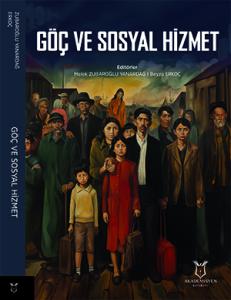
İnsan Ticareti ve Sosyal Hizmet
Özet
Migration and human trafficking cause social injustices and human rights violations all over the world, and are a cause and consequence of important problems directly related to social work. Human trafficking is a crime that has a lasting and profound impact on the lives of society and individuals. These effects include physical, psychological, social and economic problems and harm the social structure of the society as well as the victims. Migration and human trafficking are often intertwined phenomena. Human trafficking particularly affects vulnerable groups such as women, children and forced laborers and leads to human rights violations. International cooperation, awareness-raising, development of qualified policies and active participation of social workers in the process are important points in the fight against human trafficking. Social work plays an important role in combating human trafficking and the problems posed by human trafficking and strives to eliminate the causes of human trafficking, assist victims, and achieve social justice. Social workers play an important role in protecting the rights of immigrants and reducing their vulnerability to trafficking. At the same time, social workers should raise public awareness of human trafficking and migration and strive to prevent these problems. On this basis, it is essential for social work to achieve its goals by ensuring that we create a world that is more fair and respectful of human rights. This part of the book examines the phenomenon of human trafficking in the context of social work, after touching on important points about human trafficking and migration. Human trafficking is at an indispensable point in terms of ensuring the well-being of all individuals and fulfilling the purposes of social service.In the chapter, human trafficking is discussed under topics such as social work education and case management in social work. Information about the difficulties experienced in identifying human trafficking victims and working with human trafficking victims is included. In the following sections, the political context regarding human trafficking has been tried to be explained and important legislation regarding human trafficking has been listed.
Referanslar
Akgün, E. (2016). Modern Kölelik İnsan Ticareti ve Rakamlarla Türkiye Gerçeği. Marmara Üniversitesi Hukuk Fakültesi Hukuk Araştırmaları Dergisi, 22(1), 157–182.
Aktaş, E., & Arıca, F. A. (2020). İnsan Ticaretinin Cinsel Sömürü Boyutu: Cinsel Sömürü Karşıtı Kampanya Afişleri Üzerine İnceleme. Göç Araştırmaları Dergisi, 6(2), 292–325.
Alvarez, M. B., & Alessi, E. J. (2012). Human trafficking is more than sex trafficking and prostitution: Implications for social work. Affilia, 27(2), 142–152.
Aslan, F., Çabuk, G., & Antakyalıoğlu, Ş. (2020). Adli Bir Olgu (Çocuk Evliliği) Üzerinden İnsan Ticareti Kavramı. Olgularla Adli Tıp ve Adli Bilimler Kitabı. Ankara: Akademisyen Yayınevi, 177–183.
Aydın, Ç. K. (2011). Organ veya doku ticareti suçu. Ankara Barosu Dergisi, 1.
Blanton, R. G., & Blanton, S. L. (2020). The global economic and political causes of human trafficking. Içinde Oxford Research Encyclopedia of International Studies.
Cockbain, E., & Bowers, K. (2019). Human trafficking for sex, labour and domestic servitude: how do key trafficking types compare and what are their predictors? Crime, Law and Social Change, 72(1), 9–34. https://doi.org/10.1007/s10611-019-09836-7
Dinh, N., Hughes, C., Hughes, J., & Maurer-Fazio, M. (2021). Human Trafficking in Southeast Asia: Results from a Household Survey in Vietnam. Journal of Human Trafficking, 7(1), 14–34. https://doi.org/10.1080/23322705.2019.1650527
Duger, A. (2015). Focusing on prevention: The social and economic rights of children vulnerable to sex trafficking. Health & Hum. Rts. J., 17, 114.
Dündar, G. (2020). Emek sömürüsü bağlamında insan ticareti. Göç Araştırmaları Dergisi, 6(2), 326–349.
Greenbaum, J. (2017). Introduction to human trafficking: who is affected? Human trafficking is a public health issue: A paradigm expansion in the United States, 1–14.
Greenbaum, V. J., Titchen, K., Walker-Descartes, I., Feifer, A., Rood, C. J., & Fong, H. (2018). Multi-level prevention of human trafficking: The role of health care professionals. Preventive medicine, 114, 164–167.
Heinrich, K. H. (2010). Ten years after the Palermo Protocol: Where are protections for human trafficking? Human Rights Brief, 18(1), 1.
Khan, Z., Kamaluddin, M. R., Meyappan, S., Manap, J., & Rajamanickam, R. (2023). Prevalence, causes and impacts of human trafficking in Asian countries: A scoping review. F1000Research, 11, 1021.
Lee, M. (2013). Human trafficking. Routledge.
Marburger, K., & Pickover, S. (2020). A Comprehensive Perspective on Treating Victims of Human Trafficking. Professional Counselor, 10(1), 13–24.
Naik, A. B. (2018). Impacts, causes and consequences of women trafficking in India from human rights perspective. Social Sciences, 7(2), 76–80.
Okech, D., Choi, Y. J., Elkins, J., & Burns, A. C. (2018). Seventeen years of human trafficking research in social work: A review of the literature. Journal of Evidence-Informed Social Work, 15(2), 103–122. https://doi.org/10.1080/23761407.2017.1415177
Oluniyi, O. (2012). Students’ perception of the relative causes of human trafficking in Nigeria. Mediterranean Journal of Social Sciences, 493.
Orme, J., & Ross-Sheriff, F. (2015). Sex trafficking: Policies, programs, and services. Social work, 60(4), 287–294.
Ray, N. (2006). Looking at trafficking through a new lens. Cardozo JL & Gender, 12, 909.
Roby, J. L. (2005). Women and children in the global sex trade: Toward more effective policy. International Social Work, 48(2), 136–147.
Şahin, F. (2014). İnsan Ticareti Olgularında Vaka Yönetimi Temelli Sosyal Hizmet Müdahalesi Neden Önemlidir? Içinde İnsan Ticareti Mağdurlarıyla Sosyal Hizmet (s. 76). Aile Danışmanları Derneği.
Sayın, H., & Akkoca Seçkin, S. (2021). İnsan Ticareti ya da İnsanlığın Ticareti: Çocuk Ticareti Üzerinden Uluslararası Göçe Bakış. İstanbul Esenyurt Üniversitesi İşletme ve Yönetim Bilimleri Fakültesi Sosyal Bilimler Araştırmaları Dergisi, 1(1), 95–109. https://dergipark.org.tr/tr/download/article-file/2233546
Sayın, H., & Versan, R. (2010). Uluslararası Hukuk Ve Türk Hukuku Bakımından Göçmen Kaçakçılığı, İnsan Ticareti, Cinsel Sömürü Suçları ve Bunlarla Mücadelede Uluslararası [İstanbul Üniversitesi]. http://nek.istanbul.edu.tr:4444/ekos/TEZ/45672.pdf
Schatz, M. S., & Furman, R. (2002). Sexual Trafficking of Women: Strategies for Developing Trauma Recovery Teams. Social Development Issues, 24(2), 60.
Sever, H., & Arslan, S. (2008). İnsan Borsası, Adalet Yayınevi. Ankara.
Shelley, L. (2010). Human trafficking: A global perspective. Cambridge University Press.
Shelley, L. (2012). Human security and human trafficking. Içinde Human trafficking and human security (ss. 10–25). Routledge.
Sigmon, J. N. (2008). Combating modern-day slavery: Issues in identifying and assisting victims of human trafficking worldwide. Victims and Offenders, 3(2–3), 245–257.
Süren, Ö. K. (2007). Organ ve doku naklinin yasal ve etik açıdan incelenmesi. Tbb Dergisi, 73, 176–195.
UN. (2000). Protocol to prevent, suppress and punish human trafficking in persons, especially women and children, supplementing the United Nations convention against transnational organized crime.
United Nations. (2006). Toolkit to Combat Trafficking in Persons. United Nations publication. https://www.unodc.org/pdf/Trafficking_toolkit_Oct06.pdf
United Nations Office on Drugs and Crime. (2012). Global report on trafficking in persons. UN. https://www.unodc.org/unodc/data-and-analysis/glotip.html
UNODC. (2019). E4J University Module Series: Trafficking in Persons & Smuggling of Migrants Module 7: Prevention of Trafficking in Persons. https://www.unodc.org/e4j/zh/tip-and-som/module-7/key-issues/root-causes.html
Wakgari, G. (2014). Causes and Consequences of Human Trafficking in Ethiopia: the case of women in the Middle East. International journal of gender and Women’s Studies, 2(2), 233–246.
Yakushko, O. (2009). Human trafficking: A review for mental health professionals. International Journal for the Advancement of Counselling, 31, 158–167.
Zhang, S. X. (2022). Progress and Challenges in Human Trafficking Research: Two Decades after the Palermo Protocol. Journal of Human Trafficking, 8(1), 4–12. https://doi.org/10.1080/23322705.2021.2019528