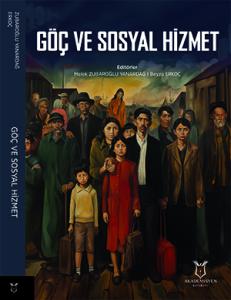
Göçmenlerin Sosyal Uyumu Üzerine Kuramsal ve Pratik Bir Çerçeve
Özet
Sosyal uyum kavramı, birçok sosyal bilimci tarafından, göçün ev sahibi ülkelerdeki olumsuz etkilerini azaltmak ve yönetmek için dikkate alınması gereken en önemli faktörlerden biri olarak kabul edilmektedir. Özellikle göç sonrası sürecin etkin yönetimi için, göçmenlerin sosyal uyumunun güçlendirilmesi gerekmektedir. Entegrasyon ve sosyal uyum genellikle eşdeğer kavramlar olarak sunulsa da, bu iki kavram arasında farklılıklar vardır. Entegrasyon, göçmenlerin yeni bir topluma yerleşme, ev sahibi toplulukla etkileşim kurma ve sosyal değişim yaşama sürecidir. İki topluluk arasındaki dinamik bir ilişki ağıdır. Başarılı bir entegrasyon süreci için, göçmenlerin sadece ev sahibi topluluğa uyum sağlaması değil, aynı zamanda ev sahibi topluluğun da bu süreçte gelişmesi ve değişmesi gerektiği inancı giderek daha yaygın hale gelmiştir. Öte yandan sosyal uyum, entegrasyonu da içeren daha geniş bir kavramdır. Bu süreçte göçmenler, ev sahibi topluluğun sosyal, kültürel ve kurumsal normlarını anlamaya ve benimsemeye çalışırlar. Sosyal uyum, göçmenlerin kendi kültürel kimliklerini korurken ev sahibi topluluğa aktif olarak katılmalarını içerir. Türkiye'nin entegrasyon ve sosyal uyum politikalarına baktığımızda, sosyal uyum ve entegrasyon açısından uluslararası rapor ve endekslerde oldukça düşük sıralarda yer aldığını görüyoruz. Pratik çerçeveden bakıldığında; sosyal uyumu artırmak için Türkiye ve diğer ülkeler için kültürel farkındalık ve anlayışı teşvik etmek, dil desteği sağlamak, aile birleşmesini desteklemek, barınma ve konaklamayı desteklemek, eğitime erişimi kolaylaştırmak, istihdam ve girişimciliği desteklemek, sağlık ve refahı sağlamak ve ayrıca göçmenleri karar alma süreçlerine dahil etmek, göçmenlerin medyada temsilini sağlamak, göçmenlerin yasal entegrasyonunu sağlamak, haklarını korumak ve son olarak, yukarıda belirtilen tüm uygulama ve faaliyetlerle ilgili izleme ve değerlendirme çalışmaları yürütmek büyük önem taşımaktadır.
The concept of social cohesion is considered by many social scientists as one of the most important factors to be taken into account in order to reduce and manage the negative effects of migration in host countries. Especially for the effective management of the post-migration process, the social cohesion of migrants needs to be enhanced. Integration and social cohesion are often presented as equivalent concepts, however; there are differences between these two concepts. Integration is the process of migrants settling into a new society, interacting with the host community, and experiencing social change. It is a dynamic network of relationships between two communities. For a successful integration process, it has become increasingly dominant to believe that not only should migrants adapt to the host community, but also the host community should evolve and change during this process. Social cohesion on the other hand, is a broader concept that also includes integration. During this process, migrants try to understand and adopt the social, cultural, and institutional norms of the host community. Social cohesion involves migrants actively participating in the host community while preserving their own cultural identities. When we look into the integration and social cohesion policies of Turkey, it ranks quite low down in international reports and indexes in terms of social cohesion and integration. From practical framework; in order to increase social cohesion, it is of great importance for Turkey and other countries to promote cultural awareness and understanding, provide language support, support family reunification, support housing and accommodation, facilitate access to education, support employment and entrepreneurship, provide health and well-being and also involve migrants in decision-making processes, ensure media representation of migrants, ensure legal integration of migrants, protect their rights, and finally, it’s highly important to conduct monitoring and evaluation studies regarding all of forementioned practices and activities.
Referanslar
Ataş, Ö. (2021). Suriyeli göçmenlerin sosyal uyum düzeyi “Gaziantep örneği”. (Yayınlanmamış Yüksek Lisans Tezi). Gaziantep Üniversitesi, Gaziantep.
Avrupa Denetçiler Mahkemesi. (2018). The Facility for Refugees in Turkey: helpful support, but improvements needed to deliver more value for money (Special Report No. 27). Erişim Adresi: [ https://www.eca.europa.eu/en/Pages/DocItem.aspx?did=47552]. Erişim Tarihi: 13/08/2017
Ayyıldız, A. A. (2023). Geçici koruma altındaki Suriyeli göçmenlerin sosyal uyum ve iyilik halleri: sivil toplum örgütleri üzerinden bir değerlendirme. (Yayınlanmamış Yüksek Lisans Tezi). Hacettepe Üniversitesi, Ankara.
Berry, J. W. (1997). Immigration, acculturation, and adaptation. Applied Psychology: An International Review, 46(1), 5-34.
Birleşmiş Milletler [BM] .(2018). Güvenli Kurallı ve Düzenli Göç Mutabakatı. Erişim Adresi: [https://www.goc.gov.tr/kurumlar/goc.gov.tr/files/k%C3%BCresel%20g%C3%B6%C3%A7%20mutabakat%C4%B1.pdf]. Erişim Tarihi: 09/09/2021
Birleşmiş Milletler Mülteciler Yüksek Komiserliği [BMMYK]. (2018). Bölgesel Mülteci Dayanıklılık Planı 2019-2020: Ülke Bölümü Türkiye. Erişim Adresi: [https://www.unhcr.org/tr/wp-content/uploads/sites/14/2020/10/3RP-2019-2020-TR.pdf]. Erişim Tarihi: 24/4/2019
Birleşmiş Milletler Mülteciler Yüksek Komiserliği [BMMYK]. (2018). UNHCR Turkey BMMYK-MEB-YÖK-YTB İşbirliği. Erişim Adresi: [ https://www.unhcr.org/tr/wp-content/uploads/sites/14/2019/01/09.-UNHCR-Turkey-Education-Fact-Sheet-September-2018_TR.pdf]. Erişim Tarihi: 11/1/2022
Birleşmiş Milletler Nüfus Fonu [UNFPA]. (2018). BM Nüfus Fonu 3RP Bölgesel Mülteci & Dayanıklılık Planı Geçim Kaynakları ve İstihdam Verileri Analizi Raporu. Erişim Adresi: [ https://www.tr.undp.org/content/turkey/tr/home/library/syria_programme/3rp-gecim-kaynaklar-ve-stihdam-verileri-analizi-raporu-.html]. Erişim Tarihi: 8/4/2020
Birleşmiş Milletler Nüfus Fonu [UNFPA]. (2018). BM Nüfus Fonu 3RP Bölgesel Mülteci & Dayanıklılık Planı Geçim Kaynakları ve İstihdam Verileri Analizi Raporu. Erişim Adresi: [ https://www.tr.undp.org/content/turkey/tr/home/library/syria_programme/3rp-gecim-kaynaklar-ve-stihdam-verileri-analizi-raporu-.html]. Erişim Tarihi: 8/4/2020
Bloemraad, I., Korteweg, A., ve Yurdakul, G. (2008). Citizenship and immigration: Multiculturalism, assimilation, and challenges to the nation-state. Annual review of sociology, 34: 153-179.
Buenfino, A. (2007). Integration and the question of social identity. In A. Buenfino, L. C. Byrne, J. Cruddas, R. Cuperus, J. Dijsselbloem, F. Dubet, et al. (Eds.), Rethinking immigration and integration: a new centre-left agenda (pp. 111–130). London: Policy Network. (Aktaran: Garha, N. S., & Paparusso, A. (2018). Fragmented integration and transnational networks: a case study of Indian immigration to Italy and Spain. Genus, 74 (1), 12.)
Crul, M., Lelie, F., Biner, Ö., Bunar, N., Keskiner, E., Kokkali, I., ... & Shuayb, M. (2019). How the different policies and school systems affect the inclusion of Syrian refugee children in Sweden, Germany, Greece, Lebanon and Turkey. Comparative Migration Studies, 7(1), 1-20.
ECRE (2022). “Not there yet: Family reunification for beneficiaries of international protection”. European Council on Refugees and Exiles. https://asylumineurope.org/wp-content/uploads/2023/02/Family-Reunification.pdf
Erdoğan, M. M. (2020). Suriyeliler Barometresi-2019: Suriyelilerle Uyum İçinde Yaşamın Çerçevesi. Orion Kitabevi.
Fiske, S. T., Cuddy A. J. C. (2006). Stereotype content across cultures as a function of group status. In Guimond S. (Ed.), Social comparison and social psychology: Understanding cognition, intergroup relations and culture (pp. 249–263). Cambridge, England: Cambridge University Press.
Friedkin, N.E. (2004) Social Cohesion. Annual Review of Sociology, 30, 409-425.
https://doi.org/10.1146/annurev.soc.30.012703.110625
Geçici Koruma Yönetmeliği. (2014). T. C. Resmî Gazete, 29153, 22 Ekim 2014.
Global Compact on Refugees. (2022). https://globalcompactrefugees.org/
Good Practice Examples in Refugee Hosting in Turkey (2020). Good Practice Examples in Refugee Hosting in Turkey, Survey Report. Erişim adresi: https://igamder.org/uploads/belgeler/Report_Good%20Practice%20Examples%20in%20Refugee%20Hosting_Final_20%2002%202020.pdf
Groenendijk, K. (2006). Family reunification as a right under community law, 8(2), 215-230.
Harley, T., & Hobbs, H. (2020). The meaningful participation of refugees in decision-making processes: questions of law and policy. International Journal of Refugee Law, 32(2), 200-226.
Hellgren, Z. (2015). Immigrant integration as a two-way process: Translating theory into practice. GRTIM Working Paper Series Number 23.
Jansen, C. J. (1970). Readings In the Sociology of Migration. New York: Pergamon Press.
McBride, M. (2015). What works to reduce prejudice and discrimination? A review of the evidence. Scottish Government.
Murphy-Lejeune, E. (2001). Student Mobility and Narrative in Europe: The New Strangers. London: Routledge
Penninx, R., ve Garcés-Mascareñas, B. (2016). The concept of integration as an analytical tool and as a policy concept. In Integration processes and policies in Europe (pp. 11-29). Springer, Cham.
Schiefer, D., ve Van der Noll, J. (2017). The essentials of social cohesion: A literature review Social Indicators Research, 132 (2), 579-603.
T.C. İçişleri Bakanlığı Göç İdaresi Başkanlığı. (2016). Türkiye Göç Raporu 2016. Erişim Adresi: [: https://www.goc.gov.tr/kurumlar/goc.gov.tr/files/2016_yiik_goc_raporu_haziran.pdf]. Erişim Tarihi: 16/11/2019
T.C. İçişleri Bakanlığı Göç İdaresi Başkanlığı. (2023). İstatistikler. https://www.goc.gov.tr/#
Uluslararası Göç Örgütü [IOM]. (2006). IOM and Migrant Integration. Erişim Adresi: https://publications.iom.int/system/files/pdf/iom_and_migrant_integration.pdf
Uluslararası Göç Örgütü [IOM]. (2017). Integratıon and Socıal Cohesıon: Key Elements for Reapıng The Benefıts of Mıgratıon. Global Compact Thematic Paper | Integration and Social Cohesion. Erişim adresi: www.iom.int/sites/default/files/our_work/ODG/GCM/IOM-Thematic-Paper-Integration-and Social-Cohesion.pdf
UNHCR. (2020). Good practices for migrant and refugee housing in Europe. United Nations High Commissioner for Refugees .New York: The United Nations Refugee Agency.
Yabancılar ve Uluslararası Koruma Kanunu. (2013). T. C. Resmi Gazete, 28615, 11 Nisan 2013.