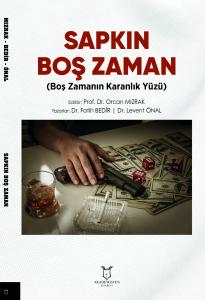
Sapkın Boş Zaman (Boş Zamanın Karanlık Yüzü)
Özet
Bu kitapta, sapkın boş zaman’ın çeşitli yönlerini ele alacak ve derinlemesine analiz edeceğiz. Teorik temellerinden gerçek dünya örneklerine, sapkın boş zaman’ı etkileyen faktörlerden toplumun kontrol mekanizmalarına kadar birçok önemli konuya değineceğiz. Ayrıca, bu faaliyetlerin bireysel ve toplumsal sonuçları üzerinde duracak ve gelecekteki trendlere dair tahminlerde bulunacağız. Bu kitap sayesinde, sapkın boş zaman hakkında daha fazla farkındalık yaratmayı, okuyucuların bu konuya ilişkin düşüncelerini ve anlayışlarını derinleştirmeyi umarak yazıyoruz. Amacımız, sapkın boş zaman’ın karmaşık doğasını anlamak için size bir rehber sunmak ve tartışmaları başlatmaktır.
Referanslar
Abarbanel, B., Gainsbury, S. M., King, D., Hing, N., & Delfabbro, P. H. (2017). Gambling games on social platforms: How do advertisements for social casino games target young adults?. Policy & internet, 9(2), 184-209.
Adler, P. A. (1992). The “post” phase of deviant careers: Reintegrating drug traffickers. Deviant Behavior, 13(2), 103-126.
Ağaoğlu, Y. S., Taşmektepligil, M. Y., & Bayrak, M. (2005). Dünyada ve Türkiye'de serbest zaman kavramının tarihsel gelişimi. Bolu Abant İzzet Baysal Üniversitesi Sosyal Bilimler Enstitüsü Dergisi, 2(11), 1-10.
Ağduman, F. (2020). Rekreasyonel Motivasyon ve Tatmin (Ed. S. Erim Erhan). Akademisyen Kitabevi.
Ahn, C. W., Yi, E. S., Park, D. K., Lee, H. W., Lee, K. U., Min, B. S., Cho, G. S., & Chang, I. Y. (2014). A study on the development of the protocol of leisure activity program for the elderly's deviant prevention. Journal of exercise rehabilitation, 10(2), 106–110.
Akyıldız, M. (2013). Boş Zamana" Ciddi" Bir Bakış: Boş Zaman Araştırmalarında Ciddi Boş Zaman Teorisi. Pamukkale Journal of Sport Sciences, 4(2).
Alcoholics Anonymous (2002b). Twelve Steps and Twelve Traditions. New York: AA World Services. Stephenson, S. (2003). History of Sex.
Atkinson, R., & Rodgers, T. (2015). Pleasure Zones and Murder Boxes: Online Pornography and Violent Video Games as Cultural Zones of Exception. British Journal of Criminology, 56(6), 1291–1307.
Ayres, T. (2019). Substance use in the night-time economy: deviant leisure?. Deviant leisure: Criminological perspectives on leisure and harm, 135-160.
Aytaç, Ö. (2006). Tüketimcilik ve metalaşma kıskacında boş zaman. Kocaeli Üniversitesi Sosyal Bilimler Dergisi, (11), 27-53.
Babaev, A. V., Babaeva, E. V., & Ganshina, G. V. (2019). Modern family leisure activities organization in theme parks. Перспективы науки и образования, (5), 345-358.
Balcı, A. (2019). Zaman Yönetimi. Ankara University Journal of Faculty of Educational Sciences (JFES), 23(1), 95-102.
Bedir, F., Önal, L., Turan, M., & Mizrak, O. (2022). Deviant leisure: why leisure is important for criminology (conceptual statement). Lex Humana (ISSN 2175-0947), 14(2), 427-436.
Bedir, F., Önal, L., Turan, M., & Mizrak, O. (2022). Deviant leisure: why leisure is important for criminology (conceptual statement). Lex Humana (ISSN 2175-0947), 14(2), 427-436.
Bellis, M. A., Hughes, K., McVeigh, J., Thomson, R., & Luke, C. (2005). Effects of nightlife activity on health. Nursing Standard, 19(30).
Bellis, M. A., Hughes, K., McVeigh, J., Thomson, R., & Luke, C. (2005). Effects of nightlife activity on health. Nursing Standard, 19(30).
Berne, E. C. (2007). Online Pornography. New York: Greenhaven Press.
Binde, P. (2010). ‘You Could Become a Millionaire’: Truth, Deception, and Imagination in Gambling Advertising. In S. Kingma (Ed.), Global Gambling: Cultural Perspectives on Gambling Organisations (pp. 171–194). New York: Routledge.
Brown, J. D. (1991). The professional ex‐: An alternative for exiting the deviant career. Sociological Quarterly, 32(2), 219-230.
Bryant, C. D. (Ed.). (2012). Routledge handbook of deviant behavior. Taylor & Francis.
Bryce, J. (2001). The technological transformation of leisure. Social Science Computer Review, 19(1), 7-16.
Bushman, B. J., & Huesmann, L. R. (2010). Aggression. Handbook of social psychology.
Caldwell, L., & Smith, E. (2013). Leisure as a context for youth development and delinquency prevention. In Pathways and crime prevention (pp. 295-321). Willan.
Cheron, E. J., & Ritchie, J. B. (1982). Leisure activities and perceived risk. Journal of Leisure Research, 14(2), 139-154.
Csikszentmihalyi, M. (1990). Flow: The psychology of optimal experience, New York: Harper & Row.
Csikszentmihalyi, M. (2000). Beyond boredom and anxiety. San Francisco: Jossey-Bass.
Delamere, F. M., & Shaw, S. M. (2006). Playing with violence: Gamers’ social construction of violent video game play as tolerable deviance. Leisure/Loisir, 30(1), 7-25.
Demir, G., & Alpullu, A. (2020). Üniversite öğrencilerinin boş zaman yönetiminin değerlendirilmesi. Eurasian Research in Sport Science, 5(1), 94-102.
Donlon, H. (2017). Shadows Across the Moon: Outlaws, Freaks, Shamans and the Making of Ibiza Clubland. London: Jawbone.
Fancourt, D., Aughterson, H., Finn, S., Walker, E., & Steptoe, A. (2021). How leisure activities affect health: a narrative review and multi-level theoretical framework of mechanisms of action. The Lancet Psychiatry, 8(4), 329-339.
Faupel, Charles E. (1991). Shooting Dope: Career Patterns of Hard-Core Heroin Users. Gainesville: University of Florida Press.
Franklin-Reible, H. (2006). Deviant Leisure: Uncovering the ‘Goods’ in Transgressive Behaviour. Leisure/Loisir, 30, 55–71.
Franquez, J. J., Hagala, J., Lim, S., & Bichler, G. (2013). We be drinkin': A study of place management and premise notoriety among risky bars and nightclubs. W. Criminology Rev., 14, 34.
Gibson, H., Willming, C., & Holdnak, A. (2002). “We're Gators… not just Gator fans”: Serious leisure and University of Florida football. Journal of Leisure Research, 34(4), 397-425.
Gottfredson, M. (2017). Self-control theory and crime. In Oxford Research Encyclopedia of Criminology and Criminal Justice.
Gottfredson, M. R., & Hirschi, T. (1990). A general theory of crime. Stanford University Press.
Gould, J. M. (2005). The Development of a Serious Leisure Inventory and Measure, Clemson University. Park, Recreation and Tourism Management, Doktora Tezi.
Grills, S. (2004). Gambling and the human condition: Transcending the deviant mystique. Electronic Journal of Gambling Issues, 10.
Gunn, L., & Caissie, L. T. (2006). Serial murder as an act of deviant leisure. Leisure/Loisir, 30(1), 27-53.
Güçlü, M. (2013). Gençlik döneminde boş zaman faaliyetlerinin yeri ve önemi. Gençlik araştırmaları dergisi, 1(1), 158-169.
Gürbüz, M., & Aydın, A. H. (2012). Zaman kavramı ve yönetimi.
Güven, U. Z. (2019). Toplumsal Dönüşüm Çerçevesinde Değişen Anlam ve kullanımlarıyla “Boş Zaman” Sosyolojisi. Ankara Üniversitesi Dil ve Tarih-Coğrafya Fakültesi Dergisi, 59(2), 1125-1148.
Hadfield, P. (2008). From Threat to Promise: Nightclub Security, Governance and Consumer Elites. British Journal of Criminology, 48(4), 429–447.
Hagen, W. W. (1991). Rural Society and the Search for Order in Early Modern Germany.
Hall, S. (2012b). Theorising Crime and Deviance: A New Perspective. London: Sage.
Hall, S., & Winlow, S. (2015). Revitalising Criminological Theory: Towards a New Ultra-Realism. Abingdon: Routledge.
Hall, S., Winlow, S., & Ancrum, C. (2008). Criminal Identities and Consumer Culture: Crime, Exclusion and the New Culture of Narcissism. London: Routledge/Willan.
Hamm, M.P. Newton, A.S. Chisholm, A. (2015). Prevalence and Effect of Cyberbullying on Children and Young People: A Scoping Review of Social Media Studies. JAMA Pediatr. 169(8):770–777.
Hamza, A., & Ruda, F. (Eds.). (2016). Slavoj Zizek and Dialectical Materialism. Houndmills: Palgrave Macmillan.
Haney, C., Banks, W. and Zimbardo, P. (1973). Interpersonal dynamics in a simulated prison. International Journal of Criminology and Penology, 1: 69–97.
Harmancı, M. (2014). Zaman Bilinci: 25. Saat Etkinliği. Nesil Basım Yayın Gıda Ticaret ve Sanayi A.Ş.
Hay, C., Meldrum, R., & Mann, K. (2010). Traditional bullying, cyber bullying, and deviance: A general strain theory approach. Journal of Contemporary Criminal Justice, 26(2), 130-147.
Hayward, K. (2015). Cultural Criminology: Script Rewrites. Theoretical Criminology.
Hirschi, T. (2015). Social Control Theory: A Control Theory of Delinquency. In Criminology Theory (pp. 289-305). Routledge.
https://tureng.com/tr/turkce-ingilizce, Erişim tarihi: 14.03.2023
https://www.seslisozluk.net/, Erişim tarihi: 14.03.2023
Human Kinetics. (2023). Definitions of Leisure, Play, And Recreation. Retrieved from: https://us.humankinetics.com/blogs/excerpt/definitions-of-leisure-play-and-recreation.
Kalichman, S. C., Tannenbaum, L., & Nachimson, D. (1998). Personality and cognitive factors influencing substance use and sexual risk for HIV infection among gay and bisexual men. Psychology of Addictive Behaviors, 12(4), 262.
Kaplan, M. (1975). Leisure theory and policy. New York, NY: Wiley & Sons.
Karaküçük, S. (2012). Terapatik rekreasyon. Gazi Kitapevi.
Karaküçük, S. (2014). Rekreasyon: boş zamanları değerlendirme. Suat KARAKÜÇÜK.
Katz, J. (1988). Seductions of Crime: Moral and Sensual Attractions of Doing Evil. New York, NY: Basic Books.
Kavanagh, E., Jones, I., & Sheppard-Marks, L. (2020). Towards typologies of virtual maltreatment: Sport, digital cultures & dark leisure. In Re-thinking leisure in a digital age (pp. 75-88). Routledge.
Kelly, J. (2016). Sweat Equity: Inside the New Economy of Mind and Body. New Jersey: Wiley.
Kelly, J. R. (2019). Freedom to be: A new sociology of leisure. Routledge.
King, D. (2018). Online gaming and gambling in children and adolescents–Normalising gambling in cyber places.
Klein, J. L., & Cooper, D. T. (2019). Deviant cyber-sexual activities in young adults: Exploring prevalence and predictions using in-person sexual activities and social learning theory. Archives of Sexual Behavior, 48, 619-630.
Koob, G. F. & Simon, E. (2009). “The neurobiology of addiction: Where we have been and where we are going.” Journal of Drug Issues, 39: 115–132.
Kuykendall, L., Boemerman, L., & Zhu, Z. (2018). The importance of leisure for subjective well-being. Handbook of well-being, 1-14.
Lanier, M.M. and Henry, S. (1998). Essential criminology, Boulder, CO: West‐view.
León, K. S. (2020). Corrupt Capital: Alcohol, Nightlife, and Crimes of the Powerful. Routledge.
Lloyd, W. K. & Gary, H. T. (1981). Toward an understanding of false accusation: The pure case of deviant labeling, Deviant Behavior, 2:3, 261-285.
Mahoney, J. L., & Stattin, H. (2000). Leisure activities and adolescent antisocial behavior: The role of structure and social context. Journal of adolescence, 23(2), 113-127.
Mannell, R.C. and Kleiber, D.A. (1997). A social psychology of leisure, State College, PA: Venture.
May, R. A. B. (2014). Urban nightlife: Entertaining race, class, and culture in public space. Rutgers University Press.
Morris, S. (2018). Up to a Million Britons Use Steroids for Looks Not Sport. Guardian Online.
New York Post, (2023). https://nypost.com/2023/07/08/boatjumping-tiktok-trends-claim-4-lives-in-6-months-in-alabama/, Erişim Tarihi: 22.07.2023
O’Hare, S. E., Cox, A. E., & Amorose, A. J. (2014). Emphasizing Appearance Versus Health Outcomes in Exercise: The Influence of the Instructor and Participants’ Reasons for Exercise. Body Image, 11, 109–118.
Osgood, D. W., Wilson, J. K., O'malley, P. M., Bachman, J. G., & Johnston, L. D. (1996). Routine activities and individual deviant behavior. American sociological review, 635-655.
Osgood, D. W., Wilson, J. K., O'malley, P. M., Bachman, J. G., & Johnston, L. D. (1996). Routine activities and individual deviant behavior. American sociological review, 635-655.
Önal, L. (2022). Serbest Zaman'da İnternet Bağımlılığını Etkileyen Faktörler: Heyecan Arayışı ve Sıkılma Algısı. Akademisyen Kitabevi.
Özoğlu, F., & Hocaoğlu, Ç. (2019). Bigoreksiya nedir? Tanı ve tedavi yaklaşımları. Spor Eğitim Dergisi, 3(2), 71-78.
Öztaş, Ş., & Kıylıoğlu, L. (2021). Kapitalizmle İlişkisi Bağlamında Boş Zaman ve Gençlik. Kültür Araştırmaları Dergisi, (9), 338-358.
Parker, S. (2021). The sociology of leisure. Routledge.
Polakowski, M. (1994). Linking self-and social control with deviance: Illuminating the structure underlying a general theory of crime and its relation to deviant activity. Journal of Quantitative Criminology, 10, 41-78.
Potter, G., & Willingham, A. (2010). Deviant Places Deviant Networks.
Prichard, I., & Tiggemann, M. (2005). Objectification in Fitness Centers: Self-Objectification, Body Dissatisfaction, and Disordered Eating in Aerobic Instructors and Aerobic Participants. Sex Roles, 53, 19–28.
Raymen, T., & Smith, O. (2019). Deviant leisure: A critical criminological perspective for the twenty-first century. Critical Criminology, 27, 115-130.
Raymen, T., & Smith, O. (Eds.). (2019). Deviant leisure: Criminological perspectives on leisure and harm. Springer Nature.
Rhodes, M.L. (1991). Ethical dilemmas in social workpractice, Milwaukee, WI: Family Service America.
Roberts, J. M., & Cremin, C. (2017). Prosumer Culture and the Question of Fetishism. Journal of Consumer Culture.
Rojek, C. (1995). Decentring Leisure. London: Sage.
Rojek, C. (1999). Leisure and culture. Springer.
Rojek, C. (1999a). Deviant leisure: The dark side of free-time activity. In E. L. Jackson & T. L. Burton (Eds.), Leisure studies in the twenty first century. Venture Publishing Inc, State College, PA.
Rojek, C. (1999b). Abnormal leisure: Invasive, mephitic, and wild forms. Society and Leisure, 22: 21–37.
Rojek, C. (2000). Leisure and the rich today: Veblen's thesis after a century. Leisure studies, 19(1), 1-15.
Rojek, C. (2005). Leisure theory. Principles and Practice.
Sales, S.M. (1971). Need for stimulation as a factor in social behavior. Journal of Personality and Social Psychology, 19: 124–134.
Schneider, J. and Weiss, R. (2001). Cybersex Exposed: Simple Fantasy or Obsession? Center City, MN: Hazelden.
Schull, N. D. (2005). Digital gambling: The coincidence of desire and design. The Annals of the American Academy of Political and Social Science, 597(1), 65-81.
Screenseductress (2005). Virtual Slut: I Was a Cybersex Addict. London: Creation Books.
Shaw, S. M. (1985). The meaning of leisure in everyday life. Leisure sciences, 7(1), 1-24.
Shen, X. S., Yarnal, C. (2010). Blowing open the serious leisure-casual leisure dichotomy: what's in there?. Leisure Sciences, 32(2), 162-179.
Singh, C. P. (1981). Hare Krishnas: a study of the deviant career of Krishna devotees. New York University.
Smith, O. (2014). Contemporary Adulthood and the Night-time Economy. Basingstoke: Palgrave Macmillan.
Smith, O. (2014). Contemporary Adulthood and the Night-Time Economy. London: Palgrave.
Smith, O., & Raymen, T. (2016). Deviant Leisure: A Criminological Perspective. Theoretical Criminology, 22(1), 63–82.
Smith, O., & Raymen, T. (2018). Deviant: Leisure: A Criminological Perspective. Theoretical Criminology, 22(1), 63–82.
Stebbins, R. A. (1982). Serious leisure: A conceptual statement. Pacific sociological review, 25(2), 251-272.
Stebbins, R. A. (1992). Amateurs, professionals, and serious leisure. McGill-Queen's Press-MQUP.
Stebbins, R. A. (1996). Cultural tourism as serious leisure. Annals of tourism research.
Stebbins, R. A. (1997). Casual leisure: A conceptual statement. Leisure studies, 16(1), 17-25.
Stebbins, R. A. (2001). The costs and benefits of hedonism: Some consequences of taking casual leisure seriously. Leisure studies, 20(4), 305-309.
Stebbins, R. A. (2017). The idea of leisure: First principles. Routledge.
Stebbins, R. A. (2020). The serious leisure perspective: A synthesis. Springer Nature.
Stebbins, R. A., Rojek, C., Sullivan, A. M. (2006). Deviant leisure.
Stiegler, B. (2010). Taking Care of Youth and the Generations. Stanford, CA: Stanford University Press.
Stodolska, M., Berdychevsky, L., Shinew, K. J. (2019). Gangs and deviant leisure. Leisure Sciences, 41(4), 278-293.
Sutherland, E.H. (1947). Principles of criminology, Philadelphia: J.B. Lippincott.
TDK, (2023). Türk Dil Kurumları Sözlüğü.
Tütüncü, Ö. (2009). Turizm, Rekreasyon ve serbest zaman yönetimi. Anatolia: Turizm Araştırmaları Dergisi, 20(2), 240-241.
US Census Bureau (2007). Table 1: Reported Internet Usage for Households, by Selected Householder Characteristics: 2007.
Veal, A. J. (2019). Joffre Dumazedier and the definition of leisure. Loisir et Société/Society and Leisure, 42(2), 187-200.
Voss, J. (1967). The definition of leisure. Journal of Economic issues, 1(1-2), 91-106.
Walker, M., Schellink, T., Anjoul, F. (2008). Explaining why people gamble. In In the pursuit of winning: Problem gambling theory, research and treatment (pp. 11-31). Boston, MA: Springer US.
White, R. (2013). Environmental Harm: An Eco-Justice Perspective. Bristol: Policy Press.
Whitty, M. and Carr, A. (2006). Cyberspace Romance: The Psychology of Online Relationships. New York: Palgrave.
Williams, D. J., Walker, G. J. (2006). Leisure, deviant leisure, and crime:“Caution: Objects may be closer than they appear”. Leisure/Loisir, 30(1), 193-218.
Williams, D. J., Walker, G. J. (2006). Leisure, deviant leisure, and crime:“Caution: Objects may be closer than they appear”. Leisure/Loisir, 30(1), 193-218.
Williams, D. J., Walker, G. J., Strean, W. B. (2005). Correctional recreation on death row: Should pardon be granted?. Journal of Offender Rehabilitation, 42(2), 49-67.
Williams, K. M., Cooper, B. S., Howell, T. M., Yuille, J. C., & Paulhus, D. L. (2009). Inferring sexually deviant behavior from corresponding fantasies: The role of personality and pornography consumption. Criminal Justice and Behavior, 36(2), 198-222.
Winlow, S., Hall, S. (2013). Rethinking Social Exclusion: The end of the social? London: Sage.
Wood, R. T., Williams, R. J., Lawton, P. K. (2007). Why do Internet gamblers prefer online versus land-based venues? Some preliminary findings and implications.
Wysocki, D. K. (1998). Let Your Fingers Do the Talking: Sex on an Adult Chat-Line. Sexualities, 1(4), 425–452.
Yenihan, B., & Öner, M. (2013). Zamanı yönetmek: Üniversite öğrencilerinin zaman yönetimi becerilerinin incelenmesi. Trakya Üniversitesi İktisadi ve İdari Bilimler Fakültesi E-Dergi, 2(2), 56-68.
Yayınlanan
Lisans
LisansBu İnternet Sitesi içeriğinde yer alan tüm eserler (yazı, resim, görüntü, fotoğraf, video, müzik vb.) Akademisyen Kitabevine ait olup, 5846 sayılı Fikir ve Sanat Eserleri Kanunu ve 5237 sayılı Türk Ceca Kanunu kapsamında korunmaktadır. Bu hakları ihlal eden kişiler, 5846 sayılı Fikir ve Sanat eserleri Kanunu ve 5237 sayılı Türk Ceza Kanununda yer alan hukuki ve cezai yaptırımlara tabi olurlar. Yayınevi ilgili yasal yollara başvurma hakkına sahiptir.
