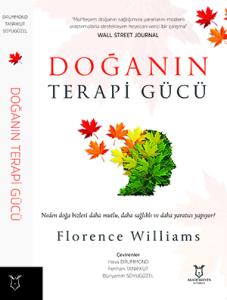
Doğanın Terapi Gücü
Özet
-
Referanslar
Title, “The Cordial Air,” from Ralph Waldo Emerson’s essay, Na-ture, first published in 1836. “In good health, the air is a cordial of incredible virtue.”
“May your trails”: From Edward Abbey, Desert Solitaire: A Season in the Wilderness (Tucson: University of Arizona Press 1988), preface.
About the MacKerron study quoted: It’s worth pointing out that MacKerron controlled for lots of variables, such as weather, com-panionship, etc., and he also was able to factor in the vacation effect by looking only at responses given during weekends and national holidays, when presumably most people were not working. In ot¬her words, people weren’t just reporting feeling happier because they were off work whenever they were in nature. Everyone was off work, so the playing field was more level. From George Mackerron and Susana Mourato, “Happiness Is Greater in Natural Environ-ments,” Global Environmental Change, vol. 23, no. 5 (Oct. 2013): p. 992.
As Nisbet rather dejectedly concluded: Elizabeth K. Nisbet and John M. Zelenski, “Underestimating Nearby Nature Affective Fore¬casting Errors Obscure the Happy Path to Sustainability,” Psycho¬logical Science, vol. 22, no. 9 (2011): pp. 1101-6.
We check our phones 1,500 times a week: Based on a survey in the U.K. by a marketing agency, Tecmark. http://www.dailymail.co.uk/ sciencetech/article-2783677/How-YOU-look-phone-The-average-user-picks-device-1-500-times- day.html, accessed May 26, 2015.
iPhone users vs. Android users: From an Experian marketing sur¬vey, written about here http://www.experian.com/blogs/marke¬ting-forward/2013/05/28/americans -spend-58-minutes-a-day-on-their-smartphones/, accessed May 27, 2015.
Regarding children spending little time outside: Only about 10 per-cent say they are spending time outdoors every day, according to a Nature Conservancy poll, http://www.nature.org/newsfeatures/ kids-in-nature/kids-in-nature-poll.xml
“Tired, nerve shaken, over-civilized people”: John Muir, Our Nati-onal Parks (New York: Houghton, Mifflin, 1901), p.1.319
“pestiferous little gratifications”: From Mose Velsor (Walt Whit¬man), “Manly Health and Training, with Off-Hand Hints Toward Their Conditions,” ed. Zach- ary Turpin, Walt Whitman Quarterly Review 33 (2016): p. 289.
Wordsworth lines: from The Prelude, 1805.
Beethoven’s tree: Cited in Eric Wiener, The Geography of Genius (New York: Simon & Schuster, 2016), p. 235. The Beethoven quote is from his letter to Therese Malfatti in 1808.
For more on prospect and refuge theories of human habitat prefe-rence, see Jay Appleton, The Experience of Landscape (London: John Wiley, 1975) and Gor- don Orians, Snakes, Sunrises and Sha-kespeare (Chicago: University of Chi- cago Press, 2014).
We’ve become arguably more irritable, less sociable, more narcis-sistic: see studies by Clifford Nass, including Roy Pea et al., “Media Use, Face-to-face Communication, Media Multitasking, and Social Well-Being Among 8-to-12- Year-Old Girls”, Developmental Psy-chology, vol. 48, no. 2 (2012): p. 327 ff. On nature deficit disorder, see Richard Louv, Last Child in the Woods (New York: Workman Publishing, 2005).
On Taksim Gezi Park, see Sebnem Arsu and Ceylan Yeginsu, “Tur-kish Leader Offers Referendum on Park at Center of Protests,” New York Times, June 13, 2013. http://www.nytimes.com/2013/06/13/ world/europe/taksim-square-protests-istanbul-turkey.html?_r=o, accessed July 2, 2015.
Olmsted quote: can be found in Witold Rybyznski, A Clearing in the Distance: Frederick Law Olmsted and the Nineteenth Century, Kindle location 4406.
Portions of this chapter originally appeared in Florence Williams, “Take Two Hours of Pine Forest and Call Me in the Morning,” Outside, Nov. 2012, published online Nov. 28, 2012.
“In short, the brain evolved in a biocentric world”: Edward O. Wilson, The Biophilia Hypothesis (Washington, DC: Island Press, 1993), p. 32.
“There is nothing you can see that is not a flower”: Matsuo Basho quoted in Margaret D. McGee, Haiku-The Sacred Art: A Spiritu¬al Practice in Three Lines (Woodstock, VT: Sky Paths Publishing, 2009), p. 32.320
With the largest concentration of giant trees: Miyazaki from the book Design- ing Our Future: Local Perspectives on Bioproducti¬on, Ecosystems and Humanity, ed. Mitsuru Osaki: Okutama Town designated in 2008, pp. 409-10.
68 percent of the country’s land mass: Qing Li. “Effect of Forest Bathing Trips on Human Immune Function,” Environmental Health and Preventive Medicine, vol. 15, no. 1 (2010): pp. 9-17.
one hundred Forestry Therapy sites within ten years: Yoshifumi Mi-yazaki, “Science of Nature Therapy,” p. 8, http://www.fc.chiba-u. jp/research/miyazaki/ assets/images/natural%20therapy (07.06)_e. pdf, accessed June 2015.
In addition to those: “Suicide in Japan,” Japan Today, Jan. 18, 2011.
commuting hell: Eric Goldschein, “Take a Look at Why the Tokyo Metro Is Known as ‘Commuter Hell,” Business Insider, Jan. 11, 2012; and Ronald E. Yates, “Tokyoites Rush to ‘Commuting Hell’” Chicago Tribune, Oct. 28, 1990.
Erich Fromm, who described it in 1973: Fromm quote from The Anatomy of Human Destructiveness (New York: Holt, Rinehart & Winston, 1973), p. 366. Cited in Stephen R. Kellert, Kinship to Mastery: Biophilia in Human Evolution and Development (Washin-gton, D.C.: Island Press, 1997).
Wilson distills the idea more precisely: Stephen R. Kellert and Edward O. Wilson. The Biophilia Hypothesis (Washington, D.C.: Island Press, 1995), p. 416.
As Miyazaki explained it: See Yoshifumi Miyazaki, “Science of Nature Therapy” (above) and Juyoung Lee et al., “Nature Therapy and Preventive Medicine,” in Public Health-Social and Behavioral Health, ed. Jay Maddock (Rijeka, Croatia: InTech, 2012); and Mi-yazaki et al. “Preventive Medical Effects of Nature Therapy,” Nihon eiseigaku zasshi/Japanese Journal of Hygiene, vol. 66, no. 4 (2011): pp. 651-56.
We suffer the consequences: Sandor Szabo, Yvette Tache, and Ar¬pad Somogyi,”The Legacy of Hans Selye and the Origins of Stress Research: A Retrospective 75 Years After His Landmark Brief ‘Let-ter’ to the Editor of Nature,” Stress, vol. 15, no. 5 (2012): pp. 472- 78.
heart disease, metabolic disease, dementia and depression: Esther M. Fried- man et al., “Social Strain and Cortisol Regulation in Mid¬life in the US,” Social 25 Science & Medicine, vol. 74, no. 4 (2012): pp. 607-15.321
The brains-on-built-environment: Roger S. Ulrich et al., “Stress Recovery During Exposure to Natural and Urban Environments,” Journal of Environ- mental Psychology, vol. 11: 201-30.
But Li found similar results with NK cells: Qing Li et al., “Effect of Phytoncide from Trees on Human Natural Killer Cell Function.” International Journal of Immunopathology and Pharmacology, vol. 22, no. 4 (2009): pp. 951-59.
“We used to wait”: Arcade Fire, “We Used to Wait,” from The Su-burbs, 2010.
a 50 percent improvement in creativity: The four-day wilderness pi-lot study is R.A. Atchley et al., “Creativity in the Wild: Improving Creative Reasoning Through Immersion in Natural Settings,” PLoS ONE, vol. 7, no. 12 (2012), published online, e51474.
“Everyone knows”: William James, The Principles of Psychology (Chicago; Henry Holt/Encyclopedia Britannica, 1991), p. 261.
“My experience is what I”: James, p. 260.
“spiritual alertness of the most vital description”: William James qu-ote from the biographical note in James, p. vi.
“I am away from the office”: From the Twitter feed of Shit Academics Say, May 13, 2015, 9:41 P.M., https://twitter.com/AcademicsSay.
For perspective, it takes: The brain’s processing speed is about 120 bits per second, from Daniel Levitin, The Organized Mind: Thinking Straight in the Age of 43 Information Overload (New York: Dutton, 2014), p. 7.
Moreover, task-switching: Task-switching burns up oxygenated glu-cose... Levitin, p. 98.
“The average American”: Levitin, p. 12.
“employs the mind”: Olmsted’s 1865 Report to the Congress of the State of California as quoted in Roger S. Ulrich et al., “Stress Reco-very During Exposure to Natural and Urban Environments,” Journal of Environmental Psychology, vol. 11, no. 3 (1991): p. 206.
partly “recovered”: The Kaplan/Berman cognitive study: Berman et al., “The Cognitive Benefits of Interacting with Nature,” Psychologi-cal Science, vol. 19, no. 12 (2008): pp. 1207-12.
At least one MRI study: The MRI study showing increased activation in the insula and anterior cingulate is Tae-Hoon Kim et al., “Hu¬man Brain Activation in Response to Visual Stimulation with Rural and 318 Urban Scenery Pictures: A Functional Magnetic Resonance Imaging Study,” Science of the Total Environ- ment, vol. 408, no. 12 (2010): pp. 2600-2607.
Some of the material in this chapter appeared in different form in Florence Williams, “This is Your Brain on Nature,” National Geographic, January 2016.
“I can’t begin to count”: Euny Hong, The Birth of Korean Cool: How One Nation Is Conquering the World Through Pop Culture (New York: Picador, 2014): p. 61.
South Korea then had a lower GDP: Hong, p. 2.
One-third of Koreans were homeless: Daniel Tudor, Korea: The Im-possible Country (North Clarendon, VT: Tuttle Publishing, 2013), Kindle location 171.
“that quality of air”: From Essays of Travel (London: Chatto & Win-dus, 1905), P. 170,http://www.archive.org/stream/eoossaysoftravels-tevrich#page/n7/mode/2up, accessed 6/17/15.
“The piny sweetness”: From “Pan in America” and cited in Tianying Zang, D.H. Lawrence’s Philosophy of Nature: An Eastern View (Blo¬omington, IN: Trafford Publishing, 2011), p. 7.
The sabinenes seem: “The Forest and Human Health Issues in Kore-an Forest Policy and Research,” topic paper, Korea Forest Research Institute, Oct. 27, 2014.
Flying out of poverty: This is based on the World Bank’s most recent ranking, found here: http://databank.worldbank.org/data/downlo-ad/GDP.pdf, accessed June 2015.
98 percent of South Koreans graduate: Tudor, Kindle location 1954.
In a country where: Tudor, Kindle location 1939.
sanshin, the mountain spirit: Hong, Kindle locations 740, 757.
Trees, too, have long been: Tudor, Kindle location 498.
which means body and soil are one: Hong, Kindle location 726.
1 trillion odors: Caroline Bushdid et al., “Humans Can Discriminate More Than 1 Trillion Olfactory Stimuli,” Science, vol. 343, no. 6177 (2014): pp. 1370-72.
The researchers measured: Lilianne R. Mujica-Parodi et al., “Che-mosensory Cues to Conspecific Emotional Stress Activate Amyg¬dala in Humans,” PLOS ONE, vol. 4, no. 7 (2008), published online, e6495.323
Svante Pääbo is the Swedish: This interview with Pääbo about hu-man smell is available online through Cold Spring Harbor Labo-ratory’s DNA Learning Cen- ter website: http://www.dnalc.org/ view/15149-Human-smell-receptors-Svante-Paabo.html, accessed Nov. 2014.
What about us?: For more on the domestication of humans, see Ra-zib Khan, “Our Cats, Ourselves,” New York Times, Nov. 24, 2014, accessed Nov. 2014.
2.1 million premature deaths annually: Tami C. Bond et al., “Boun-ding the Role of Black Carbon in the Climate System: A Scientific Assessment,” Journal of Geophysical Research: Atmospheres, vol. 118, no. 11 (2013): pp. 5380-552.
smog-choked Mexico City: Calderón-Garcidueñas et al., “Air Pollu-tion, Cognitive Deficits and Brain Abnormalities: A Pilot Study with Children and Dogs,” Brain and Cognition, vol. 68, no. 2 (2008): pp. 117-27.
Nineteen percent of Americans: Gregory M. Rowangould, “A Cen-sus of the U.S. Near-Roadway Population: Public Health and Envi-ronmental Justice Considerations,” Transportation Research Part D: Transport and Environment, vol. 25 (2013): pp. 59-67. The study also mentioned that “greater traffic volume and density are asso¬ciated with larger shares of non-white residents and lower median household incomes,” on a national level. Additionally, counties with residents living near high-volume roads often do not have an air-qu-ality moni- tor in the same area.
rose petals to lure Marc Antony: Diane Ackerman, A Natural His¬tory of the Senses (New York: Vintage Books, 1995), p. 36.
pleasant smells trigger “approach behavior”: Paula Fitzgerald Bone and Pam Scholder Ellen, “Scents in the Marketplace: Explaining a Fraction of Olfac- tion,” Journal of Retailing, vol. 75, no. 2 (1999): pp. 243-262.
If a store smells good: Rob W. Holland, Merel Hendriks, and Henk Aarts, 76 “Smells Like Clean Spirit: Nonconscious Effects of Scent on Cognition and Behavior,” Psychological Science, vol. 16, no. 9 (2005): pp. 689-93.
People assigned to a room: Katie Liljenquist, Chen-Bo Zhong, and Adam D. Galinsky, “The Smell of Virtue: Clean Scents Promote Re-ciprocity and Charity,” Psychological Science, vol. 21, no. 3 (2010): pp. 381-83.
The so-called “pinosylvin”: Mi-Jin Park, “Inhibitory Effect of the Es-sential Oil from Chamaecyparis obtuse on the Growth of Food-Bor-ne Pathogens,” Journal of Microbiology, vol. 48, no. 4. (2010): pp. 496-501.
Although aromatherapy is the most popular alternative: Yuk-Lan Lee et al., “A Systematic Review of the Anxiolytic Effects of Aromat-herapy in People with Anxiety Symptoms,” Journal of Alternative and Complementary Medicine, vol. 17, no. 2 (2011): p. 106.
“a safe and pleasant intervention”: Lee, p. 107.
significantly less anxiety using “aromasticks”: Jacqui Stringer and Graeme Donald, “Aromasticks in Cancer Care: An Innovation Not to Be Sniffed At,” Complementary Therapies in Clinical Practice, vol. 17, no. 2 (2011): pp. 116-21.
Other studies have reported: Toshiko Atsumi and Keiichi Tonosa¬ki, “Smell- ing Lavender and Rosemary Increases Free Radical Sca-venging Activity and Decreases Cortisol Level in Saliva,” Psychiatry Research,vol. 150, no. 1 (2007): pp. 89-96, and Yumi Shiina et al., “Relaxation Effects of Lavender Aroma- therapy Improve Coronary Flow Velocity Reserve in Healthy Men Evaluated by Transthoracic Doppler Echocardiography.” International Journal of Cardiology, vol. 129, no. 2 (2008): pp. 193-97.
In one survey of 400 Londoners: George MacKerron and Susana Mourato, “Life Satisfaction and Air Quality in London,” Ecological Economics, vol. 68, no. 5 (2009): pp. 1441-53.
“Most people”: From Hemingway’s letter of advice to a young writer, reported in Malcolm Cowley, “Mister Papa,” Life, Jan. 10, 1949, p. 90.
“Noise” is an unwanted sound: Kurt Fristrup, senior scientist, Nati-onal Park Service, from a talk at the AAAS conference in San Jose, California, Feb. 16, 2015.
Traffic on roads in the United States: Jesse R. Barber et al., “Con-serving the Wild Life Therein: Protecting Park Fauna from Anthro-pogenic Noise,” Park Science, vol. 26, no. 3 (Winter 2009-10), p. 26.
The number of passenger flights: The number of flights, as well as other data, are available going back to 2002 through the Bureau of Transportation’s Tran- Stats website, accessible here: http://www. transtats.bts.gov/Data_Elements .aspx?Data=1, accessed June 2015.
30,000 commercial aircraft: From the National Oceanic and At-mospheric Administration, http://sos.noaa.gov/Datasets/dataset. php?id=44, accessed 6/16/16.325
90 percent increase in air traffic: FAA Aerospace Forecast Fiscal Ye-ars 2012- 2032, quoted in Gregory Karp, “Air Travel to Nearly Doub¬le in Next 20 Years, FAA Says,” Chicago Tribune, March 8, 2012, ac¬cessed Feb. 2015.
about 30 decibels: Human development has increased noise levels by 30 decibels, from the National Park Service, see graphic at http:// media.thenewstribune.com/smedia/2014/05/17/16/18/1nMDOK. HiRe.5.jpg, accessed Feb. 2015.
decibel levels between 55 and 60: Average decibels for my neigh-borhood, the D.C. Palisades, from the 2013 Annual Aircraft Noise Report of the Metropolitan Washington Airports Authority, http:// www.mwaa.com/file/2013_noise_ report_final2.pdf, accessed Feb. 2015.
It was so airtight: I read about Carlyle’s attic in Don Campbell and Alex Doman, Healing at the Speed of Sound: How What We Hear Transforms Our Brains and Our Lives (New York: Hudson Street Press, 2011), Kindle location 566.
In one study that lasted: Barbara Griefahn et al., “Autonomic Arou-sals Related to Traffic Noise During Sleep,” Sleep, vol. 31, no. 4 (2008): p. 569.
It’s not uncommon in the animal world: Barber, p. 26.
That’s enough to reduce the distance: Barber, p. 26.
it takes them longer to find males: Barber, p. 29.
Nerve cells pick up these perturbations: For a good description of how sound travels through the brain, see Daniel Levitin, This Is Your Brain on Music (New York: Penguin Group, 2006), pp. 105-6.
As to the perennial question: Levitin, p. 29.
But there is no thing called sound: For more on Berkeley’s question, see Levitin, p. 24.
In a study of 2,000 men: These studies of noise and hypertension are described in Martin Kaltenbach, Christian Maschke, and Rainer Klinke. “Health Con- sequences of Aircraft Noise.” Dtsch Arztebl Int, vol. 105, no. 31-32 (2008): pp. 548-56.
Their systolic blood pressure went up: The Munich airport study: Gary Evans et al., “Chronic Noise Exposure and Physiological Response: A Prospective Study of Children Living Under Environ-mental Stress,” Psychological Science, vol. 9, no. 1 (1998): pp. 75-77.
As the authors of an important review paper: Kaltenbach et al., 2008.
“the world’s first anti-noise martyr”: Campbell and Doman, Healing at the Speed of Sound, Kindle location 2466.326
Visitors hearing loud vehicle noise: David Weinzimmer et al., “Hu-man Responses to Simulated Noise in National Parks,” Leisure Sciences: An Inter- disciplinary Journal, vol. 36, issue 3 (2014): pp. 251-67.
Opposite effects are seen in cities: Subjects in cities rate them as more attractive when listening to birdsong: Marcus Hedblom et al., “Bird Song Diversity Influences Young People’s Appreciation of Urban Landscapes,” Urban Forestry & Urban Greening, vol. 13, no. 3 (2014): pp. 469-474. Another interesting factoid is that hearing other people’s voices impairs park visitors’ memories. See Jacob A. Benfield et al., “Does Anthropogenic Noise in National Parks Impa¬ir Memory?” Environment and Behavior, vol. 42, no. 5 (2010): pp. 693-706.
John Ruskin wrote: Ruskin quote from “Unto This Last” (1862), ci-ted in Jona- than Bate, Romantic Ecology: Wordsworth and the Eco-logical Tradition (Lon- don: Rutledge, 1991), preface.
Darwin devoted ten pages to birdsong: On Darwin, I gathered these page counts from Gordon H. Orians, Snakes, Sunrises, and Shakes-peare: How Evolution Shapes Our Loves and Fears (Chicago: Uni-versity of Chicago Press, 2014), Kindle location 1877.
British Petroleum gas stations recently began playing birdsong: De-nise Winter-man, ‘The Surprising Uses for Birdsong’, BBC Magazi-ne, May 8, 2013, http://www.bbc.com/news/magazine-22298779, accessed February 2015.
In fact, birdsong has some: Factoids on the brown thrasher and ot-hers from http://www.pbs.org/lifeofbirds/songs/, accessed February 2015.
This is because humans and birds: On the comparison between bird brain structures and the basal ganglia, see Johan J. Bolhuis et al., “Twitter Evolution: Converging Mechanisms in Birdsong and Hu-man Speech,” Nature Reviews Neuroscience, vol. 11, no. 11 (2010): pp. 747-59.
It’s well recognized that music triggers emotions: For more on co-evolution and the fascinating similarities in gene expression and brain structures between birds and humans, see Bolhuis, but also Cary H. Leung et al., “Neural Distribution of Vasotocin Receptor MRNA in Two Species of Songbird,” Endocrinology, vol. 152, no. 12 (2011): pp. 4865-81, and Michael Balter, “Animal Communication Helps Reveal Roots of Language,” Science, vol. 328, no. 5981 (2010): pp. 969-71.327
“[When] the myopia”: Juler quote from Elie Dolgin, “The Myopia Boom” Nature, vol. 519, no. 7543 (2015): pp. 276-78, accessed March 2015.
“She promised us south rooms”: E. M. Forster, A Room with a View (New York: Knopf, 1922), p. 13.
Nightingale’s famous nursing textbook: Florence Nightingale, Notes on Nurs- ing: What It Is, and What It Is Not (New York: D. Appleton & Co., 1860), accessed at http://digital.library.upenn.edu/women/nightingale/nursing/nursing.html in April 2015.
One of the first people: “View Through a Window May Influence Recovery,” Science, vol. 224, no. 4647 (1984): pp. 224-25.
prisoners in Michigan whose cells: E. O. Moore, “A Prison Environ-ment’s Effect on Health Care Service Demands,” Journal of Environ¬mental Systems, vol. 11 (1981): pp. 17-34.
The brutalist Robert Taylor housing project: For the series of Robert Taylor Homes studies, see Frances E. Kuo, “Coping with Poverty: Impacts of Environ- ment and Attention in the Inner City,” Envi-ronment & Behavior, vol. 33, no. 1 (2001): pp. 5-34; Frances E. Kuo and William C. Sullivan, “Aggression and Violence in the Inner City: Effects of Environment via Mental Fatigue,” Envi- ronment & Beha¬vior, Special Issue, vol. 33 no. 4 (2001): pp. 543-71.
Analyzing 98 buildings over two years: Frances E. Kuo and Willi¬am C. Sullivan, “Environment and Crime in the Inner City: Does Vegetation Reduce Crime?” Environment & Behavior, vol. 33, no. 3 (2001): pp. 343-67.
The greener-courtyard residents: Frances E. Kuo et al., “Fertile Ground for Community: Inner-City Neighborhood Common Spa-ces,” American Journal of Community Psychology, vol. 26, no. 6 (1998): pp. 823-51.
For some reason, social psychologists: For the road rage study, see Jean Marie Cackowski, and Jack L. Nasar, “The Restorative Effects of Roadside Vegetation Implications for Automobile Driver Anger and Frustration,” Environment and Behavior, vol. 35, no. 6 (2003): pp. 736-51.
In these studies: The Dutch study is Jolanda Maas et al., “Social Con¬tacts as a Possible Mechanism Behind the Relation Between Green Space and Health,” Health and Place, vol. 15, no. 2 (2009): pp. 586- 95. The office plant study is Netta Weinstein, Andrew K. Przybylski, and Richard M. Ryan, “Can Nature Make Us More Caring? Effects of Immersion in Nature on Intrinsic Aspirations and Generosity,” Personality and Social Psychology Bulletin, vol. 35, no. 10 (2009): pp. 1315-29.
Several years ago Taylor wrote: Richard Taylor, “The Curse of Jack-son Pollock: The Truth Behind the World’s Greatest Art Scandal,” Oregon Quarterly, vol.90, no. 2 (2010), http://materialscience.uoregon.edu/taylor/CurseOfJacksonPollock.pdf, accessed March 2015.
Arthur C. Clarke described the Mandelbrot set: The quote is from a documentary presented by Arthur C. Clarke, The Colours of In¬finity, directed by Nigel-Lesmoir-Gordon (1995), available on You¬Tube: https://www.youtube.com /watch?v=Lk6QU94xAb8, accessed June 2015.
He and Caroline Hagerhäll: Caroline M. Hagerhäll et al., “Fractal Dimension of Landscape Silhouette Outlines as a Predictor of Lan-dscape Preference,” Journal of Environmental Psychology, vol. 24, no. 2 (2004): pp. 247-55.
To find out, they used EEG: For a fuller discussion of the EEG study, see Rich- ard Taylor et al., “Perceptual and Physiological Responses to Jackson Pollock’s Fractals,” Frontiers in Human Neuroscience, vol. 5 (2011): pp. 60-70.
Taylor believes our brains recognize that: For more on fractals in art and nature, see Branka Spehar and Richard P. Taylor, “Fractals in Art and Nature: Why Do We Like Them?” Human Vision and Electronic Imaging XVIII, March 14, 2013, published online.
Pollock’s favored dimension is similar: Taylor, p. 60.
this D range elicits our best: B. E. Rogowitz and R. F Voss, “Shape Perception and Low Dimension Fractal Boundary Contours,” in B. E. Rogowitz and J. Allenbach, eds., Proceedings of the Conference on Human Vision: Methods, Models and Applications, SPIE/SPSE Symposium on Electron Imaging, 1990, vol. 1249, pp. 387-94), cited in Hagerhäll (2004).
“The stress-reduction is triggered”: Quote from Richard Taylor, “Human Physiological Responses to Fractals in Nature and Art: a Physiological Response,” author page at http://materialscience.uore-gon.edu/taylor/rptlinks2.html, accessed March 2015.
Long before fractals, Beethoven: Beethoven wrote the resonance sentences in a letter to Therese Malfatti, his student and love inte¬rest, after complet- ing Symphony No. 6 in F Major, titled Pastoral, 1808, cited here: http://worldhistoryproject.org/1808/beethoven-fi¬nishes-his-sixth-symphony, accessed March 2015.329
“we will suffer physical and psychological costs”: Peter H. Kahn, Rachel L. Severson, and Jolina H. Ruckert. “The Human Relation with Nature and Technological Nature,” Current Directions in Psy-chological Science, vol. 18, no. 1 (2009): p. 41.
Since red makes us vigilant: We walk down red corridors faster... Peter Aspi- nall, personal communication, June 2014.
“If you want to make”: Humphrey quote from Natalie Angier, “How Do We See Red? Count the Ways,” New York Times, Feb. 6, 2007, http://www.nytimes.com/2007/02/06/science/o6angi.html, accessed April 2015.
But pink, interestingly, has the opposite effect: For more on the ps-ychology of color, see Adam Alter’s aptly named Drunk Tank Pink (New York: Penguin Group, 2013).
Berger writes in The Sense of Sight: The John Berger quote comes from Diane Ackerman’s A Natural History of the Senses (New York: Random House, 1990), p. 177.
In the app, straight and jagged lines: A fuller description of the visu¬al proper- ties that trigger restoration can be found in D. Valtchanov and C. Ellard, “Cognitive and Affective Responses to Natural Sce-nes: Effects of Low Level Visual Properties on Preference, Cognitive Load and Eye-Movements,” Journal of Environmental Psychology, vol. 43 (2015): pp. 184-95.
the same region Taylor found stimulated: The other studies implica-ting the ventral striatum and parahippocampus using fMRI include Xiaomin Yue et al., “The Neural Basis of Scene Preferences,” Neuro¬report, vol. 18, no. 6 (2007): pp. 525-29.
craving the “visual opium” of a sunset: Ackerman, p. 255.
According to Valtchanov: For more on Valtchanov’s visuospatial theory, see Deltcho Valtchanov, “Exploring the Restorative Effects of Nature: Testing a Proposed Visuospatial Theory,” diss., University of Waterloo, 2013.
“The faint whisper”: Jansson quote from Moominvalley in Novem-ber (New York: Macmillan, 2014), p. 26, first published in English in 1945.
They get five-week vacations: Rebecca Ray, Milla Sanes, and John Schmitt, “No-Vacation Nation Revisited” (Center for Economic and Policy Research, 2013), p. 5, accessible at http://www.cepr.net/do-330 cuments/publications/no- vacation-update-2013-05.pdf, accessed June 2015;and “Annual Holiday” (Ministry of Employment and the Economy, February 11, 2010), accessible at https://www.tem.fi/en/ work/labour_legislation/annual_holiday, accessed June 2015.
as well as paid one-year parental leave: Details of Finnish parental leave can be found at http://europa.eu/epic/countries/finland/in-dex_en.htm, accessed June 2015.
“Clearings. That’s what I needed”: Quote is from Helen Macdonald, H is for Hawk. (New York: Random House, 2014).
In the Gaelic poem “Hallaig”: The haunting audio clip of the poem, read in Gaelic, can be found here: http://www.edinburghliterarypu-btour.co.uk/ makars/maclean/hallaig.html, accessed April 2015.
Weet, williwaw, crizzle: All from Robert McFarlane’s Landmarks (London: Penguin UK, 2015).
In some neighborhoods a man: The information on Glasgow life expectancy comes from the World Health Organization: http:// www.who.int/bulletin/volumes/89/10/11-021011/en/, accessed Ap¬ril 2015.
The main cause: Richard J. Finlay, Modern Scotland 1914-2000 (London: Pro- file Books, 2004).
we expended about 1,000 kilocalories: The kilocalorie figures are cited in Jo Barton and Jules Pretty, “What Is the Best Dose of Nature and Green Exercise for Improving Mental Health? A Multi-Study Analysis,” Environmental Science & Technology, vol. 44, no. 10 (2010): p. 3947.
Walking is the most popular sport in Scotland: From “Let’s Get Scotland Walk- ing: The National Walking Strategy,” government report (2014), http://www.gov.scot/Resource/0045/00452622.pdf, accessed April 2015.
In other words, there was something protective: Richard Mitchell and Frank Popham, “Effect of Exposure to Natural Environment on Health Inequalities: An Observational Population Study,” Lancet, vol. 372 (2008): pp. 1655-60.
“40 percent less than those with the worst access”: Mitchell qu¬otes on the AJPM study are from his blog: http://cresh.org. uk/2015/04/21/more-reasons-to-think-green-space-may-be-equi-genic-a-new-study-of-34-european-nations/, accessed April 2015. 331
The study itself is Richard J. Mitchell et al., “Neighbor- hood En-vironments and Socioeconomic Inequalities in Mental Well-Being,” American Journal of Preventive Medicine, vol. 49, issue 1 (2015): pp. 80-84.
the percentage of Scotland covered by woodland: Martin Wil¬liams, “Hopes for Forestry Scheme to Branch Out,” The Herald (Edinburgh), June 4, 2013. http://www.heraldscotland.com/news/ home-news/hopes-for-forestry-scheme-to- branch-out.21253639, accessed May 2014.
Benjamin Rush, who first popularized the idea: Benjamin Rush qu-ote from Benjamin Rush, Medical Inquiries and Observations upon Diseases of the Mind (Philadelphia: Kimber & Richardson, 1812), p. 226, accessed at https://archive.org/stream/medicalinquiries-1812rush#page/n7/mode/2up, accessed May 2015.
“It was as though”: Johan Ottosson, “The Importance of Nature in Coping,” diss., Swedish University of Agricultural Sciences, 2007, p. 167.
Its motto could be the Emerson quote: Emerson vegetable quote from Ralph Waldo Emerson, Nature (Boston: James Munroe & Co., 1836), p. 13. A digi- tal version of the original essay is available here: https://archive.org/details/naturemunroeooemerrich, accessed June 2015.
For some other cool UK studies about happiness, health and coast-lines, see M.P. White et al., “Coastal Proximity, Health and Well-be-ing: Results from a Longitudinal Panel Survey,” Health Place, vol. 23 (2013): pp. 97-103; and B.W. Wheeler et al., “Does Living by the Coast Improve Health and Wellbeing?” Health Place, vol. 18 (2012): pp. 1198-201.
Other good walking studies include Melissa Marselle et al., “Exa-mining Group Walks in Nature and Multiple Aspects of Well-Be¬ing: A Large-Scale Study,” Ecopsychology, vol. 6, no. 3 (2014): pp. 134-147, and Melissa Marselle et al., “Walking for Well-Being: Are Group Walks in Certain Types of Natural Environments Better for Well-Being than Group Walks in Urban Environments?” Internati-onal Journal of Environmental Research and Public Health, vol. 10, no. 11 (2013): pp. 5603-28.332
“When we walk”: From Henry David Thoreau, “Walking,” in The Writings of Henry David Thoreau, Riverside ed. (Boston: Houghton Mifflin, 1893), p. 258.
Gros writes in A Philosophy of Walking: Gros is quoted in Caro¬le Cadwalladr, “Frédéric Gros: Why Going for a Walk Is the Best Way to Free Your Mind,” The Guardian, April 19, 2014, http://www. theguardian.com/books/2014/apr/20 /frederic-gros-walk-nietzsc¬he-kant, accessed May 2015.
Anticipating the exercise/nature debate: Henry David Thoreau, “Walking,” Kindle location 54.
He also wrote, in his essay “Walking”: Thoreau, Kindle location 33.
“To you, clerk”: Velsor Mose (Walt Whitman), “Manly Health and Training, with Off-Hand Hints Toward Their Conditions,” ed. Za-chary Turpin, Walt Whitman Quarterly Review 33 (2016), p. 189.
Hartman’s own history: Hartman’s relocation story is told in Jon Nordheimer, “15 Who Fled Nazis as Boys Hold a Reunion,” New York Times, July 28, 1983.
how it “interfused” with the mind: Wordsworth external mind quo¬tes are from the First Book of The Recluse.
a “savage torpor”: Savage torpor, from the preface to Lyrical Balla-ds, quoted in James A. W. Heffernan, “Wordsworth’s London: The Imperial Monster,” Stu- dies in Romanticism, vol. 37, no. 3 (1998): pp. 421-43.
He also believed: For a good overview of Berger’s quest and legacy, see David Millett, “Hans Berger: From Psychic Energy to the EEG,” Perspectives in Biology and Medicine, vol. 44, no. 4 (2001): pp. 522- 42.
walk around Edinburgh: The Edinburgh EEG study: Peter Aspinall et al., “The Urban Brain: Analyzing Outdoor Physical Activity with Mobile EEG,” British Journal of Sports Medicine (2013), published online, bjsports-2012-091877.
forty minutes of moderate walking: For Kramer’s exercise studies, see Charles H. Hillman et al., “Be Smart, Exercise Your Heart: Exer-cise Effects on Brain and Cognition,” Nature Reviews Neuroscience, vol. 9, no. 1 (2008): pp. 58-65, and Kirk I. Erickson et al., “Exercise Training Increases Size of Hippocampus and Improves Memory,” Proceedings of the National Academy of Sciences, vol. 108, no. 7 (2011): pp. 3017-22.333
Kramer was intrigued: The Stanford walking study is Marily Oppez-zo and Daniel L Schwartz, “Give Your Ideas Some Legs: The Positive Effect of Walking on Creative Thinking,” Journal of Experimental Psychology: Learning, Memory and Cognition, vol. 40, no. 4 (2014).
The Bratman “dish” study: Greg Bratman et al., “The Benefits of Nature Experience: Improved Affect and Cognition,” Landscape and Urban Planning, vol. 138 (2015), pp. 41-50.
“The results suggest”: From Gregory N. Bratman et al., “Nature Experience Reduces Rumination and Subgenual Prefrontal Cortex Activation,” Proceed- ings of the National Academy of Sciences, vol. 112, no. 28 (2015): p. 8567.
Some of the information in this chapter originally appeared in different form in Florence Williams’s National Geographic story “This Is Your Brain on Nature,” January 2016. Calvin and Hobbes quote from Bill Watterson, The Complete Calvin and Hobbes (River- side, NJ: Andrews McNeel, vol.3, 2005), p. 370. Bachelard quote, cited in Michael Pol-lan, Cooked: A Natural History of Transformation (New York: Penguin Press, 2013), p. 109. Ellen Meloy quotes from her lovely work of memoir-slash-natural history, The Last Cheater’s Waltz (New York: Henry Holt, 1999), pp. 7, 107. Ed Abbey’s chapter title from Desert Solitaire: A Season in the Wilderness (Tucson: University of Arizona Press, 1988).
“Look at all the stars!”: Bill Watterson, The Complete Calvin and Hobbes, Vol. 3 (Riverside, NJ: Andrews McMeel, 2005), p. 370.
“The passion caused”: From Edmund Burke, A Philosophical Enqu-iry into the Origin of our Ideas of the Sublime and Beautiful (Lon-don: University of Notre Dame Press, 1968), p. 57.
For more on the origins of the word “awe,” see Dacher Keltner, Born to Be Good (New York: W. W. Norton, 2009), p. 257.
For more on Burke’s influence on Kant and Diderot, see the introdu-ction by James T. Boulton in Burke, 1968 ed., p. cxxv ff.
“inverse P.T.S.D.”: Cited in Michael Pollan, “The Trip Treatment,” New Yorker, Feb. 19, 2015, http://www.newyorker.com/magazi-ne/2015/02/09/trip-treatment, accessed Oct. 2, 2015.
The Piff and Keltner study: Paul K. Piff et al., “Awe, the Small Self, and Pro- social Behavior,” Journal of Personality and Social Psycho-logy, vol. 108, no. 6 (2015): p. 883.334
The cytokine study is Jennifer E. Stellar et al., “Positive Affect and Markers of Inflammation: Discrete Positive Emotions Predict Lower Levels of Inflamma- tory Cytokines,” Emotion, vol. 15, no. 2 (2015).
For more about Darwin on compassion and the emotion of awe ge-nerally, I recommend Keltner’s How to Be Good. A more academic summary can be found in Michelle N. Shiota, Dacher Keltner, and Amanda Mossman, “The Nature of Awe: Elicitors, Appraisals, and Effects on Self-Concept,” Cognition and Emo- tion, vol. 21, no. 5 (2007): pp. 944-63.
Nearly half of all Americans: J. Carroll, “Time Pressures, Stress Common for Americans” a Gallup-Time Poll from 2008, cited in Rudd, 2012.
For more on awe and time perception, see Melanie Rudd et al., “Awe Expands People’s Perception of Time, Alters Decision Making, and Enhances Well- Being,” Psychological Science vol. 23, no. 10 (2012). For more on awe and generosity, see Netta Weinstein et al., “Can Nature Make Us More Caring? Effects of Immersion in Nature on Intrinsic Aspirations and Generosity,” Personality and Social Psy¬chology Bulletin, vol. 35, no. 10 (2009): pp. 1315-40.
“Oh Eeyore, you are wet!”: A. A. Milne, The House at Pooh Corner, deluxe ed. (New York: Dutton, 2009), p. 101.
“Between every two”: From Muir’s marginalia in his copy of Pro¬se Works by Ralph Waldo Emerson, vol. 1 (this volume resides in the Beinecke Rare Book and Manuscript Library of Yale University). Cited in “Quotations from John Muir,” selected by Harold Wood, http://vault.sierraclub.org/john_muir_ exhibit/writings/favorite_ quotations.aspx, accessed April 12, 2016.
“I Slipped & bruised my leg very much”: Lewis and Clark account from lew- is-clark.org/content/content-article.asp?ArticleID=1790, accessed Sept. 2014.
Surgeons in World War I: For a look at the role of plastic surgery in World War I, see Sheryl Ubelacker, “Unprecedented Injuries from First World War Spawned Medical Advances Still Used Today,” Ca-nadian Press (via Postmedia’s World War 1 Centenary site), Sept. 23, 2014, http://ww1.canada.com/battlefront/unprecedented-in¬juries-from-first-world-war-spawned-medical-advances- still-u¬sed-today, accessed June 2015. For an overview of the effects of mustard gas, see “Facts About Sulfur Mustard,” Centers for Disease
Control, May 2, 2013, http://www.bt.cdc.gov/agent/sulfurmustard/ basics/facts.asp, accessed June 2015.
Union soldiers after the battle: Olmsted quote from Rybczynski, Kindle edition location 3244.
PTSD wasn’t officially named and recognized: Matthew J. Fried-man, “PTSD His- tory and Overview,” U.S. Department of Veterans Affairs, March 2, 2014, http://www.ptsd.va.gov/PTSD/professional/ PTSD-overview/ptsd-overview.asp.
Among veterans, that figure: “Witness Testimony of Karen H. Seal, M.D., MPH,” House Committee on Veterans’ Affairs, June 14, 2011, http://Veterans.house.gov/prepared-statement/prepared-state¬ment-karen-h-seal-md-mph- department-medicine-and-psychiatr¬y-san, as quoted in David Scheinfeld, “From Battlegrounds to the Backcountry: The Intersection of Masculinity and Outward Bound Programming on Psychosocial Functioning for Male Military Vete-rans,” diss., University of Texas at Austin, 2014, p. 27.
They are two to four times: Gail Gamache, Robert Rosenheck, and Richard Tessler, “Overrepresentation of Women Veterans Among Homeless Women,” American Journal of Public Health, vol. 93, no. 7 (2003): pp. 1132-36.
In frightened lab animals: For the role of GCs in memory: J-F. Dominique et al., “Stress and Glucocorticoids Impair Retrieval of Long-Term Spatial Memory,” Nature, vol. 394 (1998): pp. 787-90. For the hippocampus: Nicole Y.L. Oei et al., “Glucocorticoids Decre¬ase Hippocampal and Prefrontal Activation During Declarative Me¬mory Retrieval in Young Men,” Brain Imaging and Behaviour, vol. 1 (2007): pp. 31-41. For norepinephrine: J. Douglas Bremner, “Trau¬matic Stress: Effects on the Brain,” Dialogues in Clinical Neuroscien¬ce, vol. 8, no. 4 (2006): pp. 445.
Veterans are twice as likely: Jessie L. Bennett et al., “Addressing Posttraumatic Stress Among Iraq and Afghanistan Veterans and Sig-nificant Others: An Inter- vention Utilizing Sport and Recreation,” Therapeutic Recreation Journal, vol. 48, no. 1 (2014): p. 74.
female veterans commit suicide: Matthew Jakupcak et al., “Hope-lessness and Suicidal Ideation in Iraq and Afghanistan War Vete¬rans Reporting Subthresh- old and Threshold Posttraumatic Stress Disorder,” Journal of Nervous and Mental Disease, vol. 199, no. 4 (2011): pp. 272-75.336
Some of the material from this chapter appeared in Florence Williams, “ADHD: Fuel for Adventure,” Outside, Jan./Feb. 2016, published online Jan. 20, 2016, http://www.outsideonline.com/2048391/adhd-fuel-adventure?utm_source=twitter&utm _medium=social&utm_ campaign=tweet, accessed Feb. 22, 2016.
“Childhood is, or has been”: From “Manhood for Amateurs: The Wilderness of Childhood,” New York Review of Books,” July 19, 2009, www.nybooks.com/articles/archives/2009/jul/16/manho¬od-for-amateurs-the-wilderness- of-childhood/, accessed July 17, 2015.
A recent advertisement for an ADHD drug: Mentioned in Richard Louv’s blog post, “NATURE WAS MY RITALIN: What the New York Times Isn’t Telling You About ADHD: The New Nature Movement,” http://blog.childrenandnature.org/2013/12/16/nature-was-my-rita¬lin-what-the-new-york-times-isnt-telling- you-about-adhd/, acces¬sed July 20, 2015.
Olmsted hated school: From Witold Rybczynski, A Clearing in the Distance: Frederick Law Olmsted and America in the 19th Century (New York: Scribner, 1999), Kindle edition location 417. Quote to principal from Kindle edition, location 296.
Kuo ADHD studies: see A. Faber Taylor et al., “Coping with ADD: The Surpris- ing Connection to Green Play Settings,” Environment and Behaviour, vol. 33 (Jan. 2001): pp. 54-77.
ADHD kids playing in a park study: Andrea Faber Taylor and Fran-ces E. Ming Kuo, “Could Exposure to Everyday Green Spaces Help Treat ADHD? Evidence from Children’s Play Settings,” Applied Ps-ychology: Health and Well-Being, vol. 3, no. 3 (2011): pp. 281-303.
The Barcelona study: Elmira Amoly et al., “Green and Blue Spaces and Behavioral Development in Barcelona Schoolchildren: The Bre-athe Project,” Envi- ronmental Health Perspectives (Dec. 2014), pp. 1351-58.
Kuo and Taylor’s 2004 study: Frances E. Kuo and Andrea Faber Tay¬lor, “A Potential Natural Treatment for Attention-Deficit/Hyperacti¬vity Disorder: Evidence from a National Study,” American Journal of Public Health, vol. 94, no. 9 (2004).
On play and ADHD, see Jaak Panksepp, “Can PLAY Diminish ADHD and Facilitate the Construction of the Social Brain?” Journal of the Canadian Academy of Child and Adolescent Psychiatry-Jour-nal de l’Académie canadienne de psychiatrie de l’enfant et de l’ado-lescent, vol. 16, no. 2 (2007): p. 62.
“Children cannot bounce off the walls”: Quote by Erin Kenny, cited in David Sobel, “You Can’t Bounce off the Walls if There Are No Walls: Outdoor Schools Make Kids Happier-and Smarter,” YES! Ma¬gazine, March 28, 2014. http://www.yesmagazine.org/issues/educa¬tion-uprising/the-original-kindergarten ?utm_source=FB&utm_ medium=Social&utm_campaign=20140328, accessed July 17, 2015.
“Everything is good”: The Rousseau quote is from Émile, cited in Norman Brosterman, Inventing Kindergarten (New York: Harry N. Abrams, 1997), p. 19.
For more on the tremendous and largely unsung influence of Fried-rich Fröbel, see Brosterman, who makes a fascinating case for Frö-belian kindergarten liter- ally catalyzing modern art. Braque, Kan-dinsky, Le Corbusier and Frank Lloyd Wright all spent years holding cubes and making abstract geometric patterns with Fröbel’s mate-rials, and Wright and Le Corbusier in particular directly credit this for their design sense. Brosterman suggests these influences were largely ignored by art historians because they stemmed from the do¬main of young children and their women teachers.
Finns and ADHD: S. L. Smalley et al., “Prevalence and Psychiat¬ric Comorbidity of Attention-Deficit/Hyperactivity Disorder in an Adolescent Finnish Popu- lation,” Journal of the American Academy of Child and Adolescent Psychiatry, vol. 46, no. 12 (Dec. 2007): pp. 1575-83, cited in Daniel Goleman, “Exercising the Mind to Treat Attention Deficits,” New York Times, May 12, 2014.
A large meta-analysis of dozens: B. A. Sibley et al., “The Relations-hip Between Physical Activity and Cognition in Children: A Meta-a-nalysis,” Pediatric Exercise Science, vol. 15, no. 3 (2003): pp. 243-56.
The Penn State study on social skills: Damon E. Jones et al., “Early Social- Emotional Functioning and Public Health: The Relationship Between Kinder-garten Social Competence and Future Wellness,” American Journal of Public Health, vol. 105, no. 11 (2015): pp. 2283- 90.
The 2015 Pediatrics study on physical activity in preschoolers: Pooja S. Tandon et al., “Active Play Opportunities at Child Care,” Pediatri-cs, May 18, 2015, published online.
30 percent of third-graders: Romina M. Barros, et al., “School Re-cess and Group Classroom Behavior,” Pediatrics, vol. 123, no. 2 (2009): pp. 431-36.338
“Containerized kids”: See http://www.usatoday.com/news/he-alth/2004-11-05- active_x.htm, accessed Feb. 2, 2016.
In 2004, 70 percent of mothers: R. Clements, “An Investigation of the Status of Outdoor Play,” Contemporary Issues in Early Childho-od, vol. 5 (2004): pp. 68-80. Also see S. Gaster, “Urban Children’s Access to Their Neighborhoods: Changes Over Three Generations” (1991), quoted in R. Louv, Last Child in the Woods (Chapel Hill, NC: Algonquin Books, 2005), p. 123. On children and exercise, see M. Hillman, J. Adams, and Whitelegg, “One False Move: A Study of Chil- dren’s Independent Mobility,” London: Policy Studies Institute, 1990. And http://www.dailymail.co.uk/news/article-462091/How-c-hildren-lost-right- roam-generations.html. On preschool diagnoses of ADHD, see http://www. nytimes.com/2014/05/17/us/among-ex¬perts-scrutiny-of-attention-disorder- diagnoses-in-2-and-3-year-olds.html?_r=o, accessed July 18, 2015.
Teenagers today have: J. M Twenge et al., “Birth Cohort Increa¬ses in Psychopa- thology Among Young Americans, 1938-2007: A Cross-Temporal Meta-Analysis of the MMPI,” Clinical Psychology Review, vol. 30 (2010): pp. 145-54, cited in M. mal Child Develop-ment,” International Journal of Environmental Research and Public Health, vol. 9 (2012): pp. 3136-48.
“If man is not”: Olmsted epigraph quoted in Rybczynski, Kindle location 2776. For more on the idea of Metro sapiens, see Jason Var-go, “Metro Sapiens, a an Urban Species,” Journal of Environmental Studies and Sciences, vol. 4, no. 3 (2014).
By 2030, there will be: See R. Dhamodaran, “The Great Migrati¬on-India by 2030 and Beyond: Harnessing Technology for Better Urban Transportation in India,” a presentation to the Wilson Cen¬ter, http://www.wilsoncenter.org/sites/default/files/RAMAKRISH-NAN%2C%20DHAMODARAN_Presentation .pdf, accessed July 31, 2015.
201. “be anything but a hell”: Glaeser quote from http://www.cityjournal. org/2014/24-3_urbanization.html, accessed July 31, 2015.
202. Leyhausen’s cat studies and the rat results: Cited in E. O. Wilson, Sociobiology (Cambridge, Mass: Harvard University Press, 2000), p. 255.
203. For more about the increased risk of mental disorders in city dwel¬lers, see Flo- rian Lederbogen et al., “City Living and Urban Upbrin¬ging Affect Neural Social Stress Processing in Humans,” Nature, vol. 474, no. 7352 (2011): pp. 498-501.
204. Meanwhile, a study from Portugal: S. Marques and M. L. Lima: “Li¬ving in Grey Areas: Industrial Activity and Psychological Health,” Journal of Envi- ronmental Psychology, vol. 31 (2011): 314-22, ci¬ted in “The Natural Environments Initiative: Illustrative Review and Workshop Statement,” Report, Harvard School of Public Health, Center for Health and the Global Environ- ment, 2014, p. 11.
205. We could use some more resilience: World Health Organization fact sheet, http://www.who.int/mediacentre/factsheets/fs369/en/, acces¬sed Aug. 3, 2015.
206. Singapore is the third-densest: World Bank stats found at http:// www.infoplease.com/ipa/A0934666.html, accessed Aug. 1, 2015.
207. On Singapore, see Lee Kuan Yew, From Third World to First: The Singapore Story: 1965-2000 (Singapore: Times Editions: Singapore Press Holdings, 2000), p. 199.
208. Portland hospital infection study: S. W. Kembel et al., “Architectural Design Influences the Diversity and Structure of the Built Environ¬ment Microbiome,” ISME Journal, vol. 6, no. 8 (Jan. 26, 2012): pp. 648-50.
209. The Donovan ash tree study: Geoffrey H. Donovan et al., “The Re¬lationship Between Trees and Human Health: Evidence from the Spread of the Emerald Ash Borer,” American Journal of Preventive Medicine, vol. 44, no. 2 (2013): pp. 139-45-
210. For the Toronto study, see Omid Kardan et al., “Neighborhood Gre¬enspace and Health in a Large Urban Center,” Scientific Reports, vol. 5 (2015): pp. 1-14.
Yayınlanan
Lisans
LisansBu İnternet Sitesi içeriğinde yer alan tüm eserler (yazı, resim, görüntü, fotoğraf, video, müzik vb.) Akademisyen Kitabevine ait olup, 5846 sayılı Fikir ve Sanat Eserleri Kanunu ve 5237 sayılı Türk Ceca Kanunu kapsamında korunmaktadır. Bu hakları ihlal eden kişiler, 5846 sayılı Fikir ve Sanat eserleri Kanunu ve 5237 sayılı Türk Ceza Kanununda yer alan hukuki ve cezai yaptırımlara tabi olurlar. Yayınevi ilgili yasal yollara başvurma hakkına sahiptir.
