Küresel Isınmanın Çocuk Sağlığı Üzerine Etkileri
Özet
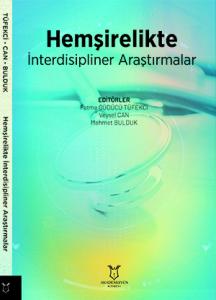
Küresel ısınma ve insan faaliyetlerinden kaynaklanan sera gazı emisyonları, 21. yüzyılın en büyük sağlık tehdididir. Bu akademik çalışma, iklim değişikliğinin çevresel ve toplumsal etkilerini incelerken, özellikle savunmasız bir grup olan çocuk sağlığı üzerindeki yıkıcı sonuçlarını derinlemesine ele almaktadır. Sanayi Devrimi'nden bu yana hızla artan sıcaklıklar; şiddetli fırtınalara, kıyı sellerine, kuraklığa ve orman yangınlarına yol açarak hava ve su kalitesini bozmaktadır. Bu durum polen mevsimlerini uzatarak çocuklarda astım ve solunum yolu hastalıklarını tetiklemekte; aşırı sıcaklar ise dehidratasyon, böbrek hastalıkları ve bebek ölüm oranlarında artışa neden olmaktadır. Ayrıca yükselen sıcaklıklar sıtma ve Zika gibi vektör kaynaklı hastalıkların coğrafi alanını genişletmekte, tarımsal verimliliği düşürerek çocuklarda yetersiz beslenme ve ölümcül ishal vakalarını artırmaktadır. WMO Konferansı ve Kyoto Protokolü gibi uluslararası önlemlere rağmen ülkelerin ortak kararlılık gösterememesi, küresel krizin büyümesine neden olmaktadır. Kitap, proaktif politikaların yürürlüğe girmesinin ve çocuk sağlığını korumaya yönelik yeni tıbbi metodolojilerin geliştirilmesinin aciliyetini vurgulayan, tıp, çevre bilimleri ve hemşirelik literatürü için kritik bir başvuru kaynağıdır.
Global warming and greenhouse gas emissions driven by human activities pose the greatest health threat of the 21st century. This academic work examines the environmental and societal impacts of climate change, with a particular focus on its devastating consequences for children's health—a uniquely vulnerable demographic. Rapidly rising temperatures since the Industrial Revolution lead to severe storms, coastal floods, droughts, and wildfires, deteriorating air and water quality. These conditions trigger asthma and respiratory diseases in children by extending pollen seasons, while extreme heat causes dehydration, kidney disease, and increased infant mortality rates. Furthermore, rising temperatures expand the geographic range of vector-borne diseases like malaria and Zika, diminish agricultural productivity, and elevate the risks of malnutrition and fatal diarrheal illnesses among children. Despite international measures such as the WMO Conference and the Kyoto Protocol, a lack of unified global resolve exacerbates this crisis. Emphasizing the urgency of implementing proactive policies and developing innovative medical methodologies to protect pediatric health, this book serves as a critical reference for literature in medicine, environmental sciences, and nursing.
Referanslar
Costello, A., Abbas, M., Allen, A., et al. Managing The Health Effects Of Climate Change: Lancet And University College London Institute For Global Health Commission. The Lancet; 2009;373(9676);1693-1733.
Anderko, L., Chalupka, S., Du, M., & Hauptman, M. Climate Changes Reproductive And Children’s Health: A Review Of Risks, Exposures, And İmpacts. Pediatric Research;2019;1-8.
Parry, M., Parry, M. L., Canziani, O., et al. Climate Change 2007-İmpacts, Adaptation And Vulnerability: Working Group II Contribution To The Fourth Assessment Report Of The IPCC (Vol. 4). Cambridge University Press. 2007.
Shahzad, U. Global Warming: Causes, Effects And Solutions. Durreesamin Journal; 2015; ISSN: 2204 – 9827, August Vol 1 Issue 4.
Satır Reyhan, A., & Reyhan, H. Küresel Isınmanın Nedenleri, Sonuçları, Çözümleri Üzerine Yeni Değerlendirmeler. Memleket Siyaset Yönetim (MSY), Cilt 11, Sayı 26, Temmuz 2016, S. 1-24.
Akalın, M. Küresel Isınma Ve İklim Değişikliği Nedeniyle Oluşan Doğal Felaketlerin İnsan Sağlığı Üzerindeki Etkileri. Hitit Üniversitesi Sosyal Bilimler Enstitüsü Dergisi, 2013, 6(2), 29-43.
Türkeş, M. İklim Değişikliği Ve Küresel Isınma Olgusu: Bilimsel Değerlendirme. E. Karakaya (Der.), Küresel Isınma Ve Kyoto Protokolü: İklim Değişikliğinin Bilimsel, Ekonomik Ve Politik Analizi İçinde, 2008, S: 21-57. İstanbul: Bağlam.
Bayraç, H. N. Enerji Kullanımının Küresel Isınmaya Etkisi Ve Önleyici Politikalar. Eskişehir Osmangazi Üniversitesi Sosyal Bilimler Dergisi, 2010, 11(2), 229-259.
Pamukçu, K. Küresel Isınmaya Karşı Küresel İşbirliği. Uluslararası İlişkiler/International Relations Dergisi, 2006; Cilt 3, Sayı 10, S.173-207.
Akın, G. Küresel Isınma, Nedenleri Ve Sonuçları. Ankara Üniversitesi Dil ve Tarih-Coğrafya Fakültesi Dergisi, 2017, 46(2).
IPCC (Intergovernmental Panel On Climate) 2013: The Physical Science Basis: Working Group I Contribution To The Fifth Assessment Report Of The Intergovernmental Panel On Climate Change. Cambridge University Press, 2014.
Kumar, S., Himanshu, S. K., & Gupta, K. K. Effect Of Global Warming On Mankind-A Review. International Research Journal of Environment Sciences, 2012;1(4), 56-59.
CDC. Climate Effects On Health. https://www.cdc.gov/climateandhealth/effects/ Erişim Tarihi: 26.10.2020.
Ahdoot, S., & Pacheco, S.E. Global Climate Change And Children’s Health. Pediatrics, 2015;136(5), E1468-E1484.
Reckling, M., Doring, T. F., Berkvist, G. et al. Grain Legume Yield İnstability Has İncreased Over 60 Years İn Long‐Term Field Experiments As Measured By A Scale‐Adjusted Coefficient Of Variation. Aspects Of Applied Biology, 2018,138, 15–20.
Long, S. P., Marshall‐Colon, A., and Zhu, X.‐G. Meeting The Global Food Demand Of The Future By Engineering Crop Photosynthesis And Yield Potential. Cell, 2015, 161, 56–66.
Dhankher, O. P., & Foyer, C. H. Climate Resilient Crops For İmproving Global Food Security And Safety. Plant, Cell & Environment, 2018, 41(5), 877-884.
Kathuria, H., Giri, J., Tyagi, H., & Tyagi, A. K. Advances İn Transgenic Rice Biotechnology. Critical Reviews İn Plant Sciences, 2007, 26, 65–103.
Watts, N., Amann, M., Arnell, N. et al. The 2019 Report Of The Lancet Countdown On Health And Climate Change: Ensuring That The Health Of A Child Born Today İs Not Defined By A Changing Climate. The Lancet, 2019, 394(10211), 1836-1878.
Williams, M. L. (2020). Global Warming, Heat Related Illnesses And The Dermatologist. International Journal of Women's Dermatology, 2020, 7(1), 70-84.
Gabriel, K. M., & Endlicher, W. R. Urban and rural mortality rates during heat waves in Berlin and Brandenburg, Germany. Environmental pollution, 2011, 159(8-9), 2044-2050.
Marselle, M. R., Stadler, J., Korn, H., et al. Biodiversity and Health in the Face of Climate Change: Challenges, Opportunities and Evidence Gaps. In Biodiversity and Health in the Face of Climate Change (pp. 1-13). Springer, Cham. 2019.
Hanna, E. G., & Tait, P. W. Limitations To Thermoregulation And Acclimatization Challenge Human Adaptation To Global Warming. International Journal Of Environmental Research And Public Health, 2015, 12(7), 8034-8074.
Wolf, L. J., zu Ermgassen, S., Balmford, A., et al. Is variety the spice of life? An experimental investigation into the effects of species richness on self-reported mental well-being. PloS one, 2017; 12(1), e0170225.
Nordon, C., Martin-Latry, K., de Roquefeuil, L., et al. Risk of death related to psychotropic drug use in older people during the European 2003 heatwave: a population-based case–control study. The American Journal of Geriatric Psychiatry, 2009, 17(12), 1059-1067.
Arbuthnott, K. G., & Hajat, S. The health effects of hotter summers and heat waves in the population of the United Kingdom: a review of the evidence. Environmental health, 2017;16(1), 119.
Stöllberger, C., Lutz, W., & Finsterer, J. Heat‐related side‐effects of neurological and non‐neurological medication may increase heatwave fatalities. European Journal of Neurology, 2009; 16(7), 879-882.
Schweitzer, M. D., Calzadilla, A. S., Salamo, O., et al. Lung health in era of climate change and dust storms. Environmental research, 2018, 163, 36-42.
Klinger, C., & Owen Landeg, V. M. Power outages, extreme events and health: a systematic review of the literature from 2011-2012. PLoS currents, 2014, 6.
World Health Organization. WHO estimates of the global burden of foodborne diseases: executive summary (No. WHO/FOS/15.02). World Health Organization. 2015.
Schachtel, A., Dyer, J. A., & Boos, M. D. Climate Change and Pediatric Skin Health. International Journal of Women’s Dermatology. 2020, 7(1), 85-90.
Chalupka, S., & Anderko, L. Climate Change and Schools: Implications for Children's Health and Safety. Creative nursing, 2019, 25(3), 249-257.
D’Amato, G., Vitale, C., Lanza, M., et al. Climate change, air pollution, and allergic respiratory diseases: an update. Current opinion in allergy and clinical immunology, 2016, 16(5), 434-440.
Knobel, R., & Holditch‐Davis, D. Thermoregulation and heat loss prevention after birth and during neonatal intensive‐care unit stabilization of extremely low‐birthweight infants. Journal of Obstetric, Gynecologic & Neonatal Nursing, 2007, 36(3), 280-287.
Deschênes, O., & Greenstone, M. Climate change, mortality, and adaptation: Evidence from annual fluctuations in weather in the US. American Economic Journal: Applied Economics, 2011, 3(4), 152-85.
Xu, Z., Etzel, R. A., Su, H., et al. Impact of ambient temperature on children's health: a systematic review. Environmental research, 2012, 117, 120-131.
Auger, N., Fraser, W. D., Sauve, R., et al. Risk of congenital heart defects after ambient heat exposure early in pregnancy. Environmental health perspectives, 2017, 125(1), 8-14.
Lin, S., Lin, Z., Ou, Y., et al. Maternal ambient heat exposure during early pregnancy in summer and spring and congenital heart defects–A large US population-based, case-control study. Environment international, 2018, 118, 211-221.
Zhang, W., Spero, T. L., Nolte, C. G., et al. Projected changes in maternal heat exposure during early pregnancy and the associated congenital heart defect burden in the United States. Journal of the American Heart Association, 2019, 8(3), e010995.
Satterfield-Nash, A., Kotzky, K., Allen, J., et al. Health and development at age 19–24 months of 19 children who were born with microcephaly and laboratory evidence of congenital Zika virus infection during the 2015 Zika virus outbreak—Brazil, 2017. MMWR. Morbidity and mortality weekly report, 2017, 66(49), 1347.
World Health Organization. Food safety: Climate change and the role of WHO. https://www.who.int/foodsafety/publications/all/climate_change/en/ Erişim tarihi; 27.10.2020.
Şanlı, B., & Özekicioğlu, H. Küresel Isınmayı Önlemeye Yönelik Çabalar ve Türkiye. Karamanoğlu Mehmetbey Üniversitesi Sosyal Ve Ekonomik Araştırmalar Dergisi, 2007(2), 456-482.
Güçlü, S., B.. “Kyoto Protokolü ve Türkiye’nin Protokol Karşısındaki Durumu”. Metalurji Dergisi. 2006, 142.
Karakaya, E., Özçağım, M. Sürdürülebilir Kalkınma Ve İklim Değişikliği: Uygulanabilecek İktisadi Araçların Analizi. Kırgızistan-Türkiye Manas Üniversitesi I. Maliye Konferansı 16 Nisan. Bişkek. 2004.