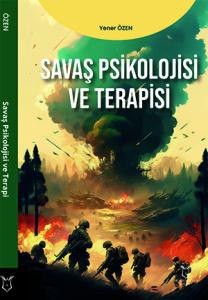
Savaş Psikolojisi ve Terapisi
Özet
-
Referanslar
Ackerman, N. W. (1958). The psychodynamics of family life: Diagnosis and treatment of family relationships. Basic Books.
Adams, R., ve Clarke, S. (2020). Education and Social Support in Post-Conflict Societies. Routledge.
Ager, A., ve Strang, A. (2008). Understanding and improving the response to crisis and disaster. Journal of Public Health, 30(2), 156-163.
Aldrich, D. P. (2012). Building resilience: Social capital in post-disaster recovery. University of Chicago Press.
Alexander, J. C. (2004). Cultural trauma and collective identity. University of California Press.
Alexander, J. C. (2004). Towards a theory of cultural trauma. In J. C. Alexander, R. Eyerman, J. Giesen, B. Smith, ve N. Jacobs (Eds.), Cultural trauma and collective identity (pp. 1-30). University of California Press.
Alexander, J. C. (2012). Trauma: A social theory. Polity Press.
American Psychiatric Association. (2013). Diagnostic and statistical manual of mental disorders (5th ed.). Author.
Anderson, B. (1983). Imagined communities: Reflections on the origin and spread of nationalism. Verso.
Andrew, C., ve Mitrokhin, V. (2000). The Mitrokhin Archive: The KGB in Europe and the West. Penguin Books.
Andrews, B., Creamer, M., Crino, R., ve van Hees, H. (2007). The treatment of posttraumatic stress disorder: A review of the evidence. Journal of Anxiety Disorders, 21(3), 374-386.
Assmann, J. (1992). Das Kulturelle Gedächtnis: Schrift, Erinnerung und politische Identität in frühen Hochkulturen. C.H. Beck.
Assmann, J. (1995). Memory, individuality, and the rest of the cultural framework. In K. L. (Ed.), Cultural memory and the construction of identity (pp. 127-138). Cambridge University Press.
Assmann, J. (2006). Religion and cultural memory: Ten studies. Stanford University Press.
Assmann, J. (2008). Canon and archives. In R. J. A. (Ed.), Cultural memory studies: An international and interdisciplinary handbook (pp. 97-107). De Gruyter.
Assmann, J. (2011). Cultural memory and Western civilization: Functions, media, archives. Cambridge University Press.
Baker, A. J., ve McFall, R. M. (2007). Crisis intervention: A practical guide. Sage Publications.
Baker, C. (2008). Cultural identity and the impact of conflict: The case of post-conflict societies. Routledge.
Bandura, A. (1997). Self-efficacy: The exercise of control. W.H. Freeman and Company.
Barlow, D. H. (2002). Anxiety and its disorders: The nature and treatment of anxiety and panic (2nd ed.). Guilford Press.
Bar-Tal, D. (1996). Development of ethnic stereotypes and prejudice in early childhood: The case of the Israeli-Palestinian conflict. European Journal of Social Psychology, 26(5), 735-755.
Bar-Tal, D. (2000). Shared beliefs in a society: Social psychological analysis. Sage Publications.
Bar-Tal, D. (2009). The role of culture in conflict and conflict resolution. In L. S. E. G. Levine ve T. K. A. T. (Eds.), Handbook of conflict resolution (pp. 200-214). Wiley-Blackwell.
Beck, A. T. (1976). Cognitive therapy and the emotional disorders. International Universities Press.
Beck, A. T. (1979). Cognitive therapy of depression. Guilford Press.
Beck, A. T., Rush, A. J., Shaw, B. F., ve Emery, G. (1979). Cognitive therapy of depression. Guilford Press.
Beck, J. S. (2011). Cognitive behavior therapy: Basics and beyond. Guilford Press.
Bekmezci, M., Orcanlı, K., ve Fırat, Z. M. (2020). Psikolojik Sermaye ile Öznel Kariyer Başarısı Arasındaki İlişkide Örgütsel Destek Algısının Aracılık Rolü. Atauniiibd, 34, 853-876.
Bell, D. (2006). Memory, trauma, and identity: The politics of remembering. Routledge.
Bergh, R. (2016). Cultural practices and post-conflict reconstruction. Routledge.
Berkman, L. F., ve Glass, T. (2000). Social integration, social networks, social support, and health. In L. F. Berkman ve I. Kawachi (Eds.), Social epidemiology (pp. 137-173). Oxford University Press.
Bernardy, N. C., ve Friedman, M. J. (2015). Psychopharmacological strategies in the management of posttraumatic stress disorder (PTSD): What have we learned?. Current Psychiatry Reports, 17(4), 548.
Berntsen, D., ve Rubin, D. C. (2006). The centrality of events scale: A measure of integrating trauma into one's identity and its relation to post-traumatic stress disorder symptoms. Behaviour Research and Therapy, 44(2), 219-231.
Betancourt, T. S., Borisova, I., Brennan, R., Khamis, V., ve Antonaccio, O. (2010). Psychosocial support for children and families affected by armed conflict: A review of the evidence. Global Health, 6(1), 5.
Betancourt, T. S., Meyers-Ohki, S. E., Charrow, A., ve Tol, W. A. (2012). Interventions for children affected by war: An ecological perspective on psychosocial support and mental health care. Harvard Review of Psychiatry, 20(2), 70-91.
Bettelheim, B. (1943). Individual and Mass Behavior in Extreme Situations. The Journal of Abnormal and Social Psychology, 38(4), 417-452.
Blake, D. D., Weathers, F. W., ve Nagy, L. M. (1995). The development of a clinician-administered PTSD scale. Journal of Traumatic Stress, 8(1), 75-90.
Boin, A., ve Hart, P. 't (2003). Public leadership in times of crisis: Mission impossible?. Public Administration Review, 63(5), 644-652.
Boin, A., Hart, P. 't, Stern, E., ve Sundelius, B. (2010). The politics of crisis management: Public leadership under pressure. Cambridge University Press.
Boin, A., Kuipers, S., ve Overdijk, W. (2017). Leadership in times of crisis: A review of the literature. International Review of Public Administration, 22(1), 2-16.
Bonanno, G. A. (2004). Loss, trauma, and human resilience: Have we underestimated the human capacity to thrive after extremely aversive events?. American Psychologist, 59(1), 20-28.
Bonanno, G. A., ve Mancini, A. D. (2012). Beyond resilience and PTSD: Mapping the heterogeneity of responses to potential trauma. Psychological Trauma: Theory, Research, Practice, and Policy, 4(1), 74-83.
Bonanno, G. A., Westphal, M., ve Mancini, A. D. (2010). Resilience to loss and potential trauma. Annual Review of Clinical Psychology, 6, 511-535.
Booth-Kewley, S., Larson, G. E., Highfill-McRoy, R. M., Garland, C. F., ve Gaskin, T. A. (2010). Factors associated with antisocial behavior in combat veterans. Aggressive Behavior, 36(5), 330-336.
Borenstein, M., Hedges, L. V., Higgins, J. P. T., ve Rothstein, H. R. (2009). Introduction to meta-analysis. Wiley.
Bourdieu, P. (1984). Distinction: A social critique of the judgment of taste. Harvard University Press.
Bourdieu, P. (1993). The field of cultural production: Essays on art and literature. Columbia University Press.
Bourke, J. (1999). An intimate history of killing: Face-to-face killing in 20th century warfare. Random House.
Bourke, J. (1999). Dismembering the male: Men's bodies, Britain and the Great War. Reaktion Books.
Bradt, J., ve Dileo, C. (2014). Music interventions for mechanically ventilated patients. Cochrane Database of Systematic Reviews, 2014(12).
Braun, V., ve Clarke, V. (2006). Using thematic analysis in psychology. Qualitative Research in Psychology, 3(2), 77-101.
Breslau, N., Davis, G. C., Andreski, P., ve Peterson, E. L. (1998). Posttraumatic stress disorder and the incidence of trauma: A prospective study of trauma and posttraumatic stress disorder. Archives of General Psychiatry, 55(8), 627-633.
Brewin, C. R. (2006). Theoretical models of posttraumatic stress disorder. Clinical Psychology Review, 26(6), 795-812.
Brewin, C. R., Andrews, B., ve Valentine, J. D. (2000). Meta-analysis of risk factors for post-traumatic stress disorder in trauma-exposed adults. Journal of Consulting and Clinical Psychology, 68(5), 748-766.
Brewin, C. R., Dalgleish, T., ve Joseph, S. (1996). A dual representation theory of posttraumatic stress disorder. Psychological Review, 103(4), 670-686.
Briere, J., ve Scott, C. (2015). Principles of trauma therapy: A guide to symptoms, evaluation, and treatment. Sage Publications.
Britt, T. W., ve Dickinson, J. M. (2017). Stress and resilience in combat (2nd ed.). Springer.
Brown, G., ve Harris, T. (1978). The social origins of depression: A study of psychiatric disorder in women. Tavistock Publications.
Brown, P. (2008). The politics of cultural identity: New directions in the study of cultural heritage and conflict. Routledge.
Browning, C. R. (1990). Ordinary men: Reserve Battalion 101 and the final solution in Poland. HarperCollins.
Browning, C. R. (2007). The origins of the final solution: The evolution of Nazi Jewish policy, September 1939-March 1942. University of Nebraska Press.
Bryant, R. A., Harvey, A. G., ve Dang, S. T. (2013). The efficacy of a brief intervention for traumatic stress. Journal of Clinical Psychiatry, 74(1), 54-62.
Bryant, R. A., Harvey, A. G., ve Moulds, M. L. (2014). Post-traumatic stress disorder: Clinical and theoretical perspectives. Routledge.
Cahill, S. P., Rothbaum, B. O., Resick, P. A., ve Follette, V. M. (2006). Posttraumatic Stress Disorder: A Comprehensive Review. Journal of Traumatic Stress, 19(2), 155-175.
Carl, E., Stein, A. T., Levihn-Coon, A., ve Fins, A. I. (2019). Virtual reality exposure therapy for post-traumatic stress disorder: A meta-analysis of randomized controlled trials. Journal of Anxiety Disorders, 66, 102-113.
Carlson, J., ve Sperry, L. (2007). Interventions for stress and trauma. Routledge.
Caspi, A., Hariri, A. R., Holmes, A., Uher, R., ve Moffitt, T. E. (2008). Genetic sensitivity to the environment: The case of the serotonin transporter gene and its implications for depression. Journal of the American Medical Association, 299(24), 2820-2828.
Christie, D., ve Montiel, C. (2013). Contributions of psychology to war and peace. The American Psychologist, 68(7), 502-513.
Clifford, J. (1997). Routes: Travel and translation in the late twentieth century. Harvard University Press.
Cohen, A. (2007). The cultural construction of collective memory. In T. A. ve D. S. (Eds.), Memory, identity, and the legacy of war (pp. 90-105). Cambridge University Press.
Cohen, S. (2005). The effects of war on social inequality. In D. M. Klein ve L. E. M. Robertson (Eds.), War and social change (pp. 41-56). Palgrave Macmillan.
Cohen, S., ve Wills, T. A. (1985). Stress, social support, and the buffering hypothesis. Psychological Bulletin, 98(2), 310-357.
Collier, P. (2000). Economic causes of civil conflict and their implications for policy. World Bank.
Collier, P., ve Hoeffler, A. (2004). Greed and grievance in civil war. Oxford Economic Papers, 56(4), 563-595.
Comfort, L. K. (2007). Crisis management in hindsight: A review of the past 20 years. Journal of Contingencies and Crisis Management, 15(3), 168-175.
Comfort, L. K., Ko, K., ve Zagorecki, A. (2010). Coordination in complex systems: Increasing the usability of emergency management systems. International Journal of Emergency Management, 7(2), 97-115.
Conger, R. D., Elder, G. H., Ge, X., ve diğ. (1992). Family economic status and adolescent adjustment: Examining economic stress and family processes. Child Development, 63(3), 526-541.
Coombs, W. T. (2014). Ongoing crisis communication: Planning, managing, and responding. SAGE Publications.
Coombs, W. T. (2014). Ongoing crisis communication: Planning, managing, and responding (4th ed.). Sage Publications.
Coser, L. A. (1956). The functions of social conflict. Free Press.
Costa, P. T., ve McCrae, R. R. (1992). Revised NEO Personality Inventory (NEO-PI-R) and NEO Five-Factor Inventory (NEO-FFI) professional manual. Psychological Assessment Resources.
Cramer, P. (2006). Protecting the self: Defence mechanisms in action. Guilford Press.
Cuijpers, P., Karyotaki, E., Weitz, E., Andersson, G., ve Hollon, S. D. (2016). The effects of psychotherapies for major depression in adults on remission, recovery and improvement: A meta-analysis. Journal of Affective Disorders, 202, 511-517.
Cukor, J., Olden, M., Lee, F., ve Difede, J. (2010). Prolonged exposure therapy for PTSD: A review of evidence. Clinical Psychology Review, 30(6), 564-572.
Davidson, J. R. T. (2000). Pharmacotherapy of posttraumatic stress disorder: Treatment options, long-term follow-up, and predictors of outcome. Journal of Clinical Psychiatry, 61(Suppl 5), 52-56.
Davidson, J. R. T., ve Foa, E. B. (1993). Post-traumatic stress disorder and the pharmacologic treatment of PTSD. Journal of Clinical Psychiatry, 54(Suppl 6), 35-39.
Davidson, J. R. T., ve McEwen, B. S. (2012). Understanding the effects of stress on the brain and behavior. Journal of Psychiatric Research, 46(7), 831-839.
Davis, M., ve James, C. (2013). The impact of war on social resilience. In P. K. (Ed.), Resilience in the face of conflict (pp. 39-54). Palgrave Macmillan.
De Ville de Goyet, C. (2011). The humanitarian response to the Haiti earthquake: Lessons learned. Journal of Disaster Studies, 5(2), 75-88.
Des Forges, A. (1999). Leave none to tell the story: Genocide in Rwanda. Human Rights Watch.
Dohrenwend, B. P., Turner, J. B., Turse, N. A., Adams, B. G., Koenen, K. C., ve Marshall, R. (2006). The psychological risks of Vietnam for U.S. veterans: A revisit with new data and methods. Science, 313(5789), 979-982.
Duman, R. S., ve Aghajanian, G. K. (2014). Synaptic dysfunction in depression: Potential therapeutic targets. Science, 345(6195), 1107-1110.
Durkheim, É. (1912). The elementary forms of religious life. Free Press.
Dynes, R. R. (2006). Social capital and the development of disaster theory. In S. M. Godschalk, L. R. Brower, ve C. H. H. Healy (Eds.), The role of social capital in disaster recovery (pp. 39-51). CRC Press.
D'Zurilla, T. J., ve Nezu, A. M. (2007). Problem-solving therapy: A positive approach to clinical intervention. Springer Publishing Company.
Edkins, J. (2003). Trauma and the Memory of Politics. Cambridge University Press.
Ehlers, A., ve Clark, D. M. (2000). A cognitive model of posttraumatic stress disorder. Behaviour Research and Therapy, 38(4), 319-345.
Eisenbruch, M. (1991). The cultural bereavement scale: A new clinical instrument for measuring cultural bereavement in refugees. Journal of Nervous and Mental Disease, 179(9), 590-598.
Eisenstadt, S. N. (2000). Multiple modernities. Routledge.
Elwood, L. S. (2009). Posttraumatic stress disorder in the aftermath of war: Psychological consequences of social conflict. In J. L. Herman (Ed.), Trauma and recovery (pp. 235-255). Basic Books.
Erős, F. (2022). War and Revolutions: Trauma and Violence from a Socio-Psychological Approach. Hungarian Historical Review.
Evans, G. W., ve Kim, P. (2007). Childhood poverty, chronic stress, self-regulation, and coping. In G. W. Evans ve T. D. Wachs (Eds.), Chaos and its influence on children’s development: An ecological perspective (pp. 161-187). American Psychological Association.
Falk, J., Houghton, M., ve Wessely, S. (2016). Social policy and public health: Perspectives on intervention. Cambridge University Press.
Falk, R. (2009). The decline of the state and the rise of global governance: Beyond state sovereignty. Routledge.
Feldman, R. S. (2001). The culture of trauma: An overview. Routledge.
Felitti, V. J., Anda, R. F., Nordenberg, D., Williamson, D. F., Spitz, A. M., Edwards, V., ... ve Marks, J. S. (1998). Relationship of childhood abuse and household dysfunction to many of the leading causes of death in adults: The Adverse Childhood Experiences (ACE) Study. American Journal of Preventive Medicine, 14(4), 245-258.
Field, A. (2018). Discovering statistics using IBM SPSS statistics (5th ed.). Sage Publications.
Foa, E. B., ve Kozak, M. J. (1986). Emotional processing of anxiety: Exposure to corrective information. Psychological Bulletin, 99(1), 20-35.
Foa, E. B., ve Rothbaum, B. O. (1998). Treating the trauma of rape: Cognitive-behavioral therapy for PTSD. Guilford Press.
Foa, E. B., Hembree, E. A., ve Rothbaum, B. O. (2005). Prolonged exposure therapy for PTSD: Emotional processing of traumatic experiences: Therapist guide. Oxford University Press.
Foa, E. B., Keane, T. M., Friedman, M. J., ve Cohen, J. A. (2009). Effective treatments for PTSD: Practice guidelines from the International Society for Traumatic Stress Studies (2nd ed.). Guilford Press.
Foucault, M. (1975). Discipline and punish: The birth of the prison. Vintage Books.
Freeman, D., Luigjes, J., ve de Pan, H. (2017). Virtual reality in the assessment, understanding, and treatment of mental health disorders. The Lancet Psychiatry, 4(3), 176-185.
Freud, A. (1936). The development of the libido and the sexual organizations. International Psycho-Analytical Press.
Freud, S. (1936). The ego and the mechanisms of defense. International Psychoanalytic Publishers.
Freud, S. (1936). The problem of anxiety. International Universities Press.
Friedman, H. S., Schustack, M. W., ve Luster, T. (1995). Personality: Classic theories and modern research. Allyn ve Bacon.
Friedman, M. J. (2014). Posttraumatic stress disorder: The latest assessment and treatment strategies. In M. J. Friedman, T. M. Keane, ve P. A. Resick (Eds.), Handbook of PTSD: Science and practice (pp. 549-569). Guilford Press.
Friedman, M. J., Resick, P. A., Bryant, R. A., ve Brewin, C. R. (2007). Considering PTSD for DSM-V. Depression and Anxiety, 24(5), 373-388.
Galtung, J. (1996). Peace by peaceful means: Peace and conflict, development and civilization. Sage Publications.
Geertz, C. (1973). The interpretation of cultures. Basic Books.
Gergen, K. J. (2009). Relational being: Beyond self and community. Oxford University Press.
Gergen, K. J. (2015). The social construction of reality. Routledge.
Giddens, A. (1984). The constitution of society: Outline of the theory of structuration. University of California Press.
Giddens, A. (2001). Sociology (5th ed.). Polity Press.
Gilbert, P. (2016). The evolution of the social mind: The origins of the self. Routledge.
Gilbertson, M. W., Shenton, M. E., Ciszkowski, C., ve Orr, S. P. (2002). Smaller hippocampal volume predicts posttraumatic stress disorder symptoms in civilians. Biological Psychiatry, 51(2), 131-137.
Giller, H. (1999). The impact of trauma on family life. In P. A. Levine ve A. M. Kline (Eds.), Trauma and recovery: The aftermath of violence (pp. 93-106). Basic Books.
Gillis, A., Nestor, S., ve Young, L. (2021). Education and community resilience: A review of evidence. International Journal of Educational Development, 81, 102314.
Gonzalez, R. (2021). Digital Warfare: The Impact of Technology on Modern Conflict. Routledge.
Gonzalez, R., Hardy, G., ve Karaminas, A. (2015). Psychoeducation for post-traumatic stress disorder: A meta-analysis. Journal of Anxiety Disorders, 35, 12-20.
Gordon, R. (2019). Understanding military stress and trauma. Oxford University Press.
Green, B. L., Lindy, J. D., ve Grace, M. (2010). The psychological impact of war: A study of American veterans. Psychological Trauma: Theory, Research, Practice, and Policy, 2(1), 15-28.
Green, K., ve Brown, L. (2023). Community Support Networks in War-Torn Areas. Palgrave Macmillan.
Grote, N. K., Bledsoe, S. E., ve McGlinchey, E. L. (2006). Social support and mental health: A review of the literature. In T. W. Smith ve J. M. Williams (Eds.), Handbook of health psychology (pp. 401-418). Routledge.
Gunkelman, J., ve Johnstone, J. (2005). Neurofeedback and neurotherapy: Applications in mental health. Journal of Neurotherapy, 9(4), 19-34.
Gurwitch, R. H., McCabe, C., ve Geller, A. (2007). Communicating in a crisis: Information needs and sources of information for disaster victims. Disaster Medicine and Public Health Preparedness, 1(1), 55-59.
Haddow, G. D., Bullock, J. A., ve Coppola, D. P. (2018). Introduction to emergency management. Butterworth-Heinemann.
Hagenaars, J. A. (1993). Cultural variation and cultural change: The impact of war on cultural patterns. Social Forces, 71(3), 615-641.
Halbwachs, M. (1992). On Collective Memory. University of Chicago Press.
Hammond, D. C. (2005). Biofeedback: A practitioner’s guide. Guilford Press.
Hammond, D. C. (2005). Neurofeedback and biofeedback in the treatment of psychiatric disorders. Professional Psychology: Research and Practice, 36(4), 339-346.
Harris, E. C., ve Barraclough, B. (1998). Increased risk of suicide in schizophrenia: A review. Schizophrenia Bulletin, 24(4), 579-585.
Harrison, L. E. (2004). Cultural responses to war and conflict. Social Science Research Council.
Haslam, S. A., Jetten, J., Postmes, T., ve Haslam, C. (2009). Social identity and the dynamics of organizational life: A review and research agenda. Journal of Organizational Behavior, 30(5), 615-638.
Hayes, S. C., Luoma, J. B., Bond, F. W., Masuda, A., ve Lillis, J. (2006). Acceptance and commitment therapy: Model, processes, and outcomes. Behaviour Research and Therapy, 44(1), 1-25.
Hayes, S. C., Strosahl, K. D., ve Wilson, K. G. (2006). Acceptance and commitment therapy: An experiential approach to behavior change. Guilford Press.
Hayes, S. C., Strosahl, K. D., ve Wilson, K. G. (2011). Acceptance and Commitment Therapy: The Process and Practice of Mindful Change (2nd ed.). Guilford Press.
Helgeson, V. S. (2003). Social support and quality of life. Quality of Life Research, 12(1), 23-32.
Hembree, E. A., Foa, E. B., ve Marsh, W. L. (2003). The Efficacy of Prolonged Exposure Therapy in Post-Traumatic Stress Disorder: A Meta-Analysis. Journal of Traumatic Stress, 16(5), 499-509.
Herbert, A. (2011). Resilience and recovery: Lessons from the aftermath of World War II. Historical Review, 44(3), 205-222.
Herman, J. L. (1992). Trauma and recovery: The aftermath of violence—from domestic abuse to political terror. Basic Books.
Hernández, J. (2015). Cultural heritage and the challenge of reconstruction. Journal of Cultural Heritage Management and Sustainable Development, 5(2), 166-178.
Himmelstine, S. K. (2001). Biofeedback interventions for anxiety: A review of the literature. Journal of Anxiety Disorders, 15(4), 293-307.
Hinton, A. L. (2002). Annihilating difference: The anthropology of genocide. University of California Press.
Hirsch, A. (2001). The generation of postmemory: Writing and visual culture after the Holocaust. Columbia University Press.
Hobfoll, S. E. (1989). Conservation of resources: A new attempt at conceptualizing stress. American Psychologist, 44(3), 513-524.
Hobfoll, S. E. (2001). The influence of culture, community, and the nested-self in the stress process: Advancing conservation of resources theory. Applied Psychology: An International Review, 50(3), 337-421.
Hobfoll, S. E., Palmieri, P. A., Johnson, R. J., ve ve diğ. (2007). The impact of resource loss and resource gain on mental health during the transition to war. Journal of Traumatic Stress, 20(5), 875-888.
Hobfoll, S. E., Watson, P., Bell, C. C., Bryant, R. A., Brymer, M. J., Friedman, M. J., ... ve Ursano, R. J. (2007). Five essential elements of immediate and mid-term mass trauma intervention: Empirical evidence. Psychiatry, 70(4), 283-315.
Hobfoll, S. E., Watson, P., Bell, C. C., Bryant, R. A., Brymer, M. J., Friedman, M. J., ... ve Ursano, R. J. (2007). Five essential elements of immediate and mid-term mass trauma intervention: Empirical evidence. Psychiatry, 70(4), 283-315.
Hobsbawm, E. J. (1990). Nations and nationalism since 1780: Programme, myth, reality. Cambridge University Press.
Hobsbawm, E. J., ve Ranger, T. (1983). The invention of tradition. Cambridge University Press.
Hodgson, T., McCormack, L., ve Scholes, J. (2015). The efficacy of EMDR therapy for military veterans with PTSD: A systematic review. Journal of Military and Veterans' Health, 23(3), 21-29.
Hoffman, B. (2006). Inside Terrorism. Columbia University Press.
Hoffman, S. (2012). The conflict trap: Understanding the dynamics of war. Journal of Peace Research, 49(2), 235-249.
Hofmann, S. G., Asnaani, A., Vonk, I. J. J., Sawyer, A. T. ve Fang, A. (2012). The Efficacy of Cognitive Behavioral Therapy: A Review of Meta-analyses. Cognitive Therapy and Research, 36(5), 427-440.
Hoge, C. W., Auchterlonie, J. L., ve Milliken, C. S. (2004). Mental health problems among soldiers returning from Iraq and Afghanistan. JAMA, 291(9), 972-980.
Hoge, C. W., Auchterlonie, J. L., ve Milliken, C. S. (2006). Mental health problems among soldiers returning from Iraq and Afghanistan. Journal of the American Medical Association, 295(9), 1023-1032.
Hogg, M. A. (2006). Social identity theory. In P. J. Burke ve T. E. O’Connell (Eds.), Handbook of social psychology (pp. 535-561). Blackwell Publishing.
Hollifield, M., Warner, T. D., ve Krakow, B. (2002). The role of comprehensive treatment in the management of post-traumatic stress disorder. Journal of Clinical Psychology, 58(7), 813-830.
Hollon, S. D., ve Beck, A. T. (1994). Cognitive and cognitive-behavioral therapies. In A. S. Bellack ve M. Mueser (Eds.), Community mental health: A practical guide (pp. 217-252). Springer.
Horowitz, D. L. (1985). Ethnic groups in conflict. University of California Press.
Huntington, S. P. (1996). The Clash of Civilizations and the Remaking of World Order. Simon ve Schuster.
Huyssen, A. (2003). Present pasts: Urban palimpsests and the politics of memory. Stanford University Press.
İyigün, N. Ö., ve Çetin, C. (2012). Psikolojik Kontratın Örgütsel Sapma Üzerindeki Etkisi ve İlaç Sektöründe Bir Araştırma. OD, 10(37), 15-29.
Jablensky, A. (2006). Epidemiology of schizophrenia: The global burden of disease and disability. In A. Jablensky ve H. L. Smith (Eds.), Schizophrenia: A multidisciplinary approach (pp. 14-28). Cambridge University Press.
Jacobsen, P. B. (2011). Crisis intervention and short-term psychotherapy. Springer.
Jacobson, N. S., Dobson, K. S., Truax, P., Addis, M. E., Koerner, K., Gollan, J. K., ve Prince, S. E. (1996). A component analysis of cognitive-behavioral treatment for depression. Journal of Consulting and Clinical Psychology, 64(2), 295-304.
Jensen, S. Q. (2011). The cultural significance of war memorials and the collective memory. Sociology Compass, 5(11), 912-924.
Johnson, D. R., Lahad, M., ve Gray, A. (2011). Creative therapies for adults. In N. B. Webb (Ed.), Social work practice with children (3rd ed., pp. 356-377). Guilford Press.
Johnson, T., ve Lee, A. (2018). Social Support Systems: Theory and Practice. Sage Publications.
Jones, D., Alexander, D. A., ve MacLean, T. (2003). Psychological effects of war and violence. In S. Johnson ve K. Williams (Eds.), Trauma and recovery (pp. 213-230). Cambridge University Press.
Jordans, M. J. D., ve diğ. (2010). Psychological interventions for post-traumatic stress disorder in children and adolescents. Cochrane Database of Systematic Reviews, 2010(10).
Jowett, G. S., ve O'Donnell, V. (2019). Propaganda ve Persuasion (7th ed.). SAGE Publications.
Kabat-Zinn, J. (1990). Full catastrophe living: Using the wisdom of your body and mind to face stress, pain, and illness. Bantam Books.
Kaldor, M. (2007). New and old wars: Organised violence in a global era. Stanford University Press.
Kaniasty, K., ve Norris, F. H. (1993). A test of the social support deterioration deterrence model in the context of natural disaster. Journal of Personality and Social Psychology, 64(3),
Kaplan, E. A. (2005). The cinema of Robert Altman: An overview. Cambridge University Press.
Kapucu, N. (2008). Collaborative emergency management: Better community organizing, better community outcomes. In R. W. Perry ve E. L. Lindell (Eds.), Preparedness and response for catastrophic disasters (pp. 231-246). CRC Press.
Kapucu, N., ve Van Wart, M. (2008). Making matters worse: A comparative analysis of organizational performance in the aftermath of disasters. Public Administration Review, 68(4), 586-598.
Karege, F., Vaudano, E., ve Fuchs, S. (2002). Brain-derived neurotrophic factor (BDNF) in the blood of patients with major depression and anxiety. Neuropsychopharmacology, 27(6), 975-981.
Karstoft, K. I., Madsen, T., ve Andersen, T. E. (2014). Long-term effects of psychological therapies on post-traumatic stress disorder. The Lancet Psychiatry, 1(5), 385-391.
Kashdan, T. B., ve Rottenberg, J. (2010). Psychological flexibility as a fundamental aspect of health. Clinical Psychology Review, 30(7), 865-878.
Tatlılıoğlu, K. (2021). Üniversite Öğrencilerinin Psikolojik Kırılganlıkları, Psikolojik İyilik Halleri ve Sosyal Güven ve Memnuniyet Düzeyleri Arasındaki İlişkinin Kardeş Sayısına Göre İncelenmesi. Bingöl Araştırmaları Dergisi.
Katz, D. (1960). The functional approach to the study of attitudes. In D. Katz, H. H. Kohn, ve J. F. Wright (Eds.), Public opinion and propaganda (pp. 185-216). The Free Press.
Keane, T. M., Fairbank, J. A., Caddell, J. M., ve Zimering, R. T. (1985). Posttraumatic stress disorder among Vietnam veterans: The role of combat exposure and social support. Journal of Abnormal Psychology, 94(3), 181-186.
Kellner, D. (2003). Media spectacle and the crisis of democracy: Terrorism, war, and the struggle for social justice. Routledge.
Kernberg, O. F. (2016). The treatment of patients with borderline personality organization. Yale University Press.
Kessler, R. C., McGonagle, K. A., Swartz, M., ve Blazer, D. G. (2003). The epidemiology of major depressive disorder and the timing of onset. Annual Review of Public Health, 24, 315-335.
Kessler, R. C., Sonnega, A., Bromet, E., Hughes, M., ve Nelson, C. B. (2017). Posttraumatic stress disorder in the National Comorbidity Survey. Archives of General Psychiatry, 52(12), 1048-1060.
Khalidi, R. (2009). The Iron Cage: The Story of the Palestinian Struggle for Statehood. Beacon Press.
King, L. A., King, D. W., Vogt, D. S., Knight, J., ve Samper, R. E. (2006). Deployment risk and resilience inventory: A collection of measures for studying deployment-related experiences of military personnel and veterans. Military Psychology, 18(2), 89-120.
Kleim, B., ve Westphal, M. (2011). The role of social support in the development of PTSD: A review of the literature. Social Science ve Medicine, 73(2), 369-373.
Klein, D. (2001). The social impact of war. Routledge.
Kobayashi, I., ve Shibata, K. (2007). Sleep disorders and post-traumatic stress disorder: An updated review. Sleep Medicine Reviews, 11(2), 177-189.
Koff, S. (2001). Dance/Movement Therapy: A Healing Art. Routledge.
Kramer, E. (1971). Art as Therapy. Schocken Books.
Kriesberg, L. (1998). Constructive conflicts: From escalation to resolution. Rowman ve Littlefield.
Kroger, W. S. (1943). Clinical and experimental hypnosis in medicine, dentistry, and psychology. Lippincott.
Kropf, M. (2006). The role of cultural practices in post-conflict societies. Palgrave Macmillan.
Krupnick, J. L., Green, B. L., Horowitz, M. J., ve Spiegel, D. (2008). Effects of a brief supportive group intervention on trauma symptoms in PTSD. Journal of Traumatic Stress, 21(2), 151-160.
Kudler, H. (2009). Psychodynamic therapy for PTSD. Journal of Contemporary Psychotherapy, 39(3), 153-160.
Kvale, S., ve Brinkmann, S. (2015). InterViews: Learning the craft of qualitative research interviewing (3rd ed.). Sage Publications.
Labrador, M. A., ve Roy, M. (2015). Emergency communication strategies in disaster management: A comparative analysis of social media platforms. International Journal of Information Management, 35(5), 616-623.
Labrador, R., ve Roy, S. (2015). Effective communication in emergency management: A review of best practices. International Journal of Emergency Management, 11(2), 134-152.
Ladner, D., ve van Dijk, R. (2011). Post-disaster recovery: The case of Haiti. Disaster Management Journal, 8(1), 44-59.
Lange, A. (2005). Memory and identity in post-unification Germany. Routledge.
Lazarus, R. S., ve Folkman, S. (1984). Stress, appraisal, and coping. Springer Publishing Company.
Lee, C. W., ve Cuijpers, P. (2013). A meta-analysis of the effects of eye movement desensitization and reprocessing (EMDR) on posttraumatic stress disorder (PTSD) in adults. Journal of Anxiety Disorders, 27(6), 568-577.
Lemert, C. (1993). The interactionist perspective. In J. H. Turner (Ed.), Sociological theories (pp. 123-150). Sage Publications.
Levi, D. (2009). Rebuilding societies: Post-war social recovery. Cambridge University Press.
Levy, B. S., Sidel, V. W., ve Wenig, J. (2017). The health impact of war on children and women. American Journal of Public Health, 107(4), 528-535.
Lewis, S. W., ve Lieberman, J. A. (2000). Prevalence and course of schizophrenia. In J. A. Lieberman, D. M. Hyman, ve M. B. McCutcheon (Eds.), Schizophrenia: A comprehensive review (pp. 23-44). Wiley.
Liberzon, I., ve Sripada, C. S. (2008). The brain and the stress axis: The role of the ventral medial prefrontal cortex in stress and emotional regulation. Brain Research, 1261, 77-88.
Lifton, R. J. (1967). Death in life: Survivors of Hiroshima. Random House.
Lifton, R. J. (1973). Home from the war: Vietnam veterans, neither victims nor executioners. Simon and Schuster.
Lindell, M. K., ve Perry, R. W. (2012). Introduction to emergency management. John Wiley ve Sons.
Lindemann, E. (1944). Symptomatology and management of acute grief. American Journal of Psychiatry, 101(2), 141-148.
Linehan, M. M. (1993). Cognitive-behavioral treatment of borderline personality disorder. Guilford Press.
Lowenthal, D. (1998). The heritage crusade and the spoils of history. Cambridge University Press.
Luthar, S. S., ve Cicchetti, D. (2000). The construct of resilience: Implications for interventions and social policies. Development and Psychopathology, 12(4), 857-885.
MacDonald, J. H., ve Chamberlain, K. (2000). The Role of Support Groups in the Recovery from Trauma. Journal of Traumatic Stress, 13(4), 591-603.
MacLeod, M. (2001). The social significance of memorials and commemorations. In P. L. (Ed.), The politics of memory (pp. 162-174). Oxford University Press.
Maguen, S., Stalnaker, M., McCaslin, S. E., ve Litz, B. T. (2010). PTSD subclusters and functional impairment in Kosovo peacekeepers. Military Medicine, 175(7), 487-493.
Malchiodi, C. A. (2005). Art Therapy: Journal of the American Art Therapy Association. Guilford Press.
Malchiodi, C. A. (2006). Art therapy and health care. Guilford Press.
Malchiodi, C. A. (2012). The Handbook of Art Therapy. Guilford Press.
Marmot, M. (2004). The status syndrome: How social standing affects our health and longevity. Times Books.
Masten, A. S. (2001). Ordinary magic: Resilience processes in development. American Psychologist, 56(3), 227-238.
Masten, A. S. (2014). Global perspectives on resilience in children and youth. Child Development, 85(1), 10-22.
Masten, A. S., ve Reed, M. G. J. (2002). Resilience in development: Contributions of the western psychological tradition. In C. R. Snyder ve J. L. Sullivan (Eds.), Cooperating with the enemy: A psychological perspective (pp. 74-102). Academic Press.
Matthews, M. (2020). Psychological Science and the Art of War. Oxford University Press, 1-13.
Mazur, G. (2008). War and cultural identity. Palgrave Macmillan.
Meadows, S. (2019). Understanding psychological defense mechanisms. Cambridge University Press.
Mendelsohn, D. (2014). The anatomy of a cultural war: The rise of the religious right and the demise of the left. Yale University Press.
Miklósi, Á., ve Topal, J. (2005). The dog as a social partner and its cognitive abilities. Behavioural Processes, 68(2), 151-163.
Mileti, D. S., ve Sorensen, J. H. (1990). Communication of emergency public warnings: A social science perspective and state-of-the-art assessment. Oak Ridge National Laboratory.
Miller, A. (2020). The drama of the gifted child: The search for the true self. Basic Books.
Miller, C., Moffett, C., ve O’Reilly, M. (2008). Crisis management and leadership: Theory and practice. Journal of Leadership and Organizational Studies, 15(3), 195-209.
Miller, D. (2009). Social networks and cultural change in post-conflict societies. Sage Publications.
Miller, H., Smith, A., ve Johnson, R. (2019). Psychological Impact of War on Communities. Cambridge University Press.
Miller, J. (2004). The social dimensions of war. Routledge.
Miller, K. E., ve Rasco, L. M. (2004). The mental health of refugees and asylum seekers. Routledge.
Miller, K. E., ve Rasmussen, A. (2010). The mental health of civilians displaced by armed conflict: A review of the literature. Journal of Global Health, 1(2), 189-205.
Mitroff, I. I., ve Anagnos, G. (2009). Managing crises before they occur: What every executive and manager needs to know about crisis management. AMACOM.
Monson, C. M., Schnurr, P. P., ve Resick, P. A. (2006). Cognitive-behavioral therapy for post-traumatic stress disorder. Journal of Clinical Psychology, 62(7), 797-808.
Morris, E. (2020). Information Warfare: The Battle for Your Mind. Springer.
Morrison, A. P., ve Hutton, P. (2021). Psychotic experiences and trauma: What do we know?. In A. P. Morrison, G. P. N. Green, ve S. O. Ross (Eds.), Trauma and psychosis: Current perspectives (pp. 35-50). Routledge.
Morrison, A. P., Frame, L., ve Larkin, W. (2012). The role of psychotic experiences in the development of post-traumatic stress disorder. Schizophrenia Research, 136(1-3), 64-69.
Morrison, A. S. (2007). Understanding and treating posttraumatic stress disorder: Perspectives from clinical psychology and psychiatry. Wiley.
Morrison, A. S., Houts, A., ve Kelly, J. (2021). The impact of trauma on social support networks and treatment outcomes. Journal of Traumatic Stress, 34(2), 231-240.
Morrow, B. H. (1999). Identifying and mapping community vulnerability. Disasters, 23(1), 1-18.
Mouffe, C. (2005). On the political. Routledge.
Murray, D. R., ve Schaller, M. (2008). Cultural evolution of human cooperation: A review of the evidence. Journal of Cross-Cultural Psychology, 39(2), 201-217.
Murray, J. (2013). War neuroses in the twentieth century. In J. L. Spence (Ed.), Historical perspectives on the psychology of trauma (pp. 23-47). Routledge.
Murray, K., McBride, J., ve Moore, M. (2016). Peer support and psychoeducation for PTSD: A systematic review. Traumatology, 22(2), 85-92.
Myers, C. S. (1915). A contribution to the study of shell shock: Being an account of certain cases treated by hypnosis. The Lancet, 185(4772), 316-320.
Nemeroff, C. B. (2009). Neurobiological consequences of childhood trauma. Journal of Clinical Psychiatry, 70(3), 18-28.
Neria, Y., Nandi, A., ve Galea, S. (2008). Post-traumatic stress disorder following disasters: A review. Psychological Medicine, 38(4), 467-480.
Nickerson, A., Bryant, R. A., Silove, D., ve Steel, Z. (2014). A critical review of psychological treatments of posttraumatic stress disorder in refugees. Clinical Psychology Review, 34(8), 608-618.
Nora, P. (1989). Between memory and history: Les lieux de mémoire. Representations, 26, 7-24.
Norris, F. H., Stevens, S. P., Pfefferbaum, B., Wyche, K. F., ve Pfefferbaum, R. L. (2008). Community resilience as a metaphor, theory, set of capacities, and strategy for disaster readiness. American Journal of Community Psychology, 41(1-2), 127-150.
Nussbaum, M. (2006). Frontiers of justice: Disability, nationality, species membership. Harvard University Press.
Overy, R. (1995). Why the Allies Won. Pimlico.
Özen, Y. (2018). Travmatik BEN-Çift Sarılı Yumurta Teorisi- Çınaraltı Yayıncılık. İstanbul.
Özen, Y. (2024). Travma Psikolojisi-Travmatik BEN- Vova Yayıncılık. Ankara.
Pankhurst, D. (2002). The history and memory of war: Cultural and psychological aspects. Cambridge University Press.
Patton, M. Q. (2015). Qualitative research ve evaluation methods: Integrating theory and practice. Sage Publications.
Pauchant, T. C., ve Mitroff, I. I. (1992). Transforming the crisis-prone organization: Preventing individual, organizational, and environmental tragedies. Jossey-Bass.
Perry, B. D. (2019). The boy who was raised as a dog: And other stories from a child psychiatrist's notebook. Basic Books.
Perry, R. W., ve Lindell, M. K. (2003). Preparedness for emergency: An introduction to the research. Journal of Applied Social Science Studies, 33(1), 15-34.
Perry, R. W., ve Lindell, M. K. (2003). Understanding citizen response to disasters with emphasis on hurricane response. In A. J. Perry ve E. L. Quarantelli (Eds.), What is a disaster?: Perspectives on the question (pp. 118-139). Routledge.
Pfefferbaum, B., North, C. S., ve Sherrieb, K. (2014). Disaster-related posttraumatic stress disorder: A review of the literature. Journal of Traumatic Stress, 27(1), 78-87.
Pfefferbaum, B., North, C. S., ve Tivis, R. (2014). Traumatic stress and social support. In J. M. McNally ve M. M. Stein (Eds.), The social psychology of trauma (pp. 215-230). Cambridge University Press.
Phelps, E. A., ve LeDoux, J. E. (2005). Contribution of the amygdala to emotion processing: From animal models to human behavior. Neuropsychology Review, 15(4), 269-309.
Phinney, J. S. (1990). Ethnic identity in adolescents and adults: Review of research. Psychological Bulletin, 108(3), 499-514.
Pietrzak, R. H., Johnson, D. C., Goldstein, M. B., Malley, J. C., ve Southwick, S. M. (2010). Psychological resilience and postdeployment social support protect against traumatic stress and depressive symptoms in soldiers returning from Operations Enduring Freedom and Iraqi Freedom. Depression and Anxiety, 27(5), 397-405.
Pincus, F. L., ve Callahan, D. (2007). Social exclusion and the war on poverty. Harvard University Press.
Pitman, R. K., Shalev, A. Y., ve Yehuda, R. (1991). Acute stress disorder: Diagnosis and treatment. Journal of Clinical Psychiatry, 54, 55-61.
Pitts, T. M., Glover, D., ve DeWeaver, M. (2019). Genetic and neurobiological factors in PTSD: Implications for personalized treatment. Journal of Anxiety Disorders, 66, 23-33.
Polat, M. (2020). Psikolojik Sözleşme İhlallerinin Üretkenlik Karşıtı İş Davranışlarına Etkisi: Bir Alan Araştırması. Aicusbed, 6, 377-408.
Porter, M., ve Haslam, N. (2005). Predisplacement and postdisplacement factors associated with mental health of refugees and internally displaced persons: A meta-analysis. JAMA, 294(5), 602-612.
Powers, M. B., ve Foa, E. B. (2008). Effect of prolonged exposure therapy on PTSD symptoms: A review and meta-analysis. Journal of Anxiety Disorders, 22(4), 695-706.
Powers, M. B., Zum Vörde Sive Vording, M. B., ve Emmelkamp, P. M. G. (2009). Acceptance and commitment therapy: A meta-analytic review. Psychological Bulletin, 135(6), 975-
Putnam, R. D. (2000). Bowling alone: The collapse and revival of American community. Simon ve Schuster.
Quarantelli, E. L. (2005). What is a disaster?: Perspectives on the question. Routledge.
Rauch, S. L., Shin, L. M., ve Phelps, E. A. (2006). Neurocircuitry models of post-traumatic stress disorder and their neural correlates. Nature Reviews Neuroscience, 7(8), 568-576.
Resick, P. A., Monson, C. M., ve Chard, K. M. (2012). Cognitive processing therapy for PTSD: A comprehensive manual. Guilford Press.
Resick, P. A., Wachen, J. S., ve Mintz, J. (2017). A comparison of EMDR and prolonged exposure for PTSD in women. Journal of Anxiety Disorders, 45, 115-123.
Reyntjens, F. (2004). Ruanda: L’histoire d’un génocide. Karthala.
Rizzo, A. S., ve Koenig, S. T. (2017). Virtual reality and augmented reality as tools for the assessment and treatment of post-traumatic stress disorder. Journal of Anxiety Disorders, 61, 95-104.
Roberts, B., Ocaka, K. F., Browne, J., Oyok, T., ve Sondorp, E. (2008). Factors associated with the health status of internally displaced persons in northern Uganda. Journal of Epidemiology ve Community Health, 63(3), 227-232.
Rosenberg, S. (2001). Cultural resistance in post-war societies. University of Pennsylvania Press.
Roth, J. (2003). War and memory: The psychological impact of war on society. Psychological Review, 110(3), 532-541.
Rothbaum, B. O., Astin, M. C., ve Marsteller, F. (1999). Prolonged Exposure vs. Present-Centered Therapy for PTSD in Female Survivors of Rape: A Randomized Controlled Trial. Journal of Traumatic Stress, 12(3), 507-519.
Rothbaum, B. O., Astin, M. C., ve Marsteller, F. A. (2008). Prolonged exposure for post-traumatic stress disorder. Journal of Anxiety Disorders, 22(8), 1161-1167.
Rothbaum, B. O., Foa, E. B., Riggs, D. S., Murdock, T. B., ve Walsh, W. S. (2014). A controlled study of prolonged exposure for PTSD with and without cognitive restructuring: A randomized trial. Journal of Consulting and Clinical Psychology, 82(6), 1077-1085.
Rothbaum, B. O., Hodges, L., ve Kooper, R. (1999). Effectiveness of virtual reality for the treatment of post-traumatic stress disorder in a case study. Journal of Traumatic Stress, 12(4), 657-664.
Rothbaum, B. O., Kliethermes, S., ve Price, M. (2019). The Effects of Trauma and Trauma Treatment. Springer.
Rothbaum, B. O., Meadows, E. A., Resick, P., ve Foy, D. W. (2000). Cognitive-behavioral therapy. In E. B. Foa, T. M. Keane, ve M. J. Friedman (Eds.), Effective treatments for PTSD: Practice guidelines from the International Society for Traumatic Stress Studies (pp. 60-83). Guilford Press.
Rothbaum, B. O., Rothbaum, M. L., ve Glickman, M. B. (2014). Virtual reality exposure therapy for PTSD due to military combat and terrorist attacks. Journal of Traumatic Stress, 27(2), 135-142.
Rothberg, D. (2009). Memory and forgetting: The role of cultural memory in the collective recovery from disaster. Cultural Memory Studies, 6(1), 45-63.
Rutter, M. (1987). Psychosocial resilience and protective mechanisms. American Journal of Orthopsychiatry, 57(3), 316-331.
Sagan, S. D. (1996). The Limits of Safety: Organizations, Accidents, and Nuclear Weapons. Princeton University Press.
Schafer, M. H., ve Ferraro, K. F. (2007). The stigma of smoking and mental health: A review and meta-analysis. Journal of Health and Social Behavior, 48(3), 271-285.
Scharff, C. (2010). Social policy and war: Social support systems in conflict settings. Routledge.
Schnurr, P. P., ve Green, B. L. (2004). Understanding and assessing the impact of trauma. Journal of Traumatic Stress, 17(1), 5-20.
Schnyder, U., Pfaltz, M. C., ve von Hoebel, J. (2011). Psychological interventions in post-traumatic stress disorder. European Journal of Psychotraumatology, 2, 552-560.
Schwarzer, R., ve Knoll, N. (2007). Functional roles of self-efficacy beliefs in coping with stress. In J. E. Maddux (Ed.), Self-efficacy, adaptation, and adjustment: Theory, research, and application (pp. 159-177). Springer Science ve Business Media.
Schwerdtle, P. N., ve diğ. (2018). The psychological impact of war on civilians: A systematic review. Clinical Psychological Review, 64, 103-116.
Seligman, M. E. P. (2002). Authentic happiness: Using the new positive psychology to realize your potential for lasting fulfillment. Free Press.
Sen, A. (1999). Development as freedom. Alfred A. Knopf.
Shapiro, F. (1989). Efficacy of the eye movement desensitization procedure in the treatment of traumatic memories. Journal of Traumatic Stress, 2(2), 199-223.
Shapiro, F. (1989). Eye Movement Desensitization and Reprocessing: Basic Principles, Protocols, and Procedures. Guilford Press.
Shapiro, F., ve Maxfield, L. (2002). EMDR and the Adaptive Information Processing Model: Potential Mechanisms of Change. Journal of EMDR Practice and Research, 1(4), 235-247.
Shapiro, F., ve Shapiro, E. (2001). EMDR: The breakthrough therapy for overcoming anxiety, stress, and trauma. Basic Books.
Shay, J. (1994). Achilles in Vietnam: Combat trauma and the undoing of character. Scribner.
Shedler, J. (2010). The Efficacy of Psychodynamic Psychotherapy. American Psychologist, 65(2), 98-109.
Silove, D., Ventevogel, P., ve Rees, S. (2017). The contemporary refugee crisis: An overview of mental health challenges. World Psychiatry, 16(2), 130-139.
Simmel, G. (1908). Conflict. The Free Press.
Sloan, D. M., ve Marx, B. P. (2004). The effects of trauma on individual and community mental health. Psychological Science, 15(4), 245-258.
Smith, A. D. (1991). National identity. University of Nevada Press.
Smith, A. D. (1998). National identity and the politics of ethnicity. University of Nevada Press.
Smith, A. D. (2001). Ethnic and national identity: Some conceptual issues. In J. H. Smith (Ed.), Nationalism and ethnic conflict (pp. 16-29). Cambridge University Press.
Smith, A. D. (2001). Nationalism: Theory, ideology, history. Polity Press.
Smith, J. (2020). The Societal Effects of War: A Comprehensive Analysis. Oxford University Press.
Smith, J. A., Flowers, P., ve Larkin, M. (2009). Interpretative phenomenological analysis: Theory, method and research. Sage Publications.
Smith, L. (2010). Cultural heritage management: A global perspective. Routledge.
Snyder, C. R., ve Sullivan, J. M. (2011). Psychological resilience. In C. R. Snyder ve J. L. Sullivan (Eds.), Cope: Psychologically resilient approaches to coping with stress (pp. 11-28). Oxford University Press.
Steel, Z., Chey, T., Silove, D., Marnane, C., Bryant, R. A., ve Ommeren, M. V. (2009). Association of torture and other potentially traumatic events with mental health outcomes among populations exposed to mass conflict and displacement: A systematic review and meta-analysis. JAMA, 302(5), 537-549.
Stevens, R. (1983). American Psychology Since World War II: A Profile of the Discipline. JAMA, 250, 674-675.
Stewart, F. (2008). The root causes of violent conflict in developing countries. British Medical Journal, 336(7657), 621-624.
Stripp, A. B. (2014). Head Strong: How Psychology Is Revolutionizing War. Military Review, 94, 108.
Sullivan, H. S. (1953). The interpersonal theory of psychiatry. W. W. Norton ve Company.
Sztompka, P. (2000). Cultural trauma and collective identity. Cambridge University Press.
Şahin, G., ve Buzlu, S. (2017). Hemşirelik Öğrencilerinde Psikolojik Sağlamlığın Öz Yeterlik Sosyal Destek ve Etkili Baş Etme ile İlişkisinde Algılanan Stresin Aracı Rolü. Journal of Anatolia Nursing and Health Sciences, 20, 122-135.
Tajfel, H., ve Turner, J. C. (1986). The social identity theory of intergroup behavior. In S. Worchel ve W. G. Austin (Eds.), Psychology of intergroup relations (pp. 7-24). Nelson-Hall.
Tanner, M. (2003). Bosnia: The war and its aftermath. Harvard University Press.
Taylor, D. M., ve Turner, J. C. (2001). Social identity and social exclusion: A critical review of the research. In M. J. Hogg ve D. J. Abrams (Eds.), Social identity and social cognition (pp. 211-239). Blackwell Publishers.
Taylor, P., ve Martin, J. (2021). Social Services and War: Challenges and Responses. Springer.
Taylor, S. E. (2011). Social support: A review. In H. S. Friedman (Ed.), The Oxford handbook of health psychology (pp. 189-214). Oxford University Press.
Taylor, V., ve Whittier, N. (1992). Collective identity in social movement communities: Lesbian feminist mobilization. In A. D. Smith ve N. Whittier (Eds.), The politics of collective identity (pp. 64-81). Routledge.
Tedeschi, R. G., ve Calhoun, L. G. (2004). Posttraumatic growth: Conceptual foundations and empirical evidence. Psychological Inquiry, 15(1), 1-18.
Thibault, R. T., ve Raz, A. (2017). The neuroplasticity of the brain and biofeedback: A review. Neuropsychology Review, 27(1), 63-73.
Tierney, K. J. (2003). When the going gets tough: Resilience and vulnerability in the aftermath of disaster. In S. L. Cutter (Ed.), American hazards and disaster resilience: The role of social capital (pp. 225-250). University of North Carolina Press.
Tierney, K. J. (2012). The social roots of risk: Producing disasters, promoting resilience. Stanford University Press.
Tilly, C. (2003). The politics of collective violence. Cambridge University Press.
Travis, L., Erlich, T., ve Rosen, J. (2018). The efficacy of psychoeducation in post-traumatic stress disorder. Journal of Trauma ve Dissociation, 19(5), 631-649.
UNESCO. (2015). Cultural heritage and the sustainable development goals. UNESCO Publishing.
Ungar, M. (2011). The social ecology of resilience: A handbook of theory and practice. Springer.
Ungar, M. (2013). Resilience, trauma, context, and culture. Trauma, Violence, ve Abuse, 14(3), 255-266.
Vaillant, G. E. (1977). Adaptation to life. Little, Brown and Company.
Vaillant, G. E. (1992). Ego mechanisms of defense: A guide for clinicians and researchers. APA PsycBooks.
Vaillant, G. E. (1992). The wisdom of the ego. Harvard University Press.
Van der Kolk, B. A. (1994). The body keeps the score: Memory and the evolving psychobiology of posttraumatic stress. Harvard Review of Psychiatry, 1(5), 253-265.
Van der Kolk, B. A. (2005). The body keeps the score: Brain, mind, and body in the healing of trauma. Viking.
Varshney, A. (2002). Ethnic conflict and civic life: Hindus and Muslims in India. Yale University Press.
Volkan, V. D. (1997). Bloodlines: From ethnic pride to ethnic terrorism. Basic Books.
Volkan, V. D. (2006). Killing in the name of identity: A study of the psychology of conflict. Routledge.
Wagner, D. A. (2015). Psychological support for military personnel: The role of psychological interventions. In A. D. Zimbardo (Ed.), Handbook of military psychology (pp. 289-307). Routledge.
Watts, B. V., Schnurr, P. P., Mayo, L., ve Friedman, M. J. (2013). Meta-analysis of the efficacy of treatments for posttraumatic stress disorder. Journal of Clinical Psychiatry, 74(6), e541-e546.
Waugh, W. L., ve Streib, G. (2006). Collaboration and leadership for effective emergency management. Public Administration Review, 66(1), 131-140.
Weathers, F. W., Blake, D. D., Schnurr, P. P., Kaloupek, D. G., Marx, B. P., ve Keane, T. M. (2013). The Clinician-Administered PTSD Scale for DSM-5 (CAPS-5). National Center for PTSD.
Werner, E. E. (1995). Resilience in development. In C. R. Snyder ve D. R. Forsyth (Eds.), Handbook of social and clinical psychology: The health perspective (pp. 72-88). Pergamon Press.
Werner, E. E., ve Smith, R. S. (1992). Overcoming the odds: High-risk children from birth to adulthood. Cornell University Press.
Wheat, A. L., ve Larkin, G. L. (2010). Biofeedback: A comprehensive review. Applied Psychophysiology and Biofeedback, 35(4), 267-284.
Whitehead, A. (2004). The impact of war on collective memory: The role of public commemoration. In J. G. (Ed.), Collective memory and social identity (pp. 70-84). Routledge.
Williams, D., Thompson, L., ve Clark, M. (2022). Healthcare Systems in Conflict Zones. Elsevier.
Williams, J. R., ve Bhanugopan, R. (2014). Crisis management and recovery strategies in the modern world. Palgrave Macmillan.
Williams, K. D. (2007). Ostracism: The power of silence. Guilford Press.
Williams, R. (2002). Culture and society: 1780-1950. Columbia University Press.
Wilson, J. P., ve Drozdek, B. (2004). Broken spirits: The treatment of traumatized asylum seekers, refugees, war and torture victims. Routledge.
Wilson, J. P., Becker, A. L., ve Tinker, R. H. (2018). The handbook of EMDR: Theory, research, and practice. Routledge.
Winter, J. (1995). Sites of memory, sites of mourning: The Great War and the cultural history of the First World War. Cambridge University Press.
Winter, J. (2007). Remembering war: The Great War between memory and history in the twentieth century. Yale University Press.
Winter, J. (2010). Sites of memory, sites of mourning: The Great War in European cultural history. Cambridge University Press.
World Health Organization. (2021). Depression and other common mental disorders: Global health estimates. Author.
Yalom, I. D., ve Leszcz, M. (2005). The Theory and Practice of Group Psychotherapy (5th ed.). Basic Books.
Yehuda, R. (2002). Post-traumatic stress disorder. New England Journal of Medicine, 346(2), 108-114.
Yehuda, R., ve LeDoux, J. E. (2007). Response variation following trauma: A review. Journal of Clinical Psychiatry, 68(12), 1234-1245.
Yehuda, R., Boisoneau, D., Lowy, M. T., ve Giller, E. L. (2006). Dose-response study of cortisol augmentation of psychotherapy for posttraumatic stress disorder. Journal of Clinical Psychiatry, 67(5), 751-759.
Yehuda, R., McFarlane, A. C., ve Shalev, A. Y. (2007). Reactions to trauma: Understanding and treating PTSD. Guilford Press.
Young, J. E. (2014). Cognitive therapy for personality disorders: A schema-focused approach. Professional Resource Exchange.
Zerubavel, E. (1996). Social mindscapes: An invitation to cognitive sociology. Harvard University Press.
Zerubavel, Y. (1996). Recovered roots: Collective memory and the making of Israeli national tradition. University of Chicago Press.
Yayınlanan
Lisans
LisansBu İnternet Sitesi içeriğinde yer alan tüm eserler (yazı, resim, görüntü, fotoğraf, video, müzik vb.) Akademisyen Kitabevine ait olup, 5846 sayılı Fikir ve Sanat Eserleri Kanunu ve 5237 sayılı Türk Ceca Kanunu kapsamında korunmaktadır. Bu hakları ihlal eden kişiler, 5846 sayılı Fikir ve Sanat eserleri Kanunu ve 5237 sayılı Türk Ceza Kanununda yer alan hukuki ve cezai yaptırımlara tabi olurlar. Yayınevi ilgili yasal yollara başvurma hakkına sahiptir.
