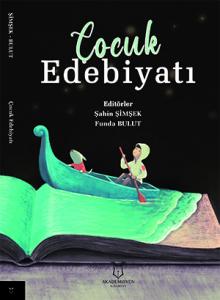
Yabancı/İkinci Dil Öğretiminde Çocuk Edebiyatının Yeri
Özet
Yabancı ve ikinci dil öğretiminde edebiyat, tarihsel süreç boyunca her zaman değerli bir kaynak olmuş, günümüzde ise iletişimsel dil yeterliliklerine sağladığı çok boyutlu katkılarla öne çıkmıştır. Diller İçin Avrupa Ortak Başvuru Metni’nin (D-AOBM) 2020 yılındaki tamamlayıcı cilt güncellemelerinde, edebî ürünlerin sınıf içi kullanımı yeni ölçeklerle detaylandırılarak alımlama, üretim ve etkileşim becerilerinin geliştirilmesindeki rolü daha sağlam bir zemine oturtulmuştur. Mekanik dil derslerinin getirdiği tekdüzeliği ve motivasyon kayıplarını ortadan kaldırmada, estetik formu ve merak uyandırıcı yapısıyla edebiyat güçlü bir itici güçtür. Bu bağlamda çocuk edebiyatı ürünleri; basit olay örgüleri, canlı anlatımları, zengin kelime haznesi ve görsellerle desteklenen yapılarıyla her yaştan yabancı dil öğrenicisi için ideal ve anlaşılır girdiler sunar. Yetişkin edebiyatına kıyasla daha az soyut fikir içermesi ve öğrenici üzerindeki bilişsel yükü hafifletmesi sayesinde, öğrencilerin hedef dile dair korku ve kaygılarını yenmelerine, zevk ve duygusal katılım yoluyla başarı duygusunu tatmalarına yardımcı olur. Doğru kitap seçimi ve sistemli öğretim yönergeleriyle desteklenen çocuk edebiyatı; sesli okuma, doğru telaffuz, özgün bağlamlarda etkileşim kurma ve topluluk önünde bireysel görüşlerini güvenle ifade etme becerilerini fark edilir düzeyde geliştirir. Uluslararası literatürde çocuk edebiyatının kıymetli katkıları deneysel olarak kanıtlanmış olup, Türkçenin yabancı dil olarak öğretiminde de bu özgün materyallerden kültürel, pedagojik ve dil bilimsel açılardan daha fazla yararlanılmalı ve yeni özgün yayınlar üretilmelidir.
Literature has always been a valuable resource throughout the historical process of foreign and second language teaching, and today, it stands out with its multidimensional contributions to communicative language competences. In the 2020 companion volume updates of the Common European Framework of Reference for Languages (CEFR), the use of literary products in the classroom was detailed with new scales, placing its role in developing reception, production, and interaction skills on a firmer ground. Literature, with its aesthetic form and curiosity-inducing structure, serves as a powerful driving force in eliminating the monotony and loss of motivation brought by mechanical language lessons. In this context, children's literature products offer ideal and comprehensible input for foreign language learners of all ages, thanks to their simple plots, vivid narratives, rich vocabulary, and visually supported structures. By containing fewer abstract ideas and reducing the cognitive load on learners compared to adult literature, it helps students overcome their fears and anxieties regarding the target language, allowing them to experience a sense of achievement through enjoyment and emotional involvement. Supported by correct book selection and systematic instructional guidelines, children's literature significantly improves skills such as reading aloud, correct pronunciation, interacting in authentic contexts, and confidently expressing individual opinions in public. The valuable contributions of children's literature have been empirically proven in international literature, and these authentic materials should be utilized more extensively in teaching Turkish as a foreign language from cultural, pedagogical, and linguistic perspectives, while generating new original publications.
Referanslar
Ackerman, T. (1994) Storytelling: A Way of Freeing the Imagination. An Interview with Dvora Shurman. The Journal of the Imagination in Language Leaming and Teaching, Retrieved from http://www.njcu.edu/cill/journal-index.html.
Amer, A. (2003). Teaching EFL/ESL literature. The Reading Matrix, 3 (2), 63-73.
Anderson, R.C., Shirley, L., Wilson, P.T., & Fielding, L.F. (1987). lnterestingness of children's reading material. R.E. Snow & M. J. Farr (Ed) Aptitude, learning and instruction: Vol. III içinde. Cognitive andaffective process analyses (s. 287-299).
Brown, E. (2004). Using children's literature with young learners. The Internet TESL Journal, Vol. 10, No. 2.
Chen, M. (2014). Teaching English as a Foreign Language through Literature. Theory and Practice in Language Studies, Vol. 4, No. 2, 232-236.
Collie, J. & Slater, S. (1987). Literature in the language classroom. Cambridge: Cambridge University Press.
Duff, A. & Maley, A. (1990). Literature. Oxford University Press.
Floris, F.D. (2004). The power of literature in EFL classrooms. Kata, 6 (1), 1-12.
Ho, L. (2000). Children’s literature in adult education. Children’s Literature in Education, 31(4), 259-271.
Khatib, M. & Rezaei, S. & Derakhshan, A. (2011). Literature in EFL/ESL classroom. English Language Teaching Journal, 4(1), 201-208.
Khodabakhski, S. C. & Lagos, D. C. (1993). Reading aloud: childen’s literature incollege ESL classes. The Journal of the Imagination in Language Learning and Teaching.
Krashen, S. (1982). Principles and practices in second language acquisition. Oxford: Pergamon.
Lazar, G. (1993). Literature and language teaching: a guide for teachers and trainers. Cambridge University Press.
Moeller, A. K. & Meyer, R. J. (1995). Children's books in the foreign language classroom: acquiring natural language in familiar contexts. Faculty Publications: Department of Teaching, Learning and Teacher Education. 16, 33-45.
Neugebauer, S. R. & Currie-Rubin, R. (2009). Reading-alouds in Calca, Peru: A bilingual indigenous context. Reading Teacher, 62, 396—405.
Newman, M. & Pujol, M. (1996). Towards an esol literature. TESL-EJ, Vol.2/1, 20-42.
Öztürk, B. (2021). İngiltere’de yükseköğretimde Türkçe öğretimi: Exeter Üniversitesi örneği. Aydın Tömer Dil Dergisi, 6 (1), 25-42.
Reid S. (2002). Book bridges for ESL students: using young adult and children’s literature to teach ESL. Lanham, MD: Scarecrow Press.
Savvidou, C. (2004). An integrated approach to the teaching of literature in the EFL classroom. The Internet TESL Journal, 12.
Songören-Arkılıç, S. (2011). Yabancı dil öğretiminde çocuk edebiyatı. Uluslararası İnsan Bilimleri Dergisi. 8 (1), 1725-1730.
Songören-Arkılıç, S. (2013). The place of children’s literatüre texts in teaching German as a foreing/second language. Procedia- Social and Behavioral Scienses, 70, 1825-1830.
Tomlinson, C. & McGraw, R. (1997). Children’s litetature in adult EFL classes:learning through response. 22 Eylül 2022 tarihinde https://files.eric.ed.gov/fulltext/ED420199.pdf#page=55 adresinden erişildi.
Weinrich, H. (1981). Von der Langeweile des Sprachunterrichts. In: Zeitschrift für Pädagogik. Heft 27. Weinheim: Beltz, S. 167-185, 168.