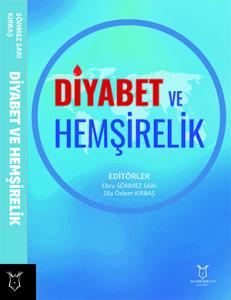
Çocukluk Çağı Diyabeti
Özet
Çocukluk çağı diyabeti (Diabetes Mellitus), pankreasın insülin üretimindeki bozukluklar sonucu yüksek kan glukozuyla seyreden, fiziksel etkilerinin yanı sıra psikolojik ve sosyal boyutları da olan kronik bir hastalıktır. Çocukluk döneminde sıklıkla otoimmün beta hücresi harabiyetiyle gelişen ve insüline bağımlı olan Tip 1 DM görülürken; obezite ve hareketsizliğe bağlı olarak insülin direnciyle karakterize Tip 2 DM vakaları da çocuklarda giderek artmaktadır. Hastalığın yönetiminde glisemik hedeflerin korunması, düzenli kan glukozu takibi, HbA1c ölçümleri, sağlıklı beslenme, fiziksel egzersiz ve ilaç/insülin tedavisi kritik rol oynar. Tedavi sürecinde hipoglisemi, ketoasidoz gibi akut; retinopati, nefropati ve nöropati gibi kronik komplikasyonlar gelişebilir. Hemşirelik bakımı ve taburculuk planlaması; çocuk ile ailesinin bütünüyle ele alınmasını, hastalık yönetimi eğitimini, komplikasyonların önlenmesini ve psikososyal uyumun sağlanmasını kapsayarak hastaların yaşam kalitesini doğrudan yükseltmektedir.
Childhood diabetes (Diabetes Mellitus) is a chronic disease characterized by high blood glucose levels resulting from impairments in pancreatic insulin production, encompassing psychological and social dimensions alongside its physical effects. While insulin-dependent Type 1 DM, which develops through autoimmune beta-cell destruction, is commonly observed in childhood, Type 2 DM cases characterized by insulin resistance due to obesity and physical inactivity are progressively increasing among children. Maintaining glycemic targets, regular blood glucose monitoring, HbA1c measurements, healthy nutrition, physical exercise, and medication/insulin therapy play a critical role in managing the disease. Acute complications such as hypoglycemia and ketoasidoz, as well as chronic complications like retinopathy, nephropathy, and neuropathy, can develop during the treatment process. Nursing care and discharge planning directly enhance the patients' quality of life by adopting a holistic approach toward the child and family, providing disease management education, preventing complications, and ensuring psychosocial adaptation.
Referanslar
World Health Organization (WHO). Classification of diabetes mellitus. https://www.who.int/publications/i/item/classification-of-diabetesmellitus www.who.org.tr [Accessed: 03.06.2022]
International Diabetes Federation (IDF). About Diabetes. https://idf.org/aboutdiabetes/what-is-diabetes/facts-figures.htmlhttps://idf.org [Accessed: 03.06.2022]
American Diabetes Association(ADA). https://www.diabetes.org [Accessed: 03.06.2022]
Hanas R. Type 1 diabetes in children, adolescents and young adults. 7th Edition. Class Publishing; 2019. p. 200-260.
Jayakumar RV, Bhavani R, Pavithran VP. Diabetes in children and adolescents, London: Jaypee Brothers Medıcal Publishers; 2013. p. 120-148.
Escobar O, Drash A, Becker DJ. Management of the with type 1 dıabetes, In: Lifshıtz F (ed.) Pediatric Endocrinology; 2018. p. 158-200.
Yiğit R, Esenay FI. Pediatri Hemşireliği. In: Conk Z, Başbakkal Z, Bal Yılmaz H, & Bolışık B. (eds) Pediatri Hemşireliği. Ankara: Akademisyen Kitabevi, 2018. p. 256-302
Alemzadeh R, Wyatt DT. Diabetes Mellitus. In: Behrman R.E, Kliegman R.M, Jenson H.B (eds.). Nelson textbook of pediatrics. Pennsylvania: Elsevier Saunders; 2019. p. 1947-1972.
Corbin KD, Driscoll KA, Pratley RE. et al. Advancing care for type 1 diabetes and obesity network (ACTION). Obesity in type 1 diabetes: pathophysiology, clinical impact, and mechanisms. Endocrine reviews. 2018;39(5): 629-663. doi: 10.1210/er.2017-00191
Cho N, Shaw JE, Karuranga S. et al. IDF Diabetes Atlas: Global estimates of diabetes prevalence for 2017 and projections for 2045. Diabetes Research And Clinical Practice. 2018;138:271-281. doi: 10.1016/j.diabres.2018.02.023
https://diabetesatlas.org/en/sections/demographic-and-geographic-outline.html [Accessed: 20.06.2022]
Beck RW, Connor CG, Mullen DM, et al. The fallacy of average: How using HbA1c alone to assess glycemic control can be misleading. Diabetes Care. 2017;40(8):994–999. doi: 10.2337/dc17-0636
Aycan Z, Çalışkan D, Garipoğlu M, et al. Diyabet nedir? In: Koza N (ed.) Çocuk çağı diyabeti eğitimci rehberi. Yayın: Ankara. 2015.
Özbek MN. Tip 1 Diyabette Egzersiz. Çocuk Endokrinolojisi ve Diyabet Derneği, Ulusal Çocuk Diyabet Grubu, Çocukluk Çağı Diyabeti: Tanı ve Tedavi Rehberi, 2018. p.47-53.
Büyükgönenç L, Törüner EK. Çocuk Sağlığı Temel Hemşirelik Yaklaşımları. Ankara: Nobel Tıp Kitabevleri. 2017.
Jayakumar RV. Definition, Epidemiology, diagnosis and calssification of diabetes. In: Jayakumar RV, Bhavani N, Pavithran PV. (ed.) Diabetes ın Chıldren and Adolescents, 2013. p. 1-9.
Akil AAS, Yassin E, Al-Maraghi A et al. Diagnosis and treatment of type 1 diabetes at the dawn of the personalized medicine era. Journal of Translational Medicine. 2021;19(1): 1-19. doi: 10.1186/s12967-021-02778-6
Regnell SE, Lernmark Å. Early prediction of autoimmune (type 1) diabetes. Diabetologia. 2017;60(8):1370-1381. doi: 10.1007/s00125-017-4308-1. Epub 2017 May 26.
Rewers M, Stene LC, Norris JM. Tip 1 Diyabet İçin Risk Faktörleri. In: Bethesda MD (ed.) Amerika'da Diyabet. 3. baskı. Ulusal Diyabet ve Sindirim ve Böbrek Hastalıkları Enstitüsü (ABD); 2018.
Chiang JL, Maahs DM, Garvey KC, et al. Type 1 diabetes in children and adolescents: a position statement by the American Diabetes Association. Diabetes care. 2018;41(9):2026-2044. doi: 10.2337/dci18-0023
Dağdelen S. Tip 1 Diyabet Tedavi ve İzlem Klinik Protokolü, Sağlık Bakanlığı Diyabet Tedavi ve İzlem Protokollleri. 2019.
Çavuşoğlu H. Çocuk sağlığı hemşireliği, Ankara: Sistem Ofset; 2017.
Bergenstal RM, Gal RL, Connor CG, et al. Racial differences in the relationship of glucose concentrations and hemoglobin A1c levels. Ann Intern Med. 2017;167(2):95–102. doi: 10.7326/M16-2596
Türk Endokrin ve Metabolizma Derneği, TEMD Diabetes Mellıtus ve Komplikasyonlarının Tanı Tedavi ve İzlem Kılavuzu, Ankara. 2021.
Young-Hyman D, De Groot M, Hill-Briggs F, et al. Psychosocial care for people with diabetes: a position statement of the American Diabetes Association. Diabetes Care. 2016;39(12): 2126-2140.
Delahanty LM, Halford BN. The role of diet behaviors in achieving improved glycemic control in intensively treated patients in the Diabetes Control and Complications Trial. Diabetes Care. 1993;16:1453–1458. doi: 10.2337/diacare.16.11.1453
https://www.ispad.org [Accessed: 15.06.2022]
Smart CE, Annan F, Higgins LA, et al. ISPAD Clinical Practice Consensus Guidelines 2018: Nutritional management in children and adolescents with diabetes. Pediatric Diabetes. 2018;19:136-154. doi: 10.1111/pedi.12738
Gandy JW, Madden A. Oxford handbook of nutrition and dietetics. Newyork: Oxford Unıversity Press. 2020.
Carral F, Gutıerrez JV, Ayala M et al. Intense physical activity is associated with better metabolic control in patients with type 1diabetes. Diabetes Research and Clinical Practice. 2013;101: 45-49. doi: 10.1016/j.diabres.2013.04.006
Beraki A, Magnuson A, Sarnblad S, et al. Increase in physical activity is associated with lower HbA1c levels in children and adolescents with type 1 diabetes: Results from a crosssectional study based on the Swedish pediatric diabetes quality registry. Diabetes Research and Clinical Practice.2014;105:119–125. doi: 10.1016/j.diabres.2014.01.029
Özbek MN. Tip 1 diyabette egzersiz. Çocuk endokrinolojisi ve diyabet derneği, ulusal çocuk diyabet grubu, Çocukluk Çağı Diyabeti: Tanı ve Tedavi Rehberi, 2018. p. 47-53.
Bary A, Connely E. The Child With Endocrıne Dysfunctıon, In : Hockenberry MJ & Wilson D (eds.) Wong's nursing care of infants and children-E-book. Elsevier Health Sciences. 2018. p. 1192-1209.
Sağlık Bakanlığı, Halk Sağlığı Genel Müdürlüğü, Çocukluk Çağı Diyabeti Eğitimci Rehberi. 2020.
Cavan D. Take Control of Type 1 Diabetes: A Comprehensive Guide to Self-Management and Staying Well. Penguin Random House, 2018.
Ertem GS, Ergün S, Özyazıcıoğlu N. Tip 1 diyabetli çocuk ve adolesanlarda metabolik kontrol, Yozgat Bozok Üniversitesi Sağlık Bilimleri Fakültesi Dergisi. 2021. 2(1): 28-37.
Kara O, Can ME. Evaluation of microvascular changes in retinal zones and optic disc in pediatric patients with type 1 diabetes mellitus. Graefes Arch Clin Exp Ophthalmol. 2021; 259: 323–334. doi: 10.1007/s00417-020-04935-x
Delibaş LD, Behice E. Sosyal Bilişsel Kuram Temelli Eğitimle Tip 1 Diyabetli Çocukların Hastalık Yönetiminin Desteklenmesi. Turkish Journal of Family Medicine and Primary Care. 2021. 15(2): 404-413.
Bary A, Connely E. The Child With Endocrıne Dysfunctıon. In: Hockenberry MJ & Wilson D (eds.). Wong's nursing care of infants and children-E-book. Elsevier Health Sciences. 2018. p. 1192-1209.
Pedrinho LR, Shibukawa B, Rissi GP, et al. Therapeutic toy in primary care: contributions for the systematization of nursing care. Texto & Contexto-Enfermagem. 2021. 1-9. doi: 10.1590/1980-265X-TCE-2020-0616
Swearingen PL. Nursıng care plannıng resource chıld and Neonatal health Elsevier; 2018.