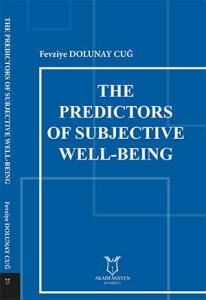
The Predictors of Subjective Well-Being
Özet
This book examines the determinants of \"Subjective Well-Being\" concept. The author, Fevziye Dolunay Cuğ, investigates the factors that influence subjective well-being in this study. The book is published by Akademisyen Yayınevi and is copyrighted. The whole or any part of the content cannot be reproduced, printed, or distributed without the prior written permission of the publisher, through mechanical, electronic, photocopying, magnetic paper, and/or other methods. Tables, figures, and graphs cannot be used for commercial purposes without permission. This book is sold with the stamp of the Ministry of Culture of the Republic of Turkey.
Referanslar
Adams, C. E., & Leary, M. R. (2007). Promoting self-compassionate attitudes toward eating among restrictive and guilty eaters. Journal of Social and Clinical Psychology, 26, 1120-1144. doi: 10.1521/jscp.2007.26.10.1120
Akın, Ü., Akın, A., & Abacı, R. (2007). Öz-duyarlık Ölçeği: Geçerlik ve güvenirlik çalışması. Hacettepe Üniversitesi Eğitim Fakültesi Dergisi, 33, 1-10.
Akın, A. (2009). Self-compassion and submissive behavior. Education and Science, 34(152), 138-147.
Akın, A. (2012). Self-compassion and automatic thoughts. Hacettepe Universitesi Eğitim Fakültesi Dergisi, 42(1), 1-10.
Akın, Ü. (2014). The predictive role of self-compassion on subjective vitality in Turkish university students. The Online Journal of Counseling and Education, 3(3), 1-13.
Alkan, N. (2006). Reliability and validity of the Turkish version of the Big Five Inventory. (Unpublished manuscript). Atılım University, Ankara.
Allemand, M., Hill, P. L., Ghaemmaghami, P., & Martin, M. (2012). Forgivingness and subjective well-being in adulthood: The moderating role of future time perspective. Journal of Research in Personality, 46, 32-39. doi: 10.1016/j.jrp.2011.11.004
Allen, A. B., Goldwasser, E. R., & Leary, M. R. (2012). Self-compassion and well-being among older adults. Self and Identity, 11(4), 428-453. doi: 10.1080/15298868.2011.595082
Andrews, F.M., & Withey, S. B. (1976). Social indicators of well-being: America’s perception of life quality. New York: Plenum.
Anic, P., & Tončić, M. (2013). Orientations to happiness, subjective well-being and life goals. Psychological Topics, 22(1), 135-153.
Arbuckle, J., & Wothke, W. (1999). AMOS 4 user’s reference guide. Chicago: Smallwaters Corp.
Arbuckle, J. L. (2009). Amos 18.0 [Computer software]. Chicago, IL: Small Waters.
Aydın, G. ve Tezer, E. (1991). İyimserlik, sağlık sorunları ve akademik başarı ilişkisi. [The relationship between optimism, health problems and academic achievement]. Psikoloji Dergisi, 7, 26, 2-9.
Ayyash-Abdo, H., & Alamuddin, R. (2007). Predictors of subjective well-being among college youth in Lebanon. The Journal of Social Psychology, 147, 265–284. doi:10.3200/SOCP.147.3.265-284
Beck, A. T. (1967). Depression: Clinical, experimental, and theoretical aspects. New York, NY: Harper & Row.
Bentler, P. M. (1990). Comparative fit indexes in structural models. Psychological Bulletin, 107, 238-246.
Birnie, K., Speca, M., & Carlson, L. E. (2010). Exploring self-compassion and empathy inthe context of mindfulness-based stress reduction (MBSR). Stress and Health, 26, 359-371. doi: 10.1002/smi.1305
Bono, G. & McCullough, M.E. (2006). Positive responses to benefit and harm: Bringing forgiveness and gratitude into cognitive psychotherapy. Journal of Cognitive Psychotherapy: An International Quarterly, 20(2), 147-158. doi: 10.1891/jcop.20.2.147
Bono, G., McCullough, M. E., & Root, L. M. (2008). Forgiveness, feeling connected to others, and well-being: Two longitudinal studies. Personality and Social Psychology Bulletin, 34(2), 182-195.
Brdar, I., Rijavec, M., Miljković, D. (2009) Life goals and well-being: Are extrinsic aspirations always detrimental to well-being? Psychological Topics, 18(2), 303-316.
Brdar, I., & Anić, P. (2010). Adolescents' life goals, orientations to happiness and psycological needs: Which is the best path to happiness? Psychological Topics, 19(1), 169-187.
Breen, W. E., Kashdan, T. B., Lenser, M. L., & Fincham, F. D. (2010). Gratitude and forgiveness: Convergence and divergence on self-report and informant ratings. Personality and Individual Differences, 49, 932-937. doi:10.1016/j.paid.2010.07.033
Brickman, P., & Campbell, D. (1971). Hedonic relativism and planning the good society. In M. H. Apley (Ed.), Adaptation-level theory: A symposium (pp. 287–302). New York: Academic Press.
Brown, R. P., & Phillips, A. (2005). Letting bygones be bygones: Further evidence for the validity of the tendency to Forgive Scale. Personality and Individual Differences, 38, 627-638. doi:10.1016/j.paid.2004.05.017
Browne, M. W., & Cudeck, R. (1993). Alternative ways of assessing model fit. In K. A. Bollen, & J. S. Long (Eds.), Testing structural equation models (pp. 136-162). Newbury Park, CA: Sage.
Bugay, A., & Demir, A. (2010). A Turkish version of Heartland Forgiveness Scale. Procedia-Social and Behavioral Sciences, 5, 1927-1931. doi: 10.1016/j.sbspro.2010.07.390
Byrne, B. M. (2010). Structural equation modeling with AMOS: Basic concepts, applications, and programming. Mahwah, N.J.: Lawrence Erlbaum Associates.
Cheng, H., & Furnham, A. (2001). Attributional style and personality as predictors of happiness and mental health. Journal of Happiness Studies, 2, 307-327.
Cheung, G. W., & Lau, R. S. (2008). Testing mediation and suppression effects of latent variables: Bootstrapping with structural equation models. Organizational Research Methods, 11(2), 296-325. doi: 10.1177/1094428107300343
Chan, D. W. (2009). The hierarchy of strengths: Their relationships with subjective well-being among Chinese teachers in Hong Kong. Teaching and Teacher Education, 25(6), 867–875. doi:10.1016/j.tate.2009.01.010
Chan, D. W. (2013). Subjective well-being of Hong Kong Chinese teachers: The contribution of gratitude, forgiveness, and the orientations to happiness. Teaching and Teacher Education, 32, 22-30. doi:10.1016/j.tate.2012.12.005
Chen, L. H., Tsai, Y. M., & Chen, M. Y. (2010). Psychometric analysis of the orientations to happiness questionnaire in Taiwanese undergraduate students. Social Indicators Research, 98, 239–249. doi: 10.1007/s11205-009-9473-2
Cohen, J. (1992). A power primer. Psychological Bulletin, 112(1), 155.
Compton, W. C. (2000). Meaningfulness as a mediator of subjective well-being. Psychological Reports, 87(1), 156-160. doi: 10.2466/pr0.2000.87.1.156
Costa, P. T, Jr, & McCrae, R. R. (1980). Still stable after all these years: Personality as a key to some issues in adulthood and old age. In P. B. Baltes & O. G. Brim (Eds.), Life span development and behavior (pp. 65–102). New York: Academic Press.
Coates, D. (1997). The correlations of forgiveness of self, forgiveness of others, and hostility, depression, anxiety, self-esteem, life adaptation, and religiosity among female victims of domestic abuse. Dissertation Abstracts International, 58(5), 2667B.
Csikszentmihalyi, M. (1990). Flow: The psychology of optimal experience. New York: Harper Collins.
Daaleman, T. P. (1999). Belief and subjective well-being in outpatients. Journal of Religion and Health, 38(3), 219-228. doi: 10.1023/A:1022980617885
Datu, J. A. (2013). Forgiveness, gratitude and subjective well-being ampng Filipino adolescents. International Journal for the Advancement of Counseling, 36, 262-273. doi: 10.1007/s10447-013-9205-9
De Negri, M., & Moretti, G. (1971). Some aspects of depression in children. Acta Paedopsychiatrica: International Journal of Child and Adolescent Psychiatry, 38(7–8), 182–190.
Deci, E. L., & Ryan, R. M. (1991). A motivational approach to self: Integration in personality. In R. Dienstbier (Ed.), Nebraska Symposium on Motivation: Vol. 38. Perspectives on motivation (pp. 237-288). Lincoln: University of Nebraska Press.
Deci, E. L., & Ryan, R. M. (2000). The "what" and" why" of goal pursuits: Human needs and the self-determination of behavior. Psychological Inquiry, 11(4), 227-268.
Deci, E. L. & Ryan, R. M. (2008). Hedonia, eudaimonia, and well-being: An introduction. Journal of Happiness Studies, 9, 1-11.
doi: 10.1007/s10902-006-9018-1
DeNeve, K. M., & Cooper, H. (1998). The happy personality: A meta analysis of 137 personality traits and subjective well-being. Psychological Bulletin, 124, 197-229.
Deniz, M. E., Arslan, C., Özyeşil, Z., & İzmirli, M. (2012). Öz-anlayış, yaşam doyumu, negatif ve pozitif duygu: Türk ve Diğer ülke üniversite öğrencileri arasında bir karşılaştırma. [Self compassion, life satisfaction, negative and positive affect: A comparison between Turkey and other different countries’ university students]. Mehmet Akif Ersoy Üniversitesi Eğitim Fakültesi Dergisi, 12(23), 428-446.
Deniz, M. E., Karakuş, Ö., Traş, Z., Eldeleklioğlu, J., Özyeşil, Z., & Hamarta, E. (2013). Parental attitude perceived by university students as predictors of subjective well-being and life satisfaction. Psychology, 4(3), 169-173. doi: 10.4236/psych.2013.43025
Derogatis, L. R., & Melisaratos, N. (1983). The Brief Symptom Inventory: An introductory report. Psychological Medicine, 13(3), 595-605.
Diener, E. (1984). Subjective well-being. Psychological Bulletin, 95(3), 542-575.
Diener, E. (2000). Subjective well-being: The science of happiness and a proposal for a national index. American Psychologist, 55(1), 34-43. doi: 10.1037/0003-066X.55.1.34
Diener, E., & Biswas-Diener, R. (2008). Rethinking happiness: The science of psychological wealth. Malden: Blackwell Publishing.
Diener, E. & Diener, M. (1995). Cross-cultural correlates of life satisfaction and self-esteem . Journal of Personality and Social Psychology, 68(4), 653-663.
Diener, E., Emmons, R. A., Larsen, R. J., & Griffin, S. (1985). The satisfaction with life scale. Journal of Personality Assessement, 49(1), 71-75.
Diener, E., Lucas, R. E., & Oishi, S. (2002). Subjective well-being: The science of happiness and life satisfaction. In C. R. Snyder & S. J. Lopez (Eds.), The handbook of positive psychology (pp. 463-473). New York: Oxford University Press.
Diener, E., Oishi, S., & Lucas, R. E. (2003). Personality, culture, and subjective well-being: Emotional and cognitive evaluations of life. Annual Review of Psychology, 54(1), 403-425. doi: 10.1146/annurev.psych.54.101601.145056
Diener, E., & Ryan, K. (2009). Subjective well-being: A general overview. South African Journal of Psychology, 39(4), 391-406.
doi: 10.1177/008124630903900402
Diener, E., Suh, E. M., Smith, H., & Shao, L. (1995). National differences in reported subjective well-being: Why do they occur? Social Indicators Research, 34(1), 7-32.
Diener, E., Suh, E., & Oishi, S. (1997). Recent findings on subjective well- being. Indian Journal of Clinical Psychology, 24(1), 25-41.
Diener, E., Suh, E. M., Lucas, R. E., & Smith, H. L. (1999). Subjective well-being: Three decades of progress. Psychological Bulletin, 125(2), 276.
Diener, E., & Suh, E. M. (2000). Measuring subjective well-being to compare the quality of life of cultures. In Diener, E., & Suh, E. M. (Eds.). Culture and subjective well-being (pp. 3-12). Cambridge, MA: MIT Press.
Diener, E., Wolsic, B., & Fujita, F. (1995), Physical attractiveness and subjective well-being. Journal of Personality and Social Psychology, 69, 120–129.
Duckworth, A. L., Steen, T. A., & Seligman, M. E. P. (2005). Positive psychology in clinical practice. Annual Review of Clinical Psychology, 1, 629-651.
Durak, M., Durak, E. S., & Gencoz, T. (2010). Psychometric properties of the satisfaction with life scale among Turkish university students, correctional officers, and elderly adults. Social Indicators Research, 99(3), 413–429. doi: 10.1007/s11205-010-9589-4
Durayappah, A. (2010). The 3P model: A general theory of subjective well-being. Journal of Happiness Studies, 12(4), 1-36. doi: 10.1007/s10902-010-9223-9
Dursun, P. (2012). The Roles of Meaning in Life, Optimism, Hope, and Coping Styles in Subjective Well-Being. Unpublished Doctoral Dissertation, Middle East Technical University, Ankara, Turkey.
Emmons, R. A., Cheung, C., & Tehrani, K. (1998). Assessing spirituality through personal goals: Implications for research on religion and subjective well-being. Social Indicators Research, 45, 391-422.
Emmons, R. A., & McCullough, M. E. (2003). Counting blessings versus burdens: An experimental investigation of gratitude and subjective well-being in daily life. Journal of Personality and Social Psychology, 84, 377–389. doi: 10.1037/0022-3514.84.2.377
Enright, R. D. (1996). Counseling within the forgiveness triad: On forgiving, receiving forgiveness, and self forgiveness. Counseling and Values, 40(2), 107-126. doi: 10.1002/j.2161-007X.1996.tb00844.x
Erickson, E. H. (1963). Childhood and society. New York: Norton.
Eryılmaz, A. & Öğülmüş, S. (2010). Ergenlikte öznel iyi oluş ve beş faktörlü kişilik modeli. [Subjective well-being and big five personality model at adolescence]. Ahi Evran Üniversitesi Eğitim Fakültesi Dergisi, 11(3), 189-203.
Eryılmaz, A. & Aypay, A. (2011). Ergen öznel iyi oluşu ile kimlik statüsü ilişkisinin incelenmesi. [Investigation of relationship between adolescents’ subjective well-being and identity status]. Dicle Üniversitesi Ziya Gökalp Eğitim Fakültesi Dergisi, 16, 167-179.
Fabricatore, A. N., Handal, P. J., & Fenzel, L. M. (2000). Personal spirituality as a moderator of the relationship between stressors and subjective well-being. Journal of Psychology and Theology, 28(3), 221-229.
Feist, G. J., Bodner, T. E., Jacobs, J. F., Miles, M., & Tan, V. (1995). Integrating top-down and bottom-up structural models of subjective well-being: A longitudinal investigation. The Journal of Personality, 68(1), 138–150.
Field, A. (2006). Discovering statistics using SPSS. Thousand Oaks. CA: Sage.
Fisher, M. L., & Exline, J. J. (2006). Self-forgiveness versus condoning: The importance of accepting responsibility. Self and Identity, 5, 127-146.
Freedman, S. R., & Enright, R. D. (1996). Forgiveness as an intervention goal with incest survivors. Journal of Consulting and Clinical Psychology, 64, 983-992.
Galinha, I. C., Oishi, S., Pereira, C. R., Wirtz, D., & Esteves, F. (2013). Adult attachment, love styles, relationship experiences and subjective well-being: Cross-cultural and gender comparison between Americans, Portuguese, and Mozambicans. Social Indicators Research, 119, 823-852. doi:10.1007/s11205-013-0512-7
Gençöz, T. (2000). Pozitif ve negatif duygu ölçegi: Geçerlik ve güvenirlik çalışması. [Positive and Negative Affect Schedule: Validity and reliability study]. Türk Psikoloji Dergisi, 15(46), 19-26.
Gilbert, P. (2005). Compassion and cruelty: A biopsychosocial approach. In P. Gilbert (Ed.), Compassion: Conceptualisations, research and use in psychotherapy (pp. 9–74). London: Routledge.
Gilbert, P., & Irons, C. (2005). Therapies for shame and self-attacking, using cognitive, behavioural, emotional imagery, and compassionate mind training. In P. Gilbert (Ed.), Compassion: Conceptualisations, research, and use in psychotherapy (pp. 263-325). London: Routledge.
Gilbert. P., & Procter, S. (2006). Compassionate mind training for people with high shame and self-criticism: A pilot study of a group therapy approach. Clinical Psychology and Psychotherapy, 13, 353-379. doi: 10.1002/cpp.507
Govindji, R., & Linley, P. A. (2007). Strengths use, self-concordance and well-being: Implications for strengths coaching and coaching psychologists. International Coaching Psychology Review, 2(2), 143-153.
Gülaçtı, F. (2010). The effect of perceived social support on subjective well-being. Procedia-Social and Behavioral Sciences, 2(2), 3844-3849.
Hair, J. F., Black, W. C., Babin, B. J., Anderson, R. E., & Tatham, R. L. (2006). Multivariate data analysis. Upper Saddle River, NJ: Pearson Prentice Hall.
Hall, J. H., & Fincham, F. D. (2005). Self-forgiveness: The stepchild of forgiveness research. Journal of Social and Clinical Psychology, 24(5), 621-637. doi: 10.1521/jscp.2005.24.5.621
Hampton, N. Z. & Marshall, A. (2000). Culture, gender, self-efficacy and life satisfaction: A comparison between Americans and Chinese people with spinal cord injures. Journal of Rehabilitation, 66(3), 21-29.
Hanna, W. E. (2012). Benefits of self-forgiveness on well-being and self-forgiveness facilitating factors. Electronic Theses and Dissertations. Retrieved from
http://scholar.uwindsor.ca/cgi/viewcontent.cgi?article=1483&context=etd.neff
Haring, M. J., Stock, W. A., & Okun, M. A. (1984). A research synthesis of gender and social class as correlates of subjective well-being. Human Relations, 37, 645-657.
Hayes, N., & Joseph, S. (2003). Big 5 correlates of three measures of subjective well-being. Personality and Individual Differences, 34(4), 723-727. doi:10.1016/S0191-8869(02)00057-0
Headey, B., & Wearing, A. (1989). Personality, life events, and subjective well-being: Toward a dynamic equilibrium model. Journal of Personality and Social Psychology, 57, 731–739.
Headey, B. W. (2006). Subjective well-being: Revisions to dynamic equilibrium theory using national panel data and panel regression methods. Social Indicators Research, 79, 369-403.
Headey, B. (2008). The Set-Point Theory of Well-Being: Negative Results and Consequent Revisions, Social Indicators of Reserach, 85, 389-403. doi: 10.1007/s11205-007-9134-2
Hill, P. L., & Allemand, M. (2011). Gratitude, forgivingness, and well-being in adulthood: tests of moderation and incremental prediction. The Journal of Positive Psychology, 6(5), 397-407.
doi:10.1080/17439760. 2011.602099
Hoelter, D. R. (1983). The analysis of covariance structures: Goodness-of-fit indices. Sociological Methods and Research, 11, 325-344. doi: 10.1177/0049124183011003003
Huta, V., & Hawley, L. (2010). Psychological strengths and cognitive vulnerabilities: Are they two ends of the same continuum or do they have independent relationships with well-being and ill-being? Journal of Happiness Studies, 11(1), 71-93.
Inglehart, R. (1990). Culture shift in advanced industrial society. Princeton, NJ: Princeton University Press.
İlhan, T., & Bacanlı, H. (2007). Mizah tarzları, kişilik özellikleri ve öznel iyi oluş: Bir model denemesi. Eğitim Bilimleri ve Uygulama Dergisi, 11, 35-52.
İlhan, T., & Özbay, Y. (2010). The predictive role of life goals and Psychological need satisfaction on subjective well-being. Turkish Psychological Counseling and Guidance Journal, 4(34), 109-118.
İskender, M., & Akın, A. (2011). Self-compassion and internet addiction. Turkish Online Journal of Educational Technology, 10(3), 215-221. doi:10.1007/s10902-008-9123-4
John, O. P., Donahue, E. M., & Kentle, R. L. (1991). The Big Five Inventory-Versions 4a and 54. Berkeley: University of California, Berkeley, Institute of Personality and Social Research.
Karataş, Z., & Tagay, Ö. (2012). Self esteem, locus of control and multidimensional perfectionism as the predictors of subjective well being. International Education Studies, 5(6), 131-137. doi: 10.5539/ies.v5n6p131
Karrenmans, J. C., Van Lange, P. A. M., Ouwerkerk, J. W., & Kluwer, E. S. (2003). When forgiving enhances psychological well-being: the role of interpersonal commitment. Journal of Personality and Social Psychology, 84, 1011-1026. doi: 10.1037/0022-3514.84.5.1011
Kashdan, T. B., Biswas-Diener, R., & King, L. A. (2008). Reconsidering happiness: the costs of distinguishing between hedonics and eudamonia. The Journal of Positive Psychology, 3(4), 219-233. doi: 10.1080/17439760802303044
Katja, R., Päivi, Å. K., Marja‐Terttu, T., & Pekka, L. (2002). Relationships Among adolescent subjective well‐being, health behavior, and school satisfaction. Journal of School Health, 72(6), 243-249. doi: 10.1111/j.1746-1561.2002.tb07337.x
Kavcic, T. & Avsec, A. (2013). Happiness and Pathways to Reach It: Dimension-Centred Versus Person-Centred Approach. Social Indicators Research, 118, 141–156. doi: 10.1007/s11205-013-0411-y
Kenny, D. A., Kashy, D. A., & Bolger, N. (1998). Data analysis in social psychology. In D. T. Gilbert, S. T. Fiske, & G. Lindzey (Eds.), The Handbook of Social Psychology (4th ed., pp. 233-265). New York: McGraw-Hill.
Kelley, T. M., & Stack, S. A. (2000). Thought recognition, locus of control and adolescent well-being. Adolescence, 35(139), 531-551.
Kim, J., & Hatfield, E. (2004). Love types and subjective well-being: A cross- cultural study. Social Behavior and Personality, 32(2), 173-182. doi: 10.2224/sbp.2004.32.2.173
King, L. A., & Napa, C. K. (1998). What makes a life good? Journal of personality and social psychology, 75(1), 156-165.
Kline, R. B. (2005). Principles and practice of structural equation modeling (2nd ed.). New York: The Guilford Press.
Klem, L. (2000). Structural equation modeling. In L. G. Grim ve P. R. Yarnold Eds.), Reading and understanding more multivariate statistics (pp. 227-260). Washington, DC: American Psychological Association.
Kong, F., Zhao, J., & You, X. (2012). Emotional intelligence and life satisfaction in Chinese university students: The mediating role of self-esteem and social support. Personality and Individual Differences, 53(8), 1039-1043. doi: 10.1016/j.paid.2012.07.032
Koydemir, S., & Schütz, A. (2012). Emotional intelligence predicts components of subjective well-being beyond personality: A two-country study using self- and informant reports. The Journal of Positive Psychology, 7, 107-118. doi: 10.1080/17439760.2011.647050
Kubzansky, L. D., & Thurston, R. C. (2007). Emotional vitality and incident coronary heart disease: Benefits of healthy psychological functioning. Archives of General Psychiatry, 64, 1393-1401.
doi: 10.1001/archpsyc.64.12.1393.
Kumano, M. (2011). Orientations to happiness in Japanese people: Pleasure, meaning, and engagement. Shinrigaku Kenkyu, 81(6), 619-624.
Lambert, N. M., Gwinn, A. M., Fincham, F. D., & Stillman, T. F. (2011). Feeling tired? How sharing positive experiences can boost vitality. International Journal of Wellbeing, 1(3), 307-314. doi: 10.5502/ijw.v1i3.1
Lawler, K. A., Younger, J. W., Piferi, R. L., Billington, E., Jobe, R., Edmondson, K., & Jones, W. H. (2003). A change of heart: Cardiovascular correlates of forgiveness in response to interpersonal conflict. Journal of Behavioral Medicine, 26, 373-393. doi: 0160-7715/03/1000-0373/0
Lawler-Row, K. A., & Piferi, R. L. (2006). The forgiving personality: predicting a life well lived. Personality and Individual Differences, 41, 1009-1020. doi: 10.1016/j.paid.2006.04.007
Leary, M. R., Tate, E. B., Adams, C. E., Allen, A. B., & Hancock, J. (2007). Self-compassion and reactions to unpleasant self-relevant events: The implications of treating oneself kindly. Journal of Personality and Social Psychology, 92, 887–904.
Lefcourt, H. M. (1992). Perceived control, personal effectiveness, and emotional states. In B. N. Carpenter (Ed.), Personal coping: theory, research, and application, pp. 111-131. Westport, CT: Praeger.
Lewis, C. A., Maltby, C. & Day, L. (2005). Religious orientation, religious coping and happiness among UK adults. Personality and Individual Differences, 38(5), 1193-1202. doi: 10.1016/j.paid.2004.08.002
Lewinsohn, P. M., Redner, J., & Seeley, J. (1991). The relationship between life satisfaction and psychosocial variables: New perspectives. . In F. Strack, M. Argyle, and A. Schwarz (Eds.), Subjective well-being: An interdisciplinary perspective, 141-169. Pergamon, New York.
Linley, P. A., Maltby, J., Wood, A. M., Joseph, S., Harrington, S., Peterson, C., & Seligman, M. E. (2007). Character strengths in the United Kingdom: The VIA inventory of strengths. Personality and Individual Differences, 43(2), 341-351. doi: 10.1016/j.paid.2006.12.004
Liu, H. & Wu, M. (2011) Relationship among forgiveness, interpersonal satisfaction and subjective well-being of college students. Chinese Journal of Clinical Psychology, 19(4), 531-533.
Lucas, R. E., Diener, E., & Suh, E. (1996). Discriminant validity of well-being measures. Journal of Personality and Social Psychology, 71, 616-628.
Lucas, R. E., & Gohm, C. L. (2000). Age and sex differences in subjective well-being across cultures. Culture and subjective well-being, 3, 291-317.
Lucas, R. E. (2008). Personality and subjective well-being. In M. Eid & R. J. Larsen (Eds.), The science of subjective well-being (pp. 171–194). New York: The Guilford Press.
Lucas, R. E., & Diener, E. (2015). Personality and subjective well-being: Current issues and controversies. In M. Mikulincer, P.R. Shaver, M. L., Cooper, R. J. Larsen, (Eds.), APA handbook of personality and social psychology, Volume 4: Personality processes and individual differences. APA handbooks in psychology (pp. 577-599). Washington, DC, US: American Psychological Association.
Lyubomirsky, S. (2001). Why are some people happier than others? The role of cognitive and motivational processes in well-being. American psychologist, 56(3), 239. doi: 10.1037/0003-066X.56.3.239
Lyubomirsky, S., King, L., & Diener, E. (2005). The benefits of frequent positive affect: Does happiness lead to success? Psychological Bulletin, 131, 803–855. doi: 10.1037/0033-2909.131.6.803
MacCallum, R. C., Browne, M. W., & Sugawara, H. M. (1996). Power analysis and determination of sample size for covariance structure modeling. Psychological Methods, 1(2), 130-149.
Malkoç, A. (2011). Big five personality traits and coping styles predict subjective well-being: A study with a Turkish sample. Procedia-Social and Behavioral Sciences, 12, 577-581. doi:10.1016/j.sbspro.2011.02.070
Maltby, J., Macaskill, A. & Day, L. (2001). Failure to forgive self and others: A replication and extension of the relationship between forgiveness, personality, social desirability, and general health. Personality and Individual Differences, 30, 881-885. doi:10.1016/S0191-8869(00)00080-5
Maltby, J., Day, L., & Barber, L. (2004). Forgiveness and mental health variables: Interpreting the relationship using an adaptational-continuum model of personality and coping. Personality and Individual Differences, 37, 1629-1641. doi: 10.1016/j.paid.2004.02.017
Maltby, J., Day, L., & Barber, L. (2005). Forgiveness and happiness. The differing contexts of forgiveness using the distinction between hedonic and eudaimonic happiness. Journal of Happiness Studies, 6(1), 1-13.
doi: 10.1007/s10902-004-0924-9
Marrero Quevedo, R. J., & Carballeira Abella, M. (2011). Well-being and personality: Facet-level analyses. Personality and Individual Differences, 50(2), 206–211. doi: 10.1016/j.paid.2010.09.030
Mauger, P. A., Perry, J. E., Freeman, T., Grove, D. C., McBride, A. G., & McKinney, K. E. (1992). The measurement of forgiveness: Preliminary research. Journal of Psychology and Christianity, 11(2), 170-180.
McCann, R. A. (2009). The relationships between self-conscious emotions, perfectionism, and the forgiveness of the self and others. Unpublished doctoral dissertation, Seattle Pacific University, USA.
McCrae, R. R., & Costa, P. T. (1987). Validation of the five-factor model of personality across instruments and observers. Journal of Personality and Social Psychology, 52, 81-90.
McCullough, M., Rachal, K., Sandage, S., Worthington, E., Brown, S., & Hight, T. (1998). Interpersonal forgiving in close relationships: II. Theoretical elaboration and measurement. Journal of Personality and Social Psychology, 75(6), 1586-1603.
McCullough, M. E. (2000). Forgiveness as human strength: Theory, measurement, and links to well-being. Journal of Social and Clinical Psychology, 19(1), 43-55.
McCullough, M. E., Pargament, K. I., & Thoresen, C. E. (2000). The psychology of forgiveness: History, conceptual issues, and overview. In M. E. McCullough, K. I. Pargament, & C. E. Thoresen (Eds.), Forgiveness: Theory, research, and practice. New York: Guilford Press.
McCullough, M.E., & Hoyt, W. T. (2002). Transgression-related motivational dispositions : personality substrates of forgiveness and their links to the big five. Personality and Social Psychology Bulletin, 28, 1556-1573.
McGregor, I., & Little, B. R. (1998). Personal projects, happiness, and meaning: on doing well and being yourself. Journal of Personality and Social Psychology, 74(2), 494.
Mertler, C. A., & Vannatta, R. A. (2010). Advanced and multivariate statistical methods: Practical application and interpretation (4th ed.). Los Angeles, CA: Pyrczak.
Myers, J. E. (1992). Wellness, prevention, and development: The cornerstone of the profession. Journal of Counseling and Development, 71, 136-39.
Myers, D. G. & Diener, E. (1995). Who is happy? Psychological Science, 6(1), 10-19.
Myers, D. G. (2000). The funds, friends, and faith of happy people. American Psychologist, 55, 56-67.
Neff, K. D. (2003). The development and validation of a scale to measure self-compassion. Self and Identity, 2, 223-250. doi: 10.1080/15298860390209035
Neff, K. D. (2004). Self-compassion and psychological well-being. Constructivism in the Human Sciences, 9(2), 27-37.
Neff, K. D., Hseih, Y., & Dejitthirat, K. (2005). Self-compassion, achievement goals, and coping with academic failure. Self and Identity, 4, 263-287.
doi: 10.1080/13576500444000317
Neff, K. D. (2006, August). The role of self-compassion in healthy relationship interactions. Paper presented at the 114th annual meeting of the American Psychological Association, New Orleans, LA.
Neff, K. D., Rude, S. S., & Kirkpatrick, K. (2007). An examination of self-compassion in relation to positive psychological functioning and personality traits. Journal of Research in Personality, 41, 908-916. doi:10.1016/j.jrp.2006.08.002
Neff, K. D., Pisitsungkagarn, K., & Hseih, Y. (2008). Self-compassion and self- construal in the United States, Thailand, and Taiwan. Journal of Cross- Cultural Psychology, 39, 267–285. doi:10.1177/0022022108314544
Neff, K. D., & Vonk, R. (2009). Self-compassion versus global self-esteem: Two different ways of relating to oneself. Journal of Personality, 77, 23-50.
doi: 10.1111/j.1467-6494.2008.00537.x
Neff, K. D., & McGehee, P. (2010). Self-compassion and psychological resilience among adolescents and young adults. Self and Identity, 9, 225-240. doi: 10.1080/15298860902979307
Neff, K. D., & Pommier, E. (2013). The relationship between self-compassion and other-focused concern among college undergraduates, community adults, and practicing meditators. Self and Identity, 12(2), 160-176.
doi: 10.1080/15298868.2011.649546
Neto, F. (2007). Forgiveness, personality and gratitude. Personality and Individual Differences, 43, 2313–2323. doi:10.1016/j.paid.2007.07.010.
Nix, G., Ryan, R. M., Manly, J. B., & Deci, E. L. (1999). Revitalization through selfregulation: the effects of autonomous versus controlled motivation on happiness and vitality. Journal of Experimental Social Psychology, 35, 266-284.
Orth, U., Berking, M., Walker, N., Meier, L. L., & Znoj, H. (2008). Forgiveness and psychological adjustment following interpersonal transgressions: A longitudinal analysis. Journal of Research in Personality, 42, 365-385. doi: 10.1016/j.jrp.2007.07.003
Ozer, D. J., & Benet-Marti’nez, V. (2006). Personality and prediction of consequential outcomes. Annual Review of Psychology, 57, 401-421.
doi: 10.1146/annurev.psych.57.102904.190127
Pampel, F. C. (2000). Logistic regression: A primer; in Lewis-Beck MS, Editor. California: Sage.
Park, N., Peterson, C., & Seligman, M. E. P. (2004). Strengths of character and well-being. Journal of Social and Clinical Psychology, 23, 603-619.
Park, N., Peterson, C., & Ruch, W. (2009). Orientations to happiness and life satisfaction in twenty-seven nations. The Journal of Positive Psychology, 4(4), 273-279. doi: 10.1080/17439760902933690
Peterson, C., Park, N., & Seligman, M. E. P. (2005). Orientations to happiness and life satisfaction: The full life versus the empty life. Journal of Happiness Studies, 6, 25-41. doi: 10.1007/s10902-004-1278-z
Peterson, C., Ruch, W., Beerman, U., Park, N., & Seligman, M. E. P. (2007). Strengths of character, orientations to happiness, and life satisfaction. The Journal of Positive Psychology, 2, 149–156.
doi: 10.1080/17439760701228938
Phillips, W., & Ferguson, S. (2013). Self-compassion: A resource for positive aging. The Journals of Gerontology, Series B: Psychological Sciences and Social Sciences, 68, 529-539. doi: 10.1093/geronb/gbs091
Pinquart, M., & Sorensen, S. (2000). Influences of socioeconomic status, social network, and competence on subjective well-being in later life: A meta-analysis. Psychology and Aging, 15, 187-224.
Preacher, K. J., & Hayes, A. F. (2008). Asymptotic and resampling strategies for assessing and comparing indirect effects in multiple mediator models. Behavior Research Methods, 40(3), 879-891.
Robbins, S. B., & Kliewer, W. L. (2000). Advances in theory and research on subjective well-being. In S. D. Brown & R. W. Lent (Eds.), Handbook of counseling psychology (pp. 310-345). New York: John Wiley.
Ryan, R. M., & Frederick, C. (1997). On energy, personality, and health: Subjective vitality as a dynamic reflection of well‐being. Journal of Personality, 65(3), 529-565.
Ryan, R.M., & Deci, E.L. (2001). On happiness and human potentials: A review of research on hedonic and eudaimonic well-being. Annual Review of Psychology, 52, 141-166. doi: 10.1146/annurev.psych.52.1.141
Ryan, R. M., Weinstein, N., Bernstein, J., Brown, K. W., Mistretta, L., & Gagne, M. (2010). Vitalizing effects of being outdoors and in nature. Journal of Environmental Psychology, 30, 159-168. doi:10.1016/j.jenvp.2009.10.009
Ryff, C. D. (1989). Happiness is everything, or is it? Explorations on the meaning of psychological wellbeing. Journal of Personality and Social Psychology, 57, 1069-1081.
Saygın, Y., & Arslan, C. (2009). Üniversite öğrencilerinin sosyal destek, benlik saygısı ve öznel iyi oluş düzeylerinin incelenmesi. Selçuk Üniversitesi Ahmet Keleşoğlu Eğitim Fakültesi Dergisi, 28, 207-222.
Scheier, M.F., & Carver, C.S. (1985). Optimism, coping and health: Assessment and implications of generalized outcome expectancies. Health Psychology, 4(3), 219-247.
Scheier, M. F., & Carver, C. S. (1992). Effects of optimism on psychological and physical well- being: Theoretical overview and empirical update. Special issue: Cognitive perspectives in health psychology. Cognitive Therapy and Research, 16(2), 201-228.
Scheier, M. F., Carver, C. S., & Bridges, M. W. (2001). Optimism, pessimism, and psychological wellbeing. In E. C. Chang (Ed.), Optimism and pessimism: Implications for theory, research, and practice (pp. 189-216). Washington, DC: American Psychological Association.
Schueller, S.M., & Seligman, M.E.P. (2010). Pursuit of pleasure, engagement, and meaning: Relationships to subjective and objective measures of well-being. The Journal of Positive Psychology, 5(4), 253-263.
Shimai, S., Otake, K., Park, N., Peterson, C., & Seligman, M. E. (2006). Convergence of character strengths in American and Japanese young adults.Journal of Happiness Studies, 7(3), 311-322.
doi: 10.1007/s10902-005-3647-7
Schumacker, R. E., & Lomax, R. G. (2004). A beginner's guide to structural equation modeling (2nd ed.). Mahwah, NJ: Lawrence Erlbaum Associates.
Seligman, M. E. P., & Csikszentmihalyi, M. (2000). Positive Psychology: An introduction. American Psychologist, 55(1), 5-14.
Seligman, M. E. P. (2002). Authentic happiness. New York: Free Press.
Seligman, M. E., Rashid, T., & Parks, A. C. (2006). Positive psychotherapy. American psychologist, 61(8), 774. doi: 10.1037/0003-066X.61.8.774
Grant, S. L., Langan-Fox, J., & Anglim, J. (2009). The Big five traits as predictors of subjective and psychological well-being. Psychological Reports, 105(1), 205-231. doi: 10.2466/PR0.105.1.205-231
Shmotkin, D. (1990). Subjective well-being as a function of age and gender: a multivariate look for differentiated trend. Social Indicators Research, 23, 201- 230.
Skinner, E. A., & Zimmer-Gembeck, M. J. (2007). The development of coping. Annual Review of Psychology, 58, 119-144.
Steel, P., Schmidt, J., & Shultz, J. (2008). Refining the relationship between personality and subjective well-being. Psychological Bulletin, 134(1), 138-161. doi: 10.1037/0033-2909.134.1.138
Stevens J. (2002). Applied multivariate statistics for the social sciences, (4th ed.). Mahwah, NJ: Erlbaum.
Steger, M.F., Frazier, P., Oishi, S., & Kaler, M. (2006). The meaning in life questionnaire: Assessing the presence of and search for meaning in life. Journal of Counseling Psychology, 53(1), 80-93. doi: 10.1037/0022-0167.53.1.80
Stewart A. L., Hays R. D., & Ware J. E. (1992). Health perceptions, energy, fatigue, and health distress measures. In A. L. Stewart, J. E. Ware & N. C. Durham (Eds.), Measuring functioning and well-being: The medical outcomes study approach (pp. 143–172). London: Duke University Press.
Suhail, K., & Chaudhry, H. R. (2004). Predictors of subjective well-being in an Eastern Muslim culture. Journal of Social and Clinical Psychology, 23(3), 359-376. doi: 10.1521/jscp.23.3.359.35451
Swart, J., & Rothmann, S. (2012). Authentic happiness of managers, and individual and organisational outcomes. South African Journal of Psychology, 42(4), 492-508.
Suh, E., Diener, E., Oishi, S., & Triandis, H. C. (1998). The shifting basis of life satisfaction judgments across cultures: Emotions versus norms. Journal of Personality and Social Psychology, 74(2), 482.
Sümer, N., Lajunen, T., & Özkan, T. (2005). Big five personality traits as the distal predictors of road accident involvement. In G., Underwood (Ed.), Traffic and Transport Psychology, (Ch. 18). Oxford: Elsevier.
Şahin, N. H., & Durak, A. (1994). Kısa semptom envanteri: Türk gençleri için uyarlanması. Türk Psikoloji Dergisi, 9(31), 44-56.
Tabachnick, B. G., & Fidell, L. S. (2007). Using multivariate statistics (5th ed.). Needham Heights, MA: Allyn and Bacon.
Telfer, E. (1990). Happiness. New York: St. Martin’s Press.
Thompson, B. (2000). Ten commandments of structural equation modeling. In L.G. Grimm & P.R. Yarnold (Eds.), Reading and understanding more multivariate statistics (pp. 261-283). Washington, DC: American Psychological Association.
Thompson, L. Y., Snyder, C. R., Hoffman, L., Michael, S. T., Rasmussen, H. N., & Billings, L. S. (2005). Dispositional forgiveness of self, others, and situations. Journal of Personality, 73, 313-359. doi: 10.1111/j.1467-6494.2005.00311.x
Tong, Y., & Song, S. (2004). A study on general self-efficacy and subjective well-being of low SES-college students in a Chinese university. College Student Journal, 38(4), 637-643.
Toussaint, L., & Webb, J. R. (2005). Theoretical and empirical connections between forgiveness, mental health, and well-being. In E. L. Worthington, Jr. (Ed.), Handbook of forgiveness (pp. 349–362). New York: Routledge.
Tuzgöl-Dost, M. (2006). Subjective well-being among university students. Hacettepe Üniversitesi Eğitim Fakültesi Dergisi, 31, 188-197.
Ullman, J. B. (2006). Structural equation modeling: Reviewing the basics and moving forward. Journal of personality assessment, 87(1), 35-50. doi: 10.1207/s15327752jpa8701_03
Vella-Brodrick, D. A. (November, 2006). Orientations to happiness as predictors of subjective well-being. Paper presented at the proceedings of the 8th Australian Conference on Quality of Life, Deakin University.
Vella-Brodrick, D. A., Park, N., & Peterson, C. (2009). Three ways to be happy: Pleasure, engagement, and meaning—Findings from Australian and US samples. Social Indicators Research, 90(2), 165-179. doi: 10.1007/s11205-008-9251-6
Vittersø, J., & Nilsen, F. (2002). The conceptual and relational structure of subjective “well-being, neurot- icism, and extraversion: Once again, neuroticism is the important predictor of happiness. Social Indicators Research, 57, 89–118. doi: 10.1023/A:1013831602280
Walker, D. F., & Gorsuch, R. L. (2002). Forgiveness within the Big Five personality model. Personality and Individual Differences, 32, 1127-1137. doi:10.1016/S0191-8869(00)00185-9
Watson, D., Clark, L. A., & Tellegen, A. (1988). Development and validation of brief measures of positive and negative affect: The PANAS scale. Journal of Personality and Social Psychology, 54, 1063-1070.
Wei, M., Liao, K. Y., Ku, T., & Shaffer, P. A. (2011). Attachment, self-compassion, empathy, and subjective well-being among college students and community adults. Journal of Personality, 79(1), 191-221. doi: 10.1111/j.1467-6494.2010.00677.x
Witvliet, C. V. O. (2001). Forgiveness and health: Review and reflections on a matter of faith, feelings, and physiology. Journal of Psychology and Theology, 29, 212–224.
Witvliet, C. V. O., Ludwig, T. E. & Vander Laan, K. L. (2001). Granting forgiveness or harboring grudges: Implications for emotion, physiology, and health. Psychological Science, 121, 117-123. doi: 10.1111/1467-9280.00320
Witvliet, C. V. O., Phipps, K. A., Feldman, M. E., & Beckham, J. C. (2004). Posttraumatic mental and physical health correlates of forgiveness and religious coping in military veterans. Journal of Traumatic Stress, 17, 269-273. doi: 10.1023/B:JOTS.0000029270.47848.e5
Worthington, E. L., Jr. (2005). Handbook of forgiveness. New York: Routledge.
Worthington, E. L., Jr., Witvliet, C. V. O., Pietrini, P., & Miller, A. J. (2007). Forgiveness, health, and well-being: A review of evidence for emotional versus decisional forgiveness, dispositional forgivingness, and reduced unforgiveness. Journal of Behavioral Medicine, 30, 291–302. doi: 10.1007/s10865-007-9105-8
World Health Organization. (1979). Psychosocial factors and health: New program directions. In Toward a New Definition of Health (pp. 87-111). Springer US.
Young, M. H., Miller, B. C, Norton, M. C. & Hill, E. J. (1995). The effect of parental supportive behaviors on life satisfaction of adolescent offspring. Journal of Marriage and Family, 57(3), 813-913.
Ysseldyk, R., Matheson, K., & Anisman, H. (2007). Rumination: Bridging a gap between forgivingness, vengefulness, and psychological health. Personality and Individual Differences, 42, 1573-1584.
Zhang, J., Miao, D., Sun, Y. Xiao, R., Ren, L., Xiao, W. Peng, J. (2013). The Impacts of Attributional Styles and Dispositional Optimism on Subject Well-Being: A Structural Equation Modelling Analysis. Social Indicators Research, 119(2), 757-769. doi: 10.1007/s11205-013-0520-7
Yayınlanan
Lisans
LisansBu İnternet Sitesi içeriğinde yer alan tüm eserler (yazı, resim, görüntü, fotoğraf, video, müzik vb.) Akademisyen Kitabevine ait olup, 5846 sayılı Fikir ve Sanat Eserleri Kanunu ve 5237 sayılı Türk Ceca Kanunu kapsamında korunmaktadır. Bu hakları ihlal eden kişiler, 5846 sayılı Fikir ve Sanat eserleri Kanunu ve 5237 sayılı Türk Ceza Kanununda yer alan hukuki ve cezai yaptırımlara tabi olurlar. Yayınevi ilgili yasal yollara başvurma hakkına sahiptir.
