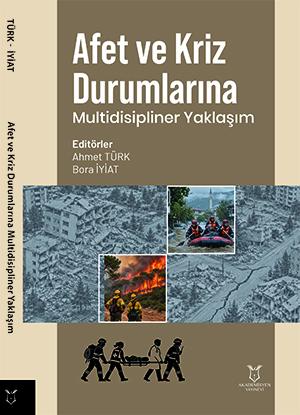
Afet ve Enkaz Altı Koşullarında Beslenme: Metabolik Yanıt ve Hayatta Kalma Odaklı Kaynak Yönetimi Modeli
Özet
Afet ve enkaz altı koşullarında hayatta kalma yalnızca travmanın şiddetine değil, organizmanın metabolik rezervlerini, sıvı dengesini ve sınırlı kaynakları yönetme kapasitesine de bağlıdır. Bu bölüm, afet ortamlarında gelişen açlık, dehidratasyon, travma, immobilizasyon ve psikolojik stres yanıtlarını bütüncül bir çerçevede ele alarak hayatta kalma odaklı bir metabolik kaynak yönetimi modeli önermektedir. Açlığın erken döneminde glikojen depolarının tükenmesini takiben gelişen lipoliz, ketogenez ve protein katabolizması süreçlerinin; travma ve stres eşliğinde klasik açlık fizyolojisinden farklılaştığı vurgulanmaktadır. Dehidratasyonun enerji açığından daha hızlı klinik bozulmaya yol açabilmesi nedeniyle sıvı-elektrolit dengesi afet beslenmesinde temel öncelik olarak değerlendirilmektedir. Bölümde ayrıca enerji yoğunluğu temelli besin seçimi, rasyonlama stratejileri ve panik tüketim gibi davranışsal süreçlerin metabolik sonuçları tartışılmaktadır. Andes kazası, Copiapó madencileri ve Tayland mağara olayı gibi ekstrem hayatta kalma vakaları üzerinden fizyolojik, bilişsel ve sosyal adaptasyon örnekleri analiz edilmiştir. Sonuç olarak afet beslenmesinin yalnızca kalori temini değil; metabolik adaptasyon, davranışsal karar verme ve kaynak yönetiminin entegrasyonunu gerektiren multidisipliner bir hayatta kalma sistemi olduğu ortaya konmaktadır.
Referanslar
Adrogué, H. J., & Madias, N. E. (2000). Hyponatremia. New England Journal of Medicine, 342(21), 1581-1589.
Aronson, M. (2020). Rising Water: The Story of the Thai Cave Rescue: Simon and Schuster.
Baysal, A. (2004). Beslenme: Hatiboğlu Yayınevi.
Biolo, G., Maggi, S. P., Williams, B. D., Tipton, K. D., & Wolfe, R. R. (1995). Increased rates of muscle protein turnover and amino acid transport after resistance exercise in humans. American Journal of Physiology-Endocrinology and Metabolism, 268(3), E514-E520.
Boateng, A. A., Sriram, K., Meguid, M. M., & Crook, M. (2010). Refeeding syndrome: treatment considerations based on collective analysis of literature case reports. Nutrition, 26(2), 156-167.
Cahill Jr, G. F. (2006). Fuel metabolism in starvation. Annu. Rev. Nutr., 26(1), 1-22.
Calder, P. C. (2010). Omega-3 fatty acids and inflammatory processes. Nutrients, 2(3), 355-374.
Citaristi, I. (2022). World food programme—WFP. In The Europa directory of international organizations 2022 (pp. 302-306): Routledge.
Fitts, R. H., Romatowski, J., Peters, J. R., Paddon-Jones, D., Wolfe, R., & Ferrando, A. (2007). The deleterious effects of bed rest on human skeletal muscle fibers are exacerbated by hypercortisolemia and ameliorated by dietary supplementation. American Journal of Physiology-Cell Physiology, 293(1), C313-C320.
Franklin, J. (2011). 33 men: Inside the miraculous survival and dramatic rescue of the Chilean miners: Penguin.
Fukagawa, N. K., McKillop, K., Pehrsson, P. R., Moshfegh, A., Harnly, J., & Finley, J. (2022). USDA's FoodData Central: what is it and why is it needed today? The American journal of clinical nutrition, 115(3), 619-624.
Hall, J. E. (2021). Guyton y Hall. Compendio de fisiología médica: Elsevier Health Sciences.
Hall, K. D., Heymsfield, S. B., Kemnitz, J. W., Klein, S., Schoeller, D. A., & Speakman, J. R. (2012). Energy balance and its components: implications for body weight regulation123. The American journal of clinical nutrition, 95(4), 989-994.
Haveman, H. A. (1992). Between a rock and a hard place: Organizational change and performance under conditions of fundamental environmental transformation. Administrative science quarterly, 48-75.
Houston, C. S. (1975). Alive: The Story of the Andes Survivors, by Piers Paul Read. Arctic, 28(1), 77-78.
Keys, A., Brožek, J., Henschel, A., Mickelsen, O., & Taylor, H. L. (1950). The biology of human starvation.(2 vols).
Koepcke, J. (2012). When I Fell From the Sky: the true story of one woman's miraculous survival: Hachette UK.
Leser, S. (2013). The 2013 FAO report on dietary protein quality evaluation in human nutrition: Recommendations and implications. Nutrition Bulletin, 38(4), 421-428.
Lieberman, H. R. (2007). Hydration and cognition: a critical review and recommendations for future research. Journal of the American College of Nutrition, 26(sup5), 555S-561S.
McEwen, B. S. (2007). Physiology and neurobiology of stress and adaptation: central role of the brain. Physiological reviews, 87(3), 873-904.
Mehanna, H. M., Moledina, J., & Travis, J. (2008). Refeeding syndrome: what it is, and how to prevent and treat it. Bmj, 336(7659), 1495-1498.
Owen, O., Morgan, A., Kemp, H., Sullivan, J., Herrera, M., & Cahill, G. J. (1967). Brain metabolism during fasting. The Journal of clinical investigation, 46(10), 1589-1595.
Parrado, N., & Rause, V. (2007). Miracle in the Andes: 72 days on the mountain and my long trek home: Crown.
Popkin, B. M., D'Anci, K. E., & Rosenberg, I. H. (2010). Water, hydration, and health. Nutrition reviews, 68(8), 439-458.
Posner, J. B. (2007). Plum and Posner's diagnosis of stupor and coma (Vol. 71): OUP USA.
Posner, J. B., Saper, C. B., Schiff, N. D., & Claassen, J. (2019). Plum and Posner's diagnosis and treatment of stupor and coma: Oxford University Press.
Ros, E. (2010). Health benefits of nut consumption. Nutrients, 2(7), 652-682.
Sapolsky, R. M. (2004). Why zebras don't get ulcers: The acclaimed guide to stress, stress-related diseases, and coping: Holt paperbacks.
Seal, A., & Thurstans, S. (2013). Derivation of nutrient requirements for disaster-affected populations: Sphere Project 2011. Food and nutrition bulletin, 34(1), 45-51.
Sepúlveda, E. (2017). Setenta días de noche. 33 mineros atrapados: Historia oculta de un rescate: Editorial Catalonia.
Silva, J. E. (2006). Thermogenic mechanisms and their hormonal regulation. Physiological reviews.
Sinha, R. (2008). Chronic stress, drug use, and vulnerability to addiction. Annals of the new York Academy of Sciences, 1141(1), 105-130.
Slavin, J. (2013). Fiber and prebiotics: mechanisms and health benefits. Nutrients, 5(4), 1417-1435.
Szomstein, S., & Nguyen, D. M. (2016). Nutritional complications and emergencies. In Bariatric surgery complications and emergencies (pp. 269-282): Springer.
Wall, B. T., Dirks, M. L., & Van Loon, L. J. (2013). Skeletal muscle atrophy during short-term disuse: implications for age-related sarcopenia. Ageing research reviews, 12(4), 898-906.
Whitty, A., & Kumaravel, G. (2006). Between a rock and a hard place? Nature chemical biology, 2(3), 112-118.
Wolfe, R. R. (2006). The underappreciated role of muscle in health and disease. The American journal of clinical nutrition, 84(3), 475-482.
Wolfe, R. R. (2017). Branched-chain amino acids and muscle protein synthesis in humans: myth or reality? Journal of the International Society of Sports Nutrition, 14(1), 30.
World Health Organization. (2006). Oral rehydration salts: Production of the new ORS. World Health Organization.
World Health Organization. (2013). Guideline: updates on the management of severe acute malnutrition in infants and children. World Health Organization.
World Health Organization. (2017). Health emergency interim guidelines: a WHO guideline development framework and toolkit. World Health Organization.