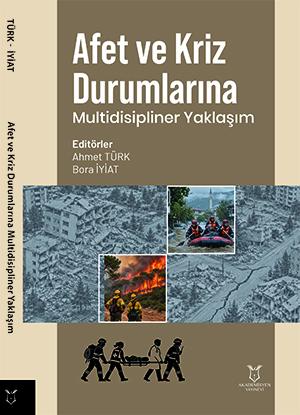
Güvenli Alandan Güçlü Geleceğe: Afet ve Kriz Durumlarında Çocuk Dostu Alanların Erken Çocukluk Dönemindeki Gelişimsel ve Psikososyal Destekleyici Rolü
Synopsis
This study examines the impacts of disaster and crisis situations on early childhood (ages 0-8) and the developmental, psychosocial, and protective roles of "Child Friendly Spaces" (CFS). Against the physical health, education, and emotional security risks children face during disasters, CFS serve as rights-based temporary support environments that prevent neglect and abuse, provide predictable routines, and create age-appropriate play and learning opportunities. Relying on principles such as providing safe spaces, utilizing local capacities, community participation, and linking with integrated services, the positive impacts of these spaces are supported by field findings from crisis experiences like those in Turkey, Pakistan, and Haiti. In conclusion, while Child Friendly Spaces do not replace permanent schools or clinical services, they serve as a vital bridge in the transition from the immediate crisis to long-term normalization.
References
Anne Çocuk Eğitim Vakfı. (2024). Afet ve krizler çağında çocuk olmak: Erken çocukluk hizmetlerine çok paydaşlı bir yaklaşım. https://www.acev.org/afet-ve-krizler-caginda-cocuk-olmak-calistay-raporu/
Aral, N. (2023). Depremin çocuklara etkileri. Çocuk ve Gelişim Dergisi, 6(11), 93–105. https://doi.org/10.36731/cg.1299175
Aydın, D. (2014). Afet sonrası psikososyal destek uygulamaları. İnsani ve Sosyal Araştırmalar Merkezi (İNSAMER). https://www.insamer.com/tr/afet-sonrasi-psikososyal-destek-uygulamalari_48.html
Aydos, E. H., Yağan, S., Öztürk, İ., & Atabay, Y. K. (2025). From crisis to classroom: Preschool teachers’ post-earthquake experiences. Humanities and Social Sciences Communications, 12(197). https://doi.org/10.1057/s41599-025-04504-9
Certel, N. (2023). Afetlerden etkilenen çocukların karşılaşabilecekleri zorluklar ve ihtiyaçları: Sosyal hizmetin rolü. Z. Altınay & F. Altınay (Ed.), World Children Conference-IV proceedings book içinde (ss. 295–300). IKSAD Publishing House.
Cumhurbaşkanlığı İletişim Başkanlığı. (2023). Türk Kızılayın kurduğu “Çocuk Dostu Alanlar”da afet travmasının etkisi azaltılıyor. https://www.iletisim.gov.tr/turkce/yerel_basin/detay/turk-kizilayin-kurdugu-cocuk-dostu-alanlarda-afet-travmasinin-etkisi-azaltiliyor
Davie, S., Stuart, M., Williams, F., & Erwin, E. (2014). Child friendly spaces: Protecting and supporting children in emergency response and recovery. The Australian Journal of Emergency Management, 29(1), 25–30. https://search.informit.org/doi/epdf/10.3316/agispt.20140867
Dikmen Özarslan, A. (2025). Çocuk merkezli afet risk yönetimi: Çocuklar için değil çocuklarla birlikte. Resilience, 9(1), 205–223. https://doi.org/10.32569/resilience.1542591
Erbil, F. (2023). Türkiye'de krizler, afetler ve çocuk. Reflektif Sosyal Bilimler Dergisi, 4(2), 357–372. https://doi.org/10.47613/reflektif.2023.110
Guha-Sapir, D., Van Panhuis, W. G., & Lagoutte, J. (2007). Short communication: Patterns of chronic and acute diseases after natural disasters—A study from the International Committee of the Red Cross field hospital in Banda Aceh after the 2004 Indian Ocean tsunami. Tropical Medicine & International Health, 12(11), 1338–1341. https://doi.org/10.1111/j.1365-3156.2007.01932.x
Hamiel, D., Wolmer, L., Pardo-Aviv, L., & Laor, N. (2017). Addressing the needs of preschool children in the context of disasters and terrorism: Clinical pictures and moderating factors. Current Psychiatry Reports, 19(7), 38. https://doi.org/10.1007/s11920-017-0793-7
Hermosilla, S., Metzler, J., Savage, K., Musa, M., & Ager, A. (2019). Child friendly spaces impact across five humanitarian settings: A meta-analysis. BMC Public Health, 19, 576. https://doi.org/10.1186/s12889-019-6939-2
Inter-Agency Network for Education in Emergencies. (2024). INEE minimum standards for education: Preparedness, response, recovery. https://inee.org/minimum-standards
Inter-Agency Standing Committee. (2007). IASC guidelines on mental health and psychosocial support in emergency settings.
Kousky, C. (2016). Impacts of natural disasters on children. The Future of Children, 26(1), 73–92. https://doi.org/10.1353/foc.2016.0004
Limoncu, S., & Atmaca, A. B. (2018). Çocuk merkezli afet yönetimi. Megaron, 13(1), 132–143. https://doi.org/10.5505/megaron.2017.49369
Madrid, P. A., Grant, R., Reilly, M. J., & Redlener, N. B. (2006). Challenges in meeting immediate emotional needs: Short-term impact of a major disaster on children’s mental health: Building resiliency in the aftermath of Hurricane Katrina. Pediatrics, 117(4), 448–453. https://doi.org/10.1542/peds.2006-0099U
Mariam, E., Ahmad, J., & Sarwar, S. (2021). BRAC humanitarian play lab model: Promoting healing, learning, and development for displaced Rohingya children. Journal on Education in Emergencies, 7(1), 133–149. https://doi.org/10.33682/u72g-v5me
Masten, A. S., & Narayan, A. J. (2012). Child development in the context of disaster, war, and terrorism: Pathways of risk and resilience. Annual Review of Psychology, 63, 227–257. https://doi.org/10.1146/annurev-psych-120710-100356
Masten, A. S., & Obradović, J. (2008). Disaster preparation and recovery: Lessons from research on resilience in human development. Ecology and Society, 13(1), Madde 9. http://www.ecologyandsociety.org/vol13/iss1/art9/
Mengilli, D. B. (2024). Afetlerde çocuklara yönelik sosyal hizmet müdahalesi. D. N. Özüçelik & T. Artan (Ed.), Afetlerde sosyal hizmet içinde (ss. 78–84). İÜC Üniversite Yayınevi. https://doi.org/10.5152/9408
Metzler, J., Diaconu, K., Hermosilla, S., Kaijuka, R., Ebulu, G., Savage, K., & Ager, A. (2019). Short- and longer-term impacts of Child Friendly Space interventions in Rwamwanja Refugee Settlement, Uganda. Journal of Child Psychology and Psychiatry, 60(11), 1152–1163. https://doi.org/10.1111/jcpp.13069
Metzler, J., Savage, K., Yamano, M., & Ager, A. (2015). Evaluation of child friendly spaces: An inter-agency series of impact evaluations in humanitarian emergencies. Columbia University Mailman School of Public Health & World Vision International.
Meynard, J.-B., Nau, A., Halbert, E., & Todesco, A. (2008). Health indicators in children from Meulaboh, Indonesia, following the tsunami of December 26, 2004. Military Medicine, 173(9), 900–905. https://doi.org/10.7205/MILMED.173.9.900
Mudavanhu, C., Manyena, B. S., Collins, E. A., Bongo, P., Mavhura, E., & Manatsa, D. (2015). Taking children’s voices in disaster risk reduction a step forward. International Journal of Disaster Risk Science, 6(3), 267–281. https://doi.org/10.1007/s13753-015-0060-7
Ökten, M. S., & Kayaalp, A. (2024). Afetlerin gölgesinde çocuklar: Depremler sonrası psikolojik tepkiler ve iyileşme süreci. Eren Dergisi, 3(5), 51–61. https://izlik.org/JA25DK46DH
Özel, Ö., & Ersoy, B. (2023). Depremden etkilenen okul öncesi dönem çocuklarının okula uyum sürecine ilişkin öğretmen görüşlerinin incelenmesi. EKEV Akademi Dergisi, (Özel Sayı), 465–481. https://izlik.org/JA93BS95XG
Özoruç, N., & Dikici Sığırtmaç, A. (2024). Okul öncesi öğretmenlerinin deprem kaygısı ve eğitim öğretim sürecine yansımaları. Çukurova Üniversitesi Sosyal Bilimler Enstitüsü Dergisi, 33(1), 380–396. https://doi.org/10.35379/cusosbil.1400448
Peek, L. (2008). Children and disasters: Understanding vulnerability, developing capacities and promoting resilience—An introduction. Children, Youth and Environments, 18(1), 1–29. https://doi.org/10.1353/cye.2008.0052
Proulx, K., & Aboud, F. (2019). Disaster risk reduction in early childhood education: Effects on preschool quality and child outcomes. International Journal of Educational Development, 66, 1–7. https://doi.org/10.1016/j.ijedudev.2019.01.007
Rassekh, B. M., & Santosham, M. (2014). Utilization of formal health services for children aged 1–5 in Aceh after the 2004 tsunami: Which children did not receive the health care they needed? Implications for other natural disaster relief efforts. Health Psychology and Behavioral Medicine, 2(1), 111–131. https://doi.org/10.1080/21642850.2013.878658
Save the Children. (2008). Child friendly spaces in emergencies: A handbook for Save the Children staff. https://resourcecentre.savethechildren.net/document/child-friendly-spaces-emergencies-handbook-save-children-staff/
Shah, S. (2023). Supporting young children affected by crisis. S. Shah & L. Bassett (Ed.), Young children in humanitarian and COVID-19 crises: Innovations and lessons from the Global South içinde (ss. 13–32). Routledge. https://doi.org/10.4324/9781003415213-2
Snider, L., & Ager, W. (2018). Operational guidance for child friendly spaces in humanitarian settings. IFRC Reference Centre for Psychosocial Support. https://www.pscentre.org/
Şengün, G. (2025). Okul öncesi öğretmenlerinin afetlere yönelik tutumları ile psikolojik dayanıklılık ve algılanan sosyal destek düzeyleri arasındaki ilişkinin incelenmesi. Mehmet Akif Ersoy University Journal of Education Faculty, 74, 357–378. https://doi.org/10.21764/maeuefd.1571346
The Alliance for Child Protection in Humanitarian Action. (2019). Minimum standards for child protection in humanitarian action (2019 ed.). Practical Action Publishing. https://alliancecpha.org/en/CPMS_home
Türk, A., & Bilican Gökkaya, V. (2023). Deprem sonrası çocukların karşılaşabileceği psikososyal riskler ve sosyal hizmet. İ. Aydemir & M. Öztürk (Ed.), Afet ve krizlerde sosyal hizmet içinde (ss. 163–188). Akademisyen Kitabevi. https://doi.org/10.37609/akya.2794
Türk, A., & Türk, S. (2025). Çoklu krizler çağında dezavantajlı gruplara yönelik yerel ve küresel dayanışma ağları: Sosyal sermaye. H. Doğan & A. Usanmaz (Ed.), Çoklu krizler çağında dezavantajlılık: Kesişimsel riskler ve uygulamalar üzerine içinde (ss. 159–179). Eğiten Kitap Yayıncılık.
UNICEF. (2009). A practical guide for developing child friendly spaces. https://reliefweb.int/report/world/practical-guide-developing-child-friendly-spaces
UNICEF. (2010). Children of Haiti: Milestones and looking forward at six months.
UNICEF. (2011). Acil durumlarda çocuk dostu ortamlar oluşturma kılavuzu.
UNICEF. (2023). Early childhood development: UNICEF vision for every child. https://www.unicef.org/reports/early-childhood-development-unicef-vision-every-child
UNICEF Türkiye. (2023). Humanitarian situation report no. 14: 19 May–5 June 2023. UNICEF.
United Nations Office for Disaster Risk Reduction. (2015). Sendai framework for disaster risk reduction 2015–2030. https://www.undrr.org/publication/sendai-framework-disaster-risk-reduction-2015-2030
Williams, R., Alexander, D. A., Bolsover, D., & Bakke, F. K. (2008). Children, resilience and disasters: Recent evidence that should influence a model of psychosocial care. Current Opinion in Psychiatry, 21(4), 338–344. https://doi.org/10.1097/YCO.0b013e328305b6e4
World Health Organization, United Nations Children’s Fund, & World Bank Group. (2018). Nurturing care for early childhood development: A framework for helping children survive and thrive to transform health and human potential. World Health Organization. https://www.who.int/publications/i/item/9789241514064
World Health Organization, War Trauma Foundation, & World Vision International. (2011). Psychological first aid: Guide for field workers. World Health Organization.
Yüksel, A. Ş. (2025). Afet ve acil durumlarda çocuk katılımı ve çocuk dostu mekânlar. E. Çalık Var, N. G. Karaman, E. Hareket, & A. Ş. Yüksel (Ed.), Afet ve acil durumlarda çocuk hakları ve eğitimi eğitici el kitabı 2: Çocuk dostu afet müdahalesi modülleri içinde (ss. 161–233). Millî Eğitim Bakanlığı-UNICEF.
Zenter, Ö., Özmen, E. F., & Yıldırım, M. T. (2024). Deprem sonrası çocuk özel eğitim yerleşkesi mimari tasarım deneyimi. Journal of Architectural Sciences and Applications, 9(Özel Sayı), 270–292. https://doi.org/10.30785/mbud.1334865