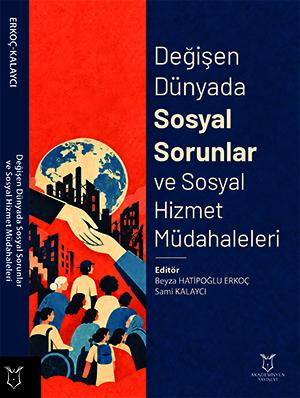
Sosyal Hizmet Odağında Geri Dönüş Göçü
Synopsis
In recent years, there has been an increase in return migration on a global scale. Consequently, there are voluntary return programmes in place to support the return process. Social work, which works with migrants, plays a significant role both in return programmes and during the return process. The aim of this study is to examine return migration from a social work perspective. Accordingly, the focus is on the role of social work in return migration and the challenges associated with it. The findings of the study indicate that social services facilitate the return process by providing psychosocial and protective services whilst acting as mediators, case managers and advocates in the implementation of return programmes. The key challenges identified from a social work perspective in return migration include the protection of family unity and family reunification, the protection of vulnerable groups, trauma and mental health issues, and the protection of unaccompanied and separated children; these have been identified and explained from a social work perspective.
References
Ballet, S., Vandevoordt, R. ve Lietaert, I. (2025). A Genealogy of ‘Future Orientation’: Re‐Inventing Social Work in an Era of Welfare State Bordering. Social Policy and Administration, 60(4), 730–739. https://doi.org/10.1111/spol.70038
Balta Özgen, A. (2023). Gönüllü Geri Dönüş. Y. Özkaya, V. Erat, K. Demirci ve A. Duran (Ed.). Göç Ansiklopedisi içinde (s. 167-169). Ankara: Nobel Akademik Yayınları.
Bartram, D., Poros, M. V., ve Monforte, P. (2017). Göç meselesinde temel kavramlar. Hiperlink.
Bisong, A. (2022). Return, Precarity and Vulnerability in West Africa: Evidence from Nigeria. 211–236. https://doi.org/10.1007/978-3-030-97322-3_11
Carr, H. (2014). Returning “home”: Experiences of reintegration for asylum seekers and refugees. The British Journal of Social Work, 44(Suppl. 1), i140–i156.
Castles, S. ve Ozkul, D. (2014). Circular Migration: Triple Win, or a New Label for Temporary Migration?. In: Battistella, G. (eds) Global and Asian Perspectives on International Migration. Global Migration Issues, vol 4. Springer, Cham. https://doi.org/10.1007/978-3-319-08317-9_2
Catherine Schmidt, Rupaleem Bhuyan, Rebecca Lash, Transnational Family Separation among Migrant Women in Canada: An Intersectional Analysis, Social Work Research, Volume 46, Issue 4, December 2022, Pages 304–316, https://doi.org/10.1093/swr/svac020
Cela, E., Bettin, G. ve King, R. (2025). ‘To return or not to return, that is the question’: The role of health in return intentions among three groups of older migrants in Italy. International Migration, 63, e70042. https://doi.org/10.1111/imig.70042
Cete, H. ve Güngör, F. (2024). Uluslararası ve Bölgesel Belgelerde Göçmenlerin Siyasi Katılım Hakkı: Oy Hakkı Bağlamında Ulus Devletlere Genel Bakış. Marmara Üniversitesi Siyasal Bilimler Dergisi, 12(1), 85-113. https://doi.org/10.14782/marmarasbd.1325497
Crowe, S. (2002). Planning for the return of separated children seeking asylum: An inter-country social service perspective. Refuge: Canada's Journal on Refugees, 20(2), 68–72. https://doi.org/10.25071/1920-7336.21256.
de Haas, H., Castles, S. ve Miller, M. J. (2022). Göçler çağı: Modern dünyada uluslararası nüfus hareketleri (B. A. Evranos, Çev.). GAV Perspektif Yayınları.
de Haas, H. ve Fokkema, T. (2011). The effects of transnational ties on the return intentions of Moroccan migrants in Europe. International Migration Review, 45(4), 755–793. https://doi.org/10.1111/j.1747-7379.2011.00867.x
de Matteis, A., Türkmen-Ceylan, F. B., Ridsdel, J. ve De Matteis, G. (2025). Separation during emergencies: Is there a stable relationship between separated children and the rest of a fleeing population? Evidence from three situations in Africa. International Migration Review, 59(2). https://doi.org/10.1177/01979183231202441.
Durieux, J. F., ve McAdam, J. (2004). Non-refoulement through time: The case for a derogation clause to the refugee convention in mass influx emergencies. International Journal of Refugee Law, 16(1), 4-24. https://doi.org/10.1093/ijrl/16.1.4
Eltanamly, H., May, A., McEwen, F., Karame, E. ve Pluess, M. (2025). Father-separation and well-being in forcibly displaced Syrian children. Attachment & Human Development, 27(5), 715–735. https://doi.org/10.1080/14616734.2024.2406610.
Fuchs, L. M. (2025). Assisted return programmes across Europe–Mapping an increasingly obscure landscape. International Migration, 63(3), e70032.
Gauci, J.-P. (2023). IOM and ‘Assisted Voluntary Return’: Responsibility for Disguised Deportations? In M. Bradley, C. Costello, ve A. Sherwood (Eds.), IOM Unbound?: Obligations and Accountability of the International Organization for Migration in an Era of Expansion (pp. 397–419). chapter, Cambridge: Cambridge University Press.
Gökçe, B. D. (2024). Role of Intergovernmental Organizations in Global Governance of Migration: The Case of AVRR (Master's thesis, Middle East Technical University (Turkey)).
Higgins, M. (2020). Social Work with Refugees and Migrants. 353–374. https://doi.org/10.1007/978-981-13-6975-9_13
International Organization for Migration. (2026). Report overview: Migration during a time of increasing disruption and distortion. In M. McAuliffe ve P. Ceriani Cernadas (Eds.), World Migration Report 2026 (Chapter 1). IOM. 16 Ağustos 2026 tarihinde https://worldmigrationreport.iom.int/what-we-do/world-migration-report-2026/foreword/foreword adresinden erişildi.
International Organization for Migration. (t.y.). Assisted Voluntary Return and Reintegration (AVRR): Supporting dignified return and sustainable reintegration [Infosheet]. https://www.iom.int/sites/g/files/tmzbdl486/files/country/EEA/infosheet_avrr.pdf
Izquierdo‐Condoy, J. S., Salazar-Aguilar, J. P., Vásconez-González, J. ve Ortiz‐Prado, E. (2025). The public health consequences of mandatory return migration: a call for action. Frontiers in Public Health, 13. https://doi.org/10.3389/fpubh.2025.1577018
Jastram, K. ve Newland, K. (2009). Family unity and refugee protection. In E. Feller, V. Türk, ve F. Nicholson (Eds.), Refugee Protection in International Law: UNHCR's Global Consultations on International Protection (pp. 555–603). Cambridge University Press. https://doi.org/10.1017/CBO9780511493973.029
Jurt, L. ve Odermatt, E. (2024). How European integration rationales shape reintegration assistance in Guinea and Senegal. International Migration, 63(3). https://doi.org/10.1111/imig.13362
Koch, A. (2014). The Politics and Discourse of Migrant Return: The Role of UNHCR and IOM in the Governance of Return. Journal of Ethnic and Migration Studies, 40(6), 905–923. https://doi.org/10.1080/1369183X.2013.855073
Kraly, E. P., Abbasi‐Shavazi, M. J., Colón, L. L. T., & Reed, H. E. (2023). Social Consequences of Forced and Refugee Migration. Annual Review of Sociology, 49(1), 129–153. https://doi.org/10.1146/annurev-soc-090221-040023
Kuan, A. S., Chen, T., & Lee, W. (2020). Barriers to health care services in migrants and potential strategies to improve accessibility: A qualitative analysis. Journal of the Chinese Medical Association, 83(1), 95–101. https://doi.org/10.1097/jcma.0000000000000224
Kuo, B. C. H. ve Rappaport, L. M. (2024). A prospective longitudinal study of depression, perceived stress, and perceived control in resettled Syrian refugees’ mental health and psychosocial adaptation. Transcultural Psychiatry, 61(4), 582–595. https://doi.org/10.1177/13634615241227696.
Kusari, K. ve Walsh, C. A. (2021). A social pedagogy lens for social work practice with return migrants. International Journal of Social Pedagogy, 10(1). https://doi.org/10.14324/111.444.ijsp.2021.v10.x.014
Kuschminder, K., Tan, S. E., Jechel, L., Schmitt, J., & Bruder, M. (2026). The Effects of Assisted Return Programmes on Sustainable Reintegration: A Review. International Migration, 64(1). https://doi.org/10.1111/imig.70122
Lafleur, J., ve Yener‐Roderburg, I. Ö. (2022). Emigration and the Transnationalization of Sending States’ Welfare Regimes. Social Inclusion, 10(1). https://doi.org/10.17645/si.v10i1.4701
Lietaert, I. (2019). The usefulness of reintegration support: The dual perspectives of returnees and caseworkers. The British Journal of Social Work, 49(5), 1216–1233. https://doi.org/10.1093/bjsw/bcy093 (Biblio)
Lietaert, I. (2021). Contextualizing and conceptualizing reintegration processes in the context of return. International Migration, 59(2), 239–254.
Lochan, A. (2017). The Effects of Assisted Voluntary Return Programs on Marginalized Women: A Critique of the IOM and UNHCR. LUJA, 4(1), 5.
Majidi, N., Oeppen, C., Kasavan, C. ve Barratt, S. (2022). Re-balancing the reintegration process and the potential of mentoring for returnees: Evidence from Senegal, Guinea and Morocco. Journal of International Migration and Integration, 24(Suppl. 2), 563–583. https://doi.org/10.1007/s12134-022-00963-0 (PubMed Central (PMC))
Margheritis, A. (2020). Diaspora Policies, Consular Services and Social Protection for Argentine Citizens Abroad. 57–75. https://doi.org/10.1007/978-3-030-51237-8_3
Naseh, M., et al. (2024). Mental health implications of family separation associated with migration policies in the United States: A systematic review. Social Science & Medicine, 352, 116995. https://doi.org/10.1016/j.socscimed.2024.116995
Nicholson, F. (2018). The “Essential Right” to Family Unity of Refugees and Others in Need of International Protection in the Context of Family Reunification. UNHCR Research Paper No. 36.
Ogbuze, C. (2022). Rehabilitation and Reintegration of Libya Returnee-Migrants in Benin-City, Edo State, Nigeria. Jurnal Administrasi Publik Public Administration Journal, 12(2), 216–229. 16 Ağustos 2026 tarihinde https://doi.org/10.31289/jap.v12i2.8215 adresinden erişildi.
Organisation for Economic Cooperation and Development. (2025). International Migration Outlook 2025. OECD Publishing: Paris. https://doi.org/10.1787/ae26c893-en
Perruchoud, R. ve Redpath, J. (2013). Göç terimleri sözlüğü. Uluslararası Göç Örgütü, (18).
Robinson, K. ve Williams, L. (2015). Leaving Care: Unaccompanied Asylum- Seeking Young Afghans Facing Return. Refuge Canada S Journal on Refuge, 31(2), 85–94. https://doi.org/10.25071/1920-7336.40312
Schweitzer, R. (2022). “Voluntary Return” without Civil Society? Migration and Society, 5(1), 29–42. https://doi.org/10.3167/arms.2022.050104
Semagn, T., Waldron, I., Williams, A. ve Wahoush, O. (2026). Impact of transnational family separation on parenting and psychosocial well-being for Black African migrant parents in Hamilton. Child & Family Social Work, 1–14. https://doi.org/10.1111/cfs.70156
Tippens, J. A., Erwin, S., Eller, K., Dutra Gross, R. M., Bearss, B., Kemp, B., Mollard, E., Njiru, L., Okwarah, P., Palmer-Wackerly, A. L. ve Lakati, A. (2023). Multisystemic resilience and psychosocial wellbeing among older refugees: A systematic review with implications for mental health and psychosocial support (MHPSS). Journal of Immigrant and Minority Health, 25(5), 1152–1170. https://doi.org/10.1007/s10903-023-01516-y
Tizazu, A. T., Derluyn, I. ve Lietaert, I. (2021). Towards a definition for returnees’ reintegration processes in the context of rural Ethiopia. International Migration, 59(2), 202–220. https://doi.org/10.1111/imig.12806 (Biblio)
United Nations High Commissioner for Refugees. (2007). Refugee protection and durable solutions in the context of international migration (UNHCR/DPC/2007/Doc. 02). 16 Ağustos 2026 tarihinde https://www.refworld.org/policy/strategy/unhcr/2007/en/21586 adresinden erişildi.
United Nations High Commissioner for Refugees. (2024). Older refugees. UNHCR Integration Handbook for Resettled Refugees.. Bauloz, C., Burns, N., & Khamkhom, N. (2026). Disability and migration: Trends, issues and responses. In M. McAuliffe & P. Ceriani Cernadas (Eds.), World Migration Report 2026. International Organization for Migration (IOM), Geneva.
United Nations High Commissioner for Refugees. (2025, May 28). Republic of Türkiye annual results report 2024. UNHCR. UNHCR – Republic of Türkiye Annual Results Report 2024
United Nations High Commissioner for Refugees. (2026). Global trends: Forced displacement in 2025. United Nations High Commissioner for Refugees. 16 Ağustos 2026 tarihinde https://www.unhcr.org/media/global-trends-2025-report adresinden erişildi.
United Nations High Commissioner for Refugees. (t.y.). Internally displaced persons. Refworld. 14 Ağustos 2026 tarihinde https://www.refworld.org/thematic-area/internally-displaced-persons adresinden erişildi.
United Nations. (1951). Convention relating to the status of refugees. 16 Ağustos 2026 tarihinde https://www.unhcr.org/1951-refugee-convention.html adresinden erişildi.
Vacca, R., Bilecen, B. ve Lubbers, MJ (2025). Göç ve göçmen entegrasyonunda sosyal ağlar: Yeni gelişmeler ve zorluklar. Int Migr, 63: e13373. https://doi.org/10.1111/imig.13373
Yılmaz, E., Tamam, L. ve Cengisiz, C. (2024). Post-traumatic stress disorder among long-term resettled Syrian refugees in Turkey: A comprehensive analysis of pre- and post-migratory factors. Frontiers in Psychiatry, 15, 1352288. https://doi.org/10.3389/fpsyt.2024.1352288.