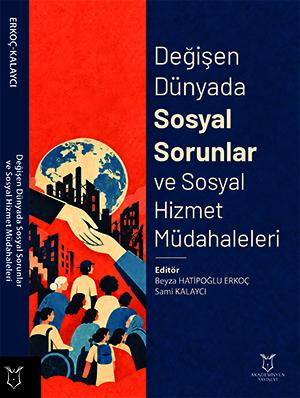
Çocuk ve Gençlik Sorunları
Synopsis
In this study, issues concerning children and youth in Turkey are addressed through a holistic approach—informed by the discipline of social work, the perspective of child and youth welfare, and ecological systems theory—within the context of the socioeconomic, demographic, and technological transformations taking place in the country. Within the scope of this study, the concepts of childhood, youth, and emerging adulthood are explained, and the key risk factors and problem areas faced by children and young people are examined. The problems faced by children and young people have been examined under the following headings: poverty, migration, family breakdown, social exclusion, working and/or living on the streets, being drawn into crime, neglect and abuse, disengagement from education, school-based violence, and addiction. It has been emphasized that economic deprivation and unequal opportunities, in particular, limit children’s development, educational prospects, and participation in social life; furthermore, it has been noted that the new risks brought about by digitalization—such as the issue of online child abuse—have come to the fore. Furthermore, youth unemployment and the rise in the number of young people who are Not in Education, Employment, or Training (NEET) have been identified as significant problem areas in terms of unemployment, poverty, and future prospects. It has been pointed out that issues such as addiction, violence, juvenile delinquency, and family breakdown are interconnected, further increasing the psychosocial vulnerability of children and young people. The study results highlight that the problems faced by children and youth are not independent of one another; rather, they interact and reinforce each other, leading to multidimensional social risks. They trigger one another—creating a "social multiplier effect"—and emerge simultaneously as both causes and consequences. Therefore, solution policies should not be limited to merely intervening in problems as they arise; rather, they must be developed based on a rights-based approach that prioritizes protective and preventive services. In this context, it is important to strengthen basic income support and social assistance mechanisms to reduce child poverty, ensure equal opportunity in education, support the participation of children and youth in policy-making processes, enhance inter-institutional cooperation, and establish early warning systems. Furthermore, it is recommended that the School Social Work model be implemented on a mandatory basis across all educational institutions; that training programs designed to strengthen the parenting capacity of families be expanded; that youth centers be further bolstered through career guidance and psychosocial support services; and that protective and supportive measures be implemented effectively.
References
Aile ve Sosyal Hizmetler Bakanlığı. (2024). Çocuk hizmetleri istatistik bülteni (2023 Aralık sonu). https://www.aile.gov.tr/sgbd/istatistik-sayfalari/aylik-istatistik-bulteni/
Akar, H. (2020). Türkiye’de çocuk yoksulluğu ve sosyal dışlanma. İstanbul: Sosyal Araştırmalar Yayınları.
Altuntaş, O., ve Altınova, H. H. (2015). Türkiye’de Risk Altındaki Çocukların Ana Akım Basında Temsili. Ergoterapi Ve Rehabilitasyon Dergisi, 3(2), 59-69. https://izlik.org/JA65WT99DW
Arnett, J. J. (2000). Emerging adulthood: A theory of development from the late teens through the twenties. American Psychologist, 55(5), 469–480. https://doi.org/10.1037/0003-066X.55.5.469
Arslan, M. (2022). Göçmen çocukların toplumsal entegrasyonu ve sosyal hizmet. Toplum ve Sosyal Hizmet Dergisi,33(2),145-162
Aydın, İ. (2019). Türkiye’de çocuk istismarı, çocuk istismarını önleyici sosyal politikalar ve Diyarbakır Örneği, (538087). [Yüksek Lisans Tezi, Ankara, Gazi Üniversitesi Sosyal Bilimler Enstitüsü]. Ulusal Tez Merkezi.
Bayram, N., Sam, D, Aytaç, S., ve Aytaç, M. (2010). Yaşam tatmini ve sosyal dışlanma. ISGUC The Journal of Industrial Relations and Human Resources, 12(4), 79-92. https://izlik.org/JA67MM33PT
Baysal, A. (1982). Beslenme ve sağlık. Ankara: Hatiboğlu Yayınları.
Çalışkan, M. (2021). Sokakta yaşayan çocuklara yönelik sosyal hizmet müdahaleleri, Ankara: Nobel Akademik Yayıncılık.
Demir, A., Kaya, B. ve Yıldız, C. (2022). Çocuk ve gençlik psikolojisi: Gelişimsel perspektifler. İzmir: Ege Üniversitesi Yayınları.
Engin Demir, C. (2019). Türkiye’de genç işsizliği ve NEET profili. Sosyal Politika Çalışmaları Dergisi, 19(44), 115-138.
Green, A. H. (1993). Child sexual abuse: Immediate and long-term effects and intervention. Journal of the American Academy of Child & Adolescent Psychiatry, 32(5), 890-902. https://doi.org/10.1097/00004583-199309000-00002
Harris, M., Brown, L. ve Smith, R. (2021). Youth mental health and future anxiety in the post-pandemic era. Journal of Youth Studies , 24(5), 312-329.
Kaplan, S. J., Pelcovitz, D., ve Labruna, V. (1999). Child and adolescent abuse and neglect research: A review of the past 10 years. Part I: Physical and emotional abuse and neglect. Journal of the American Academy of Child & Adolescent Psychiatry, 38(10), 1214–1222. https://doi.org/10.1097/00004583-199910000-00010
Kara B, Biçer Ü ve Gökalp A.S. Çocuk İstismarı. Çocuk Sağlığı ve Hastalıkları Dergisi 2004; 47: 140-51. 2.
Karataş, K. (2021). Sosyal hizmet ve çocuk refahı: Kuram ve uygulama. Ankara: Nika Yayınevi.
Kernis, M. H., Cornell, D. P., Sun, C. R., Berry, A., Harlow, T. ve Bach, J. S. (1993). There's more to self-esteem than whether it is high or low: The importance of stability of self-esteem. Journal of Personality and Social Psychology , 65, 1190-1204.
Kernis, M. H. (2019). The stability of self-esteem in adolescence. Journal of Personality and Social Psychology , 65, 1190-1204.
Koç, F., Akşit, S., Tomba, A., Aydın, C., Koturoğlu, G., Korkmaz Çetin, S., Aslan, A., Halıcıoğlu, O., Erşahin, Y., Turhan, T., Çelik, A., Şenol, E., Kara, S., ve Solak, U. (2012). Çocuk istismarı ve ihmali olgularımızın demografik ve klinik özellikleri: Ege Üniversitesi Çocuk Koruma Birimi’nin bir yıllık deneyimi. Türk Pediatri Arşivi, 47(2), 119–124. https://doi.org/10.4274/tpa.369
Lynch, M. (1999). Çocuk istismarı ve ihmali. E. Konanç, İ. Gürkaynak ve A. Egemen (Ed.), Çocuk istismarı ve ihmali içinde (2. bs., ss. 1–8). Çocuk İstismarını ve İhmalini Önleme Derneği.
Millî Eğitim Bakanlığı. (2023). Millî eğitim istatistikleri: Örgün eğitim 2022/2023. https://sgb.meb.gov.tr/meb_iys_dosyalar/2023_09/29151106_meb_istatistikleri_orgun_egitim_2022_2023.pdf
Öztürk, S. ve Aydın, G. (2020). Mülteci çocukların sosyal entegrasyonu ve karşılaşılan engeller. Göç Araştırmaları Dergisi , 6(1), 78-95.
Peleikis, D. N., Mykletun, A., ve Dahl, A. A. (2005). Long-term social status and intimate relationship in women with childhood sexual abuse who got outpatient psychotherapy for anxiety disorder and depression. Nordic Journal of Psychiatry, 59(1), 31–38. https://doi.org/10.1080/08039480510018868
Schilder, K., van Dijk, M. ve Mulder, R. (2020). Digital divide in youth education: A European perspective. European Journal of Social Work , 23(1), 12-28.
Steinberg, L., ve Morris, A. S. (2001). Adolescent development. Annual Review of Psychology, 52(1), 83–110.
Steinberg, L. (2008). A social neuroscience perspective on adolescent risk-taking. Developmental Review, 28(1), 78–106.
Şahiner, Ü. M., Yurdakök, K., Kavak, U. S., ve Çetin, İ. (2001). Tıbbi açıdan çocuk istismarı. Katkı Pediatri Dergisi, 22(3), 276–285.
T. C. Adalet Bakanlığı. (2024). Adli Görüşme Odaları (AGO) Kurumsal İstatistikleri ve Uygulama Raporu. Adli Destek ve Mağdur Hizmetleri Dairesi Başkanlığı, Ankara.
T. C. Resmi Gazete. 03.07.2005 tarih ve 5395 Sayılı Çocuk Koruma Kanunu. https://resmigazete.gov.tr/eskiler/2005/07/20050715-1.htm (Erişim tarihi: 06.08.2026).
Türkiye İstatistik Kurumu. (2024, 19 Nisan). İstatistiklerle çocuk, 2023. https://data.tuik.gov.tr/Bulten/Index?p=Istatistiklerle-Cocuk-2023-53679
United Nations Children’s Fund. (2023, April). The state of the world’s children 2023: For every child, vaccination. https://www.unicef.org/reports/state-worlds-children-2023
Wegener, D. T. ve Petty, R. E. (1994). Mood management across affective states: The hedonic contingency hypothesis. Journal of Personality and Social Psychology , 66, 1034-1048.
Wegener, D. T. ve Petty, R. E. (2018). Gençlerde bağımlılıkla mücadele stratejileri. (M. Çelik, Çev.). Ankara: Sosyal Hizmet Yayınları. (Orijinal eserin yayın tarihi 1994).
Yılmaz, F. ve Kaya, M. (2021). Engelli gençlerin sosyal hayata katılımı ve dışlanma deneyimleri. Toplum ve Sosyal Hizmet Dergisi, 32(3), 854-872.